Tag: digital

  • The Palette of Protest: Art as a Catalyst for Change

    The Palette of Protest: Art as a Catalyst for Change

    Art has long been a silent yet potent force capable of transforming society. At its heart, art is an expression of the human condition, reflecting the times in which it is created and often serving as a vehicle for social commentary. From the politically charged satirical sketches of Francisco Goya to the defiant murals of Diego Rivera, art has been employed as a tool for protest, challenging the status quo and advocating for change.

    The Historical Context of Art as Protest

    Throughout history, artists have wielded their creative might to criticize authority and highlight injustices. One of the earliest examples of this is found in the French Revolution, where artists like Jacques-Louis David depicted scenes that fanned the flames of rebellion. His paintings, such as The Death of Marat, became powerful symbols of the revolutionary spirit.

    Fast forward to the 20th century, and we see the outbreak of cultural movements such as Dadaism and Surrealism, both of which emerged as reactions against the absurdity and brutality of war. The Tate notes that Dadaists sought to “ridicule the meaninglessness of the modern world,” a sentiment echoed today in many forms of protest art.

    Modern Art Movements and Social Change

    In more recent times, art movements like Street Art and Graffiti have gained prominence as mediums of protest. Street artists such as Banksy have become household names, their works shedding light on societal issues ranging from consumerism to political oppression. Art, when placed in public domains, becomes accessible to all, thus amplifying its reach and impact.

    “Art is not a mirror to hold up to society, but a hammer with which to shape it.” – Bertolt Brecht

    The quote above aptly describes the role of art in protest. It is not merely reflective; it is transformative. The Museum of Modern Art states that protest art “seeks to provoke, inspire, instill a feeling, bring light to a situation, and most importantly, invoke change.”

    Key Examples of Protest Art in Action

    • The Vietnam War and Counterculture: The 1960s and 1970s were fertile ground for protest art, as artists highlighted the horrors of the Vietnam War and other social injustices. Artists like Peter Saul employed vibrant, grotesque imagery to criticize the war and American culture.
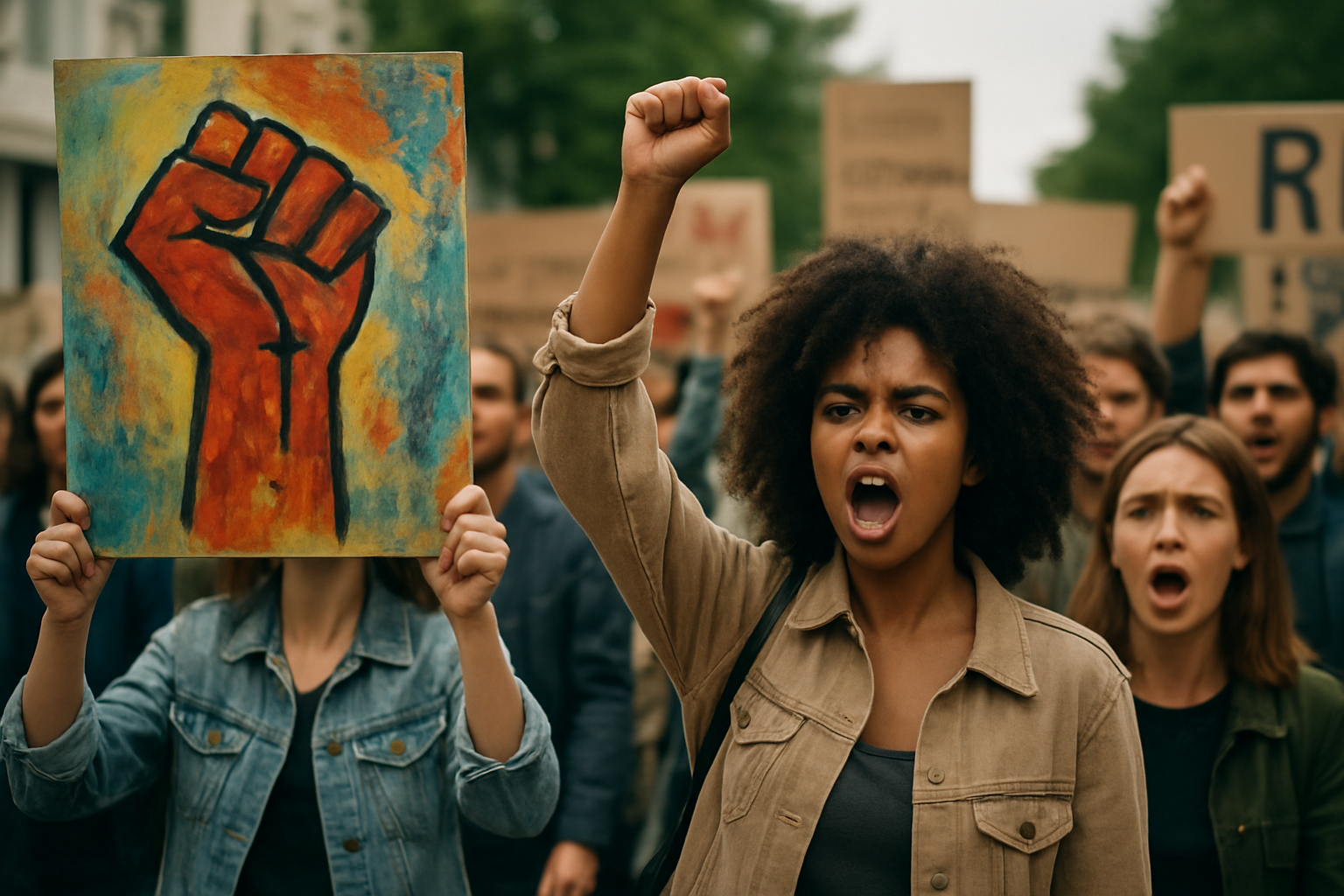
    • Black Lives Matter Movement: In response to racial injustice, the Black Lives Matter movement has inspired a surge of evocative art worldwide. From murals of George Floyd to digital art shared on social media, the visual language of protest has helped unify voices and draw attention to systemic racism.
    • Environmental Activism: Artists are at the forefront of the battle against climate change, using their art to warn of impending ecological disasters. For instance, Olafur Eliasson‘s exhibitions challenge viewers to consider their relationship with nature and climate.

    The Digital Age: New Frontiers for Protest Art

    With the advent of digital technology, the landscape of protest art has dramatically shifted. The proliferation of the internet and social media platforms has democratized the creation and dissemination of art. Artists no longer depend solely on traditional media; instead, they can reach global audiences instantaneously.

    Platforms like Instagram have become virtual galleries for modern protest art. During the peak of the COVID-19 pandemic, artworks reflecting social isolation, government responses, and public resilience proliferated online, illustrating how digital art can galvanize collective experiences and sentiments.

    The Future of Art in Protest

    As we look toward the future, the role of art in activism seems poised to grow. The convergence of technology and art forms like AI-based design or virtual reality experiences will likely create new paradigms for engaging with protest art. Artists will continue to push boundaries, experimenting with new mediums to convey their messages.

    Artsy states that “art has a unique ability to translate the turmoil and tension of a political age into something transformative.” This power makes art not only a reflection of society but also a crucial catalyst for the change needed to move forward.

    Conclusion

    In conclusion, the palette of protest remains a profound testament to art’s enduring power to shape societal norms and inspire change. From its roots in early civilization to the current digital age, protest art has provided a voice to the voiceless and a platform for visual dialogue. As society continues to grapple with myriad challenges, art will remain a stalwart companion and a beacon of hope, illuminating paths for progress and justice.

    The stories captured on canvases, walls, and digital screens remind us of our shared humanity and the relentless pursuit of a better tomorrow. The artistry of protest, therefore, is not just about what is wrong with the world—it is also about imagining and building a world that is right.

  • The Authenticity Filter: Truth and Post-Truth in Photography

    The Authenticity Filter: Truth and Post-Truth in Photography

    In an era where visual content inundates our digital spaces, photography stands at the crossroads of truth and manipulation. The authenticity of a photograph, once considered a faithful depiction of reality, is increasingly under scrutiny in the post-truth age. As technology evolves, so too do the tools that alter our perceptions of reality, casting doubt on the integrity of the photographic image.

    The Historical Lens

    Photography has long been revered for its ability to capture a moment in time, rendering the complex textures of life into still images. From the harrowing portraits of the Great Depression by Dorothea Lange to the indelible landscapes photographed by Ansel Adams, the camera was once considered a trustworthy witness.

    “Photography takes an instant out of time, altering life by holding it still.” – Dorothea Lange

    The Digital Revolution

    The advent of digital technology has equipped photographers with sophisticated tools to enhance and manipulate images, leading to a new era of photography where the lines between reality and fiction blur. Digital editing software like Adobe Photoshop enables users to transform ordinary pictures into extraordinary fabrications, paving the way for innumerable creative possibilities, yet simultaneously raising ethical questions about authenticity.

    The digital manipulation of images can range from simple color corrections to complete overhauls that create entirely new compositions. This leads to the pertinent question: when does alteration become deception?

    Photographic Authenticity in the Post-Truth Era

    In today’s post-truth society, where emotions and personal beliefs often overshadow objective facts, photography’s role as a purveyor of truth is increasingly complicated. Social media platforms amplify this issue, as images can be easily shared without context, sometimes being stripped of their original meaning. As noted by Errol Morris, a renowned filmmaker and author, “The problem with photographs is that they are so easily manipulated.”

    Errol Morris’ work delves into the complexities of photography and truth-seeking, and emphasizes the personal responsibility of photographers to uphold honesty in their art.

    Conclusion: Striking a Balance

    While the post-truth era challenges the concept of authenticity in photography, it also presents an opportunity to explore the medium’s inherent subjectivity. Photographers may need to establish a tacit agreement with their audience, clearly delineating between reality, artistic interpretation, and outright manipulation.

    As photography continues to evolve, it is imperative to consider how these images are created, shared, and perceived—ultimately striving to preserve the nucleus of truth that makes a photograph compelling.

  • Beyond the Brushstroke: New Media and Visual Expression

    Beyond the Brushstroke: New Media and Visual Expression

    In the past century, visual art has transcended the constraints of traditional media, such as painting and sculpture, evolving into a multifaceted form that embraces technological advancements. The contemporary arena of visual expression, largely fueled by new media, has surged beyond the brushstroke, offering artists innovative ways to express their creativity and engage audiences.

    The Rise of Digital Art

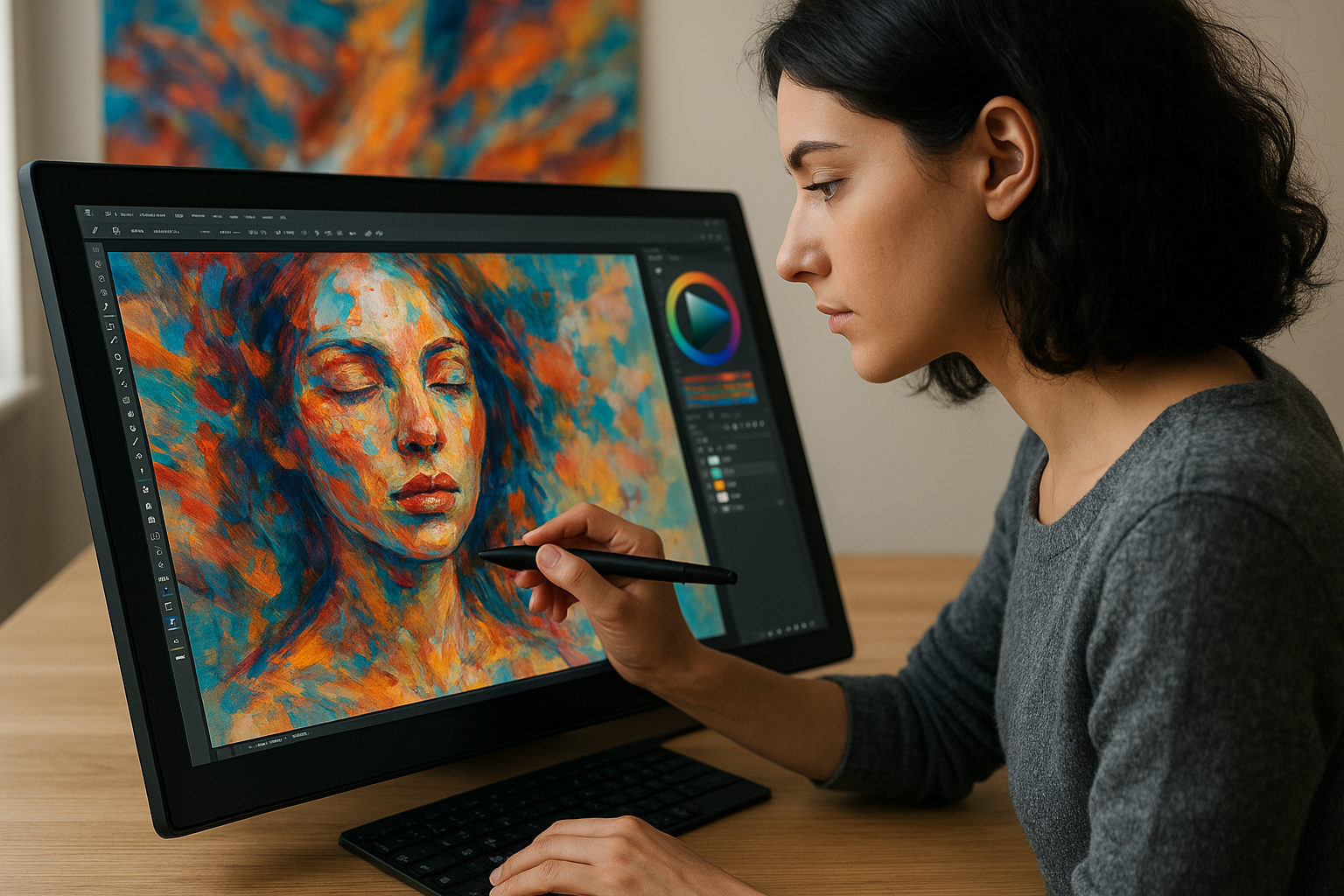
    Digital art is perhaps the most revolutionary development in new media. What began as simple pixel graphics has transformed into a sophisticated realm including digital painting, 3D modeling, and interactive installations. Artists now have access to a plethora of tools that not only mimic physical media but enhance it. Software such as Adobe Photoshop and Blender have become staples for artists aiming to push the boundaries of visual art. As Art Radar Journal notes, “Digital technologies are now providing artists with new ways to produce, distribute, and experience art” (Art Radar Journal).

    Exploring Virtual and Augmented Reality

    Virtual reality (VR) and augmented reality (AR) are no longer futuristic concepts confined to science fiction. Artists are using these technologies to create immersive environments, inviting viewers to step inside the artwork. VR, with its ability to transport users into entirely constructed worlds, allows for an experience that transcends traditional viewing. Artists such as Marina Abramović, who has embraced VR to expand her performances, are at the forefront of this transformation. According to The Guardian, “her VR piece, Rising, is an embodiment of the potential for VR to evoke visceral emotional responses” (The Guardian).

    Simultaneously, AR bridges the gap between the digital and physical worlds, enhancing our perception of the latter. Applications like ARKit and Snapchat filters allow artists to merge digital artworks with real-world environments, creating interactive experiences accessible through smartphones and tablets. The integration of AR in public art projects, such as those by JR in Paris, showcases its potential to transform urban landscapes into evolving galleries.

    Interactive and Generative Art

    Another exciting development in the realm of new media art is interactivity. Unlike traditional art forms that require passive observation, new media often encourages the audience to participate, altering the artwork in real time. This dynamism is seen in the works of Rafael Lozano-Hemmer, who creates intricate installations that depend on audience interaction.

    Generative art, which employs algorithms to create artwork, is another frontier where technology and artistry meet. Emphasizing process over result, artists like Casey Reas, co-creator of the Processing programming language, use code to generate complex, evolving patterns that challenge traditional forms of expression. With each viewer potentially seeing a different iteration, generative art becomes a living entity.

    “The beauty of generative art is that the artist can establish a framework in which the artwork evolves, a concept that invites endless possibilities,” Reas explains in an interview with Wired. (Wired)

    The Influence of Artificial Intelligence

    Artificial intelligence (AI) is another paradigm-shifting force in visual expression. AI art, created with machine learning models that analyze millions of images to create new, often surreal works, challenges preconceived notions about creativity and authorship. The controversial auction of Edmond de Belamy, an AI-produced work that sold for $432,500 at Christie’s, sparked significant debate about the role of AI in art and the definition of an artist.

    AI developments are not mere imitations of human creativity but potentially new forms of intelligence with unique aesthetic signifiers. Projects like DeepDream or GANPaint Studio allow artists to explore abstract and uncanny representations that push the limits of imagination.

    Impact on Society and Culture

    The emergence of new media in visual expression is not just an artistic development; it poses profound questions about our society and culture. As artworks become more ephemeral and digitally-oriented, debates arise about issues of preservation, authorship, and intellectual property. Furthermore, the democratization of art production and distribution, made possible by digital technologies, challenges traditional art institutions and markets, offering increased accessibility but also raising concerns about quality control and valuation.

    Moreover, new media art acts as a mirror reflecting our contemporary anxieties and aspirations. Themes of digital identity, privacy, and the pervasive influence of technology are prevalent in today’s artworks, urging viewers to reflect on the socio-political implications of our increasingly digital lives.

    Conclusion: The Future of Visual Expression

    The evolution of visual expression through new media is an ongoing journey, marked by innovation and exploration. As technology continues to advance, the possibilities for artists to delve into unknown territories of creativity are limitless. This era, characterized by a fusion of digital technologies and artistic visions, heralds a new chapter in the history of art.

    While it embraces the digital, the heart of visual expression remains the same: a quest to convey meaning through visual form. Through new media, artists are discovering unprecedented methods to engage with and challenge their audience, redefining what it means to create and experience visual art in the modern world. Indeed, as we venture further into the digital age, the future of art is not just beyond the brushstroke—it is limitless.

  • The Digital Icon: Crafting Meaning Online and Off

    The Digital Icon: Crafting Meaning Online and Off

    In an age where digital presence is as significant as a physical one, the concept of a digital icon emerges as a powerful symbol of identity and influence. These icons, whether in the form of avatars, social media profiles, or even brands, are meticulously crafted to convey specific meanings and messages both online and offline.

    What Makes a Digital Icon?

    A digital icon is more than just an image. It is a complex amalgam of visual identity, personal values, and social influence. Whether it’s a logo or a personal avatar, a true digital icon stands out by embodying specific traits:

    • Authenticity: A captivating digital icon reflects genuine personal or brand values.
    • Consistency: The icon maintains a uniform style and message across various platforms.
    • Resonance: It connects deeply with its audience on an emotional level.

    According to Forbes, successful digital icons make every online interaction part of a larger, cohesive narrative that aligns with their core identity.

    The Interplay Between Online and Offline

    The boundaries between online and offline worlds are increasingly blurred. An individual or brand’s online persona often reflects in real-world interactions and vice versa. This interplay creates a unique digital icon, which gains form and substance as it moves seamlessly between these spheres.

    “Your brand is what people say about you when you’re not in the room,” notes Jeff Bezos, founder of Amazon. This sums up the challenge and opportunity of the digital icon – to leave a lasting impression both in person and online.

    The craft of balancing these worlds is evident in innovative marketing strategies, where companies ideate campaigns that integrate digital touchpoints with offline experiences. Consider the impact of initiatives like Nike’s use of augmented reality in stores to bolster the digital persona of their iconic swoosh.

    Creating Global Themes with Local Impact

    Digital icons leverage global connectivity yet must remain aware of local nuances to resonate truly. Social media platforms have become the playground for this endeavor, allowing icons to adapt their global themes to suit local sensibilities. In doing this, they tap into widespread cultural movements while honoring specific cultural identities.

    Coca-Cola’s famous “Share a Coke” campaign exemplifies this strategy. The global theme of sharing joy and experiences is tailored to feature local names and references, making the campaign instantly relatable across diverse demographics.

    The Role of Technology in Crafting Icons

    Advanced technologies like artificial intelligence (AI) and big data analytics have revolutionized how icons are crafted and marketed. AI algorithms analyze consumer behavior and preferences, enabling brands to craft digital icons that are highly personalized and engaging. By using data-driven insights, digital icons can anticipate consumer needs and create more meaningful interactions.

    “Technology is best when it brings people together,” said Matt Mullenweg, co-founder of WordPress. The synergy between technology and personal touch empowers digital icons to foster a sense of community and inclusivity.

    Challenges in Maintaining Iconic Status

    While crafting a digital icon is a dynamic process, maintaining its status is fraught with challenges. In the ever-evolving digital landscape, icons face the risk of becoming obsolete if they fail to innovate. The constant influx of trends demands agility and adaptability.

    Another significant challenge is ensuring privacy and security. Consumers are becoming more aware of how their data is used, prompting a need for transparency and ethical practices in crafting and maintaining digital icons.

    Conclusion

    As we navigate an increasingly digital world, the significance of the digital icon continues to grow. It is a dynamic, multifaceted symbol of identity that bridges the online and offline realms with meaning and resonance. Those who master the art of crafting and sustaining such icons are poised to wield significant influence across all domains of life.

    The emergence of digital icons not only shapes individual and corporate identities but also influences societal narratives. As technology continues to evolve, the potential for crafting deeply meaningful and engaging digital icons knows no bounds, promising a future where influence and identity are more interconnected than ever before.

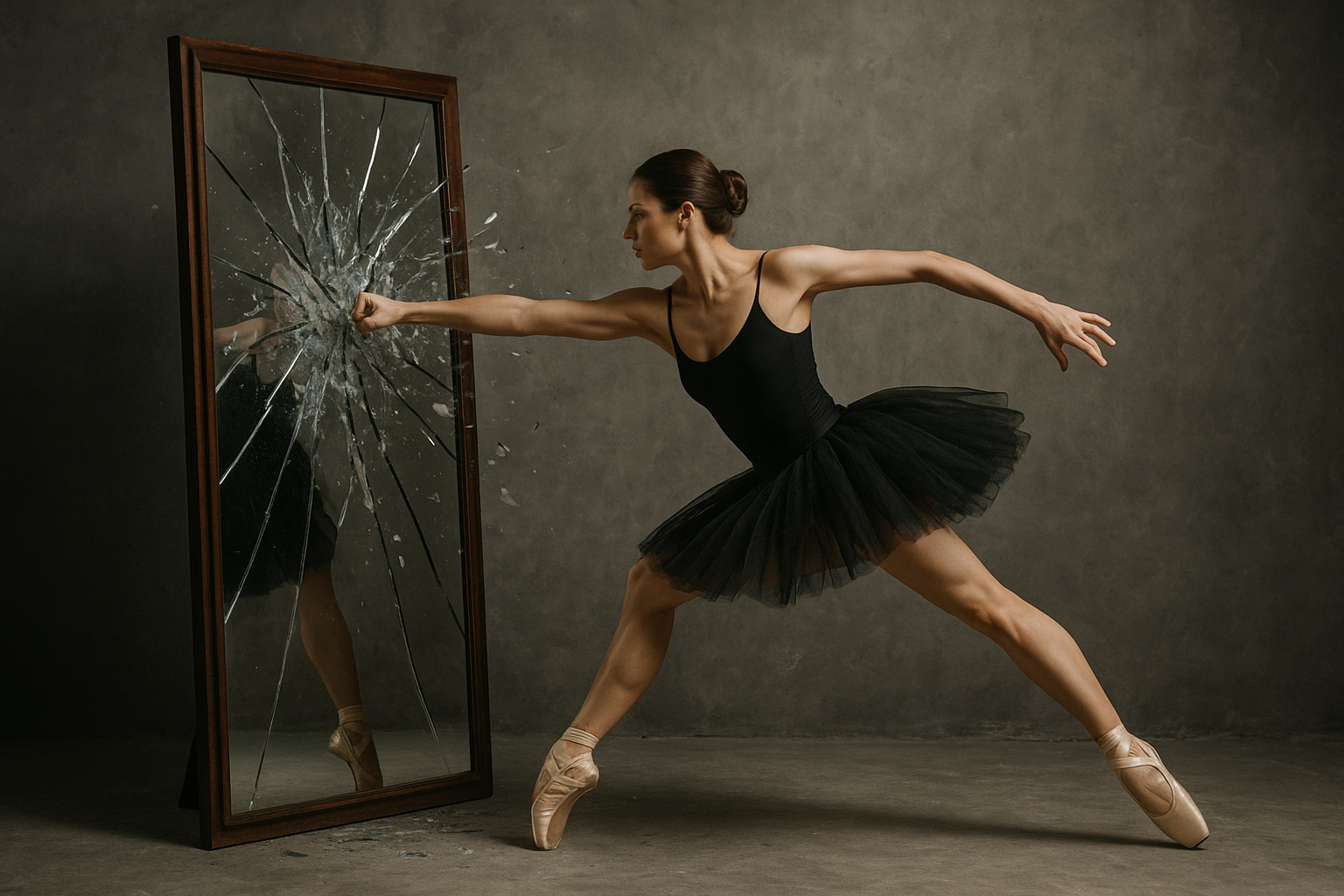
  • Shattering the Mirror: The Deconstruction of Dance Tradition

    Shattering the Mirror: The Deconstruction of Dance Tradition

    Dance, a universal language, has been a reflection of cultural identity, tradition, and evolution. It is both an art and a form of communication, able to convey deep emotions and stories without words. Yet, in recent years, the traditional mirror of dance reflects not an unyielding gaze into the past, but a kaleidoscope of deconstruction, innovation, and new narratives. This article delves into how dance traditions are being re-examined, deconstructed, and reimagined in contemporary contexts.

    The Historical Foundation of Dance

    Throughout history, dance has served as a vehicle for storytelling and cultural preservation. Consider classical ballet, which epitomizes the codification of movement and narrative. Originating in the courts of the Italian Renaissance before spreading to France and Russia, ballet became a highly structured art form, as referenced by Britannica, which states, “The dance form reached its peak as a complex danced drama during the 19th-century Romantic ballet.”

    Similarly, traditional dances such as India’s Bharatanatyam or Spain’s Flamenco are steeped in cultural rituals, often being passed down through generations. Each style not only embodies artistic expression but also serves as a living history of its people.

    Challenging the Status Quo

    While honoring tradition is vital, the modern era has ushered in waves of change that urge us to rethink established norms, including those in dance.

    The Influence of Postmodern Dance

    In the 1960s, the postmodern dance movement emerged, challenging existing perceptions by questioning the very essence of dance. Pioneering artists like Yvonne Rainer and Trisha Brown embraced the phrase ‘no to spectacle’ and questioned narrative and form. Their work eschewed the traditional elements of structured choreography, costumes, and mood-setting music.

    Rainer, in her “No Manifesto”, famously declared, “No to spectacle, no to virtuosity, no to transformations and magic and make-believe, no to the glamour and transcendency of the star image.”

    The Rise of Contemporary Dance

    Contemporary dance, distinct from its classical predecessors, merges elements from various styles, fostering an open-ended platform for expression. Its very nature is one of fusion and reinvention. As such, it serves as a powerful mechanism for deconstructing traditional dance and reconstructing it with new relevance.

    According to the Dance Consortium, a collective that aims to increase public interest in dance, contemporary dance is “characterized by its expressive nature, its use of unconventional techniques, and its acceptance of a wide array of influences.”

    Cultural Intersections

    Dance is increasingly seen as a reflection of globalization, where cross-cultural exchanges enrich traditional practices. This intersection has given rise to innovative collaborations and hybrid dance forms.

    • Interactive Fusion: Dancers frequently integrate elements from diverse traditions, creating unique expressions. For instance, the ‘Bollywest’ genre blends Bollywood and Western modern dance, appealing to broad audiences.
    • Cultural Dialogues: Modern-day choreographers often engage with issues of identity and belonging, expressing themes of diaspora, migration, and cultural hybridity. Choreographer Akram Khan, whose works intertwine Kathak and contemporary dance, exemplifies this blend.

    In an interview with The Guardian, Khan discusses how, “Dance has become a dialogue between cultures, an interaction where traditional boundaries dissolve into shared humanity.”

    Social and Political Narratives

    Dance is more than an art form; it’s a powerful tool for social commentaries and political movements.

    • Protest and Activism: Dance has been prominently featured in movements such as Black Lives Matter, where dancers use their bodies to protest against racial injustices.
    • Gender and Representation: Many choreographers focus on breaking gender stereotypes, questioning norms, and opening up spaces for underrepresented voices in the dance community.

    Dance in this century, thus, is not insular but deeply interconnected with societal currents, boldly addressing the issues of the day through innovative performance.

    The Digital Revolution

    The rise of digital platforms and technology has further expanded the canvas of dance. Virtual reality and digital mapping allow for unforeseen possibilities, as performances are released from traditional spaces and extended into digital realms.

    Live-streamed performances and online dance challenges on platforms like TikTok democratize and decentralize the art form, engaging global audiences and influencing new styles and trends.

    Conclusion: Realigning the Mirror

    As dance continues to evolve, breaking free from its own constraints, it calls into question what it means to preserve tradition while embracing change. The creative deconstruction of dance tradition is not the erasing of history but its reimagining, offering audiences new perspectives. As this dynamic art form continues to develop, it invites both artists and audiences alike to reflect on, challenge, and contribute to its bold narrative.

    Indeed, as choreographer Martha Graham aptly summarized, “Dance is the hidden language of the soul.” As we deconstruct its traditions, may we uncover even deeper meanings beneath its mesmerizing surface.

    This shattering of the mirror is not a critique but an evolution—an opportunity to see beyond reflections and discover the vast possibilities of human expression that lie beyond.

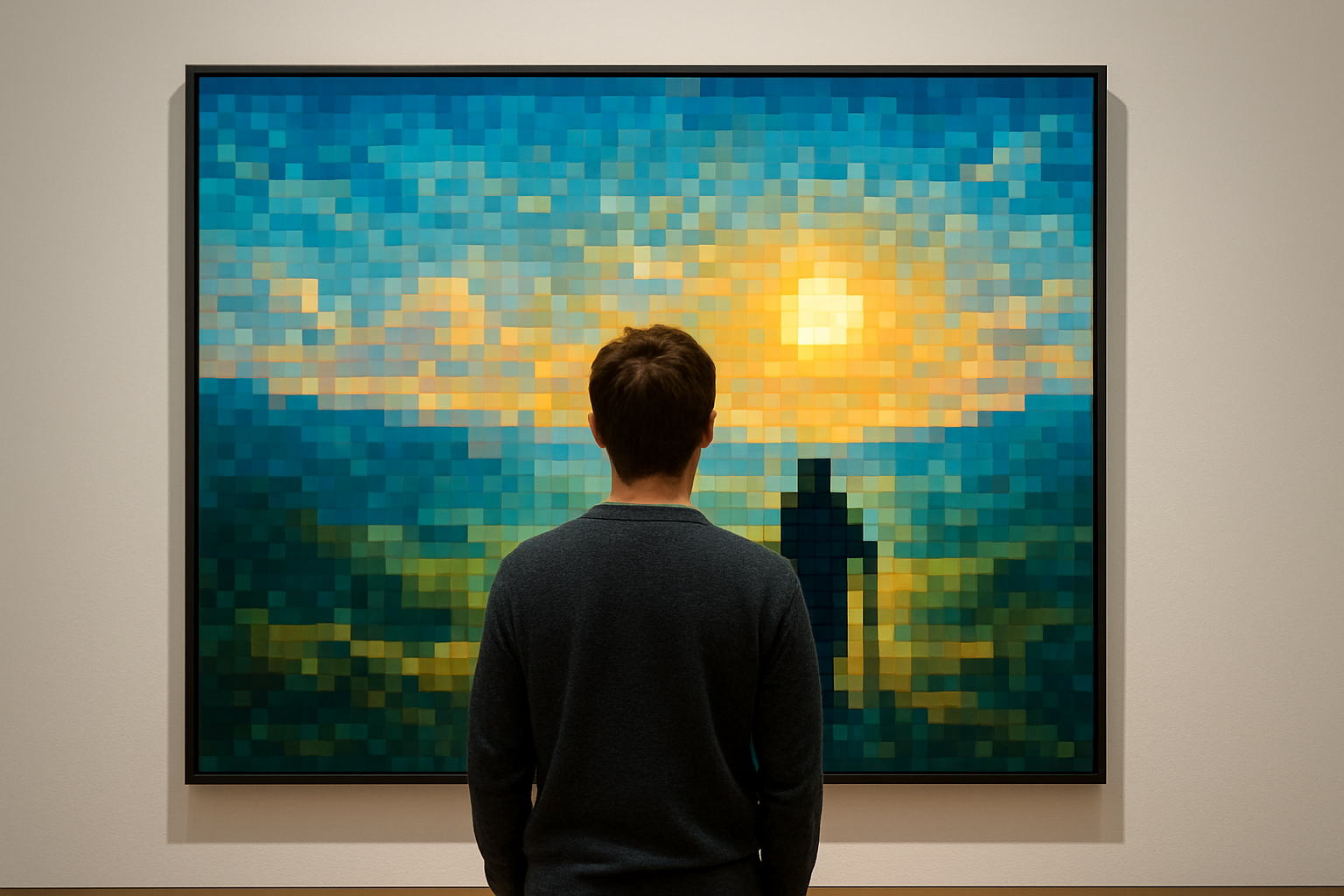
  • Pixel Pilgrimages: Digital Art and the Quest for Meaning

    Pixel Pilgrimages: Digital Art and the Quest for Meaning

    In a world where technology constantly reshapes our daily existence, digital art emerges as a potent force in the search for personal and collective meaning. This new age of artistic expression, driven by the pixel, invites both creators and observers to embark on profound journeys of understanding and reflection.

    The Rise of Digital Art

    Digital art is not merely a modern incarnation of traditional forms; it is a unique medium that stands at the intersection of technology, creativity, and philosophy. As technology advances, artists have tools that allow for previously unimaginable exploration of color, form, and multimedia.

    “Digital design is like painting, except the paint never dries.” — Neville Brody

    This limitless potential has spurred artists to delve deeper into existential themes, turning pixels into a tool for pilgrimage—a journey into the soul and the mysteries of existence.

    Exploring Existential Themes

    Digital art, with its flexibility, allows for the exploration of complex themes such as identity, reality, and connection. As images and experiences are shared across the globe with just a click, artists and viewers alike engage in a dialogue about what it means to exist in an increasingly digital world.

    • Identity: Artists like JODI deconstruct the concept of identity by manipulating digital interfaces and systems, questioning the binaries of self and other, online and offline.
    • Reality: Virtual reality installations, such as those by Jonathan Monaghan, offer immersive experiences that challenge the boundaries between the digital and the real.
    • Connection: Video game art and interactive installations create shared spaces for audiences, fostering a sense of community and shared exploration.

    A New Spiritual Journey

    The incorporation of digital art into personal and communal rites of passage is akin to a spiritual journey, a merging of the physical with the virtual. It allows us to explore our innermost thoughts and the grand questions of life in a space unbounded by the limitations of the material world.

    “The virtual reality experience is not about the technology. It’s about the creation of meaning.” — Chris Milk

    As we continue to navigate the complexities of the digital age, art becomes a vehicle for meaning-making, a lens through which we can see and understand our place in the universe. Pixel pilgrimages are not merely technological journeys but spiritual ones—quests for truth, connection, and a deeper understanding of the human experience.

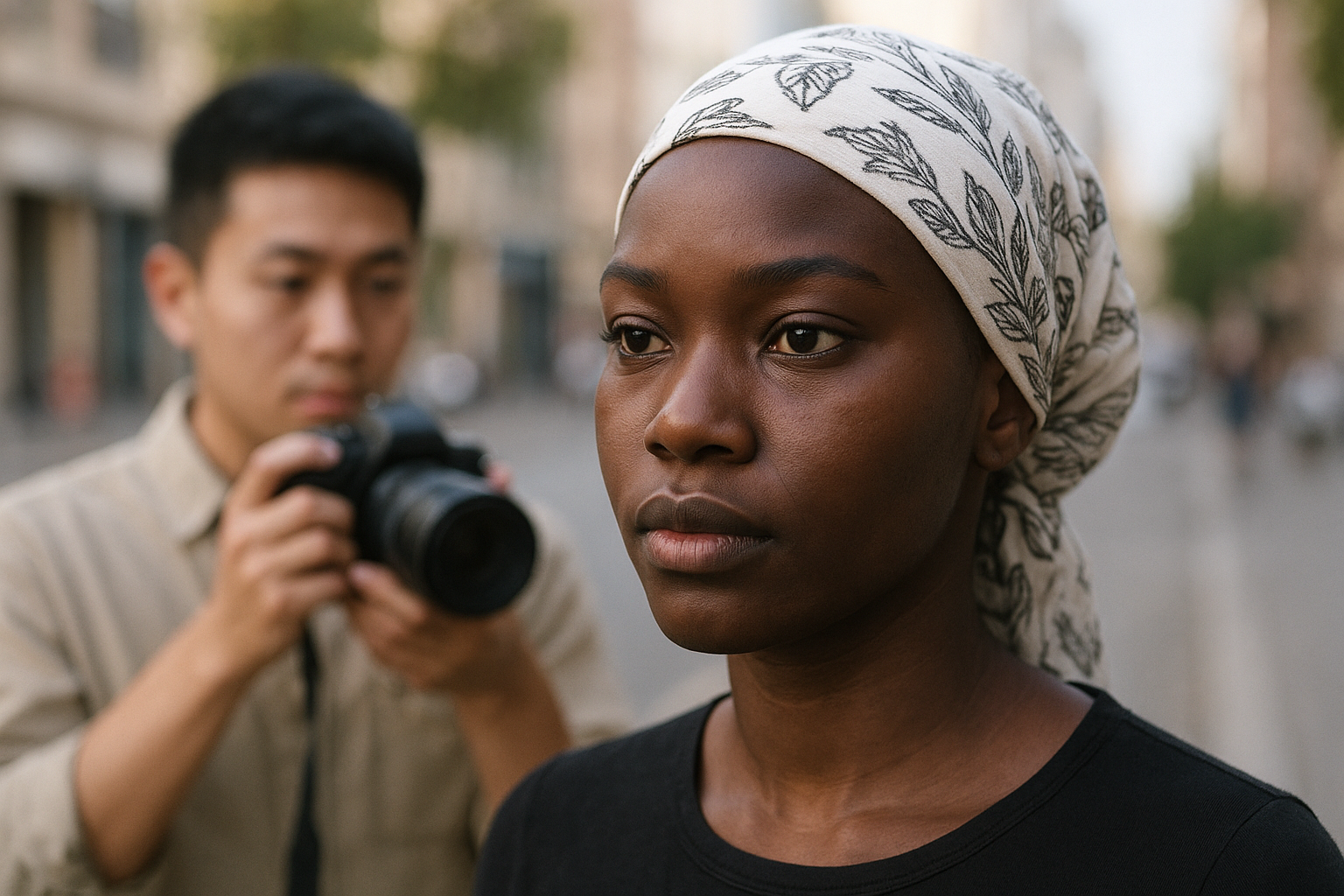
  • Beyond the Portrait: Documenting Identity in the Modern Era

    Beyond the Portrait: Documenting Identity in the Modern Era

    In an era where every fleeting moment can be captured, the portrayal of identity has transcended the static confines of traditional portraiture. The narrative of self has evolved into a complex tapestry woven from countless digital threads, reflecting the multifaceted nature of modern identity. This transformation raises pertinent questions about how identity is documented and perceived in the modern era.

    The Evolution of Portraiture

    Historically, portraits served as a means to immortalize an individual’s visage, often reserved for the elite. According to art historian John Berger in his seminal work Ways of Seeing, “A woman must continually watch herself. She is almost continually accompanied by her own image of herself.” These words underpin the historical significance of the portrait as a reflection both of and upon persona.

    With the advent of photography in the 19th century, the accessibility of portraits increased. No longer restricted to the affluent, individuals from different walks of life could document their existences, albeit still in a formalized manner. For decades, these images were two-dimensional interpretations of a multi-dimensional identity.

    The Digital Revolution

    Today, the digital revolution has irreversibly altered our interactions with images and identity documentation. Platforms like Instagram, Facebook, and TikTok allow anyone to curate and project their personas in real-time. The question is no longer if one can record their image, but rather, how one chooses to present it.

    Curation of Identity

    In the words of media theorist Marshall McLuhan, “The medium is the message.” The medium through which we express our identities shapes the identities themselves. Social media serves as both a canvas and a mirror, with identities curated to fit perceived norms and ideals. As a study published in SAGE Journals discovered, “the recreation of self online often involves subtle manipulations of reality to garner social favor.”

    • Images are often edited to achieve perfection, leading to an online persona that may diverge from reality.
    • Biographical snippets, captions, and hashtags construct a narrative that viewers consume and interpret.
    • The feedback loop of likes and comments perpetuates certain self-representations over others.

    Documenting Identity Through Multimodal Means

    Today’s portrayal of identity extends beyond mere images. It encompasses videos, tweets, blogs, and even ephemeral content like Instagram Stories and Snapchat. This multimodal expression harnesses the entirety of sensory experience to convey individual narratives.

    “We’re getting used to a new way of being alone together,” observes sociologist Sherry Turkle in her TED Talk, “where we’re able to hide from each other even as we’re more connected than ever.”

    This interconnectedness demands a more nuanced approach to understanding and documenting identity. Identity is not static but an ongoing dialogue between the self and the wider world.

    Challenges and Consequences

    The modern documentation of identity poses several challenges and implications for personal privacy and societal norms:

    1. Authenticity: The curated nature of online identities raises questions about authenticity. Is what we see a genuine reflection or merely a crafted facade?
    2. Privacy: With personal details readily available online, maintaining privacy becomes increasingly challenging. The Pew Research Center highlights that a significant portion of internet users are concerned about the erasure of privacy boundaries.
    3. Social Pressure: The desire to conform to online norms can lead to undue stress and impact mental health. It is crucial to balance online engagement with offline authenticity.

    Embracing Diversity Through Identity Narratives

    The democratization of identity documentation allows for a more diverse array of stories and perspectives to surface. Now more than ever, voices previously marginalized have platforms to share their narratives, contributing to a richer, more inclusive tapestry of human identity.

    While the public persona dominates much of the online space, niche communities flourish. These communities offer support, understanding, and authenticity away from mainstream pressures. By embracing diversity in identity documentation, we move beyond monolithic portrayals to appreciate the spectrum of human experience.

    The Future of Documenting Identity

    As technology evolves, so too will the methodologies by which we document identity. Emerging technologies like augmented reality (AR) and virtual reality (VR) are paving new avenues for expression.

    In one possible future, VR might allow for the creation of immersive, four-dimensional narratives that transcend current limitations of representation. The evolution of identity documentation is relentless, promising both challenges and opportunities as we continue to weave the digital fabric of our identities.

    Conclusion

    In conclusion, documenting identity in the modern era presents a tapestry of complexity that mirrors the very diversity of human existence. As we navigate this shifting landscape, we are challenged to balance authenticity with curation, embrace diversity, and remain vigilant about privacy concerns. By understanding these dynamics, we unlock the true potential of modern identity as more than just a portrait, but a living, evolving narrative that speaks to the essence of who we are.

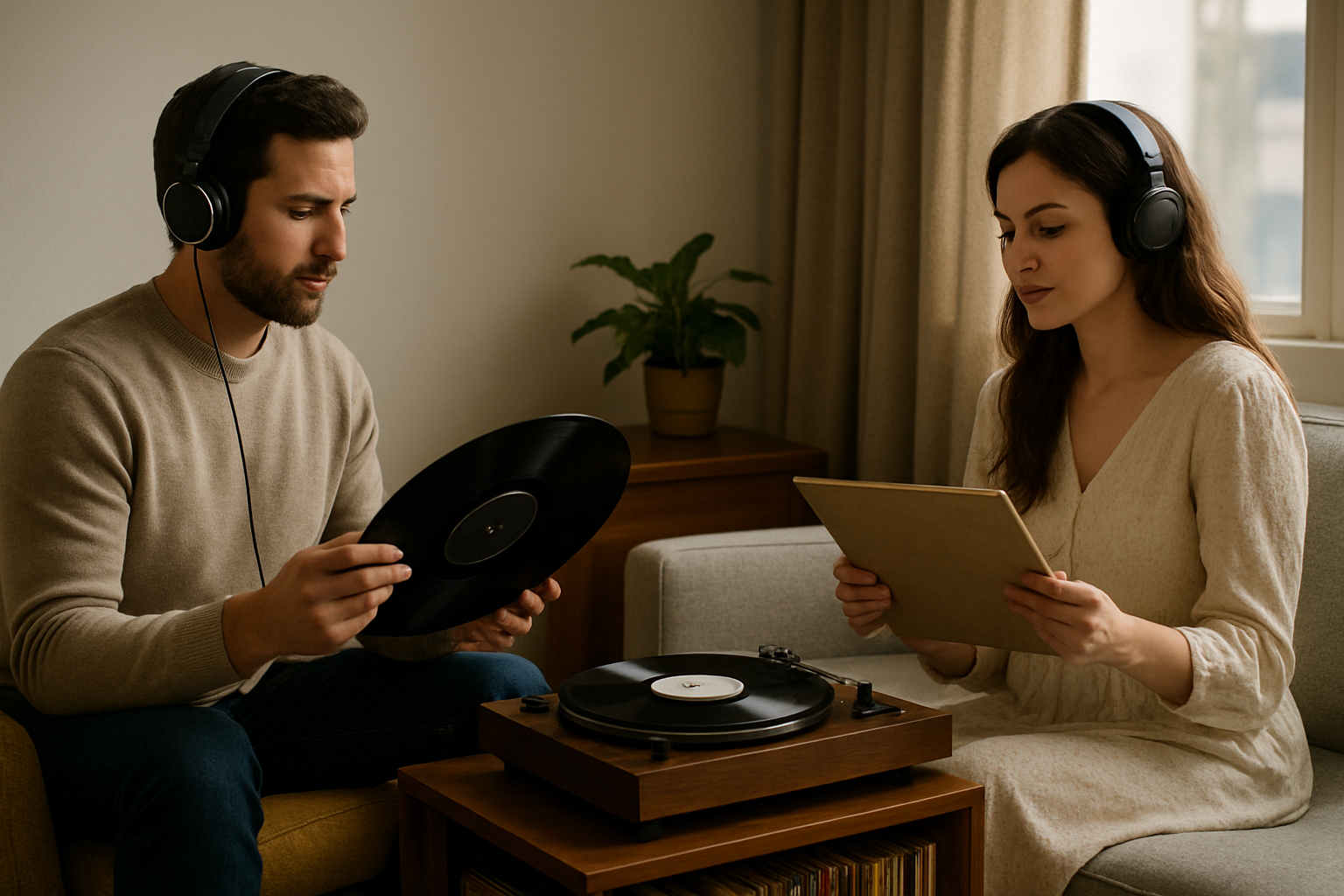
  • Vinyl and Vows: The Ritual of Listening in the Streaming Era

    Vinyl and Vows: The Ritual of Listening in the Streaming Era

    In an age where music can be accessed with the mere tap of a finger, a curious trend has emerged: the revival of vinyl records. In the 21st century, as digital streaming platforms like Spotify, Apple Music, and Tidal dominate the music industry, the physicality of vinyl offers something intangibly rich.

    The Resurgence of Vinyl

    According to the Recording Industry Association of America, vinyl sales have steadily increased over the past decade, even surpassing CD sales in recent years. Rolling Stone reported that in the first half of 2022, vinyl records generated $570 million, outshining CD revenues.

    • Tactility: Vinyl records engage more senses than digital music files. The feel of the cardboard sleeve, the smell of the record, and the act of placing the needle all contribute to a multi-sensory experience.
    • Authenticity: Many music enthusiasts argue that vinyl produces a ‘warmer’ sound, an audio authenticity that digital streams lack.
    • Nostalgia: For older generations, vinyl evokes memories of past decades. For younger listeners, it might be an avenue to experience a bygone era.

    The Ritual of Listening

    The ritual of listening to vinyl is deeply contrasting to the instantaneous nature of streaming. There’s a ceremony in preparing to listen to a record. Musician Jack White, a known advocate for vinyl, once stated,

    “There’s an immersion to vinyl – the tangible, physical relationship to an album is unique and powerful.”

    This ritual is akin to a vow taken with each listening session, creating a bond between the listener and the music.

    Vinyl demands attention and care. Unlike streaming platforms that promote passive consumption, vinyl necessitates an active engagement—both physically and mentally. The act of flipping a record or adjusting the needle requires presence. It asks the listener to slow down and devote their time, eliminating the distractions of endless playlists and algorithmic recommendations.

    Streaming: Convenience versus Connection

    The digital era has democratized music access like never before. With millions of songs available instantly, listeners can explore diverse genres and artists from around the globe. However, this convenience often comes at the cost of a deeper connection with the music. The vastness of choice can lead to an overwhelming sense of choice overload, leaving listeners in a state where the ease of skipping songs can dilute the listening experience.

    • Algorithmic Influence: Streaming platforms rely heavily on algorithms, often predicting listening behavior and influencing musical taste.
    • Passivity: The effortlessness of skipping songs and changing playlists promotes a passive relationship with music.
    • Loss of Album Experience: The concept of an album as a cohesive narrative is often lost in the era of singles and curated playlists.

    Marriage of the Two Worlds

    While vinyl offers a ritualistic experience, the digital realm provides an unparalleled scope of discovery. The two do not have to be mutually exclusive. Many artists and record labels combine the old with the new, providing digital downloads with physical vinyl purchases, thus blending the tangible and intangible.

    This synthesis opens avenues for both ritual and discovery. As listeners, we can choose when to immerse ourselves in the tactile world of vinyl and when to explore the expansive universe of digital streams. DJ Colleen ‘Cosmo’ Murphy puts it eloquently,

    “It’s not about choosing one over the other, but recognizing the unique joys each can bring.”

    Concluding Thoughts

    The resurgence of vinyl in the streaming era is more than a mere trend; it is a reflection of a growing desire for meaningful experiences. The ritual of listening to vinyl, akin to a vow taken with each rotation, reaffirms the importance of presence in an age of distraction.

    As we continue to navigate a world filled with digital options, perhaps it’s the fusion of ease and ritual that will shape our future as listeners. Whether through the warmth of vinyl or the accessibility of streaming, the essence of music remains constant—a testament to its enduring power across all mediums.

  • From Analog to Zen: The Evolving Path of Photographic Contemplation

    From Analog to Zen: The Evolving Path of Photographic Contemplation

    From Analog to Zen: The Evolving Path of Photographic Contemplation

    From Analog to Zen: The Evolving Path of Photographic Contemplation

    Introduction

    Photography has always been a deeply philosophical medium. From its analog origins to today’s digital expressions, photography invites practitioners and observers alike into a dialog with time, memory, and the self. In this article, we explore how photography’s evolution parallels contemplative practices, focusing on the transition from analog processes to more meditative and mindful approaches in the digital age, which can be equated metaphorically to a path toward Zen.

    The Analog Era: Labor and Limitation

    The advent of photography in the 19th century brought with it a technical and artistic revolution. Analog photography taught the photographer a certain discipline and patience. The manual process of developing film in a darkroom, the necessary knowledge of chemicals, and the anticipation involved in waiting for the final image imbued the practice with a sense of craft.

    The act of making a photograph was itself a meditative process. Each image was meticulously crafted, a direct interaction between human ingenuity and nature’s unpredictability.

    • The Tangibility of Film: Analog photography provided a tangibility that is often missing in digital formats. Holding a print or a strip of developed film connects one more directly to the photographic process.
    • Slowness as Virtue: The need to carefully choose each shot because of limited exposures meant that photographers had to be more mindful and present in the moment.
    • Flaws and Imperfections: Every film photo carried unique imperfections, a humbling reminder of the bond between chaos and creation—a theme central to Zen philosophy.

    The Digital Transition: From Quantity to Quietude

    With the rise of digital photography, the landscape of photographic contemplation shifted dramatically. The ability to take countless photos without waiting for development spurred a cultural change. While this democratized photography, it also introduced a tendency towards quantity over quality.

    “Digital images are immeasurable, easily manipulated and endlessly reproducible—qualities that evoke a new kind of impermanence.”—[Author’s Name]

    • Instant Gratification: Digital devices offer immediate feedback, but this can detract from the slow, contemplative process of image-making.
    • The Loss of Ritual: Enhancements and filters can overshadow the photographer’s original vision, leading to a loss of the ritualistic nature of photography.
    • Resurgence of Mindfulness: Many photographers are now intentionally returning to analog techniques or incorporating mindfulness practices into their digital work to recapture the contemplative essence.

    Zen and the Art of Photography

    The aesthetic concepts in Zen Buddhism, such as simplicity, the absence of clutter, and a profound connection to the present moment, have long been echoed in photography. The natural evolution of photography from a technical craft to a contemplative art form reflects the path to Zen.

    The Zen Principles in Photography

    • Wabi-Sabi: Embracing transience and imperfection, both crucial elements in capturing authentic moments.
    • Satori: A sudden enlightenment or clarity. In photography, this may translate to the unexpected, perfect photo.
    • Focus on Emptiness: Using negative space intentionally, inviting the viewer into a meditative state.

    The Modern Photographer: A Journey Within

    Today’s photographers, equipped with the tools of both worlds, stand at the crossroads of technology and tradition. Many artists are finding their path to Zen through their lens, where each click of the shutter is a breath in meditation.

    “Photography takes an instant out of time, altering life by holding it still.”—Dorothea Lange

    • Making Photography Meditative: Incorporating mindful practices in photography sessions can transform the art into a meditative experience.
    • Intentionally Analog in a Digital World: Some photographers choose to slow down the process intentionally, creating limits within digital frameworks.
    • Philosophical Exploration: Photography as a tool to explore existential questions and capture the intersection of time and place.

    Conclusion

    From its analog beginnings to the digital revolution and beyond, photography continues to evolve, mirroring our own philosophical and contemplative journeys. As technology advances, photographers find new ways to practice restraint, seek mindfulness, and capture the fleeting moment in this ever-changing landscape. Thus, the path from analog to Zen is not merely about the evolution of photographic technology, but about discovering an art form that reflects a deeper inner stillness and the beauty of life’s impermanent moments.

  • The Sacred and the Screen: Modern Worship in a Secular World

    The Sacred and the Screen: Modern Worship in a Secular World

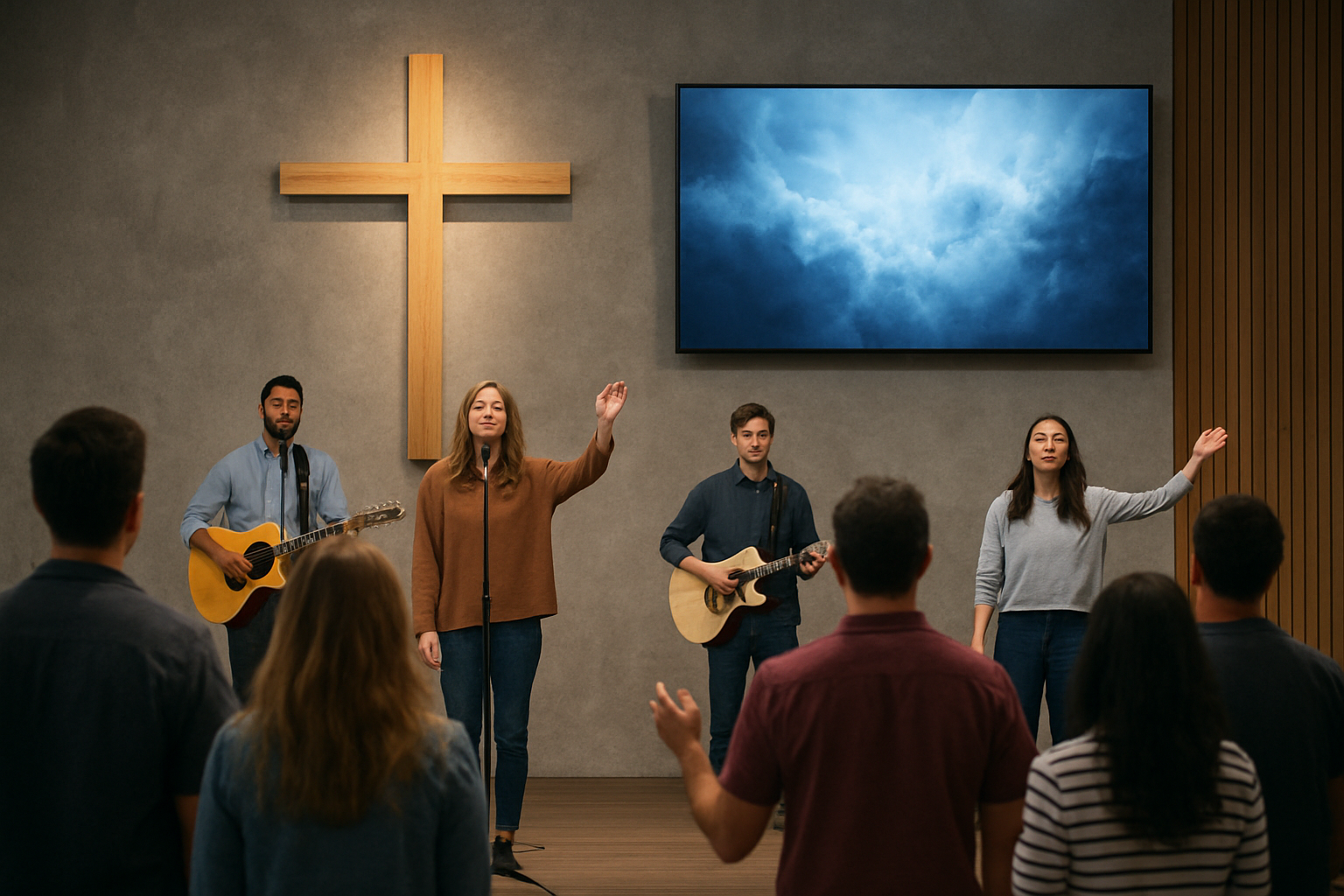
    In the bustling backdrop of our modern secular world, the notion of worship takes on new forms and finds new venues, often intersecting with the digital screens that have come to dominate our lives. As traditional religious practices vie for attention with captivating digital media, the sacred finds itself intertwined with the digital realm.

    The New Sacred Spaces

    The digital age has brought forth innovative ways to engage in spiritual practices, particularly as global events and societal shifts challenge traditional gatherings. Online worship offers a sense of community without the constraints of geographical boundaries. As one study notes, “Virtual spaces allow believers to gather for worship, prayer, and study, overcoming limitations of physical space and time.” [ResearchGate]

    • Virtual Congregations: Platforms like Zoom and Facebook Live have become new locales for worship, fostering a connection that transcends the physical domain.
    • Social Media Sermons: Spiritual leaders are increasingly utilizing Twitter, Instagram, and TikTok to share messages, providing inspiration and guidance in easily digestible formats.

    A Blurring of the Secular and the Sacred

    The blending of sacred traditions with modern technology raises compelling questions about the nature of sacred practices in a secular age. Digital tools don’t just serve as vessels but actively reshape religious experiences. According to Richard Cimino, a researcher of religion in the digital world,

    “Online worship has the potential to democratize religious authority, giving rise to new voices and interpretations.”

    [Taylor & Francis]

    • Podcasts and Apps: From meditative apps like Calm to religious podcasts that dive deep into theology, digital tools cater to personal spiritual journeys.
    • Interactive Devotionals: Websites and apps offer daily reflections, allowing individuals to engage with spirituality amidst their daily routine.

    Challenges Ahead

    Despite the blessings of digital spaces, they present significant challenges. The risk of losing intimacy and authenticity looms large, as does the potential for digital burnout. Balancing screen time with the need for genuine connection remains a critical task for modern believers.

    As we navigate these digital waters, it is imperative for spiritual seekers to critically engage with these tools, using them as means to enhance, not replace, tradition. In the paradox of modern worship, it is clear that while screens dominate our secular world, they can, with discernment, become portals to the sacred.