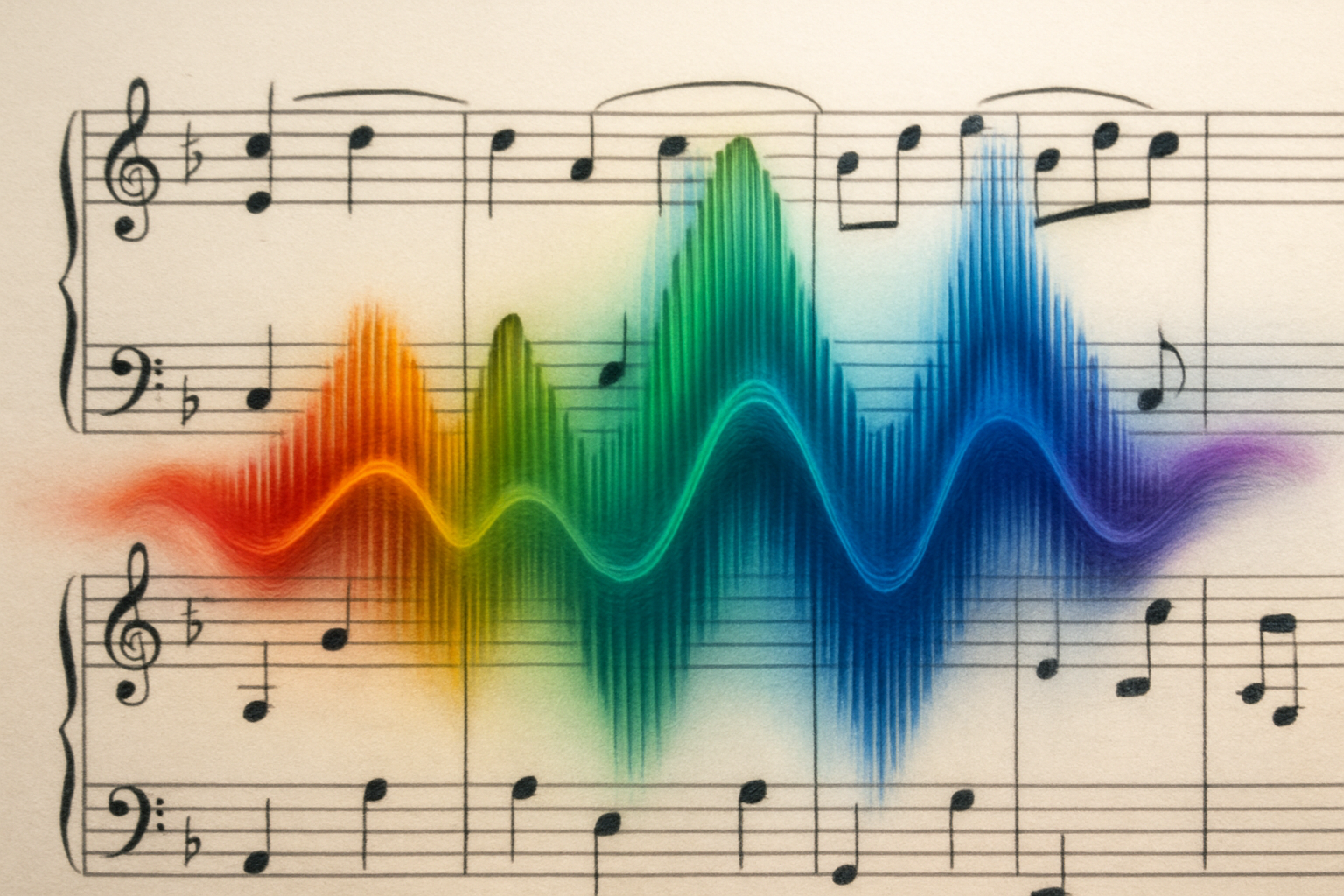
The intersection of music and visual art has long been a subject of fascination and critical analysis. In recent years, the evolution of technology has transformed this convergence, allowing contemporary artists and scholars to visualize musical structures in innovative ways. This intriguing dialogue between sound and sight prompts us to explore how we can ‘see’ the song.
The Evolution of Musical Visualization
The concept of visualizing music isn’t new. Attempts date back to the Baroque period, where visual art attempted to capture the essence of musical compositions. These early endeavors mainly focused on allegorical representations. Fast forward to the 20th century, and we see a more structured approach with composers like Wassily Kandinsky and Paul Klee, whose paintings often sought to express musical elements through color and form.
“Color is the keyboard, the eyes are the harmonies, the soul is the piano with many strings. The artist is the hand that plays, touching one key or another, to cause vibrations in the soul.” – Wassily Kandinsky
Digital Revolution and New Media
With the advent of digital technology, the visualization of music has taken on new dimensions. Consider the impact of computers and software that can analyze musical data and represent it visually. This technology allows artists and scientists alike to explore music in a spatial context, using visuals to reveal patterns and structures that were previously intangible.
The Role of Software and Algorithms
Programs like Adobe After Effects and Processing have become essential tools for artists. They allow for the translation of sound waves into intricate designs that move in synchrony with the music. For instance, sound visualization in interactive installations uses sound frequencies to drive animations, transforming the auditory experience into a visual journey.
Data Sonification
Data sonification is another captivating trend whereby numerical data is represented through sound, often producing surprising musical results. Conversely, transformations of this auditory data back into visual form have revealed new aesthetic possibilities.
- The Music Animation Machine: This tool translates classical music into visual scrolling scores, providing a visual representation of music’s temporal and harmonic structure.
- Visit Music Animation Machine
Graphic Scores in Contemporary Composition
Graphic scores push the boundary of traditional music notation. They often employ a combination of symbols, colors, lines, and images to signify musical gestures and characteristics. Pioneered by composers like John Cage and Morton Feldman, these scores are as much pieces of art as they are guides for performance.
Graphic scores invite performers to interpret the visual cues, creating unique, often unpredictable musical experiences. This openness exemplifies the fluidity between visual and auditory experiences and challenges conventional notions of how music should be notated and perceived.
The Interplay of Synesthesia
Synesthesia adds an intriguing personal layer to the visualization of music. This neurological phenomenon occurs when stimulation of one sensory pathway leads to automatic, involuntary experiences in another. For some individuals, music induces the perception of colors or shapes. This remarkable condition has inspired many artists, including Kandinsky, who often used his synesthetic experiences as a foundation for his art.
“For Kandinsky, color was a means of exerting a direct influence upon the soul… color could be used in a painting as something autonomous and apart from a visual description of an object or other form.” – National Library of Medicine
Case Studies in Music Visualization
- Brian Eno’s “77 Million Paintings”: A generative piece of software art that visualizes tonal clusters and ambient soundscapes through constantly evolving visual images.
- Ryoji Ikeda’s “data.scan”: Uses raw data output visualized in a minimalistic, digital aesthetic to create a symphony of sight and sound.
Both Eno and Ikeda push the conventional boundaries of performance, using technology to present music as both an acoustic and a visual phenomenon.
Conclusion: Envisioning the Future
The visualization of music not only enhances our sensory appreciation but also deepens our understanding of musical structure and intention. As technology continues to advance, it offers tantalizing possibilities for creative expression and cross-disciplinary collaboration between musicians, visual artists, and technologists.
In embracing these intersections, we are led to reconsider the very nature of music—the universal language of sound—and its ability to transcend traditional forms to engage audiences more holistically. As we move forward, we are reminded of the profound connections between seeing and hearing as we learn to read, interpret, and appreciate music not only with our ears but with our eyes.