Tag: often

  • The Child of Prophecy – Why the “chosen one” must always be an outcast.

    The Child of Prophecy – Why the “chosen one” must always be an outcast.


    The Child of Prophecy – Why the “chosen one” must always be an outcast

    The Child of Prophecy – Why the “chosen one” must always be an outcast

    “A prophecy is a statement about the future that is considered to have been revealed either by a god or other supernatural force.” – Oxford Languages

    Throughout history and various mythologies, there exists a recurring motif: the “chosen one,” a hero destined to save or destroy the world. From Greek’s Perseus to Norse’s Ragnarok, these figures often share a common characteristic – they are outcasts.

    • Isolated from Birth: Many prophesied heroes are born under unusual circumstances, often abandoned or hidden away from society. This isolation sets them apart and fosters their unique abilities.
    • Rejected by Society: As the chosen one, these individuals often possess powers or knowledge that threaten those around them. This leads to mistrust and ultimately, ostracization from their communities.
    • Triumph Through Adversity: The outcast nature of the chosen one provides a powerful narrative arc, as they must overcome adversity to fulfill their destiny. Their journey serves as both a warning and inspiration for those who hear their tale.

    “The more we believe in ourselves, the less we need others to be happy.” – Unknown

    This trope endures because it speaks to our human desire for heroism and redemption. However, it also reminds us of the price that must often be paid: isolation and struggle.

  • The Gothic Romance – Why the “Haunted Castle” is a map of the mind.

    The Gothic Romance – Why the “Haunted Castle” is a map of the mind.


    The Gothic Romance – Why the “Haunted Castle” is a map of the mind

    The Gothic Romance: An Exploration

    In the realm of literature, few genres have captured our imagination quite like Gothic Romance. This dark and brooding genre, characterized by its haunting settings, mysterious plots, and tormented protagonists, offers a unique insight into the human psyche.

    The Haunted Castle: A Map of the Mind

    The central motif in Gothic Romance, the haunted castle, can be seen as a metaphor for the human mind. Just as these castles are shrouded in mystery and darkness, our minds often harbor secrets and fears that we are yet to confront.

    “The castle is not simply a physical structure but a symbol of man’s soul.” – Edgar Allan Poe, author of many Gothic Romance tales.
    Source

    • Dark and Mysterious: The Gothic castle is often shrouded in darkness, reflecting the uncertainty and fear that we often feel in our own minds.
    • Hidden Chambers: These hidden chambers within the castles represent the hidden aspects of our personality, waiting to be discovered and understood.
    • Ghostly Presences: The haunting presence of ghosts or other supernatural entities symbolizes the haunting memories and regrets that we carry within us.

    The Hero’s Journey Through the Mind

    In Gothic Romance, the protagonist often embarks on a journey through these castles, facing their fears and confronting their darkest selves. This can be seen as a metaphor for the journey of self-discovery that we all undertake in our lives.

    “We must be still, and still moving;
    To let the mysteries reveal themselves.” – Francis Thompson, English poet known for his Gothic Romance poetry.
    Source

    The Enduring Appeal of Gothic Romance

    Despite their dark and brooding nature, Gothic Romances continue to captivate readers due to their exploration of the human psyche. They offer a mirror to our own fears, hopes, and dreams, making them a compelling and enduring genre in literature.

  • Preventing Burnout by Redefining Success

    Preventing Burnout by Redefining Success


    Preventing Burnout by Redefining Success

    Preventing Burnout by Redefining Success

    “Success is not the key to happiness. Happiness is the key to success. If you love what you are doing, you will be successful.” – Albert Schweitzer

    In today’s fast-paced world, burnout has become a common issue among individuals striving for success. The relentless pursuit of achievement can often lead to exhaustion, stress, and decreased productivity. However, redefining our understanding of success can help prevent this vicious cycle.

    The Traditional Definition of Success

    For many, success is synonymous with wealth, power, and recognition. This conventional definition often leads to a never-ending race that can result in burnout.

    “Burnout is the extinction of motivation or engagement in tasks that were once source of satisfaction, inspiration, and enthusiasm.” – Christina Maslach, a leading researcher on burnout.

    Redefining Success

    To prevent burnout, it is essential to redefine success in a more balanced and fulfilling manner. Here are some ways to do so:

    • Prioritize work-life balance: Recognize that personal life and well-being are just as important as professional achievements.
    • Set realistic goals: Achievable goals promote motivation and reduce the risk of burnout.
    • Find meaning in work: Engage in tasks that provide personal satisfaction, rather than solely focusing on external rewards.

    “The best way to find yourself is to lose yourself in the service of others.” – Mahatma Gandhi

    Finding Balance and Inner Peace

    By redefining success and adopting a balanced approach to life, one can achieve inner peace and prevent burnout. It is essential to remember that true success comes from within, and it is never too late to make positive changes for a happier, healthier, and more fulfilling life.

  • Emotional Burnout vs Physical Burnout: Knowing the Difference

    Emotional Burnout vs Physical Burnout: Knowing the Difference


    Emotional Burnout vs Physical Burnout: Knowing the Difference

    Emotional Burnout vs Physical Burnout: Knowing the Difference

    “Burnout is not simply a state of chronic stress or exhaustion. It’s a psychological, emotional, and often physical crisis.” – Dr. Christina Maslach

    Both emotional burnout and physical burnout are common experiences in today’s fast-paced world. However, understanding the differences between these two states can help individuals take better care of their mental and physical health.

    Emotional Burnout

    • Long-term stress: Emotional burnout often results from prolonged exposure to emotional stressors, such as work-related pressure or personal problems.
    • Emotional exhaustion: Individuals may experience feelings of exhaustion, cynicism, and detachment from their work or relationships.
    • Reduced productivity: Emotional burnout can lead to decreased motivation and a lack of focus, resulting in reduced performance at work or school.

    Physical Burnout

    • Fatigue: Physical burnout often manifests as persistent fatigue and a lack of energy.
    • Injuries and illnesses: Continuous stress can weaken the immune system, making individuals more susceptible to injuries, infections, and chronic health conditions.
    • Poor sleep quality: Burnout may lead to disturbed sleeping patterns, making it difficult for the body to recover and heal.

    Prevention and Recovery

    Preventing and recovering from burnout requires a holistic approach that addresses both emotional and physical well-being. Some strategies include: practicing mindfulness, setting boundaries, maintaining a healthy work-life balance, exercising regularly, eating nutritious foods, seeking support from friends, family, or professionals, and taking time for self-care and relaxation.

    “Take care of your body with steadiness and watch the cells begin to sing the songs they were sick of not singing.” – Kahlil Gibran

  • The Banshee’s Wail – How we ritualize the announcement of death.

    The Banshee’s Wail – How we ritualize the announcement of death.


    The Banshee’s Wail – How we ritualize the announcement of death

    The Banshee’s Wail – How we ritualize the announcement of death

    In many ancient cultures, the announcement of a death was not a simple matter. It was often imbued with rituals and superstitions, designed to honor the deceased and appease the spirits that were believed to roam the earth following their passing. One such example can be found in Irish folklore, where the banshee served as both an omen of death and a means of delivering the news in a highly ritualized manner.

    “The banshee is a female spirit, often depicted as an old hag or beautiful young woman. She was said to appear before the family of someone who was about to die, wailing and crying in mourning.”
    – Traditional Irish folklore

    The Role of the Banshee

    The banshee was believed to be a supernatural being, typically associated with a specific family or clan. When the time came for one of that family’s members to die, the banshee would make her presence known by wailing and crying. This heart-wrenching sound was said to announce the impending death and often preceded it by several days.

    Ritualizing the Announcement of Death

    The presence of the banshee served as a ritualized means of announcing a death, one that was steeped in superstition and fear. While modern society no longer holds such beliefs, many of us still find ourselves drawn to rituals when faced with the reality of death. From religious ceremonies to funerals and memorial services, these events provide structure and meaning in the face of loss.

    Modern Rituals

    • Obituaries: A formal announcement of someone’s death, often published in newspapers or online.
    • Funerals: A ceremony to honor and mourn the deceased, often including religious elements and a burial or cremation.
    • Memorial Services: Similar to funerals but without a burial or cremation, often held at a later date to allow friends and family from far away to attend.

    While the banshee may be a figure of mythology, her role in announcing death serves as a reminder of the importance of ritualizing this transition. Whether it’s through obituaries, funerals, or memorial services, we continue to seek structure and meaning in the face of loss, just as the ancient Irish did when faced with the wail of the banshee.

  • The New Discipline: Knowing When to Stop

    The New Discipline: Knowing When to Stop


    The New Discipline: Knowing When to Stop

    The New Discipline: Knowing When to Stop

    “Mastery is not a function of how much you know, but how much you can simplify what you know.” – Eric Hoffer

    In the realm of mythology, wisdom often lies in knowing when to stop. This new discipline, mastering the art of ‘enough’, is a concept that transcends the stories we’ve come to know and love.

    The Artisan’s Paradox

    “The more I do, the less it seems I accomplish.” – Aristotle

    Aristotle’s sentiment, often referred to as ‘The Artisan’s Paradox’, is a lesson many mythological characters have faced. From Heracles’ twelve labors to Odysseus’ odyssey, the journey often involves more than necessary, leading to hardships and self-discovery.

    The Lesson of Icarus

    “Fly not too high, nor too low.” – Attributed to Daedalus

    The story of Icarus is a cautionary tale about hubris. His father Daedalus warned him not to fly too close to the sun, symbolizing the dangers of ambition and overreach. This lesson resonates deeply in modern times, reminding us that balance and moderation are key to success.

    The Wisdom of Athena

    “Wise is the one who calls a halt in the right place.” – Homer (Odyssey)

    The goddess Athena, symbolizing wisdom and strategic thinking, embodies this new discipline. She often advised heroes to know when to stop, to avoid unnecessary risks or hardships. Her counsel serves as a reminder that sometimes, the best decision is not to continue but to pause and reflect.

    A Modern Perspective

    In today’s fast-paced world, learning when to stop can be a challenging discipline. However, by looking to the wisdom of our mythological past, we find guidance and inspiration in the stories that have shaped our understanding of human nature.

  • Technocracy’s Blind Spot – What cannot be quantified

    Technocracy’s Blind Spot – What cannot be quantified

    Technocracy’s Blind Spot: What Cannot Be Quantified

    In the age of data-driven decision-making, the allure of technocracy—governance by technical experts—grows stronger. However, this model harbors a critical blind spot: its reliance on quantifiable metrics to guide policy and progress. While numbers and data are invaluable to understanding the world in measurable terms, they cannot capture the full breadth of human experience and the nuances of ecological and social systems.

    The Rise of Technocracy

    Technocracy has come to prominence as governments across the globe increasingly turn to experts to address complex challenges. From climate change to public health, technocrats employ models to predict and manage future outcomes. This quantitative approach is appealing due to its semblance of objectivity and precision.

    • Historical Context: The term “technocracy” was first formalized during the early 20th century, though using experts’ input to guide policy dates back centuries.
    • Modern Technocracy: The modern incarnation of technocracy heavily relies on big data and algorithms to manage and optimize societal systems.

    Despite its advantages, this approach can overlook critical factors not easily translated into data points. Real-world implementation quickly encounters the complexity of an interconnected, adaptive system where emotions, values, and ethics play pivotal roles.

    The Unquantifiable Elements

    1. Human Emotions and Values: One of the most glaring omissions in technocratic models involves emotions and values. Numbers can track behaviors but often fail to capture the emotional and ethical undertones informing those actions. As Dr. Daniel Kahneman, a Nobel laureate in Economic Sciences, states:

    Emotions are not mere spinoffs of rational thinking but integral components of it, influencing and guiding decisions in unpredictable ways.

    Traditional economic models, for instance, are built around the assumption that individuals act rationally, a notion widely debunked by behavioral economists, pointing to the emotional and often irrational elements of decision-making.

    2. Ecosystem Complexity: In ecology, the complexity and interdependency of systems resist simplified quantification. The emergent properties of ecosystems, such as biodiversity, are often richer and more intricate than what models can predict or encapsulate. According to a study on ecosystem services by Robert Costanza:

    Conventional economic metrics often undervalue or overlook the immense and non-linear benefits provided by healthy ecosystems.

    The limitations are clear when monetary values are assigned to ecological functions, often resulting in oversimplified assessments of their true worth.

    The Risk of Oversimplification

    Reducing complex systems to quantifiable indicators risks oversimplification. This reductionist approach ignores:

    • Contextual Nuances: Metrics often ignore local contexts, which can vary greatly. A health policy effective in one region might fail in another due to cultural differences.
    • Long-Term Effects: Many technocratic solutions prioritize short-term efficiency over long-term resilience, potentially leading to unsustainable practices.

    Without accommodating these intricacies, technocratic approaches may lead to policies that address symptoms rather than the root problems, potentially exacerbating issues over time.

    The Path Forward

    Recognizing what cannot be quantified requires a paradigm shift towards more holistic and inclusive approaches. Incorporating qualitative assessments alongside quantitative metrics allows for a richer, more nuanced understanding. Acknowledgment and integration of indigenous knowledge systems can significantly enrich this approach.

    A multidimensional framework, as suggested by economist Amartya Sen, looks not just at wealth or GDP but at the capabilities and well-being of individuals. As Sen articulated in his book “Development as Freedom”:

    Development must be more concerned with enhancing the lives we lead and the freedoms we enjoy.

    This approach redirects the focus from mere economic growth to the expansion of human freedom—an inherently qualitative dimension.

    Integrating Qualitative Insights

    Qualitative insights should not merely supplement technocratic governance; they need integration into the core framework. Strategies include:

    • Participatory Decision-Making: Engaging communities in deliberative processes ensures that diverse perspectives contribute to policy-making.
    • Ethical and Value-Based Assessments: Developing frameworks to measure impacts based on societal values and ethics, aligning technological advancements with cultural contexts.

    Concluding Thoughts: Embracing a model that respects both the visible and invisible layers of society can bridge the gap created by an over-reliance on quantifiable metrics. Balancing scientific rigor with humanistic insights allows for a governance system that truly reflects the complexities and aspirations of the human condition.

    For a deeper exploration of this topic, consider reading more about integrating qualitative and quantitative data in policy-making.

  • Why Myth Refuses to Be Disproven – A defense against literalism

    Why Myth Refuses to Be Disproven – A defense against literalism

    In an era driven by data and scientific evidence, myths often seem outdated, relegated to the sidelines by the advances of technology and rational thought. Yet, myths endure, thriving against the backdrop of literal interpretation. Despite the insistence on empirical validation, myths refuse to be disproven because they serve purposes beyond the scope of literalism—a phenomenon worthy of exploration.

    The Nature of Myth

    Myths, by definition, are traditional stories passed down through generations. They often involve supernatural elements or beings and seek to explain natural or societal phenomena. According to the Stanford Encyclopedia of Philosophy, myths are “traditions of belief, especially those concerning the conceptions of mankind’s earliest environments and the nature of the gods.”

    By understanding myths as cultural narratives that convey fundamental truths about the human condition, we can appreciate why they resist reductionist interpretations. Myths engage with existential questions in ways that transcend the limitations of linear truth.

    Myth as a Vehicle for Truth

    Joseph Campbell, a notable figure in comparative mythology, argued that myths hold truths that resonate on a psychological and archetypal level. In his seminal work, The Hero with a Thousand Faces, Campbell wrote, “Myths are public dreams, dreams are private myths.” This perspective suggests that myths fundamentally deal with the core of human psyche, which is not impaired by the strictures of logical scrutiny.

    “Myth is much more important and true than history. History is just journalism, and you know how reliable that is.” — Joseph Campbell

    Myths encapsulate wisdom that might not fit into a strictly rational framework. They carry emotional and intuitive truths, often portrayed through allegory and metaphor, which evoke profound contemplation of human experiences, morality, and the cosmos.

    Myth in Modern Society

    Despite technological advancement, modern society continues to generate its own myths. Consider the archetype of the “American Dream”—a modern mythological narrative that promises prosperity and success through hard work. This societal myth persists not because every individual achieves it, but because it encapsulates aspirations, hope, and identity.

    Similarly, David Kamp, a contributing editor to Vanity Fair, in his article, “Rethinking the American Dream,” suggests that while the dream may vary from generation to generation, its essential ethos remains an influential narrative in American culture.

    The Limitations of Literalism

    Literalism—the practice of taking words and statements at face value—often falls short of capturing the essence of myth. In religious contexts, literalism can constrain spiritual interpretation, reducing rich allegories to mere disputable facts.

    As seen in the debates around religious texts, literal interpretations commonly fail to capture the symbolic richness intended by the myths. For example, the Biblical creation story is often debated between those who see it solely as literal truth and others who interpret it as a metaphor for existential understanding.

    “For many people, religious belief is anchored more deeply than the rational perception of risk. Human cognition may be more devoted to managing social relationships than abstract logic, or the ability to weigh arguments based purely on facts.” — Kate Douglas, New Scientist

    Such interpretations reflect the need for deeper explorations of context and symbolism—elements that literalism often misses.

    Myth: A Defense Against Literalism

    Because myths engage with the symbolic and transcend the immediate confines of literal interpretation, they provide a defense against the constraints of literalism. Myths open channels to explore meanings that expand beyond empirical boundaries, embracing a fuller understanding of human potential and spiritual experiences.

    Moreover, anthropologists and psychologists, like Carl G. Jung, argue that mythology allows introspection of the human psyche, where ancient stories are reflections of archetypes innate to humanity. Jung believed that confronting these inner archetypes through myths could lead to personal growth and self-awareness.

    Ultimately, myths offer individuals a lens through which to see life’s mysteries. They assure that, despite the rigor and limitations imposed by a purely literal mindset, emotions, beliefs, and imagination maintain their vital place in understanding who we are and the world we inhabit.

    Conclusion: Myth as Timeless Narratives

    Despite the assertions of literalism, myths endure because they are more than factual accounts—they are timeless narratives that reflect deeper human truths. Myths invite us to navigate the complex tapestry of our reality, devoid of empirical evidence but rich in symbolic significance and emotional resonance.

    In defending myth against literalism, we affirm the essential role of imagination and symbolic thought in our collective and individual lives. As we continue to uncover the power of mythological narratives, we may yet discover a constant, unifying thread that connects the ancient past to the present—and beyond.
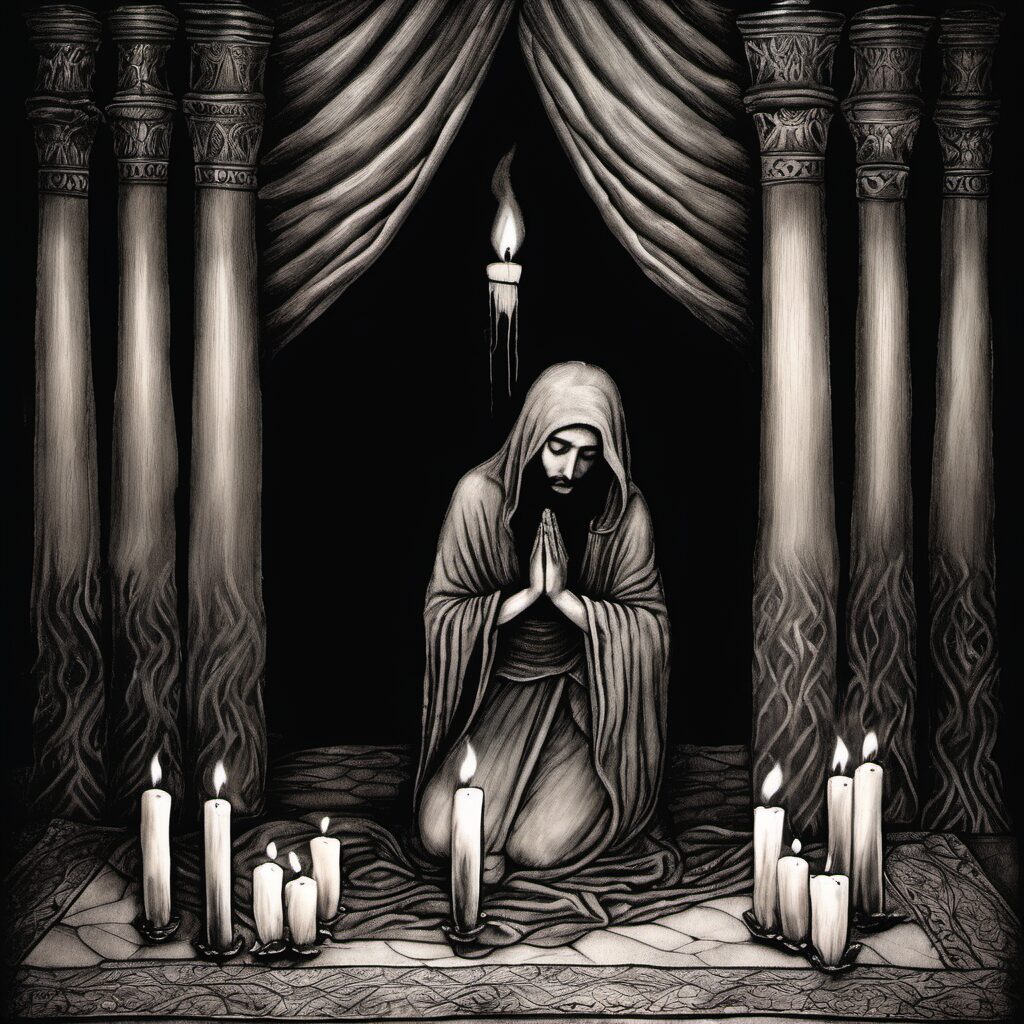

  • Mythical Time vs. Clock Time – Living outside the algorithm

    Mythical Time vs. Clock Time – Living outside the algorithm

    In an era dominated by schedules, digital alerts, and the incessant tick-tock of clock time, a burgeoning interest in mythical time invites us to pause, reflect, and potentially redefine our relationship with time itself. But what exactly is mythical time, and how does it differ from the algorithm-driven clock time that governs our daily lives?

    The Concept of Mythical Time

    Mythical time is often described as a realm where the linear progression of past, present, and future dissolves, allowing a more fluid and often symbolic interpretation of time. This concept takes inspiration from ancient cultures and narratives where time was not measured by minutes and hours but rather by events, rituals, and the natural cycles of life.

    Mircea Eliade, a Romanian historian of religion, philosopher, and professor at the University of Chicago, describes mythical time as “a primordial time, a sacred time, a mythical time.” Through this lens, time is experienced in a more cyclical and eternal manner, facilitating a deeper connection to moments of significance.

    “In the modern world, time has become a limited commodity, something to be utilized efficiently and often traded for productivity. Yet, in the mythical conception of time, moments stretch out, allowing for reflection, growth, and a connection to the past and the future,” Eliade suggests in his works on the sacred and the profane.

    The Algorithmic Nature of Clock Time

    Contrastingly, clock time is a linear, structured interpretation based on seconds, minutes, and hours—designed to quantify, schedule, and manage our activities. Our dependence on this algorithmic measure of time has intensified with the advent of technology, weaving intricate patterns of notifications, deadlines, and calendars into our personal and professional worlds.

    As Douglas Rushkoff, a media theorist, points out, “Living according to the clock’s imposed pacing can estrange us from our own bodily rhythms and intuitive understanding of time.” (Douglas Rushkoff, Team Human)

    Choosing to Live Beyond the Algorithm

    Embracing mythical time does not necessitate the total abandonment of modern conveniences, but rather encourages a mindful integration of time’s dual aspects. By cultivating practices that allow us to step outside the algorithm—such as meditation, creative expression, or spending uninterrupted time in nature—we invite a balance that acknowledges both the sacred and the structured.

    Ultimately, living outside the algorithm invites us to harmonize the tangible elements of clock time with the intangible essence of mythical time, empowering us to reconnect with the present moment in a deeper, more meaningful way.

    With this blending, we aim not just to manage our time but to live fully within it, embracing each moment’s potential for connection and significance.

  • Before Data, There Was Meaning – What algorithms cannot inherit

    Before Data, There Was Meaning – What algorithms cannot inherit

    From the rise of artificial intelligence to the ubiquitous data-driven narratives that dominate our technological landscape, it often seems that algorithms are the new arbiters of reality. Yet, behind the bloom of data and the sophistication of machine learning models, there lies an essential human dimension that machines still struggle to grasp: meaning. In a world where data tries to dictate meaning, it’s crucial to ask: What can’t algorithms inherit from us?

    The Primacy of Human Context

    Human understanding is deeply rooted in context and experience. While algorithms excel at pattern recognition and prediction based on vast datasets, they often miss the nuances that only context can provide. Philosopher Hubert Dreyfus, in his critique of artificial intelligence, famously argues that human intelligence and skills are fundamentally tied to our embodied experiences and social contexts—a concept he elaborated in Being-in-the-World: A Commentary on Heidegger’s Being and Time, Division I. As Dreyfus puts it, “Only a being with the sort of body and social upbringing we have could have the kinds of expertise we have.” [Source]

    The Complexity of Language

    Natural language processing applications have made impressive advances, yet the task of deriving meaning from language remains inherently complex. Language is not just a string of words or sentences but a rich tapestry woven with culture, intention, and emotion. Linguist Noam Chomsky highlighted the challenges of computational understanding in his numerous works, emphasizing the intricacies of syntax and semantics that go beyond algorithmic computation. Chomsky once noted, “The infinite use of finite means—language remains a defining species characteristic.” [Source]

    Understanding Subtlety and Emotion

    Emotions are a profound aspect of human life that shape our interpretations and decisions. While sentiment analysis and affective computing are emerging fields aiming to bridge this gap, they often fail to capture the subtleties of human emotions. As Rosalind Picard, a pioneer in affective computing, states, “It’s not that computers are emotional; it’s that they can help people be emotionally insightful.” [Source]

    The Ethical Dimensions

    Algorithms, by their nature, lack ethical reasoning. They follow instructions, learn from data, and predict outcomes, but do not possess a moral compass. This limitation is particularly apparent in complex ethical scenarios where human values play critical roles. As the field of AI ethics explores these limitations, a popular stance holds that ethical reasoning involves “imagination and seeing all sides,” which are outside current machine capabilities. [Source]

    “While machines can simulate human behavior, they cannot replace human judgment, which is often guided by wisdom, empathy, and insight,” remarks ethicist Shannon Vallor. [Source]

    The Role of Creativity

    Creativity stands as one of the ultimate tests of any claim about machine intelligence. While algorithms can produce art, music, and even poetry, they do so by recombining existing data based on set parameters. True creativity, as seen in human works, often involves breaking boundaries, defying logic, and crossing conventional expectations in a way that machines can only mimic, not originate.

    MIT’s renowned professor, Marvin Minsky, illustrated this in his exploration of AI, stating, “You can’t learn to be creative just by recording data—it requires breaking the mold.” [Source]

    Concluding Thoughts

    As we drive forward in this digital age, it’s important to remember that while data can inform insights and algorithms can enhance efficiencies, the authentic leap from data to meaning, from calculation to comprehension, is a distinctly human trait. As we embrace technology’s potential, nurturing the irreplaceable aspects of human intelligence—our context, emotions, ethics, and creativity—is not just beneficial, but essential.

    In doing so, we can ensure that as we rely on the growing tide of algorithms, we do not lose sight of the deeply human elements that imbue our data with true meaning.