Tag: world

  • The Gentle Traveler – Moving Softly Through the World

    The Gentle Traveler – Moving Softly Through the World

    In a world where speed and efficiency often dominate the narrative, there is a growing movement towards a more conscious and gentle form of travel. Known as the gentle traveler, this ethos prioritizes mindfulness, sustainability, and deeper connections with the places and people encountered along the journey.

    What does it mean to be a gentle traveler? At its core, gentle traveling is about slowing down and immersing oneself fully in the experience of a new place rather than rushing through destinations or ticking boxes on a typical tourist agenda. It’s an approach that not only benefits the traveler but also respects and supports the visited locales.

    “Traveling — it leaves you speechless, then turns you into a storyteller.” – Ibn Battuta

    This famous quote by the renowned Moroccan explorer Ibn Battuta encapsulates the essence of gentle traveling. It is about connecting narratives and understanding the stories behind a place or culture instead of merely capturing images for social media.

    Principles of Gentle Travel

    • Sustainability: Prioritizing eco-friendly modes of transportation, like trains or bicycles, over more polluting options (e.g., airplanes). According to the World Bank, travel accounts for a significant portion of individual carbon footprints, making transport choices crucial for sustainability.
    • Mindful Consumption: Supporting local businesses rather than international chains helps boost the local economy. Travelers might choose locally-owned accommodations, eat at family-run restaurants, or buy handmade crafts instead of mass-produced souvenirs.
    • Cultural Respect: Learning basic phrases in the local language or familiarizing oneself with local customs is vital. It demonstrates respect and can lead to more authentic and enriching interactions.

    With the rise in environmental awareness and the desire for meaningful connections, the gentle traveler philosophy resonates with many, even influencing the broader tourism industry. According to the United Nations World Tourism Organization, more travelers are seeking out sustainable options, and the industry is slowly adapting to meet this demand with greener accommodations and experiences.

    Ultimately, the gentle traveler moves softly through the world, leaving a smaller footprint and taking with them richer memories and friendships. By embracing this thoughtful approach, travelers not only enrich their journeys but also contribute positively to the places they visit, ensuring that future generations can experience the world’s diverse and vibrant cultures.

  • The Empty Hut – Where Zen and Nature Meet in Stillness

    The Empty Hut – Where Zen and Nature Meet in Stillness

    The Empty Hut – Where Zen and Nature Meet in Stillness

    The Empty Hut – Where Zen and Nature Meet in Stillness

    The Empty Hut is a profound exploration of the intersection between Zen philosophy and nature’s tranquility. Directed by the visionary filmmaker, Kiyoshi Nakagawa, this film invites us into a world where stillness speaks louder than words.

    “In the world of Zen, the empty hut isn’t just a dwelling place, but a metaphor for the clarity and peace achieved in an unclouded mind,” explains Nakagawa.

    A Visual Meditation

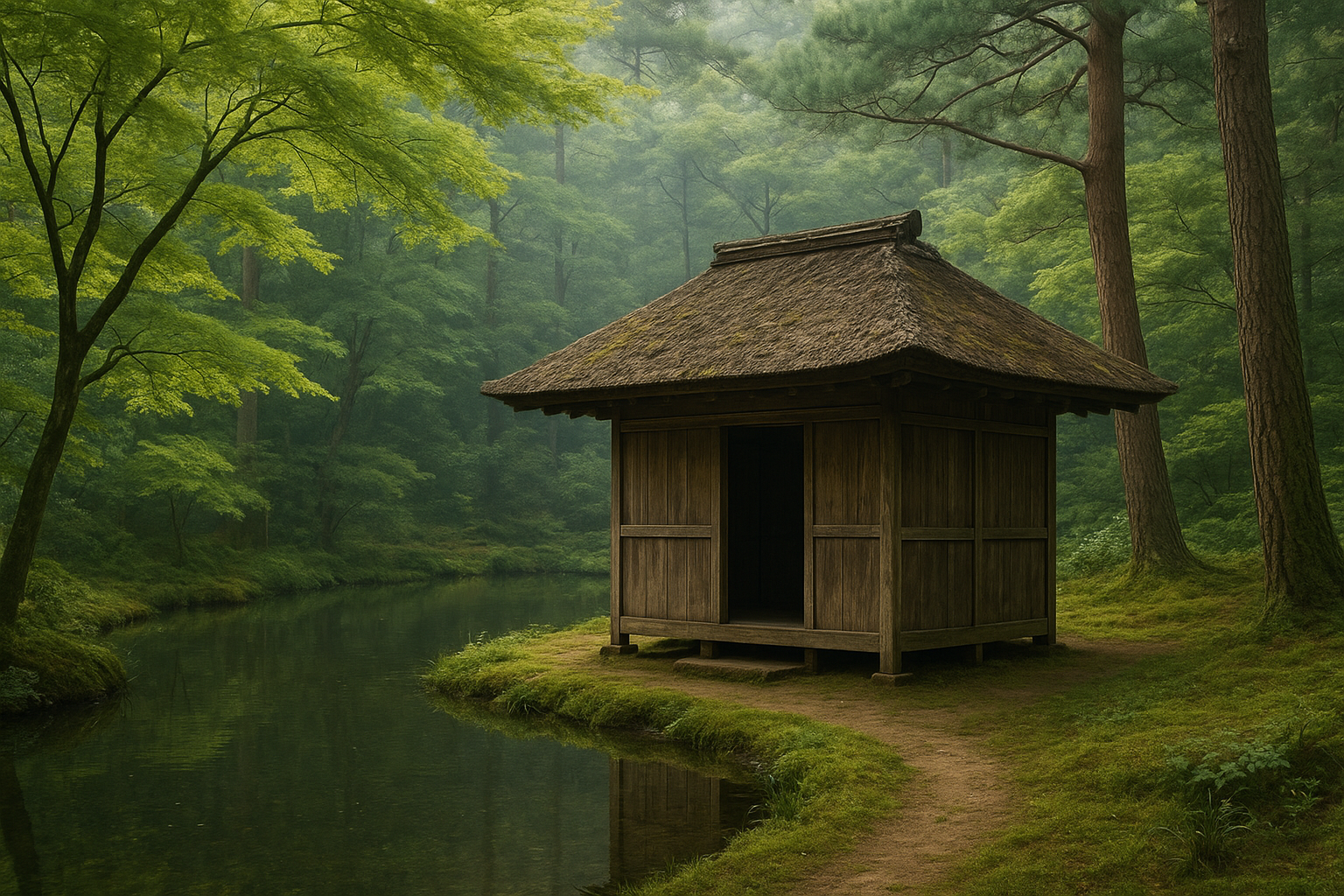
    • Cinematography: The film’s cinematography captures the raw beauty of Japan’s remote landscapes, intertwining them with elements of Zen architecture. Lush forests, serene rivers, and ancient temples are depicted in stunning detail.
    • Sound Design: Complemented by a minimalist sound design, the whisper of wind through leaves and the gentle flow of water create a meditative soundscape that enhances the viewer’s sense of presence.

    The Empty Hut does not follow a conventional narrative structure. Its pacing is deliberately slow, demanding patience and reflection. Viewers are encouraged to let go of distractions, much like the Zen practitioners whose stories are subtly woven throughout the film. Nakagawa weaves a tapestry of visual and auditory experiences that mirror the practice of Zen meditation, emphasizing deep introspection over action.

    The Essence of Zen

    At the heart of the film is a solitary monk who retreats to an isolated hut in the mountains, symbolizing the journey of returning to simplicity. His practice is not just of austerity but of an intentional embrace of the present moment. As the monk tends to a moss garden or sits in silent meditation, the viewer is invited to join him in contemplating the profound peace found in simplicity.

    This movie resonates strongly with those familiar with the tenets of Zen Buddhism and anyone who finds solace in nature’s embrace. Critics have noted that The Empty Hut is “like a haiku brought to life,” as stated in a review by Zen Filmmakers Journal.

    A Profound Experience

    In conclusion, The Empty Hut offers an exquisite escape into the world where Zen and nature coexist in profound serenity. Its ability to capture the essence of stillness and the beauty of the natural world makes it a standout piece that nurtures the soul.

    “A silent journey within—where one can meet the true self,” echoes within the closing scenes, a perfect summation of the film’s deeper message.

  • Leaves Falling on Water – Impermanence in the Daoist Eye

    Leaves Falling on Water – Impermanence in the Daoist Eye

    Leaves Falling on Water: Impermanence in the Daoist Eye

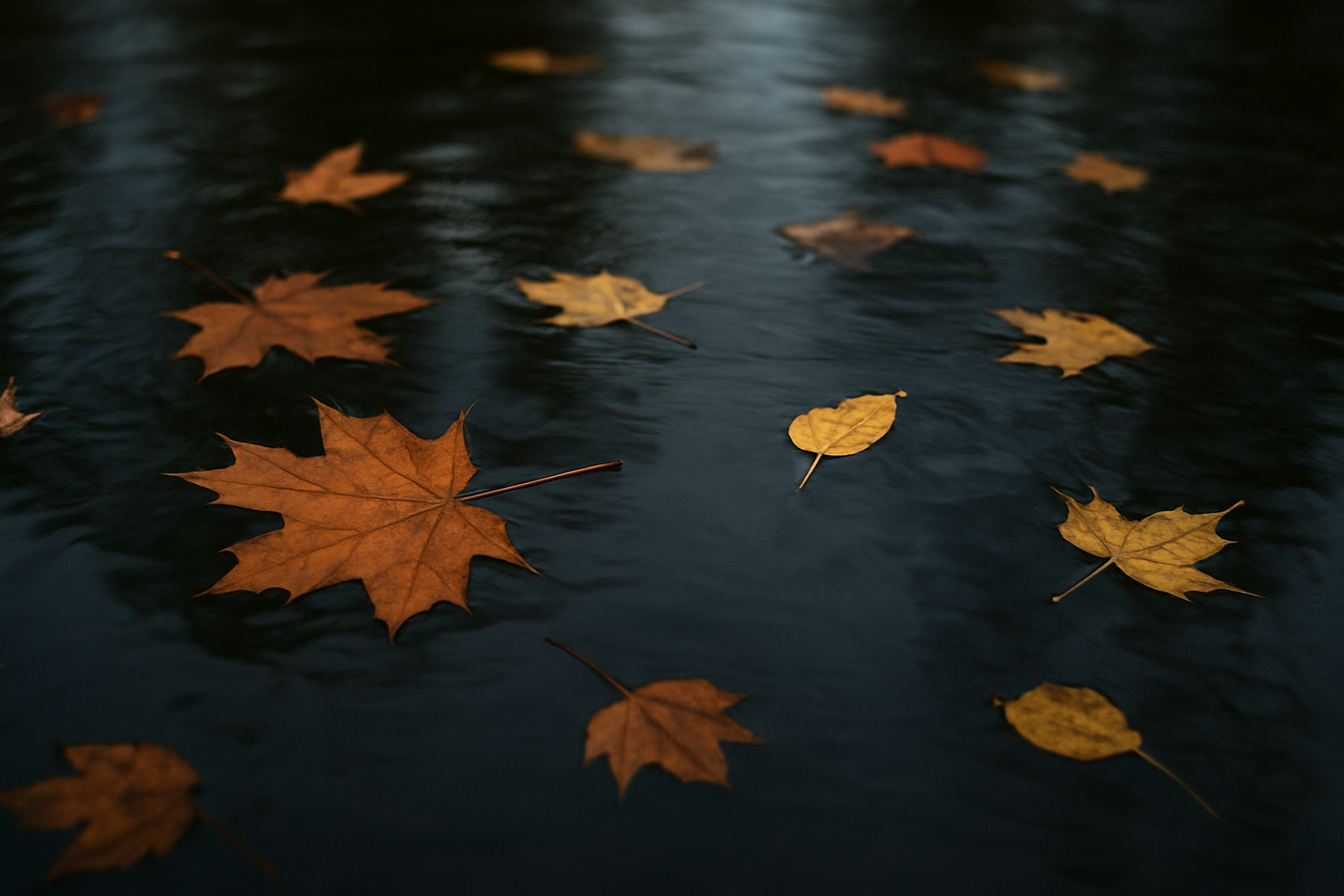
    In the heart of an autumn forest, the gentle rustling of leaves paints a picture of nature’s profound impermanence. As each leaf drifts towards water, it carries with it an ancient philosophy, a quiet testament to the Daoist view of life’s transience.

    The Essence of Daoism

    Daoism, also known as Taoism, is a philosophical and spiritual tradition originating in China around the 4th century BCE. Founded upon the teachings of Laozi and the text Tao Te Ching, Daoism emphasizes living in harmony with the Dao or “the Way,” which signifies the fundamental nature of existence.

    “The Tao that can be told is not the eternal Tao. The name that can be named is not the eternal name.” – Tao Te Ching

    At its core, Daoism teaches the virtue of simplicity, humility, and living in accordance with the natural world. Integral to this philosophy is the acceptance of change as the only constant, much like leaves that fall and dissolve into the waters below.

    The Metaphor of Falling Leaves

    Falling leaves serve as a powerful metaphor for the Daoist concept of wúwéi (无为), often translated as “non-action” or “effortless action.” This does not imply inaction but rather aligning one’s actions with the natural flow of the universe.

    • Letting Go: Just as leaves must fall, so must we release attachments. In the Daodejing, it is written, “By letting go, it all gets done. The world is won by those who let it go.” (Chapter 48)
    • Cycle of Renewal: The decay of leaves enriches the soil, fostering new growth. This cycle mirrors the Daoist belief in the continuous transformation and renewal of life.
    • Harmony with Nature: Understanding nature’s rhythms allows us to live in harmony with the forces that govern our existence, reducing struggle and fostering peace.

    The Water Element in Daoism

    In Daoism, water is a vital element symbolizing adaptability, humility, and strength. It is yielding yet powerful, able to wear away stone over time. Laozi writes:

    “Nothing in the world is as soft and yielding as water. Yet for dissolving the hard and inflexible, nothing can surpass it.” (Tao Te Ching, Chapter 78)

    Leaves falling on water symbolize the perfect interaction between the transient and the eternal. The leaves’ journey is temporary, but their impact on the water is lasting, reminding us that while life is impermanent, it is also profoundly interconnected and cyclical.

    Impermanence as Freedom

    The concept of impermanence can seem daunting, evoking a sense of loss or instability. However, through the Daoist lens, it is liberating. By recognizing and embracing impermanence, we free ourselves from unnecessary burdens and fears of what is beyond our control.

    This acceptance grants us the ability to live more fully in the present moment, understanding that each moment is unique and precious precisely because it is fleeting. The leaves on water echo a universal truth: change invites growth and transformation, providing us with opportunities to cultivate wisdom and serenity.

    Applying Daoist Wisdom Today

    In a rapidly changing world, Daoist principles offer guidance and solace. They invite us to practice mindfulness, encourage us to find balance and help us remain centered amid life’s chaos. Here are some ways to incorporate Daoist wisdom into modern living:

    • Practice Mindfulness: Engage in meditation or mindful activities, such as observing nature, to cultivate a deeper sense of awareness and connection.
    • Embrace Change: Instead of resisting or fearing change, approach it with curiosity and openness, recognizing it as a pathway to growth.
    • Simplify Life: Simplify your environment and lifestyle, focusing on what truly matters. Let go of material excess and unnecessary stressors.
    • Seek Balance: Strive for a balanced life that nurtures both physical well-being and inner peace.

    By taking inspiration from leaves falling gracefully on water, we can learn to navigate life’s currents with grace and wisdom.

    In contemplating the impermanence of nature, Daoism offers profound insights into how we might live fuller, more harmonious lives, finding beauty in the ephemeral dance of the leaves.

  • Listening to Stones – Nature’s Silent Transmission of Dao

    Listening to Stones – Nature’s Silent Transmission of Dao

    Listening to Stones: Nature’s Silent Transmission of Dao

    In the stillness of the natural world, the enduring presence of stones carries lessons that resonate with the ancient philosophy of Daoism. These geological formations, characterized by their solidity and permanence, offer profound insights into the Daoist concept of enduring harmony and balance within the cosmos.

    The Significance of Stones in Daoism

    Daoism, a spiritual tradition rooted in Chinese culture, emphasizes understanding and aligning oneself with the Dao (Tao), often translated as “the Way.” This philosophical path encourages an appreciation for nature’s simplicity and the wisdom it holds. Stones epitomize these ideals through their firm yet yielding nature, their ability to endure through time, and their harmonious existence within the landscape.

    “The Dao that can be told is not the eternal Dao; the name that can be named is not the eternal name.” – Tao Te Ching

    Much like the essence of Dao, stones teach us about the value of patience, resilience, and modesty. Just as a stone remains grounded amidst changing weather and seasons, it reminds us to stay rooted in our values and beliefs despite life’s fluctuations.

    Nature’s Silent Communicators

    Throughout history, stones have been used to communicate important cultural and spiritual messages. From the monolithic stone formations of Stonehenge to the perfectly balanced rock structures found across the world, stones convey a natural order that transcends human construction.

    • Symbolism and Rituals: Cultures across the globe have utilized stones in various rituals, often attributing sacred significance to these natural elements. In Daoism, stones are seen as symbols of eternity due to their endurance against time, subtly encouraging practitioners to seek immortality not in life but in spiritual legacy.
    • Natural Architecture: The design of many Daoist temples and gardens incorporates stones not just for their aesthetic value but also for their spiritual symbolism. Stones are deliberately placed to mimic natural mountain ranges, facilitating meditation and reflection.

    Stones as Teachers of Resilience and Change

    While stones themselves appear unchanging, they are, in fact, continually shaped by their environment. This silent testament to change highlights a central Daoist tenet: the natural world is characterized by constant transformation. As the Dao De Jing states, “Nature does not hurry, yet everything is accomplished.”

    “Being one with the stone is like being one with nature. In that union, the mind becomes still and learning abundant.” – Daoist Practice Guide

    The erosion of stones over centuries exemplifies the process of natural change—a slow yet inevitable transformation that echoes the Daoist philosophy of wu wei, or non-action. By embracing the flow of life and yielding to its natural courses, individuals can find peace and balance, much like the stone that yields to the elements.

    Environmental Lessons from the Stones

    In today’s era of environmental upheaval, the wisdom held within stones becomes particularly poignant. As symbols of stability and perseverance, stones remind us of the importance of environmental conservation and our role within the broader ecological system.

    • Connection with Nature: Daoism teaches that human beings are an intrinsic part of the natural world, not separate from it. Stones, in their quiet steadfastness, remind us of our responsibility to nurture and protect the Earth.
    • Sustainable Practices: The Daoist principle of living in harmony with nature extends to the practice of sustainability. By learning from the endurance and minimalism of stones, society can cultivate a lifestyle that respects natural resources and values long-term ecological health.

    Inspired by the silence of stones, individuals are encouraged to embrace simplicity, cultivate inner peace, and foster an awareness of their environmental footprint.

    The Enduring Message of Stones

    In the silence of stones lies a profound narrative, one that invites introspection, patience, and respect for the natural world. As we endeavor to listen to these silent custodians of nature, we align ourselves more closely with the principles of Daoism—equilibrium, humility, and unity with the universe.

    By attuning to the wisdom embedded within stones, we may find clarity in our own lives, achieving harmony with both the self and the broader cosmos. This silent transmission of Dao offers a pathway to a more balanced and enlightened existence.

  • Still Rivers Run Deep – The Zen of Inner Motion

    Still Rivers Run Deep – The Zen of Inner Motion

    In our modern, hyper-connected world, the pace of life can be dizzying. Emails, texts, notifications, and deadlines seem to chase us at every turn. Amidst this chaos, it is easy to feel as though inner peace is an elusive goal, one that requires a secluded retreat or a drastic lifestyle change. Yet, the ancient philosophy of Zen offers a profound yet simple insight: stillness and movement coexist within us.

    The Paradox of Inner Stillness

    Zen Buddhism, a school of Mahayana Buddhism originating in China during the Tang dynasty, emphasizes the value of meditation and intuitive insight. A popular Zen saying goes, “Silence is not the absence of something but the presence of everything.” This idea encourages us to find solace within rather than searching for it outside.

    According to Zen teachings, there is a deep river of tranquility flowing beneath the surface of our conscious mind. This river remains undisturbed by external circumstances, a source of profound wisdom and peace. The ability to tap into this calmness is not about shutting off the outside world, but rather about embracing the flow of thoughts and emotions without becoming entangled in them.

    Zen and Movement: A Harmonious Dance

    The concept of movement in Zen is often misunderstood. It does not imply frantic activity or constant change. Instead, it is a subtle, mindful engagement with the world. Zen master Thich Nhat Hanh captured this beautifully when he said,

    “Walk as if you are kissing the Earth with your feet.”

    This idea reflects the Zen belief in mindful action. Every step, every gesture is an opportunity to practice presence, to be fully engaged with life’s rhythm. This approach not only enhances our appreciation of the present moment but also fosters a deep sense of gratitude and peace.

    Finding the Still River Within

    How do we connect with that still river within? The path of Zen invites us to practice meditation. As Shunryu Suzuki, a renowned Zen teacher, once noted,

    “In the beginner’s mind there are many possibilities, in the expert’s mind there are few.”

    This notion encourages us to approach meditation without preconceived ideas of what it should achieve.

    The practice of Zen meditation, or zazen, involves sitting in a comfortable, upright position, focusing on the breath, and allowing thoughts to come and go without judgment or attachment. Through regular practice, we cultivate a space of inner stillness amidst the constant motion of life.

    • Mindfulness in Daily Activities: While meditation is a cornerstone of Zen practice, incorporating mindfulness into daily activities is equally important. Whether washing dishes or walking the dog, these moments offer opportunities to engage with the present.
    • Embracing Simplicity: Zen inspires a return to simplicity, stripping away the unnecessary to reveal the essence of life. This could mean decluttering our physical space or simplifying our schedule to prioritize what truly matters.

    The Ripple Effect of Inner Stillness

    The benefits of embracing the Zen of inner motion extend beyond personal well-being. When we cultivate stillness and presence within, it impacts how we interact with the world. There’s a ripple effect, akin to a stone dropped in a pond, where our calm presence influences those around us. As Zen master Dogen said,

    “To study Buddhism is to study ourselves. To study ourselves is to forget ourselves. To forget ourselves is to be awakened by all things.”

    This ripple effect can lead to more harmonious relationships, a deeper sense of empathy, and a profound connection to the natural world. The still river within us, when awakened, serves as a beacon, guiding us toward holistic and compassionate living.

    Conclusion

    The Zen practice of finding stillness in motion, and motion in stillness, offers an invaluable gift: a way to navigate the complexities of modern life with poise and equanimity. By tuning into the silent river within us, we can experience life with fullness and clarity.

    In a world where external noise often drowns out our inner voice, embracing the principles of Zen may show that still rivers, indeed, run deep. We learn that through balance and mindfulness, we can foster a sense of peace that transcends the superficial pull of the world.

    Ultimately, discovering the Zen of inner motion is not about escaping reality, but about confronting it with grace and mindfulness. In doing so, we may find that the turbulent waters of life become just another part of our peaceful journey.

  • Paths Made of Rain – Ephemeral Journeys through the Living World

    Paths Made of Rain – Ephemeral Journeys through the Living World

    Paths Made of Rain: Ephemeral Journeys through the Living World

    In the heart of our complex and multifaceted world lies a profound beauty as fleeting and transient as the paths made of rain. These ephemeral journeys are not confined to ordinary travel; they transcend it, offering reflections on the temporality of existence and the delicate interplay between human perception and the natural environment. Through examining these rain-crafted pathways, one uncovers insights about life, existence, and the world we inhabit.

    The Essence of Ephemeral Paths

    Ephemeral paths, by their very nature, assert the impermanence of the world around us. These paths exist only in the presence of rain, whispering the tale of their brevity as water traces trails across landscapes. As Heraclitus famously stated, “No man ever steps in the same river twice, for it’s not the same river and he’s not the same man.” This captures the transient essence by which paths made of rain are governed—a continuous flux that defies permanence.

    Philosophical Underpinnings: Impermanence and Existence

    The concept of impermanence is a fundamental aspect of many philosophical discourses. Within Buddhist teachings, impermanence—or anicca—is one of the three marks of existence. The ephemeral nature of rain paths can be seen as an embodiment of this principle. Each journey carved by raindrops is a testament to the understanding that all things are in a state of perpetual change.

    “Understanding the impermanence of things creates nothing less than a radical transformation in the way we regard the present moment and its possibilities.”
    Plato

    Thus, paths made of rain invite us to engage with the present, to pause and observe the fleeting moments that constitute our journeys. In doing so, one finds a deeper appreciation for the world’s transient beauty.

    Sensory Interactions: Connecting with the Natural World

    There is a profound sense of connection when walking along paths made of rain. The rhythmic sound of droplets, the scent of wet earth, and the sight of glistening reflections create an immersive experience. Rain paths invite an active engagement with the natural environment that grounds one in the present. This sensory participation fosters a mindfulness that is often lost in the hurried pace of modern life.

    Author and philosopher Henry David Thoreau wrote extensively about the need for such connectivity with nature, asserting that “All good things are wild and free.” Here, the interface between wildness and temporality plays out, as rain transforms the ordinary into a canvas of reflections and temporary beauty.

    Artistic Reflections: Influence in Art and Literature

    A glimpse into art and literature reveals how ephemeral journeys have inspired creators across genres. Impressionist painters like Claude Monet captured transient light and fleeting conditions, much akin to the ephemeral paths made of rain. Monets’s water lilies, for instance, are vivid embodiments of both light and reflection—a visual symphony of transience.

    Furthermore, Japanese haiku poets such as Matsuo Bashō encapsulated the essence of fleeting moments. Bashō wrote, “Winter solitude / in a world of one color / the sound of wind.” This haiku, though not about rain specifically, encapsulates the ephemeral sensory experience akin to observing rain paths.

    The Imperative of Ephemeral Journeys

    In a world increasingly dominated by dynamic shifts and unforeseen transformations, recognizing and appreciating ephemeral journeys through the living world becomes imperative. It fosters resilience, adaptability, and a better understanding of the transient nature of life. These paths, crafted by the touch of rain, call us to reconsider the nature of our existence.

    A modern interpretation could delve into the environmental sphere, considering how climate change affects these natural occurrences. As weather patterns fluctuate, the frequency, intensity, and nature of rain change, further influencing how these paths manifest and are experienced.

    Conclusion: Reflecting on the Passage

    In reflecting on paths made of rain, we are reminded of the intricate yet transient journey of life itself—our perceptions honed by the beauty of transition and the impermanence of our surroundings. As we walk these ephemeral journeys, let us not only admire their beauty but also derive meaning and insight from their fleeting existence.

    Through engagement with these experiences, we can cultivate a deeper understanding of nature’s transient wisdom, embedding a sense of harmony and mindfulness within our own passages. Thus, journeys on paths made of rain become profound meditations on the ephemeral yet enduring essence of our world.

  • The Uncarved Block – Returning to Simplicity in a Complicated World

    The Uncarved Block: Returning to Simplicity in a Complicated World

    In an age where complexity reigns supreme, the concept of simplicity has been somewhat overshadowed. Yet, there is a timeless wisdom in re-embracing simplicity, as reflected in the ancient Taoist philosophy through the idea of the “uncarved block” or Pu. This principle, rooted in the Dao De Jing, suggests that simplicity and naturalness are intrinsic elements of a balanced and fulfilling life.

    The Philosophy of the Uncarved Block

    The idea of the uncarved block originates from Laozi, the legendary sage and author of the Dao De Jing. This text, a cornerstone of Taoist philosophy, is a collection of aphorisms and poems that address the essence of life and governance. The uncarved block, or Pu, is a metaphor for understanding the value of naturalness and simplicity.

    “The world is ruled by letting things take their course. It cannot be ruled by interfering.” — Laozi, Dao De Jing

    By embracing the state of the uncarved block, individuals can rediscover their innate potential and authentic self, free from the engravings of societal norms and expectations. It suggests a state of being where one is pure, unshaped by the complexities of modern existence.

    Modern Complexity: A Double-Edged Sword

    In contemporary society, technological advancements and informational overload often lead to overwhelming complication. We are inundated with choices, decisions, and pressures that carve into our everyday experiences, creating not only opportunities but also stress and dissatisfaction.

    • Information Overload: Our connected world brings a constant stream of news, social media, and digital interactions, which can lead to stress and a sense of inadequacy.
    • Societal Expectations: The constant pressure to meet external expectations for success and happiness can lead us away from our true selves.
    • Decision Fatigue: The plethora of choices in our lives can exhaust our mental resources, making it harder to make decisions that align with our genuine desires and values.

    As we become accustomed to this intricate tapestry of modern existence, returning to the simplicity of Pu may offer a path to tranquility and fulfillment.

    Embracing Simplicity in the Modern World

    The value of the uncarved block is not in rejecting progress but in harmoniously integrating simplicity within our complex lives. Here are some ways to cultivate Pu and embrace simplicity:

    • Mindfulness and Presence: Embrace practices such as meditation and mindfulness to ground yourself in the present moment, allowing you to experience life more fully and authentically.
    • Minimalism: Adopt a minimalist lifestyle by simplifying possessions and decluttering your environment. This helps focus on what’s truly important and supports mental clarity.
    • Slow Living: Embrace the principles of slow living by prioritizing quality over quantity, taking time to appreciate experiences rather than rushing through them.

    The Paradox of Simplicity in Complexity

    It is paradoxical that within complexity lies simplicity, and vice versa. Anne Wilson Schaef, a well-known author and cultural therapist, encapsulated this thought:

    “Simplicity involves unburdening your life and living more lightly with fewer distractions that interfere with a high quality life, as defined uniquely by each individual.”

    This highlights the subjective nature of simplicity. What is simple for one might be complex for another, emphasizing a personal journey toward identifying and embracing one’s own Pu.

    Wisdom from Tradition

    Throughout history, various cultures and philosophies have extolled the virtues of simplicity:

    • Buddhism: Emphasizes the middle path and detachment from material desires to attain inner peace.
    • Stoicism: Advocates living a life of virtue in harmony with nature, highlighting minimalism and self-control.
    • Transcendentalism: Promoted by thinkers like Thoreau, it suggests that a connection to natural simplicity can enable self-sufficiency and personal growth.

    These philosophies, alongside Taoism, offer timeless insights into the balance between the complex and the simple.

    Conclusion: The Journey Back to the Uncarved Block

    Returning to simplicity in a complicated world is a journey rather than a destination. It involves conscious choices that align with one’s personal truth and values. By recognizing the beauty in the uncarved block, we may discover that our truest and most profound selves lie not in what we acquire or achieve but in untangling the complexities we have woven.

    Ralph Waldo Emerson succinctly states, “To be yourself in a world that is constantly trying to make you something else is the greatest accomplishment.” As we navigate our lives, these words remind us that perhaps the greatest achievement lies in preserving our true, uncarved essence amid the noise of modernity.

  • The Road Worn Smooth by Water – Learning Surrender from Nature

    The Road Worn Smooth by Water: Learning Surrender from Nature

    “When water flows over stones, it does not struggle with them but gently goes around, eventually polishing and shaping them into perfect forms.” — Lao Tzu

    In the ever-bustling world where pace is often synonymous with success, the art of surrender is frequently overlooked. Nature, in its quiet wisdom, offers profound lessons in surrender and acceptance, specifically through the element of water. Water, an omnipresent force, shapes the landscape not through force but through persistence and adaptability. This humble fluid teaches a rich lesson in navigating life’s complexities with grace.

    The Dance of Water and Stone

    One of the most vivid illustrations of water’s gentle power is the way it interacts with stones. As streams and rivers cut through landscapes, they meet obstacles in the form of rocks and stones. Instead of engaging in a battle of wills, water flows around these obstructions, finding the path of least resistance. Over time, this approach wears away the rough edges, turning rugged surfaces into smooth pebbles.

    Perhaps the most renowned example is the Grand Canyon, sculpted by the Colorado River over millions of years. This monumental achievement was not wrought by destructive force but by the relentless, gentle flow of water, patiently carving through rock to create one of nature’s masterpieces. National Park Service notes the fascinating history of these natural processes and their outcomes.

    Lessons in Surrender

    • Adaptability: Water adjusts to the shape of whatever contains it. In life, this reflects the need to adapt to situations rather than become rigid in the face of change. During uncertain times, flexibility can transform obstacles into stepping stones.
    • Persistence: Just as water carves its way through rock, continual effort and patience can lead to overcoming significant challenges. It proves the adage that “slow and steady wins the race.”
    • Finding the Path of Least Resistance: Water inherently seeks the easiest route. Likewise, learning to identify and follow the path of least resistance in life’s dilemmas can conserve energy and reduce stress.

    The Gentle Giant

    Contrary to the notion of surrender being a sign of weakness, water exemplifies strength in gentleness. When a river overflows, it calmly expands, finding new routes and, in the process, nourishing the earth with fresh nutrients. This natural phenomenon prompts the idea that surrendering to life’s flow can lead to new opportunities and personal growth.

    “Be water, my friend,” said Bruce Lee, capturing the essence of embodying the fluidity and strength of water. His philosophy underscores the power of being formless and adaptable, capable of taking on any challenge without fear of failure.

    Cultural Tributaries

    This wisdom is not confined to a single culture but is a global concept deeply embedded in philosophical and spiritual traditions across the world. Eastern philosophies, such as Taoism, have long revered water as a symbol of humility and strength. As stated in the Tao Te Ching, “Nothing in the world is as soft and yielding as water. Yet for dissolving the hard and inflexible, nothing can surpass it.”

    Similarly, Indigenous cultures recognize water as a sacred life force and a teacher, reminding us of the intricate interconnectedness of all life and the importance of harmony and balance.

    From Rivers to Routines

    Embracing the principles that water exemplifies doesn’t require drastic lifestyle changes. It begins with small, intentional actions. Just as a river is made up of countless drops, significant change can accumulate from modest daily adjustments:

    • Begin with mindfulness practices that promote a deeper awareness of the present moment and your response to it.
    • Practice gratitude to recognize and appreciate the flow and rhythm of life’s events.
    • Prioritize balance by allowing rest and recovery, much like water ebbs and flows naturally.

    The Fluid Future

    As the world increasingly relies on rapid change and adaptation, the lessons from water become ever more pertinent. To learn surrender from nature is not to accept passively but to engage actively with life’s ebb and flow. It is about harnessing the power of gentleness, finding strength in the path of least resistance, and shaping a future that is resilient and harmonious.

    “Water is not rigid. It can fit into containers of any shape. For this reason, water is the symbol of the tao.” — Confucius

    Just as roads worn smooth by water tell the enduring story of natural adaptability and persistence, our journey can be one of transformative resilience. Through the lens of nature, we can learn to cultivate a life that, like water, moves seamlessly, resolves tension, and quietly, yet profoundly, shapes the world around us.

  • The Tao of Travel

    The Tao of Travel

    In a world where travel is often equated with itineraries, destinations, and checklists, the ancient philosophy of Taoism offers a refreshing perspective: journey as a way of life, a means to self-discovery, and an embrace of the profound beauty of simplicity and spontaneity.

    The Taoist Philosophy: A Brief Overview

    Taoism, a spiritual and philosophical tradition of Chinese origin, emphasizes living in harmony with the Tao (道), which translates to “the Way.” Its origins trace back to the 4th century BCE, attributed to the sage Laozi, the purported author of the seminal text, the Tao Te Ching. According to The Internet Encyclopedia of Philosophy, Taoism teaches that the natural world and human endeavors are interconnected and encourages living simply and in accordance with nature.

    “A good traveler has no fixed plans and is not intent on arriving.” — Laozi

    This quote captures the essence of the Tao of travel: a journey without constraints, free from the pressures of a fixed destination, with the focus instead on the journey itself.

    Embracing the Journey, Not Just the Destination

    Modern tourism’s fast-paced nature, driven by the desire to visit as many places as possible in the shortest time, often contradicts this philosophy. The Tao of travel, however, invites travelers to slow down, observe, and engage with the present moment deeply.

    • Simplicity: Re-evaluating what one truly requires for a journey is crucial. By letting go of excess baggage—both physical and mental—travelers can immerse themselves more fully in their surroundings.
    • Harmony: The Tao emphasizes flowing with rather than against the current, aligning with the natural rhythm of places visited without imposing preconceptions.
    • Mindfulness: Experiencing travel through all senses, paying attention to sights, sounds, and scents. Such mindfulness transforms a trip into a meditative journey.

    The Intersection of Modern Travel and Taoism

    While the idea of travel as a Taoist practice might seem abstract, practical applications of these principles enrich modern travel experiences. The rise of slow travel, which prioritizes meaningful connections over rushed checkboxes, parallels Taoist teachings closely.

    Slow Travel

    At the heart of slow travel lies a simple principle: staying longer in fewer places to foster a deeper connection with the culture and community. This approach resonates with the Taoist ideal of immersing oneself into the natural rhythm of life. BBC Travel highlights how slow travel cultivates meaningful interactions and profound experiences that conventional travel might overlook.

    Sustainable Travel

    In alignment with living harmoniously with nature, sustainable travel emphasizes responsible tourism practices. Choosing eco-friendly accommodations, supporting local businesses, and respecting natural habitats reflect the inherent Taoist reverence for nature.

    The Interpersonal Tao

    Travel is often as much about those we meet along the way as it is about the places we visit. The Tao of travel encourages open-hearted exchanges and genuine curiosity towards others. This authenticity unfolds the tapestry of shared human experiences, transcending cultural and linguistic barriers.

    “Knowing others is intelligence; knowing yourself is true wisdom. Mastering others is strength; mastering yourself is true power.” — Laozi

    This profound insight from Laozi underlines the transformative potential of travel. By encountering diverse ways of life, travelers gain insights not just into the world but, more importantly, into themselves.

    Conclusion: A Way of Being

    In embracing the Tao of travel, one steps onto a path less defined by physical destinations and more by moments of insight, self-discovery, and serenity. It is a return to the essence of what it means to roam: unbound by time and space, and richly absorbed in the journey itself.

    Thus, the Tao of travel is an invitation to wander, not just through the world but through one’s inner landscapes—to travel with eyes wide open to the simplicity and profundity of life itself.

  • Breath, Earth, Sky

    Breath, Earth, Sky

    Breath, Earth, Sky: A Journey Through Mindful Living

    In a world filled with noise, finding moments of tranquility can be elusive. Yet, the simplest elements—breath, earth, sky—offer a gateway to balance and introspection. These elements are not only the essence of our planet but also of spiritual practices that date back centuries. Understanding and connecting with them can lead us on a journey towards mindful living.

    The Power of Breath

    Breath, the giver of life, is often taken for granted. However, it is a cornerstone of many spiritual and meditative practices. Breathwork is a transformative practice aimed at calming the mind and body. It connects us deeply to the present moment, which is the very essence of mindfulness.

    “Breath is the link between mind and body.” — Thích Nhất Hạnh

    According to Harvard Health, controlled breathing can reduce stress levels, lower blood pressure, and improve heart rate. Techniques such as pranayama in yoga, or focused breathing in Zen meditation, teach us to harness this power for spiritual and physical well-being.

    Grounded in Earth

    The earth represents stability and foundation. It is our home, providing sustenance and the natural rhythms of life. Engaging with the earth, whether through physical contact or mindfulness, can deepen our sense of belonging and responsibility for the environment.

    • Earthing or Grounding: This involves physically connecting with the earth’s surface, supposedly balancing our energy levels through electron exchange. The practice claims to alleviate inflammation and reduce stress.
    • Gardening as Therapy: Digging your hands into soil has been shown to release serotonin, a natural mood enhancer. As Alice Walker poignantly reminds us, “In search of my mother’s garden, I found my own.”

    The teachings of indigenous cultures often highlight our interdependence with the earth. In the words of Chief Seattle, “The earth does not belong to us. We belong to the earth.”

    The Infinite Sky

    The sky represents vastness and freedom. It is a reminder of the limitless potential and the things beyond our immediate grasp. Observing the sky can inspire awe and encourage a broader perspective on life.

    Many spiritual teachings incorporate the contemplation of the sky and stars as a way to realize our place in the universe. The philosopher Immanuel Kant once wrote, “Two things fill the mind with ever-increasing wonder and awe… the starry heavens above me and the moral law within me.”

    • Cloud Gazing: Allows the mind to drift and explore creativity and imagination.
    • Sunrise and Sunset Meditation: These natural phenomena reinforce the cyclical nature of time and offer a moment of gratitude and peaceful observation.

    Integrating Breath, Earth, Sky into Daily Life

    How can we integrate these elements into our modern lives? Here are a few practical ways:

    • Morning Ritual: Start your day with a few minutes of deep breathing and gratitude as you observe the sky.
    • Mindful Walks in Nature: Consciously connect with the earth below, feeling each step and observing the natural world around you.
    • Evening Reflection: Spend time at the end of the day reflecting under the night sky, acknowledging the day’s blessings and challenges.

    Ultimately, the practice of mindful living through breath, earth, and sky is about creating a symbiotic relationship with the natural world and honoring the simple yet profound rituals that remind us of our place within it. As we consciously engage with these elements, we cultivate a greater sense of peace and purpose.

    Conclusion

    Breath, earth, and sky invite us to explore the depths and expanses of our existence. By incorporating these elements into daily practice, we open ourselves to a profound transformation that aligns our inner world with the rhythms of the natural world. In doing so, we find solace, wisdom, and clarity amidst the noise of modern life.

    May we all find the serenity to navigate our journeys with mindful awareness, imbibing the essence of life itself.