Tag: visual

  • The Visual Voice: Finding Identity Through the Camera

    The Visual Voice: Finding Identity Through the Camera

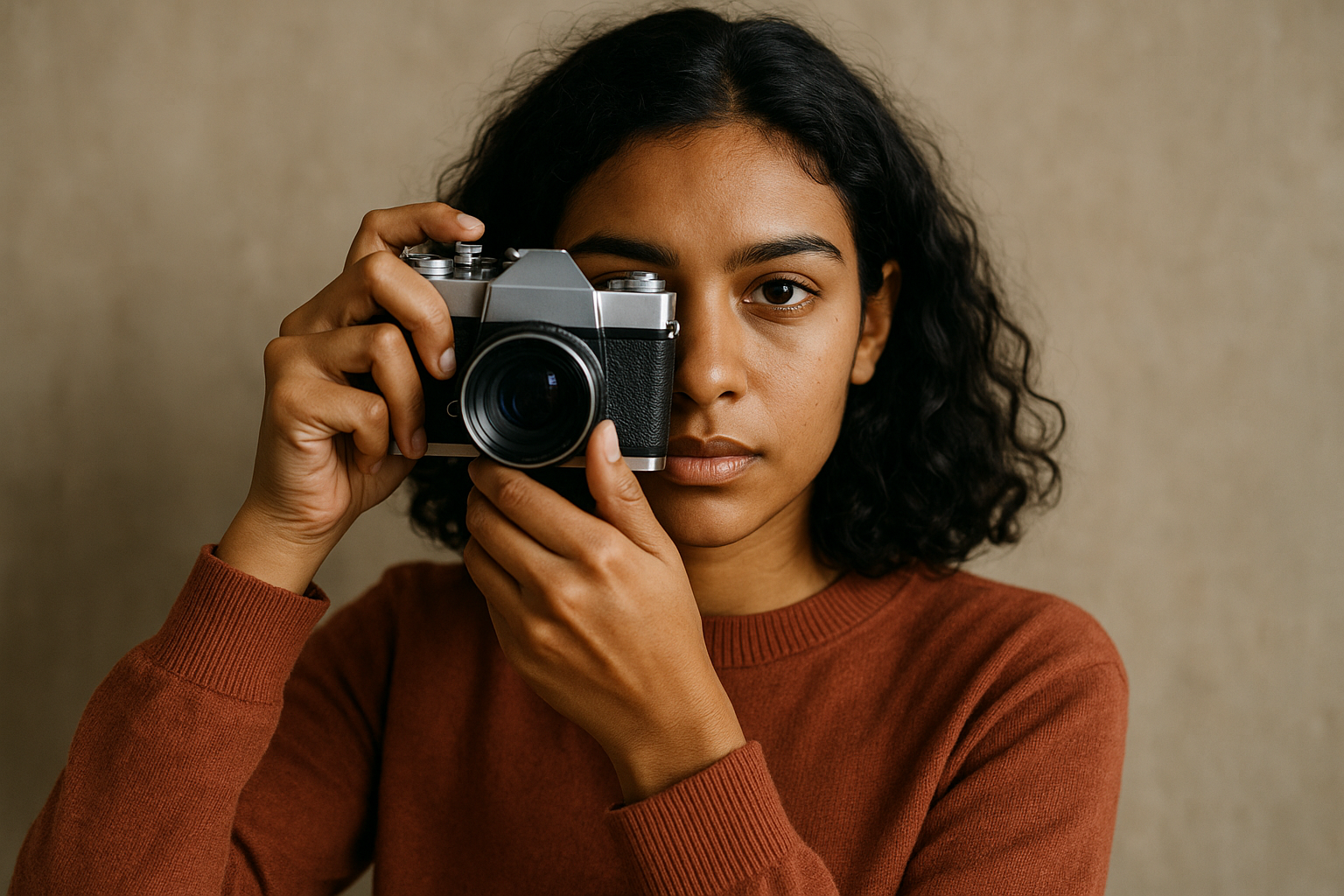
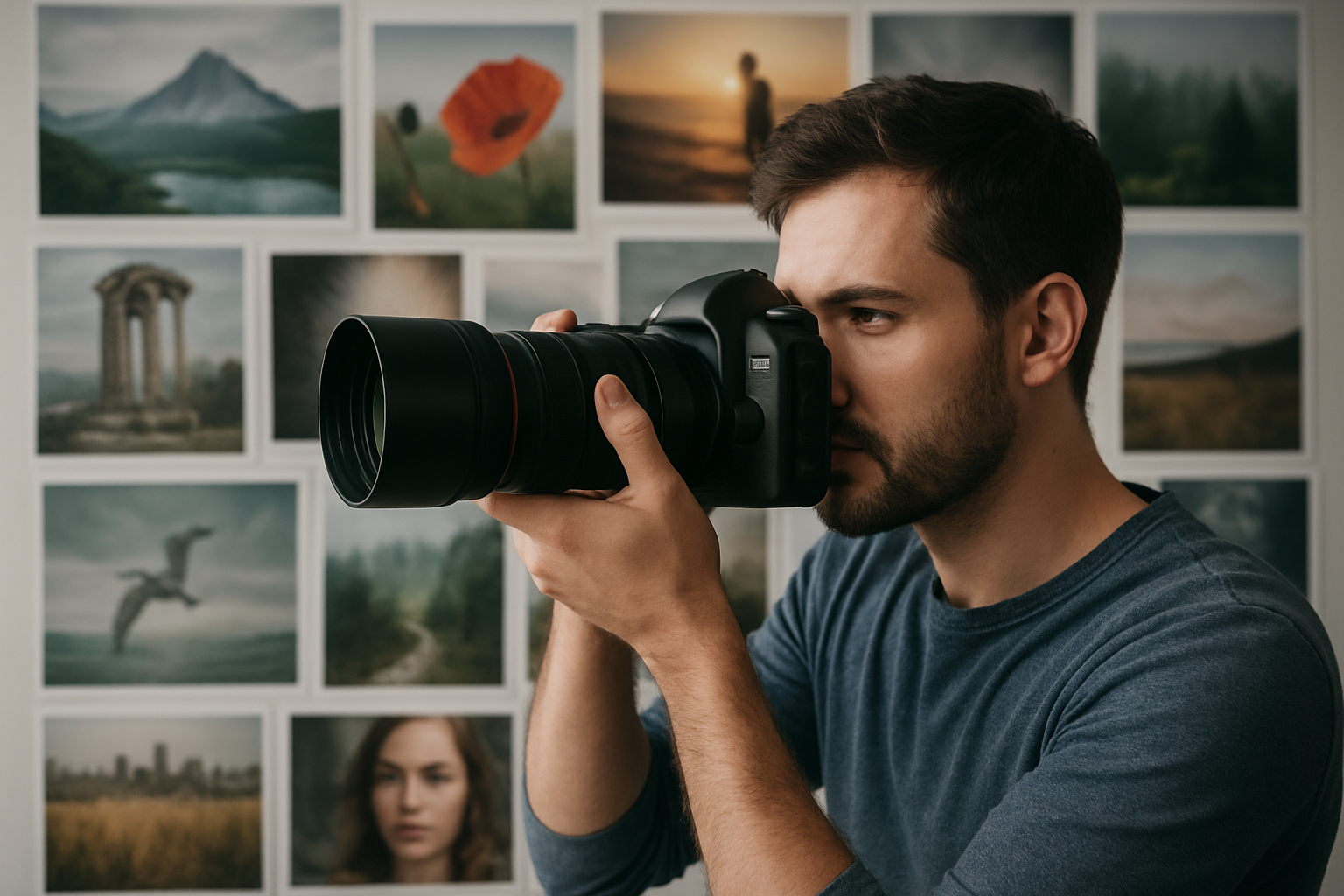
    In our rapidly evolving world, where the clamor of social media often drowns out profound self-reflection, the camera emerges as a powerful tool for personal discovery. It serves not just as an instrument for capturing images, but as a conduit for self-expression and identity formation.

    The Camera as a Mirror

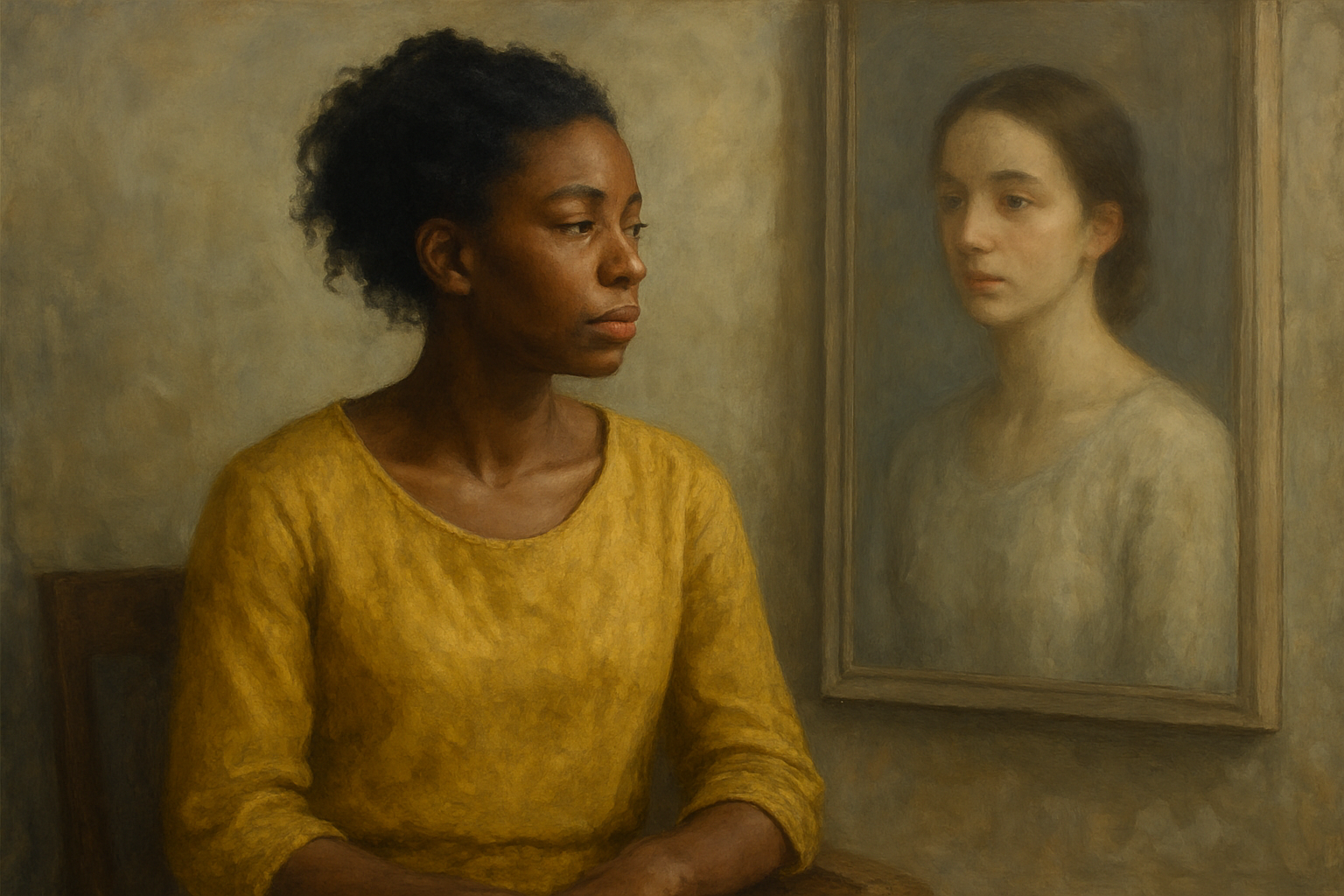
    For decades, artists and photographers have explored the idea of the camera as a mirror to the soul. The act of taking a photograph becomes a dialogue between the photographer and their inner self. As legendary photographer Richard Avedon once said, “My portraits are more about me than they are about the people I photograph.” This sentiment reflects the intimate relationship between the creator and their subject, often revealing more about the photographer’s world view than the subject itself.

    Narratives Through Lenses

    Photography provides a platform for individuals to tell their unique stories. This is especially true for marginalized communities whose voices are often underrepresented in mainstream media. By wielding a camera, these individuals can take control of their narrative, presenting their truth unfiltered.

    • Documenting Cultural Identity: Photographers like Alec Soth have long used photography to explore what it means to belong to a certain cultural or geographic identity. Through his work, Soth portrays varied aspects of life in America, exposing both the beauty and the idiosyncrasies of its diverse cultures.
    • Amplifying Marginalized Voices: Renowned street photographer Yann Arthus-Bertrand has utilized his work to shed light on environmental issues and human rights, amplifying voices that are often silenced. His iconic series “Earth from Above” showcases breathtaking images that reflect on global challenges, inviting viewers to ponder their own role within these narratives.

    Selfies and Self-Perception

    In the age of smartphone cameras, the “selfie” has become a significant cultural phenomenon. Some may dismiss it as mere narcissism, yet it can be a powerful means of exploring self-perception and projecting identity. The ability to capture and curate a digital self has transformed how individuals express who they are and how they wish to be perceived.

    “The selfie is an impression of a visual self-empowerment and self-expression, where one controls the narrative of one’s own image.” – Elite Daily

    Photography as Therapy

    The therapeutic potential of photography is well documented. It offers a creative outlet for those dealing with trauma or mental health issues, allowing them to process emotions in a tangible form. Programs using photography for therapeutic purposes have emerged worldwide, supporting individuals in their journey to mental well-being.

    • Empowerment Through Creation: Initiatives like Photo Voice empower participants to tell their stories through images, fostering a sense of agency and self-worth. These projects underscore how creating art can lead to personal growth and healing.
    • Reflecting on Inner Landscapes: By externalizing internal experiences through photographs, individuals can gain new insights into their emotional landscapes. This externalization helps bridge the gap between one’s inner world and external reality, providing clarity and perspective.

    Challenges and Critiques

    While the camera is undoubtedly a potent tool for self-expression and exploration, it is not without its challenges and critiques. The advent of digital manipulation raises questions about the authenticity of images and their ability to truly represent one’s identity. Additionally, the saturation of images on social media can lead to superficial engagement rather than deep reflection.

    “The ubiquity of digital cameras and photo-editing software makes us all potential creators of synthetic images, blurring the line between truth and fabrication.”PetaPixel

    The Future of Identity Through the Lens

    As technology evolves, so too does the potential for photography to shape our understanding of self and identity. Emerging technologies like virtual and augmented reality promise to further integrate photography into our perception of reality, offering new ways to experience and create visual narratives.

    • Enhanced Storytelling: Virtual reality allows for immersive experiences, where viewers can engage with stories in a three-dimensional space. Photographers can use this to create dynamic narratives that transcend traditional two-dimensional photography.
    • Augmented Reality and New Perspectives: Augmented reality offers new ways to layer information and perspectives onto our physical world, potentially changing how we interact with and interpret visual media.

    Despite the challenges it faces, the camera remains a vital tool for finding and expressing identity. Its power lies within its ability to capture moments that resonate deeply with both the creator and the observer, fostering understanding and connection across diverse perspectives.

    Whether through creating intimate self-portraits, documenting cultural narratives, or exploring new technologies, the camera offers a platform for voices that might otherwise remain unheard. As we continue to evolve in a digital era, it remains crucial to harness the visual voice of the camera as a means to navigate and articulate the complexities of our identities.

    Photography, in its myriad forms, continues to challenge and redefine how identity is constructed and perceived in contemporary society.
  • The Visual Vocabulary: Expanding the Language of Photography

    The Visual Vocabulary: Expanding the Language of Photography

    Photography, in its essence, is a universal language. It transcends verbal communication, capturing emotions and telling stories that words often fail to express. As the dictionary of this visual language continues to expand, we explore the significance of this evolution and how it impacts both photographers and viewers globally.

    The Foundation of Visual Language

    The roots of photography as a storytelling medium stretch back to its invention in the 19th century. Early photographs were largely documentary in nature, capturing portraits and landscapes. Over time, the development of technology and the nuances of creativity have exponentially expanded the capabilities and interpretations of photographers.

    Henri Cartier-Bresson, one of the pioneers of modern photojournalism, emphasized the importance of the “decisive moment.” He once stated,

    “Photography is, for me, a spontaneous impulse coming from an ever-attentive eye which captures the moment and its eternity.”

    His work laid the groundwork for considering photography as an art form, with its own unique visual grammar.

    Technological Advancements and Their Impact

    With the advent of digital cameras, smartphone technology, and editing software, photography has become more accessible than ever. These advances have allowed photographers to explore new techniques and styles, effectively expanding the vocabulary available to them.

    • High Dynamic Range (HDR): Technology that blends multiple exposures to record a greater dynamic range between the lightest and darkest areas of an image. This has become a critical language tool for landscape photographers.
    • Drone Photography: Offering new perspectives and compositions by capturing images from above, drone photography adds an aerial vocabulary that was once only accessible through costly methods like helicopters.
    • Artificial Intelligence in Editing: AI-powered tools have introduced automated adjustments and style transfers, enabling photographers to express unique visions with ease.

    An article in The Verge highlights the evolution of AI in photography, stating, “The integration of AI within modern cameras and post-processing software provides photographers with tools that enhance creativity and precision, altering how we interpret and understand visual narratives.”

    The Role of Cultural and Social Movements

    Photography has always reflected society’s values and changes, acting as a mirror to cultural shifts. In recent years, the emergence of social media platforms like Instagram and TikTok has democratized photography, giving voice to diverse stories and perspectives worldwide. This has widened the visual vocabulary by incorporating cultural symbols and narratives previously underrepresented in mainstream media.

    For instance, the rise of smartphone cameras has empowered photographers from diverse backgrounds to share culturally specific stories. These stories challenge the status quo, offering new perspectives that redefine the visual vocabulary.

    As Susan Sontag eloquently summarized in her book “On Photography”:

    “Photographs are not so much an instrument of memory as they are an invention of it.”

    Photography enables the construction and deconstruction of cultural memory, reflecting the ongoing dialogue between past, present, and future narratives.

    The Expanding Aesthetic and Conceptual Horizons

    The aesthetic dimensions of photography have also evolved to include abstract and conceptual photography, pushing boundaries of what is traditionally considered beautiful or meaningful. This expansion allows photographers to explore themes of reality, identity, and perception more deeply.

    • Minimalist Photography: This style emphasizes simplicity and focuses on one subject, stripping away distractions to distill the essence of the visual message.
    • Conceptual Photography: Merging ideas with art, it leverages symbolism and metaphor to communicate complex concepts and narratives.
    • Mixed Media: Combining photographs with other art forms such as drawing or digital art broadens the interpretive possibilities and narrative depth.

    An article in ArtNews discussed conceptual photography, mentioning that “by questioning the very reality captured by traditional lenses, photographers invite viewers into a dialogue that is both introspective and expansive.”

    Challenges in Crafting a New Visual Vocabulary

    While the language of photography has expanded, it is not without challenges. Photographers today are faced with the task of distinguishing their voices amidst a cacophony of images. Authenticity and originality are crucial in establishing a distinctive style and maintaining the integrity of photographic language.

    Moreover, ethical considerations play a significant role in today’s photographic world, particularly in photojournalism and street photography. Issues of privacy, consent, and representation are more pronounced, navigating these require photographers to be more socially and culturally aware.

    The Future of Photographic Language

    As technology continues to evolve, so will the language of photography. Advancements in virtual reality (VR) and augmented reality (AR) may soon provide photographers with tools to create fully immersive visual experiences. These cutting-edge technologies promise to further expand the visual vocabulary, crafting narratives with unprecedented depth and interaction.

    The integration of blockchain technology also opens new avenues for preserving the authenticity of photographic works, offering opportunities for photographers to protect their intellectual property and monetize their creativity in innovative ways.

    In conclusion, as the visual vocabulary of photography continues to expand, it becomes evident that photography is not just a reflection of reality, but a construct of it. The innovation and creativity within the realm of photography underscore its importance as a potent form of expression, capable of profound impact across cultures and time. As we stand on the precipice of further technological and creative advancements, the language of photography remains essential in narrating the ever-evolving human experience.

  • Beyond the Brushstroke: New Media and Visual Expression

    Beyond the Brushstroke: New Media and Visual Expression

    In the past century, visual art has transcended the constraints of traditional media, such as painting and sculpture, evolving into a multifaceted form that embraces technological advancements. The contemporary arena of visual expression, largely fueled by new media, has surged beyond the brushstroke, offering artists innovative ways to express their creativity and engage audiences.

    The Rise of Digital Art

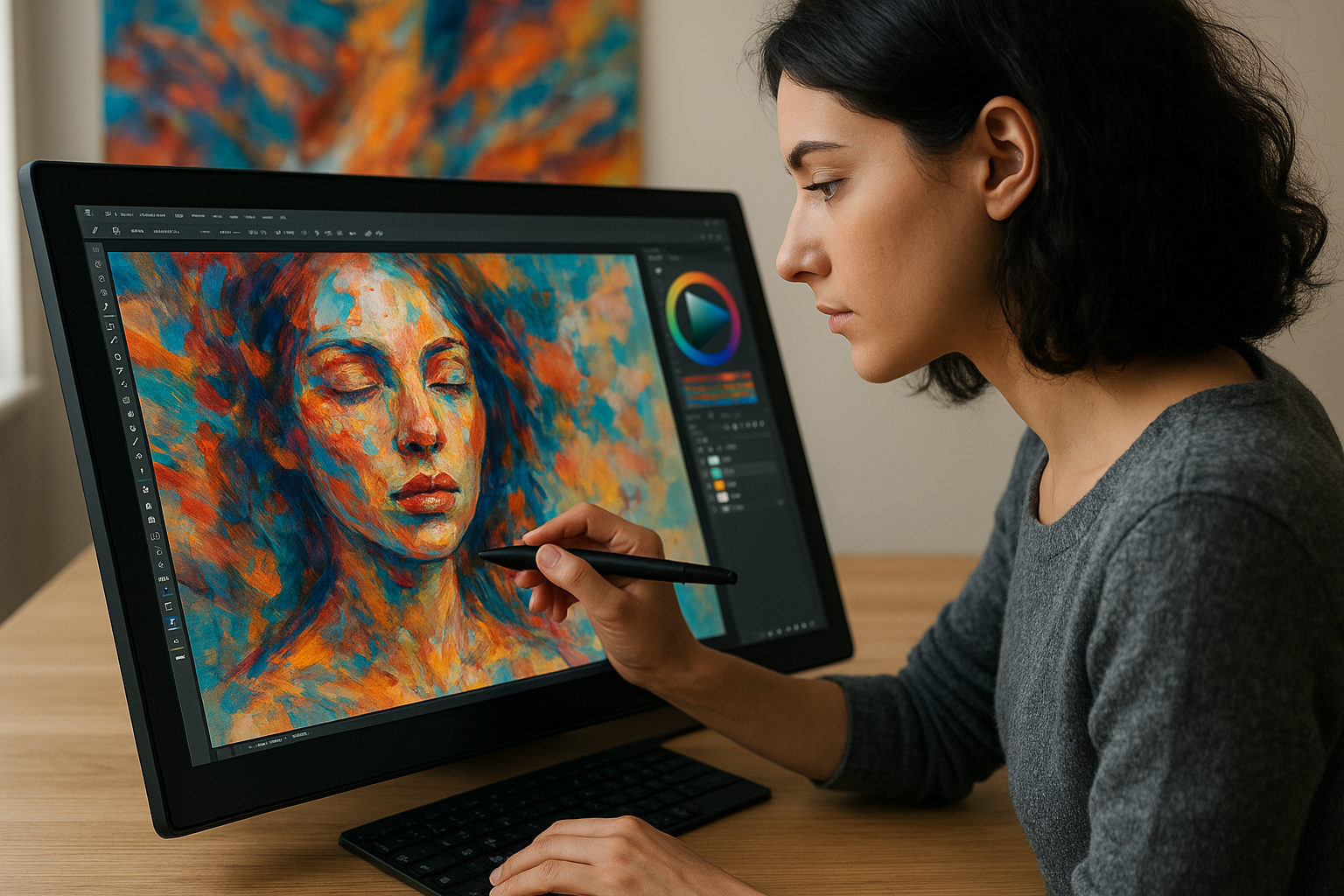
    Digital art is perhaps the most revolutionary development in new media. What began as simple pixel graphics has transformed into a sophisticated realm including digital painting, 3D modeling, and interactive installations. Artists now have access to a plethora of tools that not only mimic physical media but enhance it. Software such as Adobe Photoshop and Blender have become staples for artists aiming to push the boundaries of visual art. As Art Radar Journal notes, “Digital technologies are now providing artists with new ways to produce, distribute, and experience art” (Art Radar Journal).

    Exploring Virtual and Augmented Reality

    Virtual reality (VR) and augmented reality (AR) are no longer futuristic concepts confined to science fiction. Artists are using these technologies to create immersive environments, inviting viewers to step inside the artwork. VR, with its ability to transport users into entirely constructed worlds, allows for an experience that transcends traditional viewing. Artists such as Marina Abramović, who has embraced VR to expand her performances, are at the forefront of this transformation. According to The Guardian, “her VR piece, Rising, is an embodiment of the potential for VR to evoke visceral emotional responses” (The Guardian).

    Simultaneously, AR bridges the gap between the digital and physical worlds, enhancing our perception of the latter. Applications like ARKit and Snapchat filters allow artists to merge digital artworks with real-world environments, creating interactive experiences accessible through smartphones and tablets. The integration of AR in public art projects, such as those by JR in Paris, showcases its potential to transform urban landscapes into evolving galleries.

    Interactive and Generative Art

    Another exciting development in the realm of new media art is interactivity. Unlike traditional art forms that require passive observation, new media often encourages the audience to participate, altering the artwork in real time. This dynamism is seen in the works of Rafael Lozano-Hemmer, who creates intricate installations that depend on audience interaction.

    Generative art, which employs algorithms to create artwork, is another frontier where technology and artistry meet. Emphasizing process over result, artists like Casey Reas, co-creator of the Processing programming language, use code to generate complex, evolving patterns that challenge traditional forms of expression. With each viewer potentially seeing a different iteration, generative art becomes a living entity.

    “The beauty of generative art is that the artist can establish a framework in which the artwork evolves, a concept that invites endless possibilities,” Reas explains in an interview with Wired. (Wired)

    The Influence of Artificial Intelligence

    Artificial intelligence (AI) is another paradigm-shifting force in visual expression. AI art, created with machine learning models that analyze millions of images to create new, often surreal works, challenges preconceived notions about creativity and authorship. The controversial auction of Edmond de Belamy, an AI-produced work that sold for $432,500 at Christie’s, sparked significant debate about the role of AI in art and the definition of an artist.

    AI developments are not mere imitations of human creativity but potentially new forms of intelligence with unique aesthetic signifiers. Projects like DeepDream or GANPaint Studio allow artists to explore abstract and uncanny representations that push the limits of imagination.

    Impact on Society and Culture

    The emergence of new media in visual expression is not just an artistic development; it poses profound questions about our society and culture. As artworks become more ephemeral and digitally-oriented, debates arise about issues of preservation, authorship, and intellectual property. Furthermore, the democratization of art production and distribution, made possible by digital technologies, challenges traditional art institutions and markets, offering increased accessibility but also raising concerns about quality control and valuation.

    Moreover, new media art acts as a mirror reflecting our contemporary anxieties and aspirations. Themes of digital identity, privacy, and the pervasive influence of technology are prevalent in today’s artworks, urging viewers to reflect on the socio-political implications of our increasingly digital lives.

    Conclusion: The Future of Visual Expression

    The evolution of visual expression through new media is an ongoing journey, marked by innovation and exploration. As technology continues to advance, the possibilities for artists to delve into unknown territories of creativity are limitless. This era, characterized by a fusion of digital technologies and artistic visions, heralds a new chapter in the history of art.

    While it embraces the digital, the heart of visual expression remains the same: a quest to convey meaning through visual form. Through new media, artists are discovering unprecedented methods to engage with and challenge their audience, redefining what it means to create and experience visual art in the modern world. Indeed, as we venture further into the digital age, the future of art is not just beyond the brushstroke—it is limitless.

  • The Sensory Sacred: Engaging All Senses in Contemporary Art

    The Sensory Sacred: Engaging All Senses in Contemporary Art

    The Sensory Sacred: Engaging All Senses in Contemporary Art

    The Sensory Sacred: Engaging All Senses in Contemporary Art

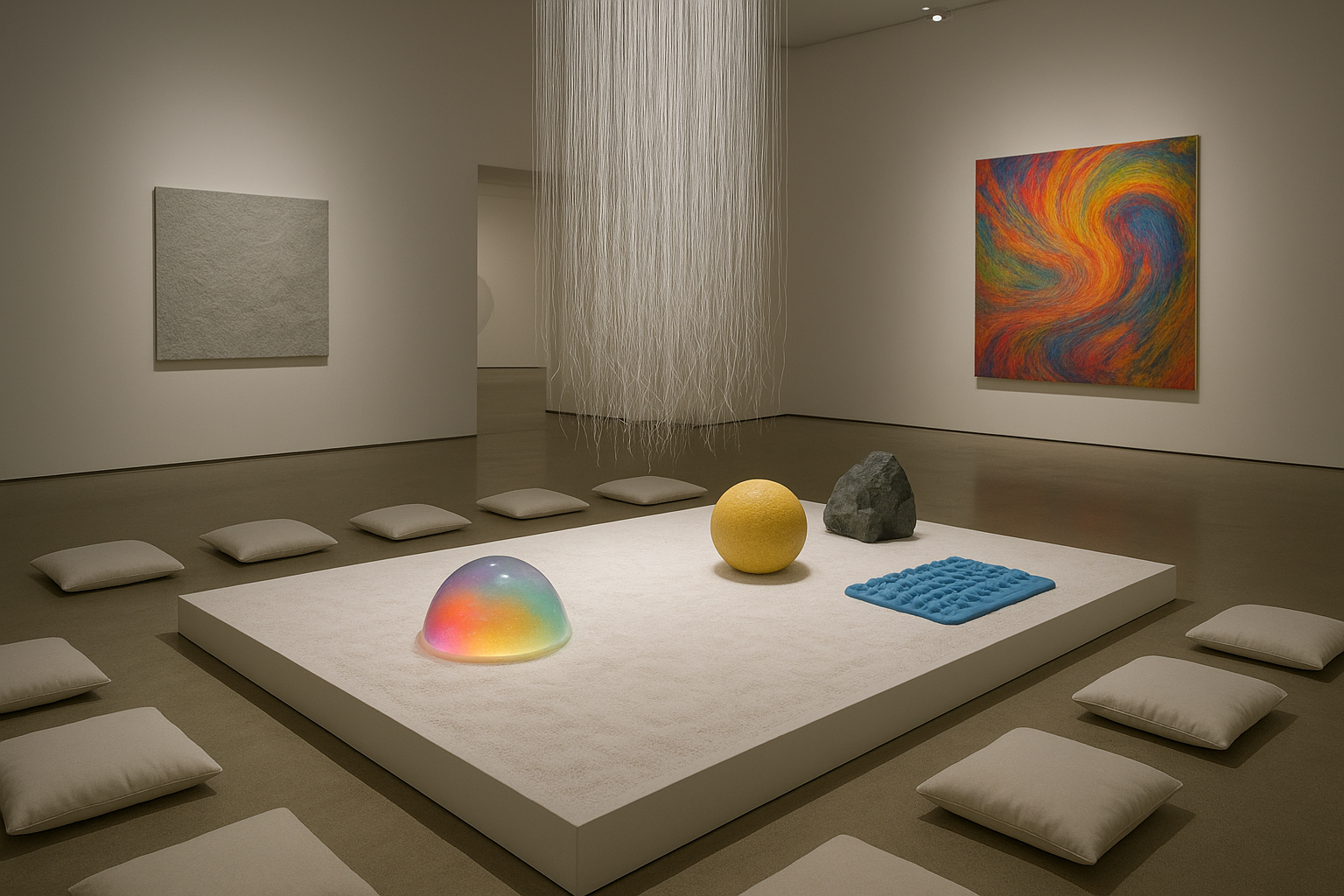
    Contemporary art has evolved to transcend the visual, venturing into realms that tantalize and challenge all the senses. This form of artistic expression strives to create a holistic sensory experience, leading audiences to engage with art in new and unexpected ways.

    The Evolution From Visual to Multi-Sensory Art

    The traditional perception of art has predominantly centered around the visual—paintings, sculptures, and photographs are all enjoyed for their visual aesthetics. However, the rise of contemporary art has seen artists embracing the non-visual by engaging other senses such as sound, smell, touch, and taste. This transformation is rooted in the desire to create more immersive experiences that captivate and challenge audiences.

    Renowned contemporary artist Olafur Eliasson, known for his large-scale installations, often employs various sensory elements in his work. In Eliasson’s words, “Art addresses us across the sensory spectrum, using it to make us more aware of our environment.” [Source]

    Notable Multi-Sensory Artistic Endeavors

    Several contemporary artists and installations have paved the way for this immersive approach, each offering unique and profound sensory experiences:

    • The Weather Project by Olafur Eliasson: A prime example of multi-sensory engagement, this installation at the Tate Modern in London used mist, heat, and light to simulate the sun, allowing visitors to feel and see an artificial sunset indoors.
    • Sonic Fountain by Doug Aitken: This installation combines sound and visual stimuli by allowing water droplets to fall into a pool, creating an auditory experience that resonates with the visual beauty of the rippling water.
    • Carsten Höller’s Scent Tunnel: A tunnel filled with distinct aromas invites visitors to explore the power of scent in evoking memories and emotions.

    The Science Behind Sensory Engagement

    Research has shown that engaging multiple senses can enhance our emotional and cognitive experiences. The use of smell, sound, touch, and taste can elicit stronger emotional responses and create lasting memories compared to visual stimuli alone.

    “Multisensory experiences reshape the way our brains process environments, significantly influencing perception and cognition,” says a study published in the Journal of Cognitive Psychology.

    Artists as Experience Designers

    In this era of sensory exploration, artists have become experience designers, orchestrating environments that stimulate the senses in sync. The interplay of various sensory stimuli can transport audiences to new conceptual realms, allowing them to experience the artwork fully.

    For instance, Japanese artist Yayoi Kusama is renowned for her immersive mirrored rooms that offer infinite reflections and distorting perspectives, challenging the visitor’s perception of space and self. Her work signifies a departure from the art object to the art experience, where the viewer is integral to the piece itself.

    The Significance of Sensory Art in Modern Society

    In a fast-paced digital world, sensory art offers a sanctuary—a chance to pause and fully engage with the present moment. It invites audiences to rediscover the world through their senses, fostering a deeper connection with themselves and their environment.

    A multi-sensory approach also plays a crucial role in accessibility, offering those who are visually impaired an opportunity to experience art through other senses, thus democratizing art consumption.

    Conclusion: An Ever-Expanding Realm

    The contemporary art landscape continues to evolve, and the future promises even more integration of technology and sensory experiences. Virtual reality and augmented reality are at the forefront, offering unprecedented opportunities for sensory engagement.

    As we navigate this transformative era, the role of the artist as a creator of multi-sensory environments becomes ever more essential, inviting us to explore the sensory sacred in fresh and profound ways. Whether through the warmth of sunlight in an art installation or the aroma of a scent tunnel, contemporary art continues to redefine and expand our sensory horizons.

  • Rethinking Representation: New Ways of Seeing in Visual Arts

    Rethinking Representation: New Ways of Seeing in Visual Arts

    The realm of visual arts has always been a dynamic landscape where representation and abstraction dance fluidly. As we delve into the 21st century, the way artists represent reality and convey meaning is undergoing transformative changes. This article explores how contemporary artists are rethinking representation to bring fresh perspectives to visual arts.

    Historical Context of Representation in Visual Arts

    Before exploring current trends, it’s essential to understand the historical context of representation in art. From the Renaissance to the Impressionists, the evolution of art has often been about how reality is interpreted:

    • The Renaissance Era: This period marked a return to classical ideals of beauty and realism. Artists like Leonardo da Vinci and Michelangelo epitomized the pursuit of human anatomy and proportion.
    • The Impressionists: Artists such as Claude Monet and Edgar Degas sought to depict everyday life and light with vibrant brushstrokes and new techniques.

    By the 20th century, movements like Cubism with Pablo Picasso, and Surrealism with Salvador Dalí, challenged the conventional means of representation, pushing towards abstraction and the exploration of the unconscious mind.

    The Contemporary Shift in Representation

    In contemporary times, representation in visual arts is not merely about mimicking reality but rather questioning and reinterpreting it:

    “Today, the exploration of representation in art is as much about questioning the image as it is about depicting it in new and innovative ways.” – Tate

    Technology as a Catalyst

    • Digital Art: Technology has become a vital tool for artists, providing new platforms and tools for innovation. Digital art allows for the manipulation of images in ways that were impossible before.
    • Augmented and Virtual Reality: Artists like Olafur Eliasson and Laurie Anderson are using augmented reality (AR) and virtual reality (VR) to create immersive experiences that challenge traditional notions of space and perception.

    The Role of Identity and Culture

    Many contemporary artists are using their work to explore themes of identity, culture, and social justice. Artists like Kara Walker and Kehinde Wiley use their art to address historical representations and question stereotypes:

    • Kara Walker: Known for her silhouettes, Walker challenges historical narratives around race, gender, and power.
    • Kehinde Wiley: Wiley reimagines classical portraiture by depicting people of color in the grandiose style of European Old Masters.

    Redefining Perspectives with Mixed Media

    Artists are increasingly using mixed media to expand the possibilities of representation. This approach allows for a blend of materials and techniques, often resulting in unexpected and provocative outcomes.

    • Collage: Artists like Wangechi Mutu use collage to juxtapose different elements, creating artworks that challenge the norms of beauty and provoke thought about identity and environment.
    • Installation Art: Installation pieces by artists such as Ai Weiwei confront viewers with immersive experiences that communicate powerful messages around politics and human rights.

    The Democratization of Art Interpretation

    With the rise of social media and online platforms, art is increasingly accessible to a broader audience. This democratization has led to diverse interpretations and dialogues about representation. Platforms like Instagram and TikTok allow artists to showcase their work globally, inviting immediate engagement and discourse.

    “Digital platforms have made art more accessible than ever, allowing artists to bypass traditional gatekeepers and reach audiences directly.” – Artsy

    Conclusion: Toward a New Vision

    As we move further into an era where technology and globalization shape our world, artists continue to redefine representation in visual arts. The ability to see beyond the canvas and screen reveals the infinite potential of this transformation.

    The reimagined representation in visual arts isn’t just a trend—it’s a revolution. It challenges us to perceive the world and our place in it with a critical yet hopeful eye. As Albert Einstein said, “Imagination is more important than knowledge. For knowledge is limited, whereas imagination embraces the entire world, stimulating progress, giving birth to evolution.” By embracing new ways of seeing, contemporary visual arts lead us to fresh understandings of reality itself.

  • The Canvas of Culture: Visual Art as Social Commentary

    The Canvas of Culture: Visual Art as Social Commentary

    Throughout history, visual art has served not only as a medium of aesthetic expression but also as a powerful tool for social commentary. Artists have used their craft to challenge societal norms, criticize political systems, and bring attention to social injustices. In doing so, art becomes a mirror reflecting the complexities of the cultural and political landscapes from which it emerges.

    The Historical Perspective

    From the politically charged works of Francisco Goya to the poignant murals of Diego Rivera, history provides a wealth of examples where art has influenced public consciousness. Goya’s The Third of May 1808, for instance, vividly captures the horrors of war and the brutal suppressions by Napoleon’s armies in Spain. Meanwhile, Rivera’s murals depict the struggles and victories of the working class, bringing light to issues of labor and inequality.

    “Artists play a vital role in exposing the gritty facets of the human experience. By doing so, they offer audiences a chance to engage with these themes critically, fostering a space where dialogue and change are possible.”
    Artsy Editorial

    Contemporary Reflections

    In the modern context, artists continue to utilize their work as a medium for commentary and change. The guerrilla art of Banksy, renowned for its satirical edge, underscores this dynamic. His work challenges notions of capitalism, authority, and consumerism, often provoking conversation on a global scale.

    Another profound example can be seen in the works of Ai Weiwei, whose installations and sculptures address themes of human rights and freedom of expression. Weiwei’s Remembering memorializes the thousands of children who died in the 2008 Sichuan earthquake, bringing attention to the corrupt construction practices that led to the tragedy.

    Art as a Catalyst for Change

    Visual art has the unique ability to transcend language barriers and evoke emotion, making it an effective means of inspiring action. The provocative nature of art compels viewers to confront uncomfortable truths and initiate dialogue. As society continues to evolve, the role of art as a commentator and catalyst for change remains indispensable.

    Ultimately, as described by Tate, social commentary art challenges audiences to reconsider their understanding of the world, encouraging reflection and progress. As we navigate the complexities of the modern age, the canvas of culture will undoubtedly continue to serve as a vibrant declaration of the human condition.

    Whether through a brushstroke or a graffiti tag, visual art will persist as a resonant force in the ongoing dialogue about society’s greatest challenges and triumphs.

  • Seeing the Song: Visualizing Contemporary Musical Structures

    Seeing the Song: Visualizing Contemporary Musical Structures

    The intersection of music and visual art has long been a subject of fascination and critical analysis. In recent years, the evolution of technology has transformed this convergence, allowing contemporary artists and scholars to visualize musical structures in innovative ways. This intriguing dialogue between sound and sight prompts us to explore how we can ‘see’ the song.

    The Evolution of Musical Visualization

    The concept of visualizing music isn’t new. Attempts date back to the Baroque period, where visual art attempted to capture the essence of musical compositions. These early endeavors mainly focused on allegorical representations. Fast forward to the 20th century, and we see a more structured approach with composers like Wassily Kandinsky and Paul Klee, whose paintings often sought to express musical elements through color and form.

    “Color is the keyboard, the eyes are the harmonies, the soul is the piano with many strings. The artist is the hand that plays, touching one key or another, to cause vibrations in the soul.” – Wassily Kandinsky

    Digital Revolution and New Media

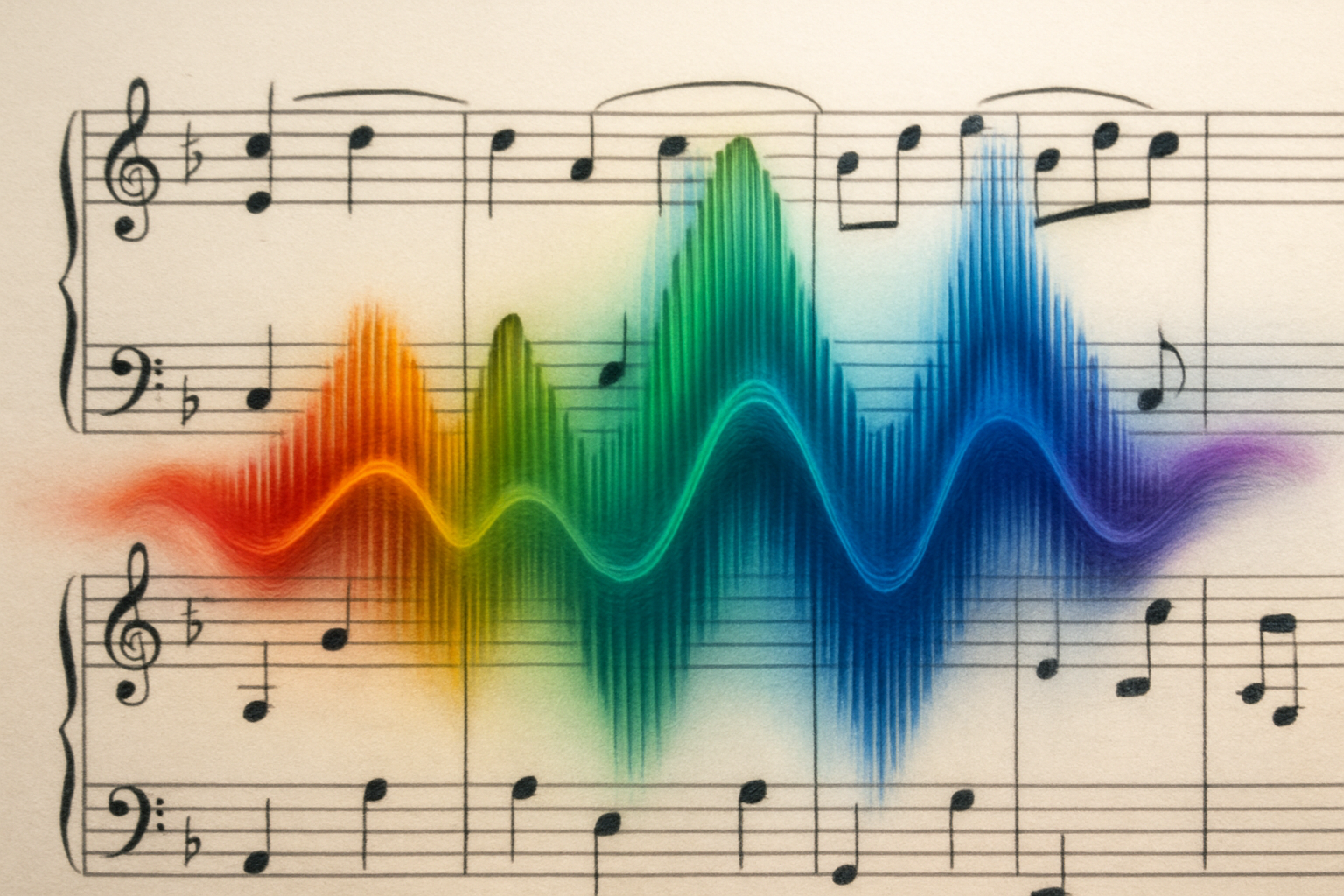
    With the advent of digital technology, the visualization of music has taken on new dimensions. Consider the impact of computers and software that can analyze musical data and represent it visually. This technology allows artists and scientists alike to explore music in a spatial context, using visuals to reveal patterns and structures that were previously intangible.

    The Role of Software and Algorithms

    Programs like Adobe After Effects and Processing have become essential tools for artists. They allow for the translation of sound waves into intricate designs that move in synchrony with the music. For instance, sound visualization in interactive installations uses sound frequencies to drive animations, transforming the auditory experience into a visual journey.

    Data Sonification

    Data sonification is another captivating trend whereby numerical data is represented through sound, often producing surprising musical results. Conversely, transformations of this auditory data back into visual form have revealed new aesthetic possibilities.

    • The Music Animation Machine: This tool translates classical music into visual scrolling scores, providing a visual representation of music’s temporal and harmonic structure.
    • Visit Music Animation Machine

    Graphic Scores in Contemporary Composition

    Graphic scores push the boundary of traditional music notation. They often employ a combination of symbols, colors, lines, and images to signify musical gestures and characteristics. Pioneered by composers like John Cage and Morton Feldman, these scores are as much pieces of art as they are guides for performance.

    Graphic scores invite performers to interpret the visual cues, creating unique, often unpredictable musical experiences. This openness exemplifies the fluidity between visual and auditory experiences and challenges conventional notions of how music should be notated and perceived.

    The Interplay of Synesthesia

    Synesthesia adds an intriguing personal layer to the visualization of music. This neurological phenomenon occurs when stimulation of one sensory pathway leads to automatic, involuntary experiences in another. For some individuals, music induces the perception of colors or shapes. This remarkable condition has inspired many artists, including Kandinsky, who often used his synesthetic experiences as a foundation for his art.

    “For Kandinsky, color was a means of exerting a direct influence upon the soul… color could be used in a painting as something autonomous and apart from a visual description of an object or other form.” – National Library of Medicine

    Case Studies in Music Visualization

    • Brian Eno’s “77 Million Paintings”: A generative piece of software art that visualizes tonal clusters and ambient soundscapes through constantly evolving visual images.
    • Ryoji Ikeda’s “data.scan”: Uses raw data output visualized in a minimalistic, digital aesthetic to create a symphony of sight and sound.

    Both Eno and Ikeda push the conventional boundaries of performance, using technology to present music as both an acoustic and a visual phenomenon.

    Conclusion: Envisioning the Future

    The visualization of music not only enhances our sensory appreciation but also deepens our understanding of musical structure and intention. As technology continues to advance, it offers tantalizing possibilities for creative expression and cross-disciplinary collaboration between musicians, visual artists, and technologists.

    In embracing these intersections, we are led to reconsider the very nature of music—the universal language of sound—and its ability to transcend traditional forms to engage audiences more holistically. As we move forward, we are reminded of the profound connections between seeing and hearing as we learn to read, interpret, and appreciate music not only with our ears but with our eyes.

  • The Silent Stage: Where Contemporary Dance Meets Visual Art

    The Silent Stage: Where Contemporary Dance Meets Visual Art

    In the realm of artistic expression, the merger of contemporary dance and visual art creates a captivating tapestry where movement and aesthetic vision intertwine seamlessly. This fusion offers a sensory experience that transcends traditional boundaries, inviting audiences to engage in a unique dialogue between the seen and the felt.

    Choreography as Canvas

    The partnership between contemporary dance and visual art is not new, but it is perpetually evolving. Choreographers like Merce Cunningham have famously collaborated with visual artists such as Robert Rauschenberg to produce performances that defy conventional narratives. As Cunningham once said, “The dance gives you what the music can’t; the visual art gives you what the dance can’t.” (Source) These collaborations allow creators to explore new dimensions of storytelling.

    Visual Artists Taking the Stage

    Visual artists, on the other hand, are increasingly taking inspiration from the dynamics of dance to expand their creative horizons. Tino Sehgal, known for his “constructed situations,” engages performers to create art through motion and interaction. His work blurs the line between spectator and participant, urging viewers to contemplate the transient nature of both dance and art.

    “Art is a continuous engagement, not a statement,” Sehgal asserts, pointing to the ephemeral quality shared by dance and performance art. (Tate Modern)

    The Silent Conversation

    The silent stage becomes a platform for this exchange, where visual aesthetics influence choreography and the rhythms of dance inform visual compositions. This interaction challenges audiences to decode layers of meaning woven into every movement and stroke.

    Exhibits such as the “Dancing Museum” initiative have further solidified this collaboration by embedding dancers into museum spaces, turning galleries into live, breathing canvases. Visitors find themselves immersed in a performance that flows around the static artworks, creating a narrative that goes beyond time and space.

    Future Directions

    • Exploring technology: Augmented reality and virtual experiences are pushing the boundaries of how these two art forms can converge.
    • Inclusive storytelling: Stories of diverse cultures and identities are told through the universal languages of dance and visual art.

    As we look to the future, the integration of contemporary dance and visual art continues to innovate, challenging artists and audiences alike to question, experience, and redefine art’s silent stage.