Tag: stories

  • The New Mythology: Crafting Personal Narratives Through Art

    The New Mythology: Crafting Personal Narratives Through Art

    In an age where communication is often reduced to fleeting digital interactions, the act of creating personal narratives through art has emerged as a transformative experience. This new mythology is not carved in ancient stone or written in the annals of old texts but is instead a vibrant testament to individual experience, emotion, and imagination. Through painting, sculpture, music, and film, artists today are crafting personal myths that resonate on a universal scale.

    The Power of Personal Myth

    Mythologies have historically served as a means to explain the unexplainable, to give life to the abstract. Today, as individuals seek to define themselves in an ever-changing world, personal myth-making through art has become a potent form of self-expression and identity construction. As Joseph Campbell famously said, “Myths are public dreams, and dreams are private myths.” This intersection of the public and private narrative allows artists to communicate their innermost thoughts and feelings with audiences who may share those same universal themes.

    “We tell ourselves stories in order to live,” wrote Joan Didion, capturing the essence of why humans have leaned on storytelling throughout history. These stories, reflected in the evolving mythologies of contemporary times, are integral to our understanding of self and other.

    Art as a Reflection of Self

    • Paintings and Drawings: The act of painting provides a canvas not just for colors, but for life stories. Artists like Frida Kahlo have famously used self-portraits to express personal pain and resilience. Kahlo’s works are deeply autobiographical, with vibrant symbolism that hints at both her Mexican heritage and her personal suffering.
    • Music and Performance: Musicians often speak to their own myths through songs. Taylor Swift, for example, weaves intricate personal narratives into her albums, transforming personal experiences into relatable anthems. “[…] with each album, I explore a new world and create a new mythology for myself,” Swift reveals in an interview with Rolling Stone.
    • Film and Media: Directors like Guillermo del Toro craft richly layered cinematic experiences that blend personal folklore with universal themes. In movies such as Pan’s Labyrinth, del Toro explores the dark corners of human experience, inviting audiences into his own mythological universe that straddles reality and fantasy.

    The Universal Appeal

    While deeply personal, the narratives crafted by artists have universal resonance. The themes they explore—love, loss, identity, and transformation—are experiences shared by many. It is this commonality that gives these new mythologies their power. By funneling personal experience through the prism of art, creators offer mirrors for audiences to see their own stories reflected back at them.

    Art therapist Cathy Malchiodi discusses the healing aspects of art-making, stating, “Creating art enables us to find and lose ourselves at the same time.” This duality is at the heart of why personal myth-making remains relevant; it allows for both introspection and connection.

    The Modern Storytellers

    Modern artists are not constrained by the traditional boundaries of narrative. The digital age has opened up new avenues for storytelling, from multimedia installations to virtual reality experiences. Artists like Olafur Eliasson use these tools to craft immersive environments that invite viewers to step into the narrative, altering their perceptions and inviting them to become part of the story. In his work The Weather Project, Eliasson engaged with a mass audience to reflect on the environment and our relationship to it, crafting a shared mythic experience.

    Social media platforms, too, play a role, allowing artists to engage with audiences in real-time and receive immediate feedback. This interactivity enhances the storytelling process, as narratives can evolve with contributions from a global audience, emphasizing the collective nature of these new myths.

    Conclusion: Embracing Your Own Mythology

    The creation of personal narratives through art is a reminder of the enduring power of storytelling. In a world where individual voices can seem lost amid the noise, art remains a beacon of personal and collective human experience. As viewers engage with these stories, they find themselves both observer and participant in a cosmic dance, one that transcends time and space.

    The new mythology invites each of us to author our own stories, to craft our own legends, and to embark on our own hero’s journeys. Like the myths of old, these contemporary narratives hold the power to transform not only the creator but also those who journey alongside them.
  • The Body Remembers: Choreography as Embodied History

    The Body Remembers: Choreography as Embodied History

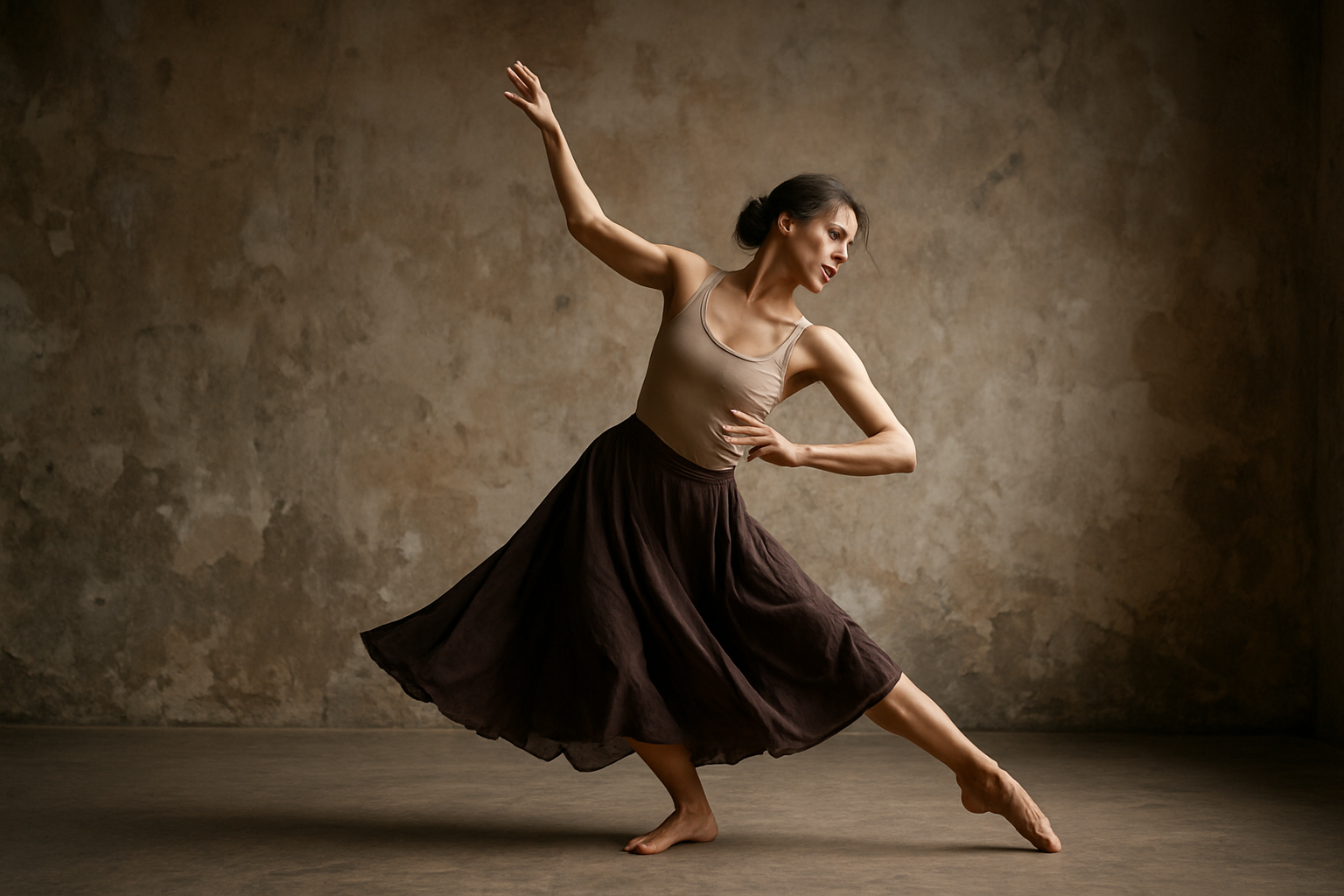
    Dance has long been a medium of expression, a channel through which cultures tell their stories, preserve their history, and envision their futures. In the world of choreography, each movement is more than just a step—it’s a narrative, an emotion, and indeed, an archive of human experience. This article delves into the profound concept of choreography as embodied history, exploring how the body serves as a living repository of collective memory.

    The Intersection of Memory and Movement

    Choreography transcends mere physical exercise; it is an art form that encapsulates the essence of memory and identity. As dance historian Mark Franko writes in his book, “Choreographing History,” “dance both resists and embodies history, constantly rewriting itself in the process of performance.”

    Each performance is unique in its execution, yet deeply rooted in tradition and the cumulative experiences of those who have danced before. The body, through dance, becomes a vessel of historical memory, preserving the intangible heritage of countless generations.

    Dance as Cultural Archive

    Across various cultures, dance has been used as a narrative tool to pass down stories and traditions. For example, the Bharatanatyam of India is not merely a dance form but a repository of ancient Indian narratives, philosophy, and cultural practices. The meticulous hand gestures (mudras) and facial expressions (abhinaya) are imbued with meanings that convey complex stories and emotions.

    “Dance is the hidden language of the soul,”

    as famously stated by Martha Graham, one of the pioneers of modern dance. Graham’s own works often drew on myth and legend, using choreography to engage with historical narratives and personal histories.

    The Modern Context: Choreography as Political Commentary

    In the contemporary dance scene, modern choreographers frequently use their platform to make poignant political and social statements. Pina Bausch, known for her innovative blend of movement, sound, and stage sets, created works that became critical commentaries on society and its complexities.

    One of her celebrated pieces, “Café Müller,” depicts the human condition’s challenges, using repetition and conflict within the choreography to express themes of fragility and resilience. As Bausch once remarked,

    “I’m not interested in how people move but in what moves them.”

    Through this, she captured the essence of choreography as a reflection of the societal zeitgeist, a political commentary written in the language of the body.

    Embodied History in Performance: The Body as a Living Archive

    Choreographers like Alvin Ailey have demonstrated how dance can serve as a historical chronicle. Ailey’s “Revelations” is an iconic masterpiece that channels the African American experience through profound musical and movement narrative, embodying cultural memory and resistance.

    According to the Alvin Ailey American Dance Theater, “Revelations” uses spirituals, song-sermons, gospel songs, and holy blues… to fervently explore the places of deepest grief and holiest joy in the soul.” Ailey’s choreography thus stands as an artistic testament to the resilience and history of a community within the broader American tapestry.

    Choreography and Social Memory

    Choreography has a pivotal role in social memory and collective identity. Through its interpretive nature, it provides a space for audiences to engage with their personal and collective pasts. The physicality of dance allows for metaphors that words can rarely achieve. In essence, dance is a dialogue between the past and present, a dance with history itself.

    Liz Lerman, a choreographer known for her collaborative approach to dance, highlights the importance of social memory. Her ensemble works invite diverse groups to share their stories and histories, thus making choreography an act of communal remembrance.

    Conclusion: The Lasting Imprint of Dance

    In conclusion, the art of choreography serves as a vital conduit for history and identity. By capturing the intangible essence of human experience in movement, it allows us not only to remember but also to connect. Dance nurtures the body and soul, crafting a living testament to the truths of human existence.

    As we move with this understanding, we honor the past, animate the present, and dance toward the future—a future enriched by the narratives and histories carried within our very bodies.

    Indeed, the body remembers, and in doing so, it keeps the history alive in the dynamic and transformative world of dance.