Tag: experience

  • The New Mythology: Crafting Personal Narratives Through Art

    The New Mythology: Crafting Personal Narratives Through Art

    In an age where communication is often reduced to fleeting digital interactions, the act of creating personal narratives through art has emerged as a transformative experience. This new mythology is not carved in ancient stone or written in the annals of old texts but is instead a vibrant testament to individual experience, emotion, and imagination. Through painting, sculpture, music, and film, artists today are crafting personal myths that resonate on a universal scale.

    The Power of Personal Myth

    Mythologies have historically served as a means to explain the unexplainable, to give life to the abstract. Today, as individuals seek to define themselves in an ever-changing world, personal myth-making through art has become a potent form of self-expression and identity construction. As Joseph Campbell famously said, “Myths are public dreams, and dreams are private myths.” This intersection of the public and private narrative allows artists to communicate their innermost thoughts and feelings with audiences who may share those same universal themes.

    “We tell ourselves stories in order to live,” wrote Joan Didion, capturing the essence of why humans have leaned on storytelling throughout history. These stories, reflected in the evolving mythologies of contemporary times, are integral to our understanding of self and other.

    Art as a Reflection of Self

    • Paintings and Drawings: The act of painting provides a canvas not just for colors, but for life stories. Artists like Frida Kahlo have famously used self-portraits to express personal pain and resilience. Kahlo’s works are deeply autobiographical, with vibrant symbolism that hints at both her Mexican heritage and her personal suffering.
    • Music and Performance: Musicians often speak to their own myths through songs. Taylor Swift, for example, weaves intricate personal narratives into her albums, transforming personal experiences into relatable anthems. “[…] with each album, I explore a new world and create a new mythology for myself,” Swift reveals in an interview with Rolling Stone.
    • Film and Media: Directors like Guillermo del Toro craft richly layered cinematic experiences that blend personal folklore with universal themes. In movies such as Pan’s Labyrinth, del Toro explores the dark corners of human experience, inviting audiences into his own mythological universe that straddles reality and fantasy.

    The Universal Appeal

    While deeply personal, the narratives crafted by artists have universal resonance. The themes they explore—love, loss, identity, and transformation—are experiences shared by many. It is this commonality that gives these new mythologies their power. By funneling personal experience through the prism of art, creators offer mirrors for audiences to see their own stories reflected back at them.

    Art therapist Cathy Malchiodi discusses the healing aspects of art-making, stating, “Creating art enables us to find and lose ourselves at the same time.” This duality is at the heart of why personal myth-making remains relevant; it allows for both introspection and connection.

    The Modern Storytellers

    Modern artists are not constrained by the traditional boundaries of narrative. The digital age has opened up new avenues for storytelling, from multimedia installations to virtual reality experiences. Artists like Olafur Eliasson use these tools to craft immersive environments that invite viewers to step into the narrative, altering their perceptions and inviting them to become part of the story. In his work The Weather Project, Eliasson engaged with a mass audience to reflect on the environment and our relationship to it, crafting a shared mythic experience.

    Social media platforms, too, play a role, allowing artists to engage with audiences in real-time and receive immediate feedback. This interactivity enhances the storytelling process, as narratives can evolve with contributions from a global audience, emphasizing the collective nature of these new myths.

    Conclusion: Embracing Your Own Mythology

    The creation of personal narratives through art is a reminder of the enduring power of storytelling. In a world where individual voices can seem lost amid the noise, art remains a beacon of personal and collective human experience. As viewers engage with these stories, they find themselves both observer and participant in a cosmic dance, one that transcends time and space.

    The new mythology invites each of us to author our own stories, to craft our own legends, and to embark on our own hero’s journeys. Like the myths of old, these contemporary narratives hold the power to transform not only the creator but also those who journey alongside them.
  • The Sensory Sacred: Engaging All Senses in Contemporary Art

    The Sensory Sacred: Engaging All Senses in Contemporary Art

    The Sensory Sacred: Engaging All Senses in Contemporary Art

    The Sensory Sacred: Engaging All Senses in Contemporary Art

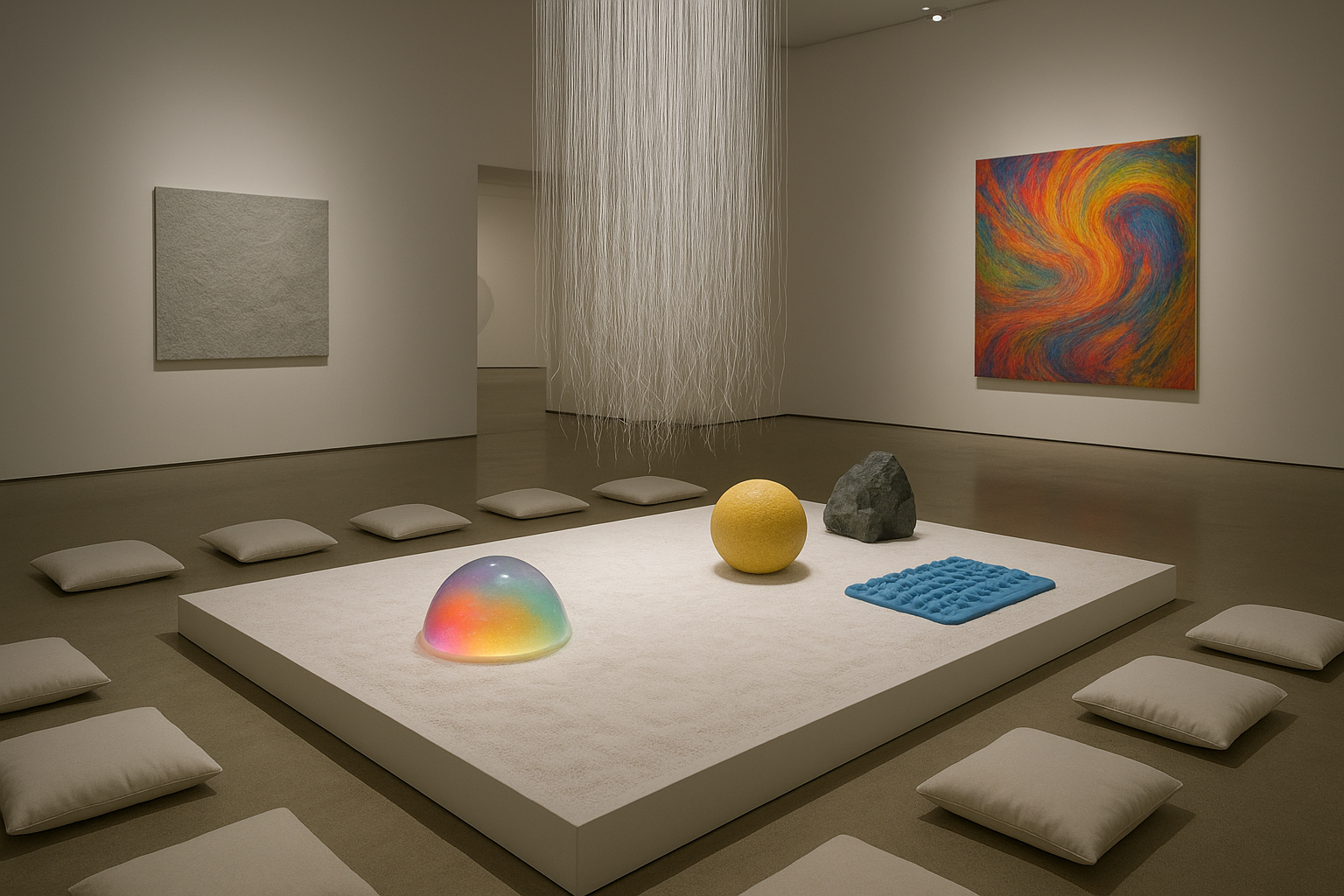
    Contemporary art has evolved to transcend the visual, venturing into realms that tantalize and challenge all the senses. This form of artistic expression strives to create a holistic sensory experience, leading audiences to engage with art in new and unexpected ways.

    The Evolution From Visual to Multi-Sensory Art

    The traditional perception of art has predominantly centered around the visual—paintings, sculptures, and photographs are all enjoyed for their visual aesthetics. However, the rise of contemporary art has seen artists embracing the non-visual by engaging other senses such as sound, smell, touch, and taste. This transformation is rooted in the desire to create more immersive experiences that captivate and challenge audiences.

    Renowned contemporary artist Olafur Eliasson, known for his large-scale installations, often employs various sensory elements in his work. In Eliasson’s words, “Art addresses us across the sensory spectrum, using it to make us more aware of our environment.” [Source]

    Notable Multi-Sensory Artistic Endeavors

    Several contemporary artists and installations have paved the way for this immersive approach, each offering unique and profound sensory experiences:

    • The Weather Project by Olafur Eliasson: A prime example of multi-sensory engagement, this installation at the Tate Modern in London used mist, heat, and light to simulate the sun, allowing visitors to feel and see an artificial sunset indoors.
    • Sonic Fountain by Doug Aitken: This installation combines sound and visual stimuli by allowing water droplets to fall into a pool, creating an auditory experience that resonates with the visual beauty of the rippling water.
    • Carsten Höller’s Scent Tunnel: A tunnel filled with distinct aromas invites visitors to explore the power of scent in evoking memories and emotions.

    The Science Behind Sensory Engagement

    Research has shown that engaging multiple senses can enhance our emotional and cognitive experiences. The use of smell, sound, touch, and taste can elicit stronger emotional responses and create lasting memories compared to visual stimuli alone.

    “Multisensory experiences reshape the way our brains process environments, significantly influencing perception and cognition,” says a study published in the Journal of Cognitive Psychology.

    Artists as Experience Designers

    In this era of sensory exploration, artists have become experience designers, orchestrating environments that stimulate the senses in sync. The interplay of various sensory stimuli can transport audiences to new conceptual realms, allowing them to experience the artwork fully.

    For instance, Japanese artist Yayoi Kusama is renowned for her immersive mirrored rooms that offer infinite reflections and distorting perspectives, challenging the visitor’s perception of space and self. Her work signifies a departure from the art object to the art experience, where the viewer is integral to the piece itself.

    The Significance of Sensory Art in Modern Society

    In a fast-paced digital world, sensory art offers a sanctuary—a chance to pause and fully engage with the present moment. It invites audiences to rediscover the world through their senses, fostering a deeper connection with themselves and their environment.

    A multi-sensory approach also plays a crucial role in accessibility, offering those who are visually impaired an opportunity to experience art through other senses, thus democratizing art consumption.

    Conclusion: An Ever-Expanding Realm

    The contemporary art landscape continues to evolve, and the future promises even more integration of technology and sensory experiences. Virtual reality and augmented reality are at the forefront, offering unprecedented opportunities for sensory engagement.

    As we navigate this transformative era, the role of the artist as a creator of multi-sensory environments becomes ever more essential, inviting us to explore the sensory sacred in fresh and profound ways. Whether through the warmth of sunlight in an art installation or the aroma of a scent tunnel, contemporary art continues to redefine and expand our sensory horizons.

  • The Looped Sermon: Repetition and Ritual in Electronic Music

    The Looped Sermon: Repetition and Ritual in Electronic Music

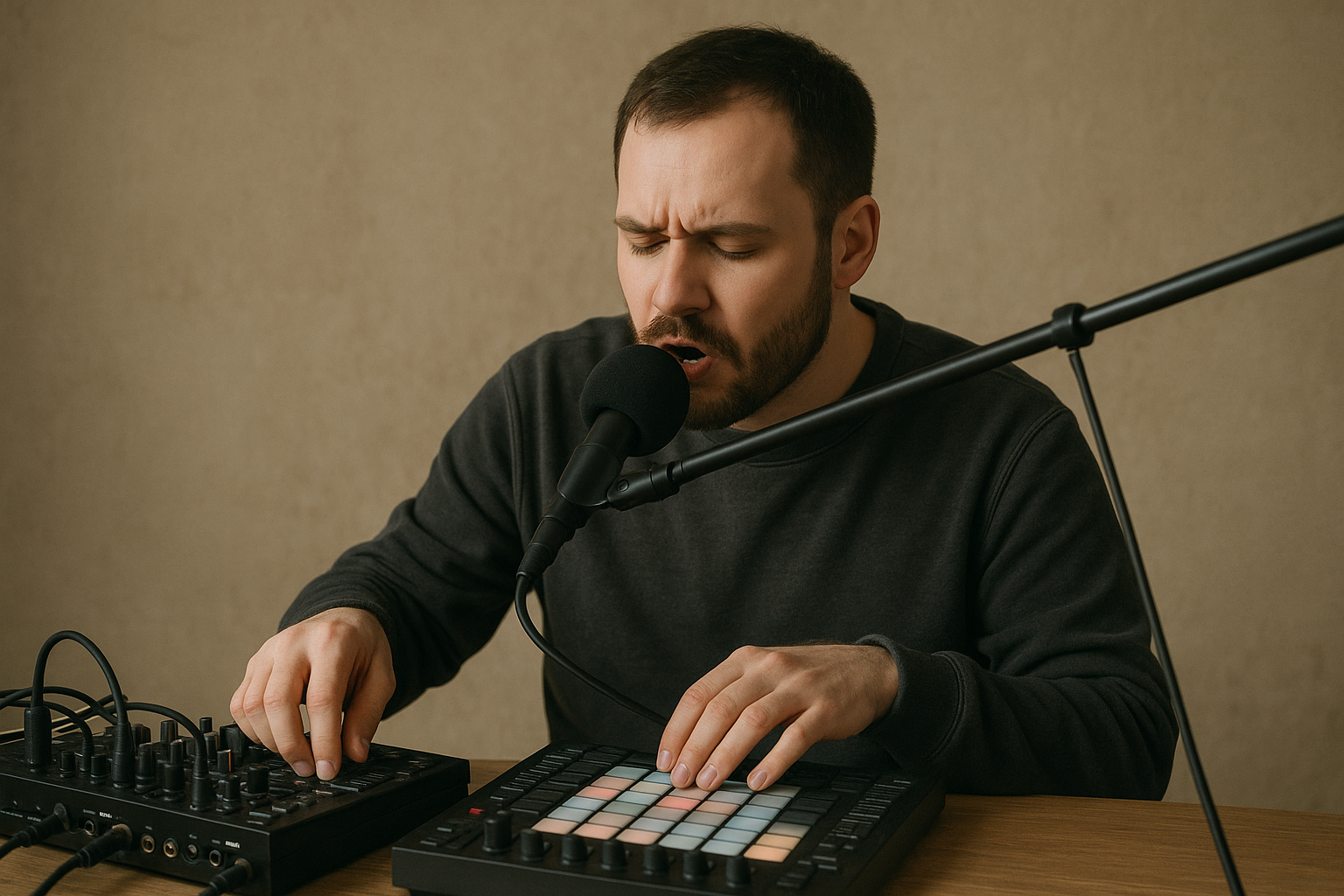
    In the bustling landscape of electronic music, repetition acts as both a creative anchor and a spiritual journey for listeners. The entrancing cycles of sound found in electronic music create spaces for reflection, catharsis, and communal experience. The effective use of repetition and ritual, much like a sermon, transforms a dance floor into a secular ceremony.

    The Power of Repetition

    Repetition in music is far from a new phenomenon. From the chants of ancient rituals to the refrains in classical compositions, repeating patterns evoke emotional and psychological responses. As Philip Tagg, a musicologist, explains:

    “Repetitive music equals participation music or anti-diva music. It encourages listeners to join in, whether by moving or vocalizing.”
    — Philip Tagg, Music Studies

    In electronic music, repetition is elevated to an art form, with loops and samples creating immersive soundscapes. These cyclical structures encourage listeners to lose themselves in the music, fostering a shared experience that is both intimate and expansive.

    Ritual as Structure

    Rituals, often characterized by their repetitive nature, create a sense of stability and predictability. According to Roy Rappaport, an anthropologist, “ritual is the performance of more or less invariant sequences of formal acts and utterances not entirely encoded by the performers.” These structures are evident in the setlists of DJs and producers who craft a carefully curated journey through sound.

    • Beatmatching: DJs blend tracks by synchronizing beats, creating a seamless transition and maintaining rhythmic continuity.
    • Track Cues: Predictable cues signal changes, fostering excitement and engagement.
    • Elevation: Gradual build-ups in tracks mimic the energetic rise in rituals, culminating in euphoric release.

    Such rituals within electronic music bring a congregation of listeners into an almost transcendental state.

    The Role of the DJ

    Regarded as both composer and curator, the DJ is akin to a ritual leader. Their role transcends mere performance—they facilitate a shared experience that connects individuals. Grandmaster Flash, a pioneer in turntablism, once stated:

    “There’s something about being a DJ that is beyond crossing one way or two ways, it’s beyond all of that because it becomes a state of bringing people together.”
    — Grandmaster Flash, Billboard

    By leveraging repetition, a DJ ensures every set is unique yet familiar, with each show providing a new interpretation of beloved tracks.

    Repetition’s Psychological Impact

    Electronic music is not only a unifying force but also a psychological one. The repetitive nature of tracks can create a meditative state, often leading to altered perceptions. According to a study published in the Journal of Psychology & the Behavioral Sciences, repetitive music affects the brain’s reward circuits, stimulating sensations of pleasure and immersion.

    The study states:

    “The predictable structure inherent in repetitive music can activate pleasure responses in the brain, similar to those experienced during other rewarding activities.”
    — Journal of Psychology & the Behavioral Sciences

    This phenomenon underscores the hypnotic allure of electronic music, drawing listeners into a deep, often introspective engagement with the sound.

    Community and Connection

    The dance floor acts as an altar where individuals gather to share in the collective joy of music. This community is solidified through the shared experience of sound and movement. It is a testament to the power of electronic music to unite diverse audiences under the pulsating beat.

    By creating environments where repetition and ritual are paramount, electronic music offers participants an egalitarian place to express themselves, freed from the confines of the ordinary world. It opens up a space where everyone, regardless of background, can experience the sublimity of sound.

    Conclusion

    Electronic music’s reliance on repetition and ritual transforms the listening experience from passive to participatory. Just as ancient ceremonies used repetition to connect individuals with the divine, modern-day electronic music mobilizes these tools to create a shared, almost spiritual experience. Through the meticulous work of DJs and producers, the repeatable elements of electronic music become vessels of connection, community, and catharsis, echoing the timeless human desire for unity.