Category: MythCoeur

  • The Documentary Sublime: Finding Beauty in the Mundane

    The Documentary Sublime: Finding Beauty in the Mundane

    In an era dominated by the extraordinary and the sensational, the documentary genre quietly asserts its power by revealing the beauty in the ordinary. This approach, often referred to as the “documentary sublime,” seeks to illuminate the extraordinary aspects of the mundane, transforming them into artful narratives that captivate and inspire.

    The Essence of the Documentary Sublime

    At its core, the documentary sublime is about finding the beauty in everyday life. By focusing on the seemingly trivial and overlooked aspects of our world, filmmakers uncover layers of meaning and emotion. This technique elevates ordinary scenes into captivating stories that resonate on a deeply human level. As filmmaker Werner Herzog once remarked, “The poetic, the cinematic sublime, is something that lies within the sensory(IndieWire).

    Techniques of the Sublime

    Several techniques are pivotal in achieving the documentary sublime:

    • Attention to Detail: A meticulous focus on details can transform the ordinary into something profound. Close-ups, slow-motion shots, and ambient sounds invite viewers to pause and appreciate the nuances of everyday moments.
    • Emphasis on Authenticity: By breaking away from the polished aesthetics of mainstream cinema, documentary filmmakers portray the raw and unfiltered aspects of life. This authenticity fosters a connection between the viewer and the subject.
    • Narrative Depth: Through careful storytelling, filmmakers delve into human experiences, emotions, and struggles. Even the simplest stories can become powerful narratives. “In the particular is contained the universal,” noted James Joyce, a principle many documentarians embrace.

    Examples of the Documentary Sublime

    Films like Honeyland and Leviathan exemplify the documentary sublime. Honeyland, directed by Tamara Kotevska and Ljubomir Stefanov, uses intimate storytelling and breathtaking cinematography to depict the life of a Turkish beekeeper in North Macedonia. It explores themes of environmentalism and cultural tradition, turning the protagonist’s simple life into a resonating narrative. Meanwhile, Leviathan employs avant-garde visuals to delve into the life of New England fishermen, offering a spellbinding view of a harsh, yet beautiful world above and below the sea.

    Conclusion

    Ultimately, the documentary sublime teaches us to appreciate the ordinary. It reminds us to find beauty in the rhythms of daily life, where every moment, no matter how monotonous, tells a story worth exploring. By capturing these narratives, the documentary sublime offers audiences a chance to reflect and find resonance in their own lives. In the words of filmmaker Ken Burns, “The common themes in our stories are the basic questions—who we are, what we are, where we are, and where we’re going(The New York Times).

  • Movement That Matters: Dance and Activism in the 21st Century

    Movement That Matters: Dance and Activism in the 21st Century

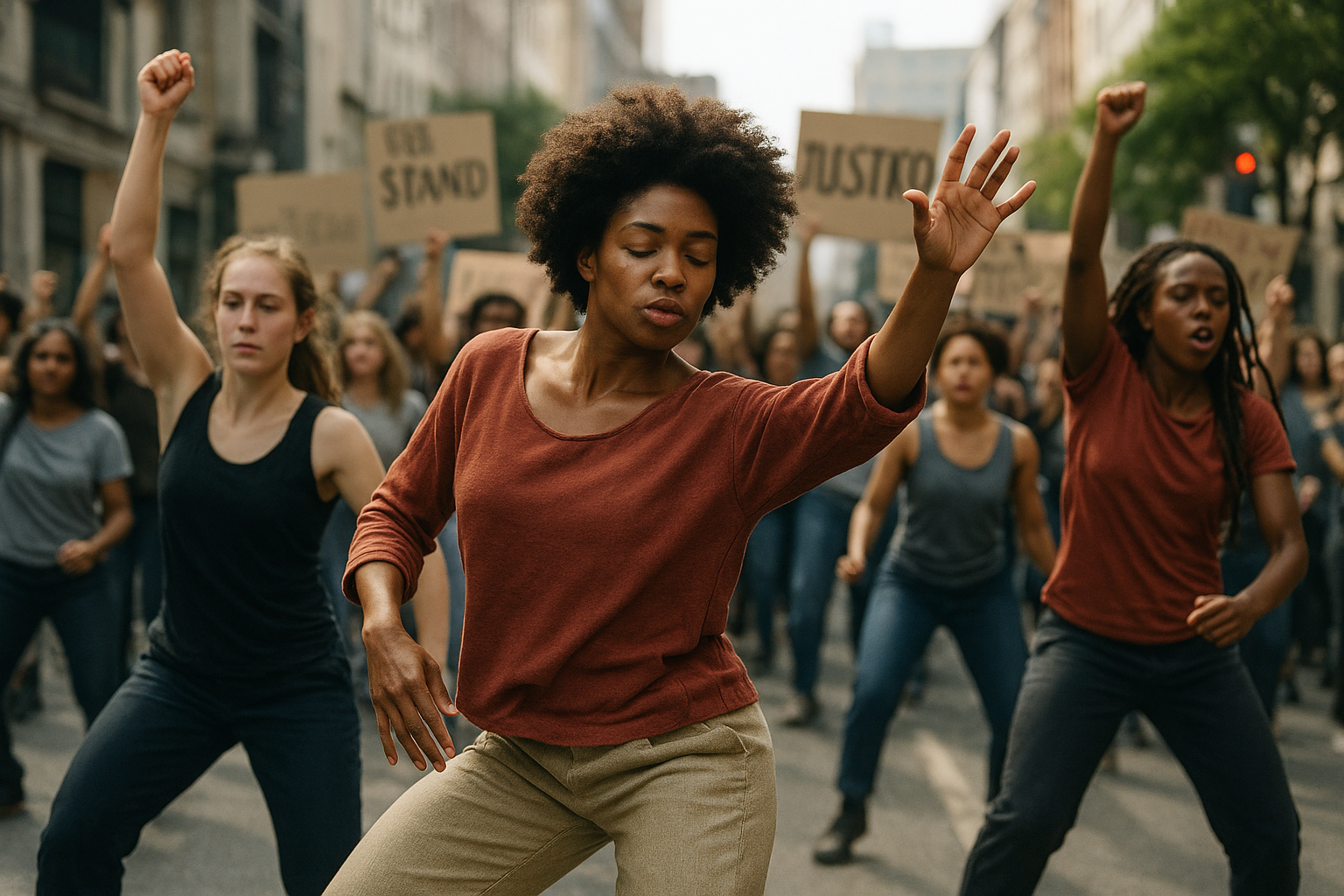
    The fusion of dance and activism is not a new phenomenon, but in the 21st century, this relationship has blossomed into a compelling force for social change. Dance, with its powerful storytelling and emotive capacity, has become a tool for protest, awareness, and unity across the globe. From large-scale performances to intimate solo acts, dancers are shedding light on critical issues that affect our societies.

    Dance as a Platform for Social Justice

    Dance transcends language barriers, offering a universal platform to address injustices. In recent years, movements such as Black Lives Matter have seen dancers using their art to protest police brutality and systemic racism. Choreographers like Camille A. Brown, known for her work that “reclaims cultural narratives of African American identity”, have been pivotal in these efforts. According to The New York Times, Brown’s works provide “a platform for healing and empowerment and a call to action against injustice.”

    Environmental Awareness through Dance

    The environmental crisis has inspired countless dance projects aimed at raising awareness. A significant example is the Dance for the Climate initiative, which uses performances to highlight issues related to global warming and sustainability. Dancers collaborate with environmental groups to create visually stunning presentations that emphasize the urgent need for action against climate change.

    “Dance can have an enormous impact on how we process and understand the world around us. In its most profound moments, it forces us to confront difficult realities, from ecological devastation to human rights abuses,” said Dr. Katherine Zubko, author of Yoga and Buddhism in the International Marketplace (source: University Archives).

    Empowerment and Community Building

    Community dance projects have been instrumental in fostering empowerment and solidarity. Take, for example, the work of Liz Lerman, who has engaged communities by incorporating local stories and histories into her dance performances. Her projects often bring together diverse groups of people, offering an inclusive space for collective expression and healing.

    Moreover, initiatives like Dancing Grounds in New Orleans engage youth and adults alike in building strong, resilient communities through dance. They emphasize inclusivity, offering workshops and performances that address topics such as body image, gender identity, and political engagement.

    Technological Innovations in Dance Activism

    In the digital age, technology has expanded the reach and influence of dance activism. Social media platforms like Instagram and TikTok are rife with viral dance challenges that often carry socio-political messages. The #DanceActivism hashtag has grown significantly, with dancers from around the world sharing their performances and drawing attention to their causes.

    • #DanceForRefugees – An initiative raising awareness and support for displaced individuals worldwide.
    • #EndViolenceThroughDance – A movement highlighting the global fight against gender-based violence.

    Technology also facilitates online collaborations, allowing dancers and choreographers to create and share performances, despite geographic and cultural barriers. These digital connections help to bolster global solidarity, emphasizing that the fight for justice knows no borders.

    The Challenges Ahead

    While dance activism is a powerful force, it faces challenges. Funding limitations, political repression, and institutional barriers often hinder the full potential of dance as a medium for change. Moreover, there is a continuous struggle to maintain the balance between artistic expression and political messaging, ensuring that performances remain authentic and impactful.

    Nonetheless, organizations and individuals continue to push boundaries, creating space for dance to not only survive but thrive as a form of activism in the 21st century. With each step, twist, and leap, dancers lay the groundwork for conversations that propel societies towards equity and justice.

    Conclusion

    Dance, in its myriad forms, remains a vital vehicle for activism in the modern era. By connecting emotionally with audiences, fostering community ties, and embracing technological advances, dancers are more equipped than ever to bring about real, tangible change. As we move further into the 21st century, dance will undoubtedly continue to enkindle dialogue, inspire action, and remind us of the shared humanity that defines our collective steps toward a better future.

  • The Digital Icon: Crafting Meaning Online and Off

    The Digital Icon: Crafting Meaning Online and Off

    In an age where digital presence is as significant as a physical one, the concept of a digital icon emerges as a powerful symbol of identity and influence. These icons, whether in the form of avatars, social media profiles, or even brands, are meticulously crafted to convey specific meanings and messages both online and offline.

    What Makes a Digital Icon?

    A digital icon is more than just an image. It is a complex amalgam of visual identity, personal values, and social influence. Whether it’s a logo or a personal avatar, a true digital icon stands out by embodying specific traits:

    • Authenticity: A captivating digital icon reflects genuine personal or brand values.
    • Consistency: The icon maintains a uniform style and message across various platforms.
    • Resonance: It connects deeply with its audience on an emotional level.

    According to Forbes, successful digital icons make every online interaction part of a larger, cohesive narrative that aligns with their core identity.

    The Interplay Between Online and Offline

    The boundaries between online and offline worlds are increasingly blurred. An individual or brand’s online persona often reflects in real-world interactions and vice versa. This interplay creates a unique digital icon, which gains form and substance as it moves seamlessly between these spheres.

    “Your brand is what people say about you when you’re not in the room,” notes Jeff Bezos, founder of Amazon. This sums up the challenge and opportunity of the digital icon – to leave a lasting impression both in person and online.

    The craft of balancing these worlds is evident in innovative marketing strategies, where companies ideate campaigns that integrate digital touchpoints with offline experiences. Consider the impact of initiatives like Nike’s use of augmented reality in stores to bolster the digital persona of their iconic swoosh.

    Creating Global Themes with Local Impact

    Digital icons leverage global connectivity yet must remain aware of local nuances to resonate truly. Social media platforms have become the playground for this endeavor, allowing icons to adapt their global themes to suit local sensibilities. In doing this, they tap into widespread cultural movements while honoring specific cultural identities.

    Coca-Cola’s famous “Share a Coke” campaign exemplifies this strategy. The global theme of sharing joy and experiences is tailored to feature local names and references, making the campaign instantly relatable across diverse demographics.

    The Role of Technology in Crafting Icons

    Advanced technologies like artificial intelligence (AI) and big data analytics have revolutionized how icons are crafted and marketed. AI algorithms analyze consumer behavior and preferences, enabling brands to craft digital icons that are highly personalized and engaging. By using data-driven insights, digital icons can anticipate consumer needs and create more meaningful interactions.

    “Technology is best when it brings people together,” said Matt Mullenweg, co-founder of WordPress. The synergy between technology and personal touch empowers digital icons to foster a sense of community and inclusivity.

    Challenges in Maintaining Iconic Status

    While crafting a digital icon is a dynamic process, maintaining its status is fraught with challenges. In the ever-evolving digital landscape, icons face the risk of becoming obsolete if they fail to innovate. The constant influx of trends demands agility and adaptability.

    Another significant challenge is ensuring privacy and security. Consumers are becoming more aware of how their data is used, prompting a need for transparency and ethical practices in crafting and maintaining digital icons.

    Conclusion

    As we navigate an increasingly digital world, the significance of the digital icon continues to grow. It is a dynamic, multifaceted symbol of identity that bridges the online and offline realms with meaning and resonance. Those who master the art of crafting and sustaining such icons are poised to wield significant influence across all domains of life.

    The emergence of digital icons not only shapes individual and corporate identities but also influences societal narratives. As technology continues to evolve, the potential for crafting deeply meaningful and engaging digital icons knows no bounds, promising a future where influence and identity are more interconnected than ever before.

  • Noise as Nuance: The Expressive Power of Aural Extremes

    Noise as Nuance: The Expressive Power of Aural Extremes

    In the world of cinema, sound is more than a companion to the visual medium; it is a force that can evoke emotion, build tension, and create atmosphere. While silence possesses its own powerful utility, this article explores the dynamic role of noise—the cacophonous, jarring, and extreme sounds that fill cinematic spaces with unyielding energy and emotion.

    The Intimate Relationship between Sound and Emotion

    Sound has a profound ability to impact the emotional undertone of a scene. Directors have long used this to their advantage, carefully crafting a film’s soundscape to manipulate audience perception. Noise, often perceived as a mere byproduct of our surroundings, transforms into a deliberate tool in the hands of skilled filmmakers. According to film theorist Michel Chion, “Sound is a little bit like the Greek god Proteus; it is capable of manifesting itself under several forms.”

    It is this multifaceted nature that makes noise such a valuable narrative device. The right blend of audio extremes can mirror a character’s internal chaos, highlight psychological turmoil, or heighten suspense in a way that visuals alone cannot achieve.

    The Role of Noise in Thrillers and Horror Films

    • Building Tension: In thrillers and horror films, noise is often employed to maintain and elevate tension. Consider the dreaded creak of floorboards in an otherwise silent house. These sounds, though familiar, are amplified to create distress and anticipation. For instance, in Alfred Hitchcock’s Psycho, Bernard Herrmann’s shrieking violins during the infamous shower scene epitomize how sound can plunge audiences into panic.
    • Unsettling the Audience: In an interview with Film Comment, director Paul Thomas Anderson emphasized how unsettling noises in Phantom Thread were as crucial as dialogue. The infusion of shockingly loud sewing machines and other abrasive noises helped to mirror the film’s tension-rich themes.

    Noise as a Character

    Beyond serving the narrative, noise can often stand on par with more traditional cinematic elements, such as editing and cinematography, functioning almost as a character in its own right. This is vividly demonstrated in films like Mad Max: Fury Road, where the thundering engines and chaotic war cries are inseparable from the film’s kinetic energy and narrative drive. Such audial bombast places the viewer at the heart of the action, causing them to internalize the film’s relentless forward momentum.

    “The sound of Fury Road was, among other things, an extension of the film’s character dynamics and driving forces,” noted Howard Shore in discussing the intricate soundscape.

    The Cultural Representation of Noise

    Through noise, films can reflect and critique cultural and societal trends. In David Lynch’s works, for instance, the exaggerated industrial sounds and mechanical drones in films like Eraserhead and Mulholland Drive serve as a commentary on the alienating landscape of urban life. The repetitive, grinding noises become metaphorical expressions of the dehumanizing nature of industrialization and modern existence.

    Likewise, Stanley Kubrick’s A Clockwork Orange uses stylized noise to highlight the brutality and chaos of the dystopian future it portrays. The film’s notorious juxtaposition of classical music and violent imagery is accentuated by the clashing sounds of ultraviolence, forcing viewers to confront the film’s commentary on free will and societal coercion.

    Breaking Boundaries with Experimental Noise

    Outside the confines of mainstream cinema, noise has been embraced by the experimental film genre. Avant-garde filmmakers, inspired by movements such as Dadaism and Surrealism, utilize sound to break traditional narrative structures. A prime example is Maya Deren’s iconic film, Meshes of the Afternoon, which eschews conventional storytelling in favor of a dream-like sequence of images set to a dissonant soundtrack, illustrating the liberation of aural elements from visual subordination.

    Furthermore, recent pioneers like Lars von Trier in Antichrist and Darren Aronofsky in Mother! push the boundaries of how sound can be manipulated to influence the perception of reality and narrative unraveling. These films use disorienting soundscapes filled with extreme noise to challenge audiences and redefine the limits of film as an art form.

    The Future of Noise in Cinema

    As technology advances, filmmakers have more tools at their disposal than ever before to experiment with aural extremes. With the introduction of immersive audio technologies like Dolby Atmos, directors can place sound three-dimensionally around the theatre, enhancing the narrative impact. Framestore Sound Designer Niv Adiri notes, “We’re only at the beginning of exploring how auditory experience can complement and extend visual storytelling.” The continuous evolution of sound technologies will undoubtedly lead to new innovations in how noise is employed within storytelling frameworks.

    Conclusion

    Noise in film is far more than a backdrop or an incidental aspect of the cinematic experience; it is a nuanced, expressive force that conveys emotion, intensifies drama, and provides cultural critique. From the psychological underpinnings of a character’s journey to disorienting atmospherics that reshape audience perceptions, noise in all its cacophonous glory remains an essential component of the storytelling process. As the art of filmmaking continues to evolve, the expressive power of aural extremes will undoubtedly play an influential role in shaping how stories are told.

  • The Sensory Sacred: Engaging All Senses in Contemporary Art

    The Sensory Sacred: Engaging All Senses in Contemporary Art

    The Sensory Sacred: Engaging All Senses in Contemporary Art

    The Sensory Sacred: Engaging All Senses in Contemporary Art

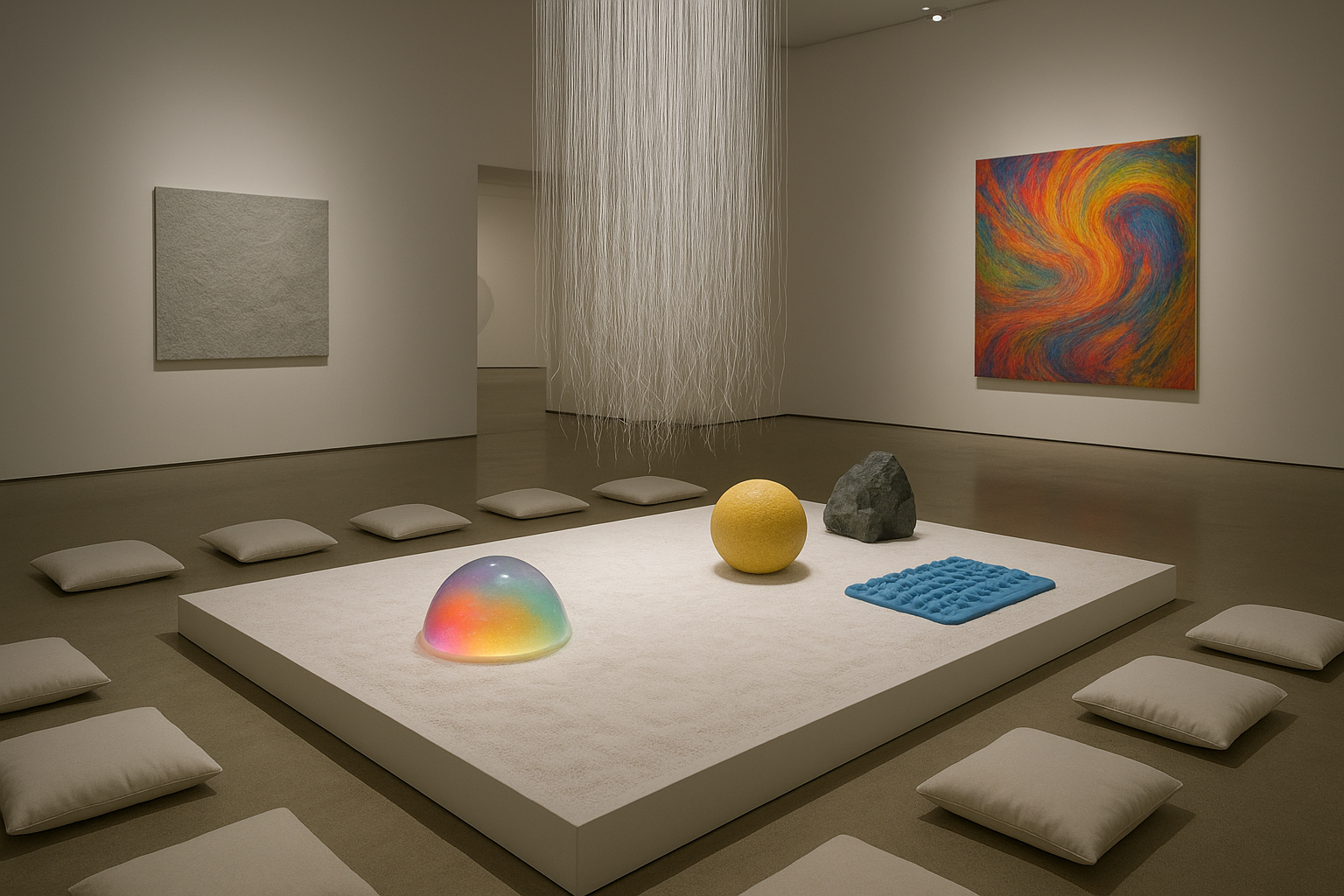
    Contemporary art has evolved to transcend the visual, venturing into realms that tantalize and challenge all the senses. This form of artistic expression strives to create a holistic sensory experience, leading audiences to engage with art in new and unexpected ways.

    The Evolution From Visual to Multi-Sensory Art

    The traditional perception of art has predominantly centered around the visual—paintings, sculptures, and photographs are all enjoyed for their visual aesthetics. However, the rise of contemporary art has seen artists embracing the non-visual by engaging other senses such as sound, smell, touch, and taste. This transformation is rooted in the desire to create more immersive experiences that captivate and challenge audiences.

    Renowned contemporary artist Olafur Eliasson, known for his large-scale installations, often employs various sensory elements in his work. In Eliasson’s words, “Art addresses us across the sensory spectrum, using it to make us more aware of our environment.” [Source]

    Notable Multi-Sensory Artistic Endeavors

    Several contemporary artists and installations have paved the way for this immersive approach, each offering unique and profound sensory experiences:

    • The Weather Project by Olafur Eliasson: A prime example of multi-sensory engagement, this installation at the Tate Modern in London used mist, heat, and light to simulate the sun, allowing visitors to feel and see an artificial sunset indoors.
    • Sonic Fountain by Doug Aitken: This installation combines sound and visual stimuli by allowing water droplets to fall into a pool, creating an auditory experience that resonates with the visual beauty of the rippling water.
    • Carsten Höller’s Scent Tunnel: A tunnel filled with distinct aromas invites visitors to explore the power of scent in evoking memories and emotions.

    The Science Behind Sensory Engagement

    Research has shown that engaging multiple senses can enhance our emotional and cognitive experiences. The use of smell, sound, touch, and taste can elicit stronger emotional responses and create lasting memories compared to visual stimuli alone.

    “Multisensory experiences reshape the way our brains process environments, significantly influencing perception and cognition,” says a study published in the Journal of Cognitive Psychology.

    Artists as Experience Designers

    In this era of sensory exploration, artists have become experience designers, orchestrating environments that stimulate the senses in sync. The interplay of various sensory stimuli can transport audiences to new conceptual realms, allowing them to experience the artwork fully.

    For instance, Japanese artist Yayoi Kusama is renowned for her immersive mirrored rooms that offer infinite reflections and distorting perspectives, challenging the visitor’s perception of space and self. Her work signifies a departure from the art object to the art experience, where the viewer is integral to the piece itself.

    The Significance of Sensory Art in Modern Society

    In a fast-paced digital world, sensory art offers a sanctuary—a chance to pause and fully engage with the present moment. It invites audiences to rediscover the world through their senses, fostering a deeper connection with themselves and their environment.

    A multi-sensory approach also plays a crucial role in accessibility, offering those who are visually impaired an opportunity to experience art through other senses, thus democratizing art consumption.

    Conclusion: An Ever-Expanding Realm

    The contemporary art landscape continues to evolve, and the future promises even more integration of technology and sensory experiences. Virtual reality and augmented reality are at the forefront, offering unprecedented opportunities for sensory engagement.

    As we navigate this transformative era, the role of the artist as a creator of multi-sensory environments becomes ever more essential, inviting us to explore the sensory sacred in fresh and profound ways. Whether through the warmth of sunlight in an art installation or the aroma of a scent tunnel, contemporary art continues to redefine and expand our sensory horizons.

  • Ancient Wisdom, Modern Wire: Connecting the Past and Future

    Ancient Wisdom, Modern Wire: Connecting the Past and Future

    The evolution of technology is often seen as a modern phenomenon, yet its roots stretch far into the distant past. From the invention of the wheel to the intricate designs of Roman aqueducts, our ancestors laid the foundational knowledge that directs today’s advancements. This article explores the symbiotic relationship between ancient innovations and modern technology, revealing how time-honored wisdom continues to inform and inspire contemporary achievements.

    The Legacy of Ancient Innovations

    Whether it’s the concept of zero from ancient India, which revolutionized mathematics, or the Antikythera mechanism, an ancient Greek analog computer, ancient innovations have consistently provided humanity with the basic tools to solve complex problems. These foundational inventions serve as the bedrock upon which modern technology is built.

    • The Wheel: Invented around 3500 B.C. in Mesopotamia, the wheel is one of humanity’s greatest inventions. It laid the groundwork for the development of transportation and machinery that eventually powered the Industrial Revolution.
    • The Printing Press: Johannes Gutenberg’s 15th-century invention was not the first of its kind. The concept originated in 9th-century China. By mechanizing the process of printing, it paved the way for mass communication, influencing today’s digital publications.
    • Aqueducts: The ancient Romans mastered the aqueduct between 312 B.C. and 226 A.D., which enabled urbanization by delivering fresh water to city populations. The principles used are echoed in modern water supply systems worldwide.

    “The ancient engineers were the giants on whose shoulders the present generation of civil engineers stand today,” notes Ou, James. Engineers of the past and their contributions to civil engineering. World Engineering Journal, 2011.

    The Influence of Ancient Science on Modern Technology

    Modern scientific achievements owe much to ancient explorations. Ancient civilizations like the Greeks, Chinese, and Egyptians contributed significantly to fields such as astronomy, medicine, and metallurgy. Their discoveries provided a framework that has guided centuries of scientific thought.

    • Astronomy: The Babylonians kept detailed astronomical records as early as 1600 B.C., which the Greeks later studied. Their work laid the foundation for Kepler’s laws of planetary motion and eventually Einstein’s theory of relativity.
    • Medicine: The Ebers Papyrus, dating back to around 1550 B.C., is one of the oldest medical documents. Egyptian doctors’ insights into anatomy greatly influenced Greek and Roman medicine, eventually informing modern medical practices.
    • Metallurgy: Ancient techniques in metalworking, developed during the Bronze and Iron Ages, set the groundwork for modern metallurgy’s complexity. Today’s advancements in materials science continue to build upon these ancient principles.

    A contemporary example of ancient influence is biomimicry, where design solutions are inspired by nature. From the study of lotus leaves to create self-cleaning surfaces to sharkskin patterns used for aerodynamic swimsuits, ancient wisdom in observation continually informs technological design.

    The Digital Age: Bridging Old and New

    Today’s digital age is no different in its regard for ancient wisdom. Computer algorithms, though modern in application, often reflect mathematic principles developed by ancient civilizations. For instance, algorithms for solving complex mathematical problems borrow from ancient strategies and logic patterns, such as those formalized by Euclid in his algorithm for finding the greatest common denominator.

    Moreover, ancient stories and myths, such as the labyrinth of Daedalus, echo in the algorithms that solve modern-day puzzles and navigate complex data networks. As noted by Smithsonian Magazine, these narratives continue to inspire innovative thinking and problem-solving techniques today.

    The Role of Philosophy and Ethics

    Beyond the technical, ancient wisdom also encompasses philosophy and ethics—domains equally critical to modern technological discourse. Greek philosophers such as Aristotle explored topics of ethics that remain highly relevant in today’s discussions surrounding artificial intelligence and digital privacy.

    “The introduction of radically different kinds of technologies requires new ethical thinking,” writes thinker Ruth Chadwick, Director of ESRC Centre for Economic and Social Aspects of Genomics. “Aristotle’s emphasis on virtue ethics can guide considerations about character and decision-making in the deployment of such technology.” (“The Guardian)

    The parallels between ancient frameworks of thought and today’s ethical considerations in technology encourage a balanced evaluation of our innovations. This approach helps cultivate progress that is as ethically sound as it is technologically advanced.

    Conclusion: Remembering the Wisdom of the Ancestors

    As we stand on the precipice of further technological breakthroughs—from quantum computing to biotech revolutions—it’s crucial to recall and respect the ancient wisdom that has consistently shaped our progress. Investigating traditional solutions to modern problems ensures that technological advancements remain grounded, conscious, and sustainable.

    The harmonious blend of past knowledge and future technology invites a richer understanding of both human potential and responsibility. By connecting the past and future, we pave the way for innovations that are not only cutting-edge but also deeply reflective of centuries of human wisdom.

  • The Radical Rhythm: Challenging Expectations in Contemporary Dance

    Contemporary dance is, by its very nature, a disruptive art form. Its evolution is a testament to the artists’ desire to transcend traditional boundaries and explore new forms of expression. The radical rhythm of contemporary dance challenges expectations, pulling audiences into its dynamic world where movement and emotion are powerfully intertwined.

    The Genesis of Contemporary Dance

    Contemporary dance emerged as a rebellion against the strict forms of ballet in the early 20th century. Celebrated pioneers such as Martha Graham and Merce Cunningham sought to pave pathways that allowed for freedom of movement, diverging from the rigid body storytelling of classical ballet. Graham, often referred to as the ‘Mother of Modern Dance’, once stated,

    “Dance is the hidden language of the soul of the body.”

    Decoding the Radical Rhythm

    One of the defining aspects of contemporary dance is its use of rhythm—or, in many instances, its deliberate subversion. Contemporary choreographers often play with rhythm, using it as a tool to evoke a spectrum of emotions. Unlike the uniform tempo of classical music that accompanies ballet, contemporary dance thrives on unpredictability. This is echoed in pieces like William Forsythe’s “The Vertiginous Thrill of Exactitude”, which uses abrupt changes in tempo to keep the audience on edge.

    Improvisation: The Heartbeat of Innovation

    • Spontaneity: Improvisation allows dancers to explore and express their innate impulses. It’s not merely a technique but a core philosophy that drives the notion of living in the moment.
    • Authenticity: By embracing improvisation, contemporary dancers bring authenticity to their performances. This authenticity invites viewers to explore their own emotions and reactions.

    Breaking Down Expectations Through Collaboration

    Contemporary dance is not confined to the talents of dancers alone. Collaborative efforts with musicians, visual artists, and technologists expand the boundaries of the art. Companies like Alvin Ailey American Dance Theater work with composers and artists to produce multi-sensory experiences that challenge traditional performances.

    • The use of digital technology in performances, such as digital projections and interactive soundscapes, add new dimensions to the medium.
    • Collaborations with artists like Brian Eno, who compose unique soundscapes for dance, further stretch the possibilities.

    The Role of Cultural Narratives

    Contemporary dance is a powerful platform for addressing cultural and societal issues. Many contemporary works engage with themes of identity, race, and politics. Choreographers like Akram Khan blend traditional and modern forms to create narratives that reflect the complex tapestry of contemporary global culture.

    “I see dance being used as communication between body and soul, to express what is too deep, too fine for words.” ― Ruth St. Denis

    • Inclusive Storytelling: Contemporary dance often uses culturally inclusive narratives, which resonate deeply in today’s globalized world.
    • Political Choreography: Dance pieces like Ohad Naharin’s “Venezuela” are prime examples of using movement to make political statements.

    Challenging Gender Norms

    In a society increasingly aware of gender fluidity, contemporary dance has played a key role in challenging traditional gender norms. Men and women dance together, share roles, and even engage in lifts traditionally reserved for male dancers. This blurring of lines encourages audiences to reflect on societal norms and supports a broader understanding and acceptance of gender fluidity.

    The Future of Contemporary Dance

    As it continues to evolve, contemporary dance remains a radical and transformative art form. The fusion of technology, exploration of global narratives, and dissolution of traditional gender roles ensure that contemporary dance will continue to challenge and inspire future generations.

    “Great dancers are not great because of their technique; they are great because of their passion.” ― Martha Graham

    Ultimately, contemporary dance is more than an art form; it’s a means of communication, a vessel for emotions, and a relentless pursuit of freedom and innovation. It asks its audiences not just to watch but to feel and think—to engage in a dialogue that transcends language, culture, and expectation.

    For those interested in exploring more about contemporary dance, the Contemporary Dance Portal offers a comprehensive view of the latest innovations, news, and features impacting the world of dance.

  • The Imperfect Image: Embracing Flaw in Modern Photography

    The Imperfect Image: Embracing Flaw in Modern Photography

    In an age dominated by pristine and meticulously curated images, a burgeoning movement within photography is shifting focus towards embracing imperfection. Often overshadowed by perfectly polished, post-processed shots, the allure of the imperfect image is slowly becoming a significant narrative in contemporary photography.

    The Allure of Imperfection

    The charm of imperfection in photography lies in its ability to evoke authenticity and evoke emotion. While there is undeniable beauty in achieving technical perfection, an imperfect image often tells a more compelling story. As renowned photographer Henri Cartier-Bresson once said,

    “In photography, the smallest thing can be a great subject.”

    This sentiment captures the ethos of imperfection, where every flaw can unveil profound beauty hidden within chaos.

    Rethinking Flaws

    When we consider imperfections in photography, it could mean anything from lens flare, motion blur, unusual compositions, or even camera shake. These elements, traditionally seen as negative attributes, are now being reconsidered as artistic choices that bring about an intentional human touch.

    • Lens Flare: Once considered a technical error, lens flair now adds an ethereal quality to images, enveloping them in warmth.
    • Motion Blur: This technique can convey movement and evoke an emotional response, often adding a dynamic feel to otherwise static photographs.
    • Unusual Compositions: Breaking traditional compositional rules can often lead to unexpected, engaging visuals that captivate observers.

    Photographers like Nan Goldin have masterfully harnessed such “imperfections” to craft evocative narratives. Goldin’s work, known for its raw and intimate portrayal of human life, challenges conventional aesthetics and celebrates the candid and the honest.

    Embracing Authenticity

    In a digital world where photo editing tools can transform any snapshot into a piece of art, viewers are increasingly gravitating towards images that resonate with authenticity. There is a growing appreciation for photographs that reflect a moment truthfully rather than those entrenched in artificial symmetry. Images that capture authentic moments often invite audiences to experience connections, transporting them into a narrative that is both relatable and authentic.

    Cheryl Strayed, in her book Brave Enough, mentions,

    “Don’t surrender all your joy for an idea you used to have about yourself that isn’t true anymore.”

    This statement resonates deeply with the evolving ideals in photography, prompting people to let go of preconceived notions of perfection in favor of genuine expression.

    The Role of Film Photography

    Film, a medium inherently associated with imperfection, has seen a revival amidst the growing desire for authenticity. Unlike digital, where perfection is just a few clicks away, film photography demands embracing the unexpected. The unique characteristics of film, such as grain and color variations, have become a celebrated part of its nostalgia-driven charm.

    Market and Cultural Shifts

    The world of art is witnessing a shift where imperfections are being not only accepted but celebrated. A survey from Statista indicates that there is a resurgence in the use of film cameras, and a marked increase in artworks that reflect raw human emotion, both of which are indicative of the value attributed to imperfection.

    Art galleries and online platforms are now offering spaces for artists challenging conventional perspectives. Projects like “Slow Photography” are focusing on meditative, thoughtful approaches to picture-taking, embracing the context and story over mere technical expertise.

    The Takeaway: Flaws as Art

    The transition towards embracing imperfection in modern photography suggests that flaws should not only be accepted but cherished. Amidst the cultural obsession with perfection, imperfect images offer a breath of fresh air—a return to recognizing the imperfections that make humans unique.

    For budding photographers, leaning into these imperfections could offer a more engaging and fulfilling creative experience. In the words of successful filmmaker and photographer Peter Lindbergh,

    “Beauty is not about being flawless. It’s about feeling alive.”

    This encapsulates the shift towards a more heartfelt and genuine portrayal of the world through the camera lens.

    Through this earnest conveyance of emotion, imperfection in photography doesn’t merely remain a flaw—it evolves into an artistic choice, reflecting deeper stories and genuine connections that resonate universally.

  • The Searchlight Soul: Illuminating the Self Through Art

    The Searchlight Soul: Illuminating the Self Through Art

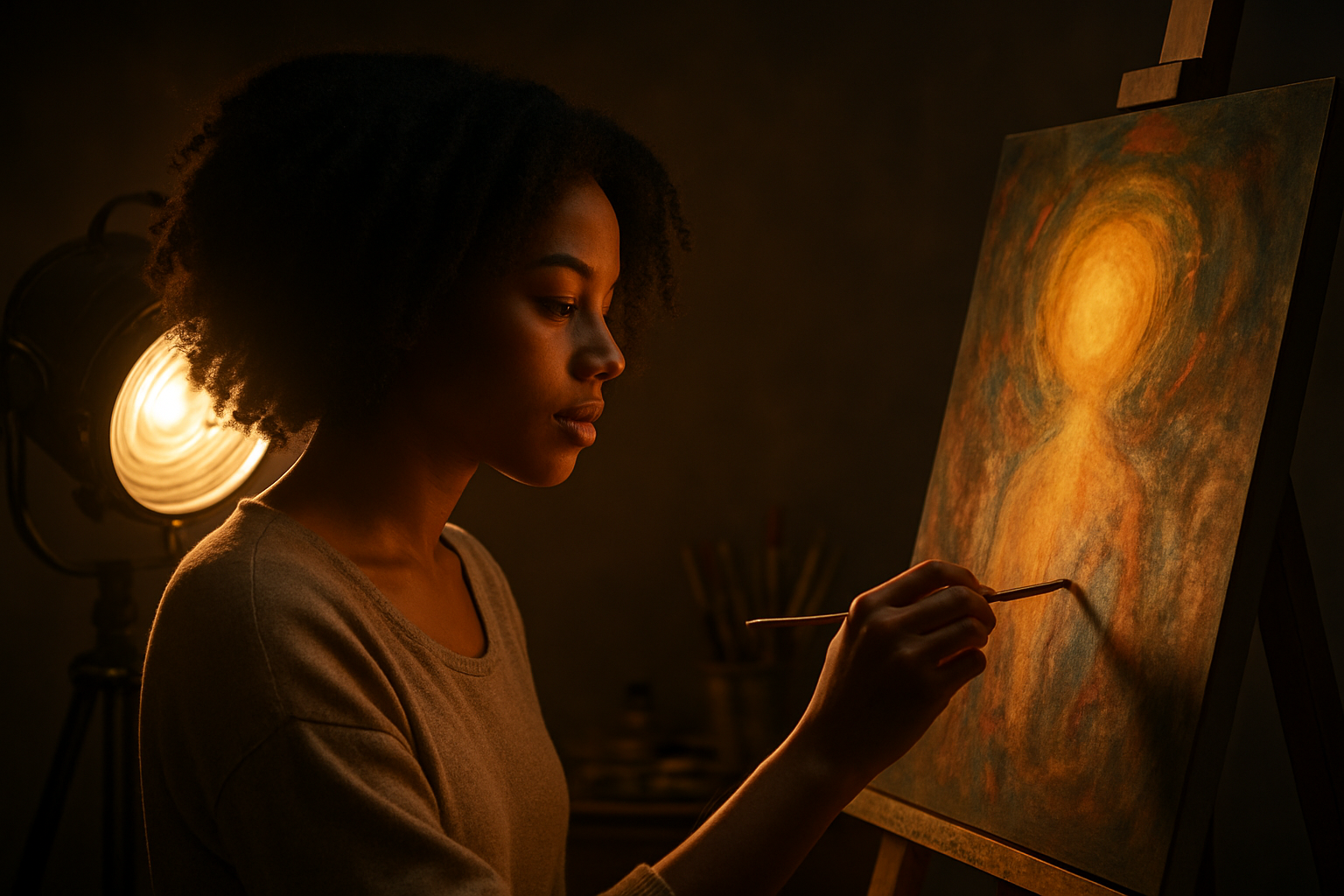
    In our ever-evolving pursuit of self-discovery, art remains a guiding beacon, illuminating the shadowy corridors of the human psyche. The more we endeavor to understand who we are, the more evident it becomes that art, in all its forms, serves as a vital mirror reflecting the depths of the soul. Not only does it shine a light on our innermost thoughts and emotions, but it also offers a path towards transformative healing and profound insight.

    The Historical Luminance of Art

    The history of art illustrates humanity’s perennial quest for self-understanding and transcendence. Art since primordial times has been a vehicle for expression and communication. From the cave paintings of Lascaux to Da Vinci’s studies of human anatomy, art has documented human evolution not just in a physiological sense but, perhaps more significantly, in terms of consciousness and self-awareness.

    “Art is a reflection of the deepest human needs to understand the world we live in.” – Metropolitan Museum of Art

    This profound capacity of art to reflect and challenge our understanding of ourselves has been evidenced through various epochs. Consider the Renaissance, which saw an explosion of creativity driven by a renewed interest in humanism and individuality, or the reflections of modern art challenging the conventions of society and self-identity.

    Art as a Therapeutic Searchlight

    Increasingly acknowledged for its psychological benefits, art offers a therapeutic entrance into the self. This practice is often referred to as art therapy, a method that encourages individuals to express their experiences and emotions through creative expression. As a tool for mental wellness, art therapy helps one navigate the spaces of emotional complexity and psychological trauma.

    “The creative process involved in artistic self-expression helps people resolve conflicts and problems, develop interpersonal skills, manage behavior, reduce

  • The Looped Sermon: Repetition and Ritual in Electronic Music

    The Looped Sermon: Repetition and Ritual in Electronic Music

    In the bustling landscape of electronic music, repetition acts as both a creative anchor and a spiritual journey for listeners. The entrancing cycles of sound found in electronic music create spaces for reflection, catharsis, and communal experience. The effective use of repetition and ritual, much like a sermon, transforms a dance floor into a secular ceremony.

    The Power of Repetition

    Repetition in music is far from a new phenomenon. From the chants of ancient rituals to the refrains in classical compositions, repeating patterns evoke emotional and psychological responses. As Philip Tagg, a musicologist, explains:

    “Repetitive music equals participation music or anti-diva music. It encourages listeners to join in, whether by moving or vocalizing.”
    — Philip Tagg, Music Studies

    In electronic music, repetition is elevated to an art form, with loops and samples creating immersive soundscapes. These cyclical structures encourage listeners to lose themselves in the music, fostering a shared experience that is both intimate and expansive.

    Ritual as Structure

    Rituals, often characterized by their repetitive nature, create a sense of stability and predictability. According to Roy Rappaport, an anthropologist, “ritual is the performance of more or less invariant sequences of formal acts and utterances not entirely encoded by the performers.” These structures are evident in the setlists of DJs and producers who craft a carefully curated journey through sound.

    • Beatmatching: DJs blend tracks by synchronizing beats, creating a seamless transition and maintaining rhythmic continuity.
    • Track Cues: Predictable cues signal changes, fostering excitement and engagement.
    • Elevation: Gradual build-ups in tracks mimic the energetic rise in rituals, culminating in euphoric release.

    Such rituals within electronic music bring a congregation of listeners into an almost transcendental state.

    The Role of the DJ

    Regarded as both composer and curator, the DJ is akin to a ritual leader. Their role transcends mere performance—they facilitate a shared experience that connects individuals. Grandmaster Flash, a pioneer in turntablism, once stated:

    “There’s something about being a DJ that is beyond crossing one way or two ways, it’s beyond all of that because it becomes a state of bringing people together.”
    — Grandmaster Flash, Billboard

    By leveraging repetition, a DJ ensures every set is unique yet familiar, with each show providing a new interpretation of beloved tracks.

    Repetition’s Psychological Impact

    Electronic music is not only a unifying force but also a psychological one. The repetitive nature of tracks can create a meditative state, often leading to altered perceptions. According to a study published in the Journal of Psychology & the Behavioral Sciences, repetitive music affects the brain’s reward circuits, stimulating sensations of pleasure and immersion.

    The study states:

    “The predictable structure inherent in repetitive music can activate pleasure responses in the brain, similar to those experienced during other rewarding activities.”
    — Journal of Psychology & the Behavioral Sciences

    This phenomenon underscores the hypnotic allure of electronic music, drawing listeners into a deep, often introspective engagement with the sound.

    Community and Connection

    The dance floor acts as an altar where individuals gather to share in the collective joy of music. This community is solidified through the shared experience of sound and movement. It is a testament to the power of electronic music to unite diverse audiences under the pulsating beat.

    By creating environments where repetition and ritual are paramount, electronic music offers participants an egalitarian place to express themselves, freed from the confines of the ordinary world. It opens up a space where everyone, regardless of background, can experience the sublimity of sound.

    Conclusion

    Electronic music’s reliance on repetition and ritual transforms the listening experience from passive to participatory. Just as ancient ceremonies used repetition to connect individuals with the divine, modern-day electronic music mobilizes these tools to create a shared, almost spiritual experience. Through the meticulous work of DJs and producers, the repeatable elements of electronic music become vessels of connection, community, and catharsis, echoing the timeless human desire for unity.