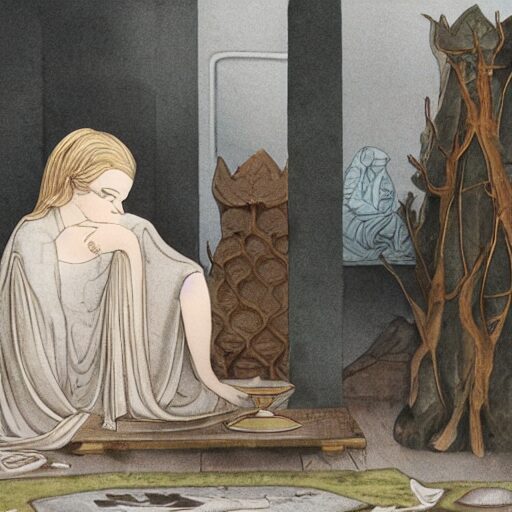
In the hallowed halls of our hearts, a question lingers…
“Who can we trust when tales are spun with threads of untruth?”
– Unknown
- A fragmented confession: In the labyrinthine world of storytelling, we’ve often been entranced by the voices that echo from pages, screens, and stages. Yet, it is time to question: Are they always reliable?
- A breath-spaced journey: The unreliable narrator, a literary device of captivating complexity, thrives in the shadows of storytelling. These are the voices that weave tales filled with ambiguity, deceit, and mystery.
- As we walk through this labyrinth together, let’s consider how these enigmatic characters challenge our perceptions and alter our understanding of reality.
- They present biased accounts: The world as seen by the unreliable narrator is always skewed through their subjective lens, distorting truths and twisting facts to suit their purposes.
- They conceal secrets: The art of omission is a powerful tool in the arsenal of the unreliable narrator. By withholding crucial information, they keep us guessing, our curiosity piqued, and our trust wavering.
- They manipulate emotions: These storytellers have an uncanny ability to tug at our heartstrings or ignite our fears. Through their words, they elicit powerful emotional responses that may cloud our judgment and disarm our skepticism.
- A contemplation of consequence: Embracing the unreliable narrator forces us to reckon with the idea that we can never truly know another’s heart or mind, even when they share their stories with us.
“Trust is like paper; it can cover a multitude of sins, but also tear when stretched too thin.”
– John Grogan
As we step away from this exploration, let us remain vigilant in our pursuit of truth. Remember that even the sweetest songbird may sing a sour tune at times.