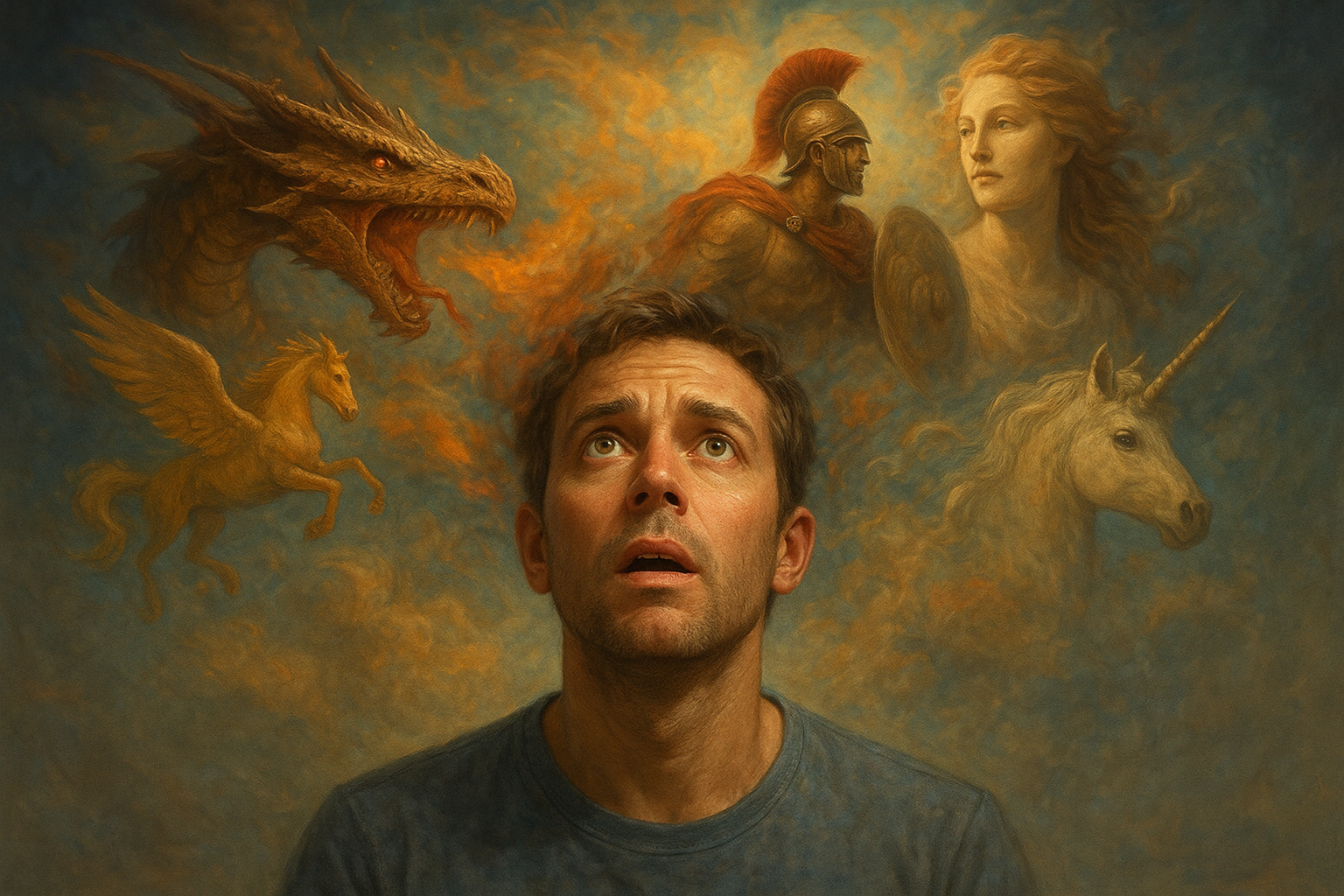
The human fascination with myth is as ancient as civilization itself. From the epic tales of Gilgamesh to modern-day superheroes, myths have been woven into the fabric of human culture. But why do humans generate myth? What compels us to create stories that transcend the boundaries of reality?
The Role of Myths in Understanding the World
Cultural Anthropologist, Claude Lévi-Strauss, suggested that myths serve as tools to mediate the world around us. In his seminal work, “The Raw and the Cooked”, Lévi-Strauss explained that myths help societies make sense of contradictions inherent in the natural world. By creating narratives that explore these tensions, myths enable people to reconcile differences between humanity and nature, life and death, and chaos and order.
“Myths are part of the human desire to understand the world and impose order on the chaos of life.”
Psychological Needs and Myth Making
The psychologist Carl Jung introduced the concept of archetypes to explain the universal elements found in myths across different cultures. In his view, these archetypes reside in the collective unconscious and manifest through myths and dreams, each echoing a deeper truth about the human psyche. According to Jung, myths serve to connect us to these shared symbols, providing a framework for understanding our own experiences and emotions.
“The creation of something new is not accomplished by the intellect but by the play instinct acting from inner necessity.”
Myths as Social Tools
Beyond understanding the world and ourselves, myths also play a crucial role in shaping social orders and ethics. Legends and fables often carry moral lessons or cultural values, instilling them across generations. In societies, myths can act as a unifying force, fostering a sense of identity and shared purpose.
- Myths establish historical continuity.
- They create common ground for communal values and beliefs.
- Myths can legitimize social institutions and hierarchies.
The Timeless Appeal of Myths
In an ever-evolving world, where technological advancements continuously reshape our environment, myths offer a comforting touchstone. They provide a narrative continuity that grounds us amidst change, linking the past with the present and the unknown future. As long as human imagination persists, so too will the creation of myths—affirming that reality, while significant, is not enough.
For further exploration of how myths continue to influence modern society, consider reading Joseph Campbell’s “The Hero with a Thousand Faces”, where he delves into the monomyth structure that dictates so many of our beloved stories.