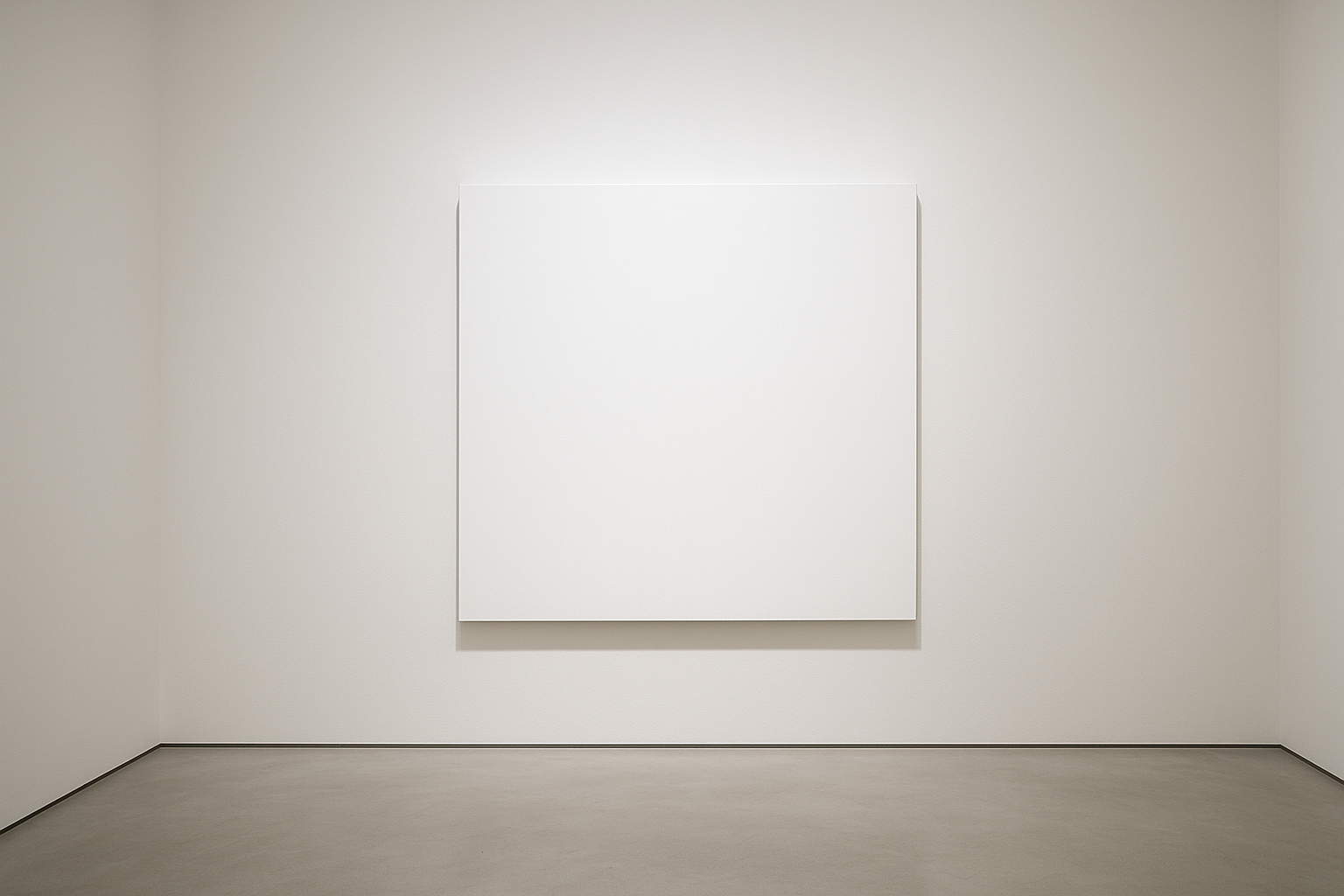
In the bustling world of contemporary art, where maximalist expressions often dominate, minimalism offers a refreshing retreat into simplicity and serenity. Emerging in the late 1950s as a response to abstract expressionism, minimalism focuses on the essence of art, stripping down to its fundamentals to explore space, form, and meaning.
Minimalism is not just an artistic style but a philosophy that champions the idea that ‘less is more.’ Through its focus on simplicity and the reduction of clutter, minimalism encourages both artists and viewers to engage deeply with the artwork presented.
“The essence of Minimalist art is its rejection of the idea that art should reflect the personal expression of the artist,” notes The Art Story.
Key Characteristics of Minimalism
- Reduction and Simplification: Minimalist art uses simple geometric shapes and monochromatic palettes to achieve clarity and focus.
- Objective Over Subjective: The movement emphasizes objectivity, often eliminating any trace of the artist’s hand or emotion in the work.
- Focus on Space: The use of empty space is deliberate, directing attention to the relationships between objects and their environment.
Interpreting Meaning in Minimalism
Interpreting meaning in minimalist art can be both challenging and rewarding. The lack of narrative and representational elements requires the viewer to actively participate in the experience. The space around and within a work becomes a medium of its own, inviting contemplation and introspection.
Artists like Donald Judd, Agnes Martin, and Frank Stella, for example, used minimalism to explore concepts of perception and existence. As Frank Stella stated, “What you see is what you see.” This bold statement reflects the minimalist ethos of purity and directness, encouraging viewers to appreciate the work for its inherent qualities rather than any symbolic or emotional underpinnings.
The Continuing Impact of Minimalism
Minimalism has left an indelible mark not only on visual art but also on architecture, design, and lifestyle. As our lives become increasingly filled with information and sensory overload, the minimalist ethos has found renewed relevance. The aesthetic of simplicity, clarity, and purpose continues to influence contemporary artists and viewers alike, fostering a deeper connection with the world around us.
In the ever-evolving dialogue of contemporary art, minimalism remains a potent reminder of the power of simplicity—the beauty of the empty space and the profound depth that can be found within.