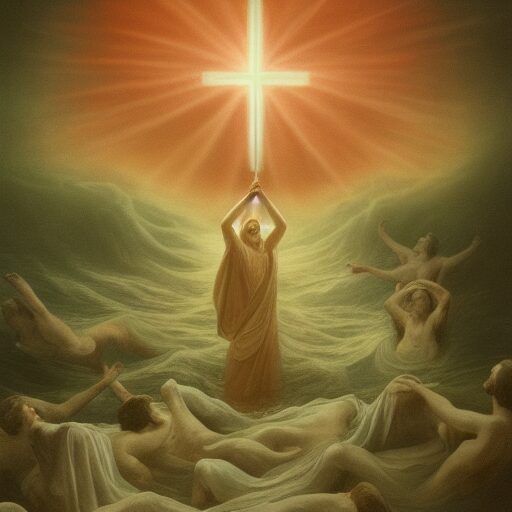
The Great Flood – A cross-cultural analysis of the cleansing wave
The story of the Great Flood is one of the most enduring and widespread myths across cultures, with its echoes found in the ancient traditions of Mesopotamia, Greece, India, Africa, and more. At its core, this mythological event shares a common thread – a catastrophic flood that wipes out humanity’s wickedness and prepares the way for rebirth.
Origins: Mesopotamian Roots
The earliest known version of the Great Flood narrative comes from ancient Sumeria in Mesopotamia (modern-day Iraq). The Epic of Gilgamesh, composed around 2000 BCE, tells the story of Utnapishtim, a king who saves himself and animals on a boat to survive the devastating flood sent by the gods. This mythological tale shares parallels with biblical accounts of Noah’s Ark in the book of Genesis.
African Variations
- Mami Wata: In West African mythology, Mami Wata is a water spirit who brings forth the Great Flood to cleanse the world of evil. This mythological figure embodies the power of nature and serves as a symbol of renewal.
- Ogun’s Flood: In Yoruba mythology from Nigeria, Ogun, the god of war and metalwork, sends a flood to destroy humanity for their wickedness. This story highlights the cyclical nature of time and the importance of moral accountability.
Greek Echoes
In Greek mythology, Deucalion’s Flood offers another striking example of this cross-cultural narrative. The gods send a devastating flood to punish humanity for their corruption, allowing only Deucalion and his wife Pyrrha to survive on a boat. This mythological event shares parallels with the biblical account of Noah’s Ark.
Indian Insights
In Hindu mythology, the Great Flood is known as Manu’s Deluge. According to this legend, the god-king Manu sends forth a flood to destroy humanity for their wickedness. The story highlights the cyclical nature of time and the importance of moral accountability.
Global Resonance
The Great Flood myth transcends geographical boundaries and cultural contexts, speaking to our collective human experience. This narrative serves as a reminder of the power of nature and the consequences of humanity’s actions.
“The flood is a universal symbol of transformation and renewal… It represents the possibility of starting anew, leaving behind the old and beginning again.” – Joseph Campbell
Conclusion
The Great Flood narrative offers a powerful example of cross-cultural resonance, echoing across ancient traditions to remind us of our shared human experience. This mythological event serves as a testament to the enduring power of storytelling and our collective quest for meaning and renewal.