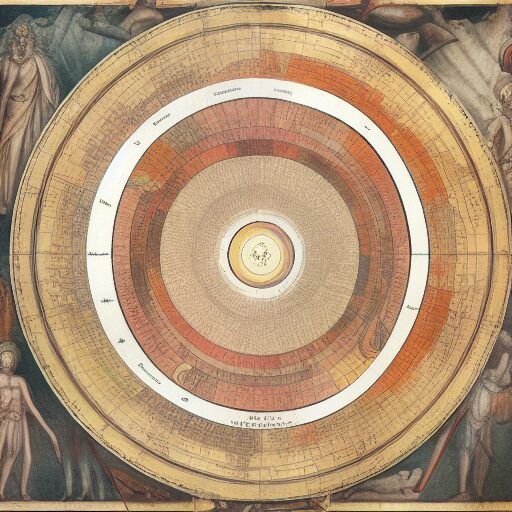
Dante’s Map – Visualizing the Architecture of the Afterlife
According to medieval Christian cosmology, the afterlife is divided into nine circles, each representing a different level of punishment or reward for the souls that inhabit them. In his epic poem The Divine Comedy, Dante Alighieri provides a detailed map of this spiritual landscape, known as the Inferno.
- The Journey Begins: The story of The Divine Comedy begins with Dante’s journey through the nine circles of Hell, guided by the Roman poet Virgil. As they descend into the underworld, they encounter various sinners and damned souls, each punished according to their specific transgressions.
- The Circle of Lust: The first circle of Hell is dedicated to those who were consumed by lust in life. This circle is characterized by a lack of remorse and a focus on physical pleasure.
- The River Styx: As Dante and Virgil journey deeper into the underworld, they come across the River Styx, which separates the living from the dead. The ferryman Charon greets them, demanding payment in exchange for crossing the river.
- The Circle of Gluttony: In the second circle of Hell, Dante and Virgil encounter those who were guilty of gluttony in life. These souls are trapped in a state of eternal hunger, forced to eat the bitter fruit of their own mistakes.
“The love that moves the sun and the other stars” – this famous line from The Divine Comedy highlights Dante’s vision of the afterlife as a place where souls are punished or rewarded based on their earthly deeds. The poem provides a detailed account of the architecture of Hell, complete with vivid descriptions of its various circles and punishments.
“Abandon all hope, ye who enter here” – this iconic inscription above the gates of Hell is a warning to those who dare to venture into the underworld. As Dante’s journey demonstrates, the afterlife is a place where sinners are punished, but also a place of redemption for those who have lived virtuous lives.
Today, The Divine Comedy remains a beloved and influential work of literature, offering insights into the human condition and our understanding of the afterlife. Whether you’re a scholar or simply a fan of classical literature, Dante’s map of Hell is an essential reading experience.
Learn More:
- The Divine Comedy: A free online version of the poem can be accessed through the Project Gutenberg.
- Dante’s Italy: Explore the Italian cityscapes that inspired Dante’s journey through Italy.com.
- The Afterlife in Literature: Discover more works of literature that explore the afterlife and its various interpretations at LiteraryDevices.net.
This article was inspired by the works of Dante Alighieri and is intended to provide a general overview of his poem, The Divine Comedy. The author acknowledges the complexities and nuances of Dante’s work and encourages readers to explore further for a deeper understanding.