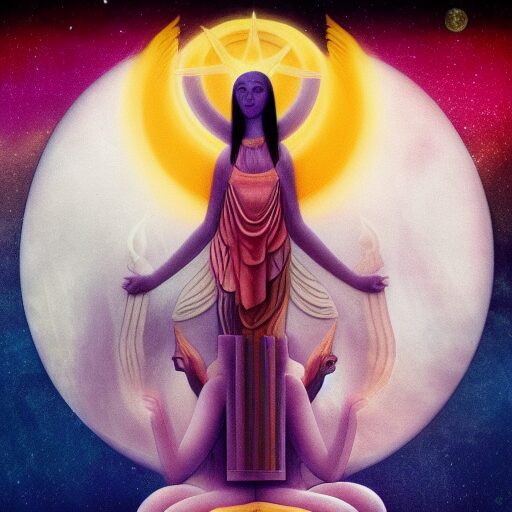
The Divine Feminine Rising – From Inanna to Artemis and beyond
The concept of the divine feminine is an ancient and universal one, with roots in many cultures and societies around the world. It refers to the symbolic representation of femininity as a sacred and powerful force that underlies all existence. This article will explore the rise of the divine feminine from its earliest recorded manifestations in Mesopotamian mythology to its modern-day reemergence.
Inanna’s Descent
In ancient Sumerian mythology, Inanna was the queen of heaven and earth, worshipped as a powerful goddess of love, war, and fertility. Her mythological story is one of empowerment and transformation. According to legend, Inanna descended into the underworld, ruled by her sister Ereshkigal, in order to reclaim her husband Dumuzi’s corpse. This journey represents Inanna’s desire for knowledge, power, and self-discovery.
Artemis’ Hunt
In Greek mythology, Artemis was the goddess of the hunt, wilderness, and childbirth. She is often depicted as a maiden with a bow and arrows, embodying the qualities of independence, strength, and protection. As the twin sister of Apollo, she represents the dualities of life: light and dark, masculine and feminine.
The Triple Goddess
The concept of the triple goddess, also known as the triple-faced goddess, is rooted in ancient European paganism. This mythological figure represents the three aspects of femininity: maiden (youth), mother (nurturing), and crone (wisdom). The triple goddess embodies the cycles of life, death, and rebirth.
Modern-Day Revival
In recent years, there has been a growing interest in reviving the divine feminine through various forms of spirituality and activism. This movement is often associated with feminist and ecological concerns, emphasizing the importance of nurturing and protecting the natural world.
“The Divine Feminine is not just about women; it’s about the feminine principle that underlies all existence.” – Gloria Steinem
Contemporary Practices
In today’s globalized society, there are many ways to connect with the divine feminine. These include:
- Wicca and witchcraft**: A modern pagan religion emphasizing the cyclical nature of life and the power of femininity.
- Feminist spirituality**: An approach that recognizes the interconnectedness of all beings, particularly women, and emphasizes self-care and empowerment.
- Ecofeminism**: A movement that highlights the connection between the oppression of women and the degradation of the natural world.
Conclusion
The divine feminine is a timeless and universal concept that has been present throughout human history. Its revival in modern times serves as a reminder of our interconnectedness with nature and each other. By exploring the myths and symbolism associated with this phenomenon, we can gain a deeper understanding of ourselves and our place within the world.