The Myth of Progress: Why Linear Narratives Fail
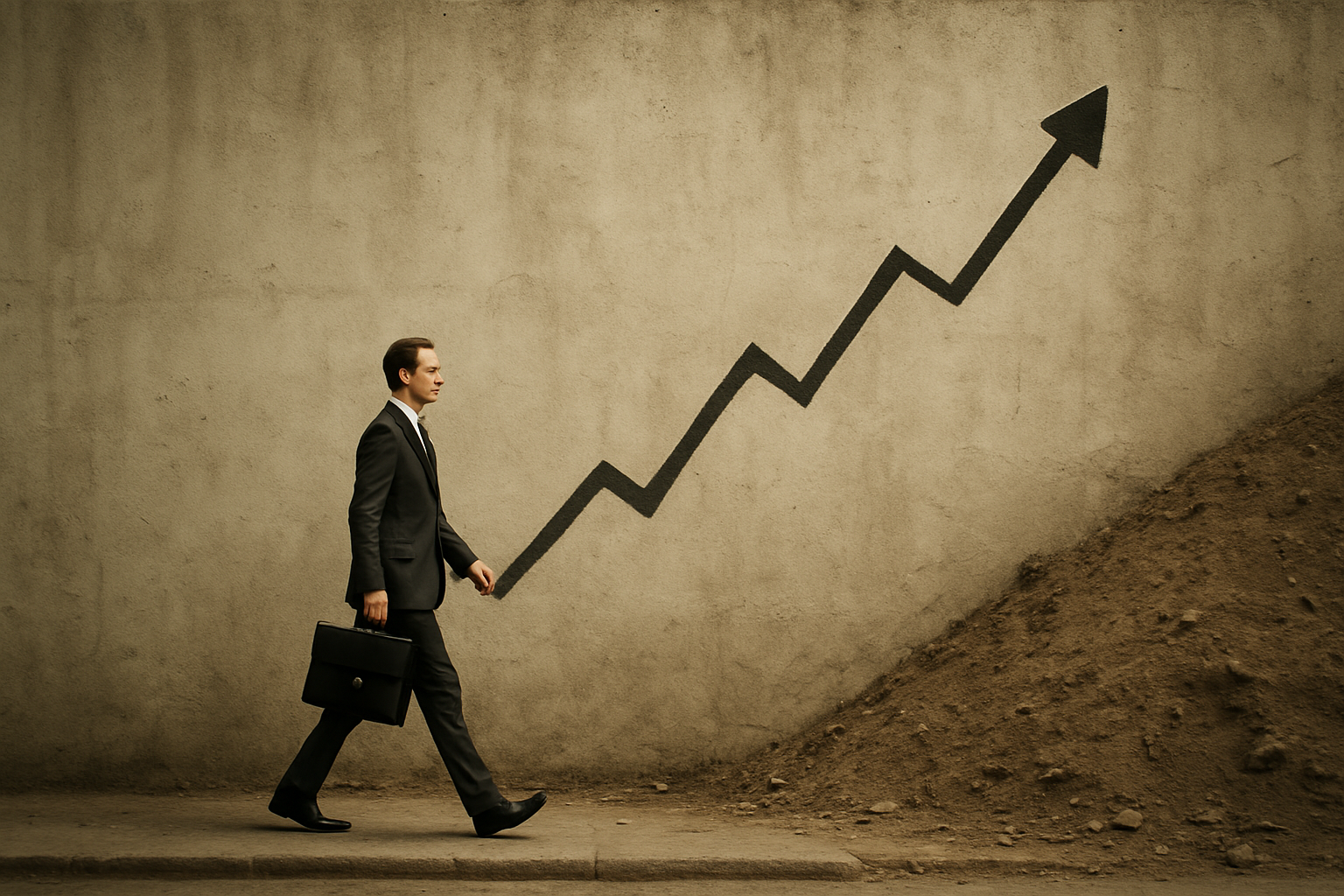
When we think about the concept of progress, we often imagine a straight line moving upwards, ever forward. This linear narrative, however, is overly simplistic and often misleading. History, human development, and societal change are far too complex to fit neatly into such a constrained framework.
The Illusion of Continuous Improvement
At the core of the linear narrative is the idea of continuous improvement. Many believe that each generation lives better than the one before, thanks to advancements in technology, medicine, and social structures. While it is true that certain areas have seen undeniable improvements, such as reduction in global poverty and advances in technology, these are not universal truths.
As philosopher Karl Popper argued, “The idea that history is moving toward a determinate end through a universal process is a dangerous illusion.” This belief often overlooks the nuanced and multifaceted nature of historical and societal change.
Historical Setbacks and Unintended Consequences
Progress is sometimes accompanied by setbacks. Societies may advance in one area while regressing in another. For example, technological advancements have improved communication and healthcare, but they have also led to environmental degradation and privacy concerns.
“We have achieved remarkable things but have lost our sense of wonder at our accomplishments,” noted historian and author Yuval Noah Harari in his book Sapiens: A Brief History of Humankind.
Recent events in global politics and climate change further underline that progress is not always a one-way street. The resurgence of populism, increasing inequality, and climate challenges remind us that setbacks are a part of human history.
The Nonlinear Nature of Cultural and Social Evolution
Cultural evolution does not follow a uniform path. Different societies evolve at different paces, and what is considered progress in one culture may not be valued in another. Anthropologist Claude Lévi-Strauss emphasized that cultural evolution is not linear, arguing that societies develop systems suited to their environments and needs, which may not always align with Western notions of progress.
Additionally, sociologist Peter Bearman suggests that “The progression of social change is frequently the result of complex, nonlinear dynamics that cannot be predicted or controlled.” This viewpoint challenges the traditional Western concept that equates modernization with positive change.
Rethinking Progress: A Cyclical Approach
Instead of viewing history as a linear timeline, some scholars propose a cyclical or network-based understanding of progress. This perspective considers that societies can experience periods of regression, stasis, and upheaval, alongside progression.
The 14th-century philosopher Ibn Khaldun introduced the concept of cyclical history in his work, Muqaddimah, suggesting that societies rise and fall in a recurring cycle. According to Khaldun, this cycle is driven by internal and external factors, including economic conditions, political stability, and cultural dynamics.
The Role of Technology and Globalization
In modern times, technology and globalization have played unique roles in shaping and disrupting the notion of linear progress. These forces can rapidly accelerate change but also exacerbate inequalities and lead to unforeseen consequences.
“Technology has no inherent power to either save or ruin us, but it is undoubtedly reshaping our world at an unprecedented pace,” writes Sherry Turkle in her book Reclaiming Conversation: The Power of Talk in a Digital Age.
Indeed, the speed and scale of technological progress raise important questions about its impacts on ecological balance, societal values, and human relationships.
Conclusion: Embracing Complexity and Uncertainty
The myth of linear progress oversimplifies and distorts our understanding of history and human development. Recognizing the complexity and unpredictability of societal change encourages a more nuanced analysis and a greater appreciation for diversity and adaptability.
In an ever-evolving world, it is crucial that we embrace uncertainty and remain open to a plurality of narratives. As we question and redefine our understanding of progress, we can foster societies that are more resilient, equitable, and sustainable.