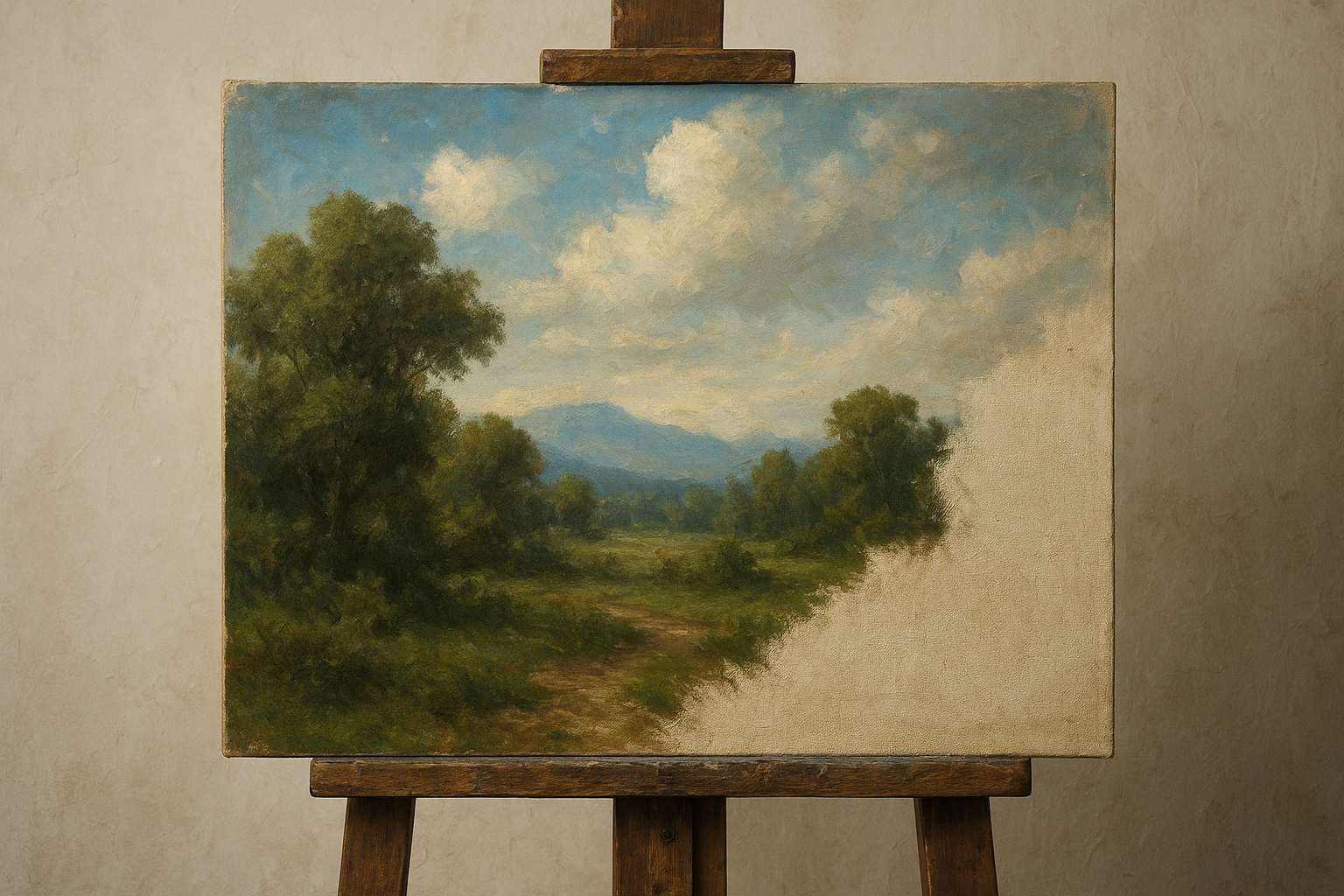
Art is often perceived as a journey from chaos to coherence, from a raw idea to a finished masterpiece. However, history shows us that some artworks find their enduring power not in completion, but in their state of eternal becoming. These unfinished pieces invite viewers into the creative process, offering glimpses into the artist’s world and the myriad possibilities that lie within the boundaries of the canvas or the flow of symphonic phrases.
The Charm of Incompleteness
Unfinished artworks possess a charm all their own. They engage the viewer’s imagination, inviting them to participate in the creative process and finish the narrative themselves. Incompleteness in art, far from being a sign of failure, often becomes a compelling asset. Incomplete artworks ask the viewer to ponder questions of intent, process, and finality.
Leonardo da Vinci’s Adoration of the Magi remains one of the most famous unfinished paintings. Although Leonardo only laid down the initial sketches and underdrawings, these create a tantalizing sense of motion and intention. The lack of completion leaves room for imagination, encouraging viewers to consider what might have been.
The Stories Behind Unfinished Masterpieces
- Michelangelo’s Sculptures: The unfinished statues of Michelangelo, such as the Prisoners or Slaves for the tomb of Pope Julius II, reveal the artist’s struggle with form and concept. These figures appear to be emerging from the stone itself, showcasing Michelangelo’s belief in finding the life within the marble.
- Franz Schubert’s Symphony No. 8: Known as “The Unfinished Symphony,” this piece disrupts conventional notions of symphonic structure. Despite being only two movements, the work commands a complete emotional narrative, suggesting that music, like visual art, can be whole in its apparent incompletion. As Maurice Brown states in The Life of Franz Schubert: “The enigma of the ‘Unfinished’ Symphony is that it does not feel unfinished.”
- Charles Dickens’ The Mystery of Edwin Drood: This novel, left incomplete upon Dickens’s death, draws readers into a mystery that allows for myriad interpretations. Each reader is invited to become a co-creator, generating theories and alternative endings, an exercise in collaborative storytelling.
The Nature of Creativity and Completion
The allure of unfinished works often lies in the insight they provide into the artist’s process. These artworks allow us to see the raw, the exploratory, and the tentative. Each brushstroke or musical note becomes a tangible thread linking us to the artist’s thoughts and decisions.
“Art is never finished, only abandoned.” – Leonardo da Vinci
Leonardo’s words remind us that the idea of completion is subjective. An artist may stop working on a piece for various reasons: shifts in inspiration, societal pressures, or unforeseen circumstances like death. These interruptions present an opportunity to reflect on the influence of external and internal factors on the creative process.
The Role of the Audience
The unfinished artwork also illuminates the active role of the audience in art’s interpretation. Each viewer brings personal experiences, emotions, and imagination to fill the voids left by the artist. This participatory nature of art enhances its dynamic quality, making it a living dialogue between the creator and the observer.
T.S. Eliot encapsulates this interaction eloquently in his essay “Tradition and the Individual Talent” available here: “The reader’s reception is an integral component of the work as a whole.”
The Modern Perspective
Today, the concept of unfinished art can also be seen in digital mediums, where artists share concepts and drafts online for feedback. This not only demystifies the creative process but also democratizes it, enabling dialogue between creators and their audiences across the globe.
The unfinished artwork isn’t merely about the absence of an ending but rather about the richness embedded in the narrative of its creation. In an age where the pressure to perfect and complete is pervasive, these works remind us of the joy and potency found in imperfection and interruption.
Conclusion
The beauty of unfinished artworks lies in their profound ability to transcend time, space, and context. Whether it be a painting, sculpture, symphony, or novel, these pieces continue to resonate, inviting each viewer or listener into an exclusive conversation that evolves endlessly.
By embracing the unfinished, we honor the enduring spirit of creativity and imagination, recognizing that sometimes the greatest beauty is found not in answers, but in questions themselves.