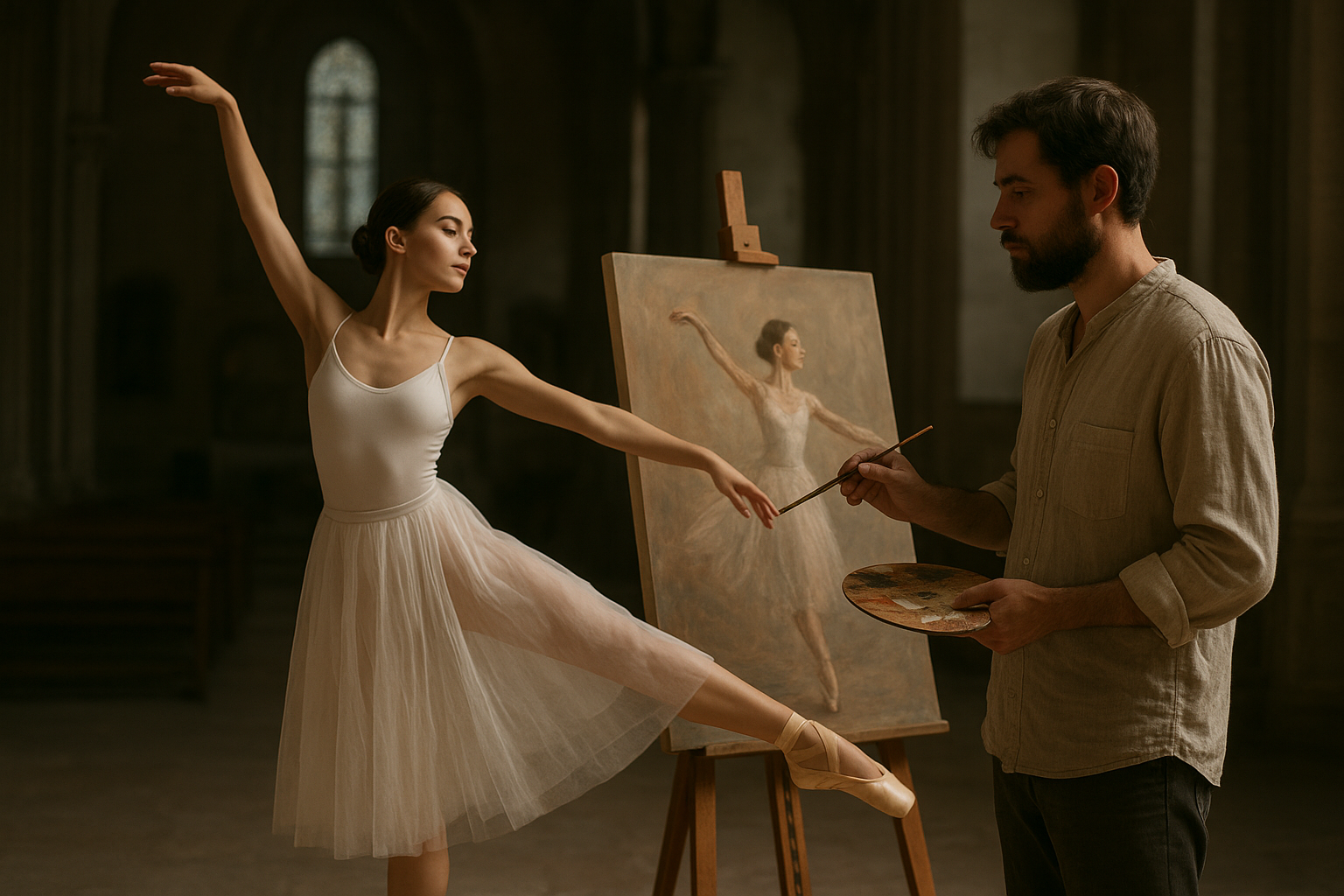
Art, dance, and faith—each a unique thread that, when woven together, creates a tapestry of human expression that transcends time and culture. These elements, though distinct, share an ability to reflect the ineffable, nurturing a connection between the earthly and the divine.
The Interplay of Art and Faith
Historically, art has been a conduit for expressing faith, offering a tangible form for the abstract. From the Byzantine mosaics, with their ethereal depictions of divine figures, to the intricate designs of Islamic calligraphy that meditate on the beauty of the Qur’anic text, art and faith have been enduring companions. As observed by Vincent Van Gogh, “Great things are done by a series of small things brought together.”
Art, therefore, becomes a sacred testimony to faith, composed of small, deliberate choices filled with meaning.
Dance: The Sacred Movement
Dance, a language of movement, allows for an expression of faith through physicality and rhythm. Whether in the form of the Bharatanatyam—an Indian classical dance celebrating spiritual ideals—or through the whirling of the Sufi dervishes, dance transcends spoken word. Sufi poet Rumi eloquently encapsulated this notion, stating, “Dance, when you’re broken open. Dance, if you’ve torn the bandage off. Dance in the middle of the fighting. Dance in your blood. Dance when you’re perfectly free.”
Here, dance becomes a liberation, an act of worship that unifies the dancer with the divine.
The Symbiosis of the Three
The synergistic relationship between art, dance, and faith creates a holistic experience that deepens spiritual understanding. For instance, in various cultures, religious ceremonies are often adorned with artistic symbols and communicated through dance performances. These elements enhance the ceremonial ambiance, inviting the community to partake in a collective contemplation of faith.
In its highest form, art does not merely depict, it delves into the essence of belief systems, much like a dance that takes worship beyond words, into a realm of felt experience.
The universality of this connection—across borders, languages, and epochs—suggests a fundamental human desire to seek out and manifest the divine truths in visible, tangible forms. Through the lens of art and the grace of dance, faith is not just seen or felt but truly experienced.