Tag: work

  • Work That Doesn’t Consume the Soul

    Work That Doesn’t Consume the Soul


    Work That Doesn’t Consume the Soul

    Work That Doesn’t Consume the Soul

    “The aim of life is not just to survive, but to thrive and become the person we were born to be.” – Oprah Winfrey

    In the realm of ancient mythology, a balance between work and personal fulfillment has long been sought. This pursuit persists in modern times, as individuals grapple with the question: can one find meaningful employment that doesn’t consume their soul?

    The Greek Myth of Tantalus

    The myth of Tantalus offers a grim warning of the consequences when one’s work consumes them. Tantalus, a king in Greek mythology, was punished by the gods for his transgressions by being forced to stand in a pool of water beneath a fruit-laden tree, with both out of reach. Every time he reached for the water or fruit, it would disappear, tormenting him endlessly.

    Modern Perspectives on Work and Soul

    “Don’t ask yourself what the world needs, ask yourself what makes you come alive. And then go do that. Because what the world needs is people who have come alive.” – Howard Thurman

    Modern thought on work and soul preservation shares parallels with ancient mythology. Viktor Frankl, a Holocaust survivor and psychiatrist, posited that finding purpose in life—even amidst adversity—can offer solace and hope. Likewise, renowned psychologist Abraham Maslow’s hierarchy of needs emphasizes personal growth and self-actualization as essential components of a fulfilling life.

    Finding Balance: The Modern Worker

    In today’s fast-paced, digitally driven world, the balance between work and personal well-being can be challenging to maintain. Nevertheless, it is essential to remember that finding work that doesn’t consume the soul involves seeking out opportunities for growth, purpose, and self-expression. By doing so, modern workers can strive toward living a life that thrives rather than merely surviving.

    Resources

  • The Silent Burnout: Functioning, Smiling, Breaking

    The Silent Burnout: Functioning, Smiling, Breaking


    The Silent Burnout: Functioning, Smiling, Breaking

    The Silent Burnout: Functioning, Smiling, Breaking

    In the realm of mental health discourse, burnout has emerged as a pressing concern, particularly in high-stress professions. However, this article aims to shed light on a less vocalized yet equally pervasive issue: The Silent Burnout.

    “Burnout is not always the result of too much work, but often the lack of play.”
    – Stuart Brown, Founder of the National Institute for Play. (Source)

    The Facade of Functioning and Smiling

    The Silent Burnout refers to individuals who appear functional on the surface but are silently struggling with overwhelming emotional and physical exhaustion. They continue to perform their daily duties while internalizing feelings of helplessness, cynicism, and detachment.

    “I was functioning at a high level at work, but I didn’t want to get out of bed in the morning, and I felt completely empty.”
    – Adam Grant, organizational psychologist at Wharton (Source)

    Breaking the Silence, Finding Healing

    Recognizing and addressing The Silent Burnout is essential to promote well-being and prevent potential disastrous consequences. Encouraging open dialogue, prioritizing self-care, and fostering supportive work environments can help individuals combat this silent crisis.

    “The first step towards getting better is admitting you need help.”
    – Unknown

  • Burnout and the Crisis of Modern Identity

    Burnout and the Crisis of Modern Identity


    Burnout and the Crisis of Modern Identity

    Burnout and the Crisis of Modern Identity

    “The high priestess of burnout,” as Anna Quindlen once described herself, has become a common figure in today’s society. The relentless pursuit of productivity and success has led to an epidemic of burnout among individuals worldwide.

    Anna Quindlen, author and journalist

    In the era of constant connectivity and information overload, it is no wonder that the concept of ‘burnout’ has gained significant traction.

    Symptoms and Causes

    • Emotional exhaustion: feelings of chronic fatigue, irritability, or helplessness
    • Alienation from work: a loss of personal accomplishment and a decline in performance
    • Reduced sense of personal accomplishment: feelings of failure and self-doubt

    Burnout is often the result of prolonged exposure to work-related stressors, such as unmanageable workloads, lack of control over one’s work, or insufficient rewards for efforts. In addition, the blurring of boundaries between work and personal life exacerbates these issues.

    The Crisis of Modern Identity

    “What we have come to understand as burnout is not just exhaustion; it’s a state of chronic spiritual emergency.”

    Dr. Herbert J. Moller, psychologist

    Modern identity, in part, has been shaped by the need to define ourselves through our work and productivity. As a result, burnout can lead to feelings of loss or crisis of self-worth.

    Mitigating Burnout

    To combat burnout, it is essential to adopt healthy coping strategies such as setting boundaries between work and personal life, practicing mindfulness, and seeking support from family, friends, or mental health professionals.

    “Take care of yourselves. Protect yourselves from this culture that is killing you.”

    Christina Fichtner, author of “The Burnout Group”

  • The Solitary Seeker – Finding mythic meaning in the “gig economy.”

    The Solitary Seeker – Finding mythic meaning in the “gig economy.”


    The Solitary Seeker – Finding mythic meaning in the “gig economy.”

    The Solitary Seeker: Unveiling Mythic Meanings in the “Gig Economy”

    In today’s ever-evolving world, the concept of work has undergone a significant transformation. The rise of the “gig economy,” characterized by temporary jobs or projects, offers an intriguing parallel to ancient mythologies and their solitary seekers.

    “The hero’s journey is not merely a metaphor for our own life story—it is the blueprint of the universal human experience.” — Joseph Campbell

    The Modern-Day Hero: The Solitary Seeker in the Gig Economy

    • Isolation: Just as mythic heroes often embark on their journeys alone, many gig workers find themselves detached from traditional workplace structures and camaraderie.
    • Adaptability: The ability to adapt is crucial for both ancient heroes and today’s freelancers, as they confront ever-changing circumstances and challenges.
    • Pursuit of Meaning: In a world where work can be ephemeral, the search for personal fulfillment and meaning becomes even more significant—reflecting the archetypal hero’s quest for self-realization.

    Connecting the Dots: The Echoes of Mythology in Modern Work

    “Mythology is not a lost tradition. It lives in each of us.” — John O’Donohue

    By examining the parallels between ancient mythologies and the modern gig economy, we can gain new insights into the human condition and the enduring quest for meaning in our lives. As we continue to navigate this rapidly-evolving work landscape, it is essential to remember that each of us carries within us the spirit of the solitary seeker.


  • How Modern Work Hijacks the Nervous System

    How Modern Work Hijacks the Nervous System


    How Modern Work Hijacks the Nervous System

    How Modern Work Hijacks the Nervous System

    “The way we work now — the constant deluge of email, the endless stream of meetings and the expectation that we’ll always be reachable — is creating an enormous amount of stress, which in turn can lead to a host of health problems.” – Susan Cain, Author of “Quiet: The Power of Introverts in a World That Can’t Stop Talking”

    • Always Connected: With smartphones and laptops, we are never truly disconnected from work. This constant availability can lead to stress and anxiety.
    • Multitasking: In an attempt to do more in less time, we multitask. However, research shows that multitasking reduces productivity and increases stress levels.
    • Unpredictability: The unpredictable nature of modern work can cause chronic stress, leading to health problems like heart disease and depression.

    “The amount of stress that people experience in their jobs is staggering. And it’s not just a matter of personal well-being; it’s a business issue.” – Dan Schawbel, Author of “Back to Human: How Great Leaders Create Connection in the Digital Workplace”

    • Emotional Labor: The constant need to be ‘on’ and to manage emotions can lead to emotional exhaustion.
    • Lack of Control: A lack of control over work processes and deadlines can contribute to stress levels.

    “Technology is not the enemy here. The problem isn’t that we are always reachable; it’s how we use these tools and how our work culture has evolved.” – Kim Scott, Author of “Radical Candor: Be a Kick-Ass Boss Without Losing Your Humanity”

    • Mindfulness: Practicing mindfulness can help reduce stress levels by focusing on the present moment.
    • Setting Boundaries: Establishing clear work-life boundaries is crucial for maintaining a healthy work-life balance.

  • Reclaiming Humanity in Work and Life

    Reclaiming Humanity in Work and Life


    Reclaiming Humanity in Work and Life

    Reclaiming Humanity in Work and Life

    “In the race for productivity, let us not forget that humanity is our greatest asset.”
    – Unknown

    In today’s fast-paced world, it is easy to get lost in the whirlwind of tasks and responsibilities. However, it is crucial that we, as individuals and societies, strive to maintain our humanity amidst the relentless pursuit of progress. This article aims to explore ways to reclaim humanity in work and life.

    Embracing Empathy at Work

    • Prioritize human connections: In a remote-first world, it is essential to prioritize personal interactions and foster a sense of camaraderie among colleagues. This can be achieved through regular team meetings, virtual coffee breaks, or casual discussions that promote emotional intelligence and empathy.
    • Promote work-life balance: Encourage employees to prioritize their personal lives and mental health by setting reasonable expectations for working hours and offering flexible schedules. This not only enhances overall well-being but also leads to increased productivity in the long run.

    Cultivating Self-awareness and Mindfulness

    Mindfulness is a powerful tool that can help individuals reclaim their humanity by fostering self-awareness, emotional regulation, and resilience. Encourage regular meditation and mindfulness practices, both in and out of the workplace, to promote personal growth and well-being.

    Supporting Community Engagement

    • Volunteer opportunities: Offer employees volunteer days or support local community initiatives to encourage active participation and engagement in social causes.
    • Collaborative projects: Encourage collaboration between departments or with other organizations on charitable projects that align with the company’s values, fostering a sense of purpose and camaraderie among employees.

    “We must be the change we wish to see in the world.”
    – Mahatma Gandhi

    By reclaiming our humanity, we can create a more compassionate, empathetic, and connected workforce. In doing so, we not only improve our own well-being but also foster a positive, supportive environment that drives success for both individuals and organizations alike.


  • Burnout Beyond Work: When Life Itself Feels Heavy

    Burnout Beyond Work: When Life Itself Feels Heavy


    Burnout Beyond Work: When Life Itself Feels Heavy


    Burnout Beyond Work: When Life Itself Feels Heavy

    In today’s fast-paced world, burnout is becoming increasingly common. While it is often associated with work-related stress, burnout can also manifest in various aspects of life.

    Understanding Burnout Beyond Work

    “Burnout refers to a state of emotional, physical, and mental exhaustion caused by excessive and prolonged stress. It occurs when you feel overwhelmed, emotionally drained, and unable to meet constant demands.”
    – World Health Organization

    Recognizing the Symptoms

    • Feelings of chronic fatigue and lack of energy
    • Increased mental distance from one’s job or activities
    • Reduced efficiency and productivity
    • Feelings of cynicism or negativity towards work or life in general

    Addressing Burnout Beyond Work

    “The antidote to burnout is not self-care, it’s human connection.”
    – Brené Brown, Research Professor at the University of Houston

    Building strong relationships, seeking support from loved ones, and engaging in activities that bring joy and fulfillment can help combat burnout.

    Preventing Burnout Beyond Work

    • Setting boundaries between work and personal life
    • Prioritizing self-care and wellness
    • Maintaining a positive mindset and finding meaning in daily activities


  • The Ambient Canvas: Art Designed for Contemplation

    The Ambient Canvas: Art Designed for Contemplation

    In the whirl of today’s fast-paced world, ambient art is emerging as a haven of tranquility, inviting viewers to slow down and engage in mindful observation. This genre of art is designed not just for visual consumption but for introspective contemplation, encouraging a deeper connection between the observer and the universe.

    A New Dimension of Perception

    Ambient art blends elements of nature, light, sound, and space to create experiences that soothe and inspire. It is less about bold statements and more about the subtle interplay of elements that evoke emotion and thought.

    “Ambient art seeks to create an atmosphere, an environment where one can meditate and reflect,” says art critic James Parker in an interview with The Atlantic. “It’s like a gentle whisper amid the clamor of everyday life.”

    Artists Leading the Movement

    • Olafur Eliasson: Known for his installations that challenge perceptions of nature and reality, Eliasson’s work often uses ephemeral elements like light and water. His Weather Project at the Tate Modern is a prime example of art that engulfs the viewer in a new atmospheric reality.
    • James Turrell: Turrell’s work focuses on light and space, creating environments where viewers can lose themselves in the contemplation of color and form. His Skyspaces installations, for example, provoke a deep meditative state through their simplicity and elegance.
    • Yayoi Kusama: Famous for her infinite mirror rooms, Kusama creates immersive spaces where the boundaries between the self and the work blur, encouraging introspection and engagement with the infinite.

    The Impact on Mental Wellbeing

    Ambient art offers not only aesthetic pleasure but also therapeutic benefits. The study of “slow art” shows it can help reduce stress and promote mindfulness. According to a report in Psychology Today, “Engaging with art in a meaningful way can lead to a state similar to meditation, reducing anxiety and promoting a sense of wellbeing.”

    An Invitation to Pause

    In a society that values speed and immediate results, ambient art stands out as a gentle reminder of the beauty in taking a moment to pause, reflect, and simply be. It does not demand comprehension or critique; instead, it offers an open invitation for personal exploration and discovery. As art continues to evolve, ambient art proves the enduring power of stillness in the cacophony of modern life.

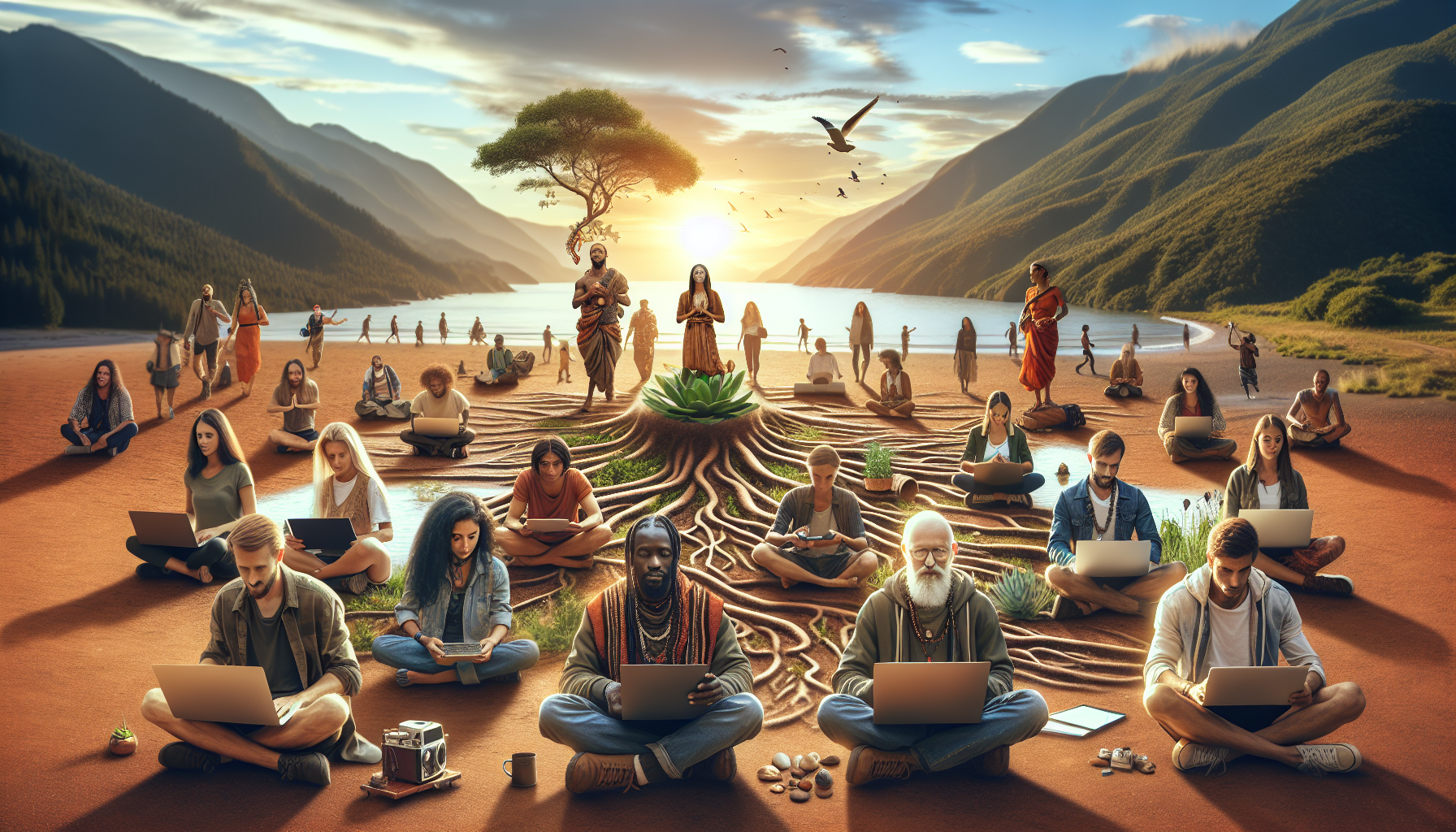
  • Digital Nomads, Spiritual Roots

    Digital Nomads, Spiritual Roots

    In recent years, the term digital nomad has become synonymous with a lifestyle that blends work and travel, allowing individuals to earn a living while exploring the world. However, beyond the surface allure of exotic locations and flexible schedules lies a deeper connection to age-old spiritual practices.

    The Rise of the Digital Nomad

    The digital nomad lifestyle has been facilitated by advancements in technology and a shift towards remote work. According to a 2020 study by MBO Partners, there were approximately 10.9 million digital nomads in the United States alone, a figure that has been steadily rising.

    “The freedom to work from anywhere has given people the opportunity to reassess their work-life balance and align their lifestyles with personal values,” says Sarah Harvey, author of Kaizen: The Japanese Method for Transforming Habits, One Small Step at a Time.

    Seeking Spiritual Connection

    Many digital nomads are increasingly seeking out environments that offer more than just a picturesque landscape. They are drawn to destinations known for their spiritual significance, such as Bali, Thailand, and India, where the promise of both inner and outer exploration beckons.

    • Bali: Often referred to as the “Island of the Gods,” Bali is known for its vibrant Hindu culture and is a popular destination for yoga retreats and meditation.
    • Thailand: With its rich Buddhist heritage, Thailand offers numerous temples and meditation centers that attract those seeking spiritual growth.
    • India: As the birthplace of yoga and a land of diverse spiritual traditions, India remains a pivotal destination for those on a path of self-discovery.

    A Harmonious Lifestyle

    For digital nomads, the integration of work and spirituality can lead to a more fulfilling life. By embracing practices such as mindfulness, yoga, and meditation, they find ways to navigate the challenges of remote work while maintaining mental and emotional well-being.

    Dr. Emma Seppälä, a psychologist at Stanford University, notes in her book The Happiness Track,

    “Mindfulness and meditation can increase your focus and creativity, helping you perform better under pressure.”

    Conclusion

    As the world becomes increasingly interconnected, the digital nomad lifestyle continues to evolve, offering a unique blend of modern work flexibility and ancient spiritual practices. For those embarking on this journey, the quest is not only for professional success but also for personal enrichment and a deeper understanding of the self.