Tag: without

  • Dew on the Grass – Fragile Moments of Zen Perception

    Dew on the Grass – Fragile Moments of Zen Perception

    Dew on the Grass: Fragile Moments of Zen Perception

    In the early morning, as the first rays of sunlight break over the horizon, a delicate transformation occurs. The world, shrouded in shadows just moments before, reveals its mysteries anew. Dew forms on blades of grass, a transient spectacle of nature proclaimed in silent grandeur. These fleeting moments of crystalline clarity are akin to the practice of Zen Buddhism, inviting contemplation and perception beyond the ordinary.

    The Symbolism of Dew

    Dew has captured the imagination of poets and philosophers alike, often serving as a metaphor for life’s ephemeral nature. Its presence is a gentle reminder of both beauty and brevity, embodying qualities that are deeply intertwined with the principles of Zen.

    “The virtue of the moon is that it is the dark void made radiant, perfect emptiness filled with light. In like manner, dew is the eye of morning, the soul of the young day formed in tears of oblivion over flowers and green leaves that have flung themselves away.” – Allen Ginsberg

    In Zen, the experience of such transient beauty is a gateway to enlightenment. It teaches practitioners to remain present and mindful of the impermanent nature of reality—a fundamental tenet of Buddhist philosophy.

    Zen and the Art of Perception

    Zen practice encourages a heightened state of awareness, where the practitioner becomes acutely attuned to the subtleties of the moment. This state is often referred to as ‘mindfulness’, a conscious attention to the immediate experience devoid of judgment or attachment. The dew glistening atop each blade of grass becomes a vehicle for this mindful practice.

    Mindfulness in Action

    • Observe the Present: Focus intently on the dew, allowing thoughts to pass without grasping onto them. This practice, often termed Shikantaza, or “just sitting,” invites one to experience reality as it is.
    • Embrace Transience: Recognize the impermanent nature of the dew. Just as it will soon evaporate, so too does each moment of life. Savoring these moments fosters a deeper appreciation for the here and now.
    • Letting Go: In Zen, attachment is seen as a source of suffering. By appreciating the dew without wishing to possess it, one learns the art of non-attachment.

    Zen master Thich Nhat Hanh beautifully describes this practice: “Drink your tea slowly and reverently, as if it is the axis on which the world earth revolves—slowly, evenly, without rushing toward the future.”

    The Practice of Zazen

    Dew’s fleeting nature finds a parallel in Zazen, or seated meditation, which is a core practice in Zen Buddhism. Both require the practitioner to sit quietly in thoughtless awareness, to embrace the void and find beauty in simplicity.

    Steps in Zazen Practice

    • Posture: Sit comfortably, with a straight back, hands resting on your knees or in a cosmic mudra.
    • Breath: Pay attention to your breath, letting it flow naturally without force.
    • Mind: Allow thoughts to arise and pass without engaging with them. Like dew on the grass, let these thoughts evaporate naturally.

    The simplicity of Zazen allows practitioners to connect deeply with their environment, proffering a space where even the smallest details, like the dew-laden grass, can inspire profound insight.

    Nature as a Teacher

    Nature plays a crucial role in Zen practice, serving as both a teacher and a source of reflection. The natural world, with its dynamic cycles and inherent impermanence, mirrors the Zen practitioner’s inner journey.

    In the words of Dogen Zenji, the founder of Soto Zen in Japan: “Do not follow the ideas of others, but learn to listen to the voice within yourself. Your body and mind will become clear, and you’ll realize the unity of all things.”

    The imagery of dew has a unique place in Eastern haikus, where nature and human emotion are interwoven. Consider the famous haiku by Matsuo Basho:

    “The summer grasses—
    All that remains
    Of warriors’ dreams.”

    Contemplating the Fragility of Life

    Just as dew evaporates with the morning sun, so too does life’s fleeting nature urge us to live mindfully. By reflecting on the impermanence embodied by dew, individuals can foster a deeper connection to the present moment and cultivate an appreciation for life’s fragility.

    Zen practice does not seek to deny the challenges of existence but to help practitioners confront them gracefully. In observing the dew, one learns to find tranquility and acceptance, even amidst life’s uncertainties.

    Conclusion

    The ephemeral nature of dew on the grass offers a rich tapestry for exploring Zen perception. Through this delicate essence of morning, one can engage in a deeply personal and contemplative journey—a reminder that beauty often resides in the most transient and fragile moments.

    In a world filled with constant distraction, the simplicity of dew offers an invitation. It beckons us to pause, observe, and find solace in the intricate dance of light and shadow upon the morning grass. Such moments, although fleeting, pave the path to inner serenity and Zen wisdom.

  • Wandering Sage – The Art of Traveling Without Thought

    Wandering Sage – The Art of Traveling Without Thought

    Wandering Sage: The Art of Traveling Without Thought

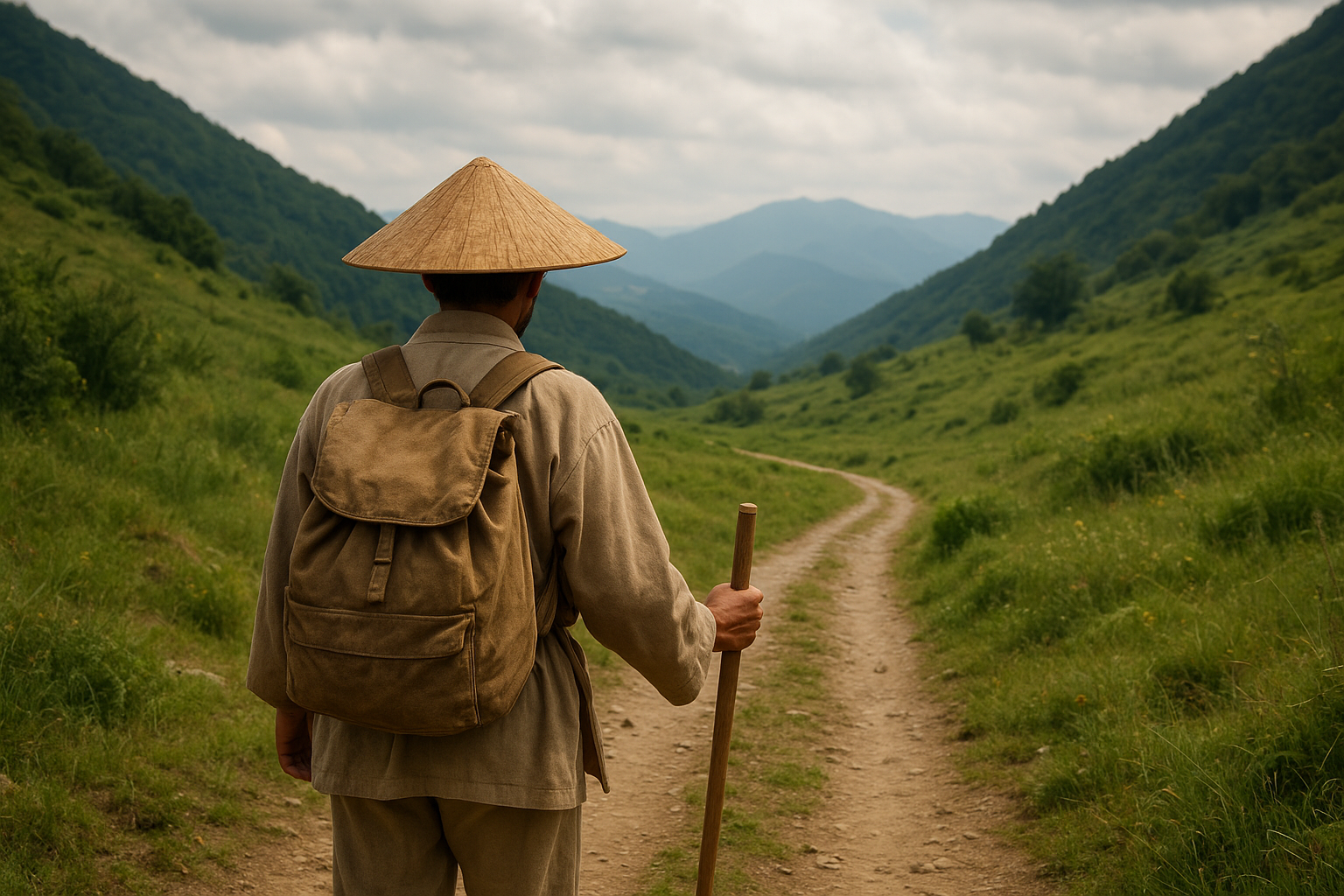
    Traveling without a rigid itinerary can be one of the most liberating experiences. This style of travel, often referred to as “The Art of Wandering,” allows adventurers to embrace spontaneity and cultivate a deeper connection with their surroundings. Much like the wandering sages of myth and history, this approach to travel encourages discovery, mindfulness, and personal growth.

    “Not all those who wander are lost.” —J. R. R. Tolkien

    The Essence of Wandering

    The art of wandering is not aimless drifting; rather, it is purposeful rambling without the constraints of a schedule. Travelers who embrace this style emphasize the journey over the destination. According to Psychology Today, wandering stimulates creativity, relieves stress, and enhances emotional well-being. The lack of a defined goal allows travelers to engage fully with the present moment.

    The Mythical Wanderers

    Throughout history and mythology, many figures have embodied the wandering sage archetype. These characters often embark on journeys that are transformative, both for themselves and the world around them.

    • Odysseus: The hero of Homer’s “Odyssey” undertakes a long and circuitous journey home. While his travels are fraught with challenges, they ultimately lead to profound personal insights.
    • Siddhartha Gautama: Before becoming the Buddha, Siddhartha wandered for years, seeking enlightenment. His journey is a quintessential example of travel as a path to self-discovery.
    • Cáin: In Irish mythology, Cáin is a nomadic musician who wanders the land, spreading wisdom and bridging human and fairy worlds.

    The Modern-Day Wanderer

    In contemporary society, the travel bug acts as the modern equivalent of the mythical journey. However, with the advent of technology and abundant travel resources, the impulse to pre-plan every aspect can be overwhelming. To truly embrace the wandering sage mindset, one must find a balance between preparation and spontaneity.

    Tips for Embracing the Wanderer’s Path

    • Travel Light: A sage travels unburdened. Packing light not only makes moving easier but also symbolizes the freedom from material constraints.
    • Stay Open: Be open to experiences without preconceived notions. Allow local culture, people, and landscapes to guide you.
    • Embrace Uncertainty: Planning every detail can stifle discovery. Find joy in the unknown and let chance determine your itinerary.
    • Reflect Daily: Spend time each day journaling or meditating. Reflect on your experiences, insights gained, and how they might inform your ongoing journey.

    Real-Life Stories of Wandering

    Modern-day wanderers often share tales that inspire others and demonstrate the profound impact of this style of travel.

    “I left without a plan and discovered more than I ever imagined, stumbling upon hidden cafes, meeting locals who became lifelong friends, and finding beauty in the unexpected. The journey was the destination.” —Anonymous Travel Blogger

    These stories underscore the idea that true wanderers embrace each moment, finding nourishment for their souls in the simplicity of the journey itself. For those who seek to understand the deeper truths of life, traveling without thought becomes both a personal evolution and a profound learning opportunity.

    Conclusion

    The art of wandering invites both novice and seasoned travelers to let go of expectations and rediscover the joy of travel in its purest form. Channeling the wisdom of sages, this approach reminds us that the unknown can be our greatest teacher. By relinquishing control, we open ourselves to the vast tapestry of experiences the world offers.

    So, the next time you pack your bags, remember the words of Lao Tzu: “A good traveler has no fixed plans and is not intent on arriving.” Embrace the journey, for the art of traveling without thought might just lead you to your own path of wisdom.

  • Pilgrim Without a Map – Trusting the Dao to Lead the Way

    Pilgrim Without a Map – Trusting the Dao to Lead the Way

    Pilgrim Without a Map: Trusting the Dao to Lead the Way

    The concept of a ‘pilgrim without a map’ often evokes the image of an exploratory journey undertaken with a sense of faith and openness to whatever path unfolds. In the philosophical context of Daoism, this journey becomes much more profound—a lifelong adventure led by the unseen, the undefined. The Dao, or ‘the Way,’ represents a central idea in Daoism where trust in the universe’s inherent wisdom guides one’s actions and decisions.

    Embracing the Dao

    The Dao Te Ching, attributed to Laozi, is a cornerstone text that encapsulates the spirit of living in harmony with the Dao. Rather than prescribing a particular path, Laozi advocates for a form of enlightened non-action, or wu wei. According to Laozi:

    “The Way is empty, yet when you use it, you never truly fill it.”
    Laozi, Dao Te Ching

    This paradoxical statement invites us to trust the inherent potential of the Dao’s void, to believe that in relinquishing control, we allow the universe’s natural flux to lead us to the journey’s true destination.

    The Uncharted Terrain

    The idea of a pilgrim without a map resonates with the understanding that certainty in life is illusory. In the Daoist perspective, life itself is an uncharted terrain. Attempting to map every turn can lead to a narrowed experience that misses the spontaneous beauty of unexpected paths. This acceptance of the unknown instills a profound sense of peace:

    “Knowing others is intelligence; knowing yourself is true wisdom. Mastering others is strength; mastering yourself is true power.”
    Laozi, Dao Te Ching

    As Daoists believe, understanding oneself, and one’s place within the broader tapestry of existence, is a much more enlightening pursuit than charting and conquering external territories.

    Living the Daoist Way

    To live according to the Dao is to harmonize with life’s natural rhythms rather than resisting them. This philosophy asks followers to forgo rigid definitions of success, contendment, and identity in favor of fluidity and responsiveness. As the Dao flows through all beings and things, so too does it navigate the pilgrim’s journey:

    • Non-attachment: The absence of a map symbolizes letting go of fixed expectations or goals that may limit one’s experience.
    • Serendipity: Accidental discoveries may be more significant than destinations initially planned.
    • Integration with nature: Observing and mirroring nature’s effortless adaptation and balance.
    • Spontaneity: Embracing change and opportunity when they arrive, without clinging or apprehension.

    The Role of Trust

    One core tenet of trusting the Dao is the cultivation of trust—not only in the universe but also in oneself. Trusting the Dao means letting go of fear and control, thereby allowing intuition and the heart, rather than the ego and outward anxiety, to navigate.

    In this context, Alan Watts, a British writer and speaker known for interpreting Eastern wisdom for a Western audience, states:

    “To have faith is to trust yourself to the water. When you swim, you don’t grab hold of the water lest you sink and drown, instead you relax and float.”
    Alan Watts

    As the quote suggests, trusting the Dao implies relaxing into life’s currents, relinquishing the struggle against them.

    Challenges Along the Way

    Despite its insights, a journey guided by the Dao isn’t without its challenges. In a world driven by goals, maps, and direct outcomes, the Daoist path may seem counter-intuitive. The modern pilgrim faces doubts of practicality and efficacy. Yet, therein lies its transformative power—learning to thrive amidst uncertainties often leads to profound spiritual and personal growth.

    The Influence of Daoism Today

    In contemporary society, the principles of Daoism influence a wide array of fields, from leadership and personal development to art and technology. The notion of harmonious living, abiding by natural laws, and following the intuitive ‘inner compass’ resonate deeply with those seeking paths less conventionally defined.

    Furthermore, the Daoist emphasis on balance and sustainability resonates with modern ecological and mindfulness movements. The integration of Daoist principles cultivates resilience against the often overwhelming pace and demands of contemporary life.

    Conclusion

    The journey of a pilgrim without a map, guided by trust in the Dao, is profound in its simplicity and complexity, reflecting the paradoxical nature of Daoism itself. To walk such a path, embracing the wisdom of wu wei and the lessons of spontaneous existence, is a practice in spirituality, courage, and enlightenment.

    As we stand, mapless and eager to embrace the infinite possibilities of our journeys, trusting the Dao to lead the way proves not just a philosophical ideal but a beacon of living harmoniously within the wondrous unpredictability of life.

  • The Pathless Path – Traveling Without Destination in the Spirit of Dao

    The Pathless Path: Traveling Without Destination in the Spirit of Dao

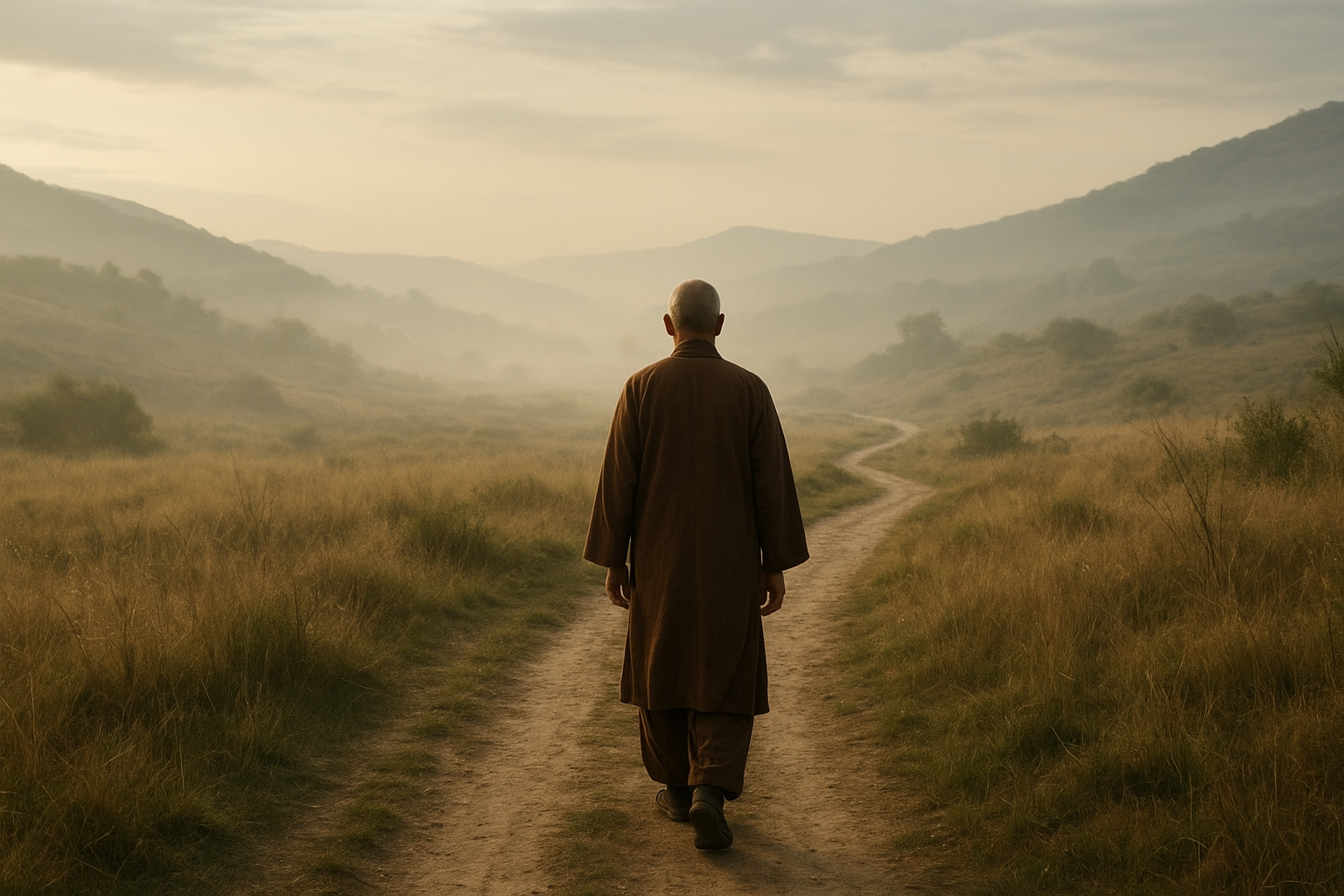
    The desire to travel and explore is intrinsic to human nature. Throughout history, people have set out on great journeys—some to discover new lands, others in search of wisdom, and many more for the sheer joy of adventure. Among these travelers, some choose to embark on journeys without a fixed destination, embracing a concept deeply rooted in Daoist philosophy.

    Embracing the Dao

    Daoism, an ancient Chinese philosophy attributed to Laozi, emphasizes living in harmony with the Dao, which can be translated as “the Way.” Central to this philosophy is the idea of going with the flow of life, embracing uncertainty, and finding contentment in the present moment. Juxtaposed with the modern obsession with goals and performance, Daoism offers a refreshing perspective on travel.

    Laozi famously stated, “A good traveler has no fixed plans, and is not intent on arriving.” This suggests a form of travel where the journey itself is the destination, and where the traveler is open to whatever experiences unfold along the way.

    The Journey Over the Destination

    Embracing a “pathless path” means being open to spontaneity, allowing intuition to guide you rather than a fixed itinerary. This way of traveling can lead to unexpected encounters, deeper connections with the places visited, and a richer appreciation for the diversity of experiences life has to offer.

    • Freedom from Anxiety: Without a rigid plan, travelers can experience freedom from the anxiety usually associated with delays and changes in schedule.
    • A Deeper Connection with the Environment: Staying open to the present moment allows travelers to truly experience their surroundings, from natural landscapes to vibrant cultures.
    • Personal Growth: As travelers adapt to new situations, they often discover more about themselves and their capacities for resilience and adaptability.

    The Modern-Day Pilgrim

    Many modern travelers seek to emulate the pathless path approach in their own way. Resources like spiri.ai offer guidance on how to integrate the principles of spontaneous travel into one’s life. Furthermore, communities of like-minded wanderers encourage and support those seeking a deeper connection with the world through purposeful aimlessness.

    “To be uncertain is to be uncomfortable, but to be certain is to be ridiculous.” – Chinese Proverb

    In essence, the spirit of the pathless path invites us to release our attachments to outcomes and be fully present—a lesson that extends well beyond the realm of travel. By weaving Daoist principles into our journeys, we can rediscover the magic of wandering, letting the world surprise us with its infinite possibilities.

  • The Way Before Words – Exploring the Primordial Dao in Silence

    The Way Before Words – Exploring the Primordial Dao in Silence

    The Dao, often translated as “the Way,” is a concept that invites seekers into a dimension of stillness and undefined beginnings. Originating from ancient Chinese philosophy, the Dao is not bound by language, yet it is experienced in the profound silence that precedes words. This article explores the primordial Dao and its relationship with silence, offering insights into how this ancient concept can guide modern spiritual practice.

    Understanding the Dao

    The Dao De Jing, attributed to the sage Laozi, is one of the most revered texts on Daoism. It opens with a profound statement:

    “The Dao that can be told is not the eternal Dao; The name that can be named is not the eternal name.”

    This passage introduces us to the concept of the Dao as something that eludes linguistic capture. It suggests that true understanding of the Dao transcends the limitations of words and enters a realm of experiential insight.

    The Role of Silence in Daoism

    Silence in Daoism is not merely the absence of sound but a profound presence that allows the Dao to reveal itself. As one embraces silence, they move beyond mental chatter, entering a space where the Dao can be felt directly. Zhuangzi, another great Daoist philosopher, emphasizes the importance of aligning with the natural order through silence:

    “To a mind that is still the whole universe surrenders.”

    This alignment is not about controlling or manipulating the environment but rather understanding and harmonizing with it silently. In silence, practitioners can observe the ebb and flow of life without attachment, thus gaining profound wisdom.

    Benefits of Embracing Silence

    • Enhanced Clarity: Without the distractions of constant input, silence provides a space for clarity and focus. It enables individuals to process thoughts more thoroughly.
    • Deeper Connection: In silence, there is an opportunity to connect deeper with oneself and the surrounding world. This connection often reveals insights that are difficult to attain amidst noise.
    • Internal Peace: Silence is a refuge where peace can be cultivated. By retreating into quietude, the mind settles, reducing stress and anxiety.

    Practices for Experiencing the Primordial Dao in Silence

    To explore the primordial Dao, one doesn’t need elaborate rituals but rather a commitment to stillness and presence. Here are a few practices that can help tune into the authentic silence where the Dao dwells:

    • Meditation: Engaging in silent meditation helps to quiet the mind and create space for the Dao to emerge. Techniques such as mindful breathing or focusing on a particular point can be helpful.
    • Nature Walks: Walking in nature without speaking allows one to attune to the natural world, listening and observing without the interference of words.
    • Silent Retreats: Participating in a silent retreat provides a prolonged period to explore silence deeply. These retreats often help practitioners understand the nuances of their inner landscapes.

    Challenges and Misunderstandings

    Embracing silence isn’t without its challenges. In a world saturated with noise and information, the absence of sound can initially feel uncomfortable. It’s vital to understand that silence isn’t lonely but a space of communion with the self and the universe. Yasunari Kawabata eloquently captures this in his work:

    “In silence there is eloquence. Stop weaving and see how the pattern improves.”

    Another common misunderstanding is the belief that silence is a rigid absence of action. In reality, it is as dynamic as the Dao itself, offering insights through its stillness.

    Integrating Silence into Daily Life

    For many, the thought of integrating silence into a busy lifestyle may seem daunting. Yet, small, consistent practices can make a significant difference:

    • Morning Silence: Begin each day with a few minutes of silence to set a peaceful tone for the day.
    • Digital Detox: Allocate time away from devices and embrace electronic silence to find mental clarity.
    • Mindful Listening: In conversations, practice listening more and speaking less, allowing space for genuine dialogue to arise.

    Conclusion

    The exploration of the primordial Dao in silence is an invitation to step beyond the constraints of language and connect with an ancient wisdom that is both pervasive and elusive. Through silence, practitioners develop a deeper understanding of themselves and the universe, discovering that the Dao’s way often begins where words end.

    The journey of silence is not a destination but a continuous, ever-unfolding practice, transforming the way one perceives and interacts with the world.

  • The Pathless Path

    The Pathless Path

    The concept of a “pathless path” suggests a journey without a predetermined course, embracing uncertainty and the unknown. This idea has been explored in various spiritual and philosophical traditions, encouraging individuals to find their unique way rather than following a prescribed route.

    The Philosophy of the Pathless Path

    In the realm of philosophy, the pathless path challenges the notion of linear progression. It suggests that life is not a straight line but a series of experiences that do not necessarily follow a logical sequence. This idea resonates with the writings of Jiddu Krishnamurti, a philosopher and spiritual teacher who believed that truth is a pathless land. He stated:

    “Truth is a pathless land, and you cannot approach it by any path whatsoever, by any religion, by any sect.”

    Krishnamurti’s teachings emphasize the importance of self-discovery and understanding without relying on external authorities or established doctrines. He encouraged individuals to break free from societal constraints and discover their paths through personal reflection and insight.

    Embracing Uncertainty

    The pathless path is inherently about embracing uncertainty. In a world that often values certainty and predictability, stepping into the unknown can be daunting. However, it is this very uncertainty that allows for growth and transformation. As Alan Watts, a British writer and speaker known for interpreting Eastern philosophy, eloquently put it:

    “The only way to make sense out of change is to plunge into it, move with it, and join the dance.”

    Watts’ perspective highlights the beauty of embracing change and the fluid nature of life. By accepting that there is no fixed path, individuals can explore new possibilities and experiences without fear of failure or judgment.

    Finding Meaning in the Pathless Path

    While the pathless path may seem directionless, it holds the potential for profound meaning. It invites individuals to seek their purpose and passions, rather than adhering to societal expectations. This journey is deeply personal and can lead to a more authentic and fulfilling life.

    The pathless path often involves a process of unlearning and letting go of preconceived notions. It requires courage to question norms and venture into uncharted territory. As Ralph Waldo Emerson famously said:

    “Do not go where the path may lead, go instead where there is no path and leave a trail.”

    Emerson’s words encourage the pursuit of individuality and the creation of one’s trail. By doing so, individuals contribute to the richness and diversity of human experience.

    Conclusion

    The pathless path is a journey of self-discovery, growth, and exploration. It challenges individuals to embrace uncertainty and seek meaning in their lives, free from societal constraints. By choosing the pathless path, one embarks on a transformative journey that can lead to a deeper understanding of themselves and the world around them.