Tag: wilderness

  • Empty Mountain, Silent Mind – Zen Lessons from the Wilderness

    Empty Mountain, Silent Mind: Zen Lessons from the Wilderness

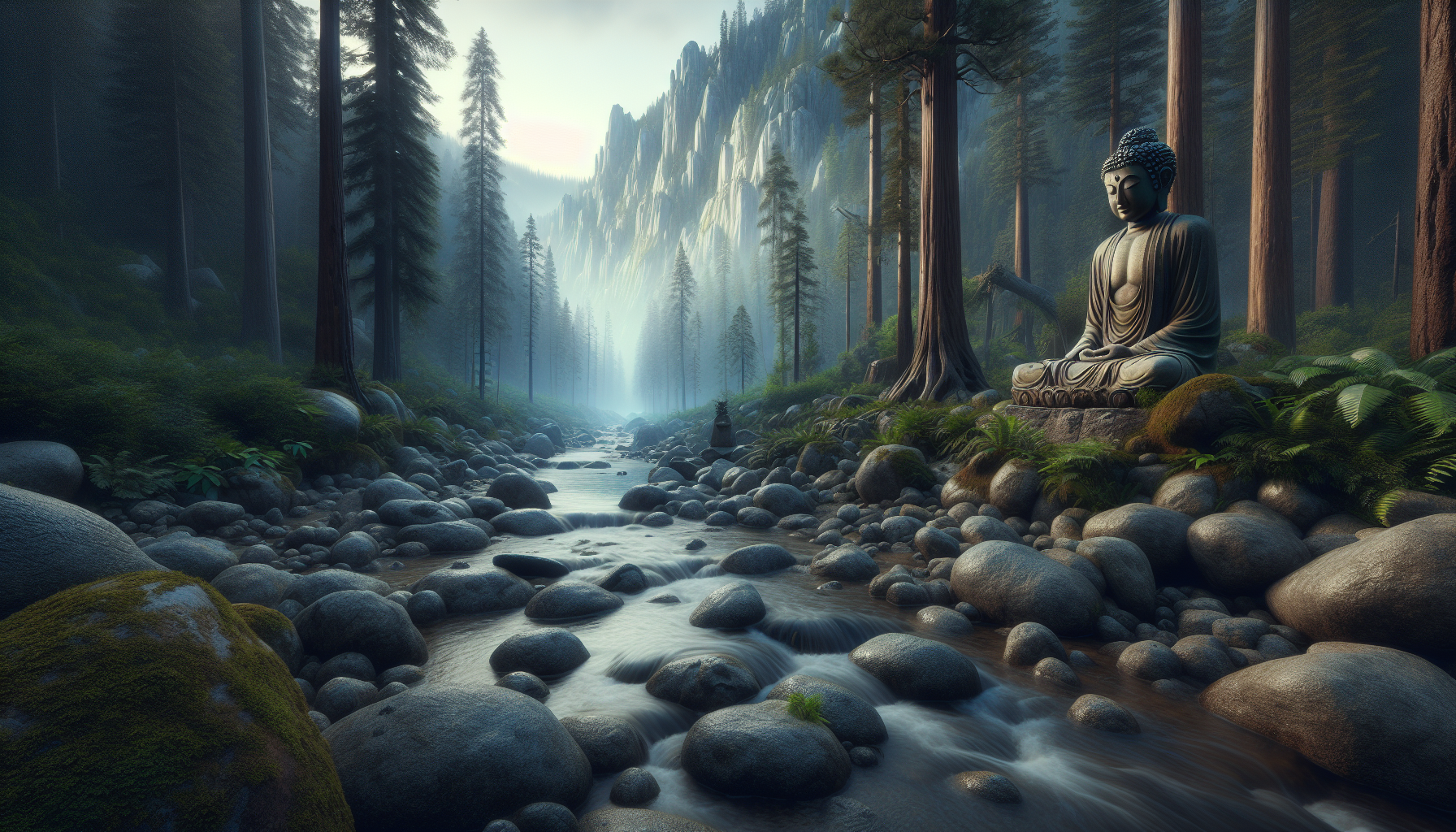
    In the serene embrace of the wilderness, where the whispers of the wind and the flutter of leaves become profound teachers, we find a space to encounter solitude and reflection. The concept of “Empty Mountain, Silent Mind” beautifully encapsulates this serene yet powerful confluence of nature and consciousness. Drawing heavily from Zen philosophy, these lessons from the wild can offer profound insights into self-awareness and tranquility.

    The Essence of Zen in Nature

    Zen Buddhism places great emphasis on meditation and direct experience over theoretical knowledge. Nature, which is devoid of human constructs and societal noise, serves as a perfect backdrop for Zen practitioners. According to the Tricycle Foundation, a resource dedicated to the dissemination of Buddhist teachings, the natural world inherently teaches us about the impermanence and interconnectedness of all things. This perspective encourages practitioners to embrace simplicity and mindfulness.

    “Nature does not hurry, yet everything is accomplished.” — Lao Tzu

    This well-known Taoist aphorism reflects a core Zen belief: the natural world holds countless lessons in patience, balance, and time, all of which are integral components of meditation and mindfulness practices.

    A Journey to the Empty Mountain

    • Solitude and Reflection: An empty mountain signifies a place untouched by the chaos of human life. Here, one finds space for solitude, which is essential for deep reflection and meditation. In solitude, we learn to confront our thoughts, fears, and desires without distraction.
    • Embracing Impermanence: The wilderness is a canvas of change—seasons transition, flora and fauna adapt, life and death cycle ceaselessly. Zen teaches us to accept impermanence, urging us to live in the present moment without attachment.
    • Interconnection with the Environment: Everything in the wild is interconnected. This realization fosters a sense of unity with the world, breaking down the illusion of separation. In Zen, this understanding helps dissolve the ego, leading to a quieter, more expansive mind.

    The Silent Mind

    The notion of a silent mind is about achieving mental clarity and peace amid the constant chatter of daily life. In Zen practice, a silent mind is synonymous with enlightenment—a state free from the ego’s disturbances and desires.

    “When you realize nothing is lacking, the whole world belongs to you.” — Lao Tzu

    Achieving a silent mind requires diligent practice and discipline. Silent meditation practices, such as zazen (sitting meditation), cultivate awareness and help practitioners focus inward, away from external chaos.

    Applying Zen Lessons from the Wilderness

    Integrating the lessons of an empty mountain and a silent mind into daily life involves both practice and intention. Here are practical suggestions:

    • Create a Daily Ritual: Spend a few minutes each day in nature. This doesn’t have to be in a mountain setting; a local park or even your backyard can offer solace and serve as a sanctuary for meditation.
    • Mindful Walking: Practice walking meditation outside. As you walk, pay attention to the sensations of each step, the feeling of the earth under your feet, and the sounds around you. This practice enhances mindfulness and connects you to the present moment.
    • Embrace Minimalism: Reflect on the simplicity of nature and how this principle can be applied to your life. Consider decluttering your physical and mental space, allowing room for clarity and peace.

    In understanding the teachings of the empty mountain and the silent mind, it’s essential not to view them merely as theoretical concepts. As Zen teaches, truth is found in direct experience. A walk in the wilderness not only opens one’s heart to the beauty and simplicity of life but also becomes a meditation in motion.

    Conclusion

    The wilderness, with its vastness and stillness, offers a unique template for cultivating inner peace and understanding. By embracing the lessons from nature, as encouraged by Zen philosophy, we learn to quiet the mind, live in the moment, and embrace the beauty of the world around us. Through these practices, the empty mountain becomes not just a place, but a state of mind—one devoid of conflict and filled with tranquility.


  • Wilderness Retreats: Inner and Outer

    Wilderness Retreats: Inner and Outer

    In the modern world, where the clamor of daily life often drowns out the stillness of the soul, wilderness retreats have emerged as a sanctuary for those seeking both inner peace and a reconnection with nature. These retreats offer a dual journey: the physical exploration of the great outdoors and the personal exploration of one’s inner landscape.

    The Outer Journey: Reconnecting with Nature

    Wilderness retreats offer an escape from the barrage of emails, social media notifications, and urban noise. By stepping into the vast expanse of nature, participants can reconnect with the Earth in its most untouched form. Whether it’s trekking through forest trails, meditating beside a tranquil lake, or observing the abundant wildlife, being in nature helps recalibrate one’s perspective.

    • Physical Renewal: The physical activities typical of these retreats—such as hiking, rock climbing, and canoeing—are rejuvenating and help improve overall well-being.
    • Simplicity: Immersion in the wilderness strips away the extraneous, leaving participants with the essentials and facilitating a focus on what truly matters.

    “In every walk with nature one receives far more than he seeks.” – John Muir

    John Muir, a naturalist, believed in the restorative power of nature and its ability to provide spiritual nourishment.

    The Inner Journey: Self-Reflection and Growth

    Just as the external journey allows for exploration and discovery, the inner journey facilitates self-reflection and personal growth. The solitude and silence found in nature provide an environment conducive to introspection. Many retreat programs include guided meditation, mindfulness practices, and workshops focusing on self-improvement.

    • Mindfulness: Practicing mindfulness in nature helps individuals become more present in the moment, fostering a deeper connection with themselves.
    • Emotional Clarity: Away from the usual distractions, individuals often gain clarity on personal issues and emotional challenges.

    “The clearest way into the Universe is through a forest wilderness.” – John Muir

    John Muir eloquently captured the notion that immersing oneself in the wilderness can lead to profound personal insights.

    Conclusion

    Wilderness retreats are more than just a temporary escape from urban life; they are an opportunity to undergo a transformative journey. As participants navigate the dual paths of self-discovery and nature exploration, they often return home with renewed vigor, clarity, and a profound connection to both the world and themselves.

  • The Wheel and the Wilderness

    The Wheel and the Wilderness

    The Wheel and the Wilderness: A Journey Through Time

    Humanity’s history is punctuated by significant innovations, with the wheel being one of the most transformative. Just as the wheel revolutionized human mobility and industry, our relationship with the wilderness has shaped our understanding of the world and our place within it. From ancient times, the wheel and the wilderness have influenced human societies, providing a perfect juxtaposition of human innovation and nature’s vastness.

    The Ancient Origins of the Wheel

    The invention of the wheel is often cited as a turning point in human history. According to Smithsonian Magazine, the oldest known wheel dates back to around 3500 B.C. in Mesopotamia. This simple device allowed humans to transport goods more efficiently, leading to the emergence of trade networks and urbanization. It was an invention that quite literally set the wheels of civilization in motion.

    “The wheel’s importance is difficult to measure, but its simple design has sparked complex advancements in technology, economy, and culture.” – Smithsonian Magazine

    Nature’s Unyielding Majesty

    While the wheel helped domesticate the environment, the wilderness retained its formidable presence in human consciousness. Wild landscapes have traditionally been viewed both as adversaries and sacred refuges. The Romantic era saw an aesthetic and philosophical shift, embracing the sublime beauty and terror of untouched nature.

    “In wildness is the preservation of the world.” – Henry David Thoreau, Walking

    The duality of the wheel and the wilderness invites reflection on how progress and preservation can coexist. From Thoreau’s time to our modern era, these reflections have led to movements aimed at sustainability and conservation, recognizing the importance of maintaining ecological balance.

    The Modern Intersection

    In the 21st century, our relation to the wheel and the wilderness continues to evolve. The burgeoning industry of off-road vehicles exemplifies how humans seek to merge technological advances with an enduring desire to explore nature’s expansive terrains. Yet, this also poses challenges in terms of environmental impact and sustainability.

    • Environmental Impact: Increased vehicle access to remote areas threatens fragile ecosystems.
    • Technological Innovation: Electric and hybrid off-roaders are being developed to minimize environmental footprints.
    • Conservation Efforts: Balancing technological advances with conservation is a key focus for future developments.

    As we venture further into the future, the enduring relationship between the wheel and the wilderness encourages us to consider how innovation can complement, rather than conflict with, the natural world. The wheel may have rolled us forward, but it is the wilderness that reminds us of where we came from and the beauty of the world that sustains us.

  • Buddhism in the Wilderness

    Buddhism in the Wilderness

    In the modern world, where cities never sleep and technology governs our every move, the appeal of retreating into the wilderness with Buddhist practices is growing. Away from the chaos, the wilderness offers a unique opportunity to connect deeply with both nature and the self, elements central to Buddhist teachings.

    The Wilderness as a Sanctuary

    The wild, untamed landscapes provide a natural environment for quiet contemplation and meditation, core components of Buddhist practice. Nature’s cycles and rhythms can be seen as a reflection of the Buddhist philosophy of impermanence and interconnectedness.

    “Look deep into nature, and then you will understand everything better,” Albert Einstein once said. The wilderness offers a resplendent backdrop for introspection and understanding one’s place in the universe.

    Practicing Buddhism Outdoors

    While Buddhism traditionally flourishes in monastic settings, outdoors practice is gaining traction. Many Buddhist temples offer forest retreats where practitioners can immerse themselves in nature while observing Vipassana or mindfulness meditation.

    • Insight Meditation: This involves being acutely aware of one’s surroundings, noting every minute detail, from the rustling leaves to the scent of pine.
    • Walking Meditation: Moving slowly and silently through the woods, practitioners connect each step with the earth, cultivating a deep sense of presence.

    Buddhism and Environmental Ethics

    Engagement with the wilderness is not only about personal enlightenment but also about embracing environmental ethics. Buddhist teachings often emphasize respect for all forms of life and encourage compassionate action towards nature.

    As World Wildlife Fund advocates for the protection of natural habitats, so too do many Buddhist teachings encourage the protection of our planet as a living entity deserving of respect and care.

    The Impact on Mental Health

    Buddhism in the wilderness can also have significant mental health benefits. The combination of meditative practices with the tranquility of nature can foster a sense of peace and clarity, reducing stress and anxiety.

    As a study by the American Psychological Association highlights, exposure to green spaces can enhance mood and improve overall well-being. The integration of Buddhist mindfulness with these environments further deepens these benefits.

    In summary, the wilderness offers an unparalleled venue for embracing Buddhism. By adopting an outdoor practice, individuals can achieve a deeper connection not only with Buddhist principles but with nature itself, fostering both personal and environmental harmony.