Tag: where

  • The Hidden Valley – Where Stillness Hides from Noise

    The Hidden Valley – Where Stillness Hides from Noise

    The Hidden Valley: Where Stillness Hides from Noise

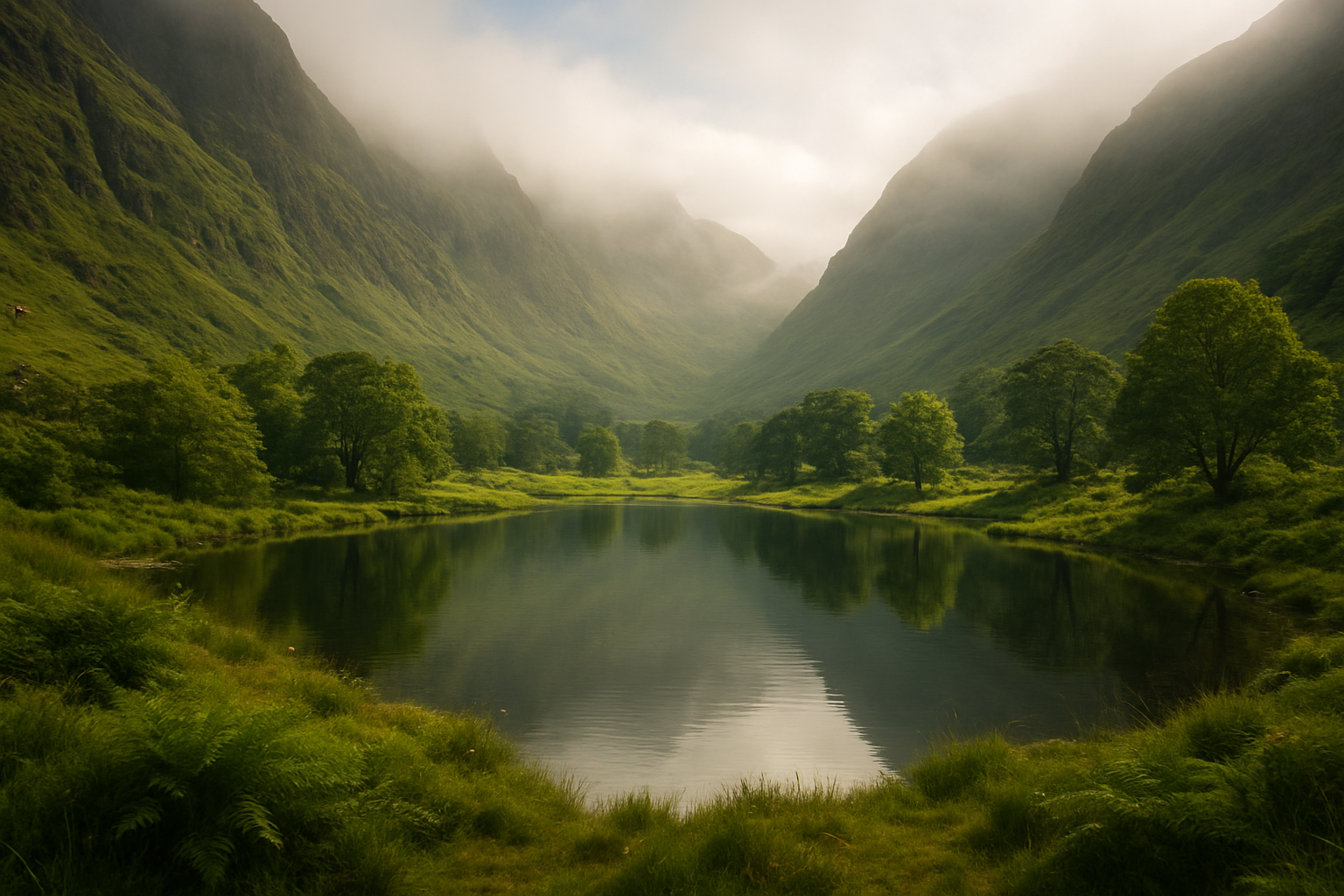
    In the heart of our increasingly noisy and bustling world, there exists a sanctuary where tranquility reigns supreme—a place aptly called the Hidden Valley. This remarkable enclave offers a profound escape from the cacophony of modern life, enveloping visitors in a serene embrace that feels a world apart.

    The Journey to Silence

    Located in the sprawling hinterlands of the Sierra Nevada, the Hidden Valley is a treasure trove of natural beauty and stillness. As described by renowned nature writer John Muir, “The clearest way into the Universe is through a forest wilderness.” His words perfectly capture the essence of trekking into this secluded paradise, where the natural world unfolds in its most pristine form.

    The Hidden Valley is accessed through winding trails that carve through dense woodlands, as the whispering of leaves and the occasional call of a distant bird create a soundtrack of nature’s own composition. Each step deeper into this sylvan retreat marks a shift away from the relentless noise of urbanity towards the harmonious silence of the wild.

    Nature’s Symphony

    The valley itself is a stunning confluence of geographical marvels and ecological diversity. Majestic pine trees rise like sentinels to hold the sky, while the valley floor is carpeted with a tapestry of wildflowers and verdant grasses. The stillness here is profound, interspersed only by the gentle flowing of the Hidden River that weaves its way through the landscape.

    “Nature is not a place to visit. It is home.” — Gary Snyder

    The Hidden River is a lifeline through the valley, creating habitats for a variety of wildlife. Observers will find themselves entranced by the dance of dragonflies skimming the water’s surface and the serene grace of deer pausing to drink along the banks. This abundance of life thrives in the absence of human interference, embodying the delicate balance of an unspoiled ecosystem.

    The Science of Silence

    Recent studies suggest that exposure to quiet environments has profound physiological and psychological benefits. According to research published in the Journal of Environmental Psychology, natural silence can reduce stress levels significantly, lower blood pressure, and boost mental clarity. The Hidden Valley serves as a living laboratory for these findings, offering a natural antidote to the pressures of modern living.

    Moreover, the valley’s tranquility supports biodiversity. A study by the World Wildlife Fund highlights that areas with minimal human noise allow native species to thrive without disturbances, maintaining essential ecological processes.

    Preserving Tranquility

    Efforts to preserve the Hidden Valley are paramount. As human activity continues to expand, conservationists emphasize the importance of protecting such sanctuaries from development and pollution. The National Park Service works tirelessly to ensure that areas like the Hidden Valley remain untouched for future generations to experience.

    In the words of Rachel Carson, “Those who contemplate the beauty of the earth find reserves of strength that will endure as long as life lasts.” It is essential to not only appreciate these serene spaces but also to take active roles in their preservation.

    The Call of the Quiet

    For those fortunate enough to find themselves in the Hidden Valley, the experience is transformative. Visitors report a heightened sense of awareness and connectivity with nature, a renewal of spirit that is difficult to attain amidst urban environments. This profound connection is a testament to the valley’s power to refresh and inspire.

    As the world grows louder, places like the Hidden Valley become invaluable refuges. They remind us of the enduring beauty of silence and the need to preserve these pockets of serenity. In an era defined by its clamor, finding stillness is both an art and a necessity, for it is within these silent sanctuaries that we rediscover the richness of life itself.

    Thus, the Hidden Valley stands not just as a physical space, but as an emblem of nature’s unwavering resilience. It calls out to each of us to step lightly on its paths, listen deeply to its silence, and join the chorus of voices committed to its protection.

  • Return to the Valley – The Humble Heart of the Way

    Return to the Valley – The Humble Heart of the Way

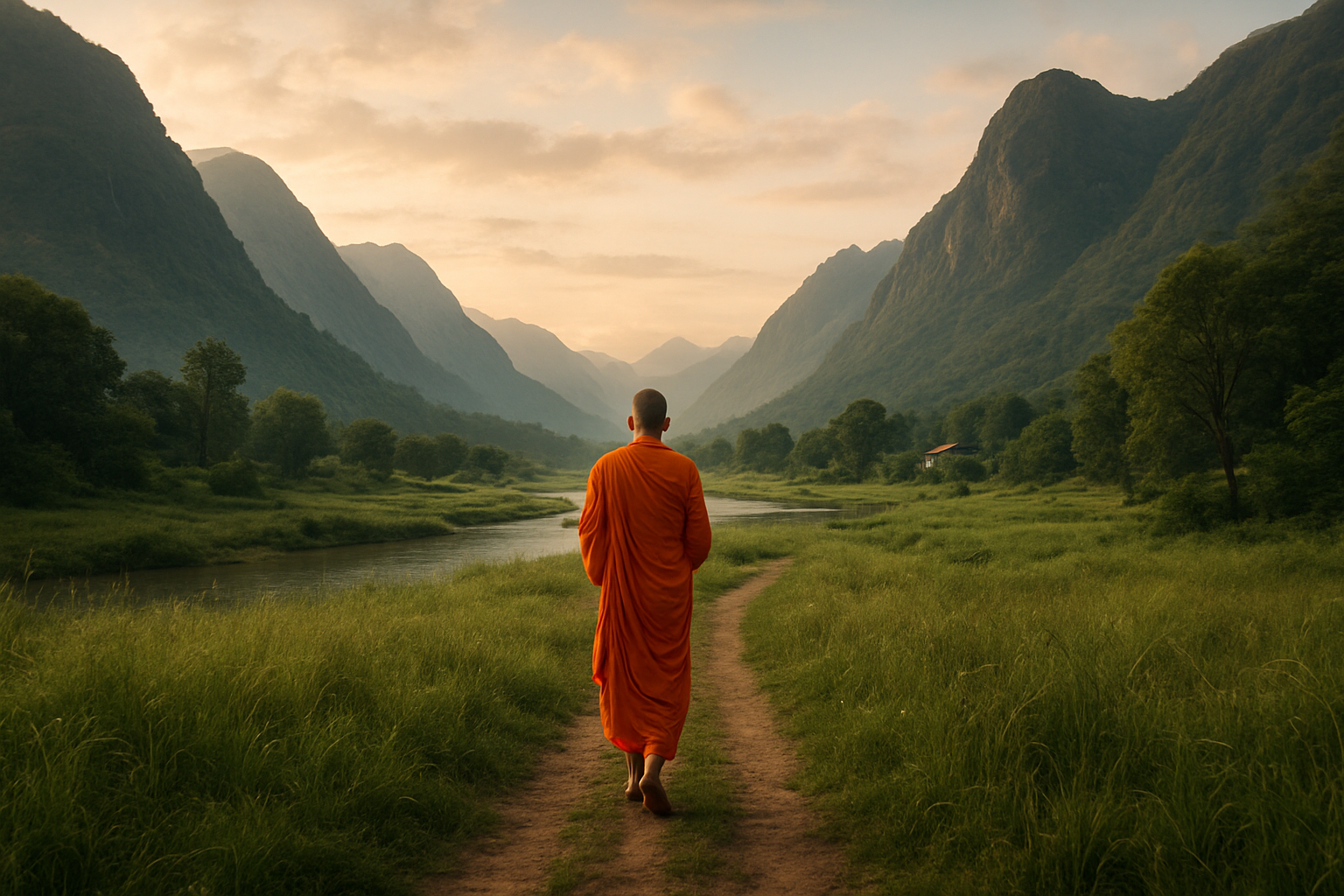
    In the realm of myth and magic, the concept of the valley has long been intertwined with notions of humility, introspection, and renewal. A journey back to the valley is often depicted as a return to an inner source of strength, a pilgrimage to the heart of wisdom where the noise of the world fades into the gentle whisper of the soul.

    The valley, in many traditions, is seen as a place of sanctuary and growth. It is the lowland where life flourishes, nestled between towering peaks. This symbolism is eloquently expressed in the ancient Taoist text, the Tao Te Ching. Lao Tzu writes, “The valley spirit never dies; It is the woman, primal mother. Her gateway is the root of heaven and earth. It is like a veil barely seen, use it; it will never fail.”

    • Rebirth through Humility: At its core, the valley is a metaphor for humility. By descending into the valley, one sheds the burdens of ego and ambition. It is here that individuals find the essence of their being, unburdened by the world’s heights.
    • The Heart of the Way: The Tao, often translated as “The Way,” embraces the valley as a path to tranquility and insight. The valley’s quietude offers a contrast to the striving and chaos of the external world. In returning to this humble state, practitioners of the Tao seek balance and peace.
    • A Place of Renewal: In the valley, springtime brings life back to the world, with rivers, plants, and creatures thriving. This cyclical renewal reminds us of life’s continuity and resilience. It is symbolic of the inner renewal one can experience through introspection.

    “It is good to have an end to journey toward; but it is the journey that matters, in the end.” —Ursula K. Le Guin

    In contemporary times, when the pressures of modern living can feel overwhelming, the metaphor of the valley is more relevant than ever. As people seek solace in mindfulness and retreat, the valley offers a reprieve from the relentless pursuit of success and status.

    Returning to the valley is not just a physical journey but a spiritual one, inviting us to embrace humility, foster renewal, and understand the heart of the way. It is a call to listen to one’s inner voice and remember that even amidst life’s climb, it is in the valley where the spirit finds its deepest peace.

  • The Pilgrim of Emptiness – A Journey Without Arrival

    The Pilgrim of Emptiness – A Journey Without Arrival

    The Pilgrim of Emptiness – A Journey Without Arrival

    The Pilgrim of Emptiness – A Journey Without Arrival

    In a world of constant movement and ambition, a peculiar traveler chooses a path less traversed, embracing the void and finding meaning in the absence of a destination.

    The Beginning of the Journey

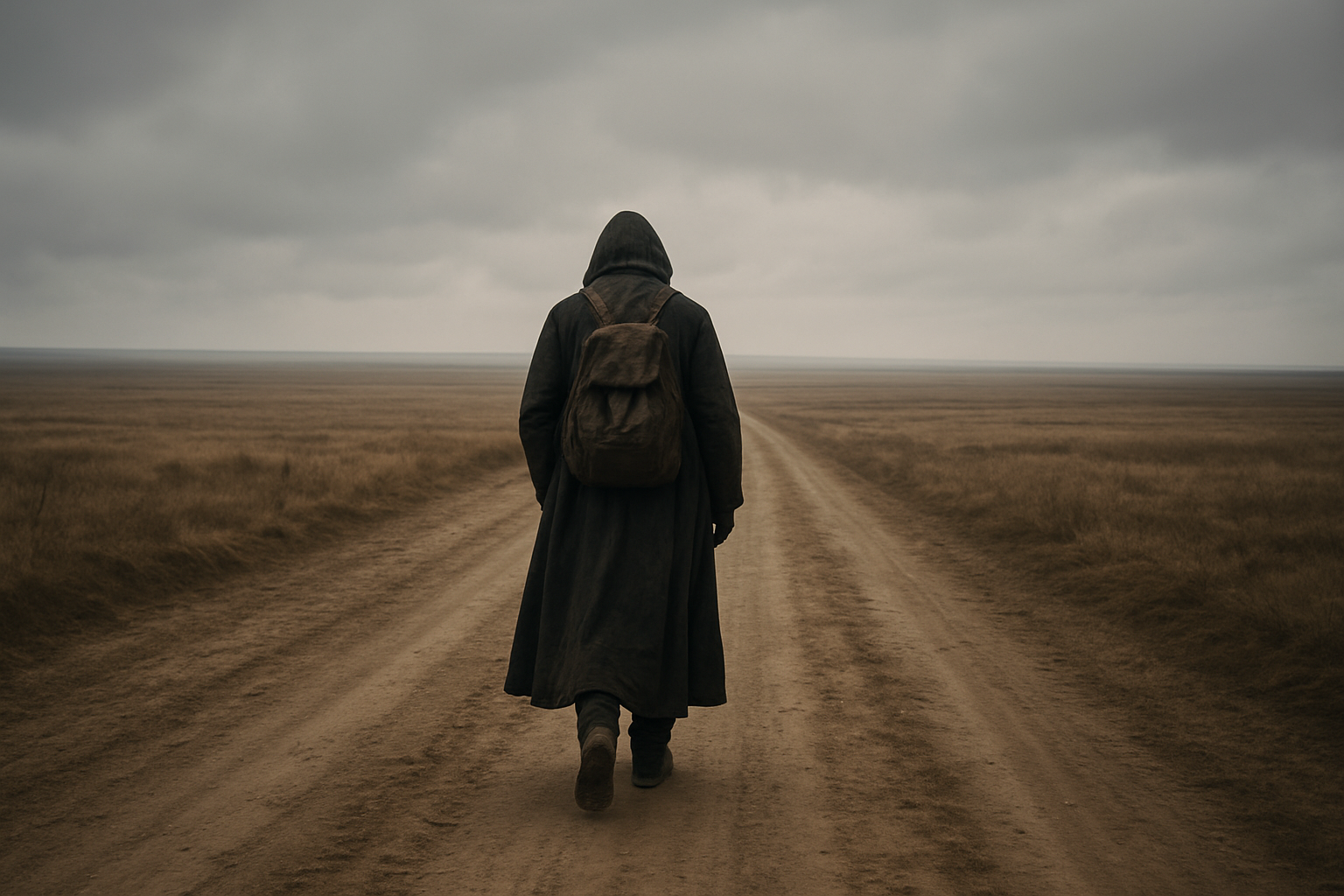
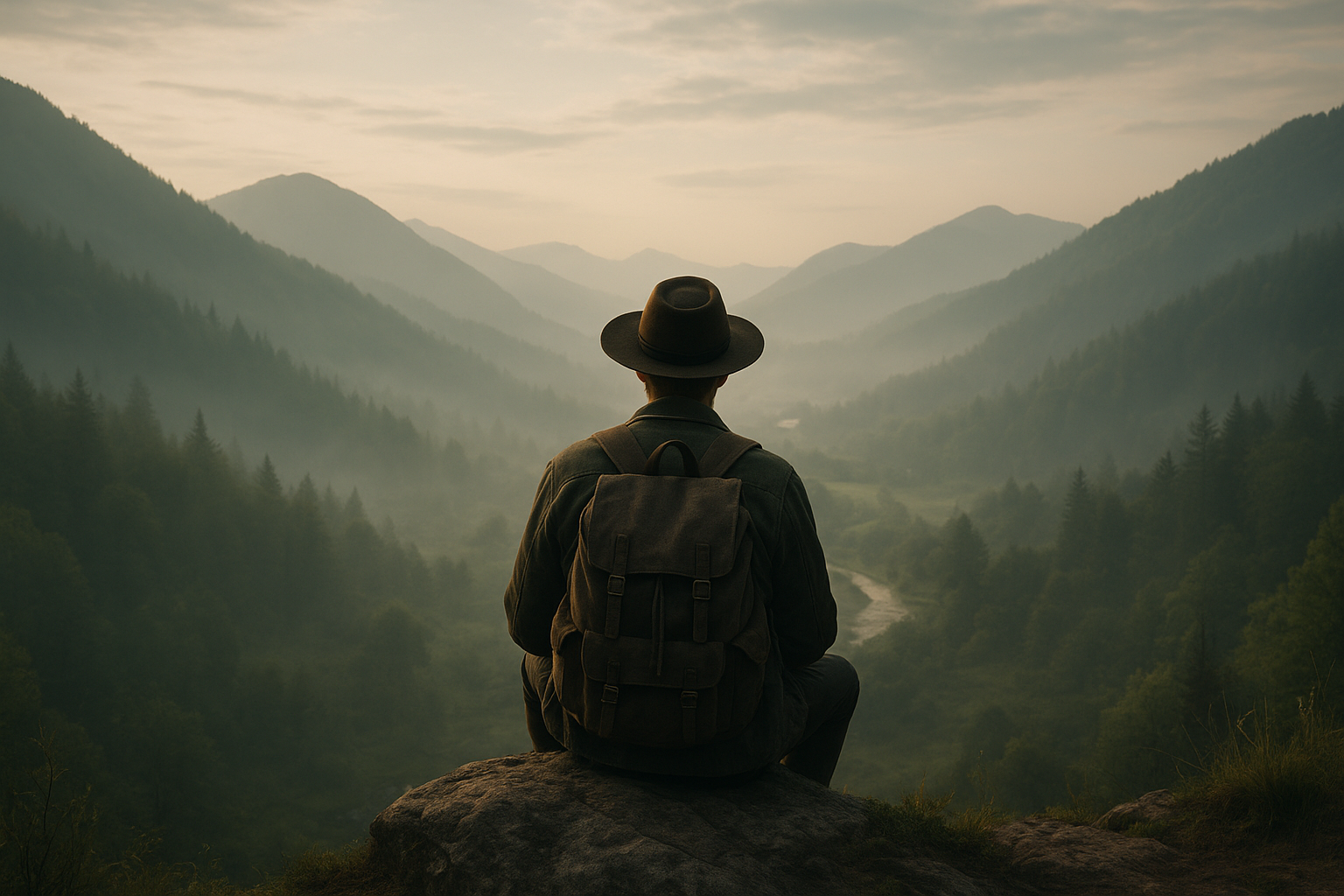
    In the realm of Anderia, where horizons stretch endlessly beyond the eye’s grasp, a solitary figure walks a path defined by the sands left unstepped. Known only as the Pilgrim of Emptiness, this wanderer is a ghostly tapestry woven from the threads of silence and shadow. While most inhabitants of Anderia toil endlessly toward futures filled with golden promises, the Pilgrim is driven by an absence of objectives, a traveler who chases the intangible essence of nothingness.

    The Philosophy of Emptiness

    The Pilgrim’s journey is not one of destinations but of notions esoteric and profound. Embracing the philosophies of ancient sages, who once whispered of the void’s beauty, the Pilgrim explores realms where the absence of substance provides clarity. In the words of Lao Tzu, “

    To the mind that is still, the whole universe surrenders.

    ” It is this stillness that the Pilgrim seeks, a path where the whispers of empty wind carry the wisdom of eons.

    Encountering the Guardians of Purpose

    Throughout the journey, the Pilgrim encounters the Guardians of Purpose, beings fashioned from aspirations and intentions. These enigmatic entities are bound to their purpose with an intensity that burns like unquenchable fire. Many travelers aspire to harness the guidance of these guardians, for they grant clarity in pursuit. Yet, to the Pilgrim, their presence is a reminder of shackles unseen. “What is a path without a beginning or end?” the guardians ask, and the Pilgrim simply replies with a gentle smile, an acknowledgment of their differing existences.

    The Midnight Lake

    One of the Pilgrim’s notable sojourns leads to the shores of the Midnight Lake, a mirror-like expanse that reflects the galaxies above in crystal-clear detail. Here, in the depths of starry reflections, the Pilgrim finds solace and meditation. Legends tell that within its waters lies the essence of time itself, paradoxically still yet ever flowing. It is here that the Pilgrim contemplates the paradox of movement—that even in emptiness, one finds the ceaseless motion of the cosmos.

    Lessons From the Void

    • Embrace Nothingness: In embracing the void, the Pilgrim teaches us the importance of letting go. Where grasping leads to chains, releasing leads to freedom.
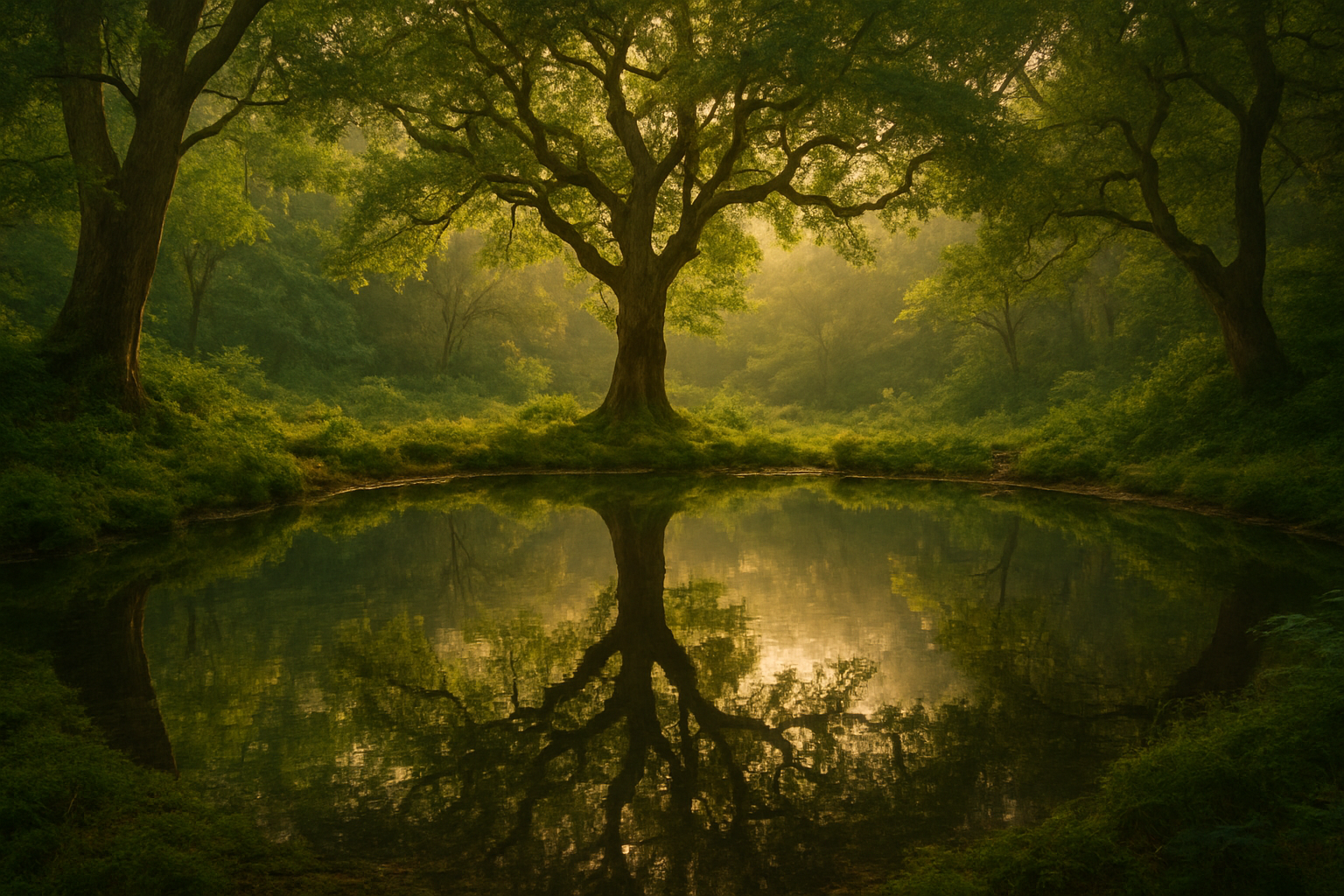
    • Find Stillness: To pause is to understand. Just as a pond only reflects perfectly when it is still, so too can the mind show truth when undisturbed.
    • Accept Impermanence: As the Pilgrim walks on, so does the landscape change with the passage of time, a reminder of the ever-evolving world.

    The Path Beyond

    Though the Pilgrim’s journey may appear to lack resolution, it is, in essence, an infinite journey, one without a guiding star nor a rearview mirror. The story of the Pilgrim of Emptiness invites us to ponder the significance of our own paths—whether it is the destination or the journey itself that defines our walk through life.

    As the Pilgrim fades into the endless horizon, we are left with the gentle words of the sage: “

    The journey of a thousand miles begins with one step.

    ” And so it does, in pursuit of the emptiness that is rich with its own treasures, the Pilgrim continues—with no destination but infinite discoveries along the way.

    To understand the duality of pathways both walked and untraveled is to embrace the emptiness of the world as part of a greater entirety. Indeed, the Pilgrim shows us that sometimes, arrival is an illusion, and it is in the deliberate act of wandering that we find our true selves.

  • The Still Point – Where All Pilgrimage Ends

    The Still Point – Where All Pilgrimage Ends

    The Still Point – Where All Pilgrimage Ends

    The Still Point – Where All Pilgrimage Ends

    The concept of the “Still Point” is one that has intrigued philosophers, poets, and seekers of truth for centuries. It is a place of convergence, of unity, where all paths ultimately lead. But what is this enigmatic point, and why is it considered the end of all pilgrimage? This article delves into the philosophical, spiritual, and metaphysical aspects of the Still Point, examining its relevance in our modern world.

    Understanding the Still Point

    The term “Still Point” was popularized by T.S. Eliot in his poem Burnt Norton, part of his larger work Four Quartets. Eliot writes:

    “At the still point of the turning world. Neither flesh nor fleshless;
    Neither from nor towards; at the still point, there the dance is,
    But neither arrest nor movement.”

    This passage captures the essence of the Still Point as an enigmatic place of balance and tranquility, where time and motion converge but do not disturb the inherent peace.

    Philosophical Interpretations

    Philosophically, the Still Point can be seen as a metaphor for ultimate truth or reality. It represents a state of being that transcends the dualities of life. Governed neither by action nor inaction, it is the awareness that underlies all experience. The philosopher Alan Watts describes it as “the place at the center of the cyclone”—a calm amidst the chaos of life’s inevitable changes.

    • Unity of Opposites: The gap between action and inaction is bridged here, resonating with Taoist teachings of wu wei, or “effortless action.”
    • Non-Duality: Eastern philosophies, particularly Advaita Vedanta, emphasize that the ultimate reality is non-dual; the Still Point embodies this seamless unity.

    Spiritual Pilgrimage to the Still Point

    In religious and spiritual terms, the Still Point is often equated with enlightenment or divine union. It represents a state of existential peace and ultimate understanding, often seen as the goal of spiritual journeying.

    • Buddhist Perspective: In Buddhism, reaching Nirvana might be considered finding one’s Still Point—freedom from the cycle of birth and rebirth.
    • Christianity’s Contemplative Path: Christian mystics, such as Thomas Merton, have described the divine presence as a “still point” within the soul, the heart of one’s being.

    Many spiritual paths involve a metaphorical pilgrimage towards this center. The journey itself is transformative, encouraging individuals to confront and transcend their own limitations.

    The Still Point in Modern Culture

    Contemporary culture has seen a renewed interest in mindfulness and meditation, practices that align closely with the quest for the Still Point. In a world of constant distraction and information overload, finding a Still Point within oneself is a path to mental and emotional well-being.

    • Meditative Practices: Mindfulness meditation encourages individuals to find their own center amidst the noise, much akin to Eliot’s Still Point.
    • Digital Detox: The practice of disconnecting from digital devices can be seen as an attempt to find that tranquility inherent in the Still Point.

    The Science of Stillness

    Interestingly, neuroscience has begun to explore how states of stillness and mindfulness affect the brain. Research indicates that meditation alters brain function and structure, promoting a state of calm and heightened awareness.

    “Meditation practices elicit neural plasticity and might enhance cognitive flexibility by increasing the efficacy of attentional resource allocation.”

    This scientific validation of ancient wisdom underscores the timeless pursuit of the Still Point, reinforcing its importance not just spiritually, but also physiologically.

    Conclusion: The End of the Pilgrimage

    The Still Point is not just a metaphorical destination, but a living, breathing state of being accessible to all. As we navigate through the complexities of life, seeking a Still Point can offer unparalleled peace and insight. Whether approached through philosophy, spirituality, or science, it remains an essential part of the human experience, a reminder of the quiet center that resides within us all.

    At its most profound, the Still Point is the touchstone for all journeys, the space where all paths ultimately lead and all pilgrimages end. Returning to T.S. Eliot’s perspective, perhaps the dance he refers to is life itself—a ballet that, at its core, remains unmoved, unfazed, and eternal.

  • The Empty Hut – Where Zen and Nature Meet in Stillness

    The Empty Hut – Where Zen and Nature Meet in Stillness

    The Empty Hut – Where Zen and Nature Meet in Stillness

    The Empty Hut – Where Zen and Nature Meet in Stillness

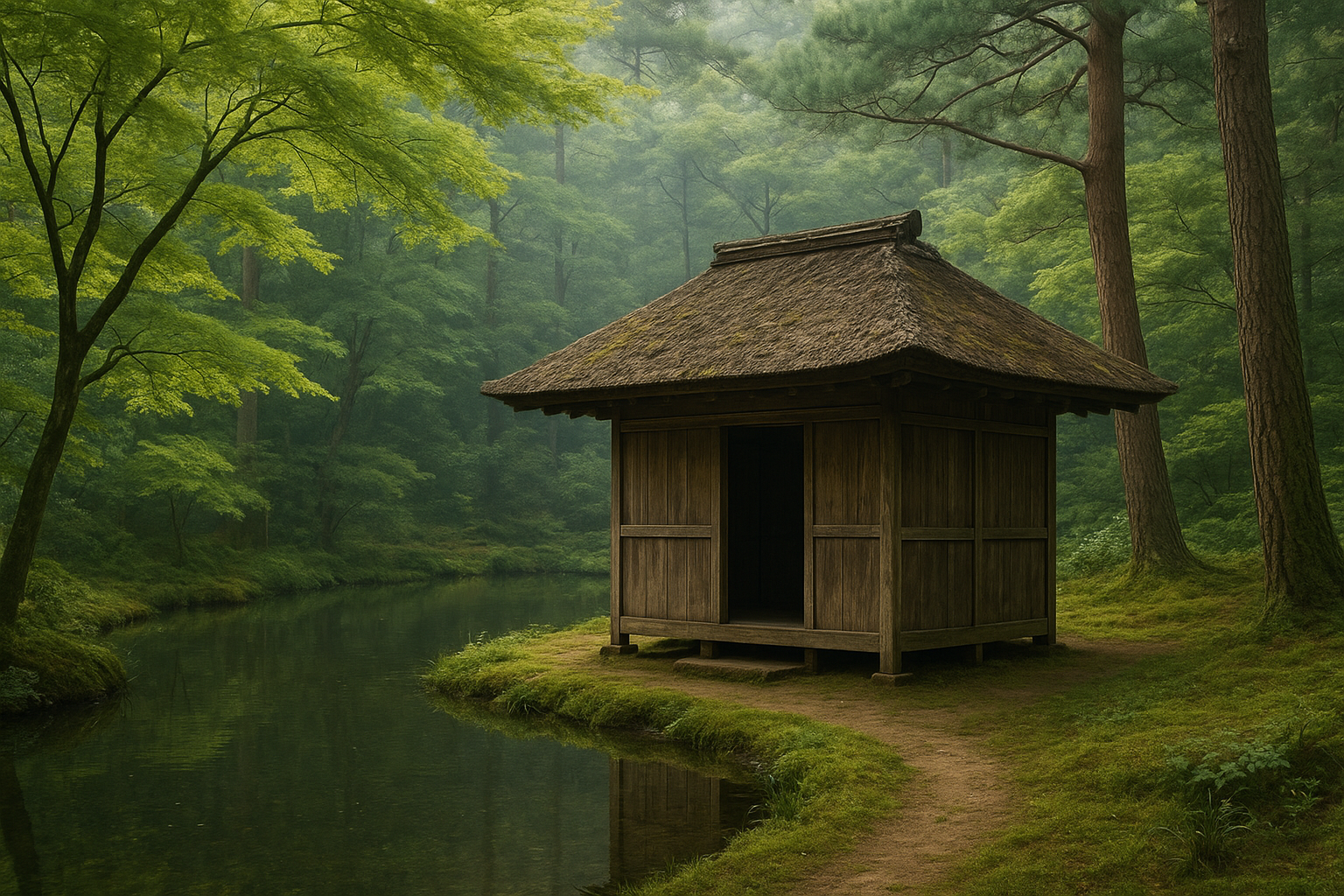
    The Empty Hut is a profound exploration of the intersection between Zen philosophy and nature’s tranquility. Directed by the visionary filmmaker, Kiyoshi Nakagawa, this film invites us into a world where stillness speaks louder than words.

    “In the world of Zen, the empty hut isn’t just a dwelling place, but a metaphor for the clarity and peace achieved in an unclouded mind,” explains Nakagawa.

    A Visual Meditation

    • Cinematography: The film’s cinematography captures the raw beauty of Japan’s remote landscapes, intertwining them with elements of Zen architecture. Lush forests, serene rivers, and ancient temples are depicted in stunning detail.
    • Sound Design: Complemented by a minimalist sound design, the whisper of wind through leaves and the gentle flow of water create a meditative soundscape that enhances the viewer’s sense of presence.

    The Empty Hut does not follow a conventional narrative structure. Its pacing is deliberately slow, demanding patience and reflection. Viewers are encouraged to let go of distractions, much like the Zen practitioners whose stories are subtly woven throughout the film. Nakagawa weaves a tapestry of visual and auditory experiences that mirror the practice of Zen meditation, emphasizing deep introspection over action.

    The Essence of Zen

    At the heart of the film is a solitary monk who retreats to an isolated hut in the mountains, symbolizing the journey of returning to simplicity. His practice is not just of austerity but of an intentional embrace of the present moment. As the monk tends to a moss garden or sits in silent meditation, the viewer is invited to join him in contemplating the profound peace found in simplicity.

    This movie resonates strongly with those familiar with the tenets of Zen Buddhism and anyone who finds solace in nature’s embrace. Critics have noted that The Empty Hut is “like a haiku brought to life,” as stated in a review by Zen Filmmakers Journal.

    A Profound Experience

    In conclusion, The Empty Hut offers an exquisite escape into the world where Zen and nature coexist in profound serenity. Its ability to capture the essence of stillness and the beauty of the natural world makes it a standout piece that nurtures the soul.

    “A silent journey within—where one can meet the true self,” echoes within the closing scenes, a perfect summation of the film’s deeper message.

  • Lotus of the Void – Awakening to the Unborn Source

    Lotus of the Void – Awakening to the Unborn Source

    Lotus of the Void: Awakening to the Unborn Source

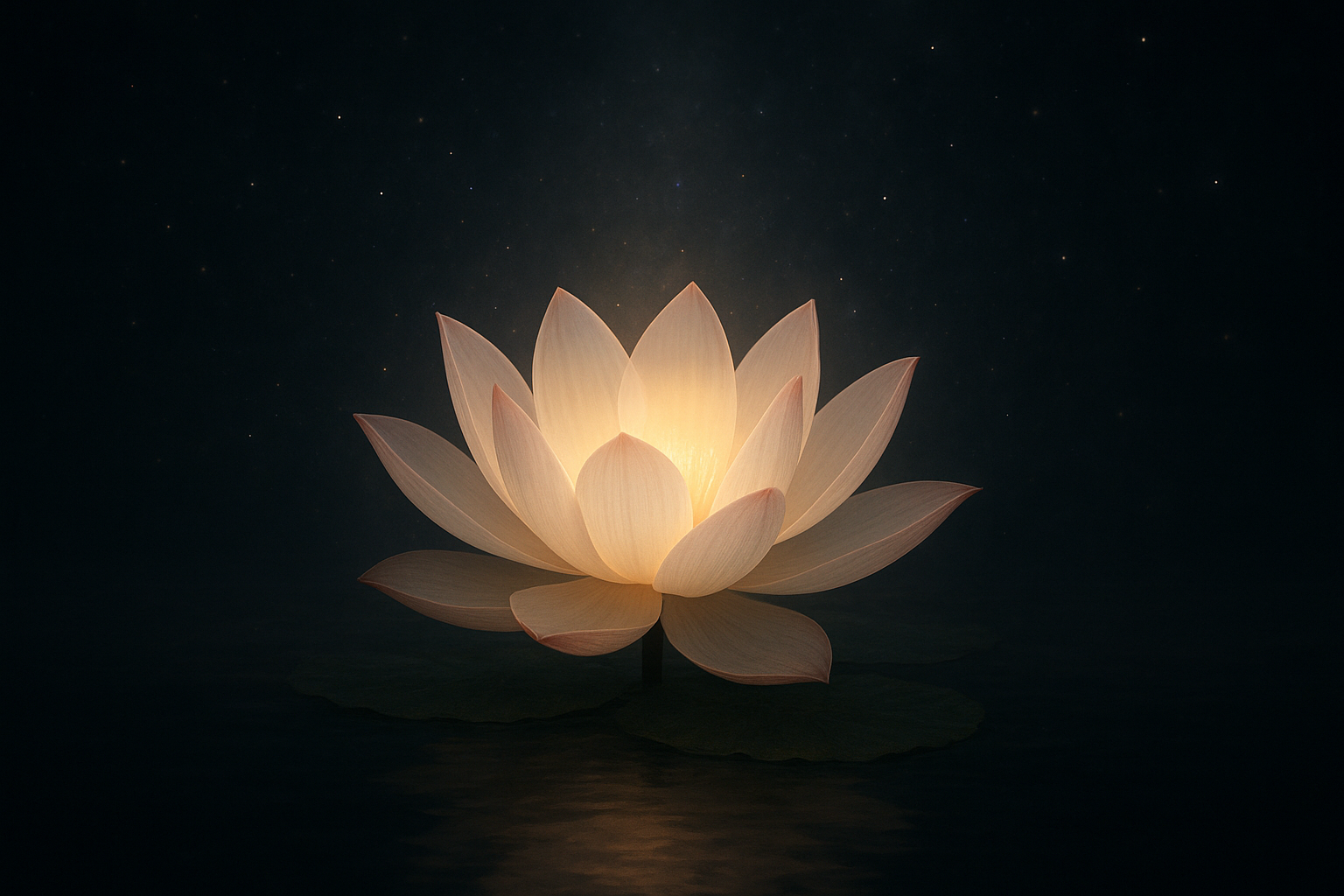
    The mystical journey of spiritual awakening often plunges us into realms of profound profundity, where the ordinary fades to reveal the extraordinary. Amongst the countless metaphors that encapsulate this journey, the Lotus of the Void shines brightly as a symbol of spiritual purity and enlightenment. Its ethereal bloom invites seekers to awaken to the Unborn Source, a transcendent state beyond the manifest universe.

    The Symbolism of the Lotus

    The lotus flower, emerging from murky waters to reveal its pristine petals, has long captivated spiritual traditions. In Buddhism, it represents the purity of body, speech, and mind, unaffected by the impurities of the world. As the lotus rises untainted from the mud, so does the enlightened soul rise above the material plane.

    “Just like a lotus that grows out of the water but does not touch it, the true knowledge elevates a spiritual aspirant beyond the mundane world.”
    Ancient Buddhist Proverb

    Embracing the Void

    In many spiritual teachings, the void is not a place of emptiness but rather an infinite potentiality. Known as the Unborn Source, it is seen as the origin of all creation—a state where dualities merge back into unity. Awakening to this source suggests a return to one’s authentic self, unconditioned by societal constructs and personal ego.

    Within this void, the enlightened encounter a profound silence that speaks louder than the chaos of the world. It is where the lotus, born from nothing yet carrying the wisdom of everything, articulates the true essence of being.

    The Path of Awakening

    • Meditation: Establish a diligent meditation practice focused on quieting the mind and entering the void.
    • Mindfulness: Cultivate awareness of the present moment to gradually dissolve the ego’s grip.
    • Learning: Engage with spiritual texts and teachings that illuminate the path to the Unborn Source.

    The Lotus of the Void remains a guiding symbol for all spiritual seekers. It encourages exploration beyond the known and invites the soul to awaken from the slumber of illusion to the clarity of the Unborn Source.

    As Lao Tzu wisely said, “Knowing others is intelligence; knowing yourself is true wisdom.” Dive into the void, and witness the lotus unfurl its divine bloom.