Tag: wheel

  • The Wheel and the Wilderness

    The Wheel and the Wilderness

    The Wheel and the Wilderness: A Journey Through Time

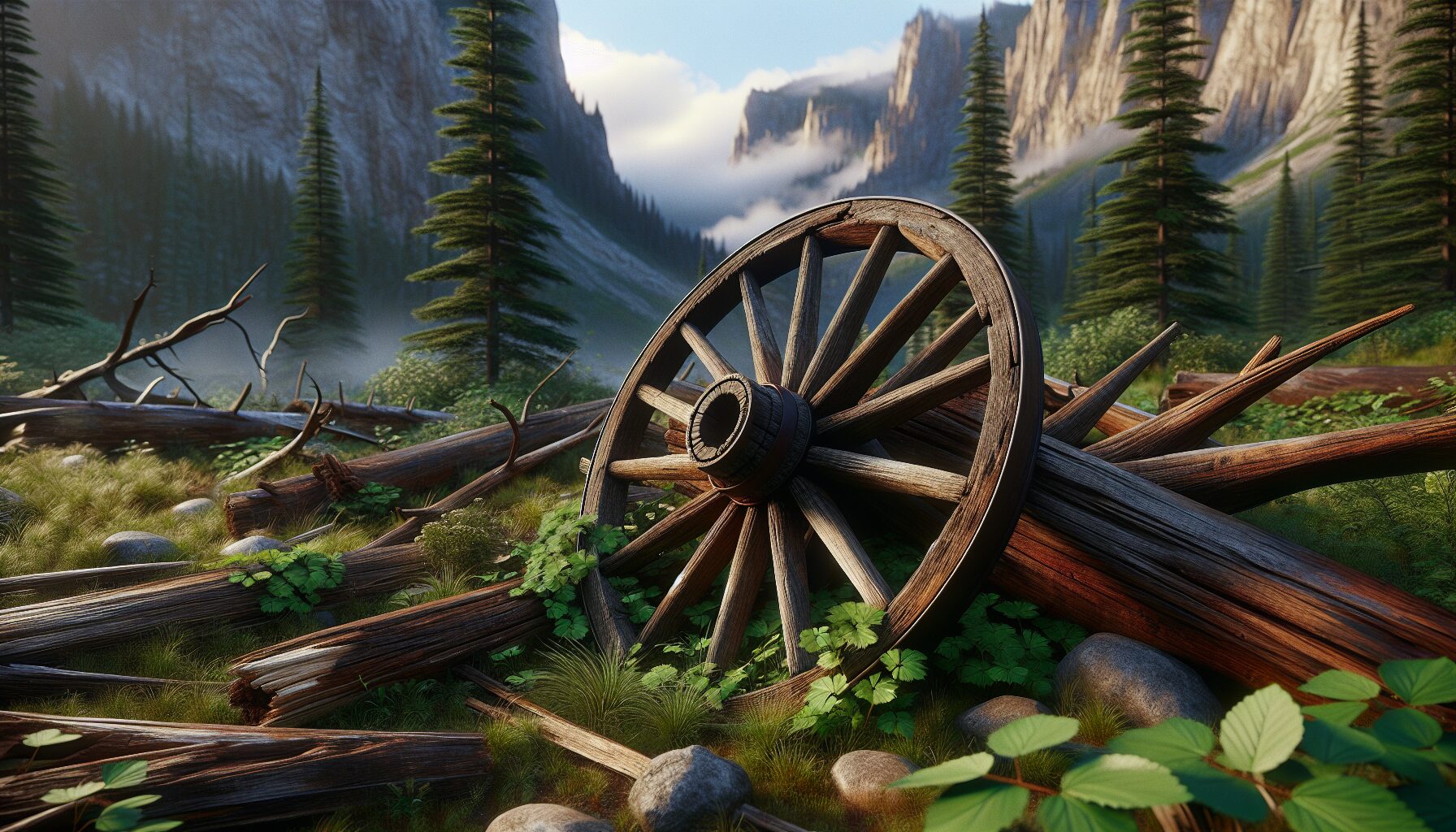
    Humanity’s history is punctuated by significant innovations, with the wheel being one of the most transformative. Just as the wheel revolutionized human mobility and industry, our relationship with the wilderness has shaped our understanding of the world and our place within it. From ancient times, the wheel and the wilderness have influenced human societies, providing a perfect juxtaposition of human innovation and nature’s vastness.

    The Ancient Origins of the Wheel

    The invention of the wheel is often cited as a turning point in human history. According to Smithsonian Magazine, the oldest known wheel dates back to around 3500 B.C. in Mesopotamia. This simple device allowed humans to transport goods more efficiently, leading to the emergence of trade networks and urbanization. It was an invention that quite literally set the wheels of civilization in motion.

    “The wheel’s importance is difficult to measure, but its simple design has sparked complex advancements in technology, economy, and culture.” – Smithsonian Magazine

    Nature’s Unyielding Majesty

    While the wheel helped domesticate the environment, the wilderness retained its formidable presence in human consciousness. Wild landscapes have traditionally been viewed both as adversaries and sacred refuges. The Romantic era saw an aesthetic and philosophical shift, embracing the sublime beauty and terror of untouched nature.

    “In wildness is the preservation of the world.” – Henry David Thoreau, Walking

    The duality of the wheel and the wilderness invites reflection on how progress and preservation can coexist. From Thoreau’s time to our modern era, these reflections have led to movements aimed at sustainability and conservation, recognizing the importance of maintaining ecological balance.

    The Modern Intersection

    In the 21st century, our relation to the wheel and the wilderness continues to evolve. The burgeoning industry of off-road vehicles exemplifies how humans seek to merge technological advances with an enduring desire to explore nature’s expansive terrains. Yet, this also poses challenges in terms of environmental impact and sustainability.

    • Environmental Impact: Increased vehicle access to remote areas threatens fragile ecosystems.
    • Technological Innovation: Electric and hybrid off-roaders are being developed to minimize environmental footprints.
    • Conservation Efforts: Balancing technological advances with conservation is a key focus for future developments.

    As we venture further into the future, the enduring relationship between the wheel and the wilderness encourages us to consider how innovation can complement, rather than conflict with, the natural world. The wheel may have rolled us forward, but it is the wilderness that reminds us of where we came from and the beauty of the world that sustains us.
  • Falun, Flow, and the Sacred Field

    Falun, Flow, and the Sacred Field

    The concepts of Falun, flow, and the sacred field are interconnected in ways that touch upon philosophy, spirituality, and cognitive science. These terms, although originating from distinct traditions, converge on the idea of harmony and alignment with the universe, whether it be through spiritual practice, psychological states, or metaphysical fields.

    Falun: The Wheel of Dharma

    Falun is a central concept in Falun Gong, a spiritual practice that combines meditation and exercises with a moral philosophy centered on the principles of truthfulness, compassion, and forbearance. Falun is often depicted as a spinning wheel, symbolizing the Dharma Wheel in Buddhist tradition.

    “The Falun spins constantly, drawing in energy from the universe and expelling negative energy from the body.” – Li Hongzhi, founder of Falun Gong.

    Practitioners believe that by cultivating Falun within oneself, they can achieve spiritual enlightenment and physical health. The practice emphasizes the transformation of mind and body, aligning oneself with universal principles.

    Flow: The Psychology of Optimal Experience

    The concept of flow was introduced by psychologist Mihaly Csikszentmihalyi. It describes a state of complete immersion and engagement in an activity where one loses self-consciousness and experiences intrinsic enjoyment.

    “Flow is a state in which people are so involved in an activity that nothing else seems to matter.” – Mihaly Csikszentmihalyi, Flow: The Psychology of Optimal Experience.

    This state of flow is characterized by a balance between challenge and skill, clear goals, and immediate feedback. It is often associated with peak performance in sports, arts, and work.

    The Sacred Field: Bridging Spirit and Science

    The sacred field refers to an invisible and intangible space that connects all living beings. It is a concept found in many spiritual traditions, often described as the energetic matrix of the universe.

    In recent times, the sacred field has been explored through the lens of quantum physics and consciousness studies. Researchers are investigating how this field might influence consciousness and how it could be measured scientifically.

    “The sacred field, or the quantum field, is the source of all creation, connecting mind and matter.” – Gregg Braden, The Divine Matrix.

    Interconnections and Implications

    • Spiritual Growth: Falun and the sacred field both emphasize spiritual growth and alignment with universal principles, suggesting a path toward enlightenment and self-realization.
    • Psychological Insight: Flow indicates the potential for human achievement when individuals are aligned with their intrinsic motivations and skills.
    • Scientific Exploration: The sacred field invites exploration into the nature of consciousness and the interconnectedness of life, bridging traditional spiritual wisdom with modern scientific inquiry.

    In conclusion, Falun, flow, and the sacred field offer unique perspectives on how humans can connect with the universe. By exploring these concepts, individuals may find pathways to greater understanding, fulfillment, and harmony in their lives.