
Tag: unseen

  • The Unseen Sound: Listening to the Edges of Contemporary Music

    The Unseen Sound: Listening to the Edges of Contemporary Music

    In the realm of contemporary music, what is unheard often shapes what is heard. The fringes of the musical world, where experimental sounds and avant-garde compositions live, push the boundaries of what music can be. These edges are where innovation thrives and the unseen sound emerges, profoundly influencing mainstream music in ways the average listener might not realize.

    “Experimental music often challenges listeners to redefine what they consider music,” explains Rolling Stone in a discussion on the genre’s influence on popular sounds. “Its impact is woven into the fabric of everything, from the most avant-garde compositions to chart-topping pop songs.”

    The Evolution of Sound

    The evolution of contemporary music has always been mirrored by advancements on its edges. Composers like John Cage, with his revolutionary piece 4′33″, and artists such as Brian Eno, the pioneer of ambient music, have continually redefined the auditory landscape. These innovators focus on the peripheries of conventional sound to create something new and surprisingly influential.

    Experiments That Echo

    • Silence and Noise: John Cage’s philosophy that all sound can be music defies traditional expectations and opens every listener to a new, vibrant world of aural experiences.
    • Ambient Soundscapes: Brian Eno’s ambient music creates atmospheres rather than structured compositions, providing a rich tapestry that forms the background for much of today’s film and video game scores.
    • Minimalism and Patterns: Artists like Steve Reich and Philip Glass use repetitive structures to explore minute changes in sound and rhythm, a technique that has influenced everything from electronica to indie rock.

    The Ripple Effect

    The ripple effect of these unseen sounds touches numerous music genres. The electronic music scene, for example, with its heavy reliance on synthesizers and digital manipulation, owes a great deal to the experimental groundwork laid by these visionaries. Even pop music incorporates avant-garde elements, often using samples or drawn inspiration from these unconventional techniques and sounds.

    In discovering the unseen sound, listeners are encouraged to let go of rigid ideas about music. This opens up a world where the beauty of noise and the eloquence of silence shift perceptions, urging a deeper exploration of what it truly means to listen. After all, as composer Edgard Varèse noted, “To stop listening is an act of resignation.”

    The unseen sound holds the secret to new horizons in music—a hidden symphony waiting to be heard by those daring enough to venture into the crescendo of the unknown.

    For further reading, visit Pitchfork’s take on electronic influences and their review of the album Electronic Mind Body Experience.
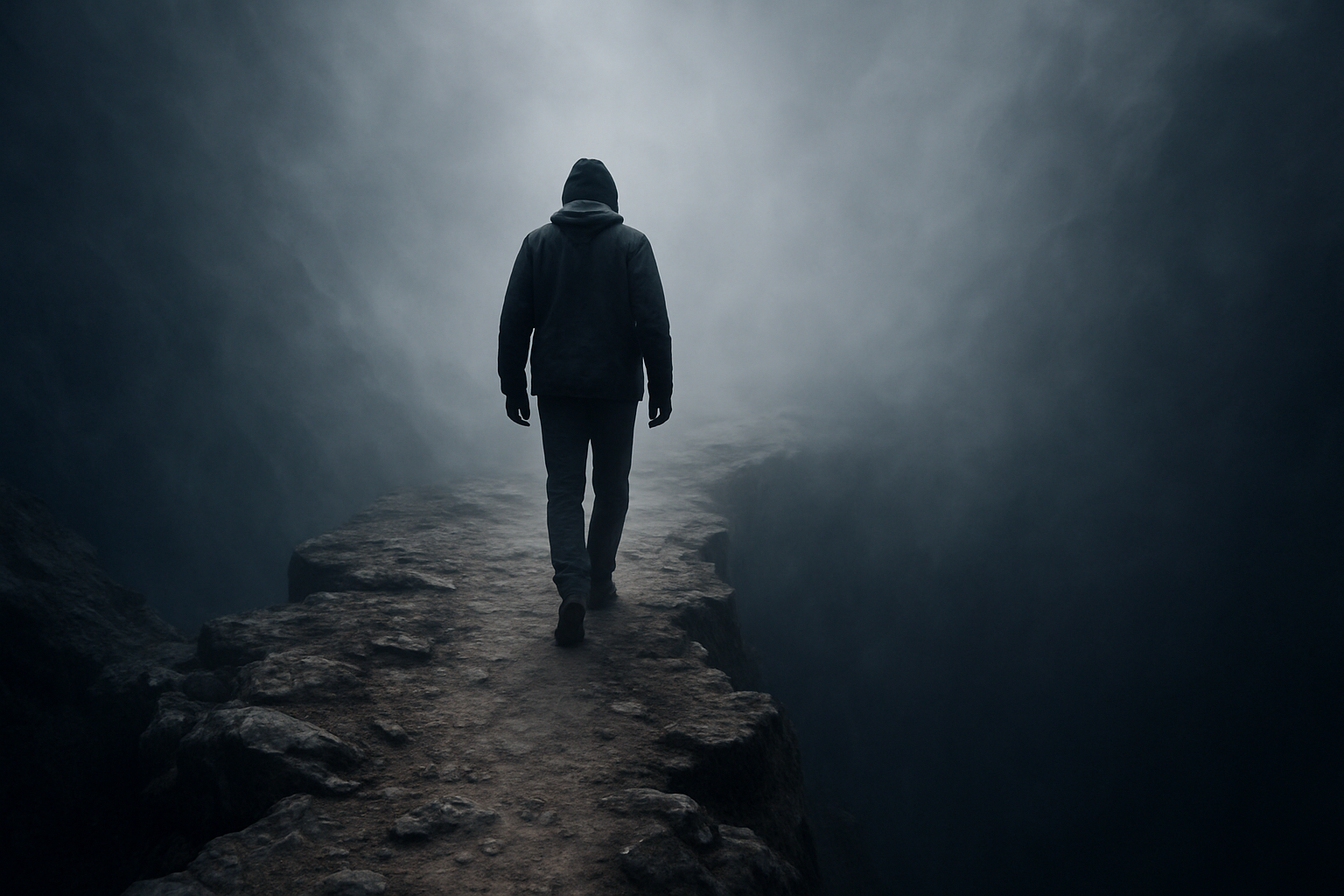
  • Walking the Void – A Journey into the Unseen Source

    Walking the Void – A Journey into the Unseen Source

    Walking the Void: A Journey into the Unseen Source

    In a world bustling with noise, light, and ceaseless connectivity, the concept of walking into the void might seem daunting or even absurd. Yet, these avenues into the unseen and unknown have long been the quest for mystics, philosophers, and explorers alike. This journey into the void is not just about physical traversing; it’s about confronting the intangible, the ineffable that lingers at the edges of human understanding.

    Journey Preparation: The Bold Step Forward

    The void—abstract yet present—is not a mere absence but a fertile space of potential. To engage with it is to embark on a path less traveled, marked by introspection and silence. As the Zen philosopher D.T. Suzuki noted, “Emptiness which is conceptually liable to be mistaken for sheer nothingness is in fact the reservoir of infinite possibilities.” This notion invites those daring enough on a journey toward the center of their consciousness and beyond.

    • Understanding the Void: The journey into the void is as much about the absence of distractions as it is about the presence of insight. It asks travelers to seek clarity in spaces vacated by external noise.
    • Embracing Stillness: Perhaps one of the toughest challenges is to embrace stillness—to let go of the ceaseless hustle and find peace in quietude.
    • Confronting the Self: It is a voyage into layers of self-awareness, peeling away societal masks to discover authentic identity.

    The Unseen Source: Discovering Edges of Awareness

    What waits beyond the veil of everyday perception is oftentimes referred to as the unseen source—a fountainhead of inner wisdom and universal truths. Modern spirituality and ancient wisdom traditions both speak to this phenomenon. According to Rumi, the renowned Sufi mystic, “The wound is the place where the Light enters you.” It suggests a perspective where vulnerabilities open pathways to deeper understanding.

    Exploring the unseen source empowers an individual to perceive life in a more integrated, holistic manner.

    • Intuition Over Reason: Tapping into the unseen often involves letting intuition guide one’s footsteps. This transcends logical reasoning, venturing into the realm of the heart and soul.
    • Expanding Consciousness: Recognizing the limits of the visible world and expanding consciousness to include what lies beyond the perceptible.

    The Intersection of Science and Mysticism

    In recent years, there has been an intriguing convergence of scientific inquiry and spiritual exploration concerning the void. Quantum physics, for instance, reveals a reality much stranger and more beautiful than anything conceived by the human imagination. Dr. Michio Kaku mentions in his book “The Future of the Mind”, “In quantum mechanics, nothing is essentially something.” The quantum void, far from being empty, is alive with activity, heralding a reconciliation between ancient mysticism and modern science.

    • The Quantum Mystery: The void in quantum physics could be viewed as a microcosm of the spiritual void, suggesting a space teeming with unseen potentials.
    • Unifying Concepts: Both fields hint at realities interconnected by unseen forces, echoing the mystical perspective of oneness with all things.

    The Personal Path: Charting One’s Own Void

    How one engages with the void is intensely personal and varies widely from individual to individual. Yet, some universal elements guide this exploration:

    • Meditation and Mindfulness: Whether through traditional meditation practices or modern mindfulness techniques, these methods offer structured approaches to exploring the void.
    • Artistic Expression: For some, the void is best navigated through art, music, or writing, as these forms bridge the seen with the unseen.
    • Connection with Nature: Immersing oneself in natural environments often mirrors the vastness and mystery of the void, providing a visceral sense of connection to the source.

    Conclusion: The Unseen Beckons

    Walking the void is as much an inner journey as it is an exploration of the universe’s mysteries. In reaching out into the unseen source, one might discover not just a reflection of the cosmos but a reflection of one’s truest self. Such a path invites courage, creativity, and an open heart—qualities that, once embraced, redefine the boundaries of possibility.

    Ultimately, the journey into the unseen is not a journey toward darkness, but toward the light hidden within it, a compelling path pursued by the curious and the brave alike.

  • Lantern in the Fog – Finding Light in the Unseen Way

    Lantern in the Fog – Finding Light in the Unseen Way

    Lantern in the Fog – Finding Light in the Unseen Way

    Lantern in the Fog – Finding Light in the Unseen Way

    In the depths of uncertainty, a metaphor emerges: the lantern in the fog. It represents the quest for clarity amidst the enigmatic journey of life—a subtle dance between illuminating the path ahead while embracing the ambiguity of uncharted territory. But how exactly do we find our way forward when the road is obscured?

    In society’s current state, marked by technological upheavals and existential questions, the lantern in the fog serves as a beacon, prompting us to explore what it means to navigate the unseen way both metaphorically and literally.

    A World Covered in Fog

    The modern world mirrors the foggy landscape of our metaphor. Science fiction has long captured this essence, presenting worlds where future society grapples with unfamiliarity and the unknown. In Philip K. Dick’s groundbreaking novel, Do Androids Dream of Electric Sheep?, this theme is predominant. As technology advances, the boundary between human and machine becomes obscured, and characters seek clarity in their identities and humanity.

    “The basic tool for the manipulation of reality is the manipulation of words. If you can control the meaning of words, you can control the people who must use the words.”

    – Philip K. Dick

    Illumination through Technology

    In today’s reality, technology plays a dual role as both the fog and the lantern. On one hand, the rapid pace of technological change can obscure our path, creating a cyber fog where traditional maps are rendered obsolete. On the other, technology acts as a lantern, casting light on possibilities previously deemed impossible.

    • Virtual Reality (VR) and Augmented Reality (AR): Tools like VR and AR are extending our perceptual realities, creating new ways to experience the world. These technologies enhance our ability to see through the fog, providing a new avenue to understand complex situations by simulating diverse outcomes.
    • Artificial Intelligence (AI): AI acts as both a mysterious enigma and a guiding force. As AI capabilities expand, it raises questions about decision-making, ethics, and control. Yet, when harnessed responsibly, AI can analyze vast amounts of data, helping us make more informed choices.

    For instance, AI technologies are beginning to sift through the ‘fog of information’ through advancements in healthcare. The data-heavy approach provides insights into personalized medicine, potentially saving lives by anticipating outcomes and suggesting treatments tailored to individuals.

    Exploring the Inner Landscape

    Beyond technological tools, finding light in the unseen way requires inner exploration. The fog is not only external but internal—a murkiness of thoughts and emotions that can obfuscate direction. Renowned psychologist Carl Jung emphasized the importance of facing our inner fog:

    “Your vision will become clear only when you can look into your own heart. Who looks outside, dreams; who looks inside, awakes.”

    – Carl Jung

    The journey inward involves self-reflection, mindfulness, and an examination of one’s values and beliefs. This introspection often uncovers latent insights, akin to a lantern illuminating a path previously hidden by the fog.

    Community as a Guidepost

    While individual journeys are essential, the collective wisdom of communities can also serve as a beacon. Historically, communities have provided support, shared knowledge, and collective strategies to navigate uncertain times. Modern networks, whether digital or physical, continue this tradition.

    Participating in discussions, sharing stories, and learning from diverse perspectives create a shared map that can help illuminate collective paths forward. Engaging with different viewpoints encourages a multifaceted understanding and helps break down the isolation that the metaphorical fog can sometimes breed.

    • Online forums and communities: Platforms such as Reddit and specialized forums for various interests act as a digital gathering space for people seeking insights and community wisdom.
    • Local community gatherings: Community centers and cultural events bring people together to share experiences and collective knowledge.

    Charting a Path Forward

    To find a light in the unseen way is to embrace the uncertainty inherent in life while consciously seeking understanding and clarity. As technological, inner, and communal lanterns guide our paths, we must also recognize the value of occasional detours and the beauty hidden in the mist.

    The lantern in the fog, then, becomes a symbol of resilience—embracing complexity, acknowledging the unknown, and finding hope and clarity amid the haze. As we traverse this nebulous landscape, the light may flicker, but it remains an unwavering guide, illuminating the cryptic yet promising journey ahead.

    This article explores scientific and psychological concepts related to navigation through uncertainty, referencing notable authors and thinkers. For further reading, explore works by Philip K. Dick and Carl Jung, among others.