Tag: understanding

  • Myth as Emotional Infrastructure – The hidden architecture of culture

    Myth as Emotional Infrastructure – The hidden architecture of culture

    Myth as Emotional Infrastructure: The Hidden Architecture of Culture

    In the tapestry of human culture, myths are the golden threads that weave together our shared understanding, beliefs, and values. Often dismissed as mere fairy tales or relics of past civilizations, myths are, in fact, the emotional infrastructure upon which societies build their beliefs, ethics, and philosophies. This article explores the essential role that myths play in shaping cultural narratives and sustaining the emotional and moral architecture of human communities.

    The Timelessness of Myth

    Myths are not just stories; they are a crucial part of the human experience. Joseph Campbell, a prominent mythologist, once noted, “Myths are public dreams, dreams are private myths.” Myths serve as a vehicle for conveying profound truths and universal experiences. They transcend time, offering insights not only into past civilizations but also into contemporary society.

    “Every society needs a myth to live by, to anchor its identity in the chaos of the universe.” – Mircea Eliade

    The power of myth lies in its ability to resonate with fundamental aspects of the human experience—identity, purpose, morality, and mortality. As a cultural touchstone, myths provide a collective narrative that helps individuals make sense of their personal and communal existence.

    Myths as Emotional Infrastructure: Understanding the Architecture

    Myths function as emotional infrastructure by providing a shared framework for understanding the world. They are the hidden architecture that supports the weight of cultural values and morals. Here are some key ways in which myths serve as this foundational support:

    • Identity and Belonging: Myths offer narratives that help define who we are as individuals and as members of a community. They give us a sense of belonging and continuity, linking us to our ancestors and their experiences.
    • Ethical Guidelines: Through legendary tales of gods, heroes, and historical events, myths provide moral and ethical guidelines. They offer lessons on courage, justice, and the consequences of human actions.
    • Cultural Cohesion: Myths create a shared history and purpose, fostering unity and cohesion within a society. They bridge the gap between the individual and the collective, harmonizing personal dreams with cultural narratives.
    • Explaining the Unknown: Myths often address existential questions and explain natural phenomena, offering comforting frameworks for understanding the world’s mysteries.

    Examples of Myths Across Cultures

    Each culture has its own set of myths that carry unique insights and values:

    • Greek Mythology: The stories of Olympian gods and ancient heroes like Hercules and Persephone embody themes of power, hubris, and the interplay between fate and free will. As History notes, these myths have significantly influenced Western literature and thought.
    • Aboriginal Dreamtime: In Australian Aboriginal cultures, Dreamtime stories explain the origin of the world, its creatures, and human customs. According to Queensland Department of Communities, these stories are vital for cultural preservation and teaching Aboriginal law and morality.
    • Norse Mythology: Tales of Odin, Thor, and Ragnarok reflect themes of bravery, the inevitability of fate, and the cyclical nature of time and creation. The Encyclopædia Britannica highlights how these myths continue to influence modern literature and popular media.

    The Relevance of Myths in Modern Culture

    In contemporary society, the relevance of myths can often be overlooked, yet they continue to shape our worldviews and cultural expressions. Consider, for example, the role of myths in pop culture, where superhero stories function as modern epic tales. They convey messages about responsibility, power, and the battle between good and evil, tapping into age-old archetypes recognized across cultures.

    Similarly, popular movies, such as Star Wars and The Lord of the Rings, embody mythical themes and structures, creating new myths for modern audiences. George Lucas, the creator of Star Wars, famously acknowledged Joseph Campbell’s influence, using the hero’s journey as a template for his saga. As Campbell wrote in The Power of Myth, “The hero is the man or woman who has been able to battle past his or her personal and local historical limitations to the generally valid, normally human forms.”

    Preserving and Transforming Myths

    As collective narratives, myths are never static. They evolve with societies, adapting to new contexts while preserving core values. This dynamic nature enables myths to remain relevant, providing continuity amid societal change. The digital age offers new platforms for myth-making, with virtual realities and interactive media extending mythic storytelling to new frontiers.

    Myths’ adaptability is crucial, especially in times of cultural upheaval. They act as stabilizers, comforting societies by reaffirming shared values and beliefs. However, their transformation also raises questions about authenticity and cultural appropriation, as myths are retold across diverse cultures and media.

    Conclusion: Understanding the Unseen Infrastructure of Myths

    Recognizing myths as emotional infrastructure allows for a deeper understanding of culture’s architecture—the unseen framework that supports and shapes human civilizations. Myths are more than ancient stories; they are living pieces of our cultural identity. As such, understanding their role is essential for appreciating the emotional and historical depth of human society.

    In a world where globalization and technological advances are rapidly altering cultural landscapes, myths remind us of our fundamental human connections and shared experiences. They anchor us, weaving a rich tapestry of stories that continue to guide, teach, and inspire across generations.

  • Reality Is Not Enough – Why humans generate myth

    Reality Is Not Enough – Why humans generate myth

    The human fascination with myth is as ancient as civilization itself. From the epic tales of Gilgamesh to modern-day superheroes, myths have been woven into the fabric of human culture. But why do humans generate myth? What compels us to create stories that transcend the boundaries of reality?

    The Role of Myths in Understanding the World

    Cultural Anthropologist, Claude Lévi-Strauss, suggested that myths serve as tools to mediate the world around us. In his seminal work, “The Raw and the Cooked”, Lévi-Strauss explained that myths help societies make sense of contradictions inherent in the natural world. By creating narratives that explore these tensions, myths enable people to reconcile differences between humanity and nature, life and death, and chaos and order.

    “Myths are part of the human desire to understand the world and impose order on the chaos of life.”

    — Claude Lévi-Strauss

    Psychological Needs and Myth Making

    The psychologist Carl Jung introduced the concept of archetypes to explain the universal elements found in myths across different cultures. In his view, these archetypes reside in the collective unconscious and manifest through myths and dreams, each echoing a deeper truth about the human psyche. According to Jung, myths serve to connect us to these shared symbols, providing a framework for understanding our own experiences and emotions.

    “The creation of something new is not accomplished by the intellect but by the play instinct acting from inner necessity.”

    — Carl Jung

    Myths as Social Tools

    Beyond understanding the world and ourselves, myths also play a crucial role in shaping social orders and ethics. Legends and fables often carry moral lessons or cultural values, instilling them across generations. In societies, myths can act as a unifying force, fostering a sense of identity and shared purpose.

    • Myths establish historical continuity.
    • They create common ground for communal values and beliefs.
    • Myths can legitimize social institutions and hierarchies.

    The Timeless Appeal of Myths

    In an ever-evolving world, where technological advancements continuously reshape our environment, myths offer a comforting touchstone. They provide a narrative continuity that grounds us amidst change, linking the past with the present and the unknown future. As long as human imagination persists, so too will the creation of myths—affirming that reality, while significant, is not enough.

    For further exploration of how myths continue to influence modern society, consider reading Joseph Campbell’s “The Hero with a Thousand Faces”, where he delves into the monomyth structure that dictates so many of our beloved stories.

  • Why Reductionism Feels So Cold – The emotional cost of hard science

    Why Reductionism Feels So Cold – The emotional cost of hard science

    In the quest for understanding the universe, reductionism has played a pivotal role. It’s a scientific approach that breaks down complex phenomena into their most basic parts, with the belief that this dissection can help explain the whole. While this method has fueled numerous scientific advancements, there’s an emotional undercurrent that warrants attention. Why does reductionism sometimes feel so cold and impersonal?

    The Essence of Reductionism

    Reductionism has been influential in many scientific discoveries. By analyzing fundamental components, scientists have unraveled mysteries of atoms, cells, and genomes. The method is rooted in the belief that by understanding the parts, we can grasp the whole. Francis Crick, co-discoverer of the structure of DNA, famously stated, “The ultimate aim of the modern movement in biology is in fact to explain all biology in terms of physics and chemistry[Brainy Quote].

    The Emotional Disconnect

    Despite its successes, reductionism can sometimes strip away the nuances that imbue human experiences with beauty, wonder, and depth. By focusing solely on the parts, reductionism can seem to ignore the emergent properties that arise when those parts interact. This focus might lead to a clinical detachment from the very subjects that the science seeks to explain.

    “The reductionist approach has its successes, but there’s a cost. It tends to look at an organism as a machine, which may miss what it means to be human,” says Michael Gazzaniga, a leading neuroscientist [PBS].

    • Oversimplification: Reducing a phenomenon to simple elements can sometimes result in oversimplification, ignoring the complex interactions that give rise to behaviors and traits.
    • Loss of Holistic Perspective: By focusing on the minutiae, the broader picture may be lost. This can result in scientific conclusions that lack warmth and empathy.

    Striking a Balance

    To mitigate the emotional coldness of reductionism, it’s important to integrate a holistic approach. Systems biology, for instance, emphasizes interactions within biological systems. It suggests a synthesis of reductionist and holistic methods to capture the complexity of life. This integrative approach can provide a fuller, more nuanced understanding of the world, resonating on both cognitive and emotional levels.

    In conclusion, while reductionism is an essential tool in scientific inquiry, weaving in the broader context of the phenomena we study—acknowledging the synergy and the unexpected—can bring a sense of warmth and wonder back to the scientific narrative. As Albert Einstein once noted, “The whole of science is nothing more than a refinement of everyday thinking[Goodreads]. Thus, recalibrating our approaches could infuse more soul into scientific exploration.

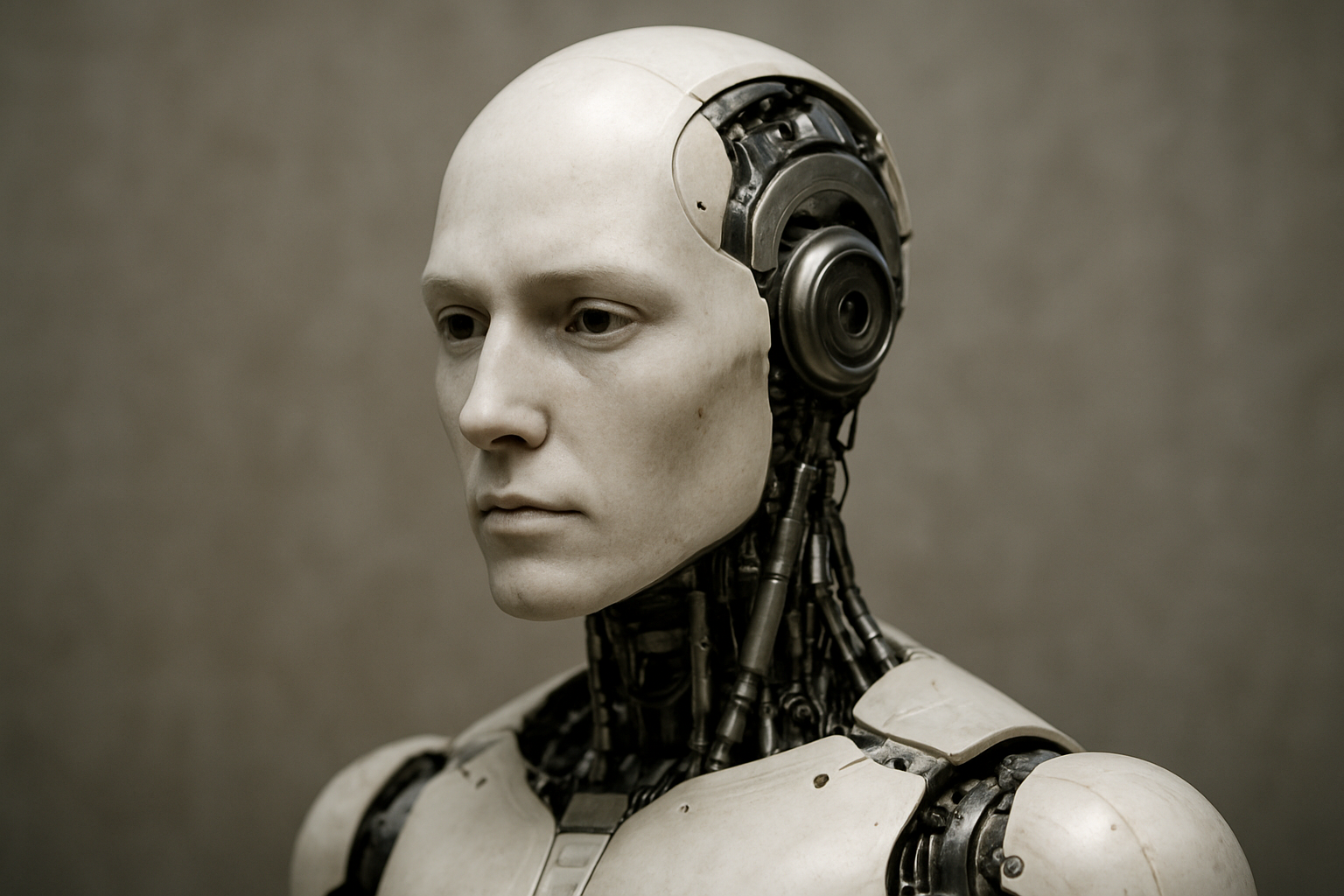
  • AI Without Myth – Why artificial intelligence feels hollow

    AI Without Myth – Why artificial intelligence feels hollow

    In recent years, artificial intelligence (AI) has been hailed as a groundbreaking technological frontier. However, as the hype around AI continues to grow, a counter-narrative is emerging—one that suggests AI, for all its capabilities, feels hollow or devoid of real substance. Why is this sentiment gaining traction, and how might it reflect broader technological and societal dynamics?

    The Hype vs. Reality

    AI is often presented as a magical solution to numerous problems, from improving healthcare to automating mundane tasks. Yet, the effects of AI in reality often fall short of these grand promises. AI’s functional prowess is generally limited to data-driven prediction and pattern recognition, and even the most advanced models, such as GPT-3 or ChatGPT by OpenAI, simulate understanding without actual comprehension.

    • Overpromised Capabilities: The narrative surrounding AI is sometimes oversold. Companies and sensationalist media depictions contribute to a perception that AI can surpass human abilities in areas like creativity and emotional intelligence, which is far from true.
    • Functional Limitations: AI technologies excel in narrow, well-defined tasks but struggle with broader, more abstract forms of reasoning. Current AI lacks true understanding, operating by drawing upon statistical correlations rather than sentient thought.

    AI’s Dependence on Data

    The core of AI functionality lies in data. Algorithms learn from vast datasets, drawing inferences applicable within the confines of their training. However, this data-centric approach introduces several limitations:

    • Data Quality Issues: For AI to provide valuable insights, it requires high-quality, unbiased datasets. Unfortunately, datasets can be incomplete, outdated, or biased, leading to flawed AI outcomes. As highlighted by Dr. Ijeoma E. Eze, “AI systems replicate and, in some cases, enhance the biases present in their training data.”
    • Lack of Original Thought: AI does not generate new ideas. It synthesizes input data, recognizing patterns to mimic human-like outputs. Thus, its engagement with the world remains derivative, lacking the originality that characterizes human intelligence.

    The Illusion of Understanding

    AI’s ability to generate human-like responses provides an illusion of understanding. When an AI responds coherently, it gives the impression of possessing comprehension. Renowned cognitive scientist Herbert A. Simon famously noted, “What computer is to thinking, a subroutine is to consciousness: a program without a self that simulates thought superficially but lacks depth.”

    “AI simulates understanding through complex algorithms but does not possess genuine understanding or consciousness.” – Herbert A. Simon

    This discrepancy between appearance and reality contributes to the perception of AI as hollow. Its outputs can be exceptionally fluent and contextually appropriate, yet lack the experiential sincerity of human cognition.

    The Human Element — Emotion, Morality, and Context

    AI lacks emotional intelligence, a component of thought that is deeply embedded in human interaction. While it can mimic sentiment through analysis and pattern recognition, it remains inherently devoid of emotions.

    • Emotion: Human understanding is enriched by emotional context, empathy, and personal experiences, aspects absent in AI.
    • Morality: Ethical decision-making requires more than cold logic; it demands contextual sensitivity and societal values, debunking the image of AI as an infallible arbiter.

    Many experts echo the sentiment that AI’s limits as an “empathic entity” are particularly striking in fields that require a fine-tuned understanding of human nuances, such as mental health support.

    “Machines can only superficially replicate empathy; real empathy connects fundamentally with the unique human condition.” – Dr. Rosalind Picard, MIT Media Lab

    Skepticism and The Quest for Authentic Intelligence

    As skepticism grows, so does the quest for genuinely intelligent machines. To move beyond surface-level gimmicks, AI needs evolution toward mental faculties closer in spirit to human intelligence. This quest revolves around creating machines capable of:

    • Adaptability: Emulating human-like learning and adaptability, allowing AI to operate beyond rigid programming limitations.
    • General Intelligence: Achieving Artificial General Intelligence (AGI), where AI can perform any intellectual task that a human being can.

    However, achieving such milestones requires tremendous advances in current machine learning practices, ethical guidelines, and a fundamental understanding of consciousness.

    Bridging the Gap

    For AI to transcend its current limitations and shed its “hollow” reputation, it must become more than a tool—it must embody elements of authentic intelligence. Therefore, industries and researchers are urged to:

    • Encourage Interdisciplinary Research: Bridging AI with fields like neuroscience, psychology, and sociology to inform more robust, adaptable AI systems.
    • Invest in Ethical Guidelines: Establishing strong ethical guidelines to ensure that AI growth aligns with humanistic values and minimizes risks.
    • Focus on True Collaboration: Enhancing partnerships between AI and human intelligence, emphasizing systems that augment human capabilities rather than replace them.

    The future of AI holds the promise of innovation, discovery, and immense global impact. However, the path forward must be navigated with care, recognizing that the technology, despite advancements, cannot yet replace or replicate the profound complexities of human intelligence and experience.

  • Myth vs. Hard Science – Two ways of knowing, not one enemy

    Myth vs. Hard Science: Two Ways of Knowing, Not One Enemy

    For centuries, humanity has relied on various methods to make sense of the world around us. Among these, myth and science have stood out as two of the most profound and influential ways of understanding reality. While they are often seen as opposing forces, a closer examination reveals that they serve different purposes and can complement each other in unexpected ways.

    Understanding Myth: More than Just Folklore

    The term “myth” is often misused to mean a mere falsehood. However, in its original and more nuanced sense, myth constitutes stories that people tell to explain the world and their experience of it. These stories, while not empirically verifiable, convey truths that cannot be easily measured.

    “Myth is much more important and true than history. History is just journalism and you know how reliable that is.” – Joseph Campbell, The Power of Myth

    Myths serve several functions in society. They offer moral guidance, serve as cautionary tales, or create a shared cultural narrative that binds communities together. An example is the Greek myths, which have provided rich material for understanding human nature, virtue, and vice. Such stories might not provide factual history but offer deep insights into human psychology and ethical dilemmas.

    The Role of Hard Science: The Pursuit of Objectivity

    In contrast to myth, science seeks to understand the world through a rigorous method of hypothesis, experimentation, and analysis. Science looks to eliminate bias and achieve objective truths based on empirical evidence. It is characterized by its replicability and falsifiability. The strength of science lies in its ability to explain phenomena in a way that they can be consistently measured and validated.

    As Carl Sagan famously said,

    “Science is not only compatible with spirituality; it is a profound source of spirituality. When we recognize our place in an immensity of light-years and in the passage of ages, when we grasp the intricacy, beauty, and subtlety of life, then that soaring feeling, that sense of elation and humility combined, is surely spiritual.”

    Science’s strength lies in solving practical problems, from curing diseases to unraveling the mysteries of the cosmos. However, it is not equipped to solve existential questions or provide moral guidance. This is where myth complements science, by filling the spaces that scientific inquiry does not reach.

    Complementary Forces: Myth and Science Together

    • Providing Context: Myths give us a narrative framework within which we can place scientific discoveries. They allow us to relate the cold, hard data of science to the human condition.
    • Sparking Creativity and Inquiry: Mythical stories have served as inspiration for scientific exploration. Think of how many inventions and scientific pursuits have been dreamt up first through the lens of mythology or speculative fiction.
    • Making Science Accessible: Complex scientific concepts can sometimes be best understood through the allegorical wisdom present in myths. They make the distant and abstract feel tangible and imminent.

    Richard Feynman, a noted physicist, famously said,

    “The first principle is that you must not fool yourself—and you are the easiest person to fool. So you have to be very careful about that. After you’ve not fooled yourself, it’s easy not to fool other scientists.”

    This speaks to the honesty and discipline inherent in the scientific process. Yet, it doesn’t negate how myth can enrich our interpretation and understanding of scientific facts.

    The Psychological Link

    From a psychological perspective, both myth and science address fundamental human needs: the need to understand, to predict, and to control or influence our environment. They provide a scaffolding on which we can construct our understanding of the self and of the universe. Psychologists like Carl Jung have explored how myths can offer insight into the collective unconscious, acting as mirrors of the human psyche.

    Jung argued that myths are akin to dreams and express the dreams of a society, and as such, they resonate on a deep psychological level. This helps individuals navigate their inner landscapes as much as science helps them understand the external world.

    The Modern Integration of Myth and Science

    In today’s world, where technological advancements occur at a breathtaking pace, it is crucial to maintain a balance between myth and science. Rather than seeing them as enemies, societies can benefit enormously from appreciating each as a critical component of human knowledge.

    • Education Systems: Incorporating both myth and science education can enhance creativity and critical thinking. For example, storytelling methods can be used to teach complex scientific ideas in a way that is engaging and memorable.
    • Cultural Understanding: By acknowledging both methods of knowing, differing worldviews can be reconciled, promoting a richer, more inclusive dialogue about human progress.
    • Innovation: Many of the world’s greatest innovators have been inspired by myth, from Da Vinci’s sketches of flying machines dreaming of Icarus to modern astronauts inspired by celestial myths.

    Conclusion

    In a world rife with information yet starved of wisdom, both myth and science offer invaluable tools. Instead of competing for supremacy, they should be recognized as parts of a comprehensive approach to discovery and understanding. Each advances human knowledge in unique ways:

    • Myth connects us to our past, cultural heritage, and psychological depths.
    • Science propels us forward, opening new doors to the future.

    By transcending the simplistic dualism of myth versus science, we can embrace a more integrated view that celebrates human curiosity in all its forms.

    In our quest for knowledge, may we never lose sight of either the narrative arcs of myth or the profound discoveries of science. In the words of Neil deGrasse Tyson,

    “We are part of this universe; we are in this universe, but perhaps more important than both of those facts is that the universe is in us.”

    Such a realization captures the essence of both myth and science, offering a fuller picture of our place in the cosmos.

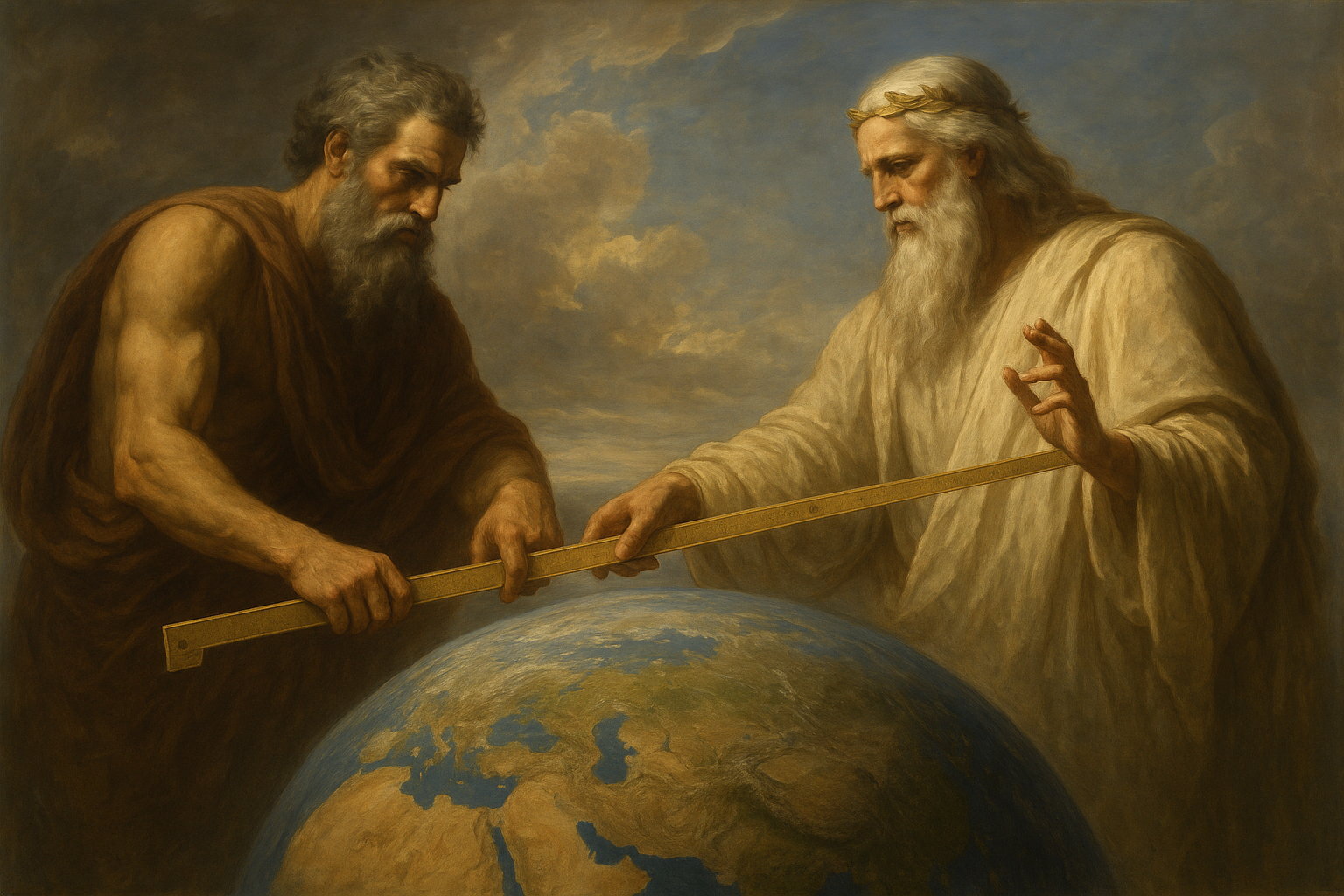
  • When Gods Measured the World – Myth as the first form of science

    When Gods Measured the World – Myth as the first form of science

    When Gods Measured the World: Myth as the First Form of Science

    Throughout history, myths have served as the cornerstone of human civilization, offering explanations for natural phenomena long before the advent of modern science. These stories not only provided comfort and understanding to ancient societies but also laid the groundwork for scientific inquiry as we know it today.

    The Role of Myth in Ancient Societies

    Myths were powerful tools used by ancient cultures to make sense of their environment, human behavior, and the cosmos. The ancient Greeks, for example, attributed natural occurrences to the whims of their pantheon of gods. Thunderstorms were seen as Zeus wielding his mighty thunderbolt, while the changing seasons were explained through the story of Demeter and her daughter Persephone.

    “The universe is full of magical things patiently waiting for our wits to grow sharper.” – Eden Phillpotts

    This quote encapsulates how myths were perceived: as magical narratives awaiting deeper understanding. These narratives laid the theoretical foundations for what would eventually evolve into scientific exploration.

    From Myths to Measurements

    The transition from myth to science was gradual and multifaceted. Many ancient myths contained observational truths that would later be validated by scientific discovery. For instance, the ancient Egyptians’ myth of the Sun God Ra traveling across the sky each day is an early recognition of solar patterns, which would later form the basis of astronomy and timekeeping.

    • Babylonian Astronomy: The Babylonians were amongst the first to record planetary movements, blending mythology with early scientific study. They believed their gods dwelt among the stars, prompting them to meticulously chart celestial bodies.
    • Native American Cosmology: Many Native American tribes used richly metaphorical stories to explain and predict natural events like eclipses and seasonal changes.

    Science as a Successor to Myth

    Some may wonder how myth compares to science in terms of validity and utility. It is crucial to understand that science is, in many respects, a natural successor to myth. While myths relied on narrative coherence and community acceptance, science insists on objective validation and universal applicability.

    According to historian of science, Richard Dawkins, “Science replaces private prejudice with publicly verifiable evidence.” What began as a means of storytelling and cultural transmission would eventually evolve into an empirical method of understanding the universe.

    Cross-cultural Connections and the Scientific Method

    Interestingly, several myths across different cultures suggest a universal quest for knowledge. The Sumerians told of Enki, god of wisdom, who guarded the divine tablet of the Me. Hindus have a similar concept in Saraswati, the goddess of wisdom who resides over knowledge and the arts. These analogous characters point to an intrinsic human desire to understand and measure the world.

    The scientific method, as it developed, was in many ways an organized, goal-oriented continuation of this mythical pursuit of knowledge. It provided a structured way to ask questions, collect data, and draw conclusions—the same processes that myths had informally undertaken centuries before.

    Myth: A Stepping Stone to Enlightenment

    While myths are often relegated to the realm of ancient history, they continue to influence modern culture and inspire contemporary science. Joseph Campbell, a notable scholar of mythology, once remarked, “Myths are public dreams, dreams are private myths.” This perfectly captures how myths and science are intertwined in our continuous effort to chart the unknown.

    Modern-day physicist and cosmologist, Neil deGrasse Tyson, articulates a similar sentiment: “The good thing about science is that it’s true whether or not you believe in it.” Yet, he also acknowledges that myths laid the ground upon which scientific inquiry was built.

    Conclusion

    In revisiting these ancient narratives, we not only gain insight into the development of human understanding but also appreciate the mythological roots of empirical science. Myths were the first form of science, guiding our ancestors’ understanding of the world and inspiring the methods through which we explore it today. In acknowledging this, we learn that the quest for knowledge is as timeless as the stars themselves, eternally linked through stories that measure, explain, and ultimately celebrate the mystery of existence.

  • Resonance Beyond Silence

    Resonance Beyond Silence

    In a world filled with constant noise, the concept of silence seems elusive. However, beyond the absence of sound, resonance silently reshapes our understanding of the environment and communication.

    The Science of Resonance

    Resonance is a natural phenomenon where systems oscillate with greater amplitude at specific frequencies. This occurs when an external force drives another system to vibrate at its natural frequency. While this concept is prevalent in physics, its implications go much further.

    “Resonance is like a story — sometimes complex, but always with a rhythm that connects parts into a full experience,” says Dr. Jane Halton, a physicist at the University of Earth Studies.

    Resonance affects everything from musical instruments to architectural designs. For example, the body of a guitar amplifies vibrations produced by strings, creating richer and deeper soundscapes. In architecture, structures must be designed to withstand resonant frequencies caused by earthquakes or wind.

    Resonance in Nature

    Beyond man-made objects, resonance is vividly observed in nature. Stars and planets emit vibrations in the form of sound waves, albeit in a vacuum where they are not heard. Research has shown that the Sun’s vibrations, known as helioseismic activity, provide insights into its internal structure.

    Animals, too, harness resonance. Elephants communicate using infrasound, sounds below human hearing that travel great distances. These powerful vibrations resonate through the ground, enabling elephants to “speak” over miles.

    “The resonance of an elephant’s call is an intricate dance between the elements of communication and survival,” notes Zoologist Dr. Kevin Grant.

    Resonance in Human Connections

    Socially, resonance transcends the physical and enters the emotional realm. Human interactions are shaped by empathetic resonance, where emotions and feelings are mirrored among individuals. This phenomenon is crucial in forming connections, understanding intentions, and sharing experiences.

    Art and music particularly embody this emotional resonance. A single piece of music can evoke a spectrum of emotions, resonating with personal memories and shared cultural experiences. This is the essence of what some call the “universal language” of art.

    The Echo of Silence

    While resonance signifies vibrations, silence itself offers its own form of resonance. A pause amidst noise can emphasize a message, a thought, or a sentiment. The deliberate use of silence in conversations allows for reflection and anticipation, enhancing communication depth.

    “Silence is a source of great strength,” states Lao Tzu, as referenced in ancient wisdom texts, highlighting its enduring significance.

    In meditation and mindfulness practices, silence becomes an active space for internal resonance, where thoughts and emotions surface without the clamor of external distractions.

    Technological Impacts on Resonance

    The digital age introduces new dimensions of resonance. Technology allows us to capture and analyze vibrations across unprecedented scales. Researchers develop tools that resonate with frequencies imperceptible to human senses, revealing insights into material properties and environmental changes.

    Consider the use of resonance in medical imaging techniques such as MRI, which utilizes magnetic resonance to create detailed images of the body. These technologies transform silent vibrations into pivotal diagnostic data.

    “Resonance technology is a window into the inaudible aspects of existence,” describes Dr. Alan Hirsch, a technology expert from Future Innovations Lab.

    The Future of Resonance

    The future of resonance lies in its interdisciplinary applications—from environmental monitoring with resonant sensors to advanced communication methods using quantum resonance. Its potential to enhance understanding and innovation across fields is vast.

    Furthermore, as we continue to explore the cosmos, understanding resonant frequencies may unlock new realms of information about the universe’s fabric.

    Conclusion

    Resonance extends beyond the physical into realms of silent influence and profound connectivity. As we continue to explore and innovate, the ability to harness resonance’s power will be pivotal in shaping a future where silence and sound intertwine to reflect and reshape our world.

  • Roots in the Sky – Daoist Paradoxes in Nature

    Roots in the Sky – Daoist Paradoxes in Nature

    Roots in the Sky: Daoist Paradoxes in Nature

    The philosophy of Daoism, originating in ancient China, offers profound insights into the nature of existence, often through paradoxical ideas that challenge conventional wisdom. One such paradox is encapsulated in the notion of “Roots in the Sky,” which suggests that true understanding comes from embracing contradictions inherent in nature. By delving into the Daoist perspectives on natural paradoxes, we can uncover a deeper appreciation for the world’s mysteries.

    The Daoist Worldview

    Central to Daoism is the concept of the Dao (often translated as “The Way”), which is both the source and the force behind everything that exists. As Laozi, the legendary figure attributed with founding Daoism, expressed in the Tao Te Ching, “The Dao that can be told is not the eternal Dao; the name that can be named is not the eternal name” (Tao Te Ching – Verse 1).

    This philosophical foundation stresses harmony with the natural world, characterized by its inherent contradictions and ever-present dualities. Instead of resisting these contradictions, Daoism teaches us to accept and learn from them.

    The Paradoxical Nature of Opposites

    One of the core elements of Daoist philosophy is the understanding of opposites, represented by the Yin and Yang symbol. Far from being fixed or separate elements, Yin and Yang are seen as interconnected forces that exist in a dynamic balance. As the I Ching or Book of Changes describes, “Thus the superior man, by cultivating in himself the qualities of higher influences, completes the fullness of Nature as endowed by Heaven and Earth” (I Ching – Introduction).

    • Yin: Represents the feminine, dark, passive, and receptive.
    • Yang: Represents the masculine, light, active, and creative.

    The harmony of the natural world, according to Daoism, derives from the interdependence and interaction of these forces. Each exists because of the other, reinforcing the idea that natural contradictions are complementary rather than conflicting.

    Nature’s Paradoxes and the Daoist Perspective

    Nature provides countless examples of how contradictions coexist harmoniously. The Daoist perspective encourages us to observe these paradoxes with openness and respect, allowing us to understand our relationship with the larger world.

    • Roots in the Sky: Trees, despite having their roots in the ground, reach towards the sky, symbolizing the connection between earth and heaven. The paradox implies that what grounds us can also uplift us, a reminder articulated by Zhuangzi, a foundational Daoist philosopher: “He who knows that enough is enough will always have enough” (Zhuangzi – Chapter 6).
    • Life and Death: In Daoism, life and death are seen as natural cycles, akin to the changing seasons. Laozi’s teachings suggest embracing this cycle: “Everything flows out and in; everything has its tides; all things rise and fall” (YourDictionary – Lao Tzu Quotes).
    • Stillness and Motion: Water exemplifies stillness and motion depending on its state, demonstrating adaptability. As the Tao Te Ching states, “Nothing in the world is as soft and yielding as water. Yet for dissolving the hard and inflexible, nothing can surpass it” (Goodreads – Tao Te Ching Quotes).

    Embracing the Paradoxical

    Daoism encourages us to embrace paradoxes not as obstacles but as sources of wisdom. By releasing our rigidity and remaining open to the inherent contradictions in life, we cultivate a more profound serenity and understanding. The practice of cultivating balance through meditation and exercises like tai chi is one way to tap into this harmonious state.

    “A journey of a thousand miles begins with a single step.” – Laozi, Tao Te Ching

    This quote emphasizes the power of simplicity and patience in dealing with life’s complexities. By taking small, intentional steps, we attune ourselves to the natural order and learn to coexist with life’s paradoxes

    Modern Applications

    The embrace of paradoxes remains relevant in contemporary times, particularly in fields such as ecology and environmentalism. Understanding the interconnectedness and interdependencies of natural systems reflects Daoist wisdom. Environmental strategies that focus on harmony rather than conquest exemplify Daoism’s relevance in modern thought. Solutions such as permaculture and regenerative agriculture take inspiration from nature’s patterns, embodying the Daoist principle of working with, rather than against, nature.

    Additionally, the consideration of holistic health approaches links back to Daoist traditions. Practices like acupuncture and herbal medicine are grounded in the idea of balancing the body’s energies, reflecting the balancing of Yin and Yang.

    Conclusion: Finding Freedom in Contradiction

    The Daoist perspective on nature’s paradoxes invites us to see beyond surface-level contradictions and appreciate the deeper, interconnected truths they reveal. By accepting and embracing these paradoxes, we learn to live in harmony with the natural world and within ourselves.

    As we walk the Daoist path, we find freedom not in certainty but in the acceptance of paradox. In doing so, we nurture our capacity for growth, understanding, and serenity, learning that the roots of true wisdom, indeed, reach towards the sky.