Tag: traveler

  • Between Earth and Ether – The Traveler as Channel of Dao

    Between Earth and Ether – The Traveler as Channel of Dao

    Between Earth and Ether: The Traveler as Channel of Dao

    In an increasingly chaotic world, the notion of the traveler as a conduit of Dao, or “The Way,” presents a timeless tranquility to those in search of spiritual balance. Embracing this concept can transform every journey into more than mere displacement, elevating travel to a practice of connectedness, harmony, and enlightenment.

    Understanding Dao

    Daoism, or Taoism, is an ancient Chinese philosophy that emphasizes living in harmony with the Dao. The Dao is an abstract concept, often translated as “The Way” or “The Path,” which represents the fundamental nature of the universe. As stated in The Tao Te Ching, attributed to Laozi, “The Dao that can be told is not the eternal Dao; the name that can be named is not the eternal name” (Project Gutenberg).

    This quintessential teaching captures the ineffable nature of Dao, inviting followers to experience rather than explain. Traveling, in its most profound form, can become an exercise in this experiential understanding.

    The Traveler as a Conduit

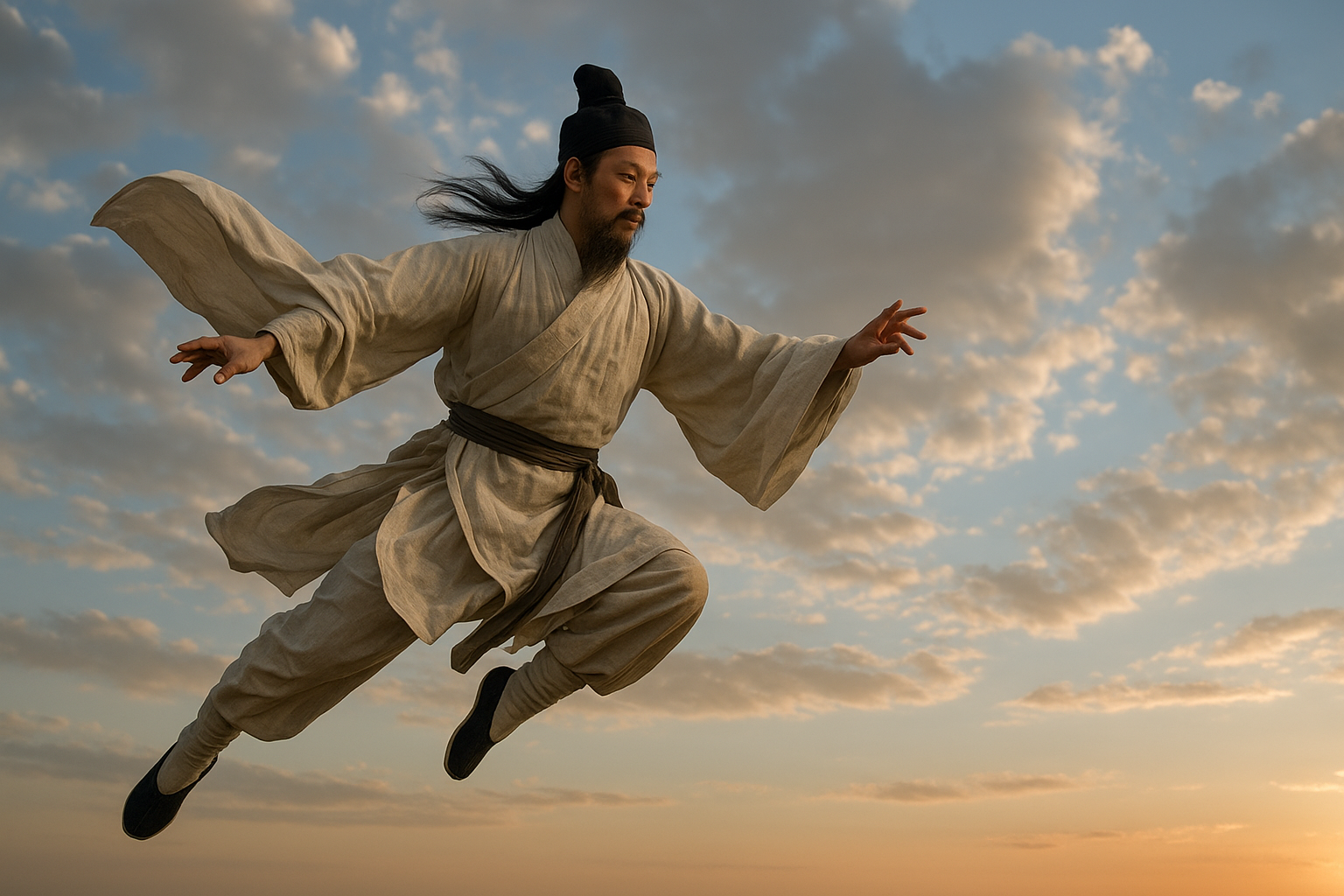
    In the context of Daoism, a traveler is more than a person on a journey from point A to point B. A true traveler embodies the principles of Dao—effortlessly wandering, observing, and absorbing the energy of both Earth and sky. This depiction is resonant with the classic image of the wandering sage, a seeker of wisdom and conductor of cosmic energies.

    The role of the traveler is one of intermediator between the tangible reality of the Earth and the ethereal expanse of the heavenly cosmos. By opening oneself to these dual realms, the traveler learns to flow with the natural rhythms, observing the world as a polyphony of existence rather than through the narrow lens of human ego and desire.

    The Physical and Spiritual Path

    Traditional travel often emphasizes the physical journey. However, for a traveler guided by Dao, the spiritual path is of greater significance. As Alan Watts, a prominent interpreter of Eastern philosophies, noted, “The only way to make sense out of change is to plunge into it, move with it, and join the dance.” (Goodreads).

    Herein lies the unique intersection between travel and spiritual practice: to plunge into the journey is akin to surrendering to the will of the universe, engaging with change and experiencing life in its raw, unfiltered form. The traveler thereby becomes a medium of Dao, moving fluidly and consciously through the world.

    Destinations as Reflections of Dao

    • Mountains: Symbolize strength and stillness. Visiting these majestic elevations, a traveler can meditate upon the immense age and wisdom that emanates from their peaks.
    • Rivers: Represent constant change and flow. Just as water navigates both gentle and treacherous terrains, the traveler learns adaptability and resilience.
    • Forests: Embody life’s interconnectedness. Walking amidst trees allows one to contemplate the myriad forms of life that coexist harmoniously, reflecting the Daoist ideal of unity.

    Each of these natural elements serves not only as a destination but as a reflection of the Daoist teachings. Traveling through them calls for silent observation and an openness to the lessons they silently offer.

    Practical Advice for the Daoist Traveler

    “Travel and change of place impart new vigor to the mind.” — Seneca

    To channel the Dao effectively, consider the following during your travels:

    • Remain Mindful: Practice mindfulness by engaging fully in each moment. This could mean putting away technology to fully appreciate the landscape.
    • Observe Quietly: Be a silent witness to your surroundings. As nature unfolds its theater, let it whisper its wisdom to you without speaking over it.
    • Honor Impermanence: Recognize that each experience, like the traveler, is transient. Cherish its uniqueness without attachment.

    The Journey of Harmony

    Traveling as a channel of Dao is not confined to exotic destinations or planned itineraries. It is a state of mind—a continuous journey of learning, experiencing, and evolving. In connecting to both Earth and ether, the traveler embodies the essence of Dao, finding peace in motion and wisdom in silence.

    As we stand at the crossroads of worlds within and without, we might find, along the way, that the truth of our journey lies not in reaching a destination but in the journey itself. The lesson from Daoism remains timeless: to travel is not just to move through space, but to traverse the boundless landscapes of the heart and mind.

  • The Wind Traveler – Moving Like Air Through the World

    The Wind Traveler – Moving Like Air Through the World

    The Wind Traveler: Moving Like Air Through the World

    In a world increasingly dominated by speed, technology, and connectivity, there exists a unique subset of adventurers known as “wind travelers.” Less concerned with fixed itineraries and more with the journey itself, these individuals seek to experience the world in a manner akin to the wind—free, unbound, and detached from the confines of modern travel dictates.

    The Essence of Wind Traveling

    Wind travelers embrace a philosophy of movement that mirrors the natural rhythm of the air currents, flowing from place to place with a sense of freedom and spontaneity. They often travel light, with minimal possessions, preferring to be unfettered by the weight of material goods. Their paths are not dictated by guidebooks or schedules but rather by the whimsical currents of chance encounters and unfolding stories.

    “To travel is to take a journey into yourself.” – Danny Kaye

    This quote by Danny Kaye encapsulates the wind traveler’s ethos perfectly. This mode of wandering is less about reaching a destination and more about the personal journey and transformation experienced along the way.

    The Journey of Discovery

    In their global peregrinations, wind travelers prioritize immersion over mere observation. Whether it’s exploring the intricate alleys of Marrakech, wandering across the transcontinental allure of the Silk Road, or simply shadowing the verdant rice terraces in Bali, the goal is to blend seamlessly into the environment, to live in harmony with the locale’s natural and cultural landscapes.

    • Flexibility: The lack of a rigid schedule allows wind travelers to stay longer in places that resonate deeply or to leave behind those that don’t.
    • Connection: By moving slowly and deliberately, they have the opportunity to forge genuine connections with locals, experiencing cultures and traditions first-hand.
    • Sustainability: This style of travel often has a lower environmental impact, as it tends to involve slower modes of transportation and less dependency on resource-intensive accommodations.

    Challenges and Rewards

    Being a wind traveler is not without its challenges. The unpredictability of this lifestyle can be daunting, and the lack of planning can lead to moments of discomfort and uncertainty. Yet, it is precisely in these moments that the rewards of the journey are unearthed—an unexpected friend made during a long bus ride, a hidden gem discovered in a remote village, or personal insights gained through solitude and reflection.

    Ultimately, wind travelers embody the spirit of the world’s ancient nomads and explorers, reminding us that the essence of travel is transformation and that sometimes to find ourselves, we must let go and allow the winds to guide us.

  • The Ancient Traveler – Remembering the Journey Before Time

    The Ancient Traveler – Remembering the Journey Before Time

    The Ancient Traveler: Remembering the Journey Before Time

    In the silent echoes of Earth’s deep past, long before the first written word or recorded history, embarked a journey that would shape the very foundation of life. This is the tale of The Ancient Traveler—an odyssey traversing the annals of time, etched not on paper but on the tapestry of Earth’s geology and biology.

    “The clearest way into the Universe is through a forest wilderness.” — John Muir

    To understand the journey of The Ancient Traveler, one must look beyond the confines of human history and delve into a world shaped by primordial forces. Here, cosmos and time meld into a single, intricate waltz. This article invites you to travel back in time to explore the significant epochs that seeded life on our planet, each a testament to Earth’s resilience and creativity.

    The Precambrian Voyage

    The journey begins in the Precambrian—a vast expanse of time covering nearly 88% of Earth’s history. This era, stretching from the planet’s formation over 4.6 billion years ago to about 541 million years ago, is often shrouded in mystery. Lacking the abundant fossils and tectonic clarity of later periods, it is a canvas painted with scant clues. Yet, it’s during this time that life quietly began its saga.

    • Formation of Earth: About 4.5 billion years ago, the solar nebula—a swirling cloud of gas and dust—coalesced to form a blazing young Earth, its surface a molten inferno eventually cooling to allow the establishment of oceans and atmosphere.
    • The First Signs of Life: The Archean Eon (4 to 2.5 billion years ago) hosts the earliest indications of life—microbial mats known as stromatolites. These ancient bacteria engaged in photosynthesis, releasing oxygen and altering the Earth’s atmosphere in what scientists call the Great Oxygenation Event.
    • Multicellular Wonders: Fast forward to the Proterozoic Eon (2.5 billion to 541 million years ago), where life diversifies into multicellular forms, setting the stage for modern organisms.

    These early life forms are much like The Ancient Traveler themselves—simple yet profoundly resilient, adapting to a world in constant upheaval.

    The Cambrian Explosion

    The Cambrian Period, which follows the Precambrian, heralds a spectacular burst of life known as the Cambrian Explosion (approximately 541 to 485 million years ago). This era, rich in fossils, tells of a world teeming with diverse life forms. According to the Natural History Museum, this period saw the emergence of most major animal phyla.

    • The Richness of Early Life: Fossils such as trilobites and the enigmatic Hallucigenia capture the imagination, illustrating the biological innovation of this time.
    • Marine Dominance: Life’s diversity thrives in the oceans, where complex ecosystems begin to form, paving the way for more advanced life forms.

    “The fossil record is like a crumbling archive stacked with intriguing but incomplete volumes, filled with thousands of faint but tantalizing traces of ancient existences.” — Richard Fortey

    The Cambrian Explosion is a pivotal chapter in the history of The Ancient Traveler, as life adapts and evolves with unprecedented speed and creativity.

    The Conquest of Land

    As The Ancient Traveler strides through time, the Silurian (443 to 419 million years ago) and Devonian periods (419 to 359 million years ago) witness life’s grand migration from water to land. The first brave inhabitants—plants—prepare the terrestrial landscape for animal colonization.

    • Flora’s Footprint: Simple, non-vascular plants gradually give way to more complex vascular counterparts, leading to the first forests by the end of the Devonian.
    • The Age of Fish: Oceans swarm with a multitude of fish species, marking the Devonian as the “Age of Fishes.” Distinct types like the lobe-finned fish play a vital evolutionary role as they transition to tetrapods, the ancestors of terrestrial vertebrates.

    These transitions, each accompanied by novel adaptations, underscore the tenacity of The Ancient Traveler, continually seeking new worlds to explore.

    The Reign of Reptiles

    During the Mesozoic Era, spanning roughly 180 million years from 252 to 66 million years ago, reptiles dominated. Known as the “Age of Reptiles,” this time is marked by the rise and fall of the mighty dinosaurs. According to the University of California Museum of Paleontology, the Mesozoic is divided into three periods: Triassic, Jurassic, and Cretaceous.

    • Dinosaurs’ Ascendancy: Dinosaurs evolve to occupy niches across the globe, from the all-powerful Tyrannosaurus rex to the sky-soaring Pterosaurs.
    • Floral Diversification: The vegetal landscape also transitions with the advent of flowering plants (angiosperms), reshaping ecosystems and influencing evolutionary paths.

    The Great Extinction and the Rise of Mammals

    The Cretaceous-Paleogene extinction event 66 million years ago marks another pivotal moment for The Ancient Traveler—a transition that eliminates dinosaurs, paving the way for mammals. It is a testament to Earth’s unpredictable, ever-changing tapestry.

    • Surviving the Cataclysm: Small mammals, often overlooked during the reign of the dinosaurs, emerge as the unintended heirs of Earth’s thrones.
    • Proliferation and Evolution: With vast territories uninhabited, mammals swiftly diversify, filling ecological vacancies left by the resultant mass extinction.

    This era is marked by profound adaptability, with mammals charting a diverse range of evolutionary trajectories, much like The Ancient Traveler themselves, perpetually navigated by the forces of natural selection and environmental change.

    Reflections on the Journey Before Time

    The story of The Ancient Traveler is not merely a recount of Earth’s biological and geological history. It serves as a powerful reminder that the journey of life—an endless exploration imbued with both successes and cataclysms—continues beyond our lifetimes. Each epoch sheds light on the immense power of adaptation and transformation.

    “It’s not the strongest of the species that survive, nor the most intelligent, but the one most responsive to change.” — Charles Darwin

    In considering this journey before time, one is struck by the realization that we, too, are part of this ancient sojourn—bound to the past by our genetic makeup and to the future by our choices. As stewards of Earth, the story of The Ancient Traveler beckons us to cherish the planet’s diversity, learn from its history, and ensure a continuous journey for future travelers across the eons.

    Thus, as we reflect on the past, our challenge and responsibility lie in weaving a future where the footprint of humanity honors the ancient paths, preserving the delicate balance that ensures the continuity of The Ancient Traveler‘s endless journey.

  • Sky Traveler – The Daoist Spirit of Limitless Movement

    Sky Traveler – The Daoist Spirit of Limitless Movement

    Sky Traveler: The Daoist Spirit of Limitless Movement

    Within the rich tapestry of Daoist philosophy and mythology, the concept of movement and flow is not merely a physical action but an existential condition, deeply embedded in the pursuit of harmony with the universe. At the heart of this ideology lies the mythical figure known as the Sky Traveler, a symbol of limitless movement and spiritual freedom. This article delves into the essence of the Sky Traveler, exploring how this figure embodies the Daoist principles of change, adaptation, and unity with nature.

    The Essence of the Sky Traveler

    In Daoism, the journey is often more significant than the destination. The Sky Traveler archetype represents the ultimate journeyer, not restricted by earthly bounds or societal conventions. This figure encapsulates the spirit of wu wei (無為), typically translated as ‘effortless action’ or ‘non-doing’. The Sky Traveler is a master of balance, riding the winds of change with grace and adaptability.

    “Daoism is the art of flowing with the currents of life, much like water navigates the landscapes it encounters. The Sky Traveler embodies this fluidity, becoming one with the natural world.” – Lao Tzu, Dao De Jing

    Historical Roots and Mythology

    The concept of the Sky Traveler has its roots in ancient Chinese mythology, where celestial beings traverse the realms between heavens and earth. These travelers are not only physical beings but also spiritual entities, representing the eternal bond between humanity and the cosmos.

    One of the legendary figures often associated with the Sky Traveler archetype is Zhilan Sheng, a mythical sage known for his ability to travel vast distances in the blink of an eye. According to legend, Zhilan Sheng could harness the winds and clouds to fly across mountains and seas, teaching the virtues of enlightenment and tranquility wherever he landed.

    The Daoist Philosophy of Movement

    Daoism emphasizes the importance of understanding and aligning with the natural world. The Sky Traveler illustrates the Daoist belief in the relativity of time and space, suggesting that physical boundaries are constructs of the mind. Daoists maintain that it is through acceptance and adaptability that one can achieve liberation from these constraints.

    • Fluidity and Adaptability: The Sky Traveler teaches the importance of flexibility in thought and action, mirroring the adaptive nature of water.
    • Unity with Nature: By traveling through the skies, this figure symbolizes unity with the natural elements, emphasizing harmony and balance.
    • Transcendence: The journey of the Sky Traveler represents a transcendence of worldly concerns, seeking higher truths and spiritual enlightenment.

    Contemporary Interpretations

    In modern contexts, the Sky Traveler symbolizes the eternal quest for knowledge and understanding. This archetype serves as a reminder of the necessity to break free from societal constraints and embrace one’s unique path. Literature, art, and film often draw inspiration from this timeless symbol, using it to explore themes of freedom and transformation.

    For instance, in contemporary literature, authors often depict characters who undergo profound journeys of self-discovery, reminiscent of the age-old traditions of the Daoist Sky Traveler. Such stories invite readers to reflect on their own lives, pondering the possibility of spiritual and personal evolution.

    Embracing the Sky Traveler Within

    Adopting the spirit of the Sky Traveler in one’s daily life means fostering a mindset of acceptance, flow, and discovery. It involves embracing the unpredictability of life with a sense of curiosity and openness. As Alan Watts eloquently put it, “The only way to make sense out of change is to plunge into it, move with it, and join the dance.” [Source]

    For those seeking to incorporate these principles, consider the following practices:

    • Meditation and Mindfulness: Regular meditation can help cultivate a sense of inner peace and acceptance, akin to the serenity of the Sky Traveler.
    • Connection with Nature: Spend time in natural settings, allowing the rhythms of the earth to guide your thoughts and actions.
    • Practice Non-Attachment: Learn to let go of rigid expectations, embracing change as a natural part of existence.

    In embracing the Sky Traveler within, individuals are encouraged to see the world not as a series of fixed realities but as a vast expanse of possibilities awaiting exploration. In this philosophy, the true journey is found not in the literal motion but in the continuous growth and transformation of the spirit.

  • The Gentle Traveler – Moving Softly Through the World

    The Gentle Traveler – Moving Softly Through the World

    In a world where speed and efficiency often dominate the narrative, there is a growing movement towards a more conscious and gentle form of travel. Known as the gentle traveler, this ethos prioritizes mindfulness, sustainability, and deeper connections with the places and people encountered along the journey.

    What does it mean to be a gentle traveler? At its core, gentle traveling is about slowing down and immersing oneself fully in the experience of a new place rather than rushing through destinations or ticking boxes on a typical tourist agenda. It’s an approach that not only benefits the traveler but also respects and supports the visited locales.

    “Traveling — it leaves you speechless, then turns you into a storyteller.” – Ibn Battuta

    This famous quote by the renowned Moroccan explorer Ibn Battuta encapsulates the essence of gentle traveling. It is about connecting narratives and understanding the stories behind a place or culture instead of merely capturing images for social media.

    Principles of Gentle Travel

    • Sustainability: Prioritizing eco-friendly modes of transportation, like trains or bicycles, over more polluting options (e.g., airplanes). According to the World Bank, travel accounts for a significant portion of individual carbon footprints, making transport choices crucial for sustainability.
    • Mindful Consumption: Supporting local businesses rather than international chains helps boost the local economy. Travelers might choose locally-owned accommodations, eat at family-run restaurants, or buy handmade crafts instead of mass-produced souvenirs.
    • Cultural Respect: Learning basic phrases in the local language or familiarizing oneself with local customs is vital. It demonstrates respect and can lead to more authentic and enriching interactions.

    With the rise in environmental awareness and the desire for meaningful connections, the gentle traveler philosophy resonates with many, even influencing the broader tourism industry. According to the United Nations World Tourism Organization, more travelers are seeking out sustainable options, and the industry is slowly adapting to meet this demand with greener accommodations and experiences.

    Ultimately, the gentle traveler moves softly through the world, leaving a smaller footprint and taking with them richer memories and friendships. By embracing this thoughtful approach, travelers not only enrich their journeys but also contribute positively to the places they visit, ensuring that future generations can experience the world’s diverse and vibrant cultures.

  • Portable Shrines: The Inner Temple of the Traveler

    Portable Shrines: The Inner Temple of the Traveler

    As humanity continues its age-old journey across the world, the need for spiritual connection remains a constant companion to the traveler. Portable shrines, as both historical artifacts and contemporary tools of personal devotion, serve as the perfect example of how spirituality adapts to the nomadic lifestyle. These compact sanctuaries have journeyed as far and wide as the people who have carried them, embodying the intersection of mobility and faith.

    The Historical Roots of Portable Shrines

    The concept of a portable shrine, or traveler’s altar, is not a modern invention but has its roots deeply planted in antiquity. Shinto (Japan) and Hindu (India) pilgrims carried small replicas of their deities during migrations and pilgrimages, ensuring that their spiritual practice remained uninterrupted regardless of their physical location.

    “Among the many items that a Buddhist monk may carry, a stupa or small shrine is a common sight,” notes New World Encyclopedia. “These shrines allow the monks to meditate and perform rituals regardless of their physical surroundings, grounding them amidst life’s constant changes.”

    Similarly, Christian missionaries traversing the ancient Roman roads often carried small folding altars or relics in intricate reliquaries, facilitating the spread of Christianity through demonstrations of faith and the offering of a tangible spiritual experience wherever they traveled.

    The Craft of Modern Portable Shrines

    In today’s fast-paced, mobile society, these pocket-sized spiritual sanctuaries have evolved, yet their essence remains. Artists and artisans craft modern portable shrines with an array of materials such as wood, metal, fabric, and paper. These creations are often personalized, reflecting the user’s unique spiritual beliefs and practices.

    • Material: Modern shrines may employ durable materials to withstand the rigors of travel, like aluminum or bamboo, offering both resilience and sustainability.
    • Design: Often imbued with intricate carvings or luminous colors, both of which symbolize the warmth and serenity of spiritual presence.
    • Size: Sized to fit into a backpack, purse, or pocket, ensuring that spiritual practice remains an unobtrusive component of daily life.

    These considerations ensure that the shrines are not only beautiful but also functional, honoring the traditions while adapting to new forms of transit and lifestyle changes.

    The Emotional Sanctuary Within

    For many travelers, portable shrines offer more than mere convenience; they provide emotional solace and a sense of continued connection to home and community. These personal altars serve as spiritual anchors, providing a place for reflection, prayer, and meditation—a temple within a suitcase, so to speak.

    “Travel can be discombobulating,” says Spirituality & Practice, “but bringing one’s faith practices along can center and ground a soul amidst the unfamiliar.”

    Consider the experience of Shannon, a business traveler, who writes, “Lighting a small candle in my portable shrine as I unwind in a strange hotel room helps me feel connected to my family and my faith, creating a moment of peace in the chaos of travel.”

    The Broader Impact of Portable Shrines

    Modern portable shrines extend beyond personal use, as they can also foster intercultural dialogue and understanding. Encountering these spiritual pieces can invite curiosity and discussion, bridging cultural gaps with a common thread of human spirituality.

    In the words of Parabola Magazine, “These shrines can be gateways into conversations about heritage, belief systems, and the shared human journey, sparking interactions that might not occur otherwise.”

    By offering a glimpse into personal spirituality, shrines help demystify foreign traditions and emphasize shared sentiments like peace, hope, and the divine experience of life.

    Conclusion: The Future of Personal Devotion

    As globalization continues to shrink the world, the significance of portable shrines is only set to grow. They reflect the essence of what it means to carry one’s beliefs from place to place, embodying both history and modernity. Whether used in solitude or shared among new acquaintances, these small sanctuaries bridge the ever-present gap between where one resides and where one belongs, offering inner peace to the wandering traveler.

    Ultimately, portable shrines serve as a testament to the enduring need for spiritual expression, revealing that regardless of the journey’s length or destination, the inner temple of the traveler is never far away.