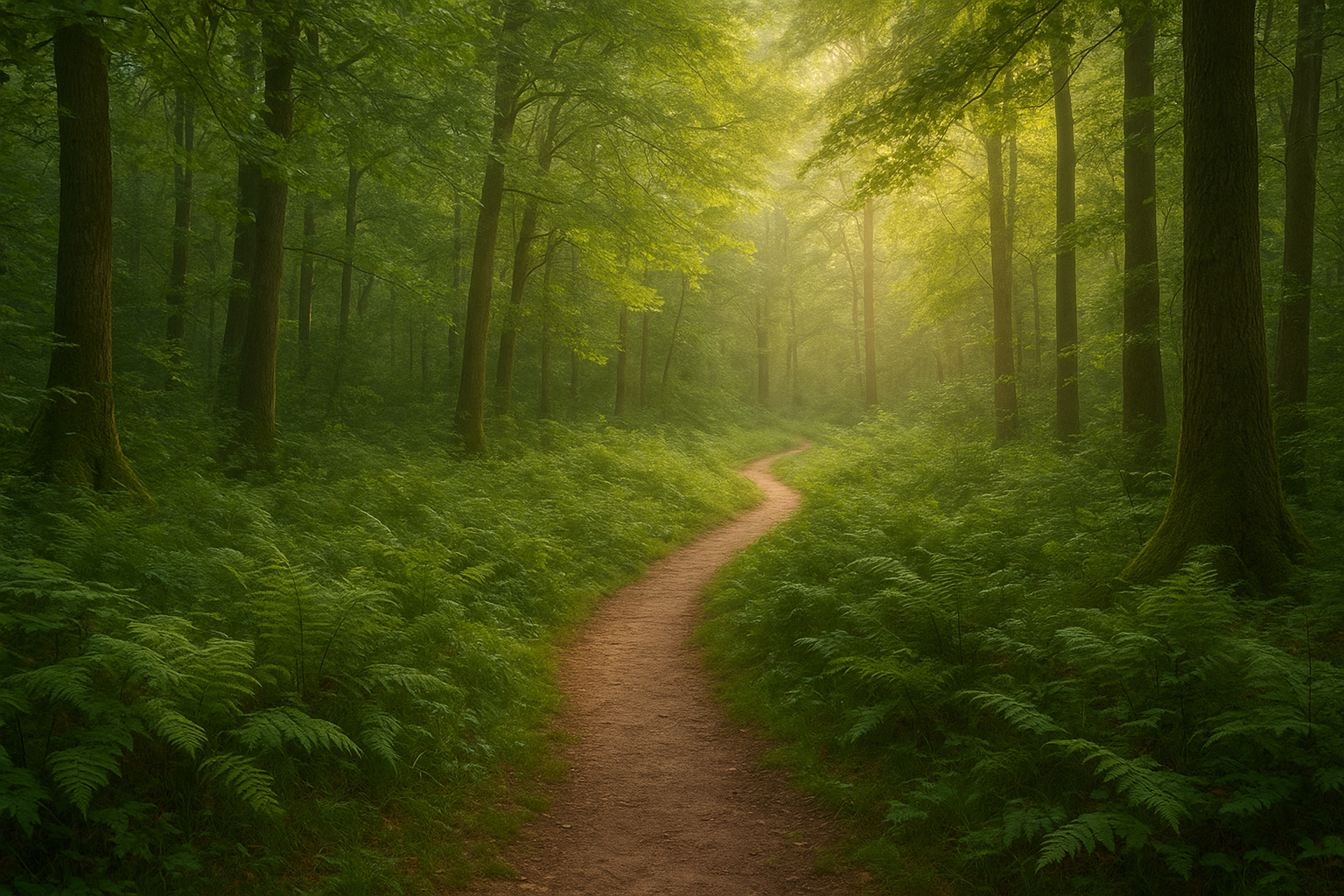
Tag: through

  • Lantern in the Fog – Finding Light in the Unseen Way

    Lantern in the Fog – Finding Light in the Unseen Way

    Lantern in the Fog – Finding Light in the Unseen Way

    Lantern in the Fog – Finding Light in the Unseen Way

    In the depths of uncertainty, a metaphor emerges: the lantern in the fog. It represents the quest for clarity amidst the enigmatic journey of life—a subtle dance between illuminating the path ahead while embracing the ambiguity of uncharted territory. But how exactly do we find our way forward when the road is obscured?

    In society’s current state, marked by technological upheavals and existential questions, the lantern in the fog serves as a beacon, prompting us to explore what it means to navigate the unseen way both metaphorically and literally.

    A World Covered in Fog

    The modern world mirrors the foggy landscape of our metaphor. Science fiction has long captured this essence, presenting worlds where future society grapples with unfamiliarity and the unknown. In Philip K. Dick’s groundbreaking novel, Do Androids Dream of Electric Sheep?, this theme is predominant. As technology advances, the boundary between human and machine becomes obscured, and characters seek clarity in their identities and humanity.

    “The basic tool for the manipulation of reality is the manipulation of words. If you can control the meaning of words, you can control the people who must use the words.”

    – Philip K. Dick

    Illumination through Technology

    In today’s reality, technology plays a dual role as both the fog and the lantern. On one hand, the rapid pace of technological change can obscure our path, creating a cyber fog where traditional maps are rendered obsolete. On the other, technology acts as a lantern, casting light on possibilities previously deemed impossible.

    • Virtual Reality (VR) and Augmented Reality (AR): Tools like VR and AR are extending our perceptual realities, creating new ways to experience the world. These technologies enhance our ability to see through the fog, providing a new avenue to understand complex situations by simulating diverse outcomes.
    • Artificial Intelligence (AI): AI acts as both a mysterious enigma and a guiding force. As AI capabilities expand, it raises questions about decision-making, ethics, and control. Yet, when harnessed responsibly, AI can analyze vast amounts of data, helping us make more informed choices.

    For instance, AI technologies are beginning to sift through the ‘fog of information’ through advancements in healthcare. The data-heavy approach provides insights into personalized medicine, potentially saving lives by anticipating outcomes and suggesting treatments tailored to individuals.

    Exploring the Inner Landscape

    Beyond technological tools, finding light in the unseen way requires inner exploration. The fog is not only external but internal—a murkiness of thoughts and emotions that can obfuscate direction. Renowned psychologist Carl Jung emphasized the importance of facing our inner fog:

    “Your vision will become clear only when you can look into your own heart. Who looks outside, dreams; who looks inside, awakes.”

    – Carl Jung

    The journey inward involves self-reflection, mindfulness, and an examination of one’s values and beliefs. This introspection often uncovers latent insights, akin to a lantern illuminating a path previously hidden by the fog.

    Community as a Guidepost

    While individual journeys are essential, the collective wisdom of communities can also serve as a beacon. Historically, communities have provided support, shared knowledge, and collective strategies to navigate uncertain times. Modern networks, whether digital or physical, continue this tradition.

    Participating in discussions, sharing stories, and learning from diverse perspectives create a shared map that can help illuminate collective paths forward. Engaging with different viewpoints encourages a multifaceted understanding and helps break down the isolation that the metaphorical fog can sometimes breed.

    • Online forums and communities: Platforms such as Reddit and specialized forums for various interests act as a digital gathering space for people seeking insights and community wisdom.
    • Local community gatherings: Community centers and cultural events bring people together to share experiences and collective knowledge.

    Charting a Path Forward

    To find a light in the unseen way is to embrace the uncertainty inherent in life while consciously seeking understanding and clarity. As technological, inner, and communal lanterns guide our paths, we must also recognize the value of occasional detours and the beauty hidden in the mist.

    The lantern in the fog, then, becomes a symbol of resilience—embracing complexity, acknowledging the unknown, and finding hope and clarity amid the haze. As we traverse this nebulous landscape, the light may flicker, but it remains an unwavering guide, illuminating the cryptic yet promising journey ahead.

    This article explores scientific and psychological concepts related to navigation through uncertainty, referencing notable authors and thinkers. For further reading, explore works by Philip K. Dick and Carl Jung, among others.

  • The Hidden Valley – Where Stillness Hides from Noise

    The Hidden Valley – Where Stillness Hides from Noise

    The Hidden Valley: Where Stillness Hides from Noise

    In the heart of our increasingly noisy and bustling world, there exists a sanctuary where tranquility reigns supreme—a place aptly called the Hidden Valley. This remarkable enclave offers a profound escape from the cacophony of modern life, enveloping visitors in a serene embrace that feels a world apart.

    The Journey to Silence

    Located in the sprawling hinterlands of the Sierra Nevada, the Hidden Valley is a treasure trove of natural beauty and stillness. As described by renowned nature writer John Muir, “The clearest way into the Universe is through a forest wilderness.” His words perfectly capture the essence of trekking into this secluded paradise, where the natural world unfolds in its most pristine form.

    The Hidden Valley is accessed through winding trails that carve through dense woodlands, as the whispering of leaves and the occasional call of a distant bird create a soundtrack of nature’s own composition. Each step deeper into this sylvan retreat marks a shift away from the relentless noise of urbanity towards the harmonious silence of the wild.

    Nature’s Symphony

    The valley itself is a stunning confluence of geographical marvels and ecological diversity. Majestic pine trees rise like sentinels to hold the sky, while the valley floor is carpeted with a tapestry of wildflowers and verdant grasses. The stillness here is profound, interspersed only by the gentle flowing of the Hidden River that weaves its way through the landscape.

    “Nature is not a place to visit. It is home.” — Gary Snyder

    The Hidden River is a lifeline through the valley, creating habitats for a variety of wildlife. Observers will find themselves entranced by the dance of dragonflies skimming the water’s surface and the serene grace of deer pausing to drink along the banks. This abundance of life thrives in the absence of human interference, embodying the delicate balance of an unspoiled ecosystem.

    The Science of Silence

    Recent studies suggest that exposure to quiet environments has profound physiological and psychological benefits. According to research published in the Journal of Environmental Psychology, natural silence can reduce stress levels significantly, lower blood pressure, and boost mental clarity. The Hidden Valley serves as a living laboratory for these findings, offering a natural antidote to the pressures of modern living.

    Moreover, the valley’s tranquility supports biodiversity. A study by the World Wildlife Fund highlights that areas with minimal human noise allow native species to thrive without disturbances, maintaining essential ecological processes.

    Preserving Tranquility

    Efforts to preserve the Hidden Valley are paramount. As human activity continues to expand, conservationists emphasize the importance of protecting such sanctuaries from development and pollution. The National Park Service works tirelessly to ensure that areas like the Hidden Valley remain untouched for future generations to experience.

    In the words of Rachel Carson, “Those who contemplate the beauty of the earth find reserves of strength that will endure as long as life lasts.” It is essential to not only appreciate these serene spaces but also to take active roles in their preservation.

    The Call of the Quiet

    For those fortunate enough to find themselves in the Hidden Valley, the experience is transformative. Visitors report a heightened sense of awareness and connectivity with nature, a renewal of spirit that is difficult to attain amidst urban environments. This profound connection is a testament to the valley’s power to refresh and inspire.

    As the world grows louder, places like the Hidden Valley become invaluable refuges. They remind us of the enduring beauty of silence and the need to preserve these pockets of serenity. In an era defined by its clamor, finding stillness is both an art and a necessity, for it is within these silent sanctuaries that we rediscover the richness of life itself.

    Thus, the Hidden Valley stands not just as a physical space, but as an emblem of nature’s unwavering resilience. It calls out to each of us to step lightly on its paths, listen deeply to its silence, and join the chorus of voices committed to its protection.

  • The Wind Traveler – Moving Like Air Through the World

    The Wind Traveler – Moving Like Air Through the World

    The Wind Traveler: Moving Like Air Through the World

    In a world increasingly dominated by speed, technology, and connectivity, there exists a unique subset of adventurers known as “wind travelers.” Less concerned with fixed itineraries and more with the journey itself, these individuals seek to experience the world in a manner akin to the wind—free, unbound, and detached from the confines of modern travel dictates.

    The Essence of Wind Traveling

    Wind travelers embrace a philosophy of movement that mirrors the natural rhythm of the air currents, flowing from place to place with a sense of freedom and spontaneity. They often travel light, with minimal possessions, preferring to be unfettered by the weight of material goods. Their paths are not dictated by guidebooks or schedules but rather by the whimsical currents of chance encounters and unfolding stories.

    “To travel is to take a journey into yourself.” – Danny Kaye

    This quote by Danny Kaye encapsulates the wind traveler’s ethos perfectly. This mode of wandering is less about reaching a destination and more about the personal journey and transformation experienced along the way.

    The Journey of Discovery

    In their global peregrinations, wind travelers prioritize immersion over mere observation. Whether it’s exploring the intricate alleys of Marrakech, wandering across the transcontinental allure of the Silk Road, or simply shadowing the verdant rice terraces in Bali, the goal is to blend seamlessly into the environment, to live in harmony with the locale’s natural and cultural landscapes.

    • Flexibility: The lack of a rigid schedule allows wind travelers to stay longer in places that resonate deeply or to leave behind those that don’t.
    • Connection: By moving slowly and deliberately, they have the opportunity to forge genuine connections with locals, experiencing cultures and traditions first-hand.
    • Sustainability: This style of travel often has a lower environmental impact, as it tends to involve slower modes of transportation and less dependency on resource-intensive accommodations.

    Challenges and Rewards

    Being a wind traveler is not without its challenges. The unpredictability of this lifestyle can be daunting, and the lack of planning can lead to moments of discomfort and uncertainty. Yet, it is precisely in these moments that the rewards of the journey are unearthed—an unexpected friend made during a long bus ride, a hidden gem discovered in a remote village, or personal insights gained through solitude and reflection.

    Ultimately, wind travelers embody the spirit of the world’s ancient nomads and explorers, reminding us that the essence of travel is transformation and that sometimes to find ourselves, we must let go and allow the winds to guide us.

  • Lotus in the Rain – Soft Resilience of the Daoist Heart

    Lotus in the Rain – Soft Resilience of the Daoist Heart

    Lotus in the Rain: Soft Resilience of the Daoist Heart

    In the swirling dance of existence, where the grasp of life often brings moments of turbulence and adversity, the Daoist heart stands as a beacon of subtle strength and resilience. Like the enduring lotus blooming elegantly amidst the rain, this gentle resilience offers profound insights into navigating the storms of life with grace and equanimity. The teachings of Daoism, deeply rooted in harmony with nature and the universe, illuminate a path to inner peace and fortitude.

    Understanding Daoism

    Daoism (or Taoism), a philosophical and religious tradition that originated in China, draws its wisdom from core texts such as the Tao Te Ching by Laozi and the Zhuangzi compiled by Zhuang Zhou. The philosophical underpinnings of Daoism emphasize living in harmony with the Dao, which Liu Yiming once described as “the way that can be told of is not an eternal way; the name that can be named is not an eternal name” (Tao Te Ching, Chapter 1). This highlights the ineffable and profound nature of the Dao, a concept inviting practitioners to explore living softly and naturally.

    The Symbolism of the Lotus

    The lotus, a powerful symbol in many Eastern philosophies, encapsulates the essence of resilience insightful to the Daoist approach. It grows in muddy waters yet rises clean and beautiful, untouched by the dirt from which it originates. In this, the lotus becomes a metaphor for human potential and spiritual awakening amid life’s complexities.

    “As a lotus flower is born in water, grows in water and rises out of water to stand above it unsoiled, so I, born in the world, raised in the world having overcome the world, live unsoiled by the world.”

    Buddha

    Soft Resilience in Daoism

    Daoism teaches us that true strength is not rigid but supple and flexible. This is beautifully captured in the concept of Wu Wei, often translated as “non-action” or “effortless action.” Rather than forcing circumstances to change through sheer will, Daoism encourages us to align with the natural flow of life. As Laozi eloquently states, “The softest of all things overrides the hardest of all things” (Tao Te Ching, Chapter 43).

    • Adaptability: Just as a tree bends with the wind to avoid breaking, embracing change and being adaptable is essential for resilience. This adaptability allows one to grow and evolve without being crushed by life’s adversities.
    • Simplicity: Living a life of simplicity and humility aligns with the Daoist path. It reduces the complexities and burdens that often cloud judgment and hinder personal growth.
    • Mindfulness: A focus on the present moment fosters a direct connection with the natural world, offering clarity and peace in times of disturbance.

    Implications for Modern Life

    In today’s fast-paced world, the Daoist heart’s soft resilience offers much-needed relief from the relentless demands and pressures. By embodying the principles of Wu Wei and the tranquility of the lotus, individuals can achieve a state of balance and satisfaction not through control but through acceptance and trust in the natural order of things.

    Practically, adopting Daoist principles can manifest across various areas of life:

    • In Personal Life: Cultivating a mindful practice, such as meditation or tai chi, can enhance one’s ability to remain centered amidst chaos. Acknowledging and appreciating the simple things can also foster contentment.
    • In Professional Settings: Promoting a culture that values collaboration over competition, and creativity over strict adherence to rules, aligns well with Daoist philosophy and can lead to a more resilient and innovative workplace.

    Conclusion

    The lotus in the rain stands as a living testament to the soft resilience of the Daoist heart. In embracing the principles of adaptability, simplicity, and mindfulness, we can find our strongest selves in our gentlest moments. As the world continues to shift, there remains a timeless wisdom in looking to nature and the Dao to guide us through life’s complexities.

    As the renowned psychologist Carl Jung noted, “The deeper we reveal our strengths when we are in harmony with our essential natures, which is often best understood through the wisdom of ancient philosophies such as Daoism.” It’s a gentle reminder that our greatest power often lies within our gentlest embrace of life’s natural ebb and flow.

  • Path of Clouds – Letting the Journey Be the Destination

    Path of Clouds – Letting the Journey Be the Destination

    Path of Clouds: Letting the Journey Be the Destination

    The environment we live in serves as more than just a backdrop to our lives; it is a continuous journey that invites us to explore and appreciate the world in motion. The path of clouds is a poetic reminder that sometimes the journey itself holds more significance than the destination.

    The Beauty in Transience

    Clouds are ever-changing and offer a unique perspective on transience and dynamism. As John Muir once said,

    “The clearest way into the Universe is through a forest wilderness.”

    Similarly, observing clouds can open our minds to the beauty of the ephemeral and the power of nature’s ongoing processes. Each formation and pattern tells a story of movement, transition, and transformation, urging us to find stillness within ourselves to appreciate this ever-evolving canvas.

    A Lesson on Presence

    Cloud-gazing offers a profound lesson in staying present. In today’s fast-paced world, it’s easy to get caught up in reaching our goals while missing out on the moments that make the journey worthwhile. By taking the time to observe the clouds, we learn to savor life’s moments, no matter how fleeting or subtle they might be.

    Inspiration and Imagination

    • Creativity: Clouds often inspire artists, writers, and dreamers. Their abstract shapes and ethereal movements spark creativity and fuel imagination.
    • Imagination: The human tendency to see shapes and figures in clouds, known as pareidolia, provides endless possibilities for stories and interpretations.
    • Peace of Mind: Watching the clouds drift can also offer peace of mind and a reminder that, like clouds, thoughts and situations in life are temporary.

    Embracing the Journey

    Letting the journey be the destination is about embracing the unpredictability of life and finding meaning in the experience of moving through it. It’s about focusing less on where we are going and more on exploring the scenic routes that lead us there. Consequently, it aligns with the deeper understanding that every occurrence, much like each cloud, has a purpose in shaping who we are and who we become.

    Next time you find yourself hurriedly moving through your day, take a moment to look up. Let the clouds remind you of the path you’re on and the journeys yet to come. Embrace the moment, for it is not the finish line that enriches us, but the steps we take along the way.

  • The Gentle Traveler – Moving Softly Through the World

    The Gentle Traveler – Moving Softly Through the World

    In a world where speed and efficiency often dominate the narrative, there is a growing movement towards a more conscious and gentle form of travel. Known as the gentle traveler, this ethos prioritizes mindfulness, sustainability, and deeper connections with the places and people encountered along the journey.

    What does it mean to be a gentle traveler? At its core, gentle traveling is about slowing down and immersing oneself fully in the experience of a new place rather than rushing through destinations or ticking boxes on a typical tourist agenda. It’s an approach that not only benefits the traveler but also respects and supports the visited locales.

    “Traveling — it leaves you speechless, then turns you into a storyteller.” – Ibn Battuta

    This famous quote by the renowned Moroccan explorer Ibn Battuta encapsulates the essence of gentle traveling. It is about connecting narratives and understanding the stories behind a place or culture instead of merely capturing images for social media.

    Principles of Gentle Travel

    • Sustainability: Prioritizing eco-friendly modes of transportation, like trains or bicycles, over more polluting options (e.g., airplanes). According to the World Bank, travel accounts for a significant portion of individual carbon footprints, making transport choices crucial for sustainability.
    • Mindful Consumption: Supporting local businesses rather than international chains helps boost the local economy. Travelers might choose locally-owned accommodations, eat at family-run restaurants, or buy handmade crafts instead of mass-produced souvenirs.
    • Cultural Respect: Learning basic phrases in the local language or familiarizing oneself with local customs is vital. It demonstrates respect and can lead to more authentic and enriching interactions.

    With the rise in environmental awareness and the desire for meaningful connections, the gentle traveler philosophy resonates with many, even influencing the broader tourism industry. According to the United Nations World Tourism Organization, more travelers are seeking out sustainable options, and the industry is slowly adapting to meet this demand with greener accommodations and experiences.

    Ultimately, the gentle traveler moves softly through the world, leaving a smaller footprint and taking with them richer memories and friendships. By embracing this thoughtful approach, travelers not only enrich their journeys but also contribute positively to the places they visit, ensuring that future generations can experience the world’s diverse and vibrant cultures.

  • The Breath of Mountains – Listening to the Dao of Stone and Sky

    The Breath of Mountains: Listening to the Dao of Stone and Sky

    Mountains have stood as eternal sentinels over the earth, their silent magnificence inspiring awe and reverence through the ages. The ancient practice of Daoism, with its profound respect for nature, offers a unique lens through which we can understand the deep connection between stone and sky, and the subtleties of their silent communication.

    “In the presence of eternity, the mountains are as transient as the clouds.” – Robert Green Ingersoll

    The Dao, or “The Way,” emphasizes living in harmony with the natural order of things. Mountains, in their unyielding presence and towering silence, embody the Dao itself. These majestic formations teach us patience and resilience, with each layer of stone marking the passage of time, just as clouds drift serenely overhead.

    Listening to the Silence

    The concept of Wu Wei, often translated as “effortless action,” is a cornerstone of Daoist philosophy. Mountains epitomize Wu Wei, existing effortlessly within the grand scheme of things. In their stillness, they encourage us to embrace moments of quiet reflection.

    Listening to the mountains involves tuning into their subtle vibrations: the rustling of leaves on a windy day, the calls of distant birds, the soft trickle of a hidden stream. Through these sounds, we learn the art of peaceful observation, letting the tranquility wash over us, an isle of calm in a frenetic world.

    Lessons from Stone and Sky

    • Strength in Stillness: The mountains teach us that sometimes strength lies not in movement, but in remaining steadfast in the face of change.
    • Unity with Nature: As Daoism advocates, understanding our connection to the world around us is essential. The mountains remind us of the unity between earth and sky.
    • Embracing Change: Though the mountains appear immutable, they are continually shaped by the elements. This cycle of change mirrors our own lives, urging us to embrace transformation.

    “The breath of mountains” is more than just a poetic phrase; it is a tangible experience. For those who stand among these giants and listen, the mountains offer profound wisdom, whispered through the Dao of stone and sky. They remind us of our place in the cosmos, encouraging us to seek balance and harmony in all aspects of life.

    In this eternal dialogue between the earth and heavens, the mountains invite us to pause, to breathe, and to listen. Only then can we truly appreciate the beauty and wisdom of their timeless presence.

  • Zen in the Dust – Finding Clarity on Forgotten Pilgrim Trails

    Zen in the Dust: Finding Clarity on Forgotten Pilgrim Trails

    In a world teeming with noise and incessant distractions, the ancient practice of pilgrimage offers a unique opportunity for mindfulness and serenity. These forgotten pilgrim trails are more than mere footpaths; they are conduits to clarity and spiritual renewal.

    The Allure of Ancient Paths

    For centuries, pilgrim trails have woven through landscapes, supporting those seeking enlightenment or purification. In Japan, the Kumano Kodo is one such revered route. Designated a UNESCO World Heritage site, it invites modern travelers to step back in time and immerse themselves in the serene rhythm of nature.

    “Walking the Kumano Kodo is akin to embracing a living prayer, where every step resonates with the footsteps of countless pilgrims before you.” – Lonely Planet

    • Historical Significance: Pilgrimages have been a crucial aspect of many religions, serving as a means to connect with the divine.
    • Path to Inner Peace: The journey on these trails can be as profound as the destination itself, offering a meditative escape from the cacophony of modern life.
    • Cultural Immersion: Walking these paths provides unique insights into the culture and history of a region.

    Experiencing Zen Through Pilgrimage

    The philosophy of Zen revolves around the practice of mindfulness, a state of active, open attention to the present. The simplicity of walkings — the rhythmic fall of footsteps, the rustle of leaves, and the whisper of the wind — cultivates this mindfulness, fostering a connection to the present moment.

    This act of walking as a form of meditation has been recognized in numerous studies, such as the one conducted by Dr. Melissa Baker who noted, “Walking meditation conjoins the discipline of meditation with the intentional act of walking.”

    The Spiritual Resonance of Forgotten Trails

    There are myriad trails around the world that offer the communion of nature and spirituality. While some, like the Camino de Santiago in Spain, are widely known, others remain cloaked in mystery and solitude. Here we explore some lesser-known pilgrim trails:

    The Via Francigena

    Traversing from Canterbury to Rome, this trail combines European charm with spiritual grandeur. Pilgrims from various parts of Europe converge to walk paths trodden by apostles and emperors alike.

    “Each mile walked is a step back through the pages of history, as the ancient road conveys tales of past travelers.” – The Telegraph

    The Nakahechi Trail

    Part of the Kumano Kodo, this trail stretches through verdant forests and ancient shrines, embodying Shinto reverence towards nature’s spirits.

    • Duration: Averaging five days to complete.
    • Highlights: The Oyunohara, an austere sandbank that serves as a traditional pilgrimage point on the trail.

    The Abraham Path

    Spanning over 1200 kilometers, this modern pilgrimage follows the legendary footsteps of Abraham through the Middle East, promoting understanding and hospitality.

    “In retracing the steps of ancient prophets, this path becomes a journey of reconciliation and peace.” – Abraham Path Initiative

    The Solace of Solitude

    Often, the forgotten trails are less traveled, offering pilgrims a profound sense of solitude. This solitude becomes an integral part of the experience, providing time for reflection and self-discovery. As the philosopher Lao Tzu wisely put it, “Silence is a source of great strength.” In these remote pathways, one can discover that silence and strength in abundance.

    Embracing the Pilgrim’s Journey

    The experience of walking these forgotten trails is an invitation to embrace simplicity and the purity of the journey itself. These trails offer a respite, a chance to disconnect from today’s hyper-connected world and reconnect with oneself.

    “In finding our way through the dust of these ancient paths, we often find our way back to ourselves.” – Unknown Pilgrim

    As we venture upon these dusty trails and seek the clarity they promise, we carry forward the tradition of pilgrims before us, discovering not only the outer landscapes but the landscapes within.

    Practical Tips for Your Pilgrimage

    • Plan Ahead: Research the trail beforehand; understand its history, geographical challenges, and the best seasons to visit.
    • Pack Wisely: Keep your gear minimal yet comprehensive to ensure comfort and safety.
    • Respect the Path: Remember these are sacred spaces for many; respect local customs and natural surroundings.

    Ultimately, Zen in the Dust invites us to tread where others once did, seeking not just destinations, but revelations. In these journeys, the clarity we find is as much about the physical path as it is about the journey within.

  • The Road Worn Smooth by Water – Learning Surrender from Nature

    The Road Worn Smooth by Water: Learning Surrender from Nature

    “When water flows over stones, it does not struggle with them but gently goes around, eventually polishing and shaping them into perfect forms.” — Lao Tzu

    In the ever-bustling world where pace is often synonymous with success, the art of surrender is frequently overlooked. Nature, in its quiet wisdom, offers profound lessons in surrender and acceptance, specifically through the element of water. Water, an omnipresent force, shapes the landscape not through force but through persistence and adaptability. This humble fluid teaches a rich lesson in navigating life’s complexities with grace.

    The Dance of Water and Stone

    One of the most vivid illustrations of water’s gentle power is the way it interacts with stones. As streams and rivers cut through landscapes, they meet obstacles in the form of rocks and stones. Instead of engaging in a battle of wills, water flows around these obstructions, finding the path of least resistance. Over time, this approach wears away the rough edges, turning rugged surfaces into smooth pebbles.

    Perhaps the most renowned example is the Grand Canyon, sculpted by the Colorado River over millions of years. This monumental achievement was not wrought by destructive force but by the relentless, gentle flow of water, patiently carving through rock to create one of nature’s masterpieces. National Park Service notes the fascinating history of these natural processes and their outcomes.

    Lessons in Surrender

    • Adaptability: Water adjusts to the shape of whatever contains it. In life, this reflects the need to adapt to situations rather than become rigid in the face of change. During uncertain times, flexibility can transform obstacles into stepping stones.
    • Persistence: Just as water carves its way through rock, continual effort and patience can lead to overcoming significant challenges. It proves the adage that “slow and steady wins the race.”
    • Finding the Path of Least Resistance: Water inherently seeks the easiest route. Likewise, learning to identify and follow the path of least resistance in life’s dilemmas can conserve energy and reduce stress.

    The Gentle Giant

    Contrary to the notion of surrender being a sign of weakness, water exemplifies strength in gentleness. When a river overflows, it calmly expands, finding new routes and, in the process, nourishing the earth with fresh nutrients. This natural phenomenon prompts the idea that surrendering to life’s flow can lead to new opportunities and personal growth.

    “Be water, my friend,” said Bruce Lee, capturing the essence of embodying the fluidity and strength of water. His philosophy underscores the power of being formless and adaptable, capable of taking on any challenge without fear of failure.

    Cultural Tributaries

    This wisdom is not confined to a single culture but is a global concept deeply embedded in philosophical and spiritual traditions across the world. Eastern philosophies, such as Taoism, have long revered water as a symbol of humility and strength. As stated in the Tao Te Ching, “Nothing in the world is as soft and yielding as water. Yet for dissolving the hard and inflexible, nothing can surpass it.”

    Similarly, Indigenous cultures recognize water as a sacred life force and a teacher, reminding us of the intricate interconnectedness of all life and the importance of harmony and balance.

    From Rivers to Routines

    Embracing the principles that water exemplifies doesn’t require drastic lifestyle changes. It begins with small, intentional actions. Just as a river is made up of countless drops, significant change can accumulate from modest daily adjustments:

    • Begin with mindfulness practices that promote a deeper awareness of the present moment and your response to it.
    • Practice gratitude to recognize and appreciate the flow and rhythm of life’s events.
    • Prioritize balance by allowing rest and recovery, much like water ebbs and flows naturally.

    The Fluid Future

    As the world increasingly relies on rapid change and adaptation, the lessons from water become ever more pertinent. To learn surrender from nature is not to accept passively but to engage actively with life’s ebb and flow. It is about harnessing the power of gentleness, finding strength in the path of least resistance, and shaping a future that is resilient and harmonious.

    “Water is not rigid. It can fit into containers of any shape. For this reason, water is the symbol of the tao.” — Confucius

    Just as roads worn smooth by water tell the enduring story of natural adaptability and persistence, our journey can be one of transformative resilience. Through the lens of nature, we can learn to cultivate a life that, like water, moves seamlessly, resolves tension, and quietly, yet profoundly, shapes the world around us.

  • Rivers Know the Way – Following Nature’s Flow as a Spiritual Practice

    Rivers Know the Way – Following Nature’s Flow as a Spiritual Practice

    Rivers Know the Way: Following Nature’s Flow as a Spiritual Practice

    A serene river winding through a forest

    There is something profoundly moving about the flow of a river. Throughout human history, rivers have been seen as sacred veins of our planet—symbols of both physical nourishment and spiritual guidance. Many cultures, both ancient and modern, revere these waters as places of self-reflection and spiritual practice. As Ralph Waldo Emerson insightfully noted, “The creation of a thousand forests is in one acorn.” In a similar vein, the lessons of many lifetimes can be found in the continuous flow of a single river.

    The Spiritual Significance of Rivers

    Rivers have been venerated in various religious and spiritual traditions across the globe. In Hinduism, rivers such as the Ganges hold immense spiritual significance. Bathing in these sacred waters is believed to purify the soul and wash away sins. Meanwhile, Indigenous cultures of the Americas, such as the Hopi, view rivers as living entities that embody a source of wisdom and life.

    These cultures remind us that engaging with rivers can be a profound spiritual practice, offering lessons in adaptability, patience, and resilience. As John Muir eloquently stated, “Rivers flow not past, but through us.” This suggests that just as rivers carve through land, they also have the power to influence our inner landscapes.

    Lessons from the Flow

    One of the key spiritual lessons that rivers teach is the importance of flowing with life’s circumstances. In a world where control and predictability are often prized, rivers remind us that life is inherently changeable. They demonstrate how to adapt with grace and confidence in the face of obstacles. A river does not resist the rocks or fallen branches in its path—instead, it finds a way around them, continually moving forward.

    “Life is like the river, sometimes it sweeps you gently along and sometimes the rapids come out of nowhere.” – Emma Thompson

    Through observing rivers, one learns the value of releasing resistance and embracing life’s uncertainties. This acceptance allows us to remain centered, much like a river that maintains its course through the landscape, adapting but never losing its direction.

    Another vital lesson provided by rivers is the importance of interconnectedness. Every river relies on countless tributaries, rainfalls, and underground springs to maintain its flow, symbolizing the myriad ways in which we are all supported and linked within the broader web of life. By relating deeply with this interconnectedness, we can cultivate a sense of belonging and compassion both for ourselves and for all living beings.

    Practicing River Spirituality

    Engaging with rivers as a spiritual practice does not require elaborate rituals. Instead, it is about mindfully interacting with the water, learning from its wisdom, and incorporating its lessons into your life. Here are some ways to deepen your spiritual connection with rivers:

    • Meditate by the Water: Simply sitting by a river and listening to the water’s flow can be a powerful form of meditation. The consistent sound of the river can help quiet the mind and bring clarity to our thoughts.
    • Reflect on Symbolism: Consider the river as a metaphor for your life. What obstacles do you encounter, and how can you flow around them?
    • Physical Engagement: Engage in activities like kayaking or canoeing. Physically moving with the river can offer insights into surrendering control and enjoying the present moment.

    The River’s Call

    As we deepen our relationship with rivers, we become more attuned to the natural rhythms of life, reminding us of our origins and our place in the world. Rivers have long been symbols of life and renewal; they are guides showing us how to navigate the torrents and stillness on our life’s journey.

    It’s worth taking time out of the hustle and bustle of daily life to follow the river’s flow and let it teach us its timeless lessons. As Henry David Thoreau once wrote, “A river seems a magic thing. A magic, moving, living part of the very earth itself.” Indeed, rivers not only run through the earth but also weave through the depths of our spiritual consciousness, offering endless lessons if we are but willing to listen.

    The next time you find yourself by a river, pause to connect with its flow. Listen to its messages. In embracing the river’s path, you might just discover a deeper connection to both the world and yourself.

    For more information on how to spiritually engage with nature, visit Spirituality and Practice.