Tag: technology

  • Technocracy and the Death of Soul – When efficiency replaces wisdom

    Technocracy and the Death of Soul – When efficiency replaces wisdom

    The 21st century has ushered in an era dominated by technological advancements where the term technocracy – a system of governance in which decision-makers are selected based on their expertise in their fields, particularly those linked to technology – is poised to shape societies. However, in this drive toward unparalleled efficiency, a crucial question arises: Are we sacrificing our collective soul in the pursuit of gears and algorithms?

    The Rise of Technocracy

    Traditionally, technocracy emerged out of a necessity for industrial proficiency and systematic accuracy. The philosophy centers around the concept of technical decision-making replacing traditional political mechanisms that could be fraught with bias and inefficiency. According to a piece in The Guardian, “Technocrats believe that science and technology, detached from emotional and cultural considerations, can effectively govern human and natural systems.”

    The Efficiency Conundrum

    While efficiency in governance ensures streamlining of processes and resource optimization, this approach often neglects the human element. Lewis Mumford, a noted historian, and philosopher once remarked,

    “The chief function of the city is to convert power into form, energy into culture, dead matter into the living symbols of art, biological reproduction into social creativity.”

    In a technocratic society, the nuances of such conversion might be lost, and in turn, the essence of culture and creativity diminished.

    Cultural Erosion and Loss of Wisdom

    • Cultural Understanding: The nuanced understanding of human emotions, ethics, and cultural traditions could be overshadowed by cold, data-driven mechanisms. When decisions hinge solely on data, the stories and values behind them risk becoming marginalized.
    • Retention of Wisdom: Wisdom, unlike knowledge, is an evolved attribute cultivated over generations, often through experience, reflection, and moral contemplation. An article from ResearchGate suggests that “while knowledge is essential for technical decision-making, wisdom encompasses ethical and emotional intelligence crucial for harmonious societal development.”
    • Spiritual Disconnection: The mechanization of humanity through technocratic systems may lead to an existential void. Purpose and fulfillment derived from spiritual and personal growth find little space to flourish in purely analytical frameworks.

    The Balance Between Technology and Soul

    What can be done to ensure technology serves humanity without enslaving it? As philosopher Jaron Lanier aptly suggests,

    “We have to be careful because the purpose of technology is not to enslave us to efficiency, but to elevate us to better appreciate our existence.”

    Maintaining this balance starts with recognizing the irreplaceable role of human wisdom and creativity. Incorporating ethical frameworks in technocratic systems can ensure that these mechanisms remain grounded in human values. Implementing broad-based educational programs that stress the importance of critical thinking, empathy, and ethics can foster a generation capable of leading with both intellectual rigor and human compassion.

    Reviving the Human Spirit

    Despite the ominous rise of technocracy, individuals and communities can cultivate resilience through grounded co-existence with technology. Embracing art, philosophy, and cultural rituals in daily life can counterbalance the encroaching dominance of algorithmic governance.

    The human spirit thrives on narrative, the profound stories passed down through generations, often carrying lessons of morality, love, and harmony. Ensuring these stories are retained and valued in society supports a holistic approach to global challenges like climate change, inequity, and health crises. As Harvard Business Review notes, “Stories are more than mere entertainment. They hold the power to heal divisions and reinstate a coherent sense of identity.”

    A Future Vision

    The trajectory humanity will chart depends on our ability to harmonize efficiency with wisdom. By understanding that the soul’s death is not an inevitable consequence of technological progress, we can strive for a lineage where wisdom bestows character to knowledge, and efficiency works alongside empathy.

    The heart of the matter is this: In our ceaseless quest for a more efficient world, let us not sacrifice the wisdom that makes us fundamentally human. Let us embrace a future where technology serves as a vessel for amplified humanity, not its replacement.

  • The Visual Vocabulary: Expanding the Language of Photography

    The Visual Vocabulary: Expanding the Language of Photography

    Photography, in its essence, is a universal language. It transcends verbal communication, capturing emotions and telling stories that words often fail to express. As the dictionary of this visual language continues to expand, we explore the significance of this evolution and how it impacts both photographers and viewers globally.

    The Foundation of Visual Language

    The roots of photography as a storytelling medium stretch back to its invention in the 19th century. Early photographs were largely documentary in nature, capturing portraits and landscapes. Over time, the development of technology and the nuances of creativity have exponentially expanded the capabilities and interpretations of photographers.

    Henri Cartier-Bresson, one of the pioneers of modern photojournalism, emphasized the importance of the “decisive moment.” He once stated,

    “Photography is, for me, a spontaneous impulse coming from an ever-attentive eye which captures the moment and its eternity.”

    His work laid the groundwork for considering photography as an art form, with its own unique visual grammar.

    Technological Advancements and Their Impact

    With the advent of digital cameras, smartphone technology, and editing software, photography has become more accessible than ever. These advances have allowed photographers to explore new techniques and styles, effectively expanding the vocabulary available to them.

    • High Dynamic Range (HDR): Technology that blends multiple exposures to record a greater dynamic range between the lightest and darkest areas of an image. This has become a critical language tool for landscape photographers.
    • Drone Photography: Offering new perspectives and compositions by capturing images from above, drone photography adds an aerial vocabulary that was once only accessible through costly methods like helicopters.
    • Artificial Intelligence in Editing: AI-powered tools have introduced automated adjustments and style transfers, enabling photographers to express unique visions with ease.

    An article in The Verge highlights the evolution of AI in photography, stating, “The integration of AI within modern cameras and post-processing software provides photographers with tools that enhance creativity and precision, altering how we interpret and understand visual narratives.”

    The Role of Cultural and Social Movements

    Photography has always reflected society’s values and changes, acting as a mirror to cultural shifts. In recent years, the emergence of social media platforms like Instagram and TikTok has democratized photography, giving voice to diverse stories and perspectives worldwide. This has widened the visual vocabulary by incorporating cultural symbols and narratives previously underrepresented in mainstream media.

    For instance, the rise of smartphone cameras has empowered photographers from diverse backgrounds to share culturally specific stories. These stories challenge the status quo, offering new perspectives that redefine the visual vocabulary.

    As Susan Sontag eloquently summarized in her book “On Photography”:

    “Photographs are not so much an instrument of memory as they are an invention of it.”

    Photography enables the construction and deconstruction of cultural memory, reflecting the ongoing dialogue between past, present, and future narratives.

    The Expanding Aesthetic and Conceptual Horizons

    The aesthetic dimensions of photography have also evolved to include abstract and conceptual photography, pushing boundaries of what is traditionally considered beautiful or meaningful. This expansion allows photographers to explore themes of reality, identity, and perception more deeply.

    • Minimalist Photography: This style emphasizes simplicity and focuses on one subject, stripping away distractions to distill the essence of the visual message.
    • Conceptual Photography: Merging ideas with art, it leverages symbolism and metaphor to communicate complex concepts and narratives.
    • Mixed Media: Combining photographs with other art forms such as drawing or digital art broadens the interpretive possibilities and narrative depth.

    An article in ArtNews discussed conceptual photography, mentioning that “by questioning the very reality captured by traditional lenses, photographers invite viewers into a dialogue that is both introspective and expansive.”

    Challenges in Crafting a New Visual Vocabulary

    While the language of photography has expanded, it is not without challenges. Photographers today are faced with the task of distinguishing their voices amidst a cacophony of images. Authenticity and originality are crucial in establishing a distinctive style and maintaining the integrity of photographic language.

    Moreover, ethical considerations play a significant role in today’s photographic world, particularly in photojournalism and street photography. Issues of privacy, consent, and representation are more pronounced, navigating these require photographers to be more socially and culturally aware.

    The Future of Photographic Language

    As technology continues to evolve, so will the language of photography. Advancements in virtual reality (VR) and augmented reality (AR) may soon provide photographers with tools to create fully immersive visual experiences. These cutting-edge technologies promise to further expand the visual vocabulary, crafting narratives with unprecedented depth and interaction.

    The integration of blockchain technology also opens new avenues for preserving the authenticity of photographic works, offering opportunities for photographers to protect their intellectual property and monetize their creativity in innovative ways.

    In conclusion, as the visual vocabulary of photography continues to expand, it becomes evident that photography is not just a reflection of reality, but a construct of it. The innovation and creativity within the realm of photography underscore its importance as a potent form of expression, capable of profound impact across cultures and time. As we stand on the precipice of further technological and creative advancements, the language of photography remains essential in narrating the ever-evolving human experience.


  • Ancient Wisdom, Modern Wire: Connecting the Past and Future

    Ancient Wisdom, Modern Wire: Connecting the Past and Future

    The evolution of technology is often seen as a modern phenomenon, yet its roots stretch far into the distant past. From the invention of the wheel to the intricate designs of Roman aqueducts, our ancestors laid the foundational knowledge that directs today’s advancements. This article explores the symbiotic relationship between ancient innovations and modern technology, revealing how time-honored wisdom continues to inform and inspire contemporary achievements.

    The Legacy of Ancient Innovations

    Whether it’s the concept of zero from ancient India, which revolutionized mathematics, or the Antikythera mechanism, an ancient Greek analog computer, ancient innovations have consistently provided humanity with the basic tools to solve complex problems. These foundational inventions serve as the bedrock upon which modern technology is built.

    • The Wheel: Invented around 3500 B.C. in Mesopotamia, the wheel is one of humanity’s greatest inventions. It laid the groundwork for the development of transportation and machinery that eventually powered the Industrial Revolution.
    • The Printing Press: Johannes Gutenberg’s 15th-century invention was not the first of its kind. The concept originated in 9th-century China. By mechanizing the process of printing, it paved the way for mass communication, influencing today’s digital publications.
    • Aqueducts: The ancient Romans mastered the aqueduct between 312 B.C. and 226 A.D., which enabled urbanization by delivering fresh water to city populations. The principles used are echoed in modern water supply systems worldwide.

    “The ancient engineers were the giants on whose shoulders the present generation of civil engineers stand today,” notes Ou, James. Engineers of the past and their contributions to civil engineering. World Engineering Journal, 2011.

    The Influence of Ancient Science on Modern Technology

    Modern scientific achievements owe much to ancient explorations. Ancient civilizations like the Greeks, Chinese, and Egyptians contributed significantly to fields such as astronomy, medicine, and metallurgy. Their discoveries provided a framework that has guided centuries of scientific thought.

    • Astronomy: The Babylonians kept detailed astronomical records as early as 1600 B.C., which the Greeks later studied. Their work laid the foundation for Kepler’s laws of planetary motion and eventually Einstein’s theory of relativity.
    • Medicine: The Ebers Papyrus, dating back to around 1550 B.C., is one of the oldest medical documents. Egyptian doctors’ insights into anatomy greatly influenced Greek and Roman medicine, eventually informing modern medical practices.
    • Metallurgy: Ancient techniques in metalworking, developed during the Bronze and Iron Ages, set the groundwork for modern metallurgy’s complexity. Today’s advancements in materials science continue to build upon these ancient principles.

    A contemporary example of ancient influence is biomimicry, where design solutions are inspired by nature. From the study of lotus leaves to create self-cleaning surfaces to sharkskin patterns used for aerodynamic swimsuits, ancient wisdom in observation continually informs technological design.

    The Digital Age: Bridging Old and New

    Today’s digital age is no different in its regard for ancient wisdom. Computer algorithms, though modern in application, often reflect mathematic principles developed by ancient civilizations. For instance, algorithms for solving complex mathematical problems borrow from ancient strategies and logic patterns, such as those formalized by Euclid in his algorithm for finding the greatest common denominator.

    Moreover, ancient stories and myths, such as the labyrinth of Daedalus, echo in the algorithms that solve modern-day puzzles and navigate complex data networks. As noted by Smithsonian Magazine, these narratives continue to inspire innovative thinking and problem-solving techniques today.

    The Role of Philosophy and Ethics

    Beyond the technical, ancient wisdom also encompasses philosophy and ethics—domains equally critical to modern technological discourse. Greek philosophers such as Aristotle explored topics of ethics that remain highly relevant in today’s discussions surrounding artificial intelligence and digital privacy.

    “The introduction of radically different kinds of technologies requires new ethical thinking,” writes thinker Ruth Chadwick, Director of ESRC Centre for Economic and Social Aspects of Genomics. “Aristotle’s emphasis on virtue ethics can guide considerations about character and decision-making in the deployment of such technology.” (“The Guardian)

    The parallels between ancient frameworks of thought and today’s ethical considerations in technology encourage a balanced evaluation of our innovations. This approach helps cultivate progress that is as ethically sound as it is technologically advanced.

    Conclusion: Remembering the Wisdom of the Ancestors

    As we stand on the precipice of further technological breakthroughs—from quantum computing to biotech revolutions—it’s crucial to recall and respect the ancient wisdom that has consistently shaped our progress. Investigating traditional solutions to modern problems ensures that technological advancements remain grounded, conscious, and sustainable.

    The harmonious blend of past knowledge and future technology invites a richer understanding of both human potential and responsibility. By connecting the past and future, we pave the way for innovations that are not only cutting-edge but also deeply reflective of centuries of human wisdom.

  • Pixel Pilgrimages: Digital Art and the Quest for Meaning

    Pixel Pilgrimages: Digital Art and the Quest for Meaning

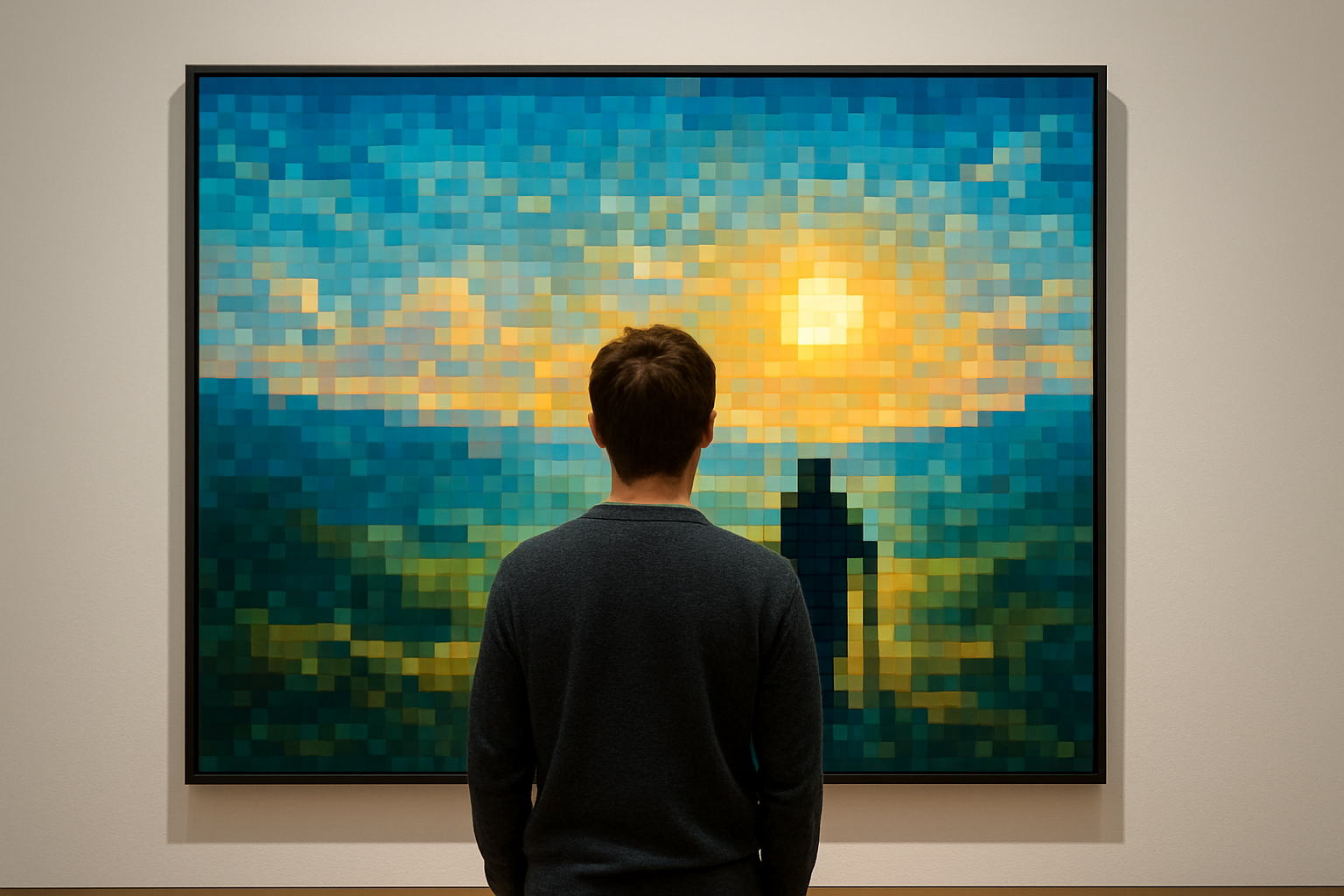
    In a world where technology constantly reshapes our daily existence, digital art emerges as a potent force in the search for personal and collective meaning. This new age of artistic expression, driven by the pixel, invites both creators and observers to embark on profound journeys of understanding and reflection.

    The Rise of Digital Art

    Digital art is not merely a modern incarnation of traditional forms; it is a unique medium that stands at the intersection of technology, creativity, and philosophy. As technology advances, artists have tools that allow for previously unimaginable exploration of color, form, and multimedia.

    “Digital design is like painting, except the paint never dries.” — Neville Brody

    This limitless potential has spurred artists to delve deeper into existential themes, turning pixels into a tool for pilgrimage—a journey into the soul and the mysteries of existence.

    Exploring Existential Themes

    Digital art, with its flexibility, allows for the exploration of complex themes such as identity, reality, and connection. As images and experiences are shared across the globe with just a click, artists and viewers alike engage in a dialogue about what it means to exist in an increasingly digital world.

    • Identity: Artists like JODI deconstruct the concept of identity by manipulating digital interfaces and systems, questioning the binaries of self and other, online and offline.
    • Reality: Virtual reality installations, such as those by Jonathan Monaghan, offer immersive experiences that challenge the boundaries between the digital and the real.
    • Connection: Video game art and interactive installations create shared spaces for audiences, fostering a sense of community and shared exploration.

    A New Spiritual Journey

    The incorporation of digital art into personal and communal rites of passage is akin to a spiritual journey, a merging of the physical with the virtual. It allows us to explore our innermost thoughts and the grand questions of life in a space unbounded by the limitations of the material world.

    “The virtual reality experience is not about the technology. It’s about the creation of meaning.” — Chris Milk

    As we continue to navigate the complexities of the digital age, art becomes a vehicle for meaning-making, a lens through which we can see and understand our place in the universe. Pixel pilgrimages are not merely technological journeys but spiritual ones—quests for truth, connection, and a deeper understanding of the human experience.

  • Seeing the Song: Visualizing Contemporary Musical Structures

    Seeing the Song: Visualizing Contemporary Musical Structures

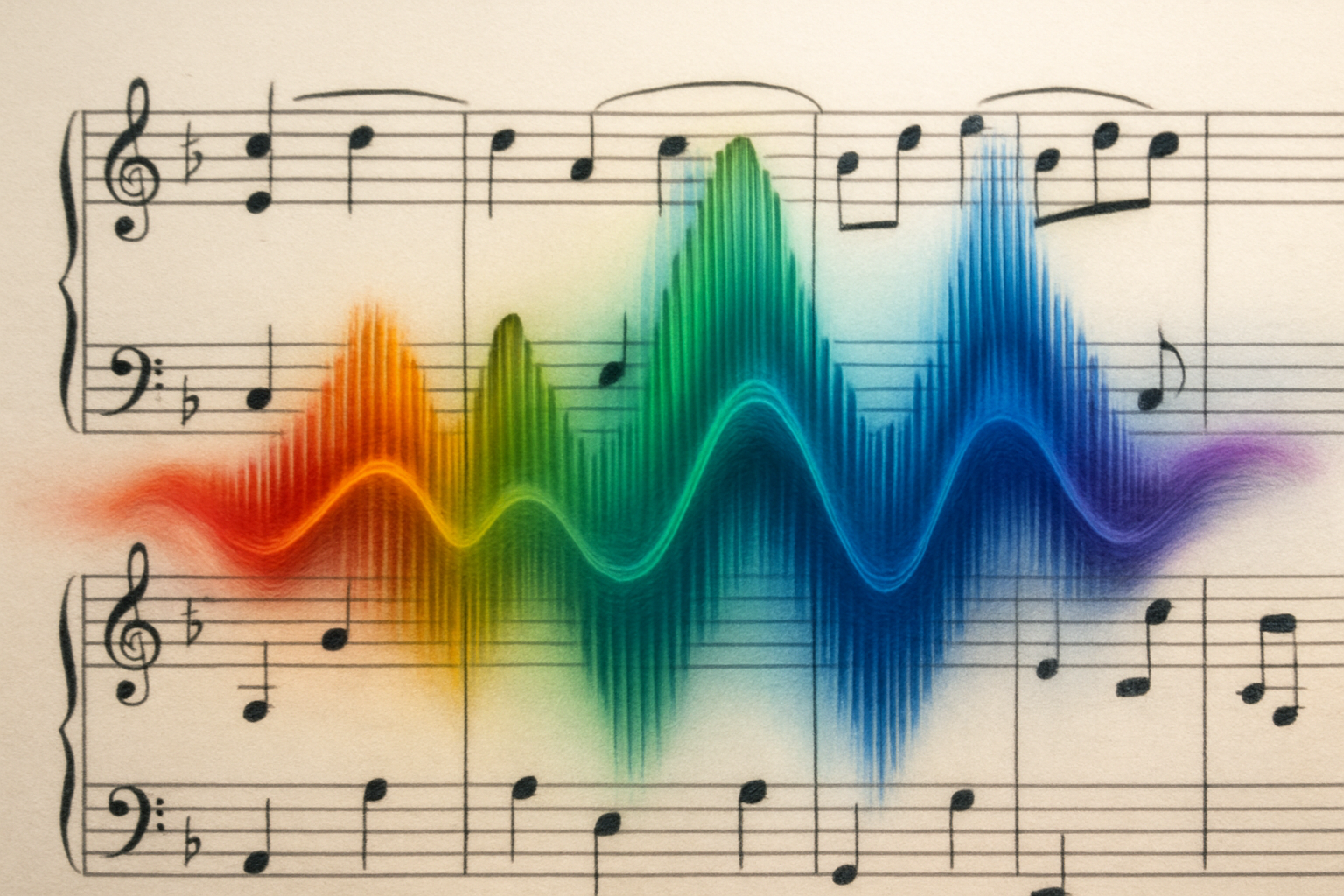
    The intersection of music and visual art has long been a subject of fascination and critical analysis. In recent years, the evolution of technology has transformed this convergence, allowing contemporary artists and scholars to visualize musical structures in innovative ways. This intriguing dialogue between sound and sight prompts us to explore how we can ‘see’ the song.

    The Evolution of Musical Visualization

    The concept of visualizing music isn’t new. Attempts date back to the Baroque period, where visual art attempted to capture the essence of musical compositions. These early endeavors mainly focused on allegorical representations. Fast forward to the 20th century, and we see a more structured approach with composers like Wassily Kandinsky and Paul Klee, whose paintings often sought to express musical elements through color and form.

    “Color is the keyboard, the eyes are the harmonies, the soul is the piano with many strings. The artist is the hand that plays, touching one key or another, to cause vibrations in the soul.” – Wassily Kandinsky

    Digital Revolution and New Media

    With the advent of digital technology, the visualization of music has taken on new dimensions. Consider the impact of computers and software that can analyze musical data and represent it visually. This technology allows artists and scientists alike to explore music in a spatial context, using visuals to reveal patterns and structures that were previously intangible.

    The Role of Software and Algorithms

    Programs like Adobe After Effects and Processing have become essential tools for artists. They allow for the translation of sound waves into intricate designs that move in synchrony with the music. For instance, sound visualization in interactive installations uses sound frequencies to drive animations, transforming the auditory experience into a visual journey.

    Data Sonification

    Data sonification is another captivating trend whereby numerical data is represented through sound, often producing surprising musical results. Conversely, transformations of this auditory data back into visual form have revealed new aesthetic possibilities.

    • The Music Animation Machine: This tool translates classical music into visual scrolling scores, providing a visual representation of music’s temporal and harmonic structure.
    • Visit Music Animation Machine

    Graphic Scores in Contemporary Composition

    Graphic scores push the boundary of traditional music notation. They often employ a combination of symbols, colors, lines, and images to signify musical gestures and characteristics. Pioneered by composers like John Cage and Morton Feldman, these scores are as much pieces of art as they are guides for performance.

    Graphic scores invite performers to interpret the visual cues, creating unique, often unpredictable musical experiences. This openness exemplifies the fluidity between visual and auditory experiences and challenges conventional notions of how music should be notated and perceived.

    The Interplay of Synesthesia

    Synesthesia adds an intriguing personal layer to the visualization of music. This neurological phenomenon occurs when stimulation of one sensory pathway leads to automatic, involuntary experiences in another. For some individuals, music induces the perception of colors or shapes. This remarkable condition has inspired many artists, including Kandinsky, who often used his synesthetic experiences as a foundation for his art.

    “For Kandinsky, color was a means of exerting a direct influence upon the soul… color could be used in a painting as something autonomous and apart from a visual description of an object or other form.” – National Library of Medicine

    Case Studies in Music Visualization

    • Brian Eno’s “77 Million Paintings”: A generative piece of software art that visualizes tonal clusters and ambient soundscapes through constantly evolving visual images.
    • Ryoji Ikeda’s “data.scan”: Uses raw data output visualized in a minimalistic, digital aesthetic to create a symphony of sight and sound.

    Both Eno and Ikeda push the conventional boundaries of performance, using technology to present music as both an acoustic and a visual phenomenon.

    Conclusion: Envisioning the Future

    The visualization of music not only enhances our sensory appreciation but also deepens our understanding of musical structure and intention. As technology continues to advance, it offers tantalizing possibilities for creative expression and cross-disciplinary collaboration between musicians, visual artists, and technologists.

    In embracing these intersections, we are led to reconsider the very nature of music—the universal language of sound—and its ability to transcend traditional forms to engage audiences more holistically. As we move forward, we are reminded of the profound connections between seeing and hearing as we learn to read, interpret, and appreciate music not only with our ears but with our eyes.

  • The Algorithmic Altar: Spirituality in the Digital Age

    The Algorithmic Altar: Spirituality in the Digital Age

    In an era marked by rapid technological advancement, where algorithms govern much of our daily lives, the quest for spirituality seems, at first glance, paradoxical. However, a deeper examination reveals a profound intersection between the ancient pursuit of meaning and the digital tools of the modern age. This confluence is reshaping how individuals engage with spirituality in a world often viewed through the lens of technology.

    The Rise of Digital Spirituality

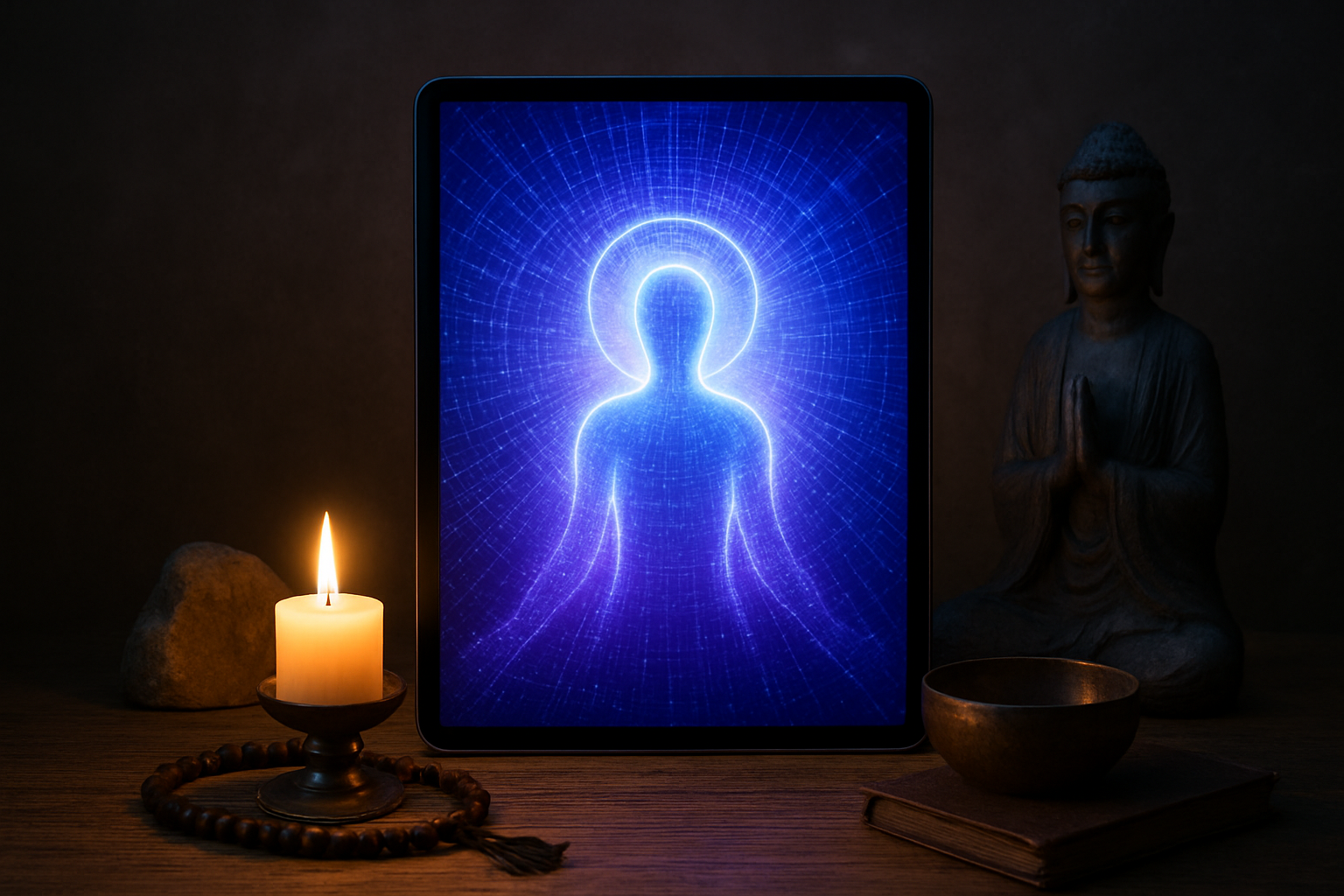
    With billions of people globally accessing the Internet, spiritual experiences are increasingly being sought out online. Meditation apps, digital religious communities, and virtual reality experiences offer new pathways to ancient practices.

    • Meditation Apps: Platforms such as Headspace and Calm guide users through personalized meditation sessions designed to reduce stress and enhance mindfulness.
    • Online Communities: Social media groups and forums serve as digital congregations, where individuals discuss beliefs, share practices, and support each other’s spiritual journeys.
    • Virtual Reality: Innovative use of VR technology allows practitioners to experience immersive environments, such as virtual temples and nature settings, which can enhance meditation and reflection.

    As David Gelles, a journalist covering mindfulness, notes,

    “Meditation in the age of smartphones is a testament to how seamlessly tradition and technology have woven themselves together.”

    This synergy between the old and the new underscores an evolving spirituality that embraces digital tools without losing connection to its roots.

    Challenges of Digital Spirituality

    Despite its growing popularity, digital spirituality faces significant challenges. Critics argue that digitizing spiritual practices risks losing the depth of experience traditionally cultivated in physical spaces and interpersonal connections.

    Sherry Turkle, a professor at MIT and author of “Reclaiming Conversation: The Power of Talk in a Digital Age,” highlights this concern:

    “The richness of our real-world interactions is irreplaceable, yet in their absence, digital interfaces offer a semblance of connection.”

    This perspective calls for a careful balance between leveraging technology and nurturing authentic, human-centered engagements.

    Advantages and Innovations

    The advantages of incorporating technology into spiritual practices are manifold. Accessibility is a key benefit, as digital platforms break down geographical and physical barriers, allowing spiritual seekers from diverse backgrounds to connect and learn. Additionally, data-driven insights offer personalized approaches to spirituality, helping individuals identify what practices resonate most with them through feedback and analytics.

    Organizations and startups are innovating at this intersection. For instance, Insight Timer combines community features with an extensive library of free meditations. Unlike traditional models, these platforms empower users with flexibility and choice, catering to diverse spiritual needs and preferences.

    The Future of Spirituality in a Digital World

    The intertwining of technology and spirituality is likely to deepen as digital tools continue to evolve. Emerging technologies such as artificial intelligence (AI) hold the potential to further enhance spiritual exploration by tailoring experiences to an individual’s unique needs and preferences.

    Religious institutions are also beginning to embrace digital transformation. During the COVID-19 pandemic, virtual services became commonplace, demonstrating the Church’s ability to adapt to changing circumstances. Moving forward, these hybrid models may become standard practice, offering both digital and physical means to participate in spiritual communities.

    Moreover, the digital age encourages a pluralistic approach to spirituality, where individuals are exposed to diverse religious and philosophical traditions, fostering a more inclusive global dialogue. As Benedictine monk and author David Steindl-Rast posits,

    “In the end, it is not religious affiliation or membership that matters, but encountering that is — no words.” This open, exploratory spirit is likely to characterize the future of spirituality amidst digital innovation.

    Conclusion

    The blend of spirituality and technology presents an opportunity to reinterpret age-old practices for modern contexts. While challenges persist, the potential for deeper, more widely accessible spiritual experiences is vast. The key lies in maintaining a mindful balance: utilizing technology to enhance, rather than replace, the human elements that remain integral to true spiritual understanding.

    As we navigate this merging of domains, the gravitational pull of spirituality promises to remain a vital force, one that guides our search for meaning amidst the pulsating algorithms of digital life.