Tag: story

  • The Great Flood – A cross-cultural analysis of the cleansing wave.

    The Great Flood – A cross-cultural analysis of the cleansing wave.

    The Great Flood – A cross-cultural analysis of the cleansing wave

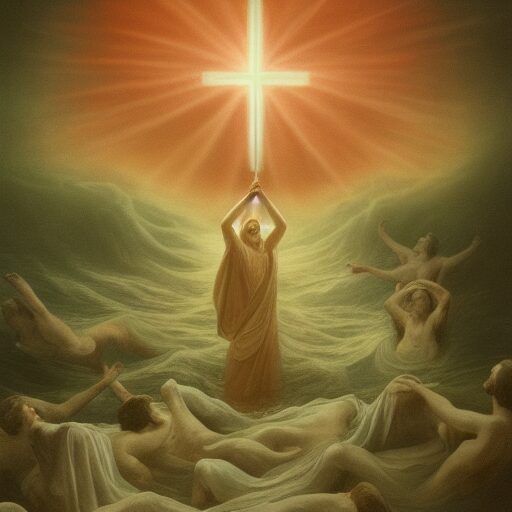
    The story of the Great Flood is one of the most enduring and widespread myths across cultures, with its echoes found in the ancient traditions of Mesopotamia, Greece, India, Africa, and more. At its core, this mythological event shares a common thread – a catastrophic flood that wipes out humanity’s wickedness and prepares the way for rebirth.

    Origins: Mesopotamian Roots

    The earliest known version of the Great Flood narrative comes from ancient Sumeria in Mesopotamia (modern-day Iraq). The Epic of Gilgamesh, composed around 2000 BCE, tells the story of Utnapishtim, a king who saves himself and animals on a boat to survive the devastating flood sent by the gods. This mythological tale shares parallels with biblical accounts of Noah’s Ark in the book of Genesis.

    African Variations

    • Mami Wata: In West African mythology, Mami Wata is a water spirit who brings forth the Great Flood to cleanse the world of evil. This mythological figure embodies the power of nature and serves as a symbol of renewal.
    • Ogun’s Flood: In Yoruba mythology from Nigeria, Ogun, the god of war and metalwork, sends a flood to destroy humanity for their wickedness. This story highlights the cyclical nature of time and the importance of moral accountability.

    Greek Echoes

    In Greek mythology, Deucalion’s Flood offers another striking example of this cross-cultural narrative. The gods send a devastating flood to punish humanity for their corruption, allowing only Deucalion and his wife Pyrrha to survive on a boat. This mythological event shares parallels with the biblical account of Noah’s Ark.

    Indian Insights

    In Hindu mythology, the Great Flood is known as Manu’s Deluge. According to this legend, the god-king Manu sends forth a flood to destroy humanity for their wickedness. The story highlights the cyclical nature of time and the importance of moral accountability.

    Global Resonance

    The Great Flood myth transcends geographical boundaries and cultural contexts, speaking to our collective human experience. This narrative serves as a reminder of the power of nature and the consequences of humanity’s actions.

    “The flood is a universal symbol of transformation and renewal… It represents the possibility of starting anew, leaving behind the old and beginning again.” – Joseph Campbell

    Conclusion

    The Great Flood narrative offers a powerful example of cross-cultural resonance, echoing across ancient traditions to remind us of our shared human experience. This mythological event serves as a testament to the enduring power of storytelling and our collective quest for meaning and renewal.

  • The Primordial Spark – Why every culture begins with a story of light.

    The Primordial Spark – Why every culture begins with a story of light.

    The Primordial Spark – Why every culture begins with a story of light

    In the beginning, there was darkness. And from that darkness, a spark of light emerged to illuminate the world. This primordial tale is not unique to one particular culture or mythology; instead, it’s a recurring theme across the globe. From ancient Mesopotamian myths to modern scientific theories, the story of light has captivated human imagination for centuries.

    • The Cosmic Dance – In Hindu mythology, the universe was born from the cosmic dance between the primordial gods Brahma, Vishnu, and Shiva. Their movements created the universe, with light being the first manifestation of creation. As the Rigveda says, “In the beginning, there was only darkness. And then there was light.” (Rigveda 1.89)
    • The Primordial Flame – In ancient Greek mythology, the Titan Prometheus stole fire from the gods to give it to humanity, defying Zeus’ decree that humans should only have darkness and shadow. This myth highlights the significance of light in human civilization.
    • The Spark of Life – In some African cultures, the first spark of life is attributed to the divine. For example, in Yoruba mythology, the god Olorun created the world by illuminating it with his divine light. This primordial spark symbolizes the source of all creation and life.
    • The Scientific Connection – Modern physics has also explored the concept of a primordial spark. The Big Bang theory suggests that the universe began as an infinitely hot and dense point, expanding rapidly around 13.8 billion years ago. This cosmic explosion is often referred to as the “primordial spark” that gave rise to our universe.

    So why do so many cultures begin with a story of light? One possible explanation is that it represents the power and mystery of creation itself. Light has long been associated with divinity, wisdom, and knowledge in various cultures. By tracing the origins of the world back to a primordial spark, these myths may be attempting to capture the essence of creation’s divine nature.

    As the ancient Greek philosopher Aristotle once said, “The whole is more than the sum of its parts.” In the case of the primordial spark, it represents the fundamental source that gives rise to all existence. Whether rooted in mythology or science, the concept of a primordial spark has captivated human imagination for centuries.

    Despite their differences, these stories share a common thread – they all begin with a spark of light, symbolizing the power and mystery of creation. As we continue to explore the mysteries of the universe, it’s intriguing to consider how our understanding of this primordial spark might shape our perception of reality itself.