Tag: spiritual

  • Ecospiritual Pilgrimage

    Ecospiritual Pilgrimage

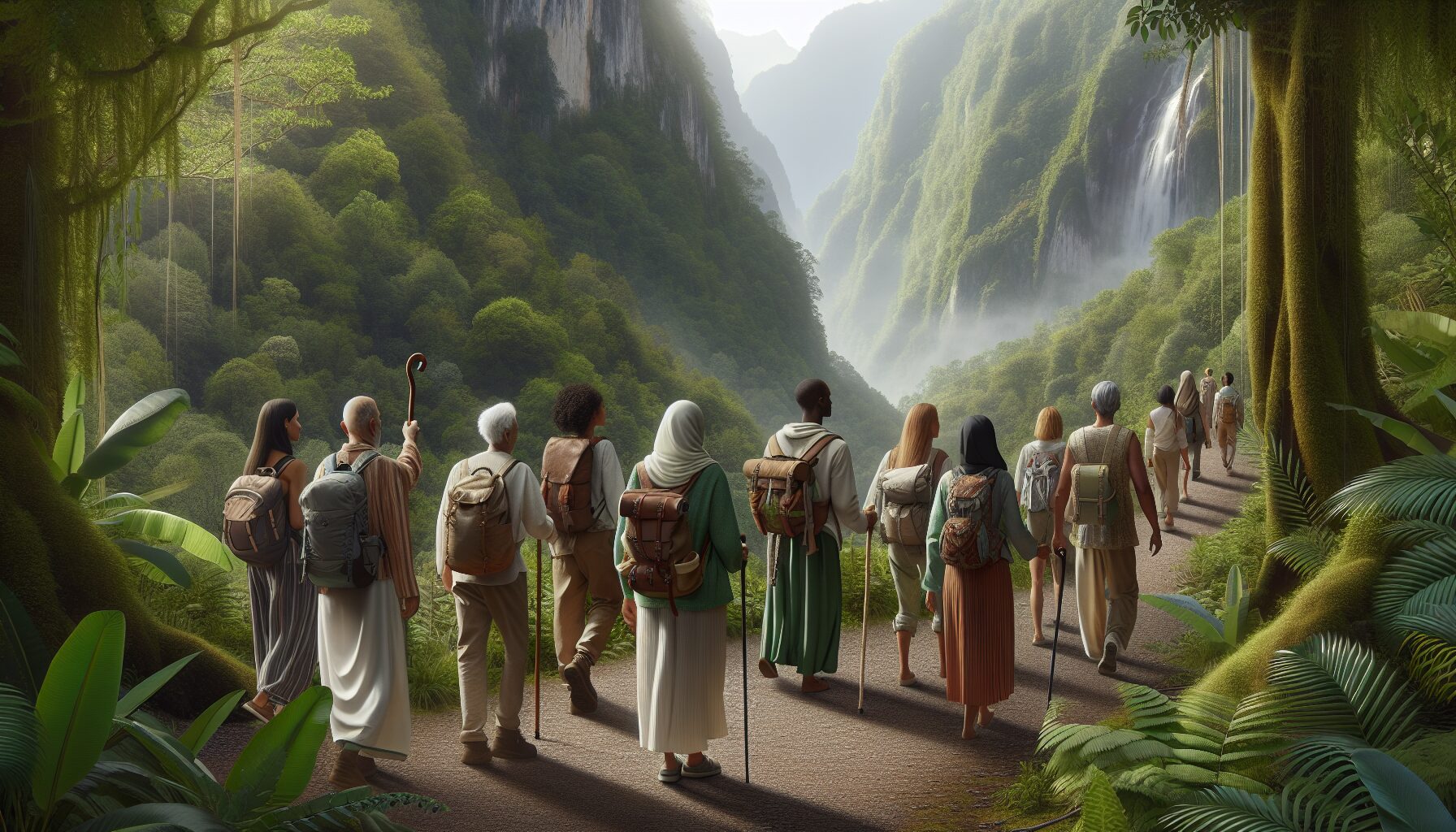
    Ecospiritual Pilgrimage: A Journey Back to Nature

    In the ever-accelerating modern world, the search for meaning and tranquility often drives individuals to seek solace in nature. Ecospiritual pilgrimage is a burgeoning movement that combines this quest for environmental spirituality with a deep reverence for the natural world. It is a journey that transcends mere travel, fostering a profound connection with the earth and the divine.

    Understanding Ecospirituality

    Ecospirituality is a spiritual ideology that integrates ecological awareness with spiritual beliefs. It is derived from the understanding that the earth is interconnected with all living beings, and it encourages a sacred relationship with the environment. As Gottlieb notes in A Greener Faith: Religious Environmentalism and Our Planet’s Future, “Ecospirituality prompts a shift from merely viewing nature as a backdrop to regarding it as an active participant in spiritual practice.”

    The Rise of Eco-Pilgrimages

    Eco-pilgrimages are journeys undertaken with ecological mindfulness, often to sacred natural sites. Unlike traditional pilgrimages, which focus on religious endpoints, ecospiritual pilgrimages emphasize the journey itself, encouraging reflection and mindfulness along the way. As interest in sustainability and environmental stewardship grows, more people are drawn to these journeys.

    “The earth has music for those who listen.”
    – William Shakespeare

    Notable Ecospiritual Destinations

    • The Camino de Santiago, Spain

      The Camino de Santiago is a well-known route with numerous paths, all converging at the shrine of Saint James in Santiago de Compostela. In recent years, it has drawn not only religious pilgrims but also those seeking a spiritual connection with nature. Travelers often speak of the profound spiritual awakenings they experience as they traverse the diverse landscapes of Spain.

    • Mount Kailash, Tibet

      Considered sacred by several religions, including Hinduism, Buddhism, and Jainism, Mount Kailash is both a physical and spiritual challenge. Pilgrims circumnavigate the mountain in a ritual known as the kora, reflecting upon their personal and environmental relationships as they do so.

    • Glendalough, Ireland

      St. Kevin’s monastic site at Glendalough in the Wicklow Mountains is as much a spectacle of natural beauty as it is a historic religious settlement. Surrounded by lakes and forests, it provides an ideal setting for reflective walks and meditations on eco-theology.

    • Uluru, Australia

      A sacred site for the Anangu people, Uluru is not just a geological wonder but a center of spirituality deeply connected to indigenous understanding of the land.

    Preparing for an Ecospiritual Pilgrimage

    Preparation for an ecospiritual pilgrimage involves more than just practical arrangements. Potential pilgrims are encouraged to engage in spiritual preparation, which may include meditation, eco-practices such as tree planting, or reading relevant ecospiritual literature. As author Joanna Macy suggests in A World We Can Trust, “Connecting with the natural world on a spiritual level requires openness, mindfulness, and the willingness to listen.”

    The Transformative Potential of Ecospiritual Pilgrimage

    The nature of an eco-pilgrimage promotes not only personal transformation but also broader ecological consciousness. By stepping away from daily routines and submerging oneself into the natural environment, individuals often gain new perspectives on their relationship with the earth and their impact on it. Pilgrims report feeling a heightened sense of environmental stewardship and a renewed commitment to protecting the natural world.

    Challenges and Considerations

    Eco-pilgrimages, while inspiring, are not without their challenges. The cultural and environmental impact of increased foot traffic on sacred and natural sites is a growing concern. Pilgrims and organizers must strive to ensure that these sacred journeys are sustainable and respectful to host landscapes and communities. Travel operations must focus on minimizing waste, conserving resources, and ensuring that local ecosystems are not disturbed.

    Concluding Thoughts

    Ecospiritual pilgrimage offers a path not only to personal enlightenment but also to environmental advocacy. By embarking on these journeys, individuals embrace the divine in nature and cultivate an increased awareness of their role within the ecosystem. As the ancient proverb states, “When we walk upon the earth, we walk with our ancestors.”

    The growing popularity of ecospiritual pilgrimages reflects a communal awakening to the reciprocity between spirituality and ecology—encouraging each person to nurture an intimate and sacred relationship with the planet.


  • Spiritual Cartography

    Spiritual Cartography

    Spiritual Cartography: Mapping the Soul’s Journey

    The concept of spiritual cartography delves into the intricate journey of the soul, transcending the physical landscapes to explore the inner realms of human consciousness. Historically, maps have been used to represent not only geographic terrains but also metaphysical spaces, guiding individuals through their spiritual quests.

    Historical Roots

    Throughout history, various cultures have utilized spiritual maps as tools for enlightenment and self-discovery. The Navajo, for instance, view the desert as a sacred space; their sand paintings are metaphoric maps that serve as healing tools and pathways to understanding one’s place within the cosmos.

    The Book of Kells, an illuminated manuscript created by Celtic monks, is adorned with intricate illustrations that blend physical and spiritual journeys. According to Bernard Meehan, “The interlacing work underlying the scenes reflects a deeper understanding of how the spiritual and temporal worlds are interconnected” (source).

    Modern Interpretations

    In contemporary times, the idea of spiritual cartography has been rejuvenated with new interpretations through art, literature, and technology. Artists like Alex Grey craft visionary paintings that provide visual representations of spiritual experiences, offering viewers a map of sorts to navigate their inner landscapes.

    “For those who feel called to a path of deeper self-knowledge, spiritual cartography offers a guide for traversing the sublime and often tumultuous journey of discovering one’s true self,” writes philosopher Richard Smoley in Inner Traditions.

    • Online platforms now offer virtual experiences that allow individuals to embark on spiritual journeys from the comfort of their homes.
    • Interactive books and apps guide users through meditative exercises, helping them visualize their spiritual pathways.

    The Personal Journey

    The personal dimension of spiritual cartography is perhaps its most significant aspect. Each individual’s map is unique, shaped by experiences, beliefs, and aspirations. This subjective nature reflects the diversity found in spiritual practices worldwide.

    Creating a personal spiritual map can be a powerful exercise in mindfulness and reflection. Journals and art supplies become tools for charting one’s inner course, helping to clarify intentions and goals on the spiritual path.

    In essence, spiritual cartography is more than just a metaphor; it is a dynamic process of exploring, understanding, and ultimately, realizing one’s innermost purpose. As the old adage suggests, it’s not about the destination, but rather the journey itself.

  • Wind, Dust, and Dharma

    Wind, Dust, and Dharma

    In the vast expanse of spiritual exploration, the imagery of wind and dust often emerges to symbolize the impermanence of life and the continual journey of dharma. These elements not only permeate the physical realm but also resonate deeply within the philosophical and spiritual teachings of Buddhism. Understanding these elements through the lens of dharma can offer profound insights into our own spiritual paths.

    The Wind: A Metaphor for Change

    The wind, in many spiritual traditions, is a powerful symbol of change and transformation. In Buddhism, it represents the ever-present force of anicca—impermanence. As Buddhist epistemology suggests, everything is subject to change, and nothing is permanent. The wind, with its ability to shift landscapes and alter environments, embodies this dynamic nature of existence.

    “Just as the wind moves, so should we let go and move in our spiritual journey,” emphasizes Thich Nhat Hanh, a renowned Zen master and author.

    • Embrace Change: Just as the wind reshapes the earth, embracing change allows personal growth.
    • Adaptability: The flexibility of the wind teaches us adaptability in our spiritual quest.

    Dust: The Residue of Life

    In contrast, dust represents the remnants of what has been—tiny particles that linger, symbolizing the transient nature of our physical forms and experiences. The Buddha taught that clinging to the physical is akin to trying to grasp at dust; it will slip through your fingers, leaving you with nothing but the memory of its presence.

    Dust invites reflection on the Five Aggregates, which are form, sensation, perception, mental formations, and consciousness. Understanding these aggregates allows individuals to see that just like dust, these components are ephemeral and ultimately insubstantial.

    “He who binds to himself a joy, does the winged life destroy; but he who kisses the joy as it flies, lives in eternity’s sunrise,” poet William Blake encourages a similar release of attachment through his words.

    Finding Balance Through Dharma

    The essence of dharma is to find balance amidst the winds of change and the dust of the past. The Buddhist path encourages followers to cultivate mindfulness and live in accordance with the teachings of the Buddha, thereby experiencing the middle way—a state of harmony between extremes.

    • Mindful Living: By living mindfully, one can remain grounded yet flexible, like a tree swaying in the wind.
    • Letting Go: Releasing attachment to the material realm allows spiritual liberation.

    In summary, the interplay of wind, dust, and dharma invites us to reflect deeply on our existence. Through understanding these elements, we can navigate our spiritual journeys with grace and equanimity, continually aligning ourselves with the path of wisdom and compassion.

  • Ascetic Ecology

    Ascetic Ecology

    Ascetic Ecology: The Fusion of Simplicity and Sustainability

    In a world of rising climate challenges and unsustainable consumption patterns, the principles of asceticism present a compelling framework for ecological responsibility. Ascetic Ecology is an emerging field focusing on the tactile intersection of spiritual simplicity and ecological sustainability. By embracing ascetic principles—typically consisting of minimalism, restraint, and deep introspection—we can forge pathways toward environmental consciousness.

    Understanding Asceticism

    Asceticism, derived from the Greek term askesis, meaning “exercise” or “training,” involves practices that enable self-discipline and abstinence from indulgences. Traditionally associated with religious contexts, ascetic practices are commonly observed in Buddhism, Hinduism, Christianity, and other spiritual traditions.

    “The goal of life is living in agreement with nature.” — Zeno of Citium, founder of Stoic philosophy.

    This quote from Zeno encapsulates the ascetic ethos; living simply in accordance with nature, rather than in dominance over it.

    The Emergence of Ascetic Ecology

    The notion of ascetic ecology proposes a paradigm where ecological well-being is pursued through ascetic discipline. As societies grapple with the consequences of excessive consumption and environmental degradation, the principles of asceticism offer a sustainable counter-narrative, emphasizing harmony with nature.

    Principles of Ascetic Ecology

    • Moderation in Consumption: Ascetic ecology encourages deriving satisfaction from minimal resource use, advocating for frugality and ethical consumption.
    • Mindfulness and Awareness: By practicing mindfulness, individuals become more aware of the environmental impact of their choices, leading to more deliberate and environmentally friendly actions.
    • Renunciation of Excess: This principle involves recognizing what is not necessary and releasing it, which translates to reduced waste and a lower carbon footprint.
    • Reverence for Nature: It transcends mere conservation; it is about fostering a profound respect and love for the natural world, mirroring spiritual devotion.

    Asceticism offers tools for individuals and societies to curb tendencies toward overconsumption, serving the dual purpose of personal spiritual growth and ecological sustainability.

    Case Study: Monastic Communities

    Monastic communities, such as the Trappist monasteries, embody ascetic ecology unintentionally through their lifestyles focused on simplicity and self-sufficiency. They serve as living laboratories for sustainable living, offering valuable lessons.

    “More than the sound of running water, more than a rare songbird, praise of God: simplicity.” — Thomas Merton

    Thomas Merton, a Trappist monk, eloquently captured the spirit of ascetic ecology by highlighting simplicity as a path to spirituality, and by extension, a template for ecological mindfulness.

    Modern Adaptations of Ascetic Ecology

    In today’s context, ascetic ecology can be related to practices like:

    • Minimalism: A contemporary movement encouraging individuals to live with less, aligning closely with ascetic principles.
    • Permaculture: This agricultural practice emphasizes sustainable land use, echoing the ascetic value of working harmoniously with nature.
    • Urban Homesteading: By growing food and producing goods within urban environments, homesteaders embody ascetic principles of self-reliance and sustainability.

    These practices provide tangible pathways for implementing ascetic ideals in modern life, marrying them with ecological needs.

    Challenges and Criticisms

    While ascetic ecology offers a promising solution, it faces several challenges:

    • Practicality: For many, the idea of drastically shifting lifestyles may not be feasible without systemic support and cultural change.
    • Accessibility: Ascetic practices can often bear an elitist connotation, at odds with mainstream culture, which can alienate those without means to easily adopt such lifestyles.
    • Balancing Needs: Finding a balance between ascetic sacrifice and necessary modern comforts remains a critical challenge.

    Nonetheless, advocating for a broader adoption of ascetic principles could drive more organic changes in societal norms and values, fostering environments where such lifestyles become accessible and desirable.

    The Path Forward: Integrating Ascetic Ecology

    For ascetic ecology to successfully take root, a cultural and structural shift is essential. Systems need to be in place that support lifestyle changes towards sustainability. Individuals can contribute by:

    • Consciously reflecting on consumption habits and striving for moderation.
    • Engaging in community gardens or local environmental projects.
    • Promoting education about sustainable practices grounded in ascetic values.

    Policy frameworks that encourage reductions in resource use, investments in renewable energy, and sustainable agricultural practices must be championed. Additionally, collectivizing efforts through local and global networks can foster support systems for individuals and communities striving to live based on ascetic ecological principles.

    Conclusion

    As the threats to our natural environment become more severe, integrating ascetic principles into our ecological endeavors offers a holistic approach to sustainability. The principles of Ascetic Ecology assist in cultivating a world where simplicity is not only a spiritual virtue but an ecological necessity.

    By striving toward a harmonious existence with the earth, ascetic ecology not only addresses environmental degradation but also offers profound spiritual fulfillment. As the philosopher Albert Schweitzer once remarked, “Simple living should become our core value in the search for a sustainable future.” It’s a clarion call to enact principles that have captured the imagination of sages and saints for centuries.

  • Yurts and Sutras

    Yurts and Sutras

    Yurts and Sutras: A Harmonious Blend of Culture and Tranquility

    The intertwining of yurts and sutras represents a harmonious blend of ancient traditions and spiritual tranquility. Both elements, though seemingly disparate, share a profound connection rooted in history and culture.

    The Historical Significance of Yurts

    Yurts, traditional portable round tents, have been used by the nomadic peoples of Central Asia for centuries. Their design and functionality cater to the mobile lifestyle, offering both shelter and comfort. As the National Geographic explains, “The yurt is more than just a tent; it’s a symbol of the nomadic culture, seamlessly blending function and tradition.”

    • Structure: Yurts are constructed with a collapsible wooden frame and covered with felt or fabric, making them durable and easy to assemble or disassemble.
    • Cultural Importance: They carry significant cultural value, serving as a place for family gatherings and traditional celebrations.

    The Spiritual Essence of Sutras

    The term sutra refers to a type of ancient scriptural text, particularly within Hindu and Buddhist traditions. These texts are considered as guiding words of wisdom and are pivotal in religious teachings. According to Encyclopaedia Britannica, “Sutras are not only important philosophical texts but also serve as manuals of instruction and guidance in spiritual endeavors.”

    • Origins: Sutras have their origins in the Sanskrit language and are core to disseminating spiritual teachings and practices.
    • Purpose: They offer guidance on meditation, ethics, and moral conduct, cultivating spiritual growth and self-awareness.

    “Sutras are concise aphorisms that capture the essence of a vast body of knowledge,” states a scholar from Britannica.

    The Intersection of Yurts and Sutras

    Yurts provide an ideal setting for reading and reflecting upon sutras. The serene environment within a yurt allows for undisturbed contemplation and meditation on the profound teachings held within the sutras. Combining the physical space of yurts with the spiritual wisdom of sutras creates a unique path for achieving inner peace and harmony.

    Recent retreats have emerged worldwide, offering individuals the chance to experience this synergistic blend. Participants can immerse themselves in the tranquility of nature while engaging deeply with the philosophical teachings of the sutras.

    In conclusion, the union of yurts and sutras brings together the richness of cultural heritage with the depth of spiritual exploration, providing a holistic approach to personal and communal enlightenment.

  • Cycles of Earth, Cycles of Spirit

    Cycles of Earth, Cycles of Spirit

    The rhythms of nature have long captivated the human imagination. From the changing of the seasons to the waxing and waning of the moon, these cycles offer profound insights into the spiritual journey. The concept of natural cycles as reflections of spiritual growth is deeply embedded in many cultures and philosophies.

    Earth’s Rhythms

    A year on Earth is marked by the transit through the seasons: the rebirth of spring, the abundance of summer, the harvest of autumn, and the dormancy of winter. These transitions exemplify the constant cycle of birth, growth, death, and renewal. Each season teaches its own lessons:

    • Spring: Symbolizes new beginnings and opportunities for growth. It’s a time for planting seeds, both literally and figuratively.
    • Summer: Known for its vibrancy and activity. It is a period of abundance and celebration of life.
    • Autumn: The season of harvest, introspection, and gratitude. It encourages reflection on what has been achieved and what must be released.
    • Winter: Represents dormancy and rest. It is a time for conserving energy and turning inward.

    Spiritual Cycles

    Just as the Earth goes through its cycles, so too does the human spirit. Many spiritual traditions emphasize the importance of recognizing and embracing these changes:

    “Look deep into nature, and then you will understand everything better.” — Albert Einstein

    This quote underscores the idea that understanding natural cycles can lead to deeper spiritual insight. Much like the Earth, individuals experience their own seasons of growth, abundance, reflection, and rest.

    Integration in Modern Life

    In our fast-paced modern world, reconnecting with these natural and spiritual rhythms can offer grounding and peace. Practices such as mindfulness, meditation, and nature walks are increasingly popular as ways to cultivate a deeper connection with oneself and the natural world. By aligning with these cycles, people find a sense of harmony that often eludes them in daily life.

    • Meditation and mindfulness practices help individuals stay attuned to their inner seasons.
    • Nature walks encourage a tangible connection to the Earth’s cycles.
    • Journaling can be a tool for tracking personal growth and emotional changes over time.

    Ultimately, the cycles of Earth and spirit remind us of the eternal nature of change. They encourage us to embrace each phase with open hearts and to recognize the interconnectedness of all life—a vital lesson as humanity seeks to find balance in an ever-evolving world.

    For further reading on how natural cycles influence spiritual life, please visit Spirituality & Practice.

  • Desert Dharma

    Desert Dharma

    Desert Dharma: Embracing Buddhist Practices in Arid Landscapes

    The desert might not be the first place that comes to mind when thinking of Buddhism. However, the synergy between the stark, serene landscapes of arid regions and the meditative practices of Buddhism is a powerful one. The quietude and expansiveness of deserts make them an ideal backdrop for spiritual exploration and mindfulness.

    An Unlikely Harmony

    Deserts, with their vast emptiness, offer a unique space for introspection. While traditional Buddhist practices often take place in lush, temple-laden settings, the minimalism of a desert can foster a deep connection with one’s inner self.

    According to Lion’s Roar, “The desert’s stillness and silence provide the perfect conditions for meditation, allowing practitioners to delve deeply into their thoughts and emotions.” This notion speaks to the heart of what many spiritual seekers aim to achieve: a profound journey into the self, uninterrupted by the distractions of more populated environments.

    Desert Retreats: A Growing Trend

    In recent years, spiritual retreats in desert locations have gained popularity. Places like Joshua Tree in California and the expanses of New Mexico offer retreats that combine traditional Buddhist teachings with the unique attributes of the desert.

    • Joshua Tree, California: Known for its vast, otherworldly landscapes, Joshua Tree has become a hub for spiritual retreats. The integration of Buddhist meditation teaches people how to cultivate mindfulness amidst the natural beauty of the arid land.
    • Taos, New Mexico: Taos has become a center for alternative spiritual practices, including deserts that cradle Buddhist enclaves focused on mindfulness and Vipassana meditation.

    These retreats often feature a blend of structured meditation sessions, dharma talks, and opportunities to explore the desert, creating a holistic experience that nurtures both body and spirit.

    The Spiritual Significance of Deserts

    Throughout history, deserts have been seen as places of transformation. In many cultures, they are viewed as spiritual crucibles where individuals can experience profound personal growth and insight.

    Matthew Capacci, a well-known spiritual writer, notes in his book “Desert Dharma”, “Deserts challenge and cleanse the soul, stripping away the unessential until only the truth remains.” This purification process resonates deeply with Buddhist teachings, which emphasize letting go of attachments and illusions.

    Practicing Mindfulness Amidst the Sands

    Buddhist practices in desert settings often involve using the natural environment as a meditation tool. The act of walking slowly across sand dunes, for example, becomes a practice in mindful movement.

    The pairing of barren landscapes with meditation grounds people in the present moment. Each step on the warm sand becomes a meditation on balance and presence.

    • Mindful Walking: Utilizing the desert’s sparsity, practitioners engage in walking meditations that emphasize every footfall as a reminder of staying grounded and aware.
    • Silence Retreats: The natural silence of the desert enriches silent retreats, supporting the practice of noble silence and deep introspection.

    These practices offer a tangible connection to the earth and allow individuals to embody principles of impermanence and acceptance, crucial aspects of Buddhist teachings.

    Challenges in the Arid Environment

    While deserts offer unique opportunities for spiritual practices, they are not without their challenges. The extremes in temperature and the harshness of the environment require preparation and respect. Practitioners must balance spiritual pursuits with the practical necessities of staying hydrated and protected from the elements.

    “A retreat in the desert demands resilience and adaptability, reflecting the spiritual challenges of life and the need for balance,” notes Sophia Novak, a mindfulness coach and desert retreat facilitator.

    Such environments test the practitioner’s ability to remain centered and calm under pressure, an invaluable skill in both spiritual and everyday contexts.

    The Future of Desert Dharma

    As interest in mindfulness and alternative spirituality continues to grow, desert dharma presents a compelling option for those looking to deepen their practice. The unique combination of landscape and philosophy offers a one-of-a-kind experience that can be both profound and life-changing.

    In a world overwhelmed by noise and haste, the call of the desert is a call to slow down, step back, and find serenity within oneself. Whether for a seasoned Buddhist practitioner or a newcomer longing for peace, desert dharma provides a journey worth undertaking.

  • The Tree as Guru

    The Tree as Guru

    The Tree as Guru: Nature’s Silent Teacher

    In a world that races towards technological advancement at an unprecedented pace, the soul can often feel neglected. Amid the noise, there exists a universal guide that has been inadvertently overlooked: the tree. For centuries, the tree has served as a profound symbol and teacher, silently imparting wisdom to those willing to listen.

    The Tree: A Universal Symbol

    Trees have always held a venerable position in human history and culture. Across various religions and philosophies, trees symbolize knowledge, growth, and resilience. Consider the Bodhi Tree under which Siddhartha Gautama, the future Buddha, attained enlightenment. It is a powerful emblem of awakening and spiritual nourishment.

    In Norse mythology, Yggdrasil is the cosmic tree that connects the nine worlds, portraying the interconnectivity of the universe. Similarly, the ancient Celts revered trees as sacred beings, crucial to both their daily lives and spiritual practices.

    Lessons in Patience and Persistence

    Trees are paragons of patience and persistence. In their steady growth over decades, sometimes centuries, they teach the value of long-term vision and resilience. As the author Ralph Waldo Emerson once said, “Adopt the pace of nature: her secret is patience.”

    A sapling may take many years before it reaches maturity, often enduring harsh weather, disease, and human disturbance. Yet, despite adversities, it continues reaching upwards towards the light. This resilience invites us to ponder our own struggles and the patience required to overcome them.

    The Cycle of Renewal

    One of the most inspiring teachings of trees is their ability to adapt and renew. The cycle of shedding leaves each autumn and budding anew in spring exemplifies transformation and resilience. This annual cycle reflects the natural process of letting go and renewal, crucial for personal growth.

    As the poet Rainer Maria Rilke beautifully noted, “If we surrendered to earth’s intelligence, we could rise up rooted, like trees.”

    This eloquent line prompts us to trust and embrace the seasons of our own lives, knowing that with each ending, a new beginning awaits.

    The Wisdom of Community

    Trees also teach us about the richness of community. Below the surface, trees communicate via a complex network of roots and fungal mycelium, often referred to as the Wood Wide Web. This network allows trees to share nutrients, aid one another, and even warn of potential dangers.

    According to a New York Times article, this interconnectedness highlights the inherent communal nature of trees, reminding us of the strength found in supporting and relying on each other.

    Environmental Guardianship

    Besides their metaphorical teachings, trees play a crucial role in sustaining life. They provide oxygen, sequester carbon, and regulate the climate, underscoring the essential balance of giving and receiving inherent in all natural systems. Trees serve as a vital reminder of our responsibility to protect the environment, echoing the urgent need for sustainable living practices.

    Spiritual Reflection

    Lastly, trees invite us to engage in spiritual reflection. Standing in the midst of a forest, one can feel a profound sense of peace and interconnectedness. This serenity offers an opportunity for introspection, allowing individuals to find clarity away from the chaos of daily life. John Muir, a renowned naturalist, once professed, “In every walk with nature one receives far more than he seeks.”

    “When one tugs at a single thing in nature, he finds it attached to the rest of the world,” wrote Muir, emphasizing the spiritual and physical unity of nature.

    Conclusion

    Whether considered as metaphorical teachers or critical components of ecological systems, trees stand as stoic mentors in the modern age. By observing their patience, adaptability, and communal support, we can unearth timeless wisdom that deeply resonates with both our inner and outer worlds.

    Embracing trees as gurus compels us to live more intentionally, harmoniously, and sustainably. As you walk past a tree today, pause, reflect, and perhaps consider the silent teachings it has to offer.

  • Portable Shrines: The Inner Temple of the Traveler

    Portable Shrines: The Inner Temple of the Traveler

    As humanity continues its age-old journey across the world, the need for spiritual connection remains a constant companion to the traveler. Portable shrines, as both historical artifacts and contemporary tools of personal devotion, serve as the perfect example of how spirituality adapts to the nomadic lifestyle. These compact sanctuaries have journeyed as far and wide as the people who have carried them, embodying the intersection of mobility and faith.

    The Historical Roots of Portable Shrines

    The concept of a portable shrine, or traveler’s altar, is not a modern invention but has its roots deeply planted in antiquity. Shinto (Japan) and Hindu (India) pilgrims carried small replicas of their deities during migrations and pilgrimages, ensuring that their spiritual practice remained uninterrupted regardless of their physical location.

    “Among the many items that a Buddhist monk may carry, a stupa or small shrine is a common sight,” notes New World Encyclopedia. “These shrines allow the monks to meditate and perform rituals regardless of their physical surroundings, grounding them amidst life’s constant changes.”

    Similarly, Christian missionaries traversing the ancient Roman roads often carried small folding altars or relics in intricate reliquaries, facilitating the spread of Christianity through demonstrations of faith and the offering of a tangible spiritual experience wherever they traveled.

    The Craft of Modern Portable Shrines

    In today’s fast-paced, mobile society, these pocket-sized spiritual sanctuaries have evolved, yet their essence remains. Artists and artisans craft modern portable shrines with an array of materials such as wood, metal, fabric, and paper. These creations are often personalized, reflecting the user’s unique spiritual beliefs and practices.

    • Material: Modern shrines may employ durable materials to withstand the rigors of travel, like aluminum or bamboo, offering both resilience and sustainability.
    • Design: Often imbued with intricate carvings or luminous colors, both of which symbolize the warmth and serenity of spiritual presence.
    • Size: Sized to fit into a backpack, purse, or pocket, ensuring that spiritual practice remains an unobtrusive component of daily life.

    These considerations ensure that the shrines are not only beautiful but also functional, honoring the traditions while adapting to new forms of transit and lifestyle changes.

    The Emotional Sanctuary Within

    For many travelers, portable shrines offer more than mere convenience; they provide emotional solace and a sense of continued connection to home and community. These personal altars serve as spiritual anchors, providing a place for reflection, prayer, and meditation—a temple within a suitcase, so to speak.

    “Travel can be discombobulating,” says Spirituality & Practice, “but bringing one’s faith practices along can center and ground a soul amidst the unfamiliar.”

    Consider the experience of Shannon, a business traveler, who writes, “Lighting a small candle in my portable shrine as I unwind in a strange hotel room helps me feel connected to my family and my faith, creating a moment of peace in the chaos of travel.”

    The Broader Impact of Portable Shrines

    Modern portable shrines extend beyond personal use, as they can also foster intercultural dialogue and understanding. Encountering these spiritual pieces can invite curiosity and discussion, bridging cultural gaps with a common thread of human spirituality.

    In the words of Parabola Magazine, “These shrines can be gateways into conversations about heritage, belief systems, and the shared human journey, sparking interactions that might not occur otherwise.”

    By offering a glimpse into personal spirituality, shrines help demystify foreign traditions and emphasize shared sentiments like peace, hope, and the divine experience of life.

    Conclusion: The Future of Personal Devotion

    As globalization continues to shrink the world, the significance of portable shrines is only set to grow. They reflect the essence of what it means to carry one’s beliefs from place to place, embodying both history and modernity. Whether used in solitude or shared among new acquaintances, these small sanctuaries bridge the ever-present gap between where one resides and where one belongs, offering inner peace to the wandering traveler.

    Ultimately, portable shrines serve as a testament to the enduring need for spiritual expression, revealing that regardless of the journey’s length or destination, the inner temple of the traveler is never far away.

  • Walking the Invisible Path

    Walking the Invisible Path

    In the vast realms of fantasy literature and myth, the concept of an invisible path has captured the imaginations of storytellers and audiences alike. This ethereal journey is often more about inner discovery and growth than the physical progression of steps. Just as much a metaphorical journey as a physical one, the invisible path represents a profound quest for truth, enlightenment, and purpose.

    “It is not in the stars to hold our destiny but in ourselves,” William Shakespeare once remarked, highlighting the intrinsic voyage of the self, a central theme to the invisible path.

    The Allure of the Invisible Path

    The idea of traversing an unseen route is appealing because it implies a venture into the unknown, promising a transformation of one’s perspective or sense of self. It offers a narrative ripe with mystery and the potential for discovering hidden truths. This concept is seen across many cultures and literary traditions, often symbolizing the transition from ignorance to enlightenment.

    • Mythological Roots: Many cultures include tales of hidden paths. In Japanese mythology, the Kami or spirits live unseen among humans, often approached through paths known only to the wise.
    • Literary Exploration: Authors like C.S. Lewis in his Chronicles of Narnia series, explore these paths to great effect. The wardrobe in The Lion, the Witch and the Wardrobe serves as an invisible portal to another world.
    • Philosophical Undertones: Such paths are frequently used as symbols for philosophical introspection and spiritual teachings, as seen in works like Hermann Hesse’s Siddhartha.

    Symbolism in the Unseen

    The invisible path is rich with symbolism, often acting as a metaphor for events or stages of life that are not immediately apparent but have a profound effect on our being. Such paths teach us that real change often occurs internally before it is manifested externally, a concept echoed in many spiritual teachings.

    “Not all those who wander are lost,” J.R.R. Tolkien famously wrote in The Lord of the Rings, implying that even paths that aren’t clearly visible lead to discovery and meaning.

    Historical Perspectives

    History is filled with stories of individuals and cultures who have embarked on journeys both physical and spiritual through invisible paths. These journeys often require them to seek knowledge beyond what is seen, to venture into realms of understanding not easily accessible.

    • Spiritual Pilgrimages: Many ancient traditions have paths that are both literal journeys and moral guidelines, such as the routes to sacred sites in pilgrimages.
    • Vision Quests: Native American tribes practice vision quests, where young individuals embark on a solitary journey to seek guidance and knowledge, often traversing unseen spiritual paths.
    • The Alchemist’s Journey: In Paulo Coelho’s The Alchemist, the protagonist Santiago follows a path defined by dreams and omens, illustrating the invisible journey toward one’s ‘Personal Legend’.

    The Invisible Path in Modern Context

    In today’s world, the concept of the invisible path may seem anachronistic, but it remains relevant, especially in personal development and self-discovery. Modern life offers countless invisible paths of its own, often in the form of choices that lead to unexpected growth and opportunities.

    • Career Paths: In the professional world, individuals often find themselves on careers paths that are not linear but invisibly winding, leading to innovations and breakthroughs.
    • Personal Growth: The journey of personal growth is deeply intertwined with the invisible path, as individuals often seek growth and betterment in ways that are not immediately visible to others.
    • Spiritual Growth: Many people engage in meditation and mindfulness practices to navigate their own invisible paths toward spiritual awakening.

    Conclusion

    The allure of the invisible path lies in its universality and deep roots in human culture and consciousness. It symbolizes both the journey and the mystery of life itself. As we move through the myriad experiences that define our existence, the invisible paths we choose determine the tapestry of our lives, guiding us toward unknown possibilities and inner transformations.

    In embracing the path that cannot be seen or easily understood, we embrace the potential within ourselves to change, to grow, and ultimately to find our place in the world. The invisible path is not just a route—it’s a life’s journey, full of wonder and discovery.