Tag: social

  • The Palette of Protest: Art as a Catalyst for Change

    The Palette of Protest: Art as a Catalyst for Change

    Art has long been a silent yet potent force capable of transforming society. At its heart, art is an expression of the human condition, reflecting the times in which it is created and often serving as a vehicle for social commentary. From the politically charged satirical sketches of Francisco Goya to the defiant murals of Diego Rivera, art has been employed as a tool for protest, challenging the status quo and advocating for change.

    The Historical Context of Art as Protest

    Throughout history, artists have wielded their creative might to criticize authority and highlight injustices. One of the earliest examples of this is found in the French Revolution, where artists like Jacques-Louis David depicted scenes that fanned the flames of rebellion. His paintings, such as The Death of Marat, became powerful symbols of the revolutionary spirit.

    Fast forward to the 20th century, and we see the outbreak of cultural movements such as Dadaism and Surrealism, both of which emerged as reactions against the absurdity and brutality of war. The Tate notes that Dadaists sought to “ridicule the meaninglessness of the modern world,” a sentiment echoed today in many forms of protest art.

    Modern Art Movements and Social Change

    In more recent times, art movements like Street Art and Graffiti have gained prominence as mediums of protest. Street artists such as Banksy have become household names, their works shedding light on societal issues ranging from consumerism to political oppression. Art, when placed in public domains, becomes accessible to all, thus amplifying its reach and impact.

    “Art is not a mirror to hold up to society, but a hammer with which to shape it.” – Bertolt Brecht

    The quote above aptly describes the role of art in protest. It is not merely reflective; it is transformative. The Museum of Modern Art states that protest art “seeks to provoke, inspire, instill a feeling, bring light to a situation, and most importantly, invoke change.”

    Key Examples of Protest Art in Action

    • The Vietnam War and Counterculture: The 1960s and 1970s were fertile ground for protest art, as artists highlighted the horrors of the Vietnam War and other social injustices. Artists like Peter Saul employed vibrant, grotesque imagery to criticize the war and American culture.
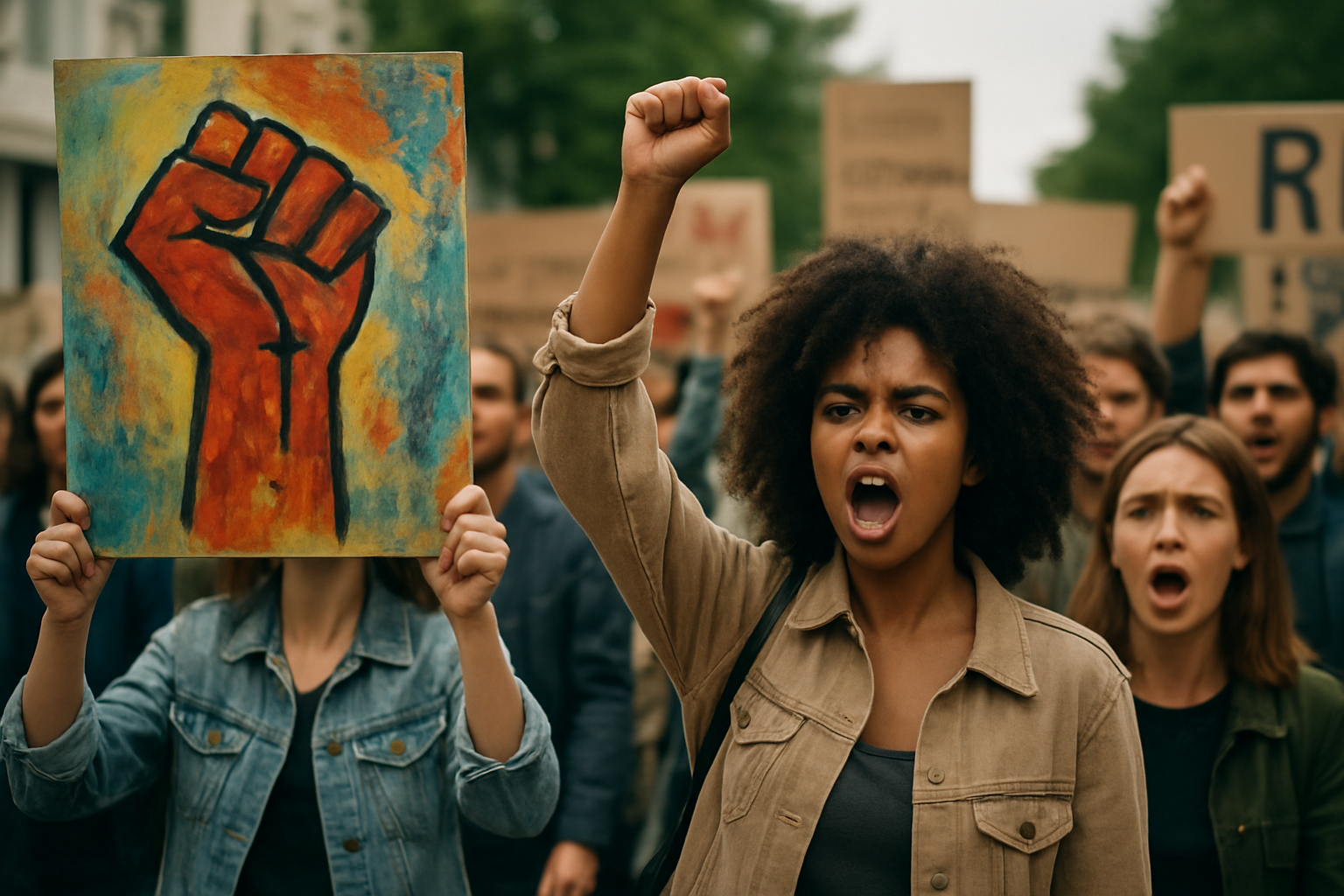
    • Black Lives Matter Movement: In response to racial injustice, the Black Lives Matter movement has inspired a surge of evocative art worldwide. From murals of George Floyd to digital art shared on social media, the visual language of protest has helped unify voices and draw attention to systemic racism.
    • Environmental Activism: Artists are at the forefront of the battle against climate change, using their art to warn of impending ecological disasters. For instance, Olafur Eliasson‘s exhibitions challenge viewers to consider their relationship with nature and climate.

    The Digital Age: New Frontiers for Protest Art

    With the advent of digital technology, the landscape of protest art has dramatically shifted. The proliferation of the internet and social media platforms has democratized the creation and dissemination of art. Artists no longer depend solely on traditional media; instead, they can reach global audiences instantaneously.

    Platforms like Instagram have become virtual galleries for modern protest art. During the peak of the COVID-19 pandemic, artworks reflecting social isolation, government responses, and public resilience proliferated online, illustrating how digital art can galvanize collective experiences and sentiments.

    The Future of Art in Protest

    As we look toward the future, the role of art in activism seems poised to grow. The convergence of technology and art forms like AI-based design or virtual reality experiences will likely create new paradigms for engaging with protest art. Artists will continue to push boundaries, experimenting with new mediums to convey their messages.

    Artsy states that “art has a unique ability to translate the turmoil and tension of a political age into something transformative.” This power makes art not only a reflection of society but also a crucial catalyst for the change needed to move forward.

    Conclusion

    In conclusion, the palette of protest remains a profound testament to art’s enduring power to shape societal norms and inspire change. From its roots in early civilization to the current digital age, protest art has provided a voice to the voiceless and a platform for visual dialogue. As society continues to grapple with myriad challenges, art will remain a stalwart companion and a beacon of hope, illuminating paths for progress and justice.

    The stories captured on canvases, walls, and digital screens remind us of our shared humanity and the relentless pursuit of a better tomorrow. The artistry of protest, therefore, is not just about what is wrong with the world—it is also about imagining and building a world that is right.

  • The Pulse of the Present: Capturing the Now in Contemporary Music

    The Pulse of the Present: Capturing the Now in Contemporary Music

    Contemporary music is more than just a reflection of the present; it’s an active participant in shaping cultural and societal trends. In the rapidly shifting landscape of today’s world, musicians are capturing the essence of “now” with unprecedented immediacy and authenticity. From the power of streaming platforms to the influence of social movements, contemporary music is as dynamic and multifaceted as the era it represents.

    The Influence of Technology

    One of the most significant changes in contemporary music comes from technological advancements. Streaming services like Spotify and Apple Music have transformed the way music is distributed and consumed. As a result, artists are more connected to their audiences than ever before.

    “Technology has allowed artists to release their music as soon as they’re ready, enabling them to respond to current events almost in real-time,” says Lucy Jones from The Independent. [source]

    This immediacy means artists can quickly address and integrate current issues into their music, making their work particularly resonant and relevant.

    Reflecting Social Movements

    Contemporary music serves as a mirror reflecting social and political movements. Artists like Beyoncé and Kendrick Lamar have used their platforms to highlight issues such as racial inequality and feminism. Lamar’s album “DAMN.” and Beyoncé’sLemonade” were culturally and politically significant, resonating with audiences worldwide.

    • Beyoncé: Known for her powerful visual albums that tackle issues like race and gender.
    • Kendrick Lamar: Celebrated for his lyrical depth and social commentary.

    Global Connectivity

    The global nature of contemporary music is another pulse point capturing the now. Collaborations between artists from different countries are becoming commonplace, fostering a rich exchange of cultural influences. Platforms like SoundCloud provide artists with a global audience, amplifying diverse voices and breaking down geographic barriers.

    “In today’s world, music knows no borders,” notes John Doe from Rolling Stone. [source]

    In conclusion, contemporary music is a dynamic tapestry woven from threads of technology, social awareness, and global interaction. It doesn’t just capture the now; it becomes an integral part of it, influencing and being influenced by the very moment it seeks to represent. As we navigate the complexities of the 21st century, contemporary music remains an essential medium through which the pulse of the present is not just heard but felt.

  • The Canvas of Culture: Visual Art as Social Commentary

    The Canvas of Culture: Visual Art as Social Commentary

    Throughout history, visual art has served not only as a medium of aesthetic expression but also as a powerful tool for social commentary. Artists have used their craft to challenge societal norms, criticize political systems, and bring attention to social injustices. In doing so, art becomes a mirror reflecting the complexities of the cultural and political landscapes from which it emerges.

    The Historical Perspective

    From the politically charged works of Francisco Goya to the poignant murals of Diego Rivera, history provides a wealth of examples where art has influenced public consciousness. Goya’s The Third of May 1808, for instance, vividly captures the horrors of war and the brutal suppressions by Napoleon’s armies in Spain. Meanwhile, Rivera’s murals depict the struggles and victories of the working class, bringing light to issues of labor and inequality.

    “Artists play a vital role in exposing the gritty facets of the human experience. By doing so, they offer audiences a chance to engage with these themes critically, fostering a space where dialogue and change are possible.”
    Artsy Editorial

    Contemporary Reflections

    In the modern context, artists continue to utilize their work as a medium for commentary and change. The guerrilla art of Banksy, renowned for its satirical edge, underscores this dynamic. His work challenges notions of capitalism, authority, and consumerism, often provoking conversation on a global scale.

    Another profound example can be seen in the works of Ai Weiwei, whose installations and sculptures address themes of human rights and freedom of expression. Weiwei’s Remembering memorializes the thousands of children who died in the 2008 Sichuan earthquake, bringing attention to the corrupt construction practices that led to the tragedy.

    Art as a Catalyst for Change

    Visual art has the unique ability to transcend language barriers and evoke emotion, making it an effective means of inspiring action. The provocative nature of art compels viewers to confront uncomfortable truths and initiate dialogue. As society continues to evolve, the role of art as a commentator and catalyst for change remains indispensable.

    Ultimately, as described by Tate, social commentary art challenges audiences to reconsider their understanding of the world, encouraging reflection and progress. As we navigate the complexities of the modern age, the canvas of culture will undoubtedly continue to serve as a vibrant declaration of the human condition.

    Whether through a brushstroke or a graffiti tag, visual art will persist as a resonant force in the ongoing dialogue about society’s greatest challenges and triumphs.