Tag: practice

  • Micro-Meditations for Exhausted People

    Micro-Meditations for Exhausted People


    Micro-Meditations for Exhausted People

    Micro-Meditations for Exhausted People

    “In stillness, there is a fountain of youth.” – Heracleitus

    In our fast-paced world, it’s easy to feel overwhelmed and exhausted. However, taking short moments for mindfulness and meditation can provide an oasis of calm in the midst of chaos. Here are some simple micro-meditations that you can incorporate into your daily routine to rejuvenate and refresh your spirit.

    1. Mindful Breathing

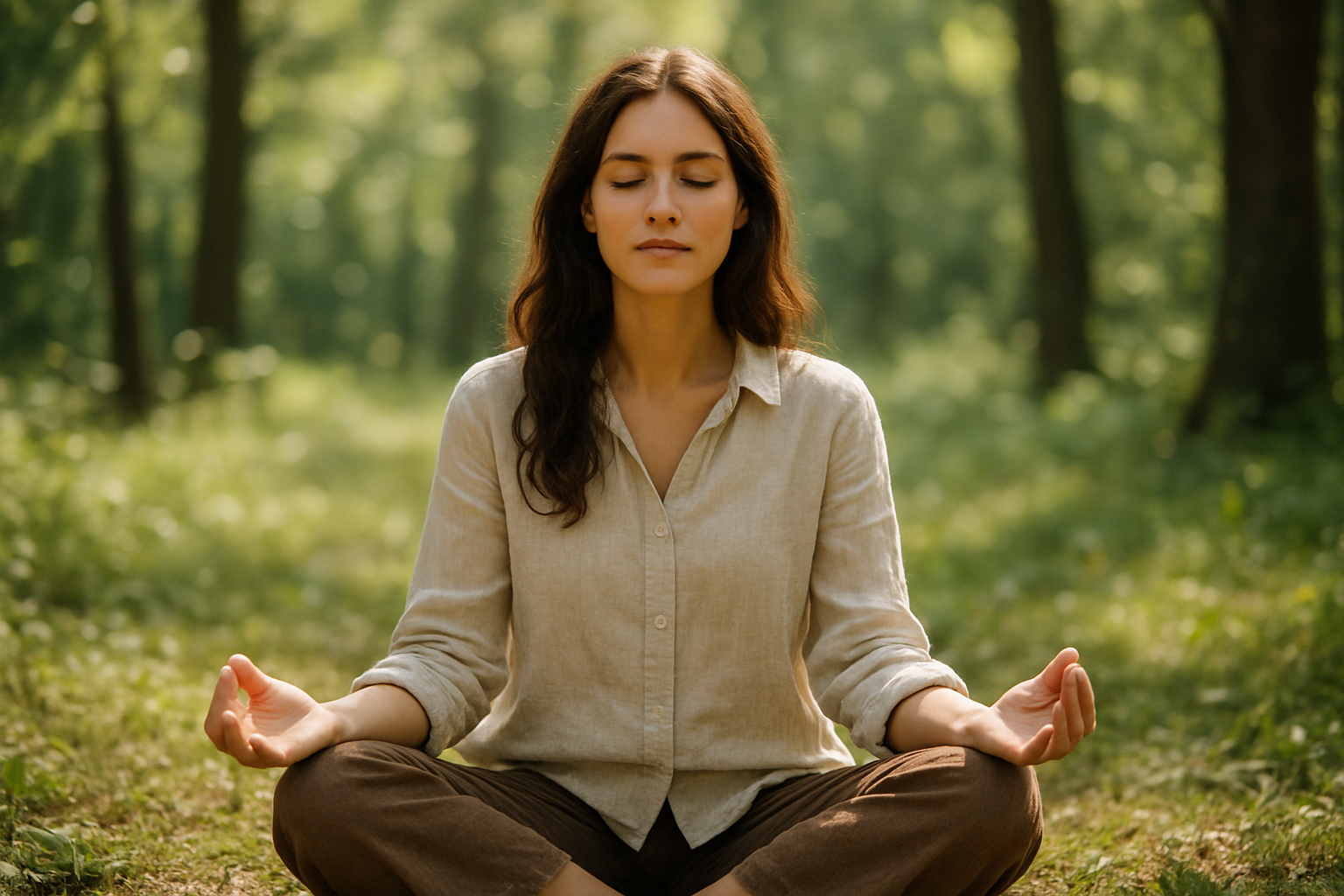
    Close your eyes and take a few deep breaths, focusing on the sensation of air entering and leaving your body. Feel the rise and fall of your chest as you breathe in and out. This simple exercise can help to calm your mind and reduce stress levels.

    2. Body Scan

    Lie down or sit comfortably, close your eyes, and focus on each part of your body, starting from the toes and moving upwards. Notice any tension or discomfort and release it with each breath. This practice helps to bring awareness to your body and can help you relax deeply.

    3. Loving-Kindness Meditation

    Sit comfortably, close your eyes, and repeat the following phrases silently to yourself: “May I be happy, may I be healthy, may I live with ease.” This practice helps to cultivate compassion and self-love, which can help you feel more centered and grounded.

    “Meditation is not a way of making your mind clear. It’s a way of making everything clearer.” – Thich Nhat Hanh

    4. Gratitude Meditation

    Take a few moments to think about things you are grateful for in your life. This practice helps to shift your focus away from negative thoughts and can help you feel more positive and optimistic.

    “The roots of peace lie in justice and love.” – Dalai Lama XIV

    5. Mindful Walking

    Next time you go for a walk, pay attention to each step you take, feeling the connection between your feet and the ground. Notice the sights, sounds, and smells around you. This practice can help to bring mindfulness into everyday activities and can help reduce stress and anxiety.

    “The present moment is filled with joy and happiness. If you are attentive, you will see it.” – Thich Nhat Hanh

  • Burnout Prevention Is a Daily Practice, Not a Vacation

    Burnout Prevention Is a Daily Practice, Not a Vacation


    Burnout Prevention Is a Daily Practice, Not a Vacation

    Burnout Prevention Is a Daily Practice, Not a Vacation

    “The best thing for the inside of a man is the outside of a horse.” – Ralph Waldo Emerson

    In today’s fast-paced world, burnout has become a common issue among professionals. However, a much-needed vacation might not always be the solution.

    Daily Routine as a Shield Against Burnout

    • Mindfulness: Start your day with mindfulness exercises to maintain mental clarity and focus throughout the day.
    • Regular Breaks: Short breaks every hour can help reduce stress and increase productivity.
    • Healthy Lifestyle: Regular exercise, balanced diet, and adequate sleep are essential for maintaining energy levels.

    The Importance of Work-Life Balance

    It’s crucial to create a healthy separation between work and personal life. Engaging in hobbies, spending time with loved ones, and taking time off can prevent burnout and promote overall well-being.

    “Don’t let your fires go out, keeping your imagination fan burning brightly, feeding it tilted wick of feeding dreams.” – Steve Jobs

    Seek Support and Encouragement

    Whether it’s a mentor, coach, or peer, having someone to confide in can provide valuable insights and help manage stress more effectively.

    Remember, burnout prevention is a continuous journey, not a destination. By incorporating these practices into your daily life, you’ll be better equipped to handle the challenges that come your way.

  • Mental Fasting: The Forgotten Practice of Not Thinking

    Mental Fasting: The Forgotten Practice of Not Thinking


    Mental Fasting: The Forgotten Practice of Not Thinking

    Mental Fasting: The Forgotten Practice of Not Thinking

    “The soul that has no fixed purpose in life is but a wave tossed upon the sea, carried hither and thither at the will of the winds.” – Napoleon Hill

    In a world where constant stimulation is considered a necessity, it’s refreshing to delve into an ancient practice that advocates the opposite – mental fasting. This forgotten practice invites us to detach from thoughts and embrace silence.

    The Ancient Origins of Mental Fasting

    Rooted in spiritual traditions, mental fasting has been practiced for millennia as a means to connect with one’s inner self and achieve mental clarity. The Buddhist tradition of ‘Vipassana’ is one example where meditation plays a significant role in mental fasting.

    The Science Behind Mental Fasting

    • Neural plasticity: Scientific research shows that mental fasting can promote neural plasticity, enabling the brain to adapt and grow new connections.
    • Stress reduction: By reducing the activity in our minds, we can lower cortisol levels, ultimately decreasing stress and anxiety.
    • Improved focus: Regular mental fasting has been linked to increased concentration and mental clarity due to the improved organization of neural pathways.

    How to Incorporate Mental Fasting into Your Life

    Mental fasting can be achieved through various techniques such as meditation, mindfulness, and even taking short technology breaks. Begin with small, manageable steps and gradually increase your practice for optimal results.

    “Silence is the simple and most effective answer to all heart problems – even to those that are global in nature.” – Mahatma Gandhi

  • Exercise That Gives Energy Instead of Taking It

    Exercise That Gives Energy Instead of Taking It


    Exercise That Gives Energy Instead of Taking It


    whispers the quiet wisdom of an ancient secret

    In a world that seems to drain our energy, we long for an exercise that does not deplete but rather nourishes and empowers us.

    – Anonymous Yogic Text

    pauses to breathe in the sacred silence

    • Surrender: Embrace the practice with an open heart, surrendering yourself to its healing grace.
    • Balance: Find equilibrium between the physical and spiritual aspects of this exercise, allowing harmony to flow through your being.
    • Patience: Remember that true transformation takes time. Be gentle with yourself as you embark on this journey.

    whispers the ancient echoes of a timeless truth

    This exercise is not just about physical movement, but a dance between your soul and the divine. It transcends the mundane, elevating you to new heights of consciousness.

    – The Bhagavad Gita

    pauses to breathe in the sacred silence once more

    • Stillness: Cultivate inner stillness as you practice. Allow yourself to become a vessel for the divine.
    • Focus: Concentrate on your breath, allowing it to guide your movements and quiet your mind.
    • Grace: Embrace the exercise with a sense of joy and wonder. Let the practice flow through you like a gentle river.

    whispers the parting words of a spiritual guide

    As you step onto the path of this exercise, remember that it is not just about physical transformation. It is about becoming one with the divine energy that flows through all things. May your journey be filled with light and love.

    – Rumi

    fades away into the eternal silence, leaving only the echoes of a sacred dance


  • The Art of Letting Go: Improvisation as Spiritual Discipline

    The Art of Letting Go: Improvisation as Spiritual Discipline

    In a world that often demands control, precision, and certainty, the practice of letting go can feel both foreign and daunting. Yet, this very act of release — of improvisation — has found its role as a transformative spiritual discipline. It challenges us to trust the unknown, to find comfort in the chaotic, and to cultivate a deeper connection with the self and the universe. Let this exploration guide you through the intertwining of improvisation and spiritual growth.

    Improvisation: More Than Just Spontaneity

    Improvisation is frequently associated with the arts — jazz musicians riffing on a theme, actors performing without a script, dancers moving freely to the music. However, the essence of improvisation extends beyond these creative realms. It is a practice rooted in the relinquishment of control, inviting one to respond authentically to the present moment. According to Viola Spolin, often considered the mother of improvisational theater, “Improvisation is not a special talent of a few but an inherent ability we all possess.”

    • Embracing Uncertainty: At its core, improvisation involves embracing the uncertainty of the present. This can be likened to spiritual practices that encourage surrendering to a higher power, reflecting a conscious release of the ego’s need to control and predict.
    • Cultivating Presence: Being fully present is a cornerstone of both meditation and improvisation. Each moment calls for mindful attention, encouraging deep awareness and connection to the now.
    • Engaging with Vulnerability: Improvisation requires courage—courage to be seen, to be imperfect, to explore the unknown. This vulnerability is a profound spiritual act, fostering growth through openness and authenticity.

    Spiritual Traditions Embracing Improvisation

    Throughout history, various spiritual traditions have revered improvisation as a means to connect with the divine and to achieve spiritual enlightenment.

    • Sufi Whirling: The mystical dance of the Sufi dervishes epitomizes the art of letting go. Sufi whirling is a form of physically active meditation, where practitioners spin in repetitive circles, a symbolic imitation of planets orbiting the sun. This practice facilitates a profound connection with the divine, illustrating how disciplines that involve improvisation help transcend the ego and tap into a greater spiritual consciousness.
    • Zen Archery: In the Zen tradition, archery is not merely about hitting a target but about achieving a state of zen or ‘no-mind.’ The focus is on the process — drawing the bow, fully entering the moment, and letting the arrow fly with trust in the present action. As Eugen Herrigel describes in his book Zen in the Art of Archery, the practice aims to “release the arrow without interference from the conscious will.”

    The Psychological and Spiritual Benefits of Improvisation

    The practice of letting go through improvisation has powerful psychological benefits, which in turn contribute to spiritual well-being.

    • Reduces Anxiety: Engaging in improvisation can significantly lower stress levels. By stepping into unpredictability, individuals learn to navigate and adapt to changing circumstances, thus bolstering resilience.
    • Enhances Creativity: The absence of a predetermined path liberates the mind, fostering innovation and creativity. This not only nurtures artistic expression but also promotes problem-solving abilities and flexible thinking.
    • Strengthens Mindfulness: Dedicated improvisation practices, akin to mindfulness meditation, encourage an enhanced state of awareness. The fluidity of the practice positions practitioners to become acutely attuned to their thoughts, emotions, and surroundings.
    • Promotes Authenticity: Improvisation compels individuals to act from a place of authenticity, bypassing rehearsed narratives and societal expectations. This nurtures a deeper understanding and acceptance of the true self.

    Integrating Improvisation into Spiritual Practice

    For those inspired to incorporate improvisation into their spiritual journeys, practical steps can guide the process:

    1. Start with Small Practices: Introduce improvisation gradually. This could be as simple as having open-ended discussions, embodying spontaneous movements, or journaling without constraints.
    2. Encourage Playfulness: Approaching improvisation with a playful attitude alleviates the fear of making mistakes. Play is a vital component, as it allows new possibilities to emerge without the pressure of judgment.
    3. Create Safe Spaces: Whether solo or in a group, establish environments where individuals feel safe to express without fear of judgment or failure.
    4. Reflect and Integrate: After improvisational practices, take time to reflect. Journaling or discussing experiences can help integrate insights and foster personal and spiritual growth.

    Conclusion: The Dance of Improvisation and Spiritual Growth

    The art of letting go through improvisation is not merely an artistic endeavor; it is a transformative spiritual discipline. By choosing to embrace uncertainty, cultivate presence, and engage with vulnerability, individuals can unlock profound psychological and spiritual benefits.

    “Life is a dance between making it happen and letting it happen,”
    writes Arianna Huffington, capturing the essence of living with intentional spontaneity.

    As we navigate the complexities of existence, may we find courage and inspiration in the unstructured dance that is improvisation, and through it, open ourselves to deeper spiritual fulfillment.

  • The Practice of Presence: Bringing Spirituality into Daily Life

    The Practice of Presence: Bringing Spirituality into Daily Life

    In a world dominated by relentless schedules, digital distractions, and ever-growing responsibilities, the quest for serenity and spiritual fulfillment often seems daunting. Yet, amidst this chaos, the ancient wisdom of ‘presence’ offers a beacon of hope. Embracing the practice of presence not only enhances spiritual well-being but also deeply enriches everyday life.

    Understanding Presence

    The concept of presence is rooted in mindfulness and revolves around the intentional focus on the current moment. As described by renowned mindfulness teacher Thich Nhat Hanh, “The present moment is the only time over which we have dominion.” This idea emphasizes the importance of living in the now, rather than being trapped in the regrets of the past or the worries of the future.

    Spirituality and Daily Life: A Harmonious Blend

    Bringing spirituality into daily life through presence involves more than abstract concepts—it requires practical application. Here, we explore various strategies to weave spirituality seamlessly into the fabric of everyday living:

    • Mindful Breathing: Taking a few moments each day for conscious breathing can ground your thoughts and sharpen your focus. Simple breathing exercises foster tranquility and can be practiced virtually anywhere—from a quiet room to a bustling train.
    • Gratitude Journaling: Journaling about things you’re grateful for not only enhances positivity but also accentuates the spiritual dimensions of thankfulness. This practice nurtures a deep appreciation for life’s blessings.
    • Connection with Nature: Spending time in nature rejuvenates the soul and strengthens the bond with the universe. Even brief interactions with nature, such as a walk in the park or tending to a garden, can be spiritually uplifting.
    • Meditation Practice: Daily meditation sessions invite serenity and self-reflection, guiding one into a state of deeper awareness and spiritual connectivity.
    • Acts of Kindness: Engaging in selfless acts fosters an environment where spiritual virtues can flourish. Simple acts, such as helping a neighbor or volunteering, can enhance personal and communal well-being.

    Testimonials: The Transformation Through Presence

    “Before embracing mindfulness, I always felt overwhelmed by a sense of urgency. Practicing presence allowed me to pause and cherish each moment, transforming my perspective on life,” shares Lisa Stevens, a mindfulness practitioner from Oregon.

    Such testimonials reflect the profound impact the practice of presence can have. By cultivating a mindset centered around the present, individuals report enhanced emotional health, greater clarity, and heightened spiritual awareness.

    Challenges and Overcoming Them

    Integrating spirituality into daily routines through presence is not without its challenges. Common obstacles include:

    • Time Constraints: Modern life is fast-paced, leaving little room for introspection. However, even brief moments of purposeful presence can significantly affect well-being.
    • Cognitive Overload: Constantly inundated with information, the mind tends to wander. Regular meditation and mindfulness exercises can help reclaim focus.

    Overcoming these challenges requires dedication and a willingness to adapt. Setting realistic goals, using mobile apps for guided meditations, and joining mindfulness groups can provide support and motivation.

    The Global Shift Towards Mindfulness

    The practice of presence is not confined to individual experiences; it resonates on a global scale. More organizations are incorporating mindfulness into their cultures, recognizing its potential to improve both employee well-being and productivity. Companies such as Google and Aetna have introduced mindfulness programs, highlighting a paradigm shift towards a more spiritually aware workplace.

    According to The Huffington Post, “Numerous studies show that meditation can combat stress, enhance emotional health, and improve focus.” Such empirical evidence further champions the integration of presence into daily routines, both personally and organizationally.

    Conclusion: A Call to Embrace the Now

    Incorporating presence into daily life unlocks a pathway to spiritual awakening and holistic well-being. It encourages individuals to break free from the confines of past regrets and future anxieties, embracing each moment for its potential joy and wisdom. As Thich Nhat Hanh reminds us, “The present moment is filled with joy and happiness. If you are attentive, you will see it.”

    Thus, why wait? Begin the journey today towards a more present and spiritually enriching life. Promise yourself a mindful walk, a quiet moment of breathing, or a journal entry for gratitude. Acknowledge that spirituality doesn’t require seclusion in remote monasteries; it thrives here and now, waiting to be discovered in your daily routine.

  • From Monks to Memes: The Changing Face of Contemplative Practice

    From Monks to Memes: The Changing Face of Contemplative Practice

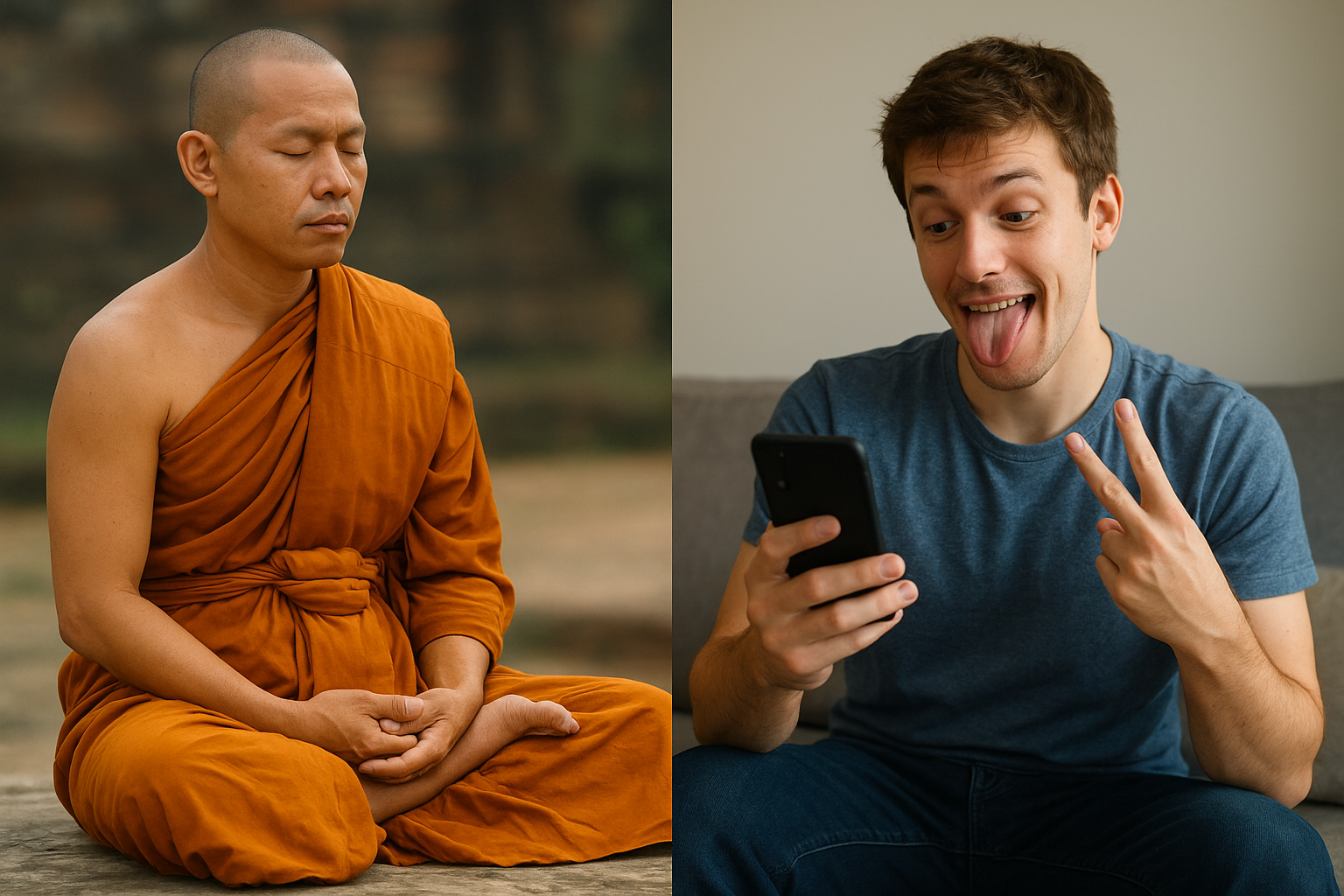
    Contemplative practice has long been associated with monastic life, where individuals dedicate their existence to spiritual and mindful pursuits. However, in today’s fast-paced, interconnected world, the face of contemplation is evolving, manifesting itself in unexpected places, even in the world of social media and internet culture.

    The Roots of Contemplation

    Traditionally, contemplative practices have been rooted in religious and spiritual traditions. Monastic communities, such as the Tibetan Buddhists or Catholic monks, have emphasized meditation, prayer, and reflection as pathways to spiritual enlightenment and mental peace. As noted by Trappist monk Thomas Merton, “Contemplation is the highest expression of man’s intellectual and spiritual life. It is that life itself, fully awake, fully active, fully aware that it is alive.”

    Contemplation in the Digital Age

    With the advent of technology and the internet, contemplative practices have transcended the monastery walls. People are finding new ways to integrate meditation and mindfulness into their daily lives, leveraging apps like Headspace and Calm, which have made these practices more accessible to the general public. A 2021 study published in JAMA Internal Medicine found that individuals who engaged in app-based mindfulness had reduced stress and increased emotional well-being.

    From Monasteries to Memes

    The integration of contemplative practice into modern culture can even be seen in the realm of memes and social media. While it may seem counterintuitive, these platforms are providing unique opportunities for individuals to explore mindfulness. Memes, often viewed as humorous and light-hearted, can also convey deeper messages, encouraging reflection and introspection.

    “Memes can serve as a form of social commentary, prompting users to think critically about their own behaviors and the world around them,” says Judith Wright, a psychological expert in mindfulness studies (Psychology Today).

    The Future of Contemplation

    The transformation of contemplative practice from monastic traditions to digital cultures demonstrates its adaptability and enduring relevance. The future of contemplation is likely to be a blend of ancient techniques and modern innovation, catering to an audience that is both technologically savvy and spiritually curious.

    As we continue to navigate the complexities of modern life, contemplating our place within it—whether through traditional meditation or scrolling through insightful internet memes—remains a vital part of the human experience.

    For those willing to look beyond the screen, the path to mindfulness and reflection is readily available, reminding us all of the timeless value of contemplation in any form.

  • The Sound of Silence: Ambient Music as Spiritual Practice

    The Sound of Silence: Ambient Music as Spiritual Practice

    In a world where noise permeates every aspect of life, ambient music emerges as an oasis of tranquility. Often dismissed as mere background noise, this genre holds transformative potential when engaged with deliberately. Ambient music can become a spiritual practice, a means to explore inner landscapes and find solace in silence.

    Understanding Ambient Music

    Ambient music, a term popularized by British musician Brian Eno in the 1970s, is designed to enhance an atmosphere or evoke a mood without demanding the listener’s full attention. Eno described it as “music as ignorable as it is interesting.” This duality is the essence of ambient music—it can be both a backdrop and a focal point of contemplation.

    The Spiritual Dimension

    Engaging with ambient music as a spiritual practice involves an intentional shift in how we listen. This practice parallels the contemplative traditions of many spiritual paths, where meditation and mindfulness lead to deeper self-awareness.

    “Music is the breath of love for a thousand years. Music has the power to soothe, to inspire, to heal, and to transform.” – Hazrat Inayat Khan

    This power of music to transform is central to using ambient music as a spiritual tool. When we listen with openness, ambient music can guide us into states of deep meditation, offering a gateway to the sacred silence within.

    Benefits of Ambient Music as a Spiritual Practice

    • Meditative Focus: The repetitive and fluid nature of ambient music can serve as an anchor for meditation, similar to chanting or breathwork. It aids in focusing the mind and reducing the incessant chatter of thoughts.
    • Emotional Healing: The calming qualities of ambient sounds can facilitate emotional release and healing. In Ståle Kleiberg’s words, “It evokes emotions that are not just about the music itself but about the listener’s own journey and experiences.”
    • Expansion of Awareness: Ambient music encourages a broader perception of reality. By listening intently, one can become more attuned to the subtleties of sound and silence, expanding awareness beyond the physical realm.

    Integrating Ambient Music into Daily Practice

    Integrating ambient music into a daily spiritual practice does not require significant effort or drastic changes. Here are some practical steps:

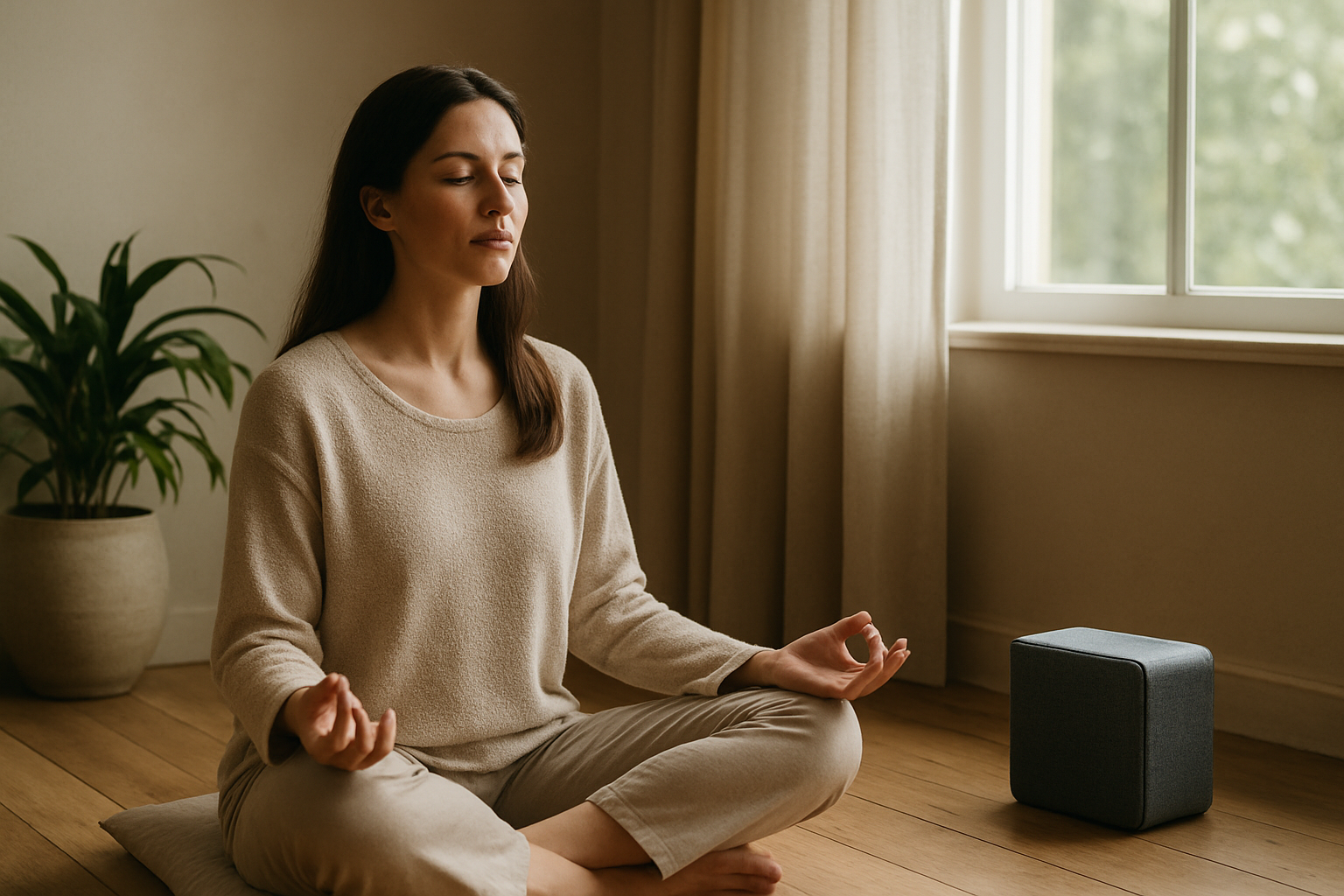
    • Create a Sacred Space: Design a space where you can listen without distractions. This could be a corner of a room adorned with spiritual symbols, incense, and comfortable seating.
    • Set an Intention: Before pressing play, set an intention for your listening session. Whether it’s seeking clarity, healing, or simply relaxation, a clear intention can guide the experience.
    • Mindful Listening: Focus on the sound without judgment or expectation. Allow the music to wash over you, observing any thoughts or emotions that arise with detachment.
    • Complement with Other Practices: Combine ambient music with other spiritual practices like yoga, tai chi, or journaling to deepen the experience.

    The Role of Technology

    With the proliferation of streaming platforms, ambient music is more accessible than ever. Platforms like Spotify and Apple Music offer curated playlists to fit various moods and intentions. Moreover, services like Headspace and Calm include ambient soundscapes as part of their mindfulness tools, reinforcing their role in spiritual and mental wellness.

    Renowned Ambient Artists

    A dive into ambient music is incomplete without exploring artists whose work embodies the spiritual depth of the genre. Among these are:

    • Brian Eno: Often considered the father of ambient music, albums like Ambient 1: Music for Airports served as a manifesto for ambient sound.
    • Harold Budd: Known for his ethereal piano compositions and collaborations with Eno, Budd’s work is a testament to ambient music’s capacity for emotional depth.
    • Steve Roach: A pioneer of ambient soundscapes, his album Structures from Silence remains a classic in the ambient genre.
    • Juliana Barwick: Her ethereal, looping vocals create immersive and transportive sound worlds that have a meditative quality.

    Conclusion

    In embracing ambient music as a spiritual practice, we invite ourselves to engage with silence and sound with heightened awareness. As we navigate the complexities of daily life, ambient music provides a path to inner stillness and spiritual exploration. By allowing ourselves to be enveloped by its gentle presence, we unlock the doors to our inner world, finding in the sound of silence a profound and sacred refuge.

  • The Everyday Epiphany: Mindfulness Through the Lens

    The Everyday Epiphany: Mindfulness Through the Lens

    In a world that thrives on chaos and constant movement, finding peace can feel like an elusive goal. Yet, the practice of mindfulness offers a gentle reminder: serenity is not a far-off destiny but an everyday reality. This article explores mindfulness through the metaphorical lens and how it brings clarity to our daily lives.

    The Art of Seeing Clearly

    Mindfulness is the art of seeing reality with clarity and without judgment. It is about being present in the moment and engaging with life deliberately. As Jon Kabat-Zinn, a pioneer in bringing mindfulness into mainstream medicine, aptly puts it, “Mindfulness means paying attention in a particular way; on purpose, in the present moment, and non-judgmentally.” (source)

    The Camera as a Metaphor

    Imagine a camera lens that captures the beauty of a flower in bloom. Like a camera, our mind can focus intently and bring the intricacies of existence to the foreground. Just as a photographer adjusts their lens to capture the perfect image, mindfulness allows us to adjust our mental lens to bring meaningful aspects of life into focus.

    “Photography is the art of frozen time… the ability to store emotion and feelings within a frame.” – Meshack Otieno

    Through mindfulness, we store emotions and experiences, savoring each moment as it unfolds. This practice does not demand perfection but encourages a compassionate understanding of our thoughts and feelings.

    The Daily Practice of Mindfulness

    1. Breathing and Awareness

    • Stop and Breathe: Taking a moment to focus on your breath is the first step towards mindfulness. A simple breathing exercise—such as inhaling deeply for four counts, holding for four, and exhaling for four—can help center your thoughts.
    • Awareness of Surroundings: Engage with your environment. Notice the colors, sounds, and scents around you. This kind of mindful awareness keeps you grounded in the present moment.

    2. Mindful Observation

    • Observe Without Judgement: As you go through your day, observe your thoughts and feelings without judgment. Acknowledge them and let them pass, like clouds in the sky.
    • Focus on Details: Appreciate the small details in your surroundings—like the pattern of leaves on a tree or the texture of your desk’s surface.

    3. Mindful Listening

    • Deep Listening: When in conversation, practice deep listening. Give your full attention to the speaker, resisting the urge to interrupt or formulate your response while they are talking.
    • Empathy and Connection: By truly listening, we connect with others empathetically, understanding their perspective more deeply.

    Unleashing the Epiphany

    Incorporating these mindfulness practices into your daily routine can lead to profound insights or everyday epiphanies. These moments of clarity are not grandiose revelations but subtle shifts in perception that can transform our relationship with ourselves and the world.

    Understanding Emotions: As Thich Nhat Hanh, a renowned Zen master, once said, “The best way to take care of the future is to take care of the present moment.” Through mindful awareness, we gain a deeper understanding of our emotions, responding to them thoughtfully rather than reacting impulsively.

    Enhanced Creativity: Mindfulness frees the mind from the clutter of incessant thoughts. This clarity unlocks creative potential, allowing us to approach problems in innovative ways. As the mind focuses, new ideas flow more organically.

    Improved Well-being: Regular mindfulness practice has been linked to a host of benefits, including reduced stress, improved mental health, and greater satisfaction in life. A study published in Psychology & Health found that mindfulness can significantly reduce rumination and increase resilience to stress.

    The Path Forward

    Embracing mindfulness is about recognizing that life is a series of moments, each holding potential wisdom and beauty. Mindfulness invites us to step back, recalibrate our inner lens, and appreciate each component of our life with fresh eyes.

    “Each morning we are born again. What we do today is what matters most.” – Buddha

    By engaging in mindful practices, we not only enrich our own lives but also positively impact the lives of those around us. Our everyday epiphanies become a beacon of inspiration and calm in a frenetic world.

    In the grand picture of life, mindfulness cultivates balance, compassion, and a deeper connection with the present. It is through this lens that we see our journey with clarity and embrace the epiphanies that arise from the ordinary moments of existence.

  • The Still Point of the Turning World: Meditative Photography

    The Still Point of the Turning World: Meditative Photography

    There is a quiet beauty found in the practice of meditative photography; a mindfulness that invites one to see the world not as a mere collection of objects, but as a tapestry of moments. This art form challenges photographers to pause, breathe, and find stillness in an ever-accelerating world. It is at this intersection of movement and stillness that T.S. Eliot’s concept of the “still point of the turning world” gains relevance.

    The Essence of Meditative Photography

    Meditative photography is not driven by the intent to capture the perfect shot or adhere to conventional aesthetic theories. Instead, it encourages a deep-seated connection with the environment. Seeing, in this context, becomes an act of mediation where the observer tunes into the intricate dance of light, shadow, and form around them.

    “The journey is what brings us happiness not the destination.” – Dan Millman

    In meditative photography, the journey, the process of observing without judgment, becomes more significant than the end product. Suspend your biases and engage in an unfiltered view of the natural world.

    Practices to Cultivate Mindfulness

    • Slow Down: Take intentional pauses as you walk, letting each step become an anchor. Allow your senses to pick up the nuances in the light or the whisper of the wind through the trees.
    • Embrace Imperfection: Do not seek to impose your vision forcibly onto the scene before you. Accept the imperfections and spontaneity that come with each moment.
    • Reflect on Your Experience: After taking photographs, spend time reflecting on what you felt and saw beyond the lens. Documenting your experiences can deepen your connection to the moment.

    The Impact of Meditative Photography

    Through meditative photography, individuals can develop a heightened awareness of their environment and emotions, aligning them more closely with the present. This practice does not merely change the way one views art but transforms how one perceives life.

    As Ansel Adams, a legendary name in photography, once said, “You don’t make a photograph just with a camera. You bring to the act of photography all the pictures you have seen, the books you have read, the music you have heard, the people you have loved.” Through these shared experiences and a dedication to simply be, one might indeed find the “still point of the turning world.”

    In adopting meditative photography, we embark on a transformative journey, finding tranquility amid chaos and discovering resilience in the passionate act of seeing.