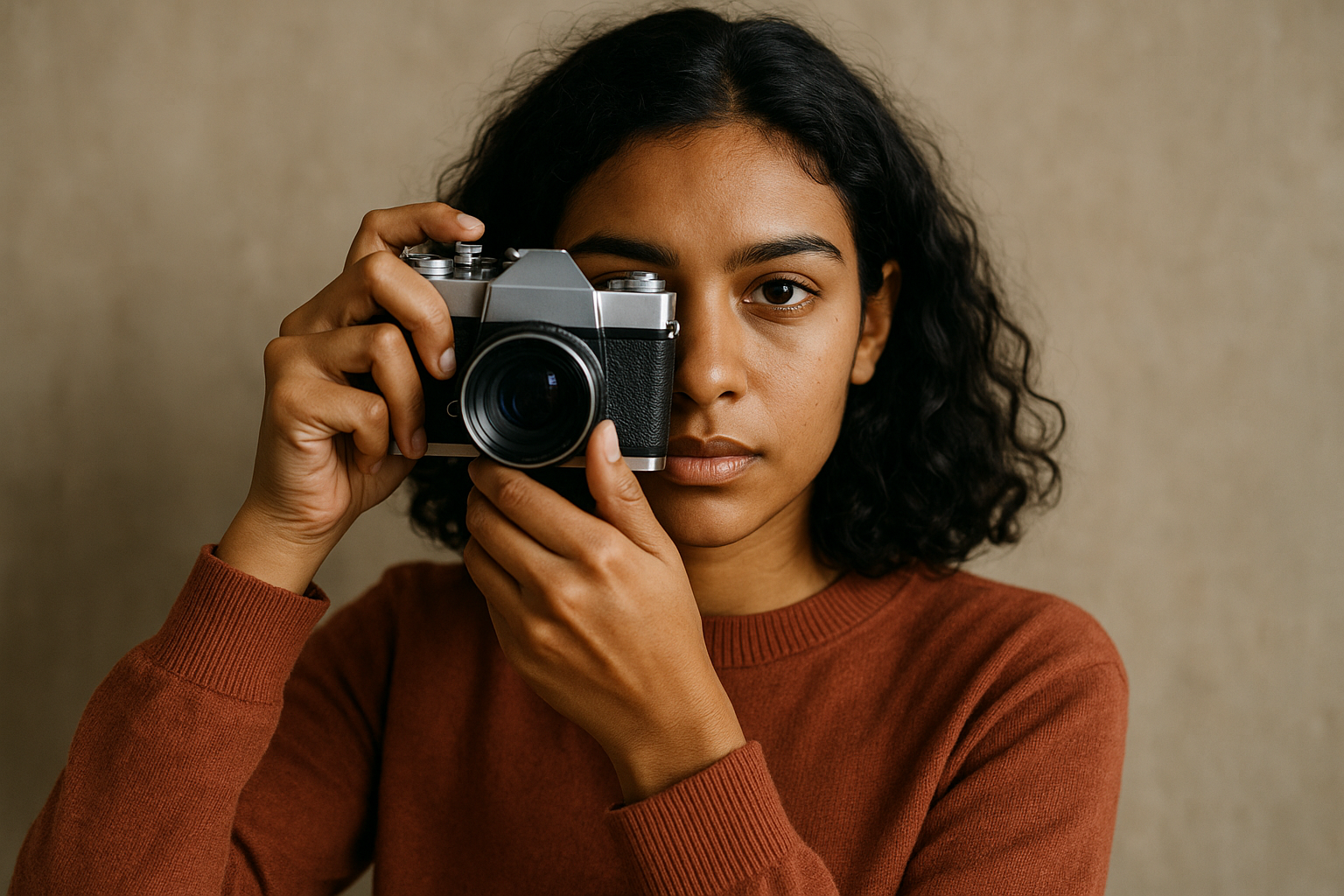
Tag: photography

  • The Still Point of the Turning World: Meditative Photography

    The Still Point of the Turning World: Meditative Photography

    There is a quiet beauty found in the practice of meditative photography; a mindfulness that invites one to see the world not as a mere collection of objects, but as a tapestry of moments. This art form challenges photographers to pause, breathe, and find stillness in an ever-accelerating world. It is at this intersection of movement and stillness that T.S. Eliot’s concept of the “still point of the turning world” gains relevance.

    The Essence of Meditative Photography

    Meditative photography is not driven by the intent to capture the perfect shot or adhere to conventional aesthetic theories. Instead, it encourages a deep-seated connection with the environment. Seeing, in this context, becomes an act of mediation where the observer tunes into the intricate dance of light, shadow, and form around them.

    “The journey is what brings us happiness not the destination.” – Dan Millman

    In meditative photography, the journey, the process of observing without judgment, becomes more significant than the end product. Suspend your biases and engage in an unfiltered view of the natural world.

    Practices to Cultivate Mindfulness

    • Slow Down: Take intentional pauses as you walk, letting each step become an anchor. Allow your senses to pick up the nuances in the light or the whisper of the wind through the trees.
    • Embrace Imperfection: Do not seek to impose your vision forcibly onto the scene before you. Accept the imperfections and spontaneity that come with each moment.
    • Reflect on Your Experience: After taking photographs, spend time reflecting on what you felt and saw beyond the lens. Documenting your experiences can deepen your connection to the moment.

    The Impact of Meditative Photography

    Through meditative photography, individuals can develop a heightened awareness of their environment and emotions, aligning them more closely with the present. This practice does not merely change the way one views art but transforms how one perceives life.

    As Ansel Adams, a legendary name in photography, once said, “You don’t make a photograph just with a camera. You bring to the act of photography all the pictures you have seen, the books you have read, the music you have heard, the people you have loved.” Through these shared experiences and a dedication to simply be, one might indeed find the “still point of the turning world.”

    In adopting meditative photography, we embark on a transformative journey, finding tranquility amid chaos and discovering resilience in the passionate act of seeing.

  • From Analog to Zen: The Evolving Path of Photographic Contemplation

    From Analog to Zen: The Evolving Path of Photographic Contemplation

    From Analog to Zen: The Evolving Path of Photographic Contemplation

    From Analog to Zen: The Evolving Path of Photographic Contemplation

    Introduction

    Photography has always been a deeply philosophical medium. From its analog origins to today’s digital expressions, photography invites practitioners and observers alike into a dialog with time, memory, and the self. In this article, we explore how photography’s evolution parallels contemplative practices, focusing on the transition from analog processes to more meditative and mindful approaches in the digital age, which can be equated metaphorically to a path toward Zen.

    The Analog Era: Labor and Limitation

    The advent of photography in the 19th century brought with it a technical and artistic revolution. Analog photography taught the photographer a certain discipline and patience. The manual process of developing film in a darkroom, the necessary knowledge of chemicals, and the anticipation involved in waiting for the final image imbued the practice with a sense of craft.

    The act of making a photograph was itself a meditative process. Each image was meticulously crafted, a direct interaction between human ingenuity and nature’s unpredictability.

    • The Tangibility of Film: Analog photography provided a tangibility that is often missing in digital formats. Holding a print or a strip of developed film connects one more directly to the photographic process.
    • Slowness as Virtue: The need to carefully choose each shot because of limited exposures meant that photographers had to be more mindful and present in the moment.
    • Flaws and Imperfections: Every film photo carried unique imperfections, a humbling reminder of the bond between chaos and creation—a theme central to Zen philosophy.

    The Digital Transition: From Quantity to Quietude

    With the rise of digital photography, the landscape of photographic contemplation shifted dramatically. The ability to take countless photos without waiting for development spurred a cultural change. While this democratized photography, it also introduced a tendency towards quantity over quality.

    “Digital images are immeasurable, easily manipulated and endlessly reproducible—qualities that evoke a new kind of impermanence.”—[Author’s Name]

    • Instant Gratification: Digital devices offer immediate feedback, but this can detract from the slow, contemplative process of image-making.
    • The Loss of Ritual: Enhancements and filters can overshadow the photographer’s original vision, leading to a loss of the ritualistic nature of photography.
    • Resurgence of Mindfulness: Many photographers are now intentionally returning to analog techniques or incorporating mindfulness practices into their digital work to recapture the contemplative essence.

    Zen and the Art of Photography

    The aesthetic concepts in Zen Buddhism, such as simplicity, the absence of clutter, and a profound connection to the present moment, have long been echoed in photography. The natural evolution of photography from a technical craft to a contemplative art form reflects the path to Zen.

    The Zen Principles in Photography

    • Wabi-Sabi: Embracing transience and imperfection, both crucial elements in capturing authentic moments.
    • Satori: A sudden enlightenment or clarity. In photography, this may translate to the unexpected, perfect photo.
    • Focus on Emptiness: Using negative space intentionally, inviting the viewer into a meditative state.

    The Modern Photographer: A Journey Within

    Today’s photographers, equipped with the tools of both worlds, stand at the crossroads of technology and tradition. Many artists are finding their path to Zen through their lens, where each click of the shutter is a breath in meditation.

    “Photography takes an instant out of time, altering life by holding it still.”—Dorothea Lange

    • Making Photography Meditative: Incorporating mindful practices in photography sessions can transform the art into a meditative experience.
    • Intentionally Analog in a Digital World: Some photographers choose to slow down the process intentionally, creating limits within digital frameworks.
    • Philosophical Exploration: Photography as a tool to explore existential questions and capture the intersection of time and place.

    Conclusion

    From its analog beginnings to the digital revolution and beyond, photography continues to evolve, mirroring our own philosophical and contemplative journeys. As technology advances, photographers find new ways to practice restraint, seek mindfulness, and capture the fleeting moment in this ever-changing landscape. Thus, the path from analog to Zen is not merely about the evolution of photographic technology, but about discovering an art form that reflects a deeper inner stillness and the beauty of life’s impermanent moments.

  • Framing the Feeling: Emotional Realism in Contemporary Photography

    Framing the Feeling: Emotional Realism in Contemporary Photography

    Photography has always been a medium that blurs the lines between reality and representation. In recent years, the rise of emotional realism in contemporary photography has created a new wave of storytelling that captures the unfiltered essence of human emotions. This genre celebrates the raw and often unrefined emotional states that reflect individual and collective human experiences. By focusing on authenticity and emotional depth, photographers create poignant narratives through their works.

    The Evolution of Emotional Realism

    Emotional realism in photography has its roots in documentary photography, yet it transcends mere documentation. Unlike traditional photojournalism that primarily aims to inform or raise awareness, emotional realism seeks to evoke emotion first, thus providing a more profound connection. This style draws influence from various arenas, including film, painting, and even literature, merging them into a uniquely photographic expression.

    Several prominent photographers have embraced this style, blending personal narratives with universal themes. According to art critic Arthur Danto, “The art of photography lies in the ability to express the ineffable through the visible image.” This notion has driven many artists to explore new emotional terrains.

    Characteristics of Emotional Realism

    • Authenticity: Unlike heavily staged or manipulated images, emotional realism thrives on authenticity. The photographers aim to capture moments as they are, allowing imperfections and transient emotions to shine through.
    • Emotional Depth: By focusing on deep emotional states, these photographs often resonate with viewers on a visceral level, evoking personal memories and responses.
    • Narrative Storytelling: Each photograph or series often tells a story, inviting viewers to engage with the narrative and reflect on their interpretations.
    • Personal Expression: Many photographers incorporate elements of their own lives or inner feelings, making their work introspective yet universally relatable.

    Pioneers of Emotional Realism

    Several contemporary photographers have pioneered this evocative style, making significant contributions to the field:

    • Sally Mann: Known for her series “Immediate Family,” Mann captures the intimate and often haunting moments of her own family life. Her work challenges viewers to reconsider notions of childhood innocence and familial bonds.
    • Nan Goldin: Through her “The Ballad of Sexual Dependency,” Goldin offers an unfiltered look into her life and the lives of her friends. Her work, often described as a visual diary, portrays moments of love, intimacy, and raw vulnerability.
    • Alec Soth: With his project “Sleeping by the Mississippi,” Soth embarks on a journey through the American Midwest, capturing the essence of solitude and longing in the lives of his subjects.

    These artists share a commitment to emotional truth, each framing their subjects in ways that amplify their impact.

    The Impact on Modern Audiences

    The emergence of emotional realism in photography has resonated deeply with modern audiences. In a world of curated perfection often portrayed on social media, these authentic depictions offer a breath of fresh air. They invite viewers to embrace imperfections, offering a sense of solace and connection.

    “Photography takes an instant out of time, altering life by holding it still.” — Dorothea Lange

    As Lange’s quote reflects, the ability of photographs to suspend time is powerful. Emotional realism taps into this ability, holding emotions in suspension—making them accessible to the viewer indefinitely.

    The Intersection with Social Issues

    Emotional realism often intersects with social and political issues, raising awareness and empathy. By highlighting personal experiences within larger societal contexts, photographers ignite conversations that transcend cultural and geographical boundaries.

    Photographer Zanele Muholi, for instance, utilizes emotional realism to document the lives of LGBTQ+ individuals in South Africa. Muholi’s work is not only a celebration of identity but also a brave political statement advocating for equality and human rights.

    Conclusion

    Emotional realism in contemporary photography continues to evolve as artists seek new ways to communicate the complexities of human emotions. These photographers remind us that beauty lies in the honest depiction of reality, with all its flaws and triumphs.

    As the world becomes increasingly image-driven, the role of photography in expressing emotions and provoking thought will only grow. The power of emotional realism lies not just in its visual impact but in its ability to create an intimate bond between the image and the viewer—a bond that transcends words, inviting deeper contemplation, empathy, and understanding.

  • Light and Shadow Play: The Photographer as Modern Alchemist

    Light and Shadow Play: The Photographer as Modern Alchemist

    The art of photography has often been described as a modern alchemy, transcending the mere capture of images to become a profound exploration of Light and Shadow. Just as ancient alchemists transformed base metals into gold, photographers manipulate light and shadow to create visual poetry.

    Understanding the Alchemical Process

    At the heart of this transformation lies an intricate dance between light and shadow. Ansel Adams, a pioneer of photography, aptly noted, “You don’t make a photograph just with a camera. You bring to the act of photography all the pictures you have seen, the books you have read, the music you have heard, the people you have loved.” (Adams Photography).

    • Light as the Catalyst: Just as alchemists used fire to instigate change, photographers rely on light. It is both the brush and the paint—defining shapes, creating depth, and provoking emotion.
    • Shadow as the Substance: Shadows are not merely voids but essential elements that provide contrast and meaning, much like how ancient texts revered the balance between darkness and light.

    The Photographer’s Philosopher’s Stone

    In this modern alchemical pursuit, the camera becomes the philosopher’s stone. It is the tool through which the mundane is elevated to the extraordinary. This idea aligns with Susan Sontag’s perspective in her seminal work, “On Photography,” where she describes photography as “an elegiac art, a twilight art.” Photographers, she argues, capture the duality of the world, “taking a keen interest in the banality, the ordinary, the everyday.”

    “Photography is, firstly, a way of feeling, of touching, of loving.” – Aaron Siskind

    Digital technology has furthered this transformation. The modern photographer’s toolkit now includes post-processing software, where images are refined, much like a chemist’s concoction, to reveal the hidden beauty and subtle nuances of the subject.

    The Legacy of Alchemical Photography

    Photography’s narrative is one of transformation, of seeing the world anew. Through their lens, photographers invite us to witness the delicate interplay of light and shadow, beckoning us to consider perspectives we may otherwise overlook.

    Ultimately, the photographer as modern alchemist is not just an observer but a creator, invoking a response from the viewer—a catalyst in the refinement of perception. This ongoing journey promises to keep the magic of photography alive, much like the eternal quest of ancient alchemy.

  • Capturing the Ghost: Photography’s Hold on the Intangible

    Capturing the Ghost: Photography’s Hold on the Intangible

    Capturing the Ghost: Photography’s Hold on the Intangible

    In the realm of the supernatural, photography has long held a captivating allure. The idea that a camera might capture something beyond the physical realm is both intriguing and chilling. Throughout the history of photography, there have been claims and controversies surrounding the depiction of the ethereal, the unseen, and the intangible.

    The Early Days of Spirit Photography

    In the late 19th century, as photography burgeoned into a popular medium, it was swiftly adopted by those wishing to document the supernatural. William H. Mumler, one of the earliest known photographers to claim to capture ghosts, brought spirit photography to the public’s attention. According to the Smithsonian Magazine, Mumler accidentally discovered double exposure, which produced ghostly figures in his images. While skeptics quickly discredited him, many spiritualists embraced his photographs as evidence of the afterlife.

    Photography as a Tool for Mystery

    Today, while the art of spirit photography is often regarded with skepticism, its allure remains. Modern paranormal investigators continue to use cameras to explore the mysterious, employing everything from infrared imagery to high-speed film. However, the relationship between modern photography and the supernatural isn’t solely tethered to the investigative. It also inspires artists who explore themes of absence, presence, and the fleeting nature of existence.

    “Photographs can make us believe in things, but they can also be oracles. They can conjure memories, dreams, stories… The presence (or absence) of a figure in a photograph can summon a thousand unwritten words.” — Source: New York Times

    The Symbolic Power of the Unseen

    Photography’s power lies not only in its capacity to document what is in front of the lens but also in its ability to symbolize what is not. Using strategic absence and presence, photographers can evoke a sense of the intangible. Through techniques like long exposure or creative lighting, they hint at stories beyond the frame.

    As we continue to advance technologically, with tools like AI and digital enhancements, the line between capturing reality and creating illusion blurs further. Though science and skepticism guide our understanding of the world, the allure of the mystery—perhaps even the ghost in the photograph—persists.

    In the end, capturing the ghost through photography may not be about proving the unseen but rather about embracing the magical potential of what photography can evoke.