Tag: past

  • The Alchemy of the Archive: Using Old Images in New Ways

    The Alchemy of the Archive: Using Old Images in New Ways

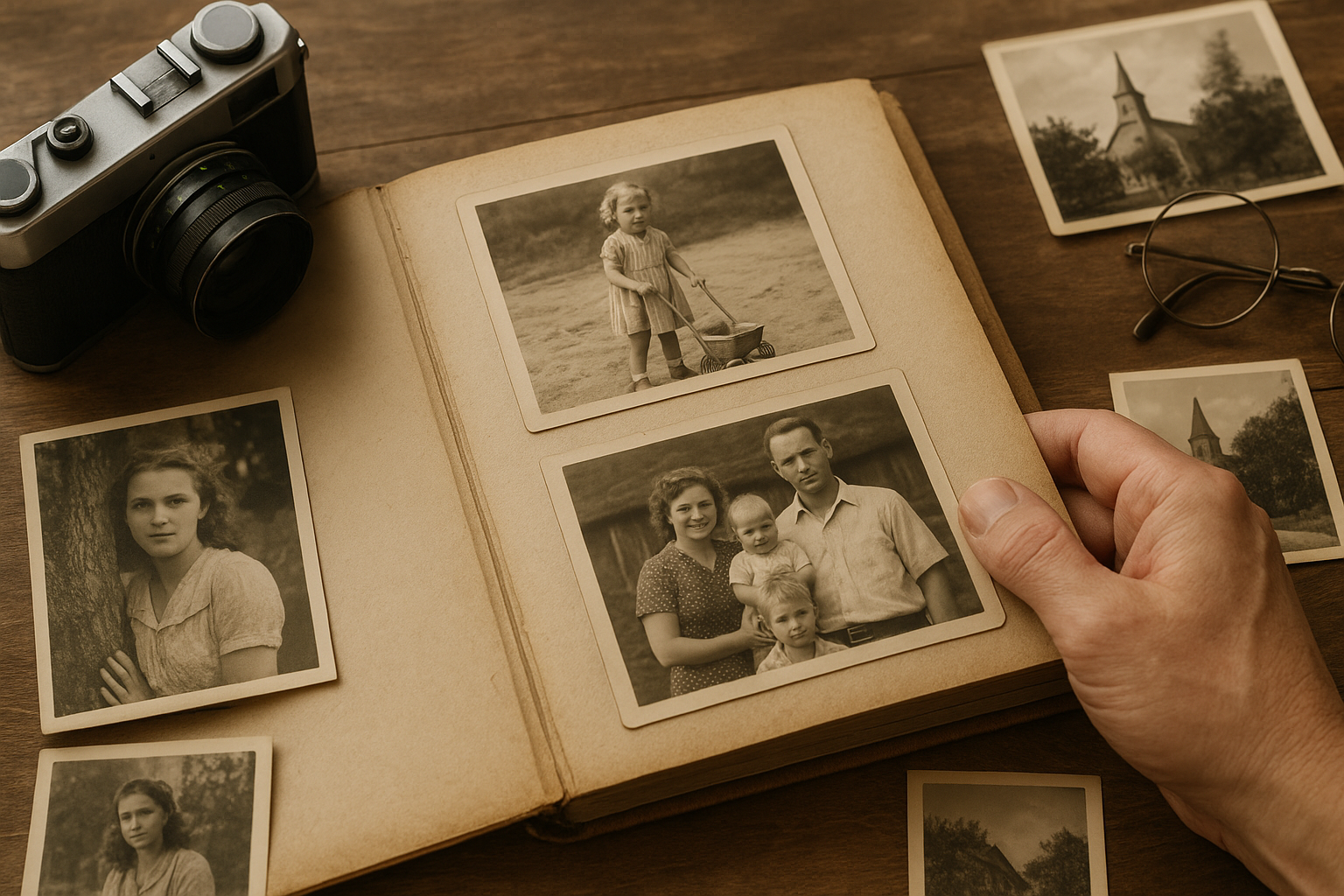
    In an age where digital media is omnipresent, the fascination with old images is undergoing a remarkable renaissance. This resurgence is not merely about nostalgia; it’s about innovation, technology, and creativity. As we sift through the archives, turning dusty prints into digital gold, we’re witnessing the alchemy of the archive come to life.

    The Power of Old Images

    Old images hold a unique power. They are windows into the past, offering glimpses of moments long gone. These images are not just artifacts but are being reimagined and repurposed in ways that unlock new potentials.

    “History is a vast early warning system.” — Norman Cousins

    With this in mind, old images are being used as learning tools, references, and inspiration, enriching our narratives with historical context and authenticity.

    Technological Innovations: Breathing New Life into the Past

    The journey from dusty albums to vibrant digital landscapes is fueled by technological advancements. Here are a few innovations transforming how old images are being used today:

    • AI and Machine Learning: Technologies like DeOldify use AI to colorize black and white photos, bringing a new vibrancy to historical events and personal memories alike.
    • Image Restoration: Tools like Adobe Photoshop offer sophisticated options for enhancing and restoring old photos, turning faded family portraits into crisp images filled with detail.
    • Augmented Reality: Applications like Snapchat and Google Lens allow users to interact with historical images in real-time, overlaying the past on present-day environments.

    Creative Applications: Transforming Archives into Art

    Artists and creators are finding innovative ways to weave old images into new works of art and media:

    • Collage Art: Using fragments of historical images, modern artists are creating collages that juxtapose the past with the present, challenging perceptions and sparking new dialogues.
    • Documentary Films: Filmmakers are embedding archival footage into documentaries, providing authenticity and depth to narratives. Ken Burns, renowned for his historical documentaries, states, “The power of history is to move us.”
    • Virtual Museums: Institutions are creating virtual spaces using digitalized archives, allowing global audiences to explore history interactively. For instance, the Museum of Modern Art offers virtual tours featuring archived artworks.

    Old Images in the Digital Economy

    The economic potential of archived images is significant as well. Websites like Getty Images and Shutterstock have vast collections of historical imagery available for licensing, supporting industries ranging from advertising to education.

    Moreover, as The New York Times highlights, the demand for authentic, high-quality historical images for use in social media platforms like TikTok is on the rise, as creators seek to add depth and interest to their storytelling.

    Challenges and Considerations

    While the reuse of old images is exciting, it’s important to approach the practice with careful consideration:

    • Copyright Concerns: Not all archived images are free from copyright constraints. Ensuring proper licensing is crucial to legally utilizing historical photographs.
    • Image Integrity: It’s essential to maintain the integrity of the image, not altering it beyond recognition, which can lead to historical inaccuracies.

    Conclusion: A New Dawn for Old Images

    As we continue to integrate these powerful artifacts into our digital world, we unlock a wealth of opportunities for education, innovation, and creative expression. The alchemy of the archive continues to transform our understanding of the past, enriching our present, and building bridges to the future.

    In the words of renowned scholar Pierre Nora, “Memory is life… it is constantly evolving.” And as long as there is history to remember, old images will find new ways to live.

  • Revisiting the Relic: Modern Artists Engaging with Old Masters

    Revisiting the Relic: Modern Artists Engaging with Old Masters

    In the dynamic world of contemporary art, there is a resonant reverberation of the past that artists cannot ignore. The dialogue between modern creators and the Old Masters serves as a bridge between centuries, where traditional techniques meet avant-garde experimentation. This conversation across time not only enriches the modern artist’s palette but also breathes new life into historical works.

    Reinterpretation and Innovation

    Modern artists are increasingly drawn to the works of legendary figures such as Leonardo da Vinci, Rembrandt, and Caravaggio. They see these masterpieces not just as relics of art history, but as living sources of inspiration. As noted by art critic Jonathan Jones in The Guardian, “The way today’s artists engage with the past is often unsettling, surprising, and transformative.”

    • Appropriation: Some artists adopt elements from classic artworks, embedding them into new contexts to create unexpected juxtapositions. British artist Tracey Emin, for instance, integrates drawings reminiscent of Egon Schiele into her work to evoke raw emotion.
    • Subversion: By reimagining revered pieces through a contemporary lens, artists challenge the viewer’s perceptions. For example, Kehinde Wiley’s portraits replace noble European figures with young African American men, effectively engaging in a dialogue about race and representation.
    • Homage: Many artists pay tribute to the techniques and styles of the Old Masters while injecting their personal narratives. Artist Jenny Saville is known for her lush, painterly works that echo the grandeur of Renaissance art while exploring modern themes of identity and the body.

    The Impact of Technology

    Today’s artists utilize technology to further explore the intricate tapestries laid down by the Old Masters. Digital art and machine learning open new gateways to understanding and reinterpreting classical works. Art historian Martin Kemp states in an article for The New York Times, “This fusion of art and technology not only expands the creative horizons but also encourages a deeper appreciation of historical art.”

    “In revisiting the past, modern artists are not just mimicking what has been done but are actively building upon it to create something pertinent to our time.”

    Ultimately, the ongoing interplay between modern artists and Old Masters illustrates the timeless nature of art. It exemplifies how creativity transcends boundaries, both temporal and stylistic, and highlights the enduring power of the past to inform and inspire the present.

  • Ancient Wisdom, Modern Wire: Connecting the Past and Future

    Ancient Wisdom, Modern Wire: Connecting the Past and Future

    The evolution of technology is often seen as a modern phenomenon, yet its roots stretch far into the distant past. From the invention of the wheel to the intricate designs of Roman aqueducts, our ancestors laid the foundational knowledge that directs today’s advancements. This article explores the symbiotic relationship between ancient innovations and modern technology, revealing how time-honored wisdom continues to inform and inspire contemporary achievements.

    The Legacy of Ancient Innovations

    Whether it’s the concept of zero from ancient India, which revolutionized mathematics, or the Antikythera mechanism, an ancient Greek analog computer, ancient innovations have consistently provided humanity with the basic tools to solve complex problems. These foundational inventions serve as the bedrock upon which modern technology is built.

    • The Wheel: Invented around 3500 B.C. in Mesopotamia, the wheel is one of humanity’s greatest inventions. It laid the groundwork for the development of transportation and machinery that eventually powered the Industrial Revolution.
    • The Printing Press: Johannes Gutenberg’s 15th-century invention was not the first of its kind. The concept originated in 9th-century China. By mechanizing the process of printing, it paved the way for mass communication, influencing today’s digital publications.
    • Aqueducts: The ancient Romans mastered the aqueduct between 312 B.C. and 226 A.D., which enabled urbanization by delivering fresh water to city populations. The principles used are echoed in modern water supply systems worldwide.

    “The ancient engineers were the giants on whose shoulders the present generation of civil engineers stand today,” notes Ou, James. Engineers of the past and their contributions to civil engineering. World Engineering Journal, 2011.

    The Influence of Ancient Science on Modern Technology

    Modern scientific achievements owe much to ancient explorations. Ancient civilizations like the Greeks, Chinese, and Egyptians contributed significantly to fields such as astronomy, medicine, and metallurgy. Their discoveries provided a framework that has guided centuries of scientific thought.

    • Astronomy: The Babylonians kept detailed astronomical records as early as 1600 B.C., which the Greeks later studied. Their work laid the foundation for Kepler’s laws of planetary motion and eventually Einstein’s theory of relativity.
    • Medicine: The Ebers Papyrus, dating back to around 1550 B.C., is one of the oldest medical documents. Egyptian doctors’ insights into anatomy greatly influenced Greek and Roman medicine, eventually informing modern medical practices.
    • Metallurgy: Ancient techniques in metalworking, developed during the Bronze and Iron Ages, set the groundwork for modern metallurgy’s complexity. Today’s advancements in materials science continue to build upon these ancient principles.

    A contemporary example of ancient influence is biomimicry, where design solutions are inspired by nature. From the study of lotus leaves to create self-cleaning surfaces to sharkskin patterns used for aerodynamic swimsuits, ancient wisdom in observation continually informs technological design.

    The Digital Age: Bridging Old and New

    Today’s digital age is no different in its regard for ancient wisdom. Computer algorithms, though modern in application, often reflect mathematic principles developed by ancient civilizations. For instance, algorithms for solving complex mathematical problems borrow from ancient strategies and logic patterns, such as those formalized by Euclid in his algorithm for finding the greatest common denominator.

    Moreover, ancient stories and myths, such as the labyrinth of Daedalus, echo in the algorithms that solve modern-day puzzles and navigate complex data networks. As noted by Smithsonian Magazine, these narratives continue to inspire innovative thinking and problem-solving techniques today.

    The Role of Philosophy and Ethics

    Beyond the technical, ancient wisdom also encompasses philosophy and ethics—domains equally critical to modern technological discourse. Greek philosophers such as Aristotle explored topics of ethics that remain highly relevant in today’s discussions surrounding artificial intelligence and digital privacy.

    “The introduction of radically different kinds of technologies requires new ethical thinking,” writes thinker Ruth Chadwick, Director of ESRC Centre for Economic and Social Aspects of Genomics. “Aristotle’s emphasis on virtue ethics can guide considerations about character and decision-making in the deployment of such technology.” (“The Guardian)

    The parallels between ancient frameworks of thought and today’s ethical considerations in technology encourage a balanced evaluation of our innovations. This approach helps cultivate progress that is as ethically sound as it is technologically advanced.

    Conclusion: Remembering the Wisdom of the Ancestors

    As we stand on the precipice of further technological breakthroughs—from quantum computing to biotech revolutions—it’s crucial to recall and respect the ancient wisdom that has consistently shaped our progress. Investigating traditional solutions to modern problems ensures that technological advancements remain grounded, conscious, and sustainable.

    The harmonious blend of past knowledge and future technology invites a richer understanding of both human potential and responsibility. By connecting the past and future, we pave the way for innovations that are not only cutting-edge but also deeply reflective of centuries of human wisdom.