Tag: nature

  • From Root to Sky – The Continuum of Dao in All Things

    From Root to Sky – The Continuum of Dao in All Things

    From Root to Sky: The Continuum of Dao in All Things

    The concept of Dao or Tao, meaning “the way,” is a foundational tenet of Chinese philosophy and religion, underpinning a myriad of connections evident throughout nature and human existence. This enduring philosophy suggests that the holistic understanding of life, from the deepest roots of the earth to the limitless expanse of the sky, is interconnected by an unseen thread that links all living and non-living things, maintaining balance and harmony in the universe.

    The Essence of Dao

    “The Dao that can be told is not the eternal Dao; The name that can be named is not the eternal name.” — Laozi, Daodejing

    At its core, Daoism advocates for living in harmony with the Dao, which is considered the fundamental principle that is the source, pattern, and substance of everything that exists. As articulated by Laozi in the Daodejing, the Dao is ineffable, beyond the constraints of language and cognition. It is a sensibility rather than a distinct path to be explicitly followed.

    Interconnectedness with Nature

    The philosophy of Daoism holds that everything in nature is part of a larger, interconnected reality. The delicate balance of natural ecosystems, from the cyclical regeneration seen in forest ecology to the migrations of animals, reflects the Dao’s principle of non-interference, known as wuwei (effortless action).

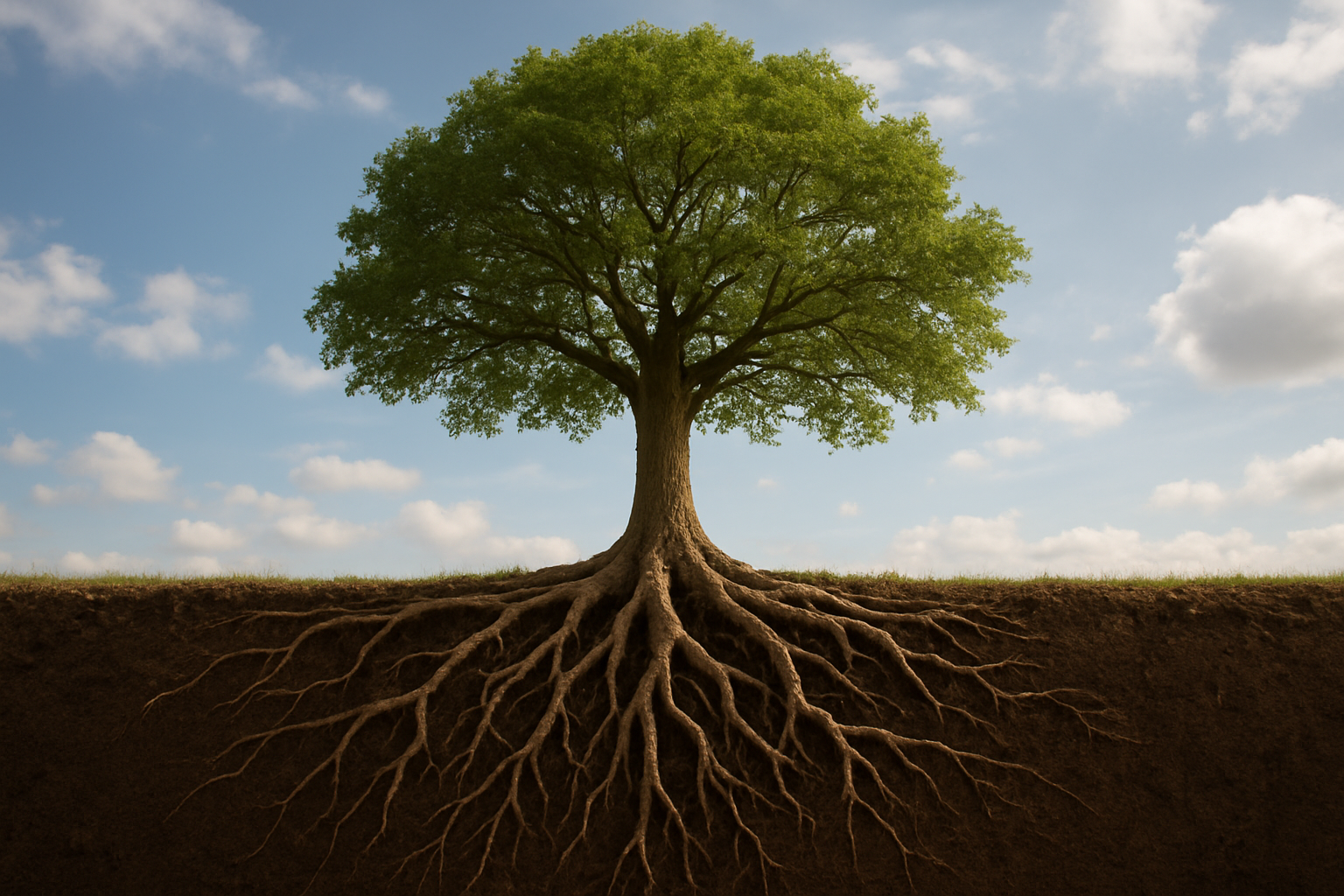
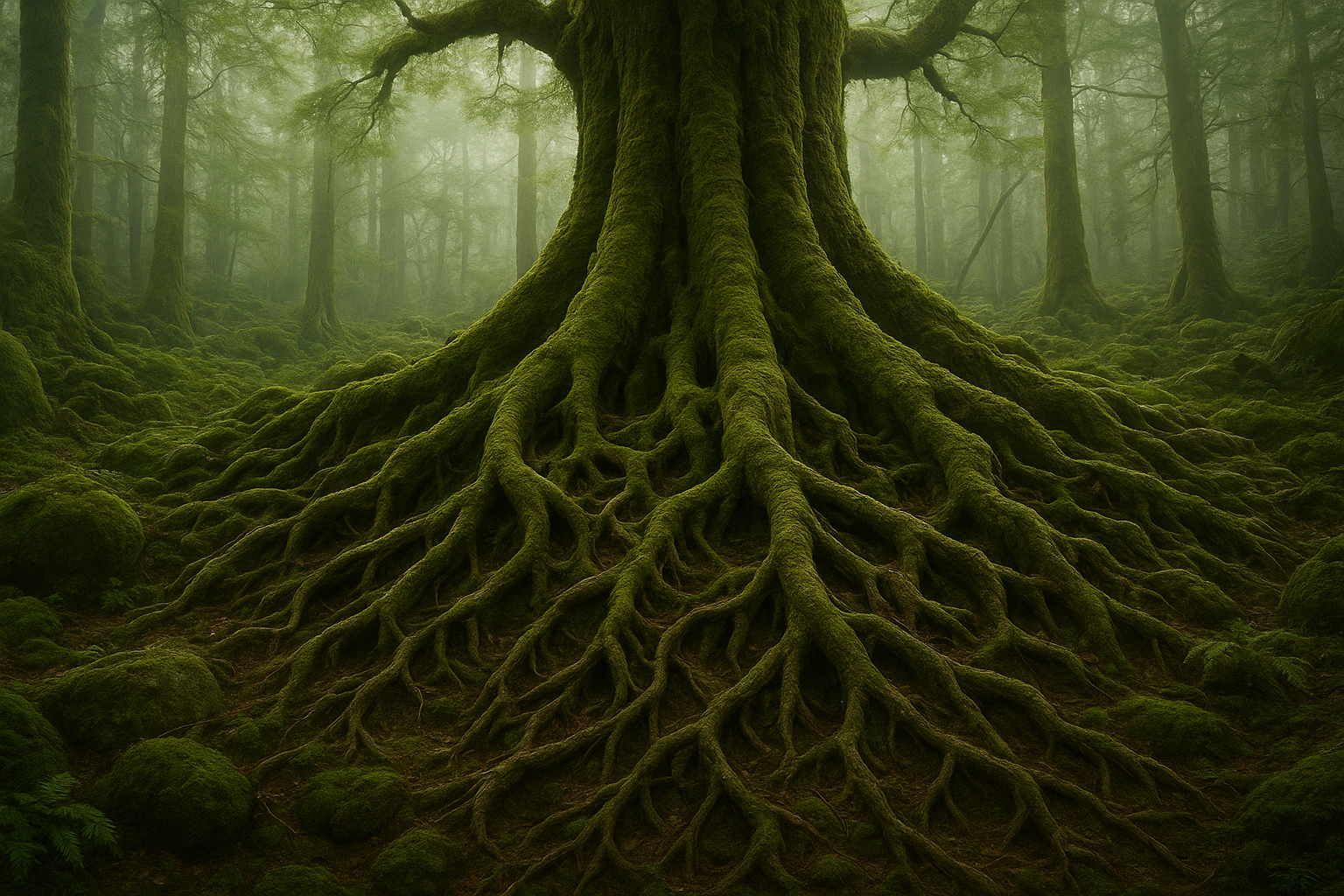
    • Roots: Trees, with their sprawling root systems, exemplify stability and nourishment, drawing sustenance from the earth. Roots represent the unseen yet critical underpinning of life, connecting the terrestrial to the spiritual.
    • Sky: The sky’s vastness symbolizes the infinite and the unattainable, ever-changing yet constant. It represents the limitless possibilities embraced by the Dao’s acceptance of natural change.

    Daoist metaphors often use water, which naturally finds its path of least resistance, to illustrate the Dao’s power and approach to life. Water embodies patience, adaptability, and strength not through force but through persistence and subtle influence.

    Humanity’s Role in the Dao

    Human beings, as part of this cosmic web, are encouraged to live in accordance with nature and the Dao. This entails a balance of self-cultivation and humility, acknowledging the limits of one’s control and the broader context of existence.

    “Being deeply loved by someone gives you strength, while loving someone deeply gives you courage.” — Laozi

    This balance is mirrored in human relationships and societal structures. Within the Daoist framework, individuals are counselled to align their lives with natural rhythms and cycles, making choices that harmonize with their surroundings, both human and ecological.

    Modern Implications of Dao

    In today’s fast-paced and often contentious world, the principles of Daoism offer a poignant reminder to reconnect with nature’s simplicity and flow. Daoist teachings underscore environmental stewardship, suggesting that humanity’s advancement should not come at the expense of the earth’s health.

    Recent studies emphasize the importance of ecological balance in maintaining biodiversity, a concept very much in line with Daoist principles. According to research published by the Nature Journal, ecosystems with higher biodiversity are more resilient and capable of withstanding environmental changes.

    Conclusion

    The continuity of the Dao from roots to sky is a reflection on life’s profound unity and complexity. While modern life often fragments our perception of the world, Daoism invites us to step back and perceive the universe as an interconnected whole. By nurturing respect for the cyclical nature of life and fostering an inner harmony with the environment, individuals can align more closely with the Dao.

    Ultimately, Daoism offers a timeless vista, a way to see clearly and navigate wisely through the ever-changing tides of existence. Whether one is contemplating the roots binding them to their origins or gazing at the sky with an eye toward the future, the Dao is present, binding all things together in an unseen and eternal dance.

  • The Empty Hut – Where Zen and Nature Meet in Stillness

    The Empty Hut – Where Zen and Nature Meet in Stillness

    The Empty Hut – Where Zen and Nature Meet in Stillness

    The Empty Hut – Where Zen and Nature Meet in Stillness

    The Empty Hut is a profound exploration of the intersection between Zen philosophy and nature’s tranquility. Directed by the visionary filmmaker, Kiyoshi Nakagawa, this film invites us into a world where stillness speaks louder than words.

    “In the world of Zen, the empty hut isn’t just a dwelling place, but a metaphor for the clarity and peace achieved in an unclouded mind,” explains Nakagawa.

    A Visual Meditation

    • Cinematography: The film’s cinematography captures the raw beauty of Japan’s remote landscapes, intertwining them with elements of Zen architecture. Lush forests, serene rivers, and ancient temples are depicted in stunning detail.
    • Sound Design: Complemented by a minimalist sound design, the whisper of wind through leaves and the gentle flow of water create a meditative soundscape that enhances the viewer’s sense of presence.

    The Empty Hut does not follow a conventional narrative structure. Its pacing is deliberately slow, demanding patience and reflection. Viewers are encouraged to let go of distractions, much like the Zen practitioners whose stories are subtly woven throughout the film. Nakagawa weaves a tapestry of visual and auditory experiences that mirror the practice of Zen meditation, emphasizing deep introspection over action.

    The Essence of Zen

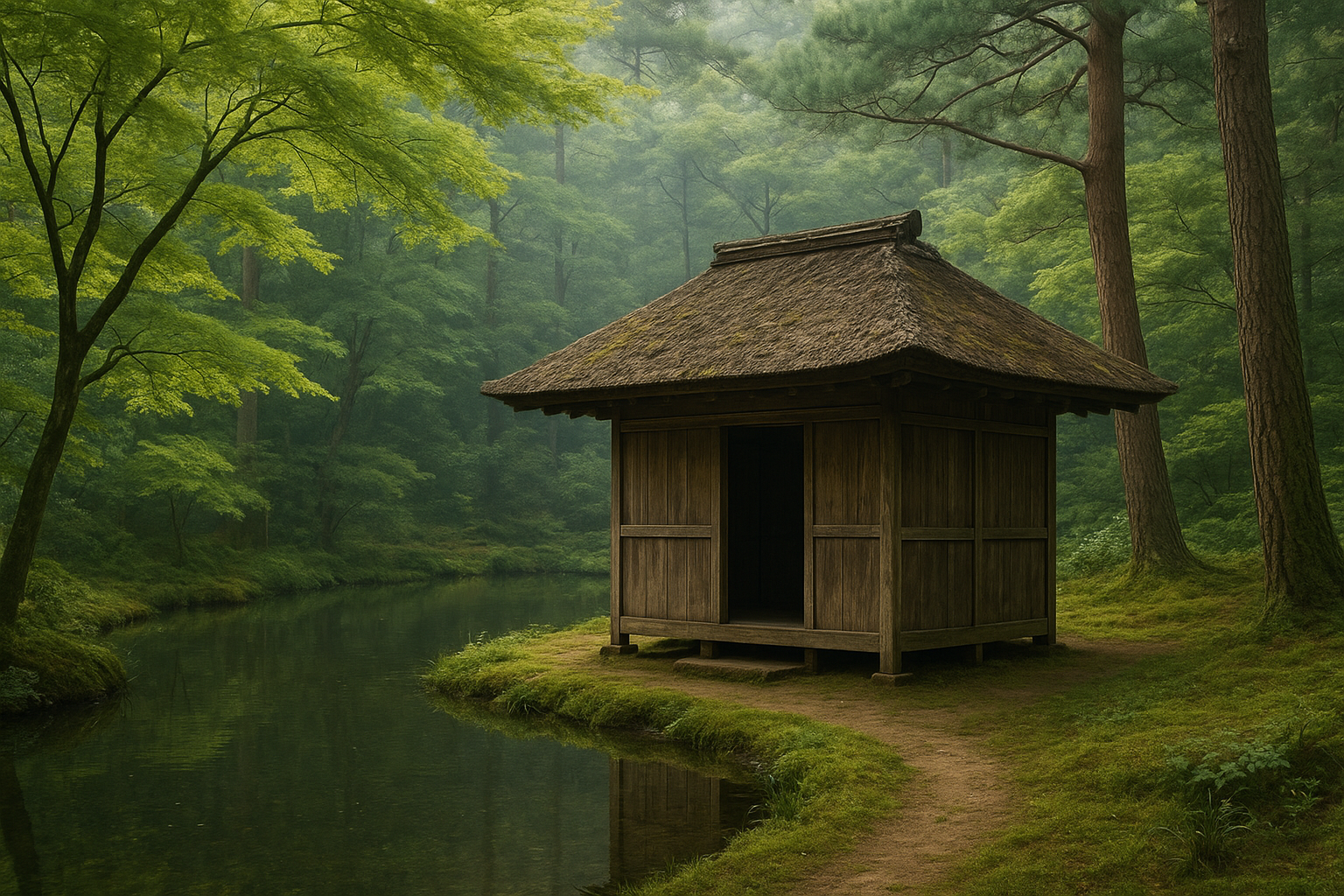
    At the heart of the film is a solitary monk who retreats to an isolated hut in the mountains, symbolizing the journey of returning to simplicity. His practice is not just of austerity but of an intentional embrace of the present moment. As the monk tends to a moss garden or sits in silent meditation, the viewer is invited to join him in contemplating the profound peace found in simplicity.

    This movie resonates strongly with those familiar with the tenets of Zen Buddhism and anyone who finds solace in nature’s embrace. Critics have noted that The Empty Hut is “like a haiku brought to life,” as stated in a review by Zen Filmmakers Journal.

    A Profound Experience

    In conclusion, The Empty Hut offers an exquisite escape into the world where Zen and nature coexist in profound serenity. Its ability to capture the essence of stillness and the beauty of the natural world makes it a standout piece that nurtures the soul.

    “A silent journey within—where one can meet the true self,” echoes within the closing scenes, a perfect summation of the film’s deeper message.

  • The Hidden Spring – Where Spirit and Nature Intertwine

    The Hidden Spring – Where Spirit and Nature Intertwine

    The Hidden Spring: Where Spirit and Nature Intertwine

    Throughout history, interactions between the spiritual and natural worlds have mystified humanity, leading us to search for places where these realms meet. One such place is the hidden spring, a conceptual and often physical spot where spirit and nature intertwine. This symbolic location offers insights into our worldviews and helps us understand the sacred bond between humans and the environment.

    The Symbolism of the Spring

    Water as a symbol of life and renewal has captured the imagination of cultures worldwide. Springs, as sources of water, hold significant spiritual symbolism. In many traditions, they represent the boundary between the known and the unknown, the physical and the metaphysical.

    From the ancient Greeks to Native American tribes, springs have been considered sacred. They are seen as a gateway to the divine, a place where one can connect directly with the gods or the spirits of the earth. As John O’Donohue eloquently stated in his book Anam Ċara: A Book of Celtic Wisdom, “The world is full of sacred places. To be human is to become visible while carrying what is hidden as a gift to others.”

    Historical and Cultural Perspectives

    Across cultures, the hidden spring serves as a rich metaphor for spiritual quests and ecological harmony:

    • Greek Mythology: Springs were dedicated to deities like Artemis and Aphrodite. The Castalian Spring at Delphi was said to be a source of poetic inspiration.
    • Celtic Lore: Sacred wells and springs were crucial in Druidic traditions, linked to healing and otherworldly knowledge.
    • Indigenous Traditions: Among many Native American societies, springs are revered as life-giving ancestors, sources of wisdom, and sites of ceremonial practices.

    In each case, the spring is more than just a natural feature; it’s a nexus of meaning and power.

    Modern Explorations: Environmental and Spiritual Movements

    In contemporary times, the intertwining of spirit and nature takes on fresh urgency. Environmental movements tap into the spiritual significance of natural sites to galvanize action and preserve these sacred spaces. As eco-philosopher Joanna Macy suggests, the deep resistance many feel against environmental degradation is partly a spiritual outcry against the loss of meaningful connections with nature.

    The ongoing environmental crisis calls for a profound shift in perception. Seeing natural elements like hidden springs as conduits between human culture and environmental health encourages a more harmonious existence. “We won’t save a place we don’t love,” wrote naturalist David Orr. This underscores the necessity of rekindling our reverence for nature.

    “We won’t fight to save what we do not love.”

    The Role of Ritual and Reflection

    Ritual and meditation at natural spring sites can enhance personal awareness and contribute to a deeper understanding of the interconnectedness of life. In his acclaimed work, Everyday Sacred, Sue Bender beautifully illustrates how simple acts of contemplation can lead us to profound insights, much like a journey to a hidden spring.

    “The journey into the center of your soul is not to be undertaken lightly,” Bender writes, recognizing the transformative potential of engaging fully with “the places of silence, where the subtle music of nature plays a melody under the din of our everyday lives.”

    Connecting Science and Spirituality

    Science has begun to explore the intersections of spirit and nature, looking at how immersion in natural settings benefits mental health and fosters a sense of well-being. Biologist and philosopher Edward O. Wilson’s concept of biophilia suggests that humans possess an innate affinity for the natural world. This aligns with many spiritual beliefs, reaffirming the intrinsic value of nature not just to our ecological health but to our spiritual fulfillment.

    Conclusion: The Call of the Hidden Spring

    The hidden spring is more than a metaphor or a location; it is an invitation to rediscover the spiritual essence embedded in the natural world. In recognizing the sacred character of earth’s springs, we affirm our responsibility towards nature’s preservation.

    As we strive to bridge the gap between disparate domains of life—spirit and nature—we draw closer to understanding our collective journey: one that renews our spirits and respects the environment that sustains us.

    In this convergence, we find “not just a refuge, but a reminder of the remarkable beauty and mystery in the world,” as naturalist Loren Eiseley describes in The Invisible Pyramid. In nurturing these sacred connections, we safeguard not only our environment but also our spirits, acknowledging the profound tie that binds them.

  • Mountain Hermit Diaries – Living the Dao in Solitude

    Mountain Hermit Diaries – Living the Dao in Solitude

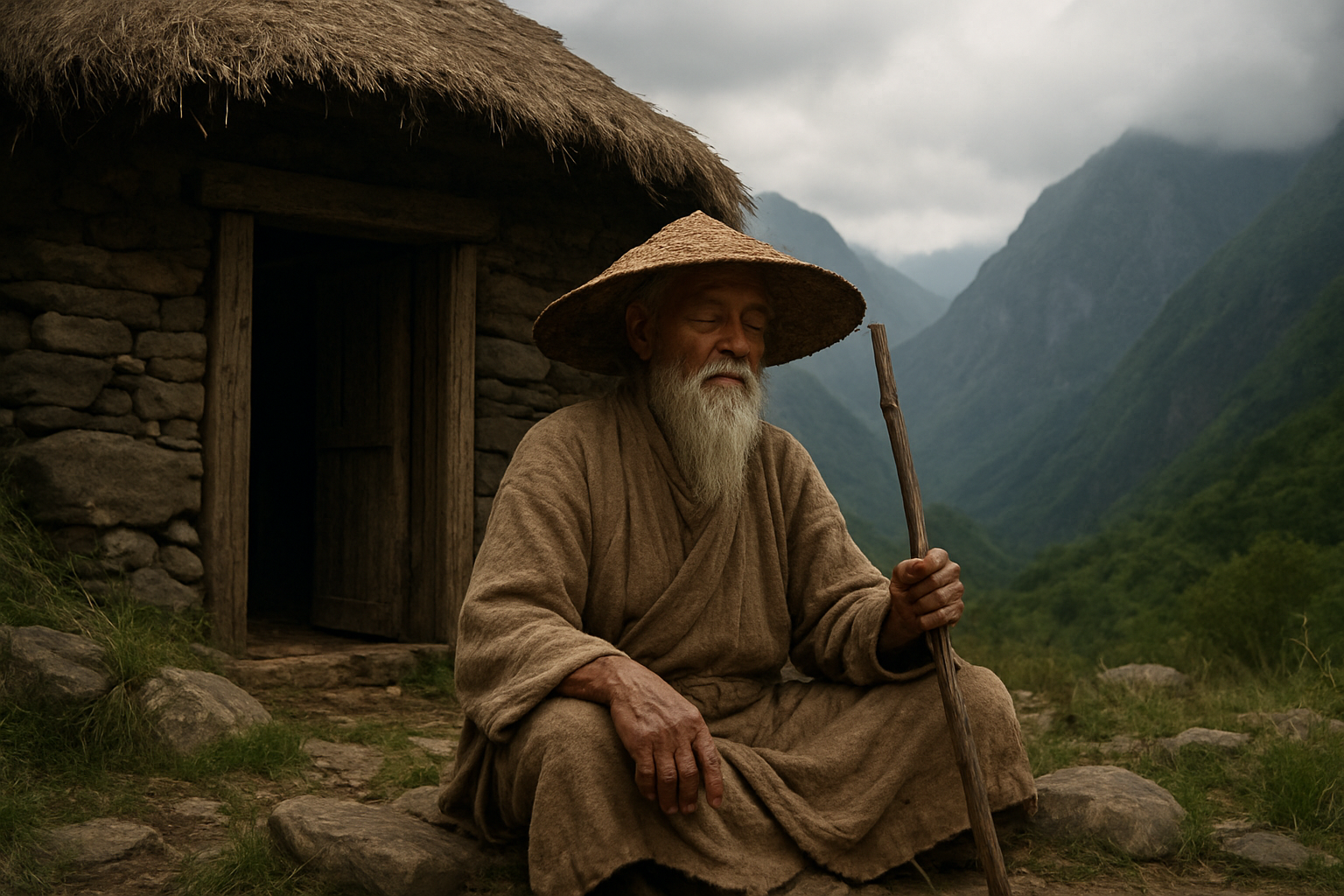
    The life of a mountain hermit, immersed in the simplicity and serenity of nature, provides a unique perspective on the teachings of Daoism. This ancient Chinese philosophy, which emphasizes living in harmony with the Dao or the “Way,” offers a path to inner peace and understanding that often eludes those ensnared by the complexity of modern life.

    The Call of the Mountains

    For many, the allure of the mountains is irresistible. The towering peaks and pristine wilderness offer a refuge from the noise and turmoil of society. Ancient Daoist sages often chose such settings for their seclusion, seeking a deeper connection with the natural world and their innermost selves.

    “In the pursuit of learning, every day something is acquired. In the pursuit of the Dao, every day something is dropped.” – Lao Tzu

    The wisdom of Lao Tzu, founder of Daoism, resonates profoundly with the hermit’s life. By shedding distractions and unnecessary attachments, the mountain hermit seeks to embrace the flow of life, embodying the principle of wu wei or “non-action,” which teaches alignment with the natural order.

    Daily Life in Solitude

    A typical day for a mountain hermit revolves around simplicity and mindfulness. Rising with the sun, the hermit engages in meditation and gentle exercises like tai chi or qigong, attuning their mind and body with the rhythms of nature. The preparation of simple meals using locally sourced, perhaps foraged ingredients serves as a daily practice of mindfulness and gratitude.

    • Meditation: Essential for centering and discovering inner peace.
    • Tai Chi/Qigong: Harmonizes the body’s energies.
    • Foraging: Provides sustenance and a connection with the earth.

    Reflections on Solitude

    While the physical solitude of the mountains is sometimes daunting, it is in these quiet moments that profound insights often arise. The hermit contemplates the Dao, observing the cyclical patterns of nature and the transience of existence, finding beauty in the impermanent and the small details often overlooked in daily life.

    “Nature does not hurry, yet everything is accomplished.” – Lao Tzu

    Living the Dao in solitude becomes a transformative journey, offering a profound understanding of the self and the universe. As the hermit engages with nature, a subtle awareness grows, revealing that the greatest wisdom often lies in the silent spaces between thoughts and the gentle flow of water down a mountain stream.

    Thus, the mountain hermit, in their solitude, lives as a guardian of ancient wisdom, embodying the quiet truths of Daoism in every fleeting moment, inspiring us to pause, reflect, and embrace the quietude of our own lives.

  • Listening to Stones – Nature’s Silent Transmission of Dao

    Listening to Stones – Nature’s Silent Transmission of Dao

    Listening to Stones: Nature’s Silent Transmission of Dao

    In the stillness of the natural world, the enduring presence of stones carries lessons that resonate with the ancient philosophy of Daoism. These geological formations, characterized by their solidity and permanence, offer profound insights into the Daoist concept of enduring harmony and balance within the cosmos.

    The Significance of Stones in Daoism

    Daoism, a spiritual tradition rooted in Chinese culture, emphasizes understanding and aligning oneself with the Dao (Tao), often translated as “the Way.” This philosophical path encourages an appreciation for nature’s simplicity and the wisdom it holds. Stones epitomize these ideals through their firm yet yielding nature, their ability to endure through time, and their harmonious existence within the landscape.

    “The Dao that can be told is not the eternal Dao; the name that can be named is not the eternal name.” – Tao Te Ching

    Much like the essence of Dao, stones teach us about the value of patience, resilience, and modesty. Just as a stone remains grounded amidst changing weather and seasons, it reminds us to stay rooted in our values and beliefs despite life’s fluctuations.

    Nature’s Silent Communicators

    Throughout history, stones have been used to communicate important cultural and spiritual messages. From the monolithic stone formations of Stonehenge to the perfectly balanced rock structures found across the world, stones convey a natural order that transcends human construction.

    • Symbolism and Rituals: Cultures across the globe have utilized stones in various rituals, often attributing sacred significance to these natural elements. In Daoism, stones are seen as symbols of eternity due to their endurance against time, subtly encouraging practitioners to seek immortality not in life but in spiritual legacy.
    • Natural Architecture: The design of many Daoist temples and gardens incorporates stones not just for their aesthetic value but also for their spiritual symbolism. Stones are deliberately placed to mimic natural mountain ranges, facilitating meditation and reflection.

    Stones as Teachers of Resilience and Change

    While stones themselves appear unchanging, they are, in fact, continually shaped by their environment. This silent testament to change highlights a central Daoist tenet: the natural world is characterized by constant transformation. As the Dao De Jing states, “Nature does not hurry, yet everything is accomplished.”

    “Being one with the stone is like being one with nature. In that union, the mind becomes still and learning abundant.” – Daoist Practice Guide

    The erosion of stones over centuries exemplifies the process of natural change—a slow yet inevitable transformation that echoes the Daoist philosophy of wu wei, or non-action. By embracing the flow of life and yielding to its natural courses, individuals can find peace and balance, much like the stone that yields to the elements.

    Environmental Lessons from the Stones

    In today’s era of environmental upheaval, the wisdom held within stones becomes particularly poignant. As symbols of stability and perseverance, stones remind us of the importance of environmental conservation and our role within the broader ecological system.

    • Connection with Nature: Daoism teaches that human beings are an intrinsic part of the natural world, not separate from it. Stones, in their quiet steadfastness, remind us of our responsibility to nurture and protect the Earth.
    • Sustainable Practices: The Daoist principle of living in harmony with nature extends to the practice of sustainability. By learning from the endurance and minimalism of stones, society can cultivate a lifestyle that respects natural resources and values long-term ecological health.

    Inspired by the silence of stones, individuals are encouraged to embrace simplicity, cultivate inner peace, and foster an awareness of their environmental footprint.

    The Enduring Message of Stones

    In the silence of stones lies a profound narrative, one that invites introspection, patience, and respect for the natural world. As we endeavor to listen to these silent custodians of nature, we align ourselves more closely with the principles of Daoism—equilibrium, humility, and unity with the universe.

    By attuning to the wisdom embedded within stones, we may find clarity in our own lives, achieving harmony with both the self and the broader cosmos. This silent transmission of Dao offers a pathway to a more balanced and enlightened existence.

  • Roots and Clouds – The Dual Nature of the Dao in Movement and Stillness

    Roots and Clouds – The Dual Nature of the Dao in Movement and Stillness

    Roots and Clouds: The Dual Nature of the Dao in Movement and Stillness

    The ancient philosophical teachings of Daoism offer profound insights into the interplay between movement and stillness, symbolized by the imagery of roots and clouds. Grounded yet expansive, these concepts illustrate how harmony with the Dao is achieved through understanding and embodying these dual aspects of existence.

    The Roots: Firmness in Stillness

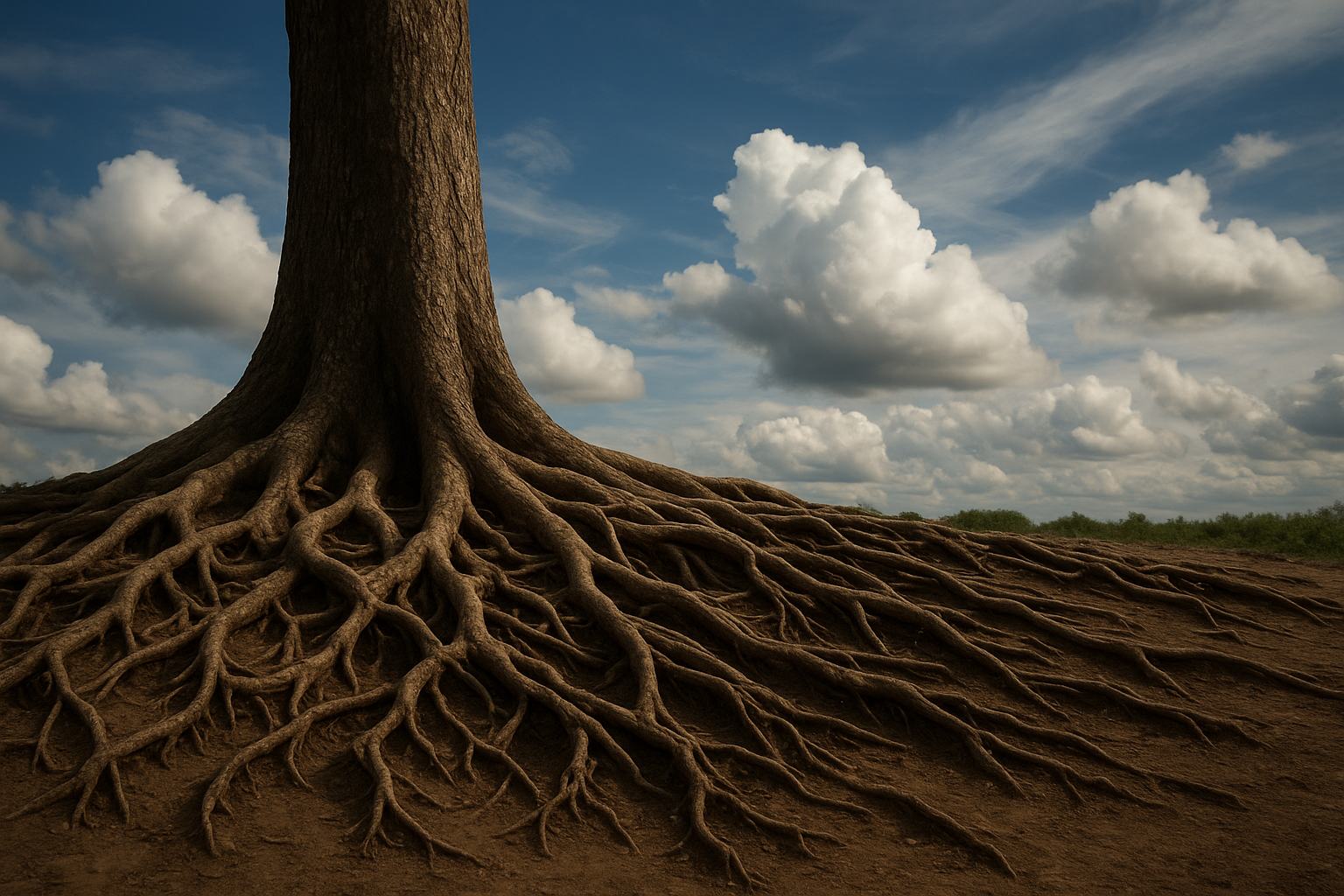
    Roots, in the context of Daoist philosophy, symbolize stability, groundedness, and strength. Just as roots anchor a tree to the earth, the concept of roots reflects the importance of a firm foundation in life. This foundational stability allows for growth and resilience.

    • Rootedness in Practicing the Dao: Daoist practices such as meditation and Tai Chi emphasize stillness and connection to the earth. This practice cultivates a form of inner quietude and strength, akin to being deeply rooted. As Laozi suggests in the Tao Te Ching, “To the mind that is still, the whole universe surrenders.
    • Balance and Harmony: Just as roots draw nourishment from the soil, individuals grounded in their practice are able to draw wisdom and strength from their surroundings, achieving a balance with the world.

    The Clouds: Freedom in Movement

    Contrasting with the steadfast nature of roots, clouds embody the essence of freedom, movement, and change. They are ever-moving, never confined to one shape or form, which is reflective of the Daoist view of the universe as fluid and dynamic.

    • Flexibility and Impermanence: The transitory nature of clouds teaches adaptability. Movement, in this sense, is not chaotic but a flexible response to life’s transient nature. The Internet Encyclopedia of Philosophy discusses how the Dao is continually transforming, like the clouds.
    • Creative Force: Where roots signify grounding, clouds represent the boundless possibilities that come with embracing change. As Zhuangzi notes, “The perfect man employs his mind like a mirror – going after nothing, welcoming nothing, responding but not storing.” This mirrors the freedom clouds have in drifting and shaping at will.

    The Harmony of Movement and Stillness

    The Dao is often described as existing in harmony with all things, embodying a dynamic balance between opposites: movement and stillness. Like yin and yang, these elements are interdependent, each defining and giving rise to the other.

    “Those who flow as life flows know they need no other force.” – Laozi.

    This statement highlights the Daoist appreciation for an existence that embraces fluidity and settledness. By becoming attuned to both roots and clouds, individuals can navigate life with serenity and grace.

    • Mindfulness in Action and Stillness: Practice involves being mindful of the present moment, whether in quiet contemplation or dynamic activity. This duality facilitates a deeply transformative experience where one is fully engaged yet maintains a peaceful center.
    • Philosophical Implications: The Daoist approach underscores the futility of resisting the natural ebb and flow of life. By highlighting both stillness and movement, Daoism encourages a surrender to the natural course of existence, fostering resilience and adaptability.

    Practical Applications

    Drawing from the principles of roots and clouds, the Dao offers practical applications for modern living:

    • Cultivating a Grounded Presence: Engage daily in grounding practices, whether it is through meditation, mindful walking, or simple stillness, providing the stability needed to face the world’s chaos.
    • Embracing Change: Like clouds, allow yourself to be open to possibilities and transformation. This adaptability enhances personal development and robust coping mechanisms.
    • Integrative Practices: Activities that combine stillness and movement, such as Tai Chi, not only improve physical health but also promote mental and emotional balance, reflecting the dual nature of the Dao.

    As the world continues to evolve at an exponential pace, the ancient wisdom of Daoism remains relevant. The balance of roots and clouds within the Dao provides a timeless template for living in harmony with both the stability of the earth and the freedom of the sky. By integrating these dual natures, individuals can embrace a life of depth, flow, and profound connection with the universe.

  • From Mist to Form – Discovering Creation in the Daoist Void

    In the enchanting philosophy of Daoism, the universe is conceived not as a distant, mechanical structure built by the hands of gods, but as an exquisite symphony of transformations stemming from the Dao, the unmanifest source of all that is. This article delves into the enigmatic concept of creation within Daoism, exploring how from the nebulous mists of the void arises the manifold forms of the cosmos.

    The Origin: The Dao and The Void

    The Dao De Jing, the seminal text of Daoism attributed to the ancient sage Laozi, commences with the line:

    “The Dao that can be told is not the eternal Dao; the name that can be named is not the eternal name.”

    This opening aphorism hints at the ineffable nature of the Dao, the primordial source that predates heaven and earth. According to Daoism, the Dao is the ultimate void, a boundless emptiness teeming with potential, existing beyond our comprehension and definition.

    The concept of the void is not one of mere nothingness, but rather a fertile absence, a womb from which all things are born. This paradoxical notion of creation challenges the conventional understanding of beginnings, urging one to embrace the mystery and spontaneity inherent in the universe.

    Qi: The Vital Breath

    Emerging from the Dao is Qi (氣), often translated as “vital breath” or “life force.” Qi is the energetic link between the void and the manifest world, a dynamic force that animates the cosmos. In Daoist cosmology, the evolution from void to form is articulated through the interplay of Qi’s two fundamental aspects: Yin and Yang.

    • Yin: Characterized by qualities such as darkness, receptiveness, and femininity.
    • Yang: Represented by light, activeness, and masculinity.

    The continuous dance of Yin and Yang embodies the balance and harmony of the universe, facilitating the transformation of the undifferentiated void into diverse physical and metaphysical forms.

    The Role of Wu Wei

    A pivotal concept in Daoism, Wu Wei (無為), is often interpreted as “non-action” or “effortless action.” In the context of creation, Wu Wei suggests that the natural world unfolds spontaneously and harmoniously when left to its own devices, without force or artificial interference.

    Laozi emphasizes this principle in the Dao De Jing, where it is stated:

    “The Dao never acts yet nothing is left undone.”

    This idea does not advocate for passivity but rather champions an alignment with the natural rhythms and currents of life. In creation, Wu Wei allows the true nature of things to manifest, free from the constraints of contrived effort.

    Three Treasures: Jing, Qi, and Shen

    Within the human microcosm, Daoism identifies three treasures that are vital to the process of spiritual creation and transformation:

    • Jing (精): The essence or seed of life, associated with physical vitality and health.
    • Qi (氣): The aforementioned life force, maintaining the connection between body and spirit.
    • Shen (神): The spirit or consciousness, regarded as the most refined and subtle energy.

    Through practices such as meditation, Tai Chi, and Qi Gong, Daoists seek to cultivate and balance these treasures, thereby aligning themselves more closely with the Dao and facilitating the flow of creative energy.

    Daoist Creation Myths

    Though less central than the philosophical tenets, Daoist myths offer rich narratives about the origins of heaven, earth, and humanity. One prominent story is of Pangu (盤古), the mythical giant who emerged from a cosmic egg and separated the heavens and earth with his strength:

    “At the beginning of time, the universe was a chaotic mass. From this void, a giant named Pangu arose. Upon his death, his body transformed into the various elements of nature. His breath became the wind, his voice the thunder, his eyes the sun and moon, and his blood formed rivers.”

    This myth underscores the cyclic nature of creation and transformation, where from unity comes multiplicity, and from the death of one entity arises life anew.

    Integrating Daoism into Modern Life

    In today’s fast-paced world, the teachings of Daoism offer a counterbalance to the prevailing ethos of constant striving and linear progress. By embracing the principles of the Dao and the simplicity of Wu Wei, one can foster a deeper appreciation for the transformative power of the present moment.

    Here are a few ways to integrate Daoist principles into modern living:

    • Meditation and Mindfulness: Practice stillness and observe the flow of thoughts, allowing them to settle naturally without interference.
    • Balance and Harmony: Strive for equilibrium in all aspects of life, acknowledging the interplay of opposing forces.
    • Engage with Nature: Spend time in natural surroundings to reconnect with the rhythms and patterns of the universe.

    Conclusion

    The Daoist vision of creation as an unfurling from mist to form presents a beautiful paradigm of interconnectedness and harmony. By learning from the Dao, humans can find their place within the cosmos, embracing the cycles of change and the mystery of existence. Through the lens of Daoism, the void is not to be feared but cherished as the silent beginning of endless possibilities.

    Experience the gentle unfolding of the Dao and explore further reading with the World History Encyclopedia on Daoism.
  • The Road Worn Smooth by Water – Learning Surrender from Nature

    The Road Worn Smooth by Water: Learning Surrender from Nature

    “When water flows over stones, it does not struggle with them but gently goes around, eventually polishing and shaping them into perfect forms.” — Lao Tzu

    In the ever-bustling world where pace is often synonymous with success, the art of surrender is frequently overlooked. Nature, in its quiet wisdom, offers profound lessons in surrender and acceptance, specifically through the element of water. Water, an omnipresent force, shapes the landscape not through force but through persistence and adaptability. This humble fluid teaches a rich lesson in navigating life’s complexities with grace.

    The Dance of Water and Stone

    One of the most vivid illustrations of water’s gentle power is the way it interacts with stones. As streams and rivers cut through landscapes, they meet obstacles in the form of rocks and stones. Instead of engaging in a battle of wills, water flows around these obstructions, finding the path of least resistance. Over time, this approach wears away the rough edges, turning rugged surfaces into smooth pebbles.

    Perhaps the most renowned example is the Grand Canyon, sculpted by the Colorado River over millions of years. This monumental achievement was not wrought by destructive force but by the relentless, gentle flow of water, patiently carving through rock to create one of nature’s masterpieces. National Park Service notes the fascinating history of these natural processes and their outcomes.

    Lessons in Surrender

    • Adaptability: Water adjusts to the shape of whatever contains it. In life, this reflects the need to adapt to situations rather than become rigid in the face of change. During uncertain times, flexibility can transform obstacles into stepping stones.
    • Persistence: Just as water carves its way through rock, continual effort and patience can lead to overcoming significant challenges. It proves the adage that “slow and steady wins the race.”
    • Finding the Path of Least Resistance: Water inherently seeks the easiest route. Likewise, learning to identify and follow the path of least resistance in life’s dilemmas can conserve energy and reduce stress.

    The Gentle Giant

    Contrary to the notion of surrender being a sign of weakness, water exemplifies strength in gentleness. When a river overflows, it calmly expands, finding new routes and, in the process, nourishing the earth with fresh nutrients. This natural phenomenon prompts the idea that surrendering to life’s flow can lead to new opportunities and personal growth.

    “Be water, my friend,” said Bruce Lee, capturing the essence of embodying the fluidity and strength of water. His philosophy underscores the power of being formless and adaptable, capable of taking on any challenge without fear of failure.

    Cultural Tributaries

    This wisdom is not confined to a single culture but is a global concept deeply embedded in philosophical and spiritual traditions across the world. Eastern philosophies, such as Taoism, have long revered water as a symbol of humility and strength. As stated in the Tao Te Ching, “Nothing in the world is as soft and yielding as water. Yet for dissolving the hard and inflexible, nothing can surpass it.”

    Similarly, Indigenous cultures recognize water as a sacred life force and a teacher, reminding us of the intricate interconnectedness of all life and the importance of harmony and balance.

    From Rivers to Routines

    Embracing the principles that water exemplifies doesn’t require drastic lifestyle changes. It begins with small, intentional actions. Just as a river is made up of countless drops, significant change can accumulate from modest daily adjustments:

    • Begin with mindfulness practices that promote a deeper awareness of the present moment and your response to it.
    • Practice gratitude to recognize and appreciate the flow and rhythm of life’s events.
    • Prioritize balance by allowing rest and recovery, much like water ebbs and flows naturally.

    The Fluid Future

    As the world increasingly relies on rapid change and adaptation, the lessons from water become ever more pertinent. To learn surrender from nature is not to accept passively but to engage actively with life’s ebb and flow. It is about harnessing the power of gentleness, finding strength in the path of least resistance, and shaping a future that is resilient and harmonious.

    “Water is not rigid. It can fit into containers of any shape. For this reason, water is the symbol of the tao.” — Confucius

    Just as roads worn smooth by water tell the enduring story of natural adaptability and persistence, our journey can be one of transformative resilience. Through the lens of nature, we can learn to cultivate a life that, like water, moves seamlessly, resolves tension, and quietly, yet profoundly, shapes the world around us.

  • Ecospiritual Pilgrimage

    Ecospiritual Pilgrimage

    Ecospiritual Pilgrimage: A Journey Back to Nature

    In the ever-accelerating modern world, the search for meaning and tranquility often drives individuals to seek solace in nature. Ecospiritual pilgrimage is a burgeoning movement that combines this quest for environmental spirituality with a deep reverence for the natural world. It is a journey that transcends mere travel, fostering a profound connection with the earth and the divine.

    Understanding Ecospirituality

    Ecospirituality is a spiritual ideology that integrates ecological awareness with spiritual beliefs. It is derived from the understanding that the earth is interconnected with all living beings, and it encourages a sacred relationship with the environment. As Gottlieb notes in A Greener Faith: Religious Environmentalism and Our Planet’s Future, “Ecospirituality prompts a shift from merely viewing nature as a backdrop to regarding it as an active participant in spiritual practice.”

    The Rise of Eco-Pilgrimages

    Eco-pilgrimages are journeys undertaken with ecological mindfulness, often to sacred natural sites. Unlike traditional pilgrimages, which focus on religious endpoints, ecospiritual pilgrimages emphasize the journey itself, encouraging reflection and mindfulness along the way. As interest in sustainability and environmental stewardship grows, more people are drawn to these journeys.

    “The earth has music for those who listen.”
    – William Shakespeare

    Notable Ecospiritual Destinations

    • The Camino de Santiago, Spain

      The Camino de Santiago is a well-known route with numerous paths, all converging at the shrine of Saint James in Santiago de Compostela. In recent years, it has drawn not only religious pilgrims but also those seeking a spiritual connection with nature. Travelers often speak of the profound spiritual awakenings they experience as they traverse the diverse landscapes of Spain.

    • Mount Kailash, Tibet

      Considered sacred by several religions, including Hinduism, Buddhism, and Jainism, Mount Kailash is both a physical and spiritual challenge. Pilgrims circumnavigate the mountain in a ritual known as the kora, reflecting upon their personal and environmental relationships as they do so.

    • Glendalough, Ireland

      St. Kevin’s monastic site at Glendalough in the Wicklow Mountains is as much a spectacle of natural beauty as it is a historic religious settlement. Surrounded by lakes and forests, it provides an ideal setting for reflective walks and meditations on eco-theology.

    • Uluru, Australia

      A sacred site for the Anangu people, Uluru is not just a geological wonder but a center of spirituality deeply connected to indigenous understanding of the land.

    Preparing for an Ecospiritual Pilgrimage

    Preparation for an ecospiritual pilgrimage involves more than just practical arrangements. Potential pilgrims are encouraged to engage in spiritual preparation, which may include meditation, eco-practices such as tree planting, or reading relevant ecospiritual literature. As author Joanna Macy suggests in A World We Can Trust, “Connecting with the natural world on a spiritual level requires openness, mindfulness, and the willingness to listen.”

    The Transformative Potential of Ecospiritual Pilgrimage

    The nature of an eco-pilgrimage promotes not only personal transformation but also broader ecological consciousness. By stepping away from daily routines and submerging oneself into the natural environment, individuals often gain new perspectives on their relationship with the earth and their impact on it. Pilgrims report feeling a heightened sense of environmental stewardship and a renewed commitment to protecting the natural world.

    Challenges and Considerations

    Eco-pilgrimages, while inspiring, are not without their challenges. The cultural and environmental impact of increased foot traffic on sacred and natural sites is a growing concern. Pilgrims and organizers must strive to ensure that these sacred journeys are sustainable and respectful to host landscapes and communities. Travel operations must focus on minimizing waste, conserving resources, and ensuring that local ecosystems are not disturbed.

    Concluding Thoughts

    Ecospiritual pilgrimage offers a path not only to personal enlightenment but also to environmental advocacy. By embarking on these journeys, individuals embrace the divine in nature and cultivate an increased awareness of their role within the ecosystem. As the ancient proverb states, “When we walk upon the earth, we walk with our ancestors.”

    The growing popularity of ecospiritual pilgrimages reflects a communal awakening to the reciprocity between spirituality and ecology—encouraging each person to nurture an intimate and sacred relationship with the planet.

  • Rewilding the Self

    Rewilding the Self

    Rewilding the Self: A Journey Back to Nature

    In an age dominated by urban landscapes and digital interactions, the concept of rewilding offers a refreshing return to nature, both ecologically and personally. While traditionally associated with environmental conservation, rewilding the self is a transformative journey focusing on restoring human connection with the natural world. This article explores the philosophical and practical dimensions of rewilding oneself in the modern age.

    The Origin and Philosophy of Rewilding

    The term “rewilding” initially gained traction in the ecological sphere, promoting the restoration of wilderness areas and biodiversity. According to Nature, rewilding efforts aim to “restore natural processes and reestablish food chains.” This restorative approach acknowledges that ecosystems flourish when they operate without excessive human interference.

    However, beyond its environmental implications, rewilding has evolved into a personal ethos. It suggests that just as ecosystems thrive through rewilding, so too can individuals find balance and vitality by reconnecting with nature.

    Why Rewilding the Self Matters

    Modern life is often characterized by its distance from nature. Studies such as one published in The Journal of Environmental Psychology highlight that increased urbanization and technology use have led to a “nature deficit,” affecting mental health and well-being.

    Carl Jung, the renowned Swiss psychiatrist, once stated, “Nature has a curious way of removing inner complexities, as a surgeon removes bulky, superfluous iron from the body, leaving behind the purest form of being.” This sentiment underscores the psychological benefits of immersing oneself in nature and simplifying life to its essentials.

    Practical Steps to Rewilding the Self

    Rewilding the self doesn’t necessarily mean forgoing modern conveniences. Instead, it’s about integrating nature more intentionally into our daily lives:

    • Engage in Nature-Based Activities: Join groups that focus on hiking, gardening, or birdwatching. Participating in these activities not only enhances appreciation for the environment but also offers a community of like-minded individuals.
    • Adopt Mindfulness Practices in Nature: Activities like forest bathing (shinrin-yoku) focus on slowing down and being present in nature. According to Global Wellbeing Institute, forest bathing can improve mood, reduce stress, and enhance overall well-being.
    • Reduce Digital Consumption: Allocate technology-free periods throughout the day to explore local parks or simply sit in a backyard and observe natural surroundings.
    • Implement Nature-Based Learning: If you have children, encourage them to learn through natural experiences, whether by exploring nearby trails or observing insects in the garden.

    The Psychological Impact of Rewilding

    The psychological benefits of rewilding the self are well-documented. A study published in Environmental Psychology indicates that individuals who engage regularly with natural environments report increased creativity, improved mood, and heightened spiritual connectivity. Nature’s rhythms and cycles offer a profound sense of grounding.

    “What is a human being without roots in the earth? What genes can bioengineer the symmetry of a snowflake or replace the solace found in a canopy of trees?” – Richard Louv, Last Child in the Woods

    This connection to nature invokes a reassessment of one’s place in the vastness of the world, encouraging introspection and a deeper understanding of oneself.

    The Social and Environmental Benefits

    Rewilding the self is also a socially and environmentally conscious act. By reconnecting with nature, individuals often become more mindful of ecological impacts and the need for sustainable living. This awareness fosters behaviors such as reducing consumption, supporting conservation efforts, and advocating for policies that protect natural habitats.

    • Community Involvement: Participation in local conservation projects or community gardens can strengthen social bonds and reinforce the importance of a shared commitment to nurturing the environment.
    • Lifestyle Changes: Adopting a more sustainable lifestyle by reducing waste, recycling, or even using renewable energy sources directly impacts the health of the planet.

    Challenges and Considerations

    Rewilding the self is not without its challenges. Modern life, with its demands and distractions, often prioritizes efficiency over tranquility. It requires conscious decision-making to step outside the confines of habitual patterns and actively pursue a natural, slower-paced lifestyle.

    Moreover, issues of accessibility can arise. Urban environments may lack green spaces, forcing individuals to travel to connect with nature, which can pose logistical and economic barriers.

    Conclusion

    In conclusion, rewilding the self is a deeply personal journey that resonates differently with each individual. Its practice encompasses fostering relationships not only within nature but also within oneself. As Richard Louv keenly observed the importance of nature in our lives, it becomes evident that as we open ourselves to rewilding, we embrace a balance often missing in fast-paced modern existence. By doing so, we not only contribute to our own well-being but also become stewards of the natural world, ensuring that such splendor endures for future generations.

    Ultimately, rewilding is an invitation to disengage from a singular, urban focus and to rediscover what it means to be human in harmony with the Earth.