Tag: natural

  • Dao of the Drifting Leaf – Trusting Nature’s Course

    Dao of the Drifting Leaf – Trusting Nature’s Course

    Dao of the Drifting Leaf: Trusting Nature’s Course

    In an era marked by rapid technological advancements and an increasingly fast-paced lifestyle, the age-old philosophy of Daoism offers a refreshing perspective on how one can live harmoniously with the natural world. Central to Daoism is the concept of wuwei, or effortless action, which emphasizes aligning oneself with the natural flow of the universe. A compelling analogy often used to illustrate this principle is the metaphor of the drifting leaf, a poetic symbol for trusting nature’s course.

    The Essence of Daoism

    Daoism, also spelled Taoism, is an ancient Chinese philosophy and religion that emphasizes living in harmony with the Dao, which can be translated as “the Way”. Laozi, the legendary figure often credited with founding Daoism, is famously known for the Tao Te Ching, a fundamental text on Daoist thought. The text offers profound insights into achieving balance and harmony within oneself and with the environment.

    “Nature does not hurry, yet everything is accomplished.” — Laozi

    This quote encapsulates the core of Daoism – the idea of achieving through non-action, letting things unfold in their own time, and trusting the natural order of the universe.

    The Drifting Leaf Metaphor

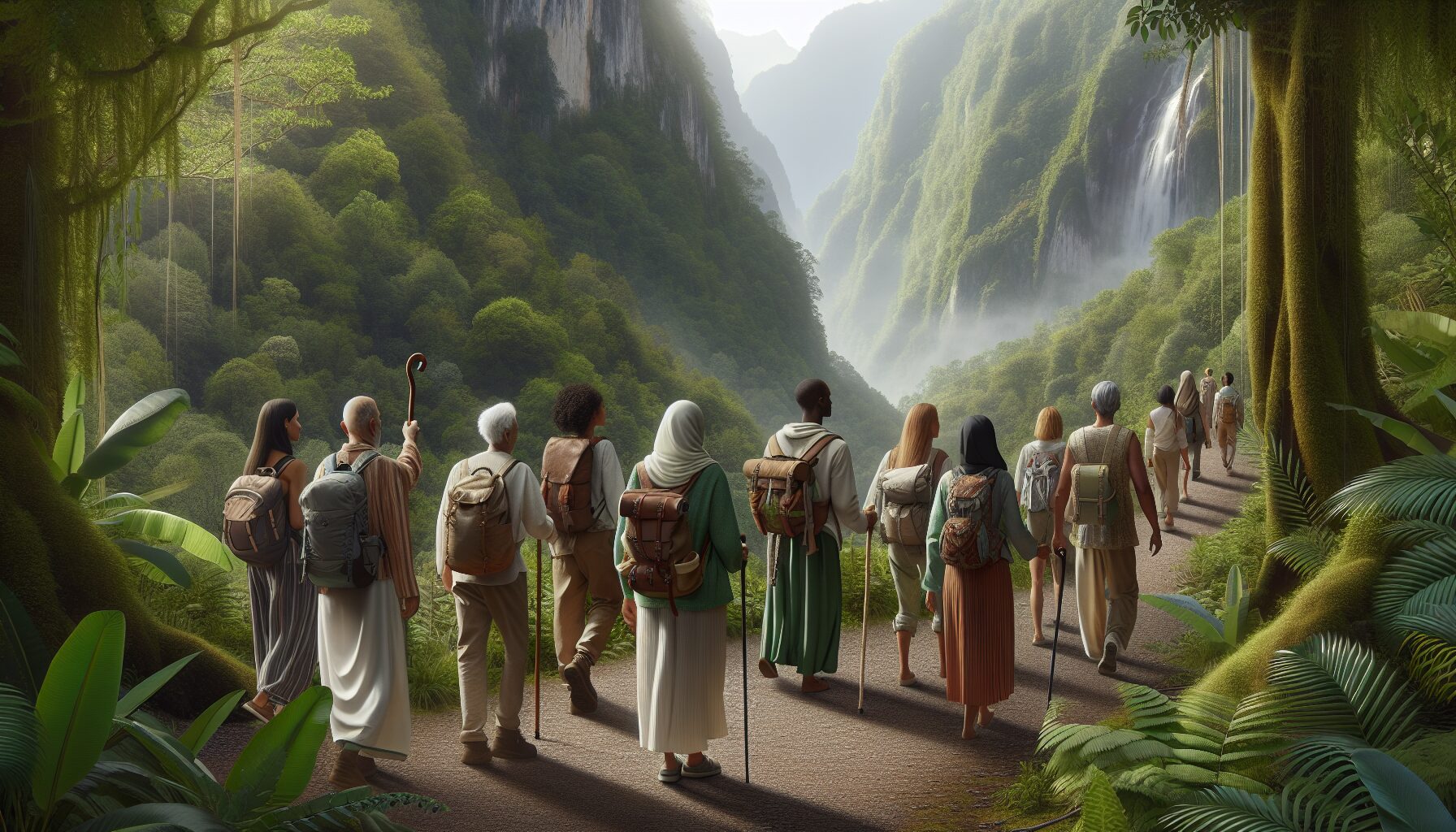
    Imagine a leaf drifting lazily along the surface of a stream. It flows without resistance, moving gracefully wherever the current takes it. This image is at the heart of the Daoist approach to life: letting go of rigid plans and instead embracing the spontaneity of existence.

    • Acceptance: Just as the drifting leaf accepts the current, individuals practicing Daoism learn to accept the circumstances of life. Acceptance doesn’t mean passivity, but rather a profound understanding that fighting against forces beyond one’s control only leads to unnecessary suffering.
    • Flexibility: Like the leaf that bends and adapts to obstacles in its path, a Daoist mindset encourages flexibility and resilience. Adapting to life’s challenges with grace and ease allows for personal growth and inner peace.
    • Harmony with Nature: The natural world operates on principles of balance and harmony, and the drifting leaf is a seamless part of this system. Nature itself is a guide, teaching us the benefits of aligning our lives with its rhythms.

    Applications in Modern Life

    Applying the principles of the drifting leaf to modern life can bring profound changes in how we perceive success, manage stress, and engage with the world around us.

    • Redefining Success: In a society that often equates success with wealth and power, the Daoist perspective encourages a broader definition that includes inner peace and happiness. Trusting the process and focusing on the journey rather than the destination can lead to a more fulfilling life.
    • Stress Management: By adopting a Daoist approach, individuals can manage stress more effectively. Instead of resisting stressors or trying to control every outcome, one can learn to flow with life’s changes, reducing anxiety and tension.
    • Environmental Awareness: The philosophy promotes a deep respect for nature. By understanding and respecting the interconnectedness of all life, individuals can make more sustainable and environmentally-conscious choices.

    Challenges and Critiques

    While the Dao of the drifting leaf offers a compelling way to engage with life, it is not without its challenges. Critics argue that an overly passive approach may lead to inaction in the face of injustice or oppression. Balancing acceptance with action is crucial, and it’s important to discern when to go with the flow and when to intervene actively.

    Despite these challenges, the principles of Daoism offer timeless wisdom. As society looks for ways to cope with the stress of modern living and environmental degradation, the metaphor of the drifting leaf provides a valuable lesson in the art of letting go and trusting the natural course.

    Conclusion

    In embracing the Dao of the drifting leaf, individuals invite peace and balance into their lives. By moving beyond the frantic pace set by societal norms and learning to flow with life’s currents, one can discover a deeper, more meaningful existence. As Laozi expressed, the most profound transformations are achieved without force. In trusting nature’s course, we find our own path to harmony and happiness.
  • Sky Traveler – The Daoist Spirit of Limitless Movement

    Sky Traveler – The Daoist Spirit of Limitless Movement

    Sky Traveler: The Daoist Spirit of Limitless Movement

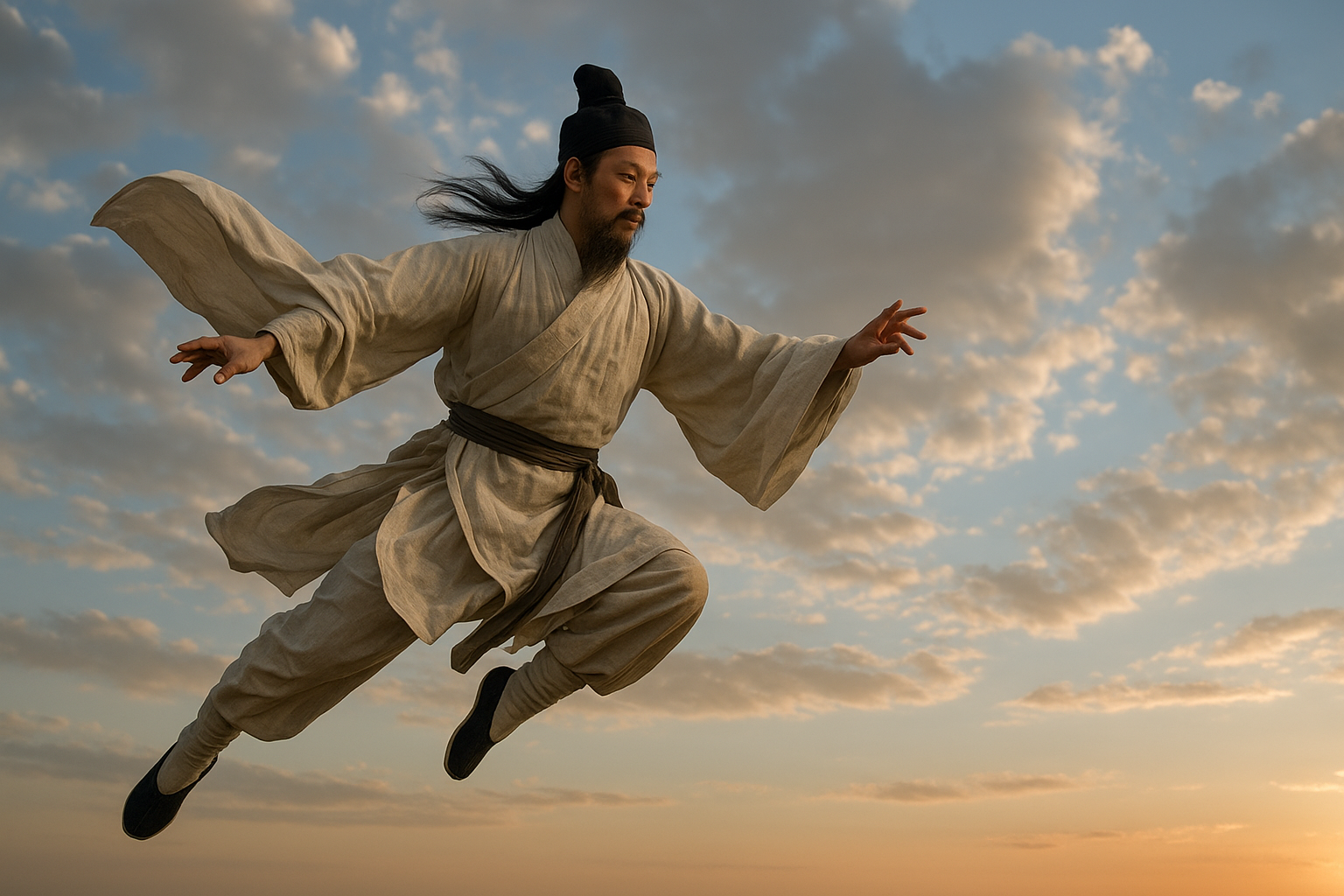
    Within the rich tapestry of Daoist philosophy and mythology, the concept of movement and flow is not merely a physical action but an existential condition, deeply embedded in the pursuit of harmony with the universe. At the heart of this ideology lies the mythical figure known as the Sky Traveler, a symbol of limitless movement and spiritual freedom. This article delves into the essence of the Sky Traveler, exploring how this figure embodies the Daoist principles of change, adaptation, and unity with nature.

    The Essence of the Sky Traveler

    In Daoism, the journey is often more significant than the destination. The Sky Traveler archetype represents the ultimate journeyer, not restricted by earthly bounds or societal conventions. This figure encapsulates the spirit of wu wei (無為), typically translated as ‘effortless action’ or ‘non-doing’. The Sky Traveler is a master of balance, riding the winds of change with grace and adaptability.

    “Daoism is the art of flowing with the currents of life, much like water navigates the landscapes it encounters. The Sky Traveler embodies this fluidity, becoming one with the natural world.” – Lao Tzu, Dao De Jing

    Historical Roots and Mythology

    The concept of the Sky Traveler has its roots in ancient Chinese mythology, where celestial beings traverse the realms between heavens and earth. These travelers are not only physical beings but also spiritual entities, representing the eternal bond between humanity and the cosmos.

    One of the legendary figures often associated with the Sky Traveler archetype is Zhilan Sheng, a mythical sage known for his ability to travel vast distances in the blink of an eye. According to legend, Zhilan Sheng could harness the winds and clouds to fly across mountains and seas, teaching the virtues of enlightenment and tranquility wherever he landed.

    The Daoist Philosophy of Movement

    Daoism emphasizes the importance of understanding and aligning with the natural world. The Sky Traveler illustrates the Daoist belief in the relativity of time and space, suggesting that physical boundaries are constructs of the mind. Daoists maintain that it is through acceptance and adaptability that one can achieve liberation from these constraints.

    • Fluidity and Adaptability: The Sky Traveler teaches the importance of flexibility in thought and action, mirroring the adaptive nature of water.
    • Unity with Nature: By traveling through the skies, this figure symbolizes unity with the natural elements, emphasizing harmony and balance.
    • Transcendence: The journey of the Sky Traveler represents a transcendence of worldly concerns, seeking higher truths and spiritual enlightenment.

    Contemporary Interpretations

    In modern contexts, the Sky Traveler symbolizes the eternal quest for knowledge and understanding. This archetype serves as a reminder of the necessity to break free from societal constraints and embrace one’s unique path. Literature, art, and film often draw inspiration from this timeless symbol, using it to explore themes of freedom and transformation.

    For instance, in contemporary literature, authors often depict characters who undergo profound journeys of self-discovery, reminiscent of the age-old traditions of the Daoist Sky Traveler. Such stories invite readers to reflect on their own lives, pondering the possibility of spiritual and personal evolution.

    Embracing the Sky Traveler Within

    Adopting the spirit of the Sky Traveler in one’s daily life means fostering a mindset of acceptance, flow, and discovery. It involves embracing the unpredictability of life with a sense of curiosity and openness. As Alan Watts eloquently put it, “The only way to make sense out of change is to plunge into it, move with it, and join the dance.” [Source]

    For those seeking to incorporate these principles, consider the following practices:

    • Meditation and Mindfulness: Regular meditation can help cultivate a sense of inner peace and acceptance, akin to the serenity of the Sky Traveler.
    • Connection with Nature: Spend time in natural settings, allowing the rhythms of the earth to guide your thoughts and actions.
    • Practice Non-Attachment: Learn to let go of rigid expectations, embracing change as a natural part of existence.

    In embracing the Sky Traveler within, individuals are encouraged to see the world not as a series of fixed realities but as a vast expanse of possibilities awaiting exploration. In this philosophy, the true journey is found not in the literal motion but in the continuous growth and transformation of the spirit.

  • The Mirror Lake – Seeing the Dao Reflected in Nature

    The Mirror Lake – Seeing the Dao Reflected in Nature

    The Mirror Lake: Seeing the Dao Reflected in Nature

    The philosophy of Daoism, or Taoism, has fascinated scholars, mystics, and nature lovers for centuries. At its core, Daoism emphasizes harmony with the natural world, seeking to align one’s life with the universal order—referred to as the Dao, or “The Way.” One of the most profound metaphors for understanding and experiencing the Dao is through the imagery of a “Mirror Lake,” a concept that wonderfully encapsulates the reflective nature of reality and personal insight.

    The Significance of Water in Daoism

    Water—as a symbol—plays a pivotal role in Daoist thought. The ancient philosopher Laozi, in the foundational text Tao Te Ching, compares the qualities of water to the ideal Daoist life. In Chapter 8, he states:

    “The highest good is like water. Water gives life to the ten thousand things and does not strive. It flows in places men reject and so is like the Dao.”

    Water embodies humility, adaptability, and softness, yet holds the strength to shape landscapes over time. These intrinsic qualities symbolize the Daoist virtues of wu wei (effortless action), humility, and the profound strength of gentleness. In the concept of the Mirror Lake, water reveals its reflective property, illustrating the Dao’s contemplative and introspective nature.

    Mirror Lake: Reflecting Promptings of the Soul

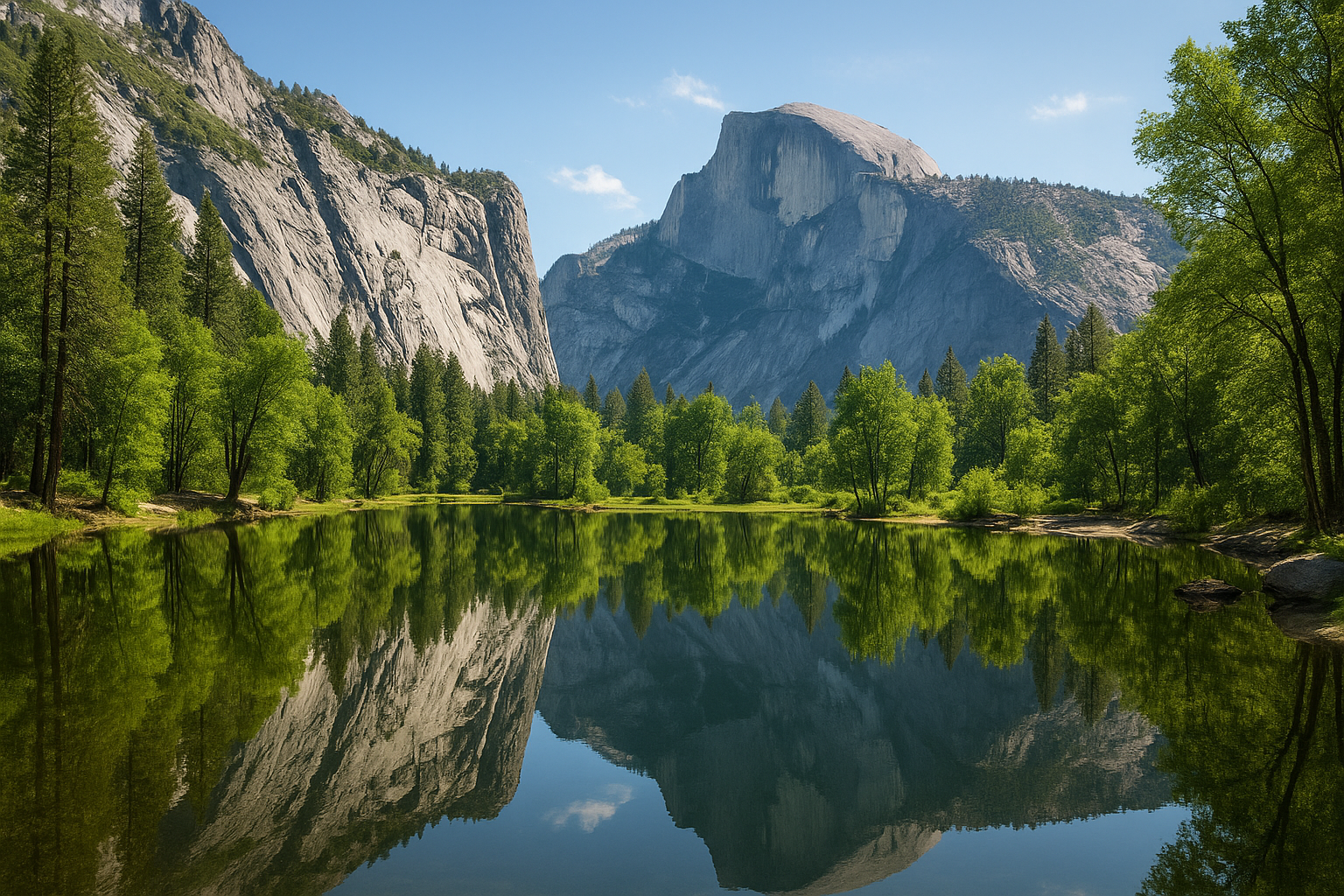
    The idea of a lake acting as a mirror is layered with meaning in Daoism. As a literal mirror reflects the world around it, so does “Mirror Lake” reflect the deeper truths of one’s inner self. The stillness and clarity of water allow for a perfect reflection, metaphorically suggesting that when our mind achieves tranquility and clarity, it mirrors the Dao more accurately.

    Harmony with Nature: A mirror lake, untouched and undisturbed, presents a flawless reflection of the sky, trees, and surrounding environment. This image reflects the Daoist ideal of living in harmony with nature, encouraging a lifestyle of minimal disturbance to the natural order. In this balance, one might find peace and contentment within the natural world.

    • Tranquility: The lake’s calm surface is akin to a mind free from distraction and conflict. A state of effortless mindfulness enables one to align with the Dao effortlessly.
    • Depth: Like the depths of the lake holding unseen mysteries, so too does the Dao encompass all the complexities and subtleties of life. Every ripple, every reflection tells a story of what lies beneath.
    • Reflection and Insight: By looking into the mirror lake, a person not only reflects externally but internally. This reflection is a metaphor for self-examination and enlightenment.

    Nature as Teacher

    In Daoism, nature is more than a backdrop; it is a teacher and a source of wisdom. A mirror lake, with its ability to present an unblemished reflection, is symbolic of the lessons nature provides—if only one chooses to inquire deeply. In his poetic essay “Walking,” transcendentalist Henry David Thoreau, whose writings closely align with Daoist thought, illustrates this connection:

    “I think that I cannot preserve my health and spirits unless I spend four hours a day at least… sauntering through the woods and over the hills and fields, absolutely free from all worldly engagements.”

    Like Thoreau, Daoists believe that engaging earnestly with the natural environment heals and educates the spirit.

    The Practice of Wu Wei on the Water

    Daoism introduces the concept of wu wei, which translates to “non-action” or “effortless action.” It’s the principle of aligning so perfectly with the natural flow of life that action becomes spontaneous and unforced. The Mirror Lake offers a perfect lesson in this, where the water flows and reflects without conscious thought, yet achieves tranquility and balance.

    • Effortless Reflection: The lake reflects without trying, a perfect embodiment of wu wei. Humans, too, are encouraged to act without aggressive striving, allowing life to unfold naturally.
    • Adapting to Circumstances: Water in a lake takes the shape of the land that contains it, teaching adaptability. This lesson reminds individuals to be flexible with life’s changes.

    Modern Reflections: The Relevance of the Mirror Lake Today

    In an increasingly fast-paced and technologically saturated world, the metaphor of the Mirror Lake is ever pertinent. It calls for moments of pause, reflection, and contemplation amid the noise of modern life. Aligning with the Daoist principle of natural harmony offers liberation from stress and an opportunity to rediscover simplicity and inner peace.

    The environmental messages in the Mirror Lake metaphor further emphasize the importance of respecting, preserving, and learning from the natural world rather than dominating it. Nature’s profound capacity to teach us about balance and reflection offers invaluable guidance amidst ecological concerns today.

    Conclusion

    The Mirror Lake serves as both a literal and metaphorical reflection of the key principles of Daoism. In its depths, one sees the ideas of harmony, reflection, and the pursuit of inner stillness, mirroring the profound insights of the Dao. As water reflects the world around it, so too can individuals reflect upon themselves and their place in the universe—offering a path to both personal enlightenment and a more harmonious existence with nature.

    Linking ancient wisdom with contemporary living, the Mirror Lake not only underscores enduring truths within the Daoist tradition but also resonates deeply with those seeking a more balanced, mindful, and meaningful life.

  • The Hidden Spring – Where Spirit and Nature Intertwine

    The Hidden Spring – Where Spirit and Nature Intertwine

    The Hidden Spring: Where Spirit and Nature Intertwine

    Throughout history, interactions between the spiritual and natural worlds have mystified humanity, leading us to search for places where these realms meet. One such place is the hidden spring, a conceptual and often physical spot where spirit and nature intertwine. This symbolic location offers insights into our worldviews and helps us understand the sacred bond between humans and the environment.

    The Symbolism of the Spring

    Water as a symbol of life and renewal has captured the imagination of cultures worldwide. Springs, as sources of water, hold significant spiritual symbolism. In many traditions, they represent the boundary between the known and the unknown, the physical and the metaphysical.

    From the ancient Greeks to Native American tribes, springs have been considered sacred. They are seen as a gateway to the divine, a place where one can connect directly with the gods or the spirits of the earth. As John O’Donohue eloquently stated in his book Anam Ċara: A Book of Celtic Wisdom, “The world is full of sacred places. To be human is to become visible while carrying what is hidden as a gift to others.”

    Historical and Cultural Perspectives

    Across cultures, the hidden spring serves as a rich metaphor for spiritual quests and ecological harmony:

    • Greek Mythology: Springs were dedicated to deities like Artemis and Aphrodite. The Castalian Spring at Delphi was said to be a source of poetic inspiration.
    • Celtic Lore: Sacred wells and springs were crucial in Druidic traditions, linked to healing and otherworldly knowledge.
    • Indigenous Traditions: Among many Native American societies, springs are revered as life-giving ancestors, sources of wisdom, and sites of ceremonial practices.

    In each case, the spring is more than just a natural feature; it’s a nexus of meaning and power.

    Modern Explorations: Environmental and Spiritual Movements

    In contemporary times, the intertwining of spirit and nature takes on fresh urgency. Environmental movements tap into the spiritual significance of natural sites to galvanize action and preserve these sacred spaces. As eco-philosopher Joanna Macy suggests, the deep resistance many feel against environmental degradation is partly a spiritual outcry against the loss of meaningful connections with nature.

    The ongoing environmental crisis calls for a profound shift in perception. Seeing natural elements like hidden springs as conduits between human culture and environmental health encourages a more harmonious existence. “We won’t save a place we don’t love,” wrote naturalist David Orr. This underscores the necessity of rekindling our reverence for nature.

    “We won’t fight to save what we do not love.”

    The Role of Ritual and Reflection

    Ritual and meditation at natural spring sites can enhance personal awareness and contribute to a deeper understanding of the interconnectedness of life. In his acclaimed work, Everyday Sacred, Sue Bender beautifully illustrates how simple acts of contemplation can lead us to profound insights, much like a journey to a hidden spring.

    “The journey into the center of your soul is not to be undertaken lightly,” Bender writes, recognizing the transformative potential of engaging fully with “the places of silence, where the subtle music of nature plays a melody under the din of our everyday lives.”

    Connecting Science and Spirituality

    Science has begun to explore the intersections of spirit and nature, looking at how immersion in natural settings benefits mental health and fosters a sense of well-being. Biologist and philosopher Edward O. Wilson’s concept of biophilia suggests that humans possess an innate affinity for the natural world. This aligns with many spiritual beliefs, reaffirming the intrinsic value of nature not just to our ecological health but to our spiritual fulfillment.

    Conclusion: The Call of the Hidden Spring

    The hidden spring is more than a metaphor or a location; it is an invitation to rediscover the spiritual essence embedded in the natural world. In recognizing the sacred character of earth’s springs, we affirm our responsibility towards nature’s preservation.

    As we strive to bridge the gap between disparate domains of life—spirit and nature—we draw closer to understanding our collective journey: one that renews our spirits and respects the environment that sustains us.

    In this convergence, we find “not just a refuge, but a reminder of the remarkable beauty and mystery in the world,” as naturalist Loren Eiseley describes in The Invisible Pyramid. In nurturing these sacred connections, we safeguard not only our environment but also our spirits, acknowledging the profound tie that binds them.

  • Listening to Stones – Nature’s Silent Transmission of Dao

    Listening to Stones – Nature’s Silent Transmission of Dao

    Listening to Stones: Nature’s Silent Transmission of Dao

    In the stillness of the natural world, the enduring presence of stones carries lessons that resonate with the ancient philosophy of Daoism. These geological formations, characterized by their solidity and permanence, offer profound insights into the Daoist concept of enduring harmony and balance within the cosmos.

    The Significance of Stones in Daoism

    Daoism, a spiritual tradition rooted in Chinese culture, emphasizes understanding and aligning oneself with the Dao (Tao), often translated as “the Way.” This philosophical path encourages an appreciation for nature’s simplicity and the wisdom it holds. Stones epitomize these ideals through their firm yet yielding nature, their ability to endure through time, and their harmonious existence within the landscape.

    “The Dao that can be told is not the eternal Dao; the name that can be named is not the eternal name.” – Tao Te Ching

    Much like the essence of Dao, stones teach us about the value of patience, resilience, and modesty. Just as a stone remains grounded amidst changing weather and seasons, it reminds us to stay rooted in our values and beliefs despite life’s fluctuations.

    Nature’s Silent Communicators

    Throughout history, stones have been used to communicate important cultural and spiritual messages. From the monolithic stone formations of Stonehenge to the perfectly balanced rock structures found across the world, stones convey a natural order that transcends human construction.

    • Symbolism and Rituals: Cultures across the globe have utilized stones in various rituals, often attributing sacred significance to these natural elements. In Daoism, stones are seen as symbols of eternity due to their endurance against time, subtly encouraging practitioners to seek immortality not in life but in spiritual legacy.
    • Natural Architecture: The design of many Daoist temples and gardens incorporates stones not just for their aesthetic value but also for their spiritual symbolism. Stones are deliberately placed to mimic natural mountain ranges, facilitating meditation and reflection.

    Stones as Teachers of Resilience and Change

    While stones themselves appear unchanging, they are, in fact, continually shaped by their environment. This silent testament to change highlights a central Daoist tenet: the natural world is characterized by constant transformation. As the Dao De Jing states, “Nature does not hurry, yet everything is accomplished.”

    “Being one with the stone is like being one with nature. In that union, the mind becomes still and learning abundant.” – Daoist Practice Guide

    The erosion of stones over centuries exemplifies the process of natural change—a slow yet inevitable transformation that echoes the Daoist philosophy of wu wei, or non-action. By embracing the flow of life and yielding to its natural courses, individuals can find peace and balance, much like the stone that yields to the elements.

    Environmental Lessons from the Stones

    In today’s era of environmental upheaval, the wisdom held within stones becomes particularly poignant. As symbols of stability and perseverance, stones remind us of the importance of environmental conservation and our role within the broader ecological system.

    • Connection with Nature: Daoism teaches that human beings are an intrinsic part of the natural world, not separate from it. Stones, in their quiet steadfastness, remind us of our responsibility to nurture and protect the Earth.
    • Sustainable Practices: The Daoist principle of living in harmony with nature extends to the practice of sustainability. By learning from the endurance and minimalism of stones, society can cultivate a lifestyle that respects natural resources and values long-term ecological health.

    Inspired by the silence of stones, individuals are encouraged to embrace simplicity, cultivate inner peace, and foster an awareness of their environmental footprint.

    The Enduring Message of Stones

    In the silence of stones lies a profound narrative, one that invites introspection, patience, and respect for the natural world. As we endeavor to listen to these silent custodians of nature, we align ourselves more closely with the principles of Daoism—equilibrium, humility, and unity with the universe.

    By attuning to the wisdom embedded within stones, we may find clarity in our own lives, achieving harmony with both the self and the broader cosmos. This silent transmission of Dao offers a pathway to a more balanced and enlightened existence.

  • Between Wind and Water – The Subtle Balance of the Natural Way

    Between Wind and Water: The Subtle Balance of the Natural Way

    In a world where technology often leads the charge, the grace of natural forces remains a constant reminder of the intricate dance of existence. The phrase “between wind and water” serves as both a nautical term and a metaphor for life, highlighting the delicate equilibrium necessary to navigate the seas of both the natural world and human experience.

    The Origins of the Phrase

    The term “between wind and water” originates from sailing. It refers to the vulnerable part of a ship — the area above the waterline and below the lowest point that water splashes during normal conditions. Striking this part of the hull can critically endanger the vessel, much like striking a critical balance in life can determine the success or failure of an endeavor. As Patrick Colquhoun stated, “The strength of the ship rests upon its balance between wind and water.” This balance in sailing epitomizes the precarious yet essential harmony found within nature itself.

    The Synergy of Wind and Water

    Wind and water, two of the fundamental elements, have worked in tandem for millennia to shape the environment. This relationship is not only a source of power and beauty but also a delicate synergy that influences ecosystems, weather patterns, and the very landscape of the earth.

    The Power of Wind

    “Sunlight is to sunshine, as wind is to energy.” — Proverb

    Wind, an invisible but palpable force, is integral to life on Earth. It is created by differences in atmospheric pressure, heat from the sun, and the rotation of the planet. Without wind, weather systems would stagnate, climate patterns would shift, and entire ecosystems would destabilize. As a renewable resource, wind energy is harnessed by humans to create a sustainable future, but its untamed version continues to sculpt natural environments in ways only visible over millennia.

    The Grace of Water

    “The voice of the sea speaks to the soul.” — Kate Chopin

    Water, the lifeblood of the planet, constitutes about 71% of Earth’s surface. It is crucial for the survival of all living organisms. It also plays a critical role in regulating climate through its heat capacity, distributing solar energy, and driving ocean currents. Water cycle interactions with wind result in the formation of clouds, precipitation, and the overall regulation of the Earth’s temperature.

    The Balance in Natural Ecosystems

    • Wetlands: Serving as a nexus between land and water, wetlands are among the most productive ecosystems. They are biodiversity hotspots and play a vital role in water purification, flood protection, and carbon sequestration.
    • Forests: Wind plays a significant role in forest ecology, aiding pollination and seed dispersal. Forests, in return, help regulate water flow and climate, creating a self-sustaining cycle.
    • Coastal Systems: The interaction between wind and water influences coastal erosion and sediment deposition, shaping shorelines and affecting marine habitats.

    Human Inclinations and Natural Balance

    Throughout history, humans have sought to harness both wind and water while maintaining the fragile balance. From ancient aqueducts to modern hydropower and wind farms, the effort to coexist sustainably with these forces continues. However, with technological advancements comes the responsibility of stewardship.

    Environmental philosopher Vandana Shiva emphasizes, “In nature’s economy, the currency is not money, it is life.” This understanding is crucial in fostering a relationship with natural elements that is based not on domination, but harmony and respect.

    The Future of Wind and Water

    The future demands an innovative approach to utilizing wind and water. As climate change continues to disrupt traditional systems, adaptive strategies such as sustainable urban planning, reforestation, and renewable energy adoption become pivotal. Investment in understanding and preserving the dynamic balance of natural ecosystems is not merely an environmental imperative but a necessity for human survival.

    Advancements in technology, alongside ancient knowledge and practices, may hold the answer to living between wind and water. The preservation of the Earth’s delicate balance requires global cooperation, scientific innovation, and a deep-rooted respect for nature’s rhythms.

    Conclusion

    The subtle balance between wind and water is emblematic of the broader natural equilibrium humanity must strive to maintain. As we continue to chart our course forward, it is essential to navigate the challenges with the wisdom of sailors — carefully and reverently maneuvering “between wind and water.”

    To read more about the impact of natural forces and the path to sustainability, visit World Wildlife Fund and the United Nations Environment Programme.

  • Before Heaven and Earth – Meditating on the Primordial Dao

    Before Heaven and Earth – Meditating on the Primordial Dao

    Before Heaven and Earth – Meditating on the Primordial Dao

    In the vast tapestry of Eastern philosophy, few concepts inspire awe and contemplation as profoundly as the Dao, often translated as the “Way.” This ancient notion transcends both human understanding and the natural world, leading us into a realm of primal essence and universal truth. Meditation on the primordial Dao is not just an intellectual exercise; it is a journey to touch the infinite, to bridge the reality of our finite existence with the boundless potential of the cosmos.

    The Origin of Dao

    The term Dao first emerged prominently in the Tao Te Ching, a classical Chinese text attributed to the sage Laozi. It describes the Dao as something ineffable and all-encompassing, existing before the heavens and earth:

    “There was something undefined and complete, coming into existence before Heaven and Earth. It may be considered the mother of all things.” — Laozi

    In this way, the Dao is depicted not only as the origin but also as the end: a cycle that encompasses everything within its embrace, yet remains untouched by the transience of worldly affairs.

    Understanding the Primordial Dao

    The primordial Dao is often conceptualized as the ultimate source that existed even before the cosmic dualities of Yin and Yang were conceived. It is a state of pure potentiality, untouched by the fragmentation that characterizes observable reality. To meditate on the primordial Dao is to engage with the infinite possibilities inherent in the universe, which has prompted Daoists to pursue an understanding that transcends ordinary perception.

    The Art of Meditation

    Meditating on the primordial Dao requires the practitioner to quiet the mind and observe without judgment. This practice is less about achieving a mental state and more about opening oneself to the vastness of the universe:

    • Begin by sitting comfortably, focusing on the natural rhythm of your breath.
    • Visualize the Dao as an endless flow that permeates everything.
    • Allow thoughts to arise and dissipate without attachment, recognizing them as temporary forms within the eternal Dao.

    Through this process, meditators aim to align themselves with the Dao’s spontaneous balance and harmony.

    Reflections on Laozi’s Wisdom

    In attempting to grasp the nature of the Dao, Laozi’s advice remains crucial. He cautions against the pursuit of fame, power, and material wealth, advocating instead for a life of simplicity and humility:

    “The wise one is like water. Water benefits all things and does not compete. It stays in the lowly places which others disdain. Thus, it is close to the Dao.” — Laozi

    Here, the symbolism of water is poignant. Just as water can transform, adapt, and sustain life without seeking recognition, so too must seekers of the Dao practice a form of living that resonates with the underlying harmony of existence.

    The Paradox of Non-Action

    A critical aspect of Daoist practice is the principle of Wu Wei, or “non-action.” This concept should not be misconstrued as passivity but understood as the art of navigating life by attuning oneself to the natural flow of the universe. In doing so, one comes to embody the Dao’s flexibility and strength.

    Non-action requires patience and trust in the process of life, recognizing that the most profound transformations often occur subtly, without force or coercion.

    Living in Harmony with the Dao

    To meditate on and live by the Dao is to cultivate an awareness of one’s interconnectedness with all things. It is to realize that each action creates ripples that extend far beyond the immediate, touching the very fabric of the universe. Therefore:

    • Recognize the value of simplicity and mindfulness in everyday actions.
    • Foster a deep respect and reverence for the natural world.
    • Embrace change as an inevitable and integral part of the cosmic order.

    Such practices reflect the Daoist ideal of a life lived in harmony with the primordial source from which all things arise.

    Epilogue: The Endless Path

    The journey into the heart of the Dao is an endless path, one that continually invites inquiry and reflection. For those who choose to walk this path, the rewards are ineffable, manifesting as a deep sense of peace and unity with the cosmos.

    Ultimately, to meditate on the primordial Dao is to understand one’s place in the universe and to appreciate the fleeting nature of life, all while embracing the timeless truth that “before Heaven and Earth” the Dao existed and will continue to exist, underlying all forms and experiences.

  • The Tao of Travel

    The Tao of Travel

    In a world where travel is often equated with itineraries, destinations, and checklists, the ancient philosophy of Taoism offers a refreshing perspective: journey as a way of life, a means to self-discovery, and an embrace of the profound beauty of simplicity and spontaneity.

    The Taoist Philosophy: A Brief Overview

    Taoism, a spiritual and philosophical tradition of Chinese origin, emphasizes living in harmony with the Tao (道), which translates to “the Way.” Its origins trace back to the 4th century BCE, attributed to the sage Laozi, the purported author of the seminal text, the Tao Te Ching. According to The Internet Encyclopedia of Philosophy, Taoism teaches that the natural world and human endeavors are interconnected and encourages living simply and in accordance with nature.

    “A good traveler has no fixed plans and is not intent on arriving.” — Laozi

    This quote captures the essence of the Tao of travel: a journey without constraints, free from the pressures of a fixed destination, with the focus instead on the journey itself.

    Embracing the Journey, Not Just the Destination

    Modern tourism’s fast-paced nature, driven by the desire to visit as many places as possible in the shortest time, often contradicts this philosophy. The Tao of travel, however, invites travelers to slow down, observe, and engage with the present moment deeply.

    • Simplicity: Re-evaluating what one truly requires for a journey is crucial. By letting go of excess baggage—both physical and mental—travelers can immerse themselves more fully in their surroundings.
    • Harmony: The Tao emphasizes flowing with rather than against the current, aligning with the natural rhythm of places visited without imposing preconceptions.
    • Mindfulness: Experiencing travel through all senses, paying attention to sights, sounds, and scents. Such mindfulness transforms a trip into a meditative journey.

    The Intersection of Modern Travel and Taoism

    While the idea of travel as a Taoist practice might seem abstract, practical applications of these principles enrich modern travel experiences. The rise of slow travel, which prioritizes meaningful connections over rushed checkboxes, parallels Taoist teachings closely.

    Slow Travel

    At the heart of slow travel lies a simple principle: staying longer in fewer places to foster a deeper connection with the culture and community. This approach resonates with the Taoist ideal of immersing oneself into the natural rhythm of life. BBC Travel highlights how slow travel cultivates meaningful interactions and profound experiences that conventional travel might overlook.

    Sustainable Travel

    In alignment with living harmoniously with nature, sustainable travel emphasizes responsible tourism practices. Choosing eco-friendly accommodations, supporting local businesses, and respecting natural habitats reflect the inherent Taoist reverence for nature.

    The Interpersonal Tao

    Travel is often as much about those we meet along the way as it is about the places we visit. The Tao of travel encourages open-hearted exchanges and genuine curiosity towards others. This authenticity unfolds the tapestry of shared human experiences, transcending cultural and linguistic barriers.

    “Knowing others is intelligence; knowing yourself is true wisdom. Mastering others is strength; mastering yourself is true power.” — Laozi

    This profound insight from Laozi underlines the transformative potential of travel. By encountering diverse ways of life, travelers gain insights not just into the world but, more importantly, into themselves.

    Conclusion: A Way of Being

    In embracing the Tao of travel, one steps onto a path less defined by physical destinations and more by moments of insight, self-discovery, and serenity. It is a return to the essence of what it means to roam: unbound by time and space, and richly absorbed in the journey itself.

    Thus, the Tao of travel is an invitation to wander, not just through the world but through one’s inner landscapes—to travel with eyes wide open to the simplicity and profundity of life itself.

  • Ecospiritual Pilgrimage

    Ecospiritual Pilgrimage

    Ecospiritual Pilgrimage: A Journey Back to Nature

    In the ever-accelerating modern world, the search for meaning and tranquility often drives individuals to seek solace in nature. Ecospiritual pilgrimage is a burgeoning movement that combines this quest for environmental spirituality with a deep reverence for the natural world. It is a journey that transcends mere travel, fostering a profound connection with the earth and the divine.

    Understanding Ecospirituality

    Ecospirituality is a spiritual ideology that integrates ecological awareness with spiritual beliefs. It is derived from the understanding that the earth is interconnected with all living beings, and it encourages a sacred relationship with the environment. As Gottlieb notes in A Greener Faith: Religious Environmentalism and Our Planet’s Future, “Ecospirituality prompts a shift from merely viewing nature as a backdrop to regarding it as an active participant in spiritual practice.”

    The Rise of Eco-Pilgrimages

    Eco-pilgrimages are journeys undertaken with ecological mindfulness, often to sacred natural sites. Unlike traditional pilgrimages, which focus on religious endpoints, ecospiritual pilgrimages emphasize the journey itself, encouraging reflection and mindfulness along the way. As interest in sustainability and environmental stewardship grows, more people are drawn to these journeys.

    “The earth has music for those who listen.”
    – William Shakespeare

    Notable Ecospiritual Destinations

    • The Camino de Santiago, Spain

      The Camino de Santiago is a well-known route with numerous paths, all converging at the shrine of Saint James in Santiago de Compostela. In recent years, it has drawn not only religious pilgrims but also those seeking a spiritual connection with nature. Travelers often speak of the profound spiritual awakenings they experience as they traverse the diverse landscapes of Spain.

    • Mount Kailash, Tibet

      Considered sacred by several religions, including Hinduism, Buddhism, and Jainism, Mount Kailash is both a physical and spiritual challenge. Pilgrims circumnavigate the mountain in a ritual known as the kora, reflecting upon their personal and environmental relationships as they do so.

    • Glendalough, Ireland

      St. Kevin’s monastic site at Glendalough in the Wicklow Mountains is as much a spectacle of natural beauty as it is a historic religious settlement. Surrounded by lakes and forests, it provides an ideal setting for reflective walks and meditations on eco-theology.

    • Uluru, Australia

      A sacred site for the Anangu people, Uluru is not just a geological wonder but a center of spirituality deeply connected to indigenous understanding of the land.

    Preparing for an Ecospiritual Pilgrimage

    Preparation for an ecospiritual pilgrimage involves more than just practical arrangements. Potential pilgrims are encouraged to engage in spiritual preparation, which may include meditation, eco-practices such as tree planting, or reading relevant ecospiritual literature. As author Joanna Macy suggests in A World We Can Trust, “Connecting with the natural world on a spiritual level requires openness, mindfulness, and the willingness to listen.”

    The Transformative Potential of Ecospiritual Pilgrimage

    The nature of an eco-pilgrimage promotes not only personal transformation but also broader ecological consciousness. By stepping away from daily routines and submerging oneself into the natural environment, individuals often gain new perspectives on their relationship with the earth and their impact on it. Pilgrims report feeling a heightened sense of environmental stewardship and a renewed commitment to protecting the natural world.

    Challenges and Considerations

    Eco-pilgrimages, while inspiring, are not without their challenges. The cultural and environmental impact of increased foot traffic on sacred and natural sites is a growing concern. Pilgrims and organizers must strive to ensure that these sacred journeys are sustainable and respectful to host landscapes and communities. Travel operations must focus on minimizing waste, conserving resources, and ensuring that local ecosystems are not disturbed.

    Concluding Thoughts

    Ecospiritual pilgrimage offers a path not only to personal enlightenment but also to environmental advocacy. By embarking on these journeys, individuals embrace the divine in nature and cultivate an increased awareness of their role within the ecosystem. As the ancient proverb states, “When we walk upon the earth, we walk with our ancestors.”

    The growing popularity of ecospiritual pilgrimages reflects a communal awakening to the reciprocity between spirituality and ecology—encouraging each person to nurture an intimate and sacred relationship with the planet.

  • Rewilding the Self

    Rewilding the Self

    Rewilding the Self: A Journey Back to Nature

    In an age dominated by urban landscapes and digital interactions, the concept of rewilding offers a refreshing return to nature, both ecologically and personally. While traditionally associated with environmental conservation, rewilding the self is a transformative journey focusing on restoring human connection with the natural world. This article explores the philosophical and practical dimensions of rewilding oneself in the modern age.

    The Origin and Philosophy of Rewilding

    The term “rewilding” initially gained traction in the ecological sphere, promoting the restoration of wilderness areas and biodiversity. According to Nature, rewilding efforts aim to “restore natural processes and reestablish food chains.” This restorative approach acknowledges that ecosystems flourish when they operate without excessive human interference.

    However, beyond its environmental implications, rewilding has evolved into a personal ethos. It suggests that just as ecosystems thrive through rewilding, so too can individuals find balance and vitality by reconnecting with nature.

    Why Rewilding the Self Matters

    Modern life is often characterized by its distance from nature. Studies such as one published in The Journal of Environmental Psychology highlight that increased urbanization and technology use have led to a “nature deficit,” affecting mental health and well-being.

    Carl Jung, the renowned Swiss psychiatrist, once stated, “Nature has a curious way of removing inner complexities, as a surgeon removes bulky, superfluous iron from the body, leaving behind the purest form of being.” This sentiment underscores the psychological benefits of immersing oneself in nature and simplifying life to its essentials.

    Practical Steps to Rewilding the Self

    Rewilding the self doesn’t necessarily mean forgoing modern conveniences. Instead, it’s about integrating nature more intentionally into our daily lives:

    • Engage in Nature-Based Activities: Join groups that focus on hiking, gardening, or birdwatching. Participating in these activities not only enhances appreciation for the environment but also offers a community of like-minded individuals.
    • Adopt Mindfulness Practices in Nature: Activities like forest bathing (shinrin-yoku) focus on slowing down and being present in nature. According to Global Wellbeing Institute, forest bathing can improve mood, reduce stress, and enhance overall well-being.
    • Reduce Digital Consumption: Allocate technology-free periods throughout the day to explore local parks or simply sit in a backyard and observe natural surroundings.
    • Implement Nature-Based Learning: If you have children, encourage them to learn through natural experiences, whether by exploring nearby trails or observing insects in the garden.

    The Psychological Impact of Rewilding

    The psychological benefits of rewilding the self are well-documented. A study published in Environmental Psychology indicates that individuals who engage regularly with natural environments report increased creativity, improved mood, and heightened spiritual connectivity. Nature’s rhythms and cycles offer a profound sense of grounding.

    “What is a human being without roots in the earth? What genes can bioengineer the symmetry of a snowflake or replace the solace found in a canopy of trees?” – Richard Louv, Last Child in the Woods

    This connection to nature invokes a reassessment of one’s place in the vastness of the world, encouraging introspection and a deeper understanding of oneself.

    The Social and Environmental Benefits

    Rewilding the self is also a socially and environmentally conscious act. By reconnecting with nature, individuals often become more mindful of ecological impacts and the need for sustainable living. This awareness fosters behaviors such as reducing consumption, supporting conservation efforts, and advocating for policies that protect natural habitats.

    • Community Involvement: Participation in local conservation projects or community gardens can strengthen social bonds and reinforce the importance of a shared commitment to nurturing the environment.
    • Lifestyle Changes: Adopting a more sustainable lifestyle by reducing waste, recycling, or even using renewable energy sources directly impacts the health of the planet.

    Challenges and Considerations

    Rewilding the self is not without its challenges. Modern life, with its demands and distractions, often prioritizes efficiency over tranquility. It requires conscious decision-making to step outside the confines of habitual patterns and actively pursue a natural, slower-paced lifestyle.

    Moreover, issues of accessibility can arise. Urban environments may lack green spaces, forcing individuals to travel to connect with nature, which can pose logistical and economic barriers.

    Conclusion

    In conclusion, rewilding the self is a deeply personal journey that resonates differently with each individual. Its practice encompasses fostering relationships not only within nature but also within oneself. As Richard Louv keenly observed the importance of nature in our lives, it becomes evident that as we open ourselves to rewilding, we embrace a balance often missing in fast-paced modern existence. By doing so, we not only contribute to our own well-being but also become stewards of the natural world, ensuring that such splendor endures for future generations.

    Ultimately, rewilding is an invitation to disengage from a singular, urban focus and to rediscover what it means to be human in harmony with the Earth.