Tag: natural

  • The Flowing Center – Finding Balance in the Stream of Life

    The Flowing Center – Finding Balance in the Stream of Life

    The Flowing Center: Finding Balance in the Stream of Life

    In the hustle and bustle of modern life, finding balance can seem as elusive as grasping water. The concept of “The Flowing Center” offers a way to embrace life’s constant changes while maintaining inner stability. This approach takes inspiration from the natural world’s seamless blend of movement and stillness.

    Understanding the Flow

    Life’s journey is much like a river, continuously moving and reshaping itself. According to Taoist philosophy, true balance lies not in resisting this flow but in harmonizing with it. As the Tao Te Ching by Lao Tzu suggests, “The wise man is one who knows what he does not know” and moves effortlessly within life’s currents.

    “Life is a balance of holding on and letting go.” – Rumi

    In our daily lives, achieving this balance involves understanding when to act and when to rest. The challenge lies in recognizing the moments that call for each. Here are some strategies to help you find your flowing center:

    Strategies for Embracing the Flowing Center

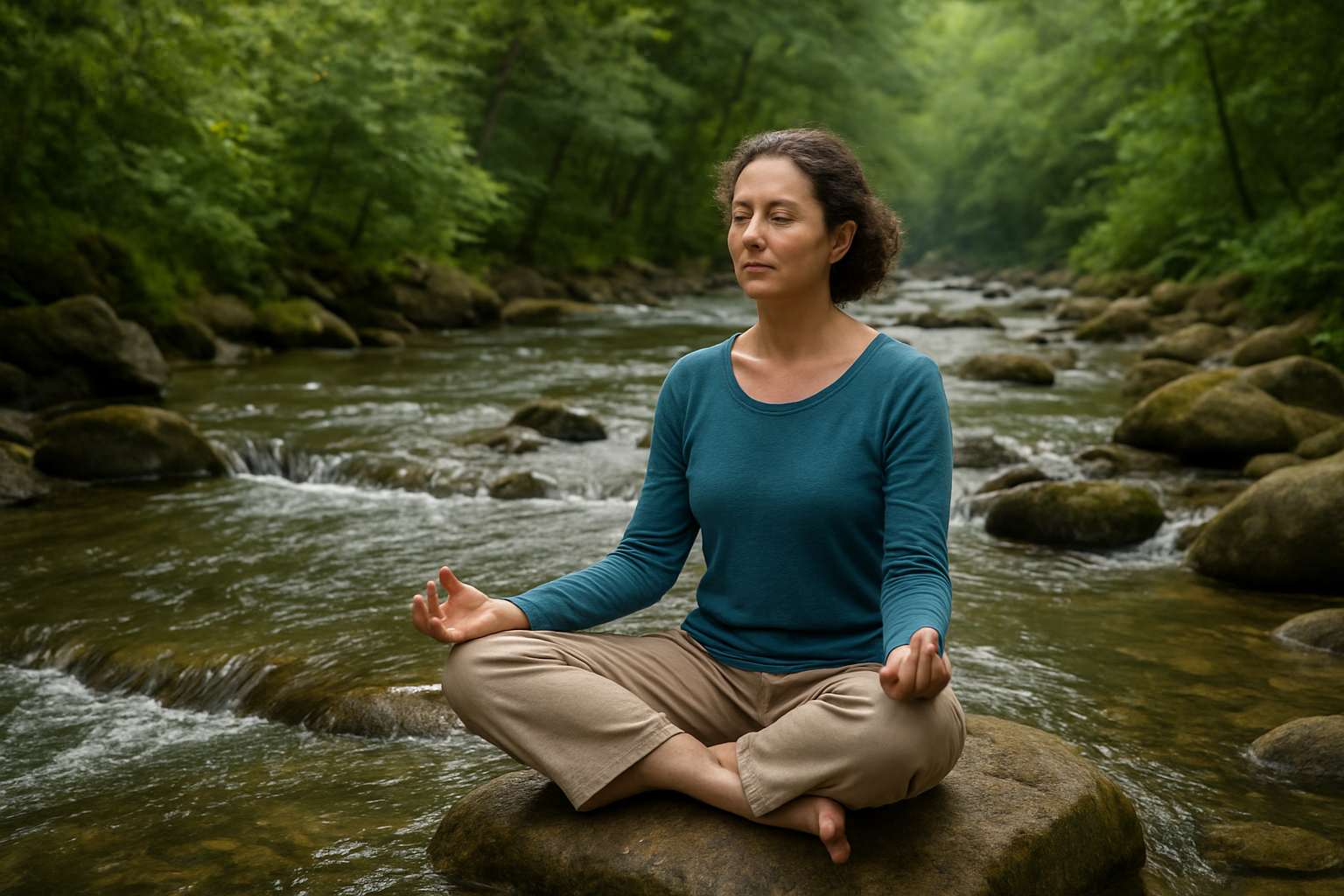
    • Practice Mindfulness: Incorporate mindful practices like meditation and yoga to ground yourself. These activities help you remain present and aware, enabling you to respond rather than react to life’s changes.
    • Embrace Impermanence: Recognize that everything is transient. This understanding allows you to let go of attachments to outcomes and accept the natural ebb and flow of experiences.
    • Find Your Rhythm: Each person has a unique rhythm, like the distinct flow of every river. Honor your natural pace and resist societal pressures to conform to a speed that doesn’t align with your well-being.
    • Create Space: Declutter both your physical environment and your mind. Simplifying your surroundings makes room for new opportunities and insights to flow in.
    • Connect with Nature: Spend time outdoors and observe the effortless flow of nature. Let the serenity of the natural world inspire your own sense of balance and peace.

    Ultimately, finding your flowing center is an ongoing journey. It’s about learning to dance gracefully with life’s unpredictable tides while maintaining a sense of calm and presence. As you embrace the stream of life, you may find that balance is not a destination but a dynamic, ever-changing process.

    For further reading on finding balance within life’s flow, explore mindfulness techniques and the timeless wisdom of ancient philosophies.


  • Whispering Paths – Subtle Teachings from the Natural World

    Whispering Paths – Subtle Teachings from the Natural World

    The natural world is a tapestry of intricate patterns and silent symphonies, where every leaf, ripple, and gust of wind holds a story or a lesson. As we meander through the whispering paths of forests, fields, and streams, we are invited to pause, listen, and learn from the subtle teachings embedded in the landscape.

    The Wisdom of the Forest

    Forests, with their towering trees and shadowy understories, are the epitome of patience and resilience. An old proverb says, “The creation of a thousand forests is in one acorn.” This notion is echoed in the endless cycles of growth and decay we witness throughout the forest. Tree trunks bear the scars of time, yet their canopies reach ever skyward, teaching us about the balance of strength and vulnerability.

    Lessons in Humility from the Wide-open Skies

    Gazing up at an open sky can be a humbling experience, reminding us of our minute place in the universe. According to Dr. Seuss, “You have brains in your head. You have feet in your shoes. You can steer yourself any direction you choose.” Yet, the infinite span of the sky teaches us to temper our ambitions with humility.

    “The sky is the daily bread of the eyes.” – Ralph Waldo Emerson

    With its ever-changing hues and formations, the sky is a canvas of fleeting beauty, each current and cloud carrying insights about the impermanence of our desires and the constancy of change.

    The Fluid Language of Rivers

    • Adaptability: Rivers teach us the lesson of adaptability. They carve through tectonic challenges, bending and turning but never losing their path.
    • Persistence: Over eons, even the softest waters of a river can cut through the hardest rock, showing the power of gradual but persistent effort.

    Philosopher Heraclitus once noted, “No man ever steps in the same river twice, for it’s not the same river and he’s not the same man.” This quote embodies the river’s role as a tutor in growth and transformation.

    The Language of Seasons

    Like chapters in a book, each season offers unique teachings:

    • Spring: The tender green shoots of spring remind us of rebirth and optimism. It’s a season that encourages hope and new beginnings, a reminder that after every winter, renewal follows.
    • Summer: This season celebrates abundance and vitality. It’s a period of joy and full bloom, where the world invites us to relish and participate in the exuberance of life.
    • Autumn: As trees shed their leaves, autumn teaches the beauty of letting go. It’s an invitation to release what no longer serves us, creating space for inner growth.
    • Winter: In its stillness, winter offers the gifts of reflection and rest. It allows us to appreciate the quiet moments and the clarity they bring.

    The Messages Carried by Birds

    Birds, ever-watchful and ever-in-motion, embody freedom and grace. They soar with effortless beauty, whispering promises of liberation to those tethered by the ordinary. A quote by Emily Dickinson perfectly encapsulates this: “Hope is the thing with feathers that perches in the soul – and sings the tunes without the words – and never stops at all.” Birds invite us to spread our own wings, to sing our unique songs even during the most testing times.

    The Silent Whisper of Rocks

    Even the stoic rocks carry ancient whispers. Worn and weathered, they are keepers of time’s secrets. They remind us of the endurance required to withstand life’s turbulent tides. Through their silent endurance, they teach us about the stillness needed to anchor our restless spirits.

    Conclusion

    The natural world is constantly speaking, offering wisdom to those willing to listen. Whether it’s the resolute whisper of the wind, the patient murmur of a brook, or the silent testimony of a mountain peak, nature invites us to walk its paths with open hearts and minds. As we attune ourselves to these whispering paths, we deepen our sense of connection, not only to the world around us but to the essence within ourselves.

    This deepened relationship with nature fosters a holistic sense of well-being, one that integrates the body, mind, and spirit in an indivisible tapestry of life. Let us wander these paths and glean from their quiet wisdom, allowing the natural world to guide us toward the truths hidden within its subtle teachings.

  • Echoes of the Source – Remembering the Primordial Dao

    Echoes of the Source – Remembering the Primordial Dao

    Echoes of the Source: Remembering the Primordial Dao

    In a world constantly seeking progress through technology and innovation, there lies a profound echo from an ancient philosophy—the Dao (or Tao). Originating in ancient China, the Daoist philosophy offers a contemplative approach to existence, one that emphasizes harmony with the natural world and tapping into the primordial source of all life. To remember the Dao is to reconnect with a timeless wisdom that champions simplicity, humility, and the perpetual flow of the universe.

    The Birth of Daoism

    Daoism, as a formalized philosophy, is traced back to the legendary sage Laozi, credited with authoring the foundational text, the Dao De Jing (Tao Te Ching). This classic work, written in the 6th century BCE, encapsulates the essence of the Dao through eighty-one compact, yet profound chapters. The opening lines of the Dao De Jing begin with:

    “The Dao that can be told is not the eternal Dao; the name that can be named is not the eternal name.”

    These lines encapsulate a profound paradox—while the Dao envelops all things, it remains ineffable, transcending human understanding through words alone.

    Core Tenets of Daoism

    • Wu Wei: The concept of “non-action” or “effortless action.” This does not mean complete passivity but rather allowing things to unfold in their natural course.
    • Simplicity: Embracing a lifestyle in alignment with minimalism and the reduction of material desires.
    • Harmony: Living in balance with the world by recognizing and flowing with its natural rhythms.
    • Yin and Yang: The principle that opposite forces are interconnected and interdependent in the natural world, giving rise to each other in turn.

    The Primordial Source

    At the heart of Daoism lies a connection to the primordial source—a metaphysical concept referring to the beginning and foundation of all existence. This source is not only a singular origin of the universe but also a continuous principle that every creation is drawn to and must return to.

    Zhuangzi, another eminent Daoist philosopher, expands on living life connected to the Source:

    “Know the masculine, keep to the feminine—be the valley of the world. Be the valley of the world—for you to adhere to the constant virtue and return to the realm of the infant.”

    Here, Zhuangzi directs us back to the simplicity and purity of a child, an allegory for returning to the inherent, untainted way of the Dao.

    Daoism in Modern Context

    Despite its ancient roots, Daoism’s tenets offer valuable insights into modern living. In today’s fast-paced and success-oriented society, many individuals find solace in revisiting these teachings, searching for balance amidst chaos. Daoist principles encourage a shift from relentless striving to embracing a way of living that is in tune with the natural order.

    The modern environmental movement finds synergy with Daoism’s call for harmony with nature. By recognizing that humans are but one thread in the vast tapestry of life, it becomes evident that conservation is not just a responsibility but a natural inclination driven by Daoist ideology.

    Rediscovering the Dao

    “Living through the Dao” means engaging actively with the practices that ground this ancient wisdom. Meditation, mindfulness, and Tai Chi are more than exercises of calm—they are ways to reconnect with the fluidity of life and the echo of the primordial source.

    Incorporated into daily life, these practices can rekindle our intimacy with the Dao. They remind us that beneath the surface of our modern existence lies a profound simplicity and purity. Recognizing the echoes of the source allows individuals to traverse beyond the illusion of separation and embrace the unity of all things.

    Conclusion

    Daoism, often misunderstood as mere mysticism, continues to occupy a vital space in philosophical thought. As the world rushes towards an uncertain future, the lessons from the Dao reverberate, urging a contemplation of life that is as profound as it is simple.

    By remembering the primordial Dao, we don’t just escape the frenetic pace of the modern world—we tune into the eternal dance of balance and harmony that the universe gently conducts. In this remembrance lies the possibility of rediscovering ourselves, our purpose, and our place within the cosmic order.

    For more about the philosophy, teachings, and influences of Daoism, visit Britannica’s Daoism entry.

  • The Breath Path – Walking Meditation and the Natural Flow

    The Breath Path – Walking Meditation and the Natural Flow

    The Breath Path: Walking Meditation and the Natural Flow

    In the fast-paced world we live in, many individuals are turning to meditation as a means to reconnect with themselves and find inner peace. A unique form of this ancient practice, known as walking meditation, invites practitioners to discover tranquility through movement. This meditative technique blends the awareness of walking with the natural flow of breath, offering a dynamic path to mindfulness.

    The Essence of Walking Meditation

    Walking meditation is not merely a stroll but a deliberate practice of mindfulness, where each step becomes an opportunity to attune with one’s body and surroundings. Thich Nhat Hanh, a renowned Zen Master, beautifully describes it:

    “Walk as if you are kissing the Earth with your feet.”

    Unlike seated meditation, where the practitioner stays still, walking meditation integrates physical movement, allowing individuals to channel their focus through both motion and breath. This harmonious blend creates a rhythmic flow that helps ground the practitioner in the present moment.

    Practicing the Breath Path

    • Begin with Intention: Start by setting a purpose for your walk, whether it’s to relieve stress, gain clarity, or simply to enjoy nature.
    • Focus on Breath: Align your breath with your steps, allowing each inhale and exhale to guide the movement. You might follow a pattern, such as taking three steps per inhalation, and two per exhalation.
    • Awareness and Sensation: Pay attention to subtle changes—how the ground feels underfoot, the sound of rustling leaves, or the warmth of sunlight on your skin.
    • Continue in Presence: Whenever your mind wanders, gently guide your attention back to your breath and steps, anchoring yourself in the now.

    Benefits of Walking Meditation

    Research has shown the numerous benefits of meditation, and walking meditation offers its unique advantages. It can improve balance, enhance focus, and elevate mood. Moreover, as Harvard Health Publishing points out, this practice may even aid in reducing anxiety and depression, making it an invaluable tool for mental wellness.

    The Breath Path is not simply about walking; it is a journey back to self-awareness and peace. By integrating the natural flow of breath with movement, one can discover a profound way to relax and revitalize the spirit.

    In the words of the great poet Rumi, “Let the beauty we love be what we do.” In walking meditation, we embody this beauty through every conscious step we take.

  • The Invisible River – How the Dao Moves Through All Things

    The Invisible River – How the Dao Moves Through All Things

    The Invisible River: How the Dao Moves Through All Things

    The concept of the Dao, often translated as “The Way,” originates from ancient Chinese philosophy, particularly within the texts of Daoism. It represents an underlying, universal force that guides and shapes the natural order of the universe. The Dao is famously described as ethereal and elusive, yet its presence and influence are undeniable. As the great Daoist thinker Laozi puts it in the Tao Te Ching, “The Dao that can be told is not the eternal Dao” (Wikipedia).

    The Essence of the Dao

    At the heart of Daoism is the belief that everything in the universe is interconnected and that an invisible current, the Dao, flows through all things. This current is not a physical entity but a guiding principle that maintains balance and harmony. It is said that understanding and aligning oneself with the Dao leads to wisdom and enlightenment.

    “Knowing others is intelligence; knowing yourself is true wisdom. Mastering others is strength; mastering yourself is true power.” — Laozi

    The Dao is present in nature, human life, and even inanimate objects. It does not force its way but instead accomplishes everything through subtle influence. This idea is encapsulated in the concept of wu wei, or “non-action,” where action is taken in perfect harmony with the flow of the Dao, without the interference of brute force or undue effort.

    The Dao in Nature

    The natural world is perhaps the most obvious manifestation of the Dao. Consider the effortless way rivers carve out valleys over millions of years or how plants grow toward sunlight without instruction. Nature operates according to the Dao through cycles and rhythms that echo the balance of yin and yang—opposing forces that create harmony in the universe.

    • Yin represents the passive, receptive, and nurturing aspects of the world.
    • Yang embodies the active, creative, and dominant forces.

    When observed together, yin and yang illustrate that balance is not achieved by conflict, but through complementary coexistence. The Dao binds these forces and ensures that neither dominates.

    Human Life and the Dao

    In humans, the Dao manifests in a more complex form. It guides behavior, intellect, and spirit. Aligning with the Dao in daily life means embracing simplicity, humility, and compassion. It encourages individuals to live authentically, avoiding pretense and embracing the natural ebb and flow of life’s experiences.

    “A journey of a thousand miles begins with a single step.” — Laozi

    This famous Daoist adage emphasizes the importance of beginning from where one is and progressing naturally. Overcomplicating actions or pushing against the Dao only leads to discord and dissatisfaction.

    The Dao as a Source of Wisdom

    Wisdom in Daoism is not merely intellectual but embodied understanding. Those who live according to the Dao cultivate the ability to see beyond immediate appearances to the essence of things. By attuning to the Dao, one becomes sensitive to the subtleties of change and can navigate life’s uncertainties with grace and adaptability.

    • By observing the principle of wu wei, individuals learn to act without forcing outcomes, allowing events to unfold naturally.
    • Wisdom gained through the Dao encourages a profound respect for life’s mysteries and acceptance of its paradoxes.

    The Enduring Influence of the Dao

    In today’s fast-paced world, the teachings of the Dao remain relevant as they offer a counterbalance to the frenetic energy and constant distractions. They encourage mindfulness, presence, and a deep appreciation for the interconnectedness of all things.

    By drawing wisdom from the Dao, we can foster more compassionate relationships, make decisions that honor the natural world, and cultivate a sense of peace amidst chaos. In doing so, we honor the invisible river that flows through everything, gently guiding us back to the essence of our true selves.

    Ultimately, aligning with the Dao is not about claiming to understand it in its entirety. Instead, it is about trusting in its profound presence and embracing the flow it offers. As stated in the Tao Te Ching, “To the mind that is still, the whole universe surrenders.”

    To learn more about the principles of Daoism and the Dao, visit Stanford Encyclopedia of Philosophy.

  • The Stone Sutra – Reading Zen in the Landscape

    The Stone Sutra – Reading Zen in the Landscape

    The Stone Sutra: Reading Zen in the Landscape

    In the quiet whispers of nature, where the wind caresses ancient stones and leaves rustle in meditative harmony, lies the essence of Zen philosophy. The landscape becomes not merely a backdrop but a sacred text—a ‘stone sutra’ etched with lessons of simplicity, impermanence, and harmony. Join us as we delve into the profound relationship between Zen and the natural world, where each element becomes a teacher, guiding us towards enlightenment.

    The Zen of Nature

    Zen Buddhism, originating in China and perfected in Japan, finds a deep resonance in nature. The very act of observing a landscape invites a contemplative approach characteristic of Zen. As Japanese monk Dogen Zenji, the founder of Soto Zen, once said, Mountains and waters right now are the actualization of the ancient Buddha way. (Shambhala Publications)

    This philosophy sees the natural world as a mirror reflecting the true self. It urges individuals to perceive beyond the superficial, to understand the underlying interconnectedness of all life. Zen encourages the practice of mindfulness through immersion in the environment, transforming simple acts like gazing at a stone or breathing under a tree into profound spiritual exercises.

    The Elements of a Zen Landscape

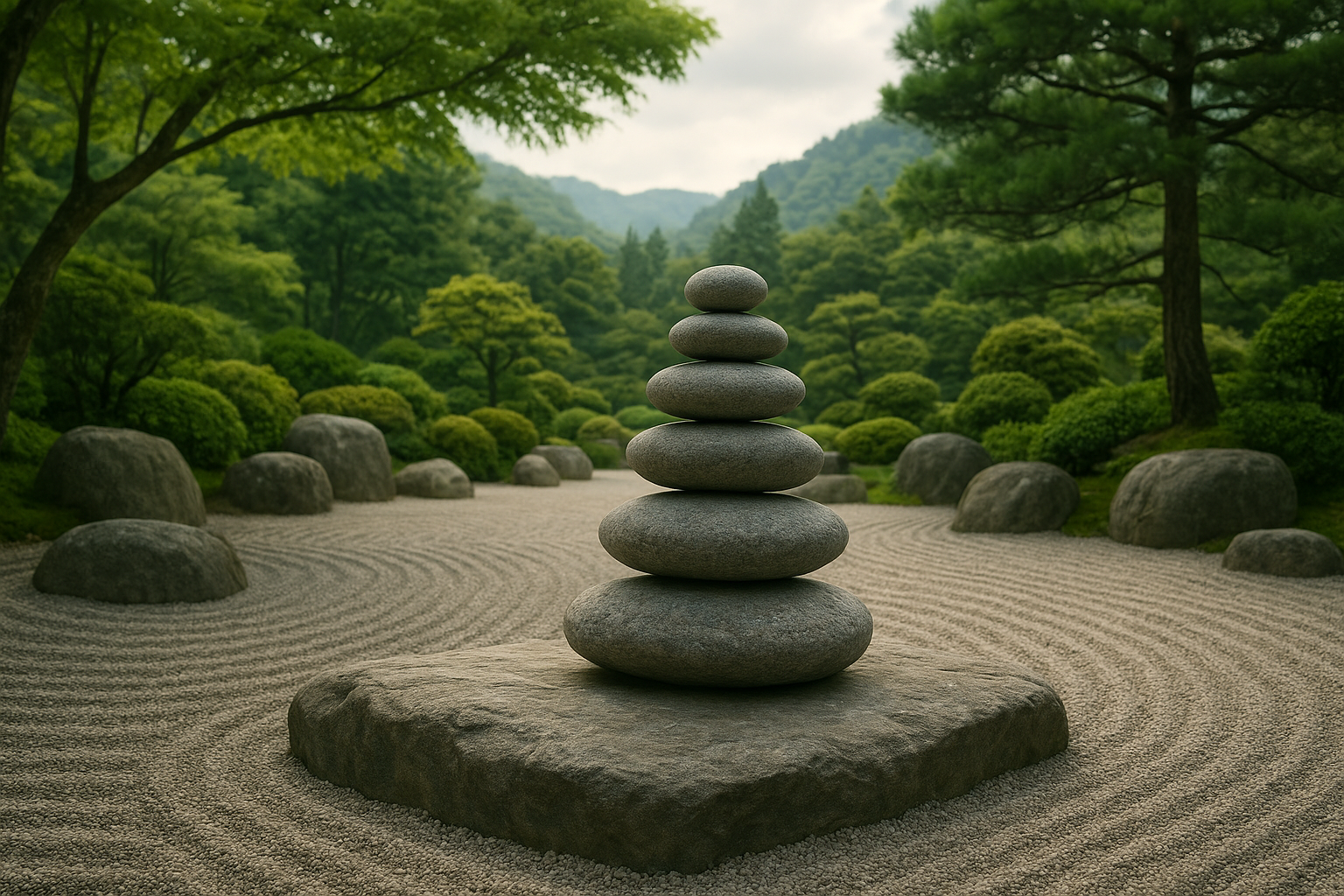
    • Stones: Representing eternal permanence amidst the transient flow of life, stones are often central to Zen gardens. Their placement is intentional, inviting contemplation and embodying the essence of wabi-sabi—beauty in imperfection and impermanence.
    • Water: The presence of water, whether in the tranquility of a pond or the gentle flow of a stream, symbolizes life’s ever-changing nature. Water in a Zen garden is a metaphor for purity and the cyclical passage of time.
    • Plants: Meticulously chosen and maintained, plants in a Zen landscape remind us of growth, resilience, and adaptability. Each leaf or blossom is a lesson in mindfulness and appreciation of life’s fleeting moments.
    • Paths: Pathways in a Zen garden do not necessarily lead from one point to another but rather encourage thoughtful wandering and reflection. They embody the journey of life, inviting the traveler to ponder each step’s significance.

    The Practice of Shakkei

    The Japanese concept of shakkei, or “borrowed landscape,” epitomizes the Zen approach to designing space. It involves incorporating elements from the surrounding natural landscape into the garden’s design, blurring the lines between cultivated and wild nature. This technique not only enhances aesthetic pleasure but also deepens the integration of Zen principles into everyday life, reminding us to embrace our environments as they are, seeing beauty and value in the natural world.

    The best-known Zen master of landscape gardening, Muso Soseki, said, “The heart of the garden can only be understood by the heart of the gardener.” Understanding Zen in the landscape involves not only seeing but feeling. It requires openness to the whispers of the rocks, the songs of the rivers, and the breath of the trees.

    — Muso Soseki

    The Path to Enlightenment

    Engaging with the landscape as a manifestation of Zen Buddhism encourages a return to simplicity and mindfulness, essential teachings that have resonated through centuries. It calls for an active participation in the natural world, fostering a sense of unity and teaching the fluidity of existence.

    Modern adherents of Zen and enthusiasts of mindfulness alike find solace and wisdom in this interaction. In an era where technology often disengages us from our immediate environments, reconnecting with nature serves as a reminder of our intrinsic ties to all living things. As Rinzai Zen master Shunryu Suzuki eloquently put it, In the beginner’s mind there are many possibilities, but in the expert’s mind there are few. This openness is precisely what engaging with the stone sutra, or natural landscape, cultivates.

    Conclusion

    The stone sutra within the landscape is an invitation to observe, reflect, and grow. It is a living scripture, offering insights into the Zen way of being. Through the harmonious balance of elements, it encourages the practice of mindfulness, simplicity, and an appreciation for the ephemeral beauty of life.

    By embracing the teachings found in nature, one embarks on a journey towards enlightenment—a path paved with stones, watered by streams, and shaded by ancient trees. In doing so, the landscape becomes a sanctuary of peace and wisdom, ever ready to teach those willing to listen.

  • Roots in the Sky – Daoist Paradoxes in Nature

    Roots in the Sky – Daoist Paradoxes in Nature

    Roots in the Sky: Daoist Paradoxes in Nature

    The philosophy of Daoism, originating in ancient China, offers profound insights into the nature of existence, often through paradoxical ideas that challenge conventional wisdom. One such paradox is encapsulated in the notion of “Roots in the Sky,” which suggests that true understanding comes from embracing contradictions inherent in nature. By delving into the Daoist perspectives on natural paradoxes, we can uncover a deeper appreciation for the world’s mysteries.

    The Daoist Worldview

    Central to Daoism is the concept of the Dao (often translated as “The Way”), which is both the source and the force behind everything that exists. As Laozi, the legendary figure attributed with founding Daoism, expressed in the Tao Te Ching, “The Dao that can be told is not the eternal Dao; the name that can be named is not the eternal name” (Tao Te Ching – Verse 1).

    This philosophical foundation stresses harmony with the natural world, characterized by its inherent contradictions and ever-present dualities. Instead of resisting these contradictions, Daoism teaches us to accept and learn from them.

    The Paradoxical Nature of Opposites

    One of the core elements of Daoist philosophy is the understanding of opposites, represented by the Yin and Yang symbol. Far from being fixed or separate elements, Yin and Yang are seen as interconnected forces that exist in a dynamic balance. As the I Ching or Book of Changes describes, “Thus the superior man, by cultivating in himself the qualities of higher influences, completes the fullness of Nature as endowed by Heaven and Earth” (I Ching – Introduction).

    • Yin: Represents the feminine, dark, passive, and receptive.
    • Yang: Represents the masculine, light, active, and creative.

    The harmony of the natural world, according to Daoism, derives from the interdependence and interaction of these forces. Each exists because of the other, reinforcing the idea that natural contradictions are complementary rather than conflicting.

    Nature’s Paradoxes and the Daoist Perspective

    Nature provides countless examples of how contradictions coexist harmoniously. The Daoist perspective encourages us to observe these paradoxes with openness and respect, allowing us to understand our relationship with the larger world.

    • Roots in the Sky: Trees, despite having their roots in the ground, reach towards the sky, symbolizing the connection between earth and heaven. The paradox implies that what grounds us can also uplift us, a reminder articulated by Zhuangzi, a foundational Daoist philosopher: “He who knows that enough is enough will always have enough” (Zhuangzi – Chapter 6).
    • Life and Death: In Daoism, life and death are seen as natural cycles, akin to the changing seasons. Laozi’s teachings suggest embracing this cycle: “Everything flows out and in; everything has its tides; all things rise and fall” (YourDictionary – Lao Tzu Quotes).
    • Stillness and Motion: Water exemplifies stillness and motion depending on its state, demonstrating adaptability. As the Tao Te Ching states, “Nothing in the world is as soft and yielding as water. Yet for dissolving the hard and inflexible, nothing can surpass it” (Goodreads – Tao Te Ching Quotes).

    Embracing the Paradoxical

    Daoism encourages us to embrace paradoxes not as obstacles but as sources of wisdom. By releasing our rigidity and remaining open to the inherent contradictions in life, we cultivate a more profound serenity and understanding. The practice of cultivating balance through meditation and exercises like tai chi is one way to tap into this harmonious state.

    “A journey of a thousand miles begins with a single step.” – Laozi, Tao Te Ching

    This quote emphasizes the power of simplicity and patience in dealing with life’s complexities. By taking small, intentional steps, we attune ourselves to the natural order and learn to coexist with life’s paradoxes

    Modern Applications

    The embrace of paradoxes remains relevant in contemporary times, particularly in fields such as ecology and environmentalism. Understanding the interconnectedness and interdependencies of natural systems reflects Daoist wisdom. Environmental strategies that focus on harmony rather than conquest exemplify Daoism’s relevance in modern thought. Solutions such as permaculture and regenerative agriculture take inspiration from nature’s patterns, embodying the Daoist principle of working with, rather than against, nature.

    Additionally, the consideration of holistic health approaches links back to Daoist traditions. Practices like acupuncture and herbal medicine are grounded in the idea of balancing the body’s energies, reflecting the balancing of Yin and Yang.

    Conclusion: Finding Freedom in Contradiction

    The Daoist perspective on nature’s paradoxes invites us to see beyond surface-level contradictions and appreciate the deeper, interconnected truths they reveal. By accepting and embracing these paradoxes, we learn to live in harmony with the natural world and within ourselves.

    As we walk the Daoist path, we find freedom not in certainty but in the acceptance of paradox. In doing so, we nurture our capacity for growth, understanding, and serenity, learning that the roots of true wisdom, indeed, reach towards the sky.

  • Breath of the World – The Life of the Dao in All Things

    Breath of the World – The Life of the Dao in All Things

    The Dao, often translated as the “Way,” is an essential concept in Chinese philosophy, particularly in Daoism. It represents a fundamental principle that underlies and unifies the universe. This article explores the manifestations of the Dao and how it breathes life into all things.

    The Dao: A Fundamental Influence

    At its core, the Dao is a philosophy of balance and natural order. It is the guiding force of nature and the universe, often described as the path or the way that things ultimately are. As the great sage Laozi writes in the Dao De Jing, “The Dao that can be told is not the eternal Dao; the name that can be named is not the eternal name.”

    This succinctly encapsulates the elusive nature of the Dao—an idea that is so fundamental that it transcends linguistic expression. Instead, it is something to be experienced and understood through nature and interaction with the world.

    The Dao in Nature

    The Dao is deeply entrenched in the natural world. A single leaf, a flowing stream, or the gentle rustling of the wind—all exhibit the spontaneous and harmonious qualities of the Dao. The interconnectedness of all life reflects the Dao’s pervasive presence. As Alan Watts elegantly put it in The Way of Zen, “We do not ‘come into’ this world; we come out of it, as leaves from a tree. As the ocean ‘waves,’ the universe ‘peoples.’” [Goodreads]

    In understanding the natural rhythm and patterns of the world, humans can align themselves more closely with the Dao. This connection offers a greater appreciation for the intuitive wisdom found within every living thing and fosters an awareness of the interconnectedness of all aspects of life.

    Balance and Harmony

    Central to the Dao is the idea of balance. The Daoist principle of yin and yang speaks to the dynamic interplay between opposing forces in the universe. These elements are never in isolation but are part of a constant flow and exchange, creating harmony. In Stephen Mitchell’s interpretation of the Tao Te Ching, this is illustrated as “Being deeply loved by someone gives you strength, while loving someone deeply gives you courage.”

    Harmony with the Dao is not achieved through forceful action but through a process of aligning with the natural order. This approach is best encapsulated in the concept of wuwei, or “non-action,” which represents an effortless way of being that allows one to move in accord with the rhythms of life.

    The Dao and Life in Modern Times

    In today’s fast-paced world, the teachings of the Dao offer profound insights for living a balanced and harmonious life. By embracing the principles of simplicity and alignment with nature, it becomes possible to find peace amidst chaos. As Laozi famously said, “A journey of a thousand miles begins with a single step.”

    Many contemporary thinkers and practitioners have sought to apply these ancient principles to modern contexts, encouraging a lifestyle that prioritizes well-being and ecological balance over material excess. The modern sustainability movement, for example, often echoes Daoist ideals by advocating for a way of living that minimizes harm to the environment and recognizes the importance of maintaining equilibrium with the Earth.

    Conclusion

    In understanding the Dao, we cultivate a deeper connection not only to the world around us but also to ourselves. The concept of the Dao offers timeless wisdom, guiding us towards a life of balance, harmony, and spiritual fulfillment.

    “To be one with the Dao is to be in harmony with all things, letting the cosmos unfold in its natural order.”

    As we continue to explore and deepen our understanding of the Dao, let us remember that this path is less about striving for an unattainable ideal and more about harmonizing our lives with the incredible tapestry of the universe. This, ultimately, is the life of the Dao—expressed in all things, breathing life into the world.

  • Under the Bamboo Moon – Zen Reflections in Nature’s Mirror

    Under the Bamboo Moon – Zen Reflections in Nature’s Mirror

    The moon casts its silvery glow over the swaying bamboo groves, creating a serene tableau that has inspired Zen practitioners for centuries. The quiet rustling of leaves and the gentle play of moonlight on their surface invite introspection and tranquility. This scene serves as a reflection of the Zen tradition’s deep intertwining with nature, where natural phenomena become a metaphor for spiritual realization.

    The Bamboo: A Symbol of Strength and Flexibility

    Bamboo, with its lithe form, embodies concepts central to Zen: flexibility and resilience. Huang Po, a renowned Chinese Zen master, once remarked, “The wise adapt themselves to circumstances, as water molds itself to the pitcher.” The bamboo, unyielding yet flexible, mirrors this adaptability—a core tenet in Zen philosophy.

    • Resilience in Adversity: Bamboo withstands intense storms by bending rather than breaking, much like the Zen philosophy of enduring life’s challenges with grace.
    • Growth and Renewal: Bamboo’s rapid growth symbolizes renewal and the potential for personal growth through disciplined practice and meditation.

    Moonlight: Illumination and Enlightenment

    The moon holds a special place in Zen iconography, often representing enlightenment. Its radiant light sheds illumination on the shadowy night, symbolizing the clarity achieved through Zen meditation. Dogen Zenji, a Japanese Zen master, famously said, “Enlightenment is like the moon reflected on water. The moon does not get wet, nor is the water broken.” This imagery highlights the interconnectedness of all things and the nature of enlightenment as both pervasive and non-intrusive.

    “There is nothing more sacred than the connection between nature and the mind. Just as the moon reflects on every pool of water without discrimination, enlightenment embraces everyone.” – Anonymous Zen Saying

    Meditation in Nature: Harmonizing the Mind

    Shunryu Suzuki, a prominent figure in bringing Zen to the West, emphasized meditating in natural settings. He observed, “When you do something, you should burn yourself completely, like a good bonfire, leaving no trace of yourself.” Meditation amidst nature aligns the practitioner with the natural world, promoting harmonization between the inner self and external surroundings.

    • Silence and Stillness: The quietude of a bamboo grove encourages a deep silence that allows the mind to settle, as thoughts diminish like ripples in a tranquil pond.
    • Aware Presence: By immersing oneself in the natural environment, awareness of the present moment sharpens, offering a glimpse into the timelessness of now.

    The Zen Garden: Cultivating Inner Peace

    Zen gardens, or karesansui, known for their simplicity, use landscapes to represent larger spiritual landscapes. Stones and raked gravel symbolize islands and ocean waves, inviting meditation on the subtle interplay between emptiness and form. The placement of each element is intentional, mirroring the precision with which Zen practitioners cultivate their minds.

    • Symbolism and Simplicity: Each feature within the garden holds meaning, prompting contemplation and reflection, stripping away the unnecessary to find purity.
    • Flow and Form: The practice of maintaining a Zen garden is an exercise in mindfulness and patience, reflecting how life itself may be curated with intention and care.

    Conclusion: The Eternal Dance of Light and Shadow

    Under the bamboo moon, the dance of light and shadow inspires endless reflection and enlightenment. Each moment spent in nature’s embrace is an opportunity for Zen practitioners to connect deeply with the world around them, harmonizing the external with the internal. The tranquility experienced serves not only as a retreat but as a profound reminder of the interconnectedness and impermanence of all things.

    As we sit beneath the luminous dome of the night sky, the wisdom of Zen teachings encourages us to reflect inward, cultivating a garden of the mind as peaceful as a moonlit bamboo grove. In this serene silence, where nature’s mirror offers a glimpse into our souls, we find echoes of enlightenment and the ever-present invitation to be fully aware, moment by moment.

  • Listening to Waterfalls – Hearing the Dao in the Roar of Life

    Listening to Waterfalls – Hearing the Dao in the Roar of Life

    Listening to Waterfalls: Hearing the Dao in the Roar of Life

    In the serene and tumultuous meeting of water and earth, the melody of the waterfall resonates with the profound teachings of Dao (or Tao). This ancient Chinese philosophy, known for emphasizing harmony with the natural world, finds a vibrant echo in the thundering cascades of water. This article explores how turning our attention to waterfalls can open channels of understanding to Dao, offering lessons in harmony, balance, and the continuous flow of life.

    The Natural Symphony of Waterfalls

    Waterfalls are nature’s symphonies, an amalgamation of sights and sounds that captivate the senses. The relentless movement of water over rock epitomizes the Daoist principle of wu wei, or effortless action. Laozi, the semi-legendary founder of Daoism, encapsulated this idea in his seminal work, Taodejing.

    “The best are like water, benefiting all things and competing with none. They dwell in lowly places that all disdain. This is why they are so near to the Dao.” — Laozi, Daodejing

    The unyielding flow of a waterfall, adaptable and persistent, exemplifies how one can achieve great impact through gentleness and resilience. It shows us how, like water, we can shape our destiny by yielding to the natural order of life instead of resisting it.

    Harmony and Balance in Nature

    Listening to waterfalls can provide insight into the Daoist concept of balance — the dance between yin and yang. The cycle of water, from pool to cascade to river and back to pool, mirrors the cyclical nature of life itself. Each droplet that falls is both an individual entity and part of a greater, harmonious whole.

    • Yin: The receptive, dark, and soft aspects of the water as it pools, lying still and reflective.
    • Yang: The dynamic, bright, and active nature of the water’s leap over the rocks, vibrant and full of energy.

    The continuous interplay between these forces is a vivid reminder that life thrives in balance, and that the ceaseless interplay of polarities is a source of creativity and vitality.

    Lessons of Impermanence and Change

    Waterfalls are ephemeral, ever-changing spectacles. No two moments at a waterfall are ever identical; the water that passes over the cliff is transient, a fleeting passage in the continuum of its existence. This constant change embodies the Daoist acceptance of impermanence, promoting an awareness of the present moment.

    “Life is a series of natural and spontaneous changes. Don’t resist them — that only creates sorrow. Let reality be reality. Let things flow naturally forward in whatever way they like.” — Laozi

    Understanding waterfalls can help us let go of attachments and accept that change is an intrinsic part of the universe. By embracing the waterfall mindset, we improve our ability to adapt gracefully to life’s vicissitudes, a core component of Daoist survival wisdom.

    The Roar of Life

    The sound of a waterfall is both soothing and powerful, often described as a roar. In the raw power of its voice, we can perceive a metaphor for the life force that courses through all living beings. This energy, or qi, is central to Daoist thought, representing the breath of life that binds the universe together.

    The churning waters teach us to harness our inner strength and potential. Just as the waterfall transforms obstacles into opportunities for movement and growth, we learn to channel our energies constructively and find a path through life’s adversities.

    The Path to Spiritual Tranquility

    Finding spiritual tranquility requires both an inner and outer journey. Listening to a waterfall can be an exercise in mindfulness, encouraging us to center our mind and spirit. According to Daoism, nature shows us the way; thus, immersing ourselves in its rhythms through attentive listening can guide us towards enlightenment and inner peace.

    “Nature does not hurry, yet everything is accomplished.” — Laozi

    In this sense, a waterfall becomes a natural meditation tool, offering us a chance to pause, reflect, and realign with the natural order of the cosmos.

    Conclusion: Embracing the Dao

    To hear the Dao amidst the roar of a waterfall is to recognize the profound wisdom inherent in the natural world. By observing and listening to these majestic cascades, we learn to emulate their flow, adapt to life’s changes, and find balance in its dualities. This symbiosis with nature is at the heart of Daoism, offering timeless insights for modern living.

    Embrace a day by a waterfall, let its music envelop you, and let it remind you of the simplicity, beauty, and wisdom of the natural world. In its roar lies the quiet voice of the Dao, calling us back to our roots, inviting us to live in harmony with the world around us.