Tag: mythology

  • Blood and Nectar – The biological roots of divine food and drink.

    Blood and Nectar – The biological roots of divine food and drink.

    Blood and Nectar – The Biological Roots of Divine Food and Drink

    In many cultures, certain foods and drinks are considered divine or sacred, imbued with mystical powers that nourish both body and soul. Two examples of such substances are blood and nectar, which have been revered across various mythologies as symbols of life, vitality, and spiritual sustenance.

    • Blood: The Primal Nourisher
      • In many ancient cultures, blood was seen as the source of life and vitality. For example, in Greek mythology, ambrosia – a divine food that granted immortality – was often associated with the blood of the gods.
      • “Blood is the source of all life,” says mythologist J.G. Frazer in his book “The Golden Bough”. This idea is echoed in the ancient Mesopotamian Epic of Gilgamesh, where the gods are said to have created humans from blood and clay.
    • Nectar: The Elixir of Life
      • In Hindu mythology, nectar (amrita) is the drink that grants immortality. According to the Rigveda, nectar was created by the gods and served as a source of vitality and strength.
      • “The ambrosia which the gods eat and drink… is the nectar that comes from the gods,” writes mythologist Karl Kerenyi in his book “Eleusis: Archetypal Image of the Mother”. This idea is also reflected in Greek mythology, where ambrosia was often depicted as a sweet, honey-like substance.
    • The Biology of Blood and Nectar
      • From a biological perspective, blood can be seen as the ultimate source of life. It contains the oxygen and nutrients necessary for cellular respiration, as well as essential hormones and growth factors.
      • Nectar, on the other hand, is often linked to the idea of honey – a sweet, viscous liquid produced by bees from the nectar of flowers. Honey has been prized throughout history for its antibacterial properties and nutritional value.
    • The Psychological Significance
      • The symbolic meanings attached to blood and nectar can be seen as a reflection of humanity’s deep-seated desire for life, vitality, and spiritual sustenance. These substances represent the fundamental forces that drive human existence.
      • “The symbolism of blood is rich in psychological significance,” writes mythologist Marie-Louise von Franz in her book “The Golden Game”. This idea is echoed in the work of psychoanalyst Carl Jung, who saw the symbolic language of mythology as a reflection of the collective unconscious.

      “Myths are public dreams, and dreams are private myths.” – Joseph Campbell

  • The Primordial Spark – Why every culture begins with a story of light.

    The Primordial Spark – Why every culture begins with a story of light.

    The Primordial Spark – Why every culture begins with a story of light

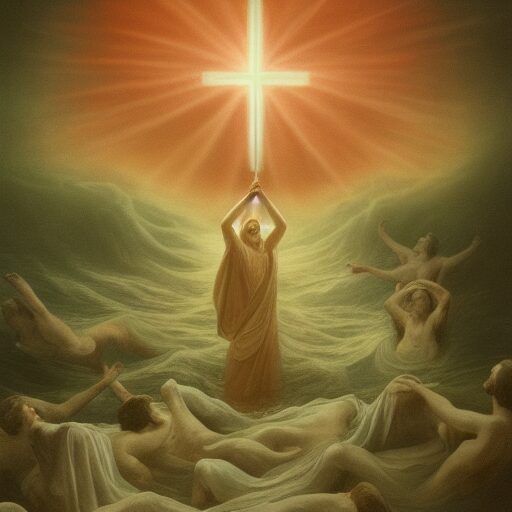
    In the beginning, there was darkness. And from that darkness, a spark of light emerged to illuminate the world. This primordial tale is not unique to one particular culture or mythology; instead, it’s a recurring theme across the globe. From ancient Mesopotamian myths to modern scientific theories, the story of light has captivated human imagination for centuries.

    • The Cosmic Dance – In Hindu mythology, the universe was born from the cosmic dance between the primordial gods Brahma, Vishnu, and Shiva. Their movements created the universe, with light being the first manifestation of creation. As the Rigveda says, “In the beginning, there was only darkness. And then there was light.” (Rigveda 1.89)
    • The Primordial Flame – In ancient Greek mythology, the Titan Prometheus stole fire from the gods to give it to humanity, defying Zeus’ decree that humans should only have darkness and shadow. This myth highlights the significance of light in human civilization.
    • The Spark of Life – In some African cultures, the first spark of life is attributed to the divine. For example, in Yoruba mythology, the god Olorun created the world by illuminating it with his divine light. This primordial spark symbolizes the source of all creation and life.
    • The Scientific Connection – Modern physics has also explored the concept of a primordial spark. The Big Bang theory suggests that the universe began as an infinitely hot and dense point, expanding rapidly around 13.8 billion years ago. This cosmic explosion is often referred to as the “primordial spark” that gave rise to our universe.

    So why do so many cultures begin with a story of light? One possible explanation is that it represents the power and mystery of creation itself. Light has long been associated with divinity, wisdom, and knowledge in various cultures. By tracing the origins of the world back to a primordial spark, these myths may be attempting to capture the essence of creation’s divine nature.

    As the ancient Greek philosopher Aristotle once said, “The whole is more than the sum of its parts.” In the case of the primordial spark, it represents the fundamental source that gives rise to all existence. Whether rooted in mythology or science, the concept of a primordial spark has captivated human imagination for centuries.

    Despite their differences, these stories share a common thread – they all begin with a spark of light, symbolizing the power and mystery of creation. As we continue to explore the mysteries of the universe, it’s intriguing to consider how our understanding of this primordial spark might shape our perception of reality itself.