Tag: motion

  • The Silence Between Steps – Meditating in Motion

    The Silence Between Steps – Meditating in Motion

    Meditation is traditionally associated with stillness — a serene figure in lotus position, eyes closed, mind at peace. However, in a world that never stops moving, finding tranquility in motion has emerged as an equally profound form of meditation. Welcome to the art of meditating in motion, where the silence between steps becomes sacred.

    The Essence of Meditating in Motion

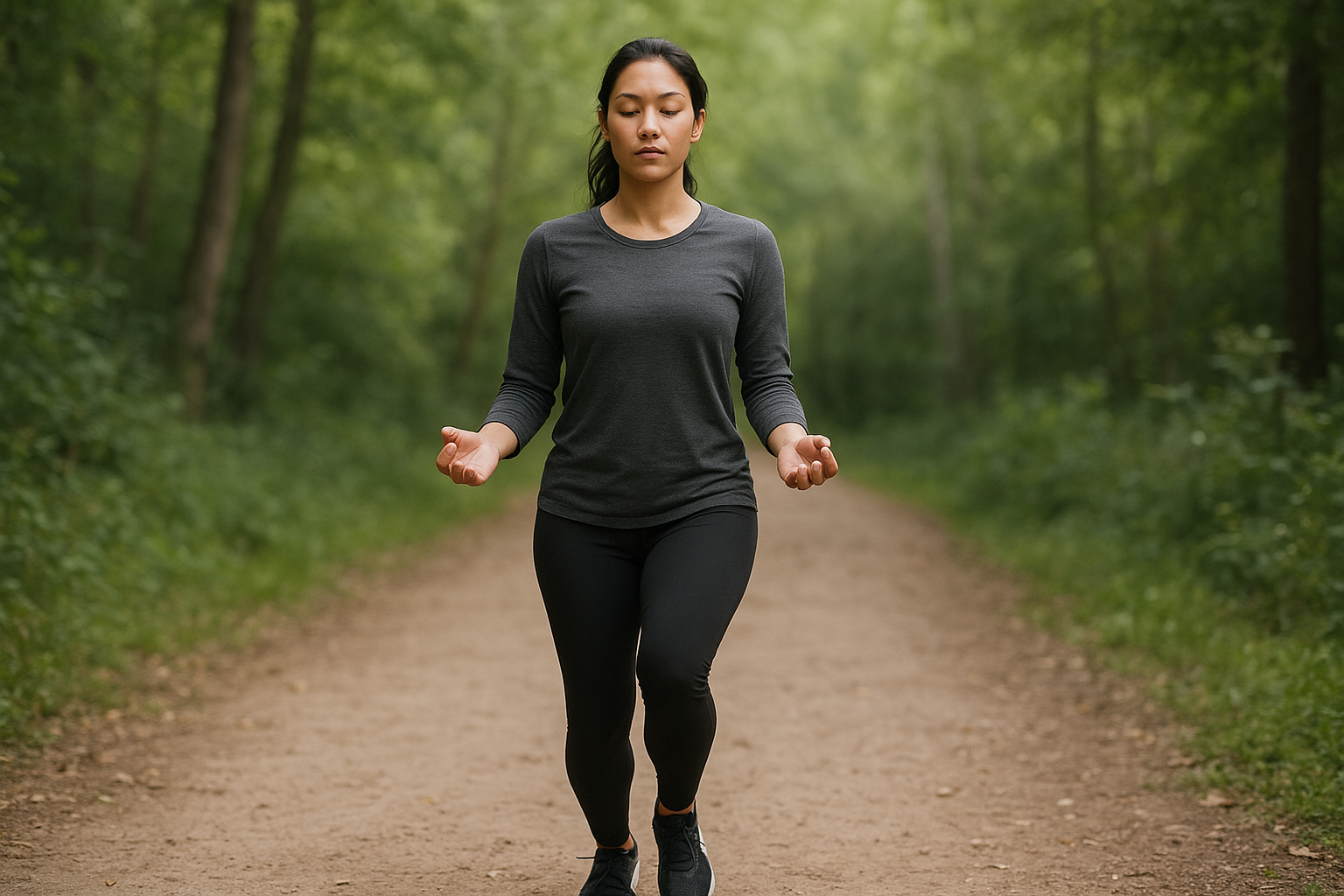
    Walking meditation, also known as kinhin in Zen Buddhism, is a practice that blends the calming effects of meditation with the natural rhythm of walking. Unlike seated meditation that focuses on breath alone, this form centers on the synchronized movement of the body with the mind.

    John Daido Loori, a renowned Zen monk, describes walking meditation as “the practice of mindfulness. Every step becomes the practice, the step itself as the point of contact with the Earth.”

    The Benefits of Meditating in Motion

    • Mindful Movement: Walking meditation encourages a deeper connection with the present moment by aligning physical movements with mental stillness. It brings awareness to each step, teaching us to be grounded.
    • Enhanced Awareness: This practice awakens the senses. We begin to notice the subtleties of our environment — the way light filters through leaves, the sound of gravel underfoot, the scent of fresh rain.
    • Stress Reduction: The rhythmic movement acts as a balm for stress. According to a study published in the Journal of Psychology and Health, walking meditation can significantly reduce anxiety and improve overall mood.
    • Promotes Physical Health: As an added bonus, walking naturally enhances cardiovascular health and improves muscle tone, making it beneficial for both mind and body.

    How to Practice Walking Meditation

    Embarking on this journey of motion meditation is simple, yet it requires dedication and presence of mind. Here is a step-by-step guide to help you begin:

    “Walk as if you are kissing the earth with your feet.” — Thich Nhat Hanh

    • Find a Suitable Path: Choose a quiet, safe path where you won’t be interrupted. This could be a garden, a tranquil park pathway, or even a spacious room.
    • Posture and Presence: Stand upright, feet slightly apart. Let your arms hang naturally. Soften your gaze, focusing a few meters ahead.
    • Focus on Your Footsteps: Lift your left heel and let the foot slowly roll forward, from heel to toe. Be completely aware of the lifting, moving, and placement of the foot.
    • Synchronize Breath and Steps: Inhale as you lift one foot and exhale as you place it down. Let the breath guide your steps.
    • Mindful Walking: As you walk, maintain awareness of each step. If your mind wanders, gently guide it back to the sensation of the foot connecting with the ground.

    Overcoming Common Challenges

    As with any form of meditation, walking meditations come with challenges. The mind might initially resist the quietude or get distracted by sounds and thoughts. However, patience and persistence are key.

    • Dealing with Distractions: Nature’s sounds or random thoughts are part of the experience. Acknowledge them and gently bring your focus back to your steps. Remember the words of Vietnamese Zen Master Thich Nhat Hanh, “Deep listening and mindful breathing is a source of peace, hope, and clarity.”
    • Restlessness: If you feel restless or impatient, slow your pace and deepen your breath. Observing the restlessness itself can be enlightening.
    • Physical Discomfort: If you’re not accustomed to walking meditation, some discomfort might arise. This too is a learning opportunity — to be present with the body and its messages.

    The Profound Connection

    Those who practice walking meditation often find a deeper connection to the Earth and their own inner rhythm. There’s a profound sense of belonging that emerges, a realization that our movements are in harmony with the universe.

    Incorporating meditative walking into daily routines transforms mundane tasks into moving meditations. Whether it’s a short walk in the morning, a stroll through the park, or mindful navigation through a bustling city, this practice infuses everyday life with a sense of peace and presence.

    A Journey Beyond

    Meditating in motion offers an invitation to explore the silence between steps — a space where the mind and body find unison. Each step becomes a gentle reminder that peace is not solely found in stillness, but in the harmonious dance of movement and mindfulness.

    “In every walk with nature, one receives far more than he seeks.” — John Muir

    As we tread through life, may we find serenity in movement, embracing the cadence of our journey with grace and mindfulness. Let the silence between your steps speak, and listen to the eloquence of the Earth.

    For further reading, consider “Peace is Every Step” by Thich Nhat Hanh, a book that beautifully explores the concept of mindfulness in everyday life, including meditative walking.

  • Still Rivers Run Deep – The Zen of Inner Motion

    Still Rivers Run Deep – The Zen of Inner Motion

    In our modern, hyper-connected world, the pace of life can be dizzying. Emails, texts, notifications, and deadlines seem to chase us at every turn. Amidst this chaos, it is easy to feel as though inner peace is an elusive goal, one that requires a secluded retreat or a drastic lifestyle change. Yet, the ancient philosophy of Zen offers a profound yet simple insight: stillness and movement coexist within us.

    The Paradox of Inner Stillness

    Zen Buddhism, a school of Mahayana Buddhism originating in China during the Tang dynasty, emphasizes the value of meditation and intuitive insight. A popular Zen saying goes, “Silence is not the absence of something but the presence of everything.” This idea encourages us to find solace within rather than searching for it outside.

    According to Zen teachings, there is a deep river of tranquility flowing beneath the surface of our conscious mind. This river remains undisturbed by external circumstances, a source of profound wisdom and peace. The ability to tap into this calmness is not about shutting off the outside world, but rather about embracing the flow of thoughts and emotions without becoming entangled in them.

    Zen and Movement: A Harmonious Dance

    The concept of movement in Zen is often misunderstood. It does not imply frantic activity or constant change. Instead, it is a subtle, mindful engagement with the world. Zen master Thich Nhat Hanh captured this beautifully when he said,

    “Walk as if you are kissing the Earth with your feet.”

    This idea reflects the Zen belief in mindful action. Every step, every gesture is an opportunity to practice presence, to be fully engaged with life’s rhythm. This approach not only enhances our appreciation of the present moment but also fosters a deep sense of gratitude and peace.

    Finding the Still River Within

    How do we connect with that still river within? The path of Zen invites us to practice meditation. As Shunryu Suzuki, a renowned Zen teacher, once noted,

    “In the beginner’s mind there are many possibilities, in the expert’s mind there are few.”

    This notion encourages us to approach meditation without preconceived ideas of what it should achieve.

    The practice of Zen meditation, or zazen, involves sitting in a comfortable, upright position, focusing on the breath, and allowing thoughts to come and go without judgment or attachment. Through regular practice, we cultivate a space of inner stillness amidst the constant motion of life.

    • Mindfulness in Daily Activities: While meditation is a cornerstone of Zen practice, incorporating mindfulness into daily activities is equally important. Whether washing dishes or walking the dog, these moments offer opportunities to engage with the present.
    • Embracing Simplicity: Zen inspires a return to simplicity, stripping away the unnecessary to reveal the essence of life. This could mean decluttering our physical space or simplifying our schedule to prioritize what truly matters.

    The Ripple Effect of Inner Stillness

    The benefits of embracing the Zen of inner motion extend beyond personal well-being. When we cultivate stillness and presence within, it impacts how we interact with the world. There’s a ripple effect, akin to a stone dropped in a pond, where our calm presence influences those around us. As Zen master Dogen said,

    “To study Buddhism is to study ourselves. To study ourselves is to forget ourselves. To forget ourselves is to be awakened by all things.”

    This ripple effect can lead to more harmonious relationships, a deeper sense of empathy, and a profound connection to the natural world. The still river within us, when awakened, serves as a beacon, guiding us toward holistic and compassionate living.

    Conclusion

    The Zen practice of finding stillness in motion, and motion in stillness, offers an invaluable gift: a way to navigate the complexities of modern life with poise and equanimity. By tuning into the silent river within us, we can experience life with fullness and clarity.

    In a world where external noise often drowns out our inner voice, embracing the principles of Zen may show that still rivers, indeed, run deep. We learn that through balance and mindfulness, we can foster a sense of peace that transcends the superficial pull of the world.

    Ultimately, discovering the Zen of inner motion is not about escaping reality, but about confronting it with grace and mindfulness. In doing so, we may find that the turbulent waters of life become just another part of our peaceful journey.

  • Practicing Stillness While in Motion

    Practicing Stillness While in Motion

    Practicing Stillness While in Motion

    Practicing Stillness While in Motion

    In today’s fast-paced world, the idea of finding stillness seems almost paradoxical when we are constantly on the move. However, discovering tranquility amid activity is not only possible but also a path to greater mindfulness and peace. Practicing stillness while in motion can be an essential skill for enhancing focus, reducing stress, and achieving a balanced life.

    The Concept of Stillness

    “Stillness is not about focusing on nothingness. It’s about creating an emotional clearing to see what is actually there.” – Oprah Winfrey

    Stillness, as defined by spiritual leaders and mindfulness practitioners, does not necessarily mean the absence of movement; rather, it implies a centeredness and clarity achieved through intentionality. As noted in the spiritual teachings, stillness is about finding peace within chaos.

    Finding Stillness in Daily Activities

    Integrating stillness into daily life can transform ordinary routines into opportunities for mindfulness and inner calm. Here are some key practices to incorporate stillness even while engaged in activity:

    • Mindful Walking: Instead of rushing from one task to another, practice mindful walking by focusing on each step. Feel the ground beneath your feet and the rhythm of your breath.
    • Focused Breathing: While commuting or during work breaks, engage in deep, conscious breathing. Inhale for four counts, hold, and exhale slowly, letting go of tension.
    • Active Meditation: Transform repetitive actions like washing dishes or gardening into meditative experiences by giving full attention to the activity at hand.

    Developing a Mindset for Stillness

    Achieving stillness begins with a shift in mindset. Here’s how you can cultivate a mentality that supports stillness in motion:

    • Embrace Imperfection: Accept that stillness doesn’t require perfection. It’s an ongoing practice that grows with patience and persistence.
    • Set Intentions: Begin each day by setting an intention to remain centered, no matter the external circumstances. Such an approach guides the mind towards calmness.
    • Practice Gratitude: Regularly acknowledging gratitude fosters a sense of contentment, which supports inner peace and stillness.

    Benefits of Practicing Stillness

    Embracing stillness as a practice offers numerous benefits that contribute to overall well-being:

    • Reduced Stress: Mindful practices activate the parasympathetic nervous system, lowering stress levels and fostering a sense of peace.
    • Increased Focus: Regular stillness practices enhance concentration and attention, improving productivity in professional and personal life.
    • Enhanced Emotional Health: Stillness enables individuals to gain greater control over their emotional responses, promoting resilience.

    Mindful Practices Around the World

    Different cultures have long recognized the importance of stillness, integrating unique practices into daily life:

    • Japan: The Japanese tradition of Zen emphasizes satori, or enlightenment through meditation and appreciation of simplicity and nature.
    • India: Yoga, originating in India, combines physical postures with controlled breathing and meditation to achieve peace and balance.
    • Thailand: Thai Buddhism recommends Vipassana meditation, cultivating insight through mindfulness of body and mind.

    Conclusion

    Practicing stillness while in motion doesn’t mean halting life’s activities but living them with awareness and intention. By adopting techniques to find peace within the chaos, you can cultivate a profound sense of stillness, regardless of external circumstances. Start with small steps, such as incorporating mindful walking or deep breathing into your routine. As you incorporate these practices, you’ll discover a tranquility that transforms not only your actions but also your perspective on life.

    For further reading on the power of stillness and mindfulness, visit Mindful.org.

  • Stillness in Motion

    Stillness in Motion

    Stillness in Motion: Finding Calm in a Rapidly Changing World

    In an era where technological advancements and societal shifts happen at lightning speed, finding moments of stillness can seem like an elusive ideal. Yet, the concept of “stillness in motion” is gaining traction as a necessary practice for maintaining mental health and fostering creativity.

    Amidst the chaos, embracing stillness does not mean ceasing all activity. Instead, it involves cultivating a state of mind where calmness and awareness coexist with the constant flow of life.

    The Science of Stillness

    Recent studies have highlighted the benefits of incorporating stillness into our daily routines. According to a report from the National Institutes of Health, mindfulness practices can significantly reduce stress and enhance cognitive function. This balance of activity and tranquility is essential for sustaining productivity and well-being.

    “Stillness does not mean the absence of movement or activity, but rather a state of inner peace and mindfulness amid the hustle and bustle of life.” – Psychology Today

    Techniques to Achieve Stillness

    Incorporating moments of stillness into a busy schedule requires intentionality and practice. Here are a few strategies to help achieve this balance:

    • Mindful Meditation: Dedicate a few minutes each day to meditation. Focus on your breath and let go of distracting thoughts.
    • Nature Walks: Spend time in nature to disconnect from technology and reconnect with the natural world. The rhythmic motion of walking can provide both physical exercise and mental clarity.
    • Digital Detox: Regularly unplug from digital devices to reduce information overload and allow your mind to rest.
    • Creative Expression: Engage in creative activities such as painting, writing, or playing music. These can serve as meditative practices that promote inner calm.

    Conclusion

    Finding stillness in motion is more than a paradox; it’s a vital practice for thriving in today’s fast-paced world. By integrating mindfulness into our routines, we create space for reflection and innovation. As the world continues to evolve, the ability to maintain inner peace amidst external chaos will be a defining skill of the future.

    For more insights into mindfulness and mental well-being, visit the Mindful website.