Tag: mindfulness

  • The Stone Sutra – Reading Zen in the Landscape

    The Stone Sutra – Reading Zen in the Landscape

    The Stone Sutra: Reading Zen in the Landscape

    In the quiet whispers of nature, where the wind caresses ancient stones and leaves rustle in meditative harmony, lies the essence of Zen philosophy. The landscape becomes not merely a backdrop but a sacred text—a ‘stone sutra’ etched with lessons of simplicity, impermanence, and harmony. Join us as we delve into the profound relationship between Zen and the natural world, where each element becomes a teacher, guiding us towards enlightenment.

    The Zen of Nature

    Zen Buddhism, originating in China and perfected in Japan, finds a deep resonance in nature. The very act of observing a landscape invites a contemplative approach characteristic of Zen. As Japanese monk Dogen Zenji, the founder of Soto Zen, once said, Mountains and waters right now are the actualization of the ancient Buddha way. (Shambhala Publications)

    This philosophy sees the natural world as a mirror reflecting the true self. It urges individuals to perceive beyond the superficial, to understand the underlying interconnectedness of all life. Zen encourages the practice of mindfulness through immersion in the environment, transforming simple acts like gazing at a stone or breathing under a tree into profound spiritual exercises.

    The Elements of a Zen Landscape

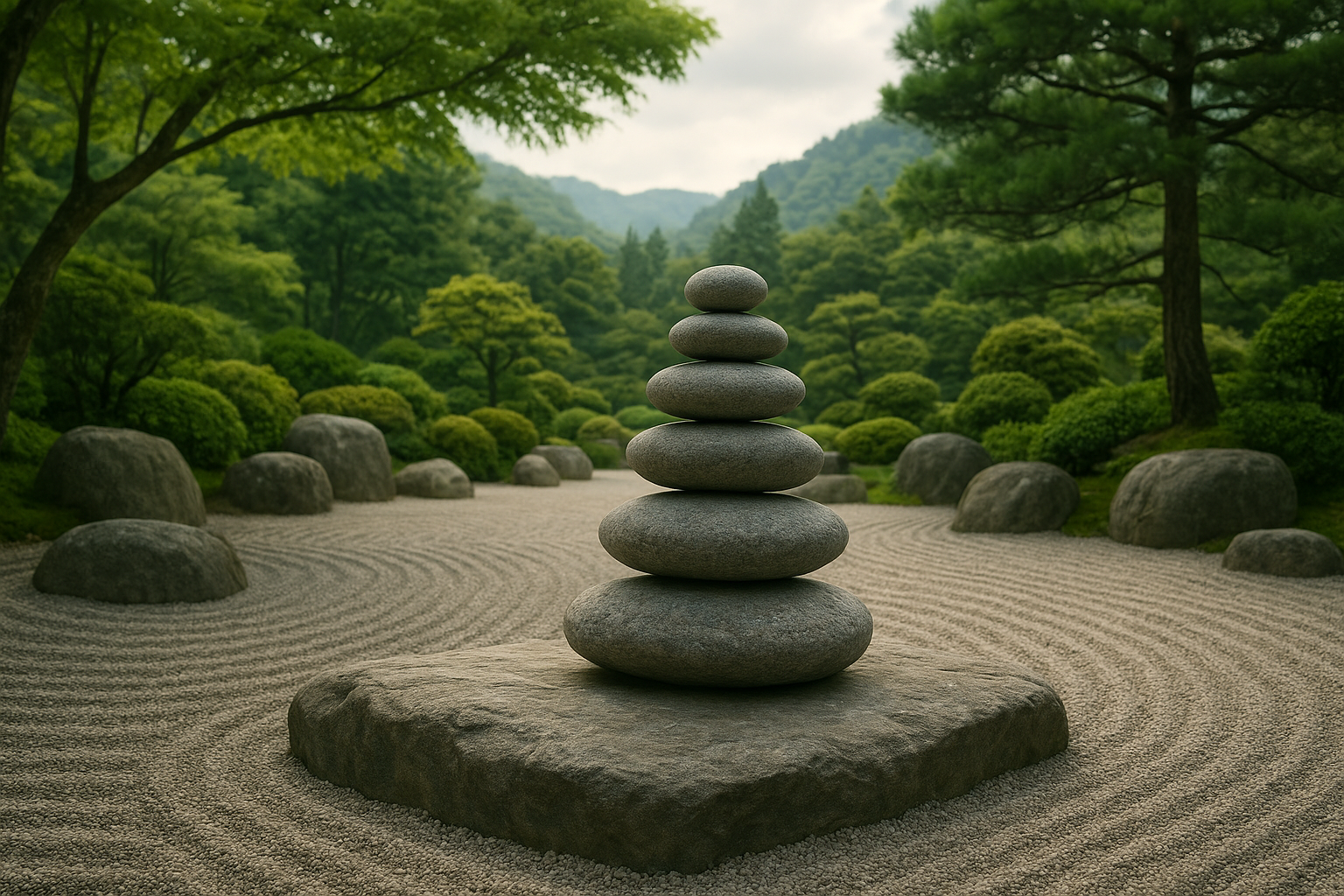
    • Stones: Representing eternal permanence amidst the transient flow of life, stones are often central to Zen gardens. Their placement is intentional, inviting contemplation and embodying the essence of wabi-sabi—beauty in imperfection and impermanence.
    • Water: The presence of water, whether in the tranquility of a pond or the gentle flow of a stream, symbolizes life’s ever-changing nature. Water in a Zen garden is a metaphor for purity and the cyclical passage of time.
    • Plants: Meticulously chosen and maintained, plants in a Zen landscape remind us of growth, resilience, and adaptability. Each leaf or blossom is a lesson in mindfulness and appreciation of life’s fleeting moments.
    • Paths: Pathways in a Zen garden do not necessarily lead from one point to another but rather encourage thoughtful wandering and reflection. They embody the journey of life, inviting the traveler to ponder each step’s significance.

    The Practice of Shakkei

    The Japanese concept of shakkei, or “borrowed landscape,” epitomizes the Zen approach to designing space. It involves incorporating elements from the surrounding natural landscape into the garden’s design, blurring the lines between cultivated and wild nature. This technique not only enhances aesthetic pleasure but also deepens the integration of Zen principles into everyday life, reminding us to embrace our environments as they are, seeing beauty and value in the natural world.

    The best-known Zen master of landscape gardening, Muso Soseki, said, “The heart of the garden can only be understood by the heart of the gardener.” Understanding Zen in the landscape involves not only seeing but feeling. It requires openness to the whispers of the rocks, the songs of the rivers, and the breath of the trees.

    — Muso Soseki

    The Path to Enlightenment

    Engaging with the landscape as a manifestation of Zen Buddhism encourages a return to simplicity and mindfulness, essential teachings that have resonated through centuries. It calls for an active participation in the natural world, fostering a sense of unity and teaching the fluidity of existence.

    Modern adherents of Zen and enthusiasts of mindfulness alike find solace and wisdom in this interaction. In an era where technology often disengages us from our immediate environments, reconnecting with nature serves as a reminder of our intrinsic ties to all living things. As Rinzai Zen master Shunryu Suzuki eloquently put it, In the beginner’s mind there are many possibilities, but in the expert’s mind there are few. This openness is precisely what engaging with the stone sutra, or natural landscape, cultivates.

    Conclusion

    The stone sutra within the landscape is an invitation to observe, reflect, and grow. It is a living scripture, offering insights into the Zen way of being. Through the harmonious balance of elements, it encourages the practice of mindfulness, simplicity, and an appreciation for the ephemeral beauty of life.

    By embracing the teachings found in nature, one embarks on a journey towards enlightenment—a path paved with stones, watered by streams, and shaded by ancient trees. In doing so, the landscape becomes a sanctuary of peace and wisdom, ever ready to teach those willing to listen.

  • Practicing Stillness While in Motion

    Practicing Stillness While in Motion

    Practicing Stillness While in Motion

    Practicing Stillness While in Motion

    In today’s fast-paced world, the idea of finding stillness seems almost paradoxical when we are constantly on the move. However, discovering tranquility amid activity is not only possible but also a path to greater mindfulness and peace. Practicing stillness while in motion can be an essential skill for enhancing focus, reducing stress, and achieving a balanced life.

    The Concept of Stillness

    “Stillness is not about focusing on nothingness. It’s about creating an emotional clearing to see what is actually there.” – Oprah Winfrey

    Stillness, as defined by spiritual leaders and mindfulness practitioners, does not necessarily mean the absence of movement; rather, it implies a centeredness and clarity achieved through intentionality. As noted in the spiritual teachings, stillness is about finding peace within chaos.

    Finding Stillness in Daily Activities

    Integrating stillness into daily life can transform ordinary routines into opportunities for mindfulness and inner calm. Here are some key practices to incorporate stillness even while engaged in activity:

    • Mindful Walking: Instead of rushing from one task to another, practice mindful walking by focusing on each step. Feel the ground beneath your feet and the rhythm of your breath.
    • Focused Breathing: While commuting or during work breaks, engage in deep, conscious breathing. Inhale for four counts, hold, and exhale slowly, letting go of tension.
    • Active Meditation: Transform repetitive actions like washing dishes or gardening into meditative experiences by giving full attention to the activity at hand.

    Developing a Mindset for Stillness

    Achieving stillness begins with a shift in mindset. Here’s how you can cultivate a mentality that supports stillness in motion:

    • Embrace Imperfection: Accept that stillness doesn’t require perfection. It’s an ongoing practice that grows with patience and persistence.
    • Set Intentions: Begin each day by setting an intention to remain centered, no matter the external circumstances. Such an approach guides the mind towards calmness.
    • Practice Gratitude: Regularly acknowledging gratitude fosters a sense of contentment, which supports inner peace and stillness.

    Benefits of Practicing Stillness

    Embracing stillness as a practice offers numerous benefits that contribute to overall well-being:

    • Reduced Stress: Mindful practices activate the parasympathetic nervous system, lowering stress levels and fostering a sense of peace.
    • Increased Focus: Regular stillness practices enhance concentration and attention, improving productivity in professional and personal life.
    • Enhanced Emotional Health: Stillness enables individuals to gain greater control over their emotional responses, promoting resilience.

    Mindful Practices Around the World

    Different cultures have long recognized the importance of stillness, integrating unique practices into daily life:

    • Japan: The Japanese tradition of Zen emphasizes satori, or enlightenment through meditation and appreciation of simplicity and nature.
    • India: Yoga, originating in India, combines physical postures with controlled breathing and meditation to achieve peace and balance.
    • Thailand: Thai Buddhism recommends Vipassana meditation, cultivating insight through mindfulness of body and mind.

    Conclusion

    Practicing stillness while in motion doesn’t mean halting life’s activities but living them with awareness and intention. By adopting techniques to find peace within the chaos, you can cultivate a profound sense of stillness, regardless of external circumstances. Start with small steps, such as incorporating mindful walking or deep breathing into your routine. As you incorporate these practices, you’ll discover a tranquility that transforms not only your actions but also your perspective on life.

    For further reading on the power of stillness and mindfulness, visit Mindful.org.

  • Zen Nomadism

    Zen Nomadism

    Zen Nomadism: Embracing the Art of Simple Living and Traveling

    In a world that often feels restless and overwhelming, the concept of Zen Nomadism emerges as a refreshing antidote. By blending elements of Zen philosophy with the wanderlust spirit of nomadism, this lifestyle encourages a harmonious and intentional approach to living and traveling. At its core, Zen Nomadism is about simplifying one’s life, finding peace in the present moment, and embracing the joys of exploration while practicing mindfulness.

    The Essence of Zen Nomadism

    Zen Nomadism is rooted in the ancient practices of Zen Buddhism, which emphasize simplicity, mindfulness, and presence. The nomadic aspect adds the dimension of continual movement, exploration, and adaptation. Together, these elements forge a path toward a life that values experiences over material possessions.

    “Zen is not some kind of excitement, but concentration on our usual everyday routine.” – Shunryu Suzuki

    • Simplicity: Zen Nomads prioritize reducing clutter, both physical and mental, focusing instead on what truly matters.
    • Mindfulness: Practicing awareness of the present moment allows nomads to fully experience their journeys and the people they encounter.
    • Adaptability: The ever-changing nature of a nomadic lifestyle requires flexibility and resilience.

    Benefits of Adopting a Zen Nomadic Lifestyle

    There are several compelling reasons why individuals might choose to embrace Zen Nomadism:

    • Freedom and Flexibility: Without the constraints of a permanent home and a rigid schedule, Zen Nomads can travel wherever they choose, often leading to experiences they might not have had otherwise.
    • Mindfulness and Presence: By practicing mindfulness, individuals learn to immerse themselves in each moment, savoring experiences rather than getting caught up in a perpetual chase for more.
    • Environmental Consciousness: The simplicity inherent in Zen Nomadism usually translates to a lower carbon footprint, as individuals often use fewer resources and produce less waste.
    • Deep Connections: With fewer distractions, there is more space for connecting with others, fostering deep and meaningful relationships with people from various backgrounds.

    Challenges and Considerations

    While Zen Nomadism is appealing in many ways, it also presents unique challenges. It requires an openness to uncertainty and an ability to navigate the complexities of travel logistics, language barriers, and cultural differences.

    “The traveler sees what he sees. The tourist sees what he has come to see.” – G.K. Chesterton

    Furthermore, the lack of a fixed address can complicate matters such as receiving mail, maintaining personal relationships, and managing finances. It is essential for those embarking on this path to have a plan for how they will address these challenges.

    Practical Steps to Embark on a Zen Nomadic Journey

    1. Declutter Your Life: Start by minimizing material possessions, keeping only what is essential to your journey and wellbeing.
    2. Cultivate Mindfulness: Incorporate daily practices of meditation and mindfulness to stay grounded.
    3. Research and Plan: Equip yourself with knowledge about potential destinations, including aspects of culture, language, and local customs.
    4. Embrace Simplicity: Opt for a simpler lifestyle that prioritizes experiences and connections over material wealth.
    5. Stay Open: Foster an attitude of openness and curiosity, allowing each new experience to inform and enrich your journey.

    A Personal Journey: A Zen Nomad’s Story

    Consider the story of Emily Adams, a former corporate executive who left her fast-paced job to pursue a life of Zen Nomadism. Emily recounts her transformation:

    “I realized I had spent years accumulating things and chasing achievements that brought only fleeting satisfaction. It was when I started letting go of my possessions and embracing the unknown that I truly found peace and fulfillment.”

    Emily’s journey took her to diverse destinations where she explored local communities, participated in meditation retreats, and volunteered for environmental projects. Through her travels, she achieved a profound understanding of the interconnectedness of life and the importance of being present.

    Conclusion: The Way Forward

    Zen Nomadism is not for everyone, but for those who feel called to it, it offers a deeply fulfilling and enriching way of life. Whether you decide to fully embrace this path or simply incorporate elements into your existing lifestyle, the teachings of Zen Nomadism—emphasizing simplicity, mindfulness, and presence—can serve as guiding principles to cultivate a more meaningful and connected life.

    For more insights into the journey of living simply, consider visiting resources like The Minimalists or exploring the teachings of Zen masters such as Thich Nhat Hanh.

    In the essence of Zen, may your journey be one of peace, discovery, and profound understanding.

  • Stillness in Motion

    Stillness in Motion

    Stillness in Motion: Finding Calm in a Rapidly Changing World

    In an era where technological advancements and societal shifts happen at lightning speed, finding moments of stillness can seem like an elusive ideal. Yet, the concept of “stillness in motion” is gaining traction as a necessary practice for maintaining mental health and fostering creativity.

    Amidst the chaos, embracing stillness does not mean ceasing all activity. Instead, it involves cultivating a state of mind where calmness and awareness coexist with the constant flow of life.

    The Science of Stillness

    Recent studies have highlighted the benefits of incorporating stillness into our daily routines. According to a report from the National Institutes of Health, mindfulness practices can significantly reduce stress and enhance cognitive function. This balance of activity and tranquility is essential for sustaining productivity and well-being.

    “Stillness does not mean the absence of movement or activity, but rather a state of inner peace and mindfulness amid the hustle and bustle of life.” – Psychology Today

    Techniques to Achieve Stillness

    Incorporating moments of stillness into a busy schedule requires intentionality and practice. Here are a few strategies to help achieve this balance:

    • Mindful Meditation: Dedicate a few minutes each day to meditation. Focus on your breath and let go of distracting thoughts.
    • Nature Walks: Spend time in nature to disconnect from technology and reconnect with the natural world. The rhythmic motion of walking can provide both physical exercise and mental clarity.
    • Digital Detox: Regularly unplug from digital devices to reduce information overload and allow your mind to rest.
    • Creative Expression: Engage in creative activities such as painting, writing, or playing music. These can serve as meditative practices that promote inner calm.

    Conclusion

    Finding stillness in motion is more than a paradox; it’s a vital practice for thriving in today’s fast-paced world. By integrating mindfulness into our routines, we create space for reflection and innovation. As the world continues to evolve, the ability to maintain inner peace amidst external chaos will be a defining skill of the future.

    For more insights into mindfulness and mental well-being, visit the Mindful website.