Tag: living

  • Sustainable Energy: Living Below Your Maximum

    Sustainable Energy: Living Below Your Maximum

    “`html


    Sustainable Energy: Living Below Your Maximum

    Sustainable Energy: Living Below Your Maximum

    “The time has come for us to act. Climate change is an existential crisis, and we have the power to make a difference.” – Barack Obama

    In a world where consumption and convenience often dominate our daily lives, it’s crucial to remember the importance of living sustainably, especially when it comes to energy usage. One key principle to embracing a sustainable lifestyle is learning to live below your maximum energy capacity.

    Understanding Your Energy Consumption

    The first step towards sustainable living is understanding your own energy consumption patterns. Identify the appliances, transportation methods, and lifestyle choices that consume the most energy in your life.

    • Consider using a home energy audit to assess your household’s energy usage.
    • Tracking your daily activities and their associated energy costs can help identify areas for improvement.

    Reducing Unnecessary Energy Use

    Once you have a clear understanding of your energy consumption, it’s time to take action. Begin by focusing on reducing unnecessary energy use. Small changes can lead to significant long-term savings.

    • Turn off lights and unplug electronics when not in use.
    • Upgrade to energy-efficient appliances and light bulbs when possible.

    Embracing Renewable Energy Sources

    In addition to reducing unnecessary energy use, it’s essential to consider renewable energy sources for your home and transportation needs. These clean and sustainable options can help minimize your carbon footprint.

    • Solar panels are an effective way to generate electricity at home.
    • Electric vehicles (EVs) offer a more environmentally friendly alternative to traditional gasoline-powered cars.

    “The future is already here — it’s just not evenly distributed.” – William Gibson

    While sustainable living may seem daunting, remember that the future is within reach. Embracing a lifestyle focused on living below your maximum energy capacity will not only benefit you but also contribute to a healthier planet for generations to come.


    “`

  • Sustainable Living for Sensitive and Creative People

    Sustainable Living for Sensitive and Creative People


    Sustainable Living for Sensitive and Creative People

    Sustainable Living for Sensitive and Creative People

    “Nature does not hurry, yet everything is accomplished.” – Lao Tzu

    In today’s fast-paced world, it can be challenging for sensitive and creative individuals to maintain a balance between their personal wellbeing and the demands of modern life. Embracing sustainable living practices offers a path towards harmony and self-fulfillment. This article will provide insights into how you can create a more balanced lifestyle while minimizing your impact on the environment.

    Embrace Mindfulness

    • Practice meditation and yoga to cultivate awareness and reduce stress.
    • Link to a mindfulness resource: Mindful

    Adopt an Eco-Friendly Diet

    • Choose locally sourced, organic foods to support your community and the environment.
    • Link to a local food resource: Local Food Guides

    Reduce Energy Consumption

    • Use energy-efficient appliances and practice energy conservation habits.
    • Link to an energy conservation resource: Energy Star

    Minimize Waste Production

    • Embrace reusable items, recycle when possible, and compost organic waste.
    • Link to a zero-waste living resource: Zero Waste Home

    “The earth does not belong to us; we belong to the earth.” – Chief Seattle

    By adopting these sustainable living practices, you can create a harmonious lifestyle that benefits both yourself and the environment. Remember, it’s essential to honor our planet, which has nurtured us throughout history and continues to provide the resources we need for survival. Happy living!

  • Living at a Human Pace

    Living at a Human Pace


    Living at a Human Pace

    Living at a Human Pace: Embracing Slowness in the Fast World

    “Slow down and enjoy life. It’s not only the scenery you miss by going too fast – you also miss the sense of where you are going and why.” – Eddie Cantor

    In a world where technology and modernity have accelerated our pace of living, it is increasingly important to remember the value of slowing down. Living at a human pace can be seen as a deliberate choice to resist the fast-paced lifestyle that many of us find ourselves immersed in.

    The Advantages of Living at a Human Pace

    • Improved Mental Health: Slowing down allows for greater mindfulness and presence, which can help reduce stress and anxiety.
    • Deepened Connections: Taking time to truly engage with others fosters stronger relationships and a more meaningful social life.
    • Enhanced Creativity: A slower pace of living creates space for reflection, introspection, and the exploration of new ideas.

    “Happiness is not having it all. It’s enjoying the journey while on the way to getting it.” – Winnie The Pooh

    Practical Steps Towards Living at a Human Pace

    • Limit screen time and focus on face-to-face interactions.
    • Take regular breaks throughout the day to rest and recharge.
    • Embrace hobbies that promote relaxation, such as reading, gardening, or yoga.
    • Cultivate a sense of gratitude for the small moments in life.

    By living at a human pace, we can find greater happiness, fulfillment, and connection in our daily lives. Embracing slowness doesn’t mean being lazy or complacent; rather, it means taking the time to appreciate the journey and truly enjoy the ride.


  • From Mount Olympus to Inner Life: Living with the Gods Today

    From Mount Olympus to Inner Life: Living with the Gods Today


    From Mount Olympus to Inner Life: Living with the Gods Today

    From Mount Olympus to Inner Life: Living with the Gods Today

    Ancient Greek mythology, with its grandeur and enchantment, continues to resonate in our modern lives. The gods of Mount Olympus are no longer mere figures of the past; they are a part of our inner selves, shaping our understanding of the human condition.

    “Mythology is the penultimate form of wisdom. It is the eternal struggle between good and evil represented in symbolic language.” – Carl Jung

    – Carl Jung

    The Influence of Greek Mythology on Modern Psychology

    Swiss psychiatrist Carl Gustav Jung, a pioneer in analytical psychology, was deeply influenced by ancient Greek mythology. He saw the gods and heroes as archetypes that could help us understand our unconscious minds.

    “Man is a symbol-making animal.” – Carl Gustav Jung

    – Carl Gustav Jung

    Everyday Applications of Greek Mythology

    • Self-discovery: The journey of heroes like Hercules or Odysseus can inspire us to face our own challenges and grow.
    • Understanding relationships: Myths about Zeus’s infidelities, Hera’s jealousies, and Aphrodite’s love affairs can offer insights into human relationships.
    • Exploring creativity: The birth of Athena from Zeus’s forehead symbolizes the sudden creative inspiration so familiar to artists.

    The Gods Within: A Reflection of Human Potential

    By acknowledging the divine within us, we can strive to embody the virtues associated with Greek gods – wisdom (Athena), courage (Achilles), and love (Aphrodite) – in our daily lives. This quest for self-improvement is a modern interpretation of living with the gods today.

    “Inside man dwells the image of god, and the last stage of his development consists in the growth of this image until it eventually fills him completely.” – Friedrich Nietzsche

    – Friedrich Nietzsche

  • Mythical Time vs. Clock Time – Living outside the algorithm

    Mythical Time vs. Clock Time – Living outside the algorithm

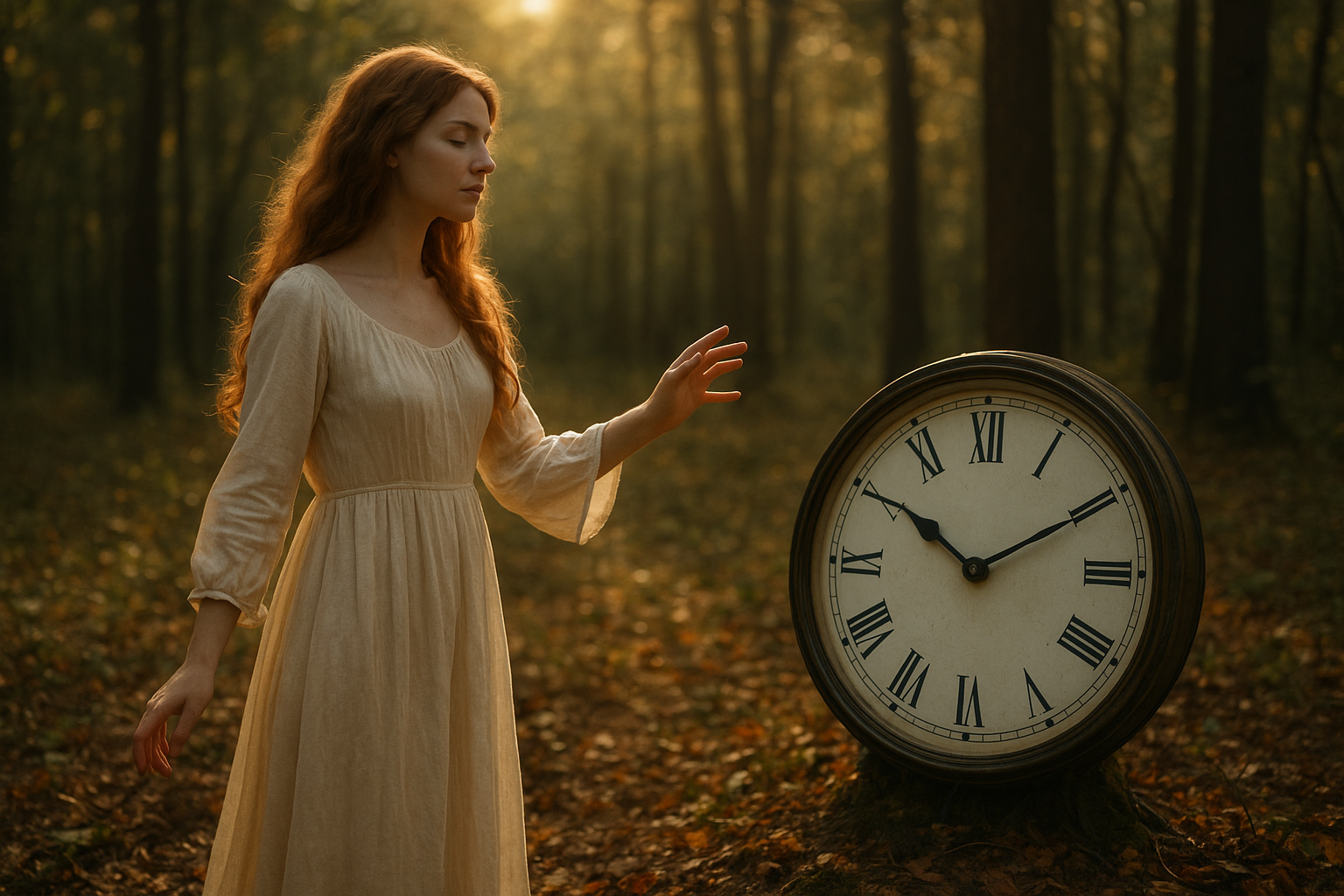
    In an era dominated by schedules, digital alerts, and the incessant tick-tock of clock time, a burgeoning interest in mythical time invites us to pause, reflect, and potentially redefine our relationship with time itself. But what exactly is mythical time, and how does it differ from the algorithm-driven clock time that governs our daily lives?

    The Concept of Mythical Time

    Mythical time is often described as a realm where the linear progression of past, present, and future dissolves, allowing a more fluid and often symbolic interpretation of time. This concept takes inspiration from ancient cultures and narratives where time was not measured by minutes and hours but rather by events, rituals, and the natural cycles of life.

    Mircea Eliade, a Romanian historian of religion, philosopher, and professor at the University of Chicago, describes mythical time as “a primordial time, a sacred time, a mythical time.” Through this lens, time is experienced in a more cyclical and eternal manner, facilitating a deeper connection to moments of significance.

    “In the modern world, time has become a limited commodity, something to be utilized efficiently and often traded for productivity. Yet, in the mythical conception of time, moments stretch out, allowing for reflection, growth, and a connection to the past and the future,” Eliade suggests in his works on the sacred and the profane.

    The Algorithmic Nature of Clock Time

    Contrastingly, clock time is a linear, structured interpretation based on seconds, minutes, and hours—designed to quantify, schedule, and manage our activities. Our dependence on this algorithmic measure of time has intensified with the advent of technology, weaving intricate patterns of notifications, deadlines, and calendars into our personal and professional worlds.

    As Douglas Rushkoff, a media theorist, points out, “Living according to the clock’s imposed pacing can estrange us from our own bodily rhythms and intuitive understanding of time.” (Douglas Rushkoff, Team Human)

    Choosing to Live Beyond the Algorithm

    Embracing mythical time does not necessitate the total abandonment of modern conveniences, but rather encourages a mindful integration of time’s dual aspects. By cultivating practices that allow us to step outside the algorithm—such as meditation, creative expression, or spending uninterrupted time in nature—we invite a balance that acknowledges both the sacred and the structured.

    Ultimately, living outside the algorithm invites us to harmonize the tangible elements of clock time with the intangible essence of mythical time, empowering us to reconnect with the present moment in a deeper, more meaningful way.

    With this blending, we aim not just to manage our time but to live fully within it, embracing each moment’s potential for connection and significance.

  • Return to Origin – The Primordial Dao Reawakened

    Return to Origin – The Primordial Dao Reawakened

    Return to Origin: The Primordial Dao Reawakened

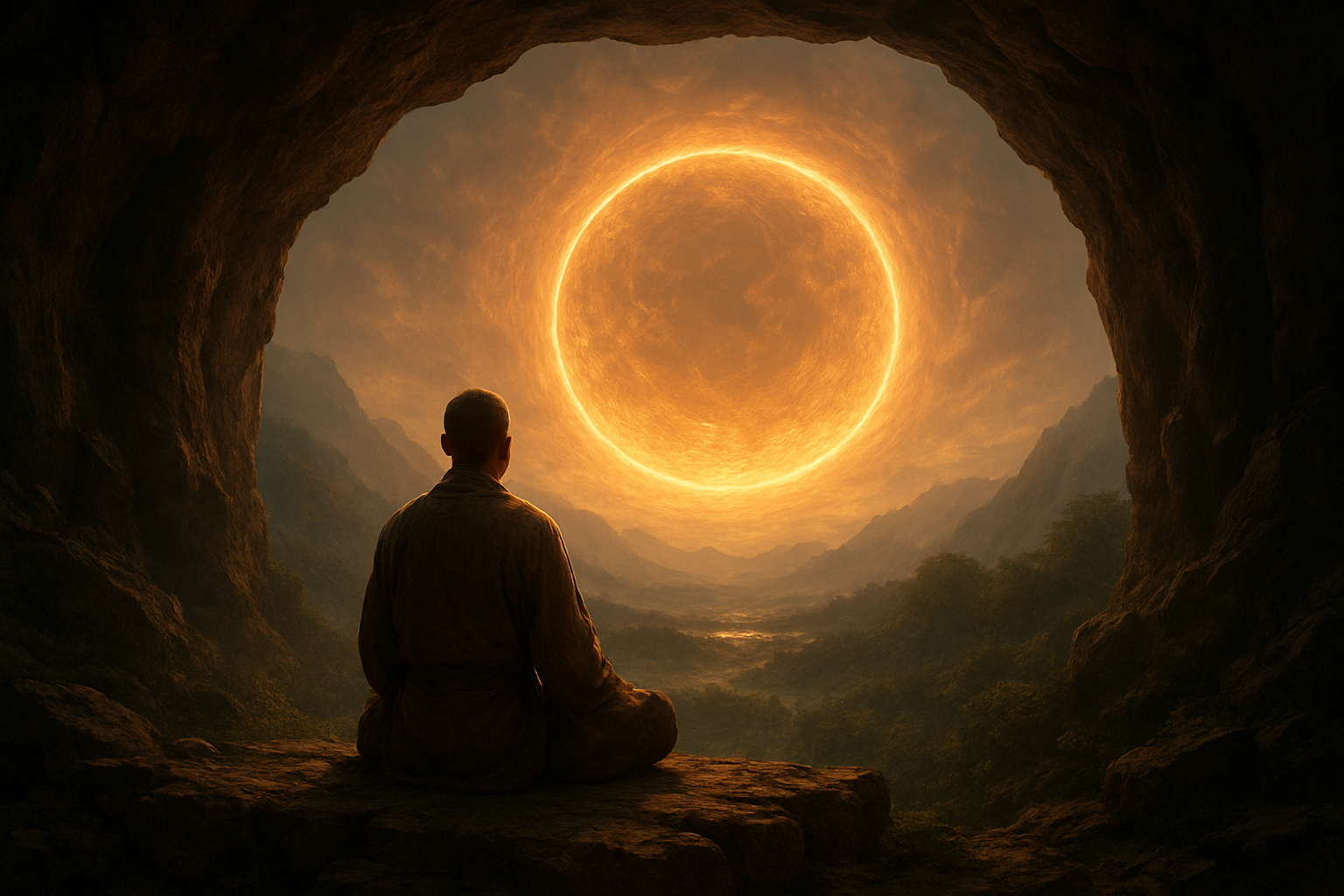
    Throughout history, humanity has sought to understand its place within the grand tapestry of existence. In this journey, ancient philosophies often offer profound insights. One such wisdom tradition is Daoism, a philosophy and way of living that traces its roots back to ancient China. It speaks of a return to simplicity, alignment with nature, and an understanding of the life force, or Dao, that flows through and around all things.

    The Essence of Daoism

    At the heart of Daoism is the concept of the Dao (or Tao), often translated as “The Way.” This path is not merely a set of moral codes or religious doctrines, but a living, breathing approach to life and the universe. The Dao De Jing, attributed to the sage Laozi, encapsulates this philosophy in its elegant verses. As Laozi remarked,

    “The Dao that can be told is not the eternal Dao; the name that can be named is not the eternal name.” – Laozi, Dao De Jing

    This foundational text beckons us to transcend the limitations of language and conceptual thought, inviting us into direct experience and understanding of the natural flow of life.

    The Primordial Dao and the Return to Origin

    Central to Daoist thought is the concept of returning to the origin – a metaphorical homecoming to the pure and untainted state of being. In the Daoist worldview, this means reconnecting with the uncarved block, or the state of pu, which reflects simplicity and potential. Embracing the primordial Dao involves:

    • Embracing Simplicity: Stripping away the unnecessary complexities of life and focusing on what is essential.
    • Harmony with Nature: Understanding our intrinsic connection to the natural world and living in balance with it.
    • Non-Action (Wu Wei): Paradoxically, this does not imply inactivity but rather aligning actions with the natural flow to achieve optimal outcomes with minimal effort.

    These principles reflect the unchanging truths of the Dao, reminding us that true wisdom lies in simplicity, and true power in subtlety.

    The Reawakening of Primordial Dao in Modern Times

    In today’s fast-paced world, where technological advancements and societal changes rapidly alter the landscape of our lives, the primordial Dao holds significant relevance. The current global shift towards sustainability, mindful living, and well-being echoes a yearning for the primordial wisdom of our ancestors.

    Sustainability and the Dao

    One cannot overlook the environmental crises that threaten the fabric of life on Earth. Daoism’s emphasis on harmony with nature aligns with modern ecological movements. Concepts such as integrated agriculture and permaculture resonate with Daoist practices, underscoring responsible stewardship of our planet.

    Mindfulness and Simplicity

    Mindfulness practices, popularized in recent decades, echo Daoist meditation techniques aimed at achieving clarity and presence. The practice of dao yin—an ancient form of Daoist yoga and meditation—focuses on directing the flow of energy, or qi, throughout the body.

    In this light, returning to the Dao represents a paradigm shift from consumption-driven living to one imbued with intentional action and simplicity. As noted by Alan Watts, a philosopher who helped popularize Eastern philosophy in the West, “This is the real secret of life—to be completely engaged with what you are doing in the here and now. And instead of calling it work, realize it is play.”

    The Path Forward

    While the fullness of the Dao cannot be contained within words alone, engaging with its principles offers potent avenues for personal and communal transformation. By embracing the return to origin, individuals and societies can benefit in numerous ways:

    • Enhanced Mental Well-being: By cultivating a sense of inner peace and resilience.
    • Community Harmony: Encouraging cooperation and cohesion through shared values aligned with the Dao’s teachings.
    • Resilient Ecosystems: Practicing environmentally aligned living that nurtures rather than depletes.

    Conclusion: Embracing the Dao

    The journey back to our origins offers a way of seeing and being that is deeply necessary in our contemporary world. In embracing the primordial Dao, we open ourselves to a life of more fluidity, authenticity, and interconnectedness. Even as we advance technologically and socially, a stabilizing force remains in our return to these ancient yet timeless principles.

    The Dao teaches us that life, in its myriad forms, is already perfect as it is. Our task is not to mold it to our desires but to appreciate and flow with its rhythms, finding ourselves along the way. The return to origin is less about going back, rather a conscious progression towards our truest form, recognizing and reawakening the intrinsic Dao within us all.