Apollo: Light, Order, Prophecy, and the Discipline of Beauty
Apollo: Light, Order, Prophecy, and the Discipline of Beauty
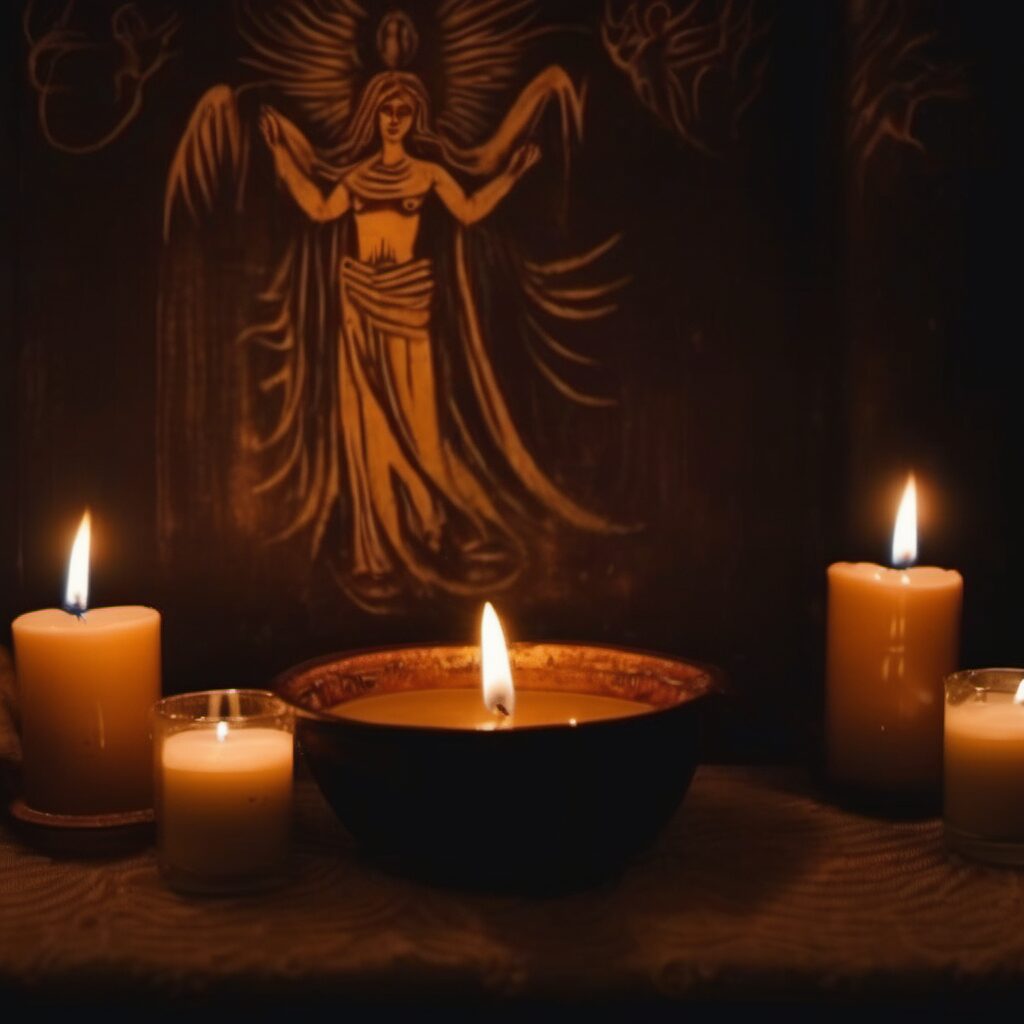
In Greek mythology, Apollo stands as a central figure, a god of multiple aspects and diverse influence. As the son of Zeus and Leto, he embodies the harmonious union of divine power and pure creativity.
“Apollo is a god who embodies many ideals that are essential to human civilization: light, reason, prophecy, medicine, music, poetry, and more.”
– Source: Britannica Encyclopedia
Light and Order
As the god of sunlight, Apollo is intimately connected to light. His chariot brings daylight each morning, symbolizing knowledge and enlightenment. Furthermore, his association with order reflects his role as a patron of law, justice, and art.
Prophecy and Delphi
Apollo is also associated with prophecy and the oracle at Delphi, one of the most famous sanctuaries in Greece. Here, Apollo was believed to communicate predictions through his priestess Pythia.
“The power that resided in the Pythia, as it was said, came from Apollo.”
– Source: Ancient History Encyclopedia
The Discipline of Beauty
Perhaps most famously, Apollo is the god of music and poetry. His influence on the arts is evident in his mastery of various musical instruments, including the lyre, and his patronage over creative endeavors.
The Will-o’-the-Wisp – Following the False Lights of the Marshland
Deep within the misty marshlands, a mysterious and treacherous phenomenon has been observed by travelers for centuries. The Will-o’-the-Wisp, also known as Ignis Fatuus or Jack o’ Lantern, is a ghostly light that seems to lead wanderers deeper into the swamp.
The Origins of the Legend According to folklore, the Will-o’-the-Wisp is the spirit of a witch who died in the marsh. Her ghost now lures unsuspecting travelers with its eerie glow, leading them to their doom.
A Beacon of Deception The Wisp’s light appears as a faint flickering flame or a ball of fire that moves in strange patterns. Its purpose is to mislead, rather than guide, those who follow it. As the ancient proverb goes: “The Will-o’-the-Wisp leads you astray, where the bog holes await.”
The Dangers of the Marsh The marshlands are treacherous terrain, with hidden bogs and quicksand that can swallow a person whole. Add the allure of the Wisp’s false light, and it’s no wonder many have lost their lives in this unforgiving environment.
A Modern-Day Parallel While we may not believe in ghostly apparitions today, the concept of being misled by false promises or deceptive appearances still resonates. As the great philosopher, Heraclitus, once said: “The way up and the way down are one and the same.”
The Wisp’s Modern Legacy The Will-o’-the-Wisp has inspired numerous works of fiction, from folklore to literature. Its allure remains strong, captivating our imagination with its enigmatic presence.
“The Will-o’-the-Wisp may be a mere illusion, but it is an illusion that can still lead you astray.” – Old English Proverb
The Primordial Spark – Why every culture begins with a story of light
In the beginning, there was darkness. And from that darkness, a spark of light emerged to illuminate the world. This primordial tale is not unique to one particular culture or mythology; instead, it’s a recurring theme across the globe. From ancient Mesopotamian myths to modern scientific theories, the story of light has captivated human imagination for centuries.
The Cosmic Dance – In Hindu mythology, the universe was born from the cosmic dance between the primordial gods Brahma, Vishnu, and Shiva. Their movements created the universe, with light being the first manifestation of creation. As the Rigveda says, “In the beginning, there was only darkness. And then there was light.” (Rigveda 1.89)
The Primordial Flame – In ancient Greek mythology, the Titan Prometheus stole fire from the gods to give it to humanity, defying Zeus’ decree that humans should only have darkness and shadow. This myth highlights the significance of light in human civilization.
The Spark of Life – In some African cultures, the first spark of life is attributed to the divine. For example, in Yoruba mythology, the god Olorun created the world by illuminating it with his divine light. This primordial spark symbolizes the source of all creation and life.
The Scientific Connection – Modern physics has also explored the concept of a primordial spark. The Big Bang theory suggests that the universe began as an infinitely hot and dense point, expanding rapidly around 13.8 billion years ago. This cosmic explosion is often referred to as the “primordial spark” that gave rise to our universe.
So why do so many cultures begin with a story of light? One possible explanation is that it represents the power and mystery of creation itself. Light has long been associated with divinity, wisdom, and knowledge in various cultures. By tracing the origins of the world back to a primordial spark, these myths may be attempting to capture the essence of creation’s divine nature.
As the ancient Greek philosopher Aristotle once said, “The whole is more than the sum of its parts.” In the case of the primordial spark, it represents the fundamental source that gives rise to all existence. Whether rooted in mythology or science, the concept of a primordial spark has captivated human imagination for centuries.
Despite their differences, these stories share a common thread – they all begin with a spark of light, symbolizing the power and mystery of creation. As we continue to explore the mysteries of the universe, it’s intriguing to consider how our understanding of this primordial spark might shape our perception of reality itself.
In the whirl of today’s fast-paced world, ambient art is emerging as a haven of tranquility, inviting viewers to slow down and engage in mindful observation. This genre of art is designed not just for visual consumption but for introspective contemplation, encouraging a deeper connection between the observer and the universe.
A New Dimension of Perception
Ambient art blends elements of nature, light, sound, and space to create experiences that soothe and inspire. It is less about bold statements and more about the subtle interplay of elements that evoke emotion and thought.
“Ambient art seeks to create an atmosphere, an environment where one can meditate and reflect,” says art critic James Parker in an interview with The Atlantic. “It’s like a gentle whisper amid the clamor of everyday life.”
Artists Leading the Movement
Olafur Eliasson: Known for his installations that challenge perceptions of nature and reality, Eliasson’s work often uses ephemeral elements like light and water. His Weather Project at the Tate Modern is a prime example of art that engulfs the viewer in a new atmospheric reality.
James Turrell: Turrell’s work focuses on light and space, creating environments where viewers can lose themselves in the contemplation of color and form. His Skyspaces installations, for example, provoke a deep meditative state through their simplicity and elegance.
Yayoi Kusama: Famous for her infinite mirror rooms, Kusama creates immersive spaces where the boundaries between the self and the work blur, encouraging introspection and engagement with the infinite.
The Impact on Mental Wellbeing
Ambient art offers not only aesthetic pleasure but also therapeutic benefits. The study of “slow art” shows it can help reduce stress and promote mindfulness. According to a report in Psychology Today, “Engaging with art in a meaningful way can lead to a state similar to meditation, reducing anxiety and promoting a sense of wellbeing.”
An Invitation to Pause
In a society that values speed and immediate results, ambient art stands out as a gentle reminder of the beauty in taking a moment to pause, reflect, and simply be. It does not demand comprehension or critique; instead, it offers an open invitation for personal exploration and discovery. As art continues to evolve, ambient art proves the enduring power of stillness in the cacophony of modern life.
Modern architecture often seems more concerned with functionality and aesthetic appeal than with instilling a sense of the sacred. Yet, as we navigate the bustling streets of our contemporary cities, an unexpected blend of simplicity and grandeur can inspire feelings of awe and transcendence. The sacred, it seems, has not been entirely eclipsed by concrete and glass.
The Concept of Sacred Space
The idea of sacred space transcends physical structures, acting as a bridge between the human and the divine. As architect Louis Kahn once said, “A great building must begin with the unmeasurable, must go through measurable means when it is being designed and in the end must be unmeasurable.” (Source) This echoes the notion that architecture can evoke spirituality without needing to be overtly religious.
Elements That Evoke Sacredness
Light and Shadow: The play of light within a structure can create an ethereal atmosphere. Architect Tadao Ando often incorporates natural light in his designs, turning concrete spaces into dynamic encounters with luminosity.
Minimalism: By stripping away the superfluous, minimalist design offers clarity and focus, allowing individuals to feel a deeper connection to the present moment. As Ando notes, “We borrow from nature the space upon which we build.” This borrowing invites a perspective of reverence and mindfulness.
Scale and Proportion: Vast open spaces can prompt reflection and introspection, fostering a sense of humility and a connection to something larger than oneself.
Case Studies: Modern Sacred Architecture
Several architects have masterfully infused modern architecture with a sense of the sacred:
The Church of Light: Designed by Tadao Ando in Osaka, Japan, this structure uses a cruciform aperture to create a profound interplay of light and darkness, encouraging contemplation.
Ronchamp Chapel: Designed by Le Corbusier in France, this chapel reimagines traditional religious architecture. Its bold forms and unconventional use of space invite spiritual reflection.
The Impact of Sacred Architecture
In a world where materialism often overshadows spirituality, sacred architecture offers a refuge—a place where the mundane meets the miraculous. As poet John O’Donohue writes, “The human soul is hungry for beauty; we seek it everywhere—in landscape, music, art, clothing, furniture, gardening, companionship, love, religion, and in ourselves.” (Source)
Through a sensitive blend of light, space, and form, modern architecture can transcend its earthly confines, offering a sacred encounter. Thus, even amidst the hustle and bustle of modern life, these spaces provide an oasis of tranquility, a testament to the undying human yearning for the divine.
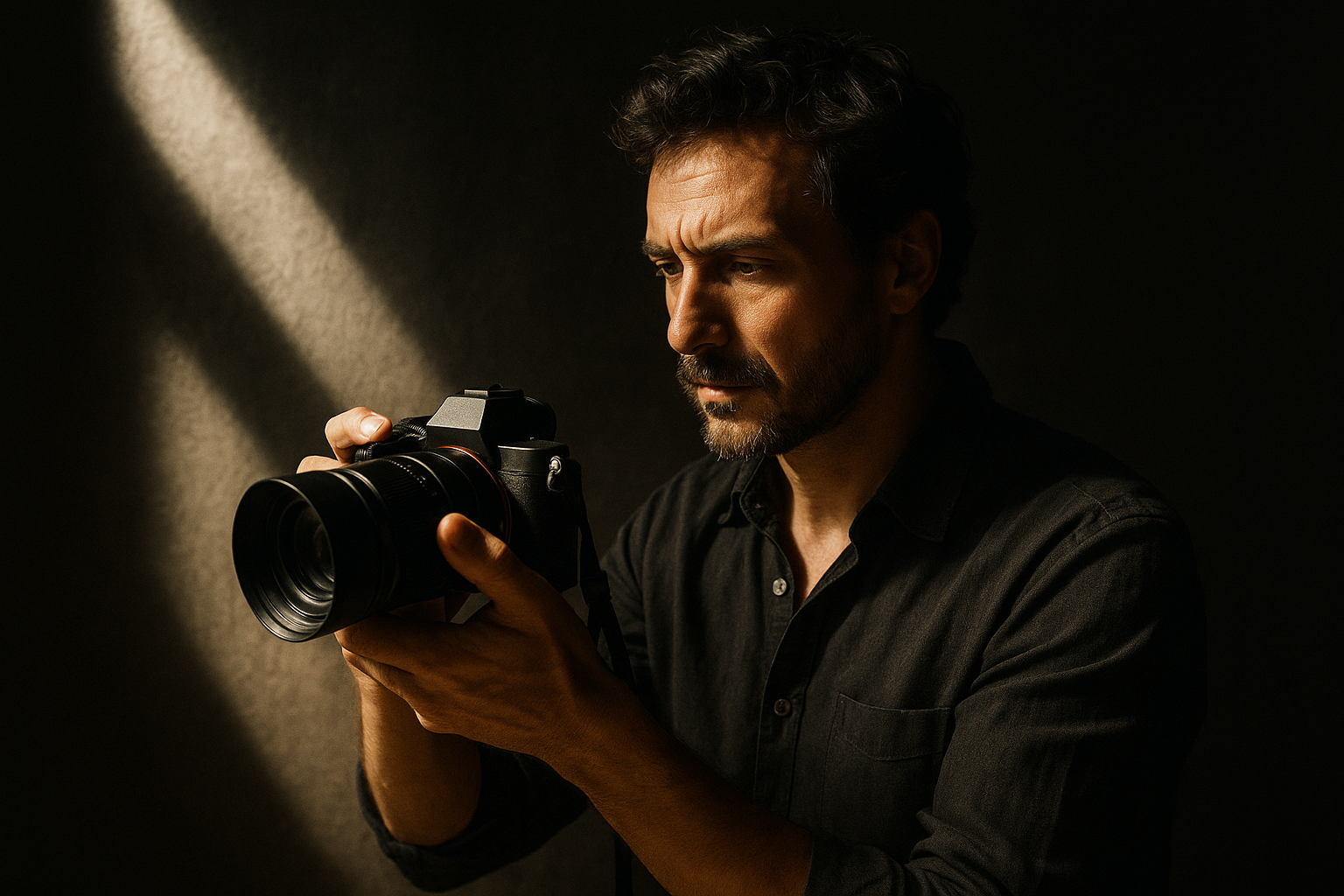
The art of photography has often been described as a modern alchemy, transcending the mere capture of images to become a profound exploration of Light and Shadow. Just as ancient alchemists transformed base metals into gold, photographers manipulate light and shadow to create visual poetry.
Understanding the Alchemical Process
At the heart of this transformation lies an intricate dance between light and shadow. Ansel Adams, a pioneer of photography, aptly noted, “You don’t make a photograph just with a camera. You bring to the act of photography all the pictures you have seen, the books you have read, the music you have heard, the people you have loved.” (Adams Photography).
Light as the Catalyst: Just as alchemists used fire to instigate change, photographers rely on light. It is both the brush and the paint—defining shapes, creating depth, and provoking emotion.
Shadow as the Substance: Shadows are not merely voids but essential elements that provide contrast and meaning, much like how ancient texts revered the balance between darkness and light.
The Photographer’s Philosopher’s Stone
In this modern alchemical pursuit, the camera becomes the philosopher’s stone. It is the tool through which the mundane is elevated to the extraordinary. This idea aligns with Susan Sontag’s perspective in her seminal work, “On Photography,” where she describes photography as “an elegiac art, a twilight art.” Photographers, she argues, capture the duality of the world, “taking a keen interest in the banality, the ordinary, the everyday.”
“Photography is, firstly, a way of feeling, of touching, of loving.” – Aaron Siskind
Digital technology has furthered this transformation. The modern photographer’s toolkit now includes post-processing software, where images are refined, much like a chemist’s concoction, to reveal the hidden beauty and subtle nuances of the subject.
The Legacy of Alchemical Photography
Photography’s narrative is one of transformation, of seeing the world anew. Through their lens, photographers invite us to witness the delicate interplay of light and shadow, beckoning us to consider perspectives we may otherwise overlook.
Ultimately, the photographer as modern alchemist is not just an observer but a creator, invoking a response from the viewer—a catalyst in the refinement of perception. This ongoing journey promises to keep the magic of photography alive, much like the eternal quest of ancient alchemy.
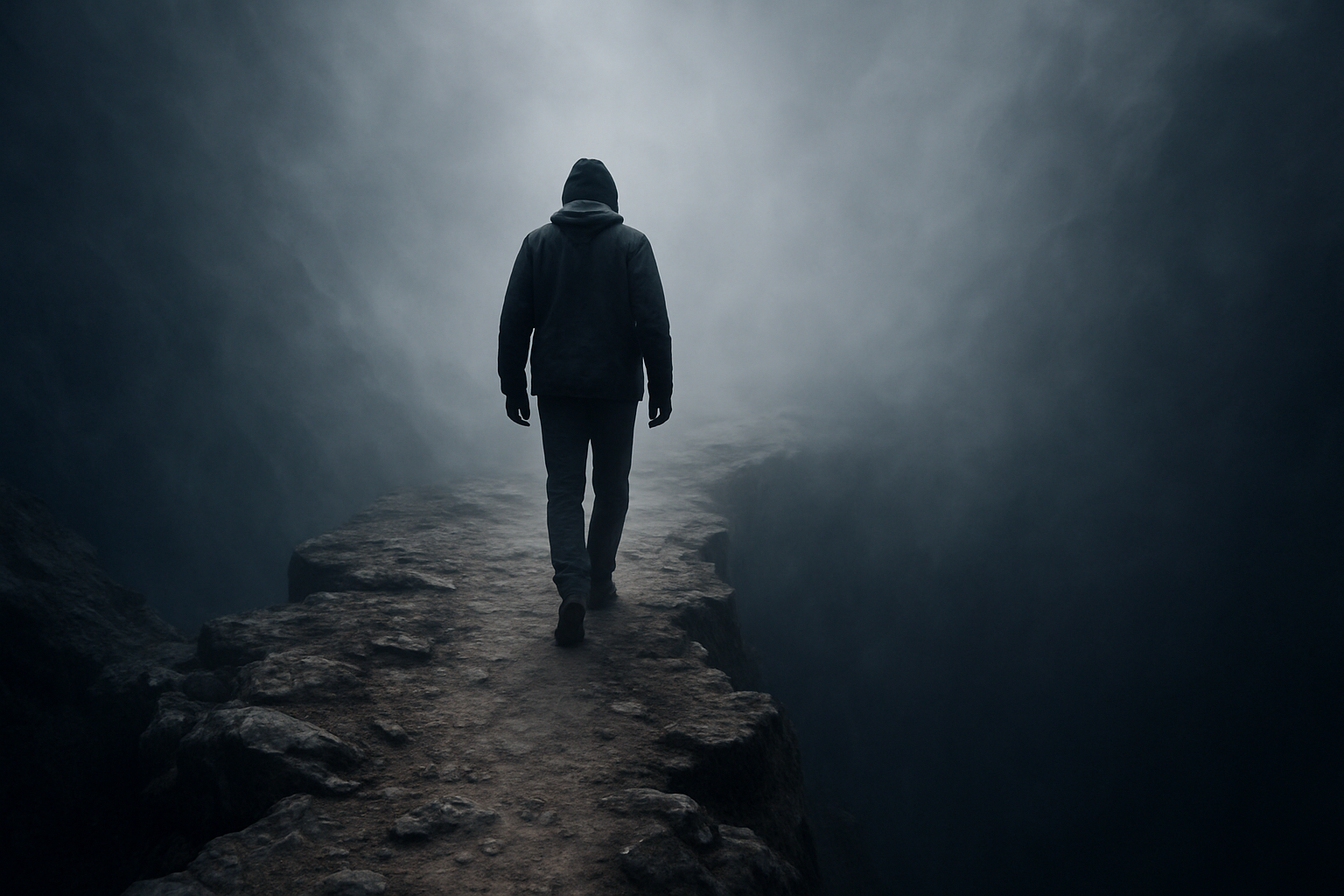
Walking the Void: A Journey into the Unseen Source
In a world bustling with noise, light, and ceaseless connectivity, the concept of walking into the void might seem daunting or even absurd. Yet, these avenues into the unseen and unknown have long been the quest for mystics, philosophers, and explorers alike. This journey into the void is not just about physical traversing; it’s about confronting the intangible, the ineffable that lingers at the edges of human understanding.
Journey Preparation: The Bold Step Forward
The void—abstract yet present—is not a mere absence but a fertile space of potential. To engage with it is to embark on a path less traveled, marked by introspection and silence. As the Zen philosopher D.T. Suzuki noted, “Emptiness which is conceptually liable to be mistaken for sheer nothingness is in fact the reservoir of infinite possibilities.” This notion invites those daring enough on a journey toward the center of their consciousness and beyond.
Understanding the Void: The journey into the void is as much about the absence of distractions as it is about the presence of insight. It asks travelers to seek clarity in spaces vacated by external noise.
Embracing Stillness: Perhaps one of the toughest challenges is to embrace stillness—to let go of the ceaseless hustle and find peace in quietude.
Confronting the Self: It is a voyage into layers of self-awareness, peeling away societal masks to discover authentic identity.
The Unseen Source: Discovering Edges of Awareness
What waits beyond the veil of everyday perception is oftentimes referred to as the unseen source—a fountainhead of inner wisdom and universal truths. Modern spirituality and ancient wisdom traditions both speak to this phenomenon. According to Rumi, the renowned Sufi mystic, “The wound is the place where the Light enters you.” It suggests a perspective where vulnerabilities open pathways to deeper understanding.
Exploring the unseen source empowers an individual to perceive life in a more integrated, holistic manner.
Intuition Over Reason: Tapping into the unseen often involves letting intuition guide one’s footsteps. This transcends logical reasoning, venturing into the realm of the heart and soul.
Expanding Consciousness: Recognizing the limits of the visible world and expanding consciousness to include what lies beyond the perceptible.
The Intersection of Science and Mysticism
In recent years, there has been an intriguing convergence of scientific inquiry and spiritual exploration concerning the void. Quantum physics, for instance, reveals a reality much stranger and more beautiful than anything conceived by the human imagination. Dr. Michio Kaku mentions in his book “The Future of the Mind”, “In quantum mechanics, nothing is essentially something.” The quantum void, far from being empty, is alive with activity, heralding a reconciliation between ancient mysticism and modern science.
The Quantum Mystery: The void in quantum physics could be viewed as a microcosm of the spiritual void, suggesting a space teeming with unseen potentials.
Unifying Concepts: Both fields hint at realities interconnected by unseen forces, echoing the mystical perspective of oneness with all things.
The Personal Path: Charting One’s Own Void
How one engages with the void is intensely personal and varies widely from individual to individual. Yet, some universal elements guide this exploration:
Meditation and Mindfulness: Whether through traditional meditation practices or modern mindfulness techniques, these methods offer structured approaches to exploring the void.
Artistic Expression: For some, the void is best navigated through art, music, or writing, as these forms bridge the seen with the unseen.
Connection with Nature: Immersing oneself in natural environments often mirrors the vastness and mystery of the void, providing a visceral sense of connection to the source.
Conclusion: The Unseen Beckons
Walking the void is as much an inner journey as it is an exploration of the universe’s mysteries. In reaching out into the unseen source, one might discover not just a reflection of the cosmos but a reflection of one’s truest self. Such a path invites courage, creativity, and an open heart—qualities that, once embraced, redefine the boundaries of possibility.
Ultimately, the journey into the unseen is not a journey toward darkness, but toward the light hidden within it, a compelling path pursued by the curious and the brave alike.
Lantern in the Fog – Finding Light in the Unseen Way
Lantern in the Fog – Finding Light in the Unseen Way
In the depths of uncertainty, a metaphor emerges: the lantern in the fog. It represents the quest for clarity amidst the enigmatic journey of life—a subtle dance between illuminating the path ahead while embracing the ambiguity of uncharted territory. But how exactly do we find our way forward when the road is obscured?
In society’s current state, marked by technological upheavals and existential questions, the lantern in the fog serves as a beacon, prompting us to explore what it means to navigate the unseen way both metaphorically and literally.
A World Covered in Fog
The modern world mirrors the foggy landscape of our metaphor. Science fiction has long captured this essence, presenting worlds where future society grapples with unfamiliarity and the unknown. In Philip K. Dick’s groundbreaking novel, Do Androids Dream of Electric Sheep?, this theme is predominant. As technology advances, the boundary between human and machine becomes obscured, and characters seek clarity in their identities and humanity.
“The basic tool for the manipulation of reality is the manipulation of words. If you can control the meaning of words, you can control the people who must use the words.”
– Philip K. Dick
Illumination through Technology
In today’s reality, technology plays a dual role as both the fog and the lantern. On one hand, the rapid pace of technological change can obscure our path, creating a cyber fog where traditional maps are rendered obsolete. On the other, technology acts as a lantern, casting light on possibilities previously deemed impossible.
Virtual Reality (VR) and Augmented Reality (AR): Tools like VR and AR are extending our perceptual realities, creating new ways to experience the world. These technologies enhance our ability to see through the fog, providing a new avenue to understand complex situations by simulating diverse outcomes.
Artificial Intelligence (AI): AI acts as both a mysterious enigma and a guiding force. As AI capabilities expand, it raises questions about decision-making, ethics, and control. Yet, when harnessed responsibly, AI can analyze vast amounts of data, helping us make more informed choices.
For instance, AI technologies are beginning to sift through the ‘fog of information’ through advancements in healthcare. The data-heavy approach provides insights into personalized medicine, potentially saving lives by anticipating outcomes and suggesting treatments tailored to individuals.
Exploring the Inner Landscape
Beyond technological tools, finding light in the unseen way requires inner exploration. The fog is not only external but internal—a murkiness of thoughts and emotions that can obfuscate direction. Renowned psychologist Carl Jung emphasized the importance of facing our inner fog:
“Your vision will become clear only when you can look into your own heart. Who looks outside, dreams; who looks inside, awakes.”
– Carl Jung
The journey inward involves self-reflection, mindfulness, and an examination of one’s values and beliefs. This introspection often uncovers latent insights, akin to a lantern illuminating a path previously hidden by the fog.
Community as a Guidepost
While individual journeys are essential, the collective wisdom of communities can also serve as a beacon. Historically, communities have provided support, shared knowledge, and collective strategies to navigate uncertain times. Modern networks, whether digital or physical, continue this tradition.
Participating in discussions, sharing stories, and learning from diverse perspectives create a shared map that can help illuminate collective paths forward. Engaging with different viewpoints encourages a multifaceted understanding and helps break down the isolation that the metaphorical fog can sometimes breed.
Online forums and communities: Platforms such as Reddit and specialized forums for various interests act as a digital gathering space for people seeking insights and community wisdom.
Local community gatherings: Community centers and cultural events bring people together to share experiences and collective knowledge.
Charting a Path Forward
To find a light in the unseen way is to embrace the uncertainty inherent in life while consciously seeking understanding and clarity. As technological, inner, and communal lanterns guide our paths, we must also recognize the value of occasional detours and the beauty hidden in the mist.
The lantern in the fog, then, becomes a symbol of resilience—embracing complexity, acknowledging the unknown, and finding hope and clarity amid the haze. As we traverse this nebulous landscape, the light may flicker, but it remains an unwavering guide, illuminating the cryptic yet promising journey ahead.