Tag: life

  • Mountain Hermit Diaries – Living the Dao in Solitude

    Mountain Hermit Diaries – Living the Dao in Solitude

    The life of a mountain hermit, immersed in the simplicity and serenity of nature, provides a unique perspective on the teachings of Daoism. This ancient Chinese philosophy, which emphasizes living in harmony with the Dao or the “Way,” offers a path to inner peace and understanding that often eludes those ensnared by the complexity of modern life.

    The Call of the Mountains

    For many, the allure of the mountains is irresistible. The towering peaks and pristine wilderness offer a refuge from the noise and turmoil of society. Ancient Daoist sages often chose such settings for their seclusion, seeking a deeper connection with the natural world and their innermost selves.

    “In the pursuit of learning, every day something is acquired. In the pursuit of the Dao, every day something is dropped.” – Lao Tzu

    The wisdom of Lao Tzu, founder of Daoism, resonates profoundly with the hermit’s life. By shedding distractions and unnecessary attachments, the mountain hermit seeks to embrace the flow of life, embodying the principle of wu wei or “non-action,” which teaches alignment with the natural order.

    Daily Life in Solitude

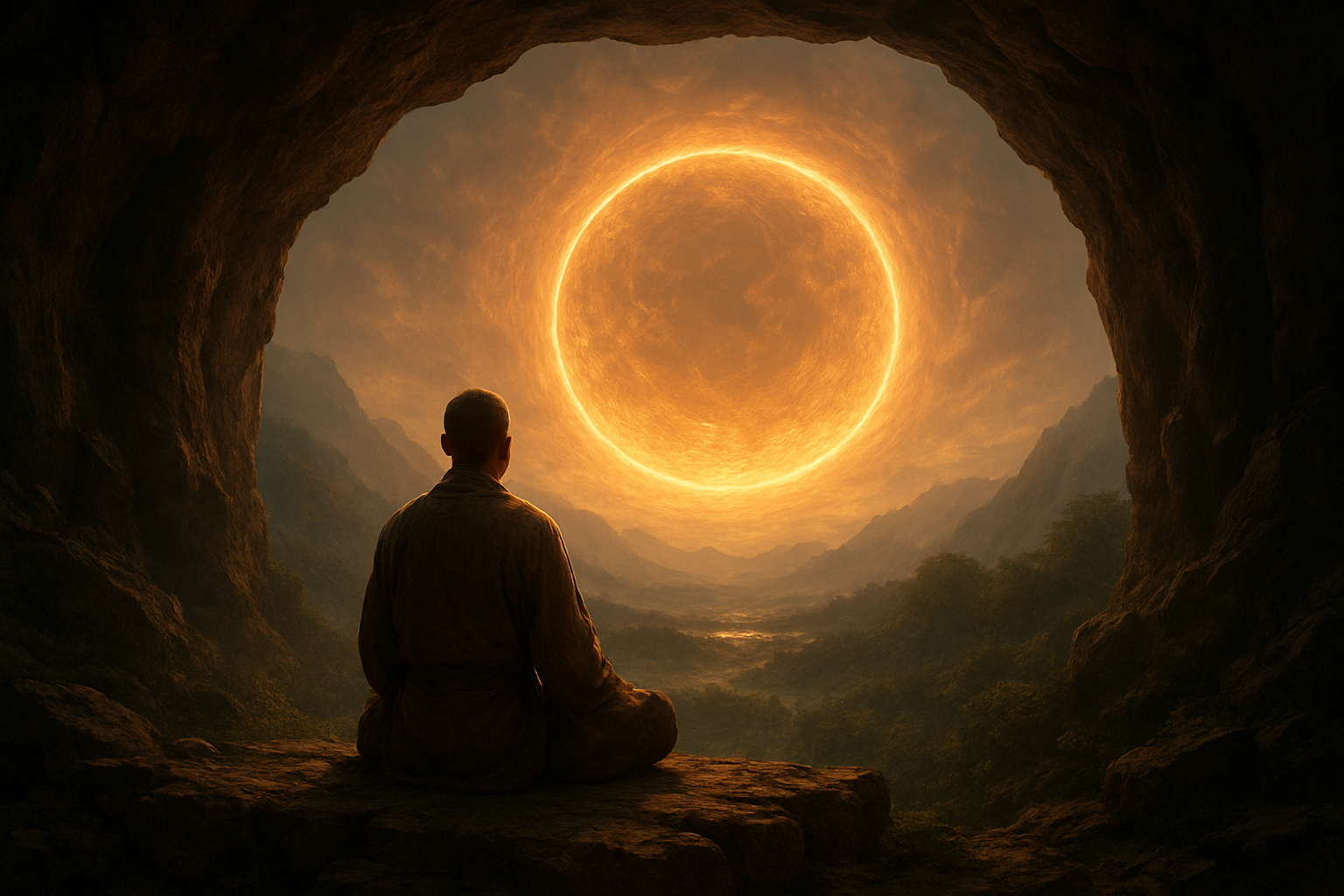
    A typical day for a mountain hermit revolves around simplicity and mindfulness. Rising with the sun, the hermit engages in meditation and gentle exercises like tai chi or qigong, attuning their mind and body with the rhythms of nature. The preparation of simple meals using locally sourced, perhaps foraged ingredients serves as a daily practice of mindfulness and gratitude.

    • Meditation: Essential for centering and discovering inner peace.
    • Tai Chi/Qigong: Harmonizes the body’s energies.
    • Foraging: Provides sustenance and a connection with the earth.

    Reflections on Solitude

    While the physical solitude of the mountains is sometimes daunting, it is in these quiet moments that profound insights often arise. The hermit contemplates the Dao, observing the cyclical patterns of nature and the transience of existence, finding beauty in the impermanent and the small details often overlooked in daily life.

    “Nature does not hurry, yet everything is accomplished.” – Lao Tzu

    Living the Dao in solitude becomes a transformative journey, offering a profound understanding of the self and the universe. As the hermit engages with nature, a subtle awareness grows, revealing that the greatest wisdom often lies in the silent spaces between thoughts and the gentle flow of water down a mountain stream.

    Thus, the mountain hermit, in their solitude, lives as a guardian of ancient wisdom, embodying the quiet truths of Daoism in every fleeting moment, inspiring us to pause, reflect, and embrace the quietude of our own lives.

  • The Softest Power – Water as the Teacher of the Way

    The Softest Power – Water as the Teacher of the Way

    The Softest Power: Water as the Teacher of the Way

    Throughout history and across cultures, water has been considered one of the most powerful elements on Earth. Revered for its life-sustaining properties, fluidity, and subtle strength, water embodies what Eastern philosophies describe as the “softest power.” Yet, it holds the profound ability to teach us about life, resilience, and harmony. By examining the characteristics of water, we can uncover the wisdom it offers as a guide for living a balanced and fulfilling life.

    The Essence of Water: Flexibility and Adaptability

    Lao Tzu, the ancient Chinese philosopher, poignantly observed in the Tao Te Ching:

    “Water is the source of life; it is the force that nourishes all living things. It finds its own path, settles at the lowest point, and can wear away the hardest stone.”

    Water’s ability to flow and adapt to its surroundings is a key lesson in flexibility. Whether rushing as a mighty river or resting quietly in a pond, water demonstrates the importance of adaptability in facing life’s unpredictable challenges. Living like water means practicing fluidity, recognizing when to stand firm and when to yield, ensuring harmony with the ever-changing world around us.

    The Strength in Gentleness

    Although water adopts a gentle demeanor, its strength is undeniable. A single drop of water, soft and yielding, can eventually wear away rock, a testament to persistence and gentle force over time. This teaches us that resilience need not be aggressive or domineering. Instead, it can be subtle and consistent. As the motivational speaker James Clear puts it, “Success is the product of daily habits—not once-in-a-lifetime transformations.”

    In life, applying consistent gentle efforts can lead to significant changes and progress. Embracing patience and steadiness allows us to achieve our goals without burning out.

    Water as a Symbol of Purity and Renewal

    In numerous spiritual traditions, water is a symbol of purification and renewal. The act of cleansing oneself in water, from the Hindu practice of bathing in the Ganges to the Christian rite of baptism, signifies renewal and the washing away of past transgressions. This symbolism suggests that, like water, we have the innate ability to restore and refresh ourselves physically, emotionally, and spiritually.

    Cultures around the globe use water in rituals, such as Japan’s Misogi, where purification is achieved through ritual washing. These practices emphasize the importance of shedding the burdens of past experiences to embrace a new beginning.

    The Lesson of Balance and Harmony

    Water’s role in maintaining environmental balance cannot be overstated. It supports ecosystems, regulates climate, and facilitates nutrient cycles essential for life. This ecological perspective teaches us the value of balance and harmony within our own lives.

    By observing how water sustains and interacts within the environment, we learn to appreciate the interconnectedness of all things. The stoic philosopher Seneca once remarked, “Only in harmony will you find peace—a kind of peace conveyed by nature itself.”

    Human life, much like an ecosystem, thrives when diverse elements coexist in harmony. We must strive for balance in work, relationships, and wellness, just as water does in nature.

    Lessons in Humility and Service

    Water humbly serves all forms of life, from the mightiest trees to the tiniest microorganisms. This humility is an essential aspect of water’s power. By serving others selflessly and nourishing those around us, we foster connections and build a stronger community.

    The act of service, similar to water’s offering of itself, is fulfilling and fortifies our spirit and the bonds we share with others. In the words of Mother Teresa, “The best way to find yourself is to lose yourself in the service of others.”

    Embracing Change through Water’s Wisdom

    Change is inherent to the nature of water, as it continuously cycles from ice to liquid to vapor. This constancy of change challenges us to view change not as a threat but as an opportunity for growth and transformation. The Buddhist principle of Anicca, or impermanence, is vividly demonstrated through water’s ability to transition seamlessly between states.

    By accepting the inevitability of change, we cultivate a mindset of growth and adaptability, essential for navigating the tides of modern life.

    Ultimately, water stands as a silent mentor—a teacher guiding us towards living a life rooted in flexibility, strength, purity, balance, humility, and the embrace of change. As we listen to its lessons and integrate them into our lives, we find a path to harmony and fulfillment that echoes the timeless wisdom of nature.

    For Further Reading

  • Between Wind and Water – The Subtle Balance of the Natural Way

    Between Wind and Water: The Subtle Balance of the Natural Way

    In a world where technology often leads the charge, the grace of natural forces remains a constant reminder of the intricate dance of existence. The phrase “between wind and water” serves as both a nautical term and a metaphor for life, highlighting the delicate equilibrium necessary to navigate the seas of both the natural world and human experience.

    The Origins of the Phrase

    The term “between wind and water” originates from sailing. It refers to the vulnerable part of a ship — the area above the waterline and below the lowest point that water splashes during normal conditions. Striking this part of the hull can critically endanger the vessel, much like striking a critical balance in life can determine the success or failure of an endeavor. As Patrick Colquhoun stated, “The strength of the ship rests upon its balance between wind and water.” This balance in sailing epitomizes the precarious yet essential harmony found within nature itself.

    The Synergy of Wind and Water

    Wind and water, two of the fundamental elements, have worked in tandem for millennia to shape the environment. This relationship is not only a source of power and beauty but also a delicate synergy that influences ecosystems, weather patterns, and the very landscape of the earth.

    The Power of Wind

    “Sunlight is to sunshine, as wind is to energy.” — Proverb

    Wind, an invisible but palpable force, is integral to life on Earth. It is created by differences in atmospheric pressure, heat from the sun, and the rotation of the planet. Without wind, weather systems would stagnate, climate patterns would shift, and entire ecosystems would destabilize. As a renewable resource, wind energy is harnessed by humans to create a sustainable future, but its untamed version continues to sculpt natural environments in ways only visible over millennia.

    The Grace of Water

    “The voice of the sea speaks to the soul.” — Kate Chopin

    Water, the lifeblood of the planet, constitutes about 71% of Earth’s surface. It is crucial for the survival of all living organisms. It also plays a critical role in regulating climate through its heat capacity, distributing solar energy, and driving ocean currents. Water cycle interactions with wind result in the formation of clouds, precipitation, and the overall regulation of the Earth’s temperature.

    The Balance in Natural Ecosystems

    • Wetlands: Serving as a nexus between land and water, wetlands are among the most productive ecosystems. They are biodiversity hotspots and play a vital role in water purification, flood protection, and carbon sequestration.
    • Forests: Wind plays a significant role in forest ecology, aiding pollination and seed dispersal. Forests, in return, help regulate water flow and climate, creating a self-sustaining cycle.
    • Coastal Systems: The interaction between wind and water influences coastal erosion and sediment deposition, shaping shorelines and affecting marine habitats.

    Human Inclinations and Natural Balance

    Throughout history, humans have sought to harness both wind and water while maintaining the fragile balance. From ancient aqueducts to modern hydropower and wind farms, the effort to coexist sustainably with these forces continues. However, with technological advancements comes the responsibility of stewardship.

    Environmental philosopher Vandana Shiva emphasizes, “In nature’s economy, the currency is not money, it is life.” This understanding is crucial in fostering a relationship with natural elements that is based not on domination, but harmony and respect.

    The Future of Wind and Water

    The future demands an innovative approach to utilizing wind and water. As climate change continues to disrupt traditional systems, adaptive strategies such as sustainable urban planning, reforestation, and renewable energy adoption become pivotal. Investment in understanding and preserving the dynamic balance of natural ecosystems is not merely an environmental imperative but a necessity for human survival.

    Advancements in technology, alongside ancient knowledge and practices, may hold the answer to living between wind and water. The preservation of the Earth’s delicate balance requires global cooperation, scientific innovation, and a deep-rooted respect for nature’s rhythms.

    Conclusion

    The subtle balance between wind and water is emblematic of the broader natural equilibrium humanity must strive to maintain. As we continue to chart our course forward, it is essential to navigate the challenges with the wisdom of sailors — carefully and reverently maneuvering “between wind and water.”

    To read more about the impact of natural forces and the path to sustainability, visit World Wildlife Fund and the United Nations Environment Programme.

  • The Uncarved Block – Returning to Simplicity in a Complicated World

    The Uncarved Block: Returning to Simplicity in a Complicated World

    In an age where complexity reigns supreme, the concept of simplicity has been somewhat overshadowed. Yet, there is a timeless wisdom in re-embracing simplicity, as reflected in the ancient Taoist philosophy through the idea of the “uncarved block” or Pu. This principle, rooted in the Dao De Jing, suggests that simplicity and naturalness are intrinsic elements of a balanced and fulfilling life.

    The Philosophy of the Uncarved Block

    The idea of the uncarved block originates from Laozi, the legendary sage and author of the Dao De Jing. This text, a cornerstone of Taoist philosophy, is a collection of aphorisms and poems that address the essence of life and governance. The uncarved block, or Pu, is a metaphor for understanding the value of naturalness and simplicity.

    “The world is ruled by letting things take their course. It cannot be ruled by interfering.” — Laozi, Dao De Jing

    By embracing the state of the uncarved block, individuals can rediscover their innate potential and authentic self, free from the engravings of societal norms and expectations. It suggests a state of being where one is pure, unshaped by the complexities of modern existence.

    Modern Complexity: A Double-Edged Sword

    In contemporary society, technological advancements and informational overload often lead to overwhelming complication. We are inundated with choices, decisions, and pressures that carve into our everyday experiences, creating not only opportunities but also stress and dissatisfaction.

    • Information Overload: Our connected world brings a constant stream of news, social media, and digital interactions, which can lead to stress and a sense of inadequacy.
    • Societal Expectations: The constant pressure to meet external expectations for success and happiness can lead us away from our true selves.
    • Decision Fatigue: The plethora of choices in our lives can exhaust our mental resources, making it harder to make decisions that align with our genuine desires and values.

    As we become accustomed to this intricate tapestry of modern existence, returning to the simplicity of Pu may offer a path to tranquility and fulfillment.

    Embracing Simplicity in the Modern World

    The value of the uncarved block is not in rejecting progress but in harmoniously integrating simplicity within our complex lives. Here are some ways to cultivate Pu and embrace simplicity:

    • Mindfulness and Presence: Embrace practices such as meditation and mindfulness to ground yourself in the present moment, allowing you to experience life more fully and authentically.
    • Minimalism: Adopt a minimalist lifestyle by simplifying possessions and decluttering your environment. This helps focus on what’s truly important and supports mental clarity.
    • Slow Living: Embrace the principles of slow living by prioritizing quality over quantity, taking time to appreciate experiences rather than rushing through them.

    The Paradox of Simplicity in Complexity

    It is paradoxical that within complexity lies simplicity, and vice versa. Anne Wilson Schaef, a well-known author and cultural therapist, encapsulated this thought:

    “Simplicity involves unburdening your life and living more lightly with fewer distractions that interfere with a high quality life, as defined uniquely by each individual.”

    This highlights the subjective nature of simplicity. What is simple for one might be complex for another, emphasizing a personal journey toward identifying and embracing one’s own Pu.

    Wisdom from Tradition

    Throughout history, various cultures and philosophies have extolled the virtues of simplicity:

    • Buddhism: Emphasizes the middle path and detachment from material desires to attain inner peace.
    • Stoicism: Advocates living a life of virtue in harmony with nature, highlighting minimalism and self-control.
    • Transcendentalism: Promoted by thinkers like Thoreau, it suggests that a connection to natural simplicity can enable self-sufficiency and personal growth.

    These philosophies, alongside Taoism, offer timeless insights into the balance between the complex and the simple.

    Conclusion: The Journey Back to the Uncarved Block

    Returning to simplicity in a complicated world is a journey rather than a destination. It involves conscious choices that align with one’s personal truth and values. By recognizing the beauty in the uncarved block, we may discover that our truest and most profound selves lie not in what we acquire or achieve but in untangling the complexities we have woven.

    Ralph Waldo Emerson succinctly states, “To be yourself in a world that is constantly trying to make you something else is the greatest accomplishment.” As we navigate our lives, these words remind us that perhaps the greatest achievement lies in preserving our true, uncarved essence amid the noise of modernity.

  • From Mist to Form – Discovering Creation in the Daoist Void

    In the enchanting philosophy of Daoism, the universe is conceived not as a distant, mechanical structure built by the hands of gods, but as an exquisite symphony of transformations stemming from the Dao, the unmanifest source of all that is. This article delves into the enigmatic concept of creation within Daoism, exploring how from the nebulous mists of the void arises the manifold forms of the cosmos.

    The Origin: The Dao and The Void

    The Dao De Jing, the seminal text of Daoism attributed to the ancient sage Laozi, commences with the line:

    “The Dao that can be told is not the eternal Dao; the name that can be named is not the eternal name.”

    This opening aphorism hints at the ineffable nature of the Dao, the primordial source that predates heaven and earth. According to Daoism, the Dao is the ultimate void, a boundless emptiness teeming with potential, existing beyond our comprehension and definition.

    The concept of the void is not one of mere nothingness, but rather a fertile absence, a womb from which all things are born. This paradoxical notion of creation challenges the conventional understanding of beginnings, urging one to embrace the mystery and spontaneity inherent in the universe.

    Qi: The Vital Breath

    Emerging from the Dao is Qi (氣), often translated as “vital breath” or “life force.” Qi is the energetic link between the void and the manifest world, a dynamic force that animates the cosmos. In Daoist cosmology, the evolution from void to form is articulated through the interplay of Qi’s two fundamental aspects: Yin and Yang.

    • Yin: Characterized by qualities such as darkness, receptiveness, and femininity.
    • Yang: Represented by light, activeness, and masculinity.

    The continuous dance of Yin and Yang embodies the balance and harmony of the universe, facilitating the transformation of the undifferentiated void into diverse physical and metaphysical forms.

    The Role of Wu Wei

    A pivotal concept in Daoism, Wu Wei (無為), is often interpreted as “non-action” or “effortless action.” In the context of creation, Wu Wei suggests that the natural world unfolds spontaneously and harmoniously when left to its own devices, without force or artificial interference.

    Laozi emphasizes this principle in the Dao De Jing, where it is stated:

    “The Dao never acts yet nothing is left undone.”

    This idea does not advocate for passivity but rather champions an alignment with the natural rhythms and currents of life. In creation, Wu Wei allows the true nature of things to manifest, free from the constraints of contrived effort.

    Three Treasures: Jing, Qi, and Shen

    Within the human microcosm, Daoism identifies three treasures that are vital to the process of spiritual creation and transformation:

    • Jing (精): The essence or seed of life, associated with physical vitality and health.
    • Qi (氣): The aforementioned life force, maintaining the connection between body and spirit.
    • Shen (神): The spirit or consciousness, regarded as the most refined and subtle energy.

    Through practices such as meditation, Tai Chi, and Qi Gong, Daoists seek to cultivate and balance these treasures, thereby aligning themselves more closely with the Dao and facilitating the flow of creative energy.

    Daoist Creation Myths

    Though less central than the philosophical tenets, Daoist myths offer rich narratives about the origins of heaven, earth, and humanity. One prominent story is of Pangu (盤古), the mythical giant who emerged from a cosmic egg and separated the heavens and earth with his strength:

    “At the beginning of time, the universe was a chaotic mass. From this void, a giant named Pangu arose. Upon his death, his body transformed into the various elements of nature. His breath became the wind, his voice the thunder, his eyes the sun and moon, and his blood formed rivers.”

    This myth underscores the cyclic nature of creation and transformation, where from unity comes multiplicity, and from the death of one entity arises life anew.

    Integrating Daoism into Modern Life

    In today’s fast-paced world, the teachings of Daoism offer a counterbalance to the prevailing ethos of constant striving and linear progress. By embracing the principles of the Dao and the simplicity of Wu Wei, one can foster a deeper appreciation for the transformative power of the present moment.

    Here are a few ways to integrate Daoist principles into modern living:

    • Meditation and Mindfulness: Practice stillness and observe the flow of thoughts, allowing them to settle naturally without interference.
    • Balance and Harmony: Strive for equilibrium in all aspects of life, acknowledging the interplay of opposing forces.
    • Engage with Nature: Spend time in natural surroundings to reconnect with the rhythms and patterns of the universe.

    Conclusion

    The Daoist vision of creation as an unfurling from mist to form presents a beautiful paradigm of interconnectedness and harmony. By learning from the Dao, humans can find their place within the cosmos, embracing the cycles of change and the mystery of existence. Through the lens of Daoism, the void is not to be feared but cherished as the silent beginning of endless possibilities.

    Experience the gentle unfolding of the Dao and explore further reading with the World History Encyclopedia on Daoism.

  • Before Heaven and Earth – Meditating on the Primordial Dao

    Before Heaven and Earth – Meditating on the Primordial Dao

    Before Heaven and Earth – Meditating on the Primordial Dao

    In the vast tapestry of Eastern philosophy, few concepts inspire awe and contemplation as profoundly as the Dao, often translated as the “Way.” This ancient notion transcends both human understanding and the natural world, leading us into a realm of primal essence and universal truth. Meditation on the primordial Dao is not just an intellectual exercise; it is a journey to touch the infinite, to bridge the reality of our finite existence with the boundless potential of the cosmos.

    The Origin of Dao

    The term Dao first emerged prominently in the Tao Te Ching, a classical Chinese text attributed to the sage Laozi. It describes the Dao as something ineffable and all-encompassing, existing before the heavens and earth:

    “There was something undefined and complete, coming into existence before Heaven and Earth. It may be considered the mother of all things.” — Laozi

    In this way, the Dao is depicted not only as the origin but also as the end: a cycle that encompasses everything within its embrace, yet remains untouched by the transience of worldly affairs.

    Understanding the Primordial Dao

    The primordial Dao is often conceptualized as the ultimate source that existed even before the cosmic dualities of Yin and Yang were conceived. It is a state of pure potentiality, untouched by the fragmentation that characterizes observable reality. To meditate on the primordial Dao is to engage with the infinite possibilities inherent in the universe, which has prompted Daoists to pursue an understanding that transcends ordinary perception.

    The Art of Meditation

    Meditating on the primordial Dao requires the practitioner to quiet the mind and observe without judgment. This practice is less about achieving a mental state and more about opening oneself to the vastness of the universe:

    • Begin by sitting comfortably, focusing on the natural rhythm of your breath.
    • Visualize the Dao as an endless flow that permeates everything.
    • Allow thoughts to arise and dissipate without attachment, recognizing them as temporary forms within the eternal Dao.

    Through this process, meditators aim to align themselves with the Dao’s spontaneous balance and harmony.

    Reflections on Laozi’s Wisdom

    In attempting to grasp the nature of the Dao, Laozi’s advice remains crucial. He cautions against the pursuit of fame, power, and material wealth, advocating instead for a life of simplicity and humility:

    “The wise one is like water. Water benefits all things and does not compete. It stays in the lowly places which others disdain. Thus, it is close to the Dao.” — Laozi

    Here, the symbolism of water is poignant. Just as water can transform, adapt, and sustain life without seeking recognition, so too must seekers of the Dao practice a form of living that resonates with the underlying harmony of existence.

    The Paradox of Non-Action

    A critical aspect of Daoist practice is the principle of Wu Wei, or “non-action.” This concept should not be misconstrued as passivity but understood as the art of navigating life by attuning oneself to the natural flow of the universe. In doing so, one comes to embody the Dao’s flexibility and strength.

    Non-action requires patience and trust in the process of life, recognizing that the most profound transformations often occur subtly, without force or coercion.

    Living in Harmony with the Dao

    To meditate on and live by the Dao is to cultivate an awareness of one’s interconnectedness with all things. It is to realize that each action creates ripples that extend far beyond the immediate, touching the very fabric of the universe. Therefore:

    • Recognize the value of simplicity and mindfulness in everyday actions.
    • Foster a deep respect and reverence for the natural world.
    • Embrace change as an inevitable and integral part of the cosmic order.

    Such practices reflect the Daoist ideal of a life lived in harmony with the primordial source from which all things arise.

    Epilogue: The Endless Path

    The journey into the heart of the Dao is an endless path, one that continually invites inquiry and reflection. For those who choose to walk this path, the rewards are ineffable, manifesting as a deep sense of peace and unity with the cosmos.

    Ultimately, to meditate on the primordial Dao is to understand one’s place in the universe and to appreciate the fleeting nature of life, all while embracing the timeless truth that “before Heaven and Earth” the Dao existed and will continue to exist, underlying all forms and experiences.

  • Empty Mountain, Silent Mind – Zen Lessons from the Wilderness

    Empty Mountain, Silent Mind: Zen Lessons from the Wilderness

    In the serene embrace of the wilderness, where the whispers of the wind and the flutter of leaves become profound teachers, we find a space to encounter solitude and reflection. The concept of “Empty Mountain, Silent Mind” beautifully encapsulates this serene yet powerful confluence of nature and consciousness. Drawing heavily from Zen philosophy, these lessons from the wild can offer profound insights into self-awareness and tranquility.

    The Essence of Zen in Nature

    Zen Buddhism places great emphasis on meditation and direct experience over theoretical knowledge. Nature, which is devoid of human constructs and societal noise, serves as a perfect backdrop for Zen practitioners. According to the Tricycle Foundation, a resource dedicated to the dissemination of Buddhist teachings, the natural world inherently teaches us about the impermanence and interconnectedness of all things. This perspective encourages practitioners to embrace simplicity and mindfulness.

    “Nature does not hurry, yet everything is accomplished.” — Lao Tzu

    This well-known Taoist aphorism reflects a core Zen belief: the natural world holds countless lessons in patience, balance, and time, all of which are integral components of meditation and mindfulness practices.

    A Journey to the Empty Mountain

    • Solitude and Reflection: An empty mountain signifies a place untouched by the chaos of human life. Here, one finds space for solitude, which is essential for deep reflection and meditation. In solitude, we learn to confront our thoughts, fears, and desires without distraction.
    • Embracing Impermanence: The wilderness is a canvas of change—seasons transition, flora and fauna adapt, life and death cycle ceaselessly. Zen teaches us to accept impermanence, urging us to live in the present moment without attachment.
    • Interconnection with the Environment: Everything in the wild is interconnected. This realization fosters a sense of unity with the world, breaking down the illusion of separation. In Zen, this understanding helps dissolve the ego, leading to a quieter, more expansive mind.

    The Silent Mind

    The notion of a silent mind is about achieving mental clarity and peace amid the constant chatter of daily life. In Zen practice, a silent mind is synonymous with enlightenment—a state free from the ego’s disturbances and desires.

    “When you realize nothing is lacking, the whole world belongs to you.” — Lao Tzu

    Achieving a silent mind requires diligent practice and discipline. Silent meditation practices, such as zazen (sitting meditation), cultivate awareness and help practitioners focus inward, away from external chaos.

    Applying Zen Lessons from the Wilderness

    Integrating the lessons of an empty mountain and a silent mind into daily life involves both practice and intention. Here are practical suggestions:

    • Create a Daily Ritual: Spend a few minutes each day in nature. This doesn’t have to be in a mountain setting; a local park or even your backyard can offer solace and serve as a sanctuary for meditation.
    • Mindful Walking: Practice walking meditation outside. As you walk, pay attention to the sensations of each step, the feeling of the earth under your feet, and the sounds around you. This practice enhances mindfulness and connects you to the present moment.
    • Embrace Minimalism: Reflect on the simplicity of nature and how this principle can be applied to your life. Consider decluttering your physical and mental space, allowing room for clarity and peace.

    In understanding the teachings of the empty mountain and the silent mind, it’s essential not to view them merely as theoretical concepts. As Zen teaches, truth is found in direct experience. A walk in the wilderness not only opens one’s heart to the beauty and simplicity of life but also becomes a meditation in motion.

    Conclusion

    The wilderness, with its vastness and stillness, offers a unique template for cultivating inner peace and understanding. By embracing the lessons from nature, as encouraged by Zen philosophy, we learn to quiet the mind, live in the moment, and embrace the beauty of the world around us. Through these practices, the empty mountain becomes not just a place, but a state of mind—one devoid of conflict and filled with tranquility.

  • Rivers Know the Way – Following Nature’s Flow as a Spiritual Practice

    Rivers Know the Way – Following Nature’s Flow as a Spiritual Practice

    Rivers Know the Way: Following Nature’s Flow as a Spiritual Practice

    A serene river winding through a forest

    There is something profoundly moving about the flow of a river. Throughout human history, rivers have been seen as sacred veins of our planet—symbols of both physical nourishment and spiritual guidance. Many cultures, both ancient and modern, revere these waters as places of self-reflection and spiritual practice. As Ralph Waldo Emerson insightfully noted, “The creation of a thousand forests is in one acorn.” In a similar vein, the lessons of many lifetimes can be found in the continuous flow of a single river.

    The Spiritual Significance of Rivers

    Rivers have been venerated in various religious and spiritual traditions across the globe. In Hinduism, rivers such as the Ganges hold immense spiritual significance. Bathing in these sacred waters is believed to purify the soul and wash away sins. Meanwhile, Indigenous cultures of the Americas, such as the Hopi, view rivers as living entities that embody a source of wisdom and life.

    These cultures remind us that engaging with rivers can be a profound spiritual practice, offering lessons in adaptability, patience, and resilience. As John Muir eloquently stated, “Rivers flow not past, but through us.” This suggests that just as rivers carve through land, they also have the power to influence our inner landscapes.

    Lessons from the Flow

    One of the key spiritual lessons that rivers teach is the importance of flowing with life’s circumstances. In a world where control and predictability are often prized, rivers remind us that life is inherently changeable. They demonstrate how to adapt with grace and confidence in the face of obstacles. A river does not resist the rocks or fallen branches in its path—instead, it finds a way around them, continually moving forward.

    “Life is like the river, sometimes it sweeps you gently along and sometimes the rapids come out of nowhere.” – Emma Thompson

    Through observing rivers, one learns the value of releasing resistance and embracing life’s uncertainties. This acceptance allows us to remain centered, much like a river that maintains its course through the landscape, adapting but never losing its direction.

    Another vital lesson provided by rivers is the importance of interconnectedness. Every river relies on countless tributaries, rainfalls, and underground springs to maintain its flow, symbolizing the myriad ways in which we are all supported and linked within the broader web of life. By relating deeply with this interconnectedness, we can cultivate a sense of belonging and compassion both for ourselves and for all living beings.

    Practicing River Spirituality

    Engaging with rivers as a spiritual practice does not require elaborate rituals. Instead, it is about mindfully interacting with the water, learning from its wisdom, and incorporating its lessons into your life. Here are some ways to deepen your spiritual connection with rivers:

    • Meditate by the Water: Simply sitting by a river and listening to the water’s flow can be a powerful form of meditation. The consistent sound of the river can help quiet the mind and bring clarity to our thoughts.
    • Reflect on Symbolism: Consider the river as a metaphor for your life. What obstacles do you encounter, and how can you flow around them?
    • Physical Engagement: Engage in activities like kayaking or canoeing. Physically moving with the river can offer insights into surrendering control and enjoying the present moment.

    The River’s Call

    As we deepen our relationship with rivers, we become more attuned to the natural rhythms of life, reminding us of our origins and our place in the world. Rivers have long been symbols of life and renewal; they are guides showing us how to navigate the torrents and stillness on our life’s journey.

    It’s worth taking time out of the hustle and bustle of daily life to follow the river’s flow and let it teach us its timeless lessons. As Henry David Thoreau once wrote, “A river seems a magic thing. A magic, moving, living part of the very earth itself.” Indeed, rivers not only run through the earth but also weave through the depths of our spiritual consciousness, offering endless lessons if we are but willing to listen.

    The next time you find yourself by a river, pause to connect with its flow. Listen to its messages. In embracing the river’s path, you might just discover a deeper connection to both the world and yourself.

    For more information on how to spiritually engage with nature, visit Spirituality and Practice.

  • The Tao of Travel

    The Tao of Travel

    In a world where travel is often equated with itineraries, destinations, and checklists, the ancient philosophy of Taoism offers a refreshing perspective: journey as a way of life, a means to self-discovery, and an embrace of the profound beauty of simplicity and spontaneity.

    The Taoist Philosophy: A Brief Overview

    Taoism, a spiritual and philosophical tradition of Chinese origin, emphasizes living in harmony with the Tao (道), which translates to “the Way.” Its origins trace back to the 4th century BCE, attributed to the sage Laozi, the purported author of the seminal text, the Tao Te Ching. According to The Internet Encyclopedia of Philosophy, Taoism teaches that the natural world and human endeavors are interconnected and encourages living simply and in accordance with nature.

    “A good traveler has no fixed plans and is not intent on arriving.” — Laozi

    This quote captures the essence of the Tao of travel: a journey without constraints, free from the pressures of a fixed destination, with the focus instead on the journey itself.

    Embracing the Journey, Not Just the Destination

    Modern tourism’s fast-paced nature, driven by the desire to visit as many places as possible in the shortest time, often contradicts this philosophy. The Tao of travel, however, invites travelers to slow down, observe, and engage with the present moment deeply.

    • Simplicity: Re-evaluating what one truly requires for a journey is crucial. By letting go of excess baggage—both physical and mental—travelers can immerse themselves more fully in their surroundings.
    • Harmony: The Tao emphasizes flowing with rather than against the current, aligning with the natural rhythm of places visited without imposing preconceptions.
    • Mindfulness: Experiencing travel through all senses, paying attention to sights, sounds, and scents. Such mindfulness transforms a trip into a meditative journey.

    The Intersection of Modern Travel and Taoism

    While the idea of travel as a Taoist practice might seem abstract, practical applications of these principles enrich modern travel experiences. The rise of slow travel, which prioritizes meaningful connections over rushed checkboxes, parallels Taoist teachings closely.

    Slow Travel

    At the heart of slow travel lies a simple principle: staying longer in fewer places to foster a deeper connection with the culture and community. This approach resonates with the Taoist ideal of immersing oneself into the natural rhythm of life. BBC Travel highlights how slow travel cultivates meaningful interactions and profound experiences that conventional travel might overlook.

    Sustainable Travel

    In alignment with living harmoniously with nature, sustainable travel emphasizes responsible tourism practices. Choosing eco-friendly accommodations, supporting local businesses, and respecting natural habitats reflect the inherent Taoist reverence for nature.

    The Interpersonal Tao

    Travel is often as much about those we meet along the way as it is about the places we visit. The Tao of travel encourages open-hearted exchanges and genuine curiosity towards others. This authenticity unfolds the tapestry of shared human experiences, transcending cultural and linguistic barriers.

    “Knowing others is intelligence; knowing yourself is true wisdom. Mastering others is strength; mastering yourself is true power.” — Laozi

    This profound insight from Laozi underlines the transformative potential of travel. By encountering diverse ways of life, travelers gain insights not just into the world but, more importantly, into themselves.

    Conclusion: A Way of Being

    In embracing the Tao of travel, one steps onto a path less defined by physical destinations and more by moments of insight, self-discovery, and serenity. It is a return to the essence of what it means to roam: unbound by time and space, and richly absorbed in the journey itself.

    Thus, the Tao of travel is an invitation to wander, not just through the world but through one’s inner landscapes—to travel with eyes wide open to the simplicity and profundity of life itself.

  • Life Between Campsites

    Life on the road is an exhilarating blend of freedom, adventure, and unpredictability. For those who have embraced the nomadic lifestyle or simply enjoy weekend escapes to the great outdoors, life between campsites offers a unique perspective on travel, nature, and solitude.

    Exploring the Unknown

    Every journey between campsites is an opportunity to explore the unknown. It’s that in-between space where the magic often happens. As Herman Melville once wrote, “It is not down on any map; true places never are.” This captures the essence of discovering those hidden gems that are off the beaten path.

    • Scenic Drives: The journey itself can be as rewarding as the destination. Whether you’re winding through mountainous roads or cruising along coastal highways, the scenery often provides its own reward.
    • Local Culture: Small towns and local communities offer a glimpse into regional culture, from unique foods to charming customs.
    • Self-Reflection: Long stretches between destinations are perfect times for reflection. The solitude allows for introspection and a deeper connection with oneself.

    Challenges and Comforts

    While the romance of the open road is undeniable, life between campsites can also present challenges. Comfortable accommodations and reliable resources might be elusive at times. Yet, it’s noteworthy how adapting and overcoming these obstacles can provide a profound sense of accomplishment.

    “Traveling – it leaves you speechless, then turns you into a storyteller.” – Ibn Battuta

    Indeed, overcoming the unpredictability of the road adds rich stories to one’s repertoire, contributing to personal growth and an unparalleled sense of achievement.

    Planning the Next Stop

    Between campsites, planning the next leg of the journey involves choosing the perfect site that fits one’s preferences and needs. Websites like REI or Campspot offer resources for discovering and booking campsites that suit various tastes, whether you desire solitude in the backcountry or amenities at well-equipped facilities.

    • Research: Invest time in researching potential campsites, considering factors like location, amenities, and necessary reservations.
    • Backup Plans: Always have an alternative site in mind, just in case plans change.

    Embracing Freedom

    The spaces between campsites are as significant as the destinations themselves. They represent freedom, self-discovery, and a connection with nature that few other lifestyles offer. Every mile on this journey contributes to a mosaic of experiences that define the beauty of life on the road.