Tag: journey

  • Wind on the Summit – The Subtle Joy of the Pilgrim’s Heart

    Wind on the Summit – The Subtle Joy of the Pilgrim’s Heart

    Wind on the Summit: The Subtle Joy of the Pilgrim’s Heart

    Reaching the summit of any personal journey or pilgrimage involves more than just the physical act of getting there. It is where the subtle joy of the pilgrim’s heart comes into full bloom, much like the delicate flowers that can only survive in such austere climes.

    “The journey of a thousand miles begins with one step.” – Lao Tzu

    The Metaphor of Wind

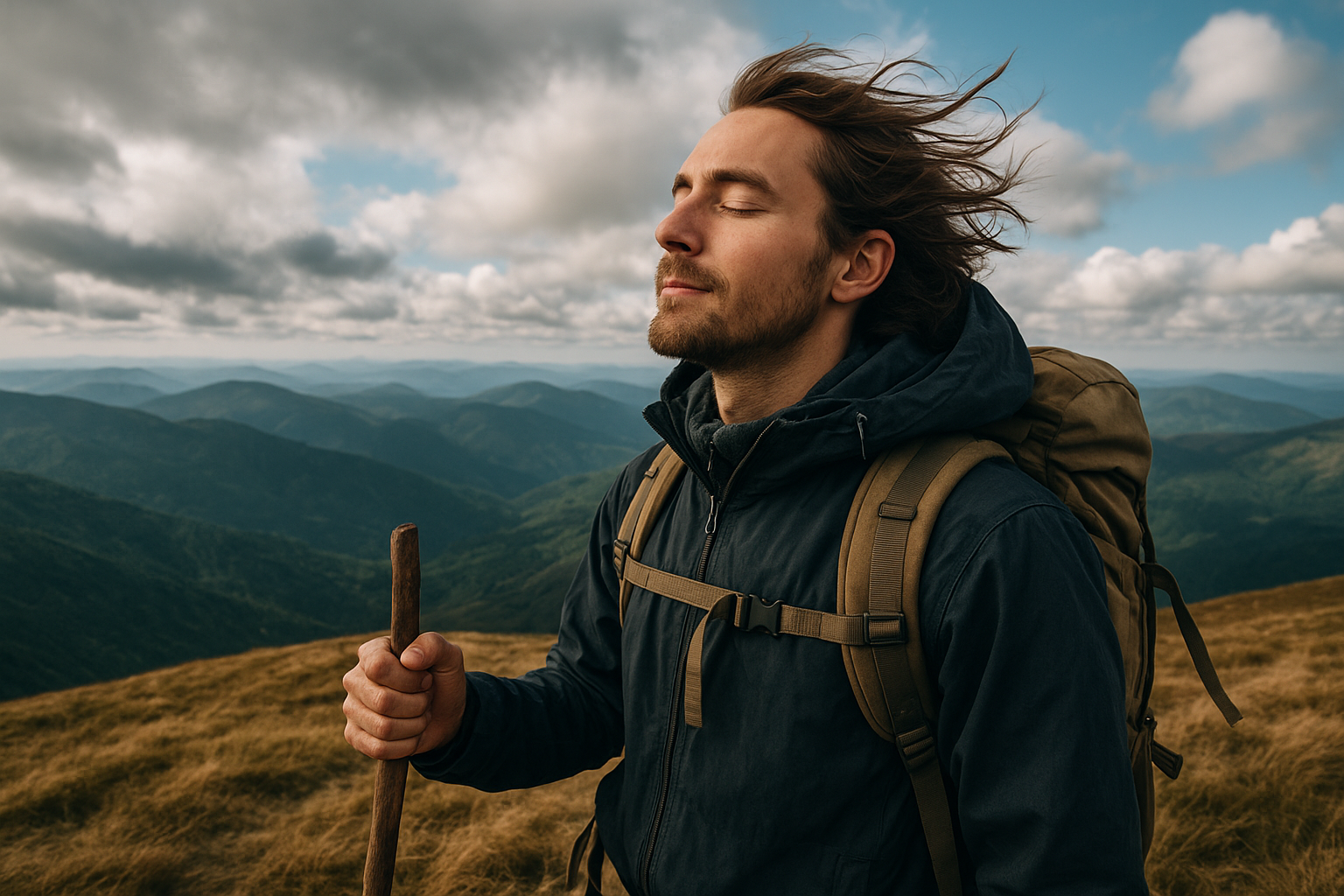
    On the summit, the wind acts both as a literal and metaphorical force, symbolizing the trials and eventual triumphs of a pilgrim. It is a reminder that reaching the summit is not just about the view but about feeling every nuance of the journey.

    • Challenges: The wind epitomizes the challenges faced along the journey, sometimes pushing against the pilgrim, sometimes accompanying them as a gentle breeze.
    • Changes: Just as the wind changes direction and intensity without warning, so too does the pilgrimage alter the pilgrim, who is transformed by the experiences that come with every step.

    This metaphorical wind may be cold and harsh, but it carries the promise of what lies at the peak—a peace and satisfaction that fills the heart with quiet joy.

    The Essence of Pilgrimage

    Historically, pilgrimage has been a quest for enlightenment and transformation. Whether it’s the Camino de Santiago or the Appalachian Trail, these journeys are more about the soul’s terrain than the geographical landscape.

    • The physical act of walking clears the mind, allowing pilgrims to focus on introspection.
    • The social interactions with fellow pilgrims often provide unexpected lessons and insights.
    • The spiritual aspect, regardless of religious affiliation, add depth to the journey.

    Martin Palmer, in his article about modern pilgrimages, points out, “Pilgrimage, which seemed a thing of the past, is now more popular than ever, as people seek to escape the pressures of modern life and reconnect with the self.”

    Finding Joy in the Journey

    The joy found at the summit of a pilgrimage is deeply rooted in the journey itself. This joy is not simply happiness but a profound understanding of one’s place in the tapestry of life.

    “Life is itself a journey and mine, a pilgrimage to the world’s end.” – Peter Matthiessen

    A pilgrim’s joy comes from:

    • Overcoming Adversity: Every challenge overcome along the way makes the joy of the summit all the more poignant.
    • Self-Discovery: The solitude and reflection inherent in these journeys help shape a deeper connection to oneself.
    • Unity with Nature: Being at one with the natural world can prompt a profound sense of wonder and contentment.

    The Summit: A Symbol of Life’s Peaks

    Reaching the summit is often seen as the pinnacle of one’s life endeavors. This summit, however, is not just a physical location but a symbolic peak in life’s many challenges.

    According to Robert M. Pirsig, author of Zen and the Art of Motorcycle Maintenance, “Mountains should be climbed with as little effort as possible and without desire. The reality of your own nature should determine the speed. If you become restless, speed up. If you become winded, slow down. You climb the mountain in an equilibrium between restlessness and exhaustion.”

    The summit is less about reaching a destination and more about understanding the balance between this restlessness and exhaustion, resulting in a joyous realization about one’s own journey through life.

    A Continuing Journey

    Once a summit is reached, the journey is far from over. A true pilgrim understands that the end of one pilgrimage can be the beginning of another. Each journey adds layers to the pilgrim’s heart, each summit enriching their appreciation for the subtle joys discovered along the way.

    • Legacy: Each pilgrimage adds a chapter to the larger story of one’s life, leaving behind a legacy for others to be inspired by.
    • Preparation: Every journey equips one with wisdom and courage for the next challenge.
    • Expansion: The pilgrim’s heart, continually expanded by each experience, becomes more attuned to recognizing joy even in the simplest of things.

    In this continuous looping of endings and beginnings, the pilgrim finds a joy that is as constant and pervasive as the wind that carries a song across the summit—a song that echoes in the heart long after the journey has concluded.

  • The Way of Returning – Tracing the Path Back to Source

    The Way of Returning – Tracing the Path Back to Source

    The Way of Returning – Tracing the Path Back to Source

    The Way of Returning: Tracing the Path Back to Source

    “The journey of a thousand miles begins with one step.” – Lao Tzu

    The concept of returning to one’s source is an ancient idea, explored in various cultures and philosophies around the world. It speaks to a universal longing within the human spirit—a desire to reconnect with our beginnings, whether that’s an ancestral home, a spiritual origin, or simply a return to a state of simplicity and peace. As the modern world grows increasingly complex, the attraction of tracing this path back to our roots becomes ever more compelling.

    The Philosophical Underpinnings

    Throughout history, many philosophies and spiritual traditions have emphasized the importance of returning to the source. In Daoism, the notion of wu wei or non-action implies a flow that aligns with the natural order of the universe, suggesting a return to a more primal, untainted state of being. As Lao Tzu also said, “Knowing others is intelligence; knowing yourself is true wisdom. Mastering others is strength; mastering yourself is true power.”

    In Hindu philosophy, the concept of moksha represents liberation from the cycle of birth and death, signifying a return to the divine source. Similarly, in Buddhism, the attainment of Nirvana implies a return to an original, enlightened state, freed from the attachments and illusions of the world.

    “We are not human beings having a spiritual experience; we are spiritual beings having a human experience.” – Pierre Teilhard de Chardin

    Modern Interpretations

    In today’s fast-paced world, the yearning for a return to source is often manifested in trends like minimalism, ecological awareness, and movements such as The Slow Movement. These modern interpretations reflect a collective desire to strip away the excess and complexity of contemporary life, seeking a more meaningful and authentic existence.

    Minimalism encourages individuals to remove clutter not only from their physical spaces but also from their minds and schedules. By doing so, they aim to live a life driven by purpose, free from the distractions of material possessions and unessential commitments.

    • Minimalism: Removing the unnecessary to focus on what truly matters.
    • Ecological Awareness: Reconnecting with the planet to heal and sustain our natural environment.
    • Mindfulness and Meditation: Practices that bring us closer to our true selves and the present moment.

    The Path to Self-Discovery

    Tracing the path back to source is inherently a journey of self-discovery. It involves peeling back layers of conditioning and societal expectations to reveal our innermost selves. It’s about asking the essential questions: Who am I? What is my purpose? How do I align my life with my deepest values?

    One tool to facilitate this journey is meditation. By quieting the mind, meditation offers a glimpse into the core of our being. As the Indian philosopher Jiddu Krishnamurti stated, “Meditation is not a means to an end. It is both the means and the end.” Through meditation, individuals can experience a profound sense of peace and unity with the universe, aligning their personal energies with the greater cosmic flow.

    Challenges and Rewards

    While the desire to return to source is strong, the path is not without its challenges. The journey can be fraught with doubts, distractions, and the ever-present pull of modern life’s demands. However, those who persevere often find profound rewards: a deepened sense of peace, clarity, and connection to something greater than themselves.

    These newfound insights often translate into a more balanced and fulfilling life. As individuals reconnect with their true selves and their environment, they discover the joy of living in harmony with the world and the people around them.

    Final Reflections

    Returning to source is a deeply personal journey, unique to each individual’s experiences and spiritual understanding. Whether through philosophy, meditation, minimalism, or ecological awareness, the path is as varied as those who embark upon it. Yet, the underlying principle remains the same: the quest for authenticity, simplicity, and unity with the essence of life.

    As we continue to navigate the complexities of modern existence, the stories and teachings of those who have walked the path before us serve as invaluable guides. They remind us that, at the core of our humanity, lies a longing to return to the beginning—a sacred place where we are truly at home.

    In the words of the renowned poet T.S. Eliot, “We shall not cease from exploration, and the end of all our exploring will be to arrive where we started and know the place for the first time.”

  • Mist Path Reflections – Pilgrimage as Inner Awakening

    Mist Path Reflections – Pilgrimage as Inner Awakening

    Mist Path Reflections: Pilgrimage as Inner Awakening

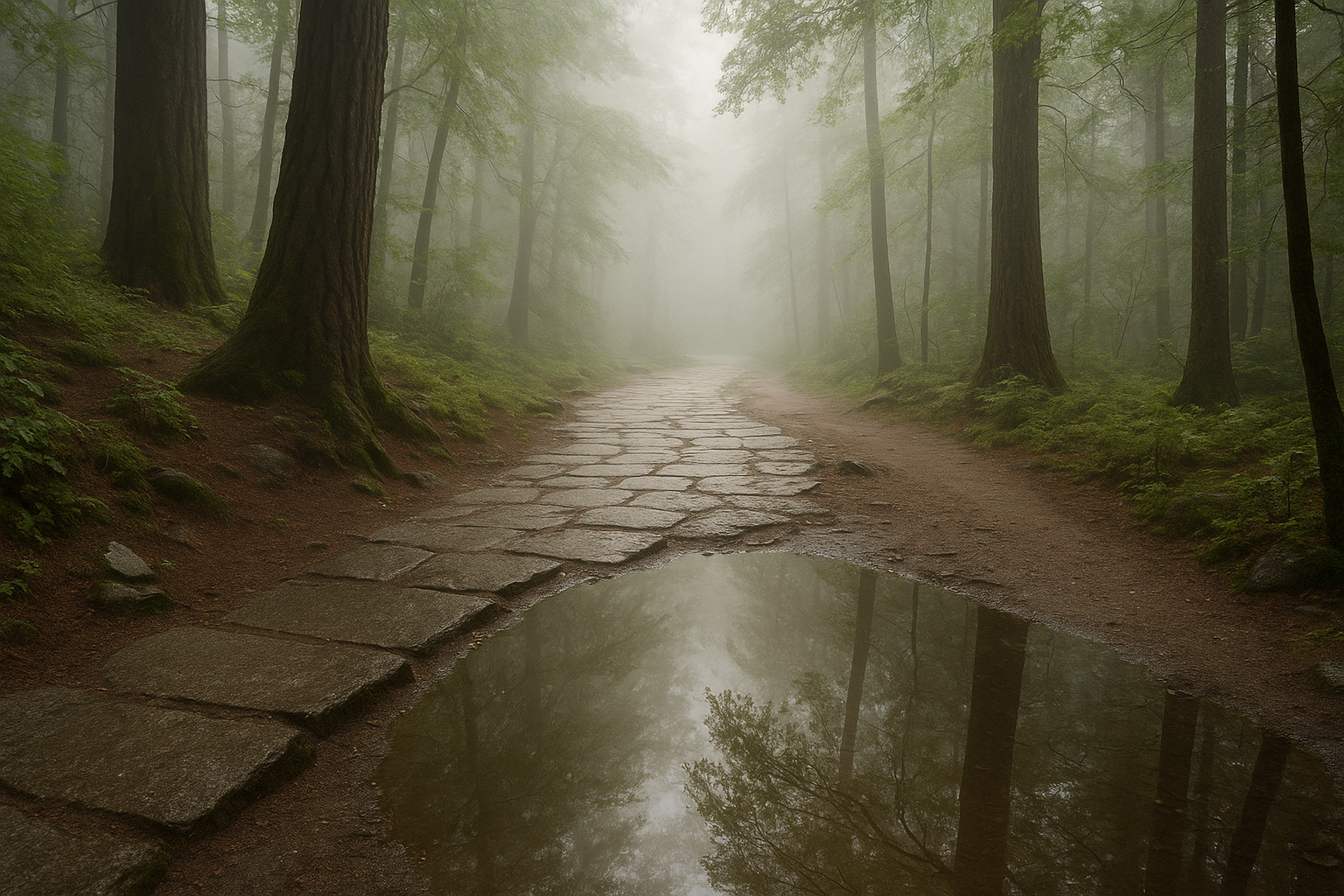
    The journey of a pilgrimage is often seen as an outward voyage to a sacred destination, but its true essence lies in the inner exploration it nurtures within us. Walking along the mist-laden paths towards an unknown shrine can be a metaphor for the journey inward, awakening the deepest layers of one’s soul.

    The Call to Pilgrimage

    Pilgrimages have been a part of human culture since ancient times, providing a spiritual balm to those who yearn for something beyond the mundane. This sacred journey, often embarked upon for religious or personal reasons, prompts pilgrims to detach from their daily lives and embrace solitude.

    “From Mecca to Santiago de Compostela, pilgrimage routes have offered transformative experiences that open eyes to another way of being.”

    The paths trodden by pilgrims are imbued with echoes of past travelers’ aspirations and struggles. These journeys are not merely about reaching a holy site but about discovering the sacred within oneself.

    A Journey Inward

    As one sets foot on the mist-covered trails, every step becomes an invitation to turn inward. The pilgrimage strips away external distractions, allowing individuals to focus solely on their thoughts and emotions. This inner awakening can lead to profound self-discovery and personal growth.

    • Mindfulness: Walking through nature amplifies the practice of mindfulness, as pilgrims become fully present in each moment.
    • Self-Reflection: The solitude of the journey encourages introspection, enabling pilgrims to confront personal challenges and ambitions.
    • Connection: Despite the solitude, pilgrims often find a deeper connection with the world around them, recognizing their place within the larger tapestry of life.

    The Transformative Power of Awe

    Experiencing the grandeur of nature and the serenity of ancient paths can instill a sense of awe, a critical element in the transformation process.

    “Awe transforms individuals and helps to reduce stress, expanding perceptions and leading to greater well-being.”

    Such moments of awe catalyze an awakening, stirring the soul and inspiring a renewed sense of purpose.

    Returning Home Changed

    Upon returning from a pilgrimage, individuals carry back with them a changed perspective. The journey inward often reveals the beauty of simplicity, a clearer understanding of one’s values, and a profound gratitude for life. Pilgrimage, in its essence, is not solely about reaching a destination but about embracing the journey within.

    As St. Augustine wisely observed, “The world is a book, and those who do not travel read only one page.” Embarking on a pilgrimage allows one to venture through these unwritten pages both outwardly and inwardly, fostering an awakening that echoes long after the journey has ended.

  • Wandering Sage – The Art of Traveling Without Thought

    Wandering Sage – The Art of Traveling Without Thought

    Wandering Sage: The Art of Traveling Without Thought

    Traveling without a rigid itinerary can be one of the most liberating experiences. This style of travel, often referred to as “The Art of Wandering,” allows adventurers to embrace spontaneity and cultivate a deeper connection with their surroundings. Much like the wandering sages of myth and history, this approach to travel encourages discovery, mindfulness, and personal growth.

    “Not all those who wander are lost.” —J. R. R. Tolkien

    The Essence of Wandering

    The art of wandering is not aimless drifting; rather, it is purposeful rambling without the constraints of a schedule. Travelers who embrace this style emphasize the journey over the destination. According to Psychology Today, wandering stimulates creativity, relieves stress, and enhances emotional well-being. The lack of a defined goal allows travelers to engage fully with the present moment.

    The Mythical Wanderers

    Throughout history and mythology, many figures have embodied the wandering sage archetype. These characters often embark on journeys that are transformative, both for themselves and the world around them.

    • Odysseus: The hero of Homer’s “Odyssey” undertakes a long and circuitous journey home. While his travels are fraught with challenges, they ultimately lead to profound personal insights.
    • Siddhartha Gautama: Before becoming the Buddha, Siddhartha wandered for years, seeking enlightenment. His journey is a quintessential example of travel as a path to self-discovery.
    • Cáin: In Irish mythology, Cáin is a nomadic musician who wanders the land, spreading wisdom and bridging human and fairy worlds.

    The Modern-Day Wanderer

    In contemporary society, the travel bug acts as the modern equivalent of the mythical journey. However, with the advent of technology and abundant travel resources, the impulse to pre-plan every aspect can be overwhelming. To truly embrace the wandering sage mindset, one must find a balance between preparation and spontaneity.

    Tips for Embracing the Wanderer’s Path

    • Travel Light: A sage travels unburdened. Packing light not only makes moving easier but also symbolizes the freedom from material constraints.
    • Stay Open: Be open to experiences without preconceived notions. Allow local culture, people, and landscapes to guide you.
    • Embrace Uncertainty: Planning every detail can stifle discovery. Find joy in the unknown and let chance determine your itinerary.
    • Reflect Daily: Spend time each day journaling or meditating. Reflect on your experiences, insights gained, and how they might inform your ongoing journey.

    Real-Life Stories of Wandering

    Modern-day wanderers often share tales that inspire others and demonstrate the profound impact of this style of travel.

    “I left without a plan and discovered more than I ever imagined, stumbling upon hidden cafes, meeting locals who became lifelong friends, and finding beauty in the unexpected. The journey was the destination.” —Anonymous Travel Blogger

    These stories underscore the idea that true wanderers embrace each moment, finding nourishment for their souls in the simplicity of the journey itself. For those who seek to understand the deeper truths of life, traveling without thought becomes both a personal evolution and a profound learning opportunity.

    Conclusion

    The art of wandering invites both novice and seasoned travelers to let go of expectations and rediscover the joy of travel in its purest form. Channeling the wisdom of sages, this approach reminds us that the unknown can be our greatest teacher. By relinquishing control, we open ourselves to the vast tapestry of experiences the world offers.

    So, the next time you pack your bags, remember the words of Lao Tzu: “A good traveler has no fixed plans and is not intent on arriving.” Embrace the journey, for the art of traveling without thought might just lead you to your own path of wisdom.

  • The Circle of Return – Cycles of Journey and Stillness

    The Circle of Return – Cycles of Journey and Stillness

    The Circle of Return – Cycles of Journey and Stillness

    The Circle of Return: Cycles of Journey and Stillness

    Life is often conceived as a series of linear progressions, where we move from point A to point B in pursuit of goals and dreams. However, if one takes a closer look, it becomes evident that life also unfolds in cycles, embodying a dynamic dance between moments of movement and moments of stillness. This is the essence of the circle of return—an endless loop that defines our existence and experiences.

    The Concept of Cycles

    Many ancient cultures observed life as a cyclical process, a concept best evidenced by the changing seasons, lunar phases, and even the tide. This view affirms that “everything comes back around,” tapping into a rhythm that has been part of human consciousness for millennia. As philosopher Alan Watts posits:

    “There is a peculiar rhythm that thrills through our lives, revealing that one must dissipate and then regather their energies in a constant cycle.” (Alan Watts)

    This everlasting cycle of return underscores seminal phases in our lives. Whether in the ebb and flow of our personal development or the inevitable rise and fall of civilizations, understanding these cycles is crucial to grasping the core of our journey through life.

    Journey: The Cycle of Movement

    The journey phase of the cycle is characterized by action and exploration. It is a period where we venture outward, engage with the world, and seek new experiences. In this mode, humans are akin to the migrating birds that navigate countless miles, driven by instinct and the lure of the unknown.

    • Travelling to new places contributes to our personal growth.
    • Pursuing education or career advancements represents another form of this cycle.
    • Engaging in relationships and building connections are part of our social journey.

    This cycle of movement is fueled by curiosity and desire. As renowned author J. R. R. Tolkien wrote, “Not all those who wander are lost,” highlighting how this aspect of the cycle is essential for discovering new terrains—both external and internal.

    Stillness: The Cycle of Return

    The cycle of stillness is equally critical, contrasting the active journey. These are the moments when we pause, reflect, and fully internalize our experiences. It is a time of rest and rejuvenation, echoing the winter that follows a bountiful harvest season.

    • Reflecting on past journeys helps integrate lessons learned.
    • Periods of rest are essential to prevent burnout and maintain well-being.
    • Mindfulness and meditation practices fall within this cycle, offering spiritual sustenance.

    As Eckhart Tolle notes, “Stillness is where creativity and solutions to problems are found.” (Eckhart Tolle) By embracing these pauses, individuals are better equipped to navigate future journeys with enhanced perspectives and refreshed resilience.

    Finding Balance in the Cycle

    The harmony between journey and stillness fosters an enriched life. Balancing these cycles invites a deeper connection to our own nature and the world around us. Here are some ways to integrate this understanding effectively:

    • Adopt practices that emphasize both movement and rest—such as yoga or tai chi.
    • Engage in continuous learning, alternating between active application and reflection.
    • Cultivate a lifestyle that values experiences without losing sight of moments for introspection and peace.

    Understanding the circle of return allows one to navigate life’s challenges and opportunities with wisdom and grace. It reminds us that moments of pause are not setbacks but essential parts of our cyclical existence.

    Conclusion

    The circle of return envelops our lives, manifesting as intertwined cycles of journey and stillness. By appreciating this beautiful rhythm, we can move through life with greater awareness and serenity, acknowledging that each step forward is balanced by moments of gentle return. The dance between action and repose, progress and quietude, becomes a path to a life steeped in meaning and fulfillment.

    Ultimately, it is the understanding and acceptance of these cycles that empower us to grow. With every journey concluded by a period of stillness, we emerge renewed—equipped for the next leg of our life’s adventurous journey.

  • When the Road Disappears – The Traveler Meets the Infinite

    When the Road Disappears – The Traveler Meets the Infinite

    Life is often described as a journey with a clear destination, guided by markers such as career milestones, familial milestones, and personal achievements. However, what happens when the markers vanish, and the road dissipates into the infinite possibilities ahead? The experience can be both liberating and bewildering.

    The Metaphor of the Infinite Journey

    The metaphor of a road disappearing illustrates a pivotal moment in life that is often accompanied by transformative change. This moment can manifest in myriad ways: a job loss, a shift in personal values, or a profound life event such as travel.

    “Feeling lost involves all senses, seeing, hearing, smelling, tasting, and touching, but no immediate connection to memories or clear mental targets,” explains Dr. Inci Acikoz Girgin in Psychology Today. “It is a disruption in the ordinary course of one’s life, creating space for creativity and new insights.”

    Embracing Limitlessness

    • Redefining Structure: When familiar structures dissolve, establishing new frameworks becomes essential. This redefinition is not merely about finding another job or relationship but involves reevaluating and realigning with deeper personal values and desires.
    • Fostering Creativity: With the disappearance of the road comes a profound opportunity for creativity. Unshackled from defined paths, individuals are free to explore innovative ideas, whether in their careers, personal lives, or creative pursuits.
    • Spiritual Exploration: For some, the absence of a defined path prompts a deeper spiritual quest. It’s a chance to explore existential questions and redefine personal beliefs about purpose and meaning beyond societal expectations.

    Facing the Fear of Ambiguity

    Embracing the infinite involves confronting ambiguity. Humans have an innate aversion to uncertainty, a concept explored extensively in psychological literature. A study from the Journal of Experimental Psychology notes that ambiguity can induce anxiety and stress (source: Ambiguity and Anxiety, Journal of Experimental Psychology, APA).

    “Living without an established script presents both anxiety and awe,” shares researcher Dr. Noah D. Goodman. “This duality often provokes a battle between the comfort of past narratives and the exhilaration of possibility.”

    Strategies for Navigating the Infinite

    • Mindfulness Practices: Engaging in mindfulness and meditation can help ground individuals, offering peace amidst chaos and enhancing the ability to embrace new experiences with an open mind.
    • Setting Small, Achievable Goals: While the overall journey may lack a distinct endpoint, setting small goals can provide a sense of direction, progress, and accomplishment, creating momentum towards larger ambitions.
    • Seeking Support: Engaging with a community or network of like-minded individuals facing similar transitions can offer solace and shared wisdom. Therapeutic settings also provide a safe space to explore feelings and aspirations.

    The Beauty of Infinite Horizons

    Although daunting, the journey into the limitless can lead to unparalleled personal growth and self-discovery. When the road disappears, the opportunity arises to chart one’s own course, free from the constraints of social conventions and predefined expectations.

    As Albert Camus eloquently stated, “In the depth of winter, I finally learned that there was in me an invincible summer.” Much like the endless road, within each person lies an endless potential waiting to be uncovered, explored, and embraced.

    Ultimately, when the road disappears, it signifies not an end but a beginning—a foray into the infinite where footfalls on untrodden paths yield experiences that define life’s true journey.

  • Beyond the Gate – Pilgrimage as Transformation of Self

    Beyond the Gate – Pilgrimage as Transformation of Self

    Beyond the Gate: Pilgrimage as Transformation of Self

    Throughout history, the concept of pilgrimage has held a sacred place in various cultures and religions around the world. A pilgrimage is more than just a physical journey; it is a spiritual quest toward self-discovery and transformation. The act of leaving one’s daily life and stepping into the unknown represents a metaphorical crossing of a threshold—or a gate—into a realm of enlightenment and personal growth. This article explores the timeless tradition of pilgrimage and its profound impact on the self.

    The Pilgrimage Tradition: A Brief Overview

    Pilgrimages are an ancient tradition, dating back thousands of years. They are deeply ingrained in the fabric of many religions, including Christianity, Islam, Buddhism, and Hinduism, among others. Here are some of the most renowned pilgrimages:

    • Christianity: The Camino de Santiago in Spain is perhaps the most famous Christian pilgrimage, attracting over 200,000 pilgrims annually.
    • Islam: The Hajj pilgrimage to Mecca is a pillar of the Islamic faith, mandatory for all Muslims who are physically and financially able.
    • Buddhism: Pilgrims often travel to Bodh Gaya in India, where Siddhartha Gautama attained enlightenment.
    • Hinduism: The Kumbh Mela, held every 12 years, is the largest religious gathering in the world.

    The Journey of Self-discovery

    The physical and spiritual aspects of pilgrimage work together to create a transformative experience. As John B. Cobb Jr. famously noted, “Pilgrimage is a powerful metaphor for any sort of transformation, and all of us undertake a pilgrimage through life.” The steps taken through deserts, mountains, and ancient paths prompt introspection and change.

    Physical Challenge and Spiritual Growth

    The arduous nature of a pilgrimage tests the limits of physical endurance. Pilgrims often walk vast distances, face harsh climates, and endure physical discomfort, all of which mirror the internal journey of overcoming personal struggles and fears. This physical exertion serves as a catalyst for spiritual awakening, fostering resilience and inner strength.

    The Power of Solitude and Reflection

    Pilgrims often travel in isolation, or if in groups, there are long stretches of silence that allow for deep reflection. The absence of modern distractions gives rise to profound contemplation, helping to unearth inner truths and desires. As the renowned mystic Rumi suggests, “The journey brings us face to face with the self.”

    Crossing Thresholds: Symbolism and Sacred Spaces

    Pilgrimage often involves moving through and into sacred spaces that hold significant spiritual meaning. These spaces, imbued with centuries of pilgrimage and prayer, serve as a conduit for divine connection and transformation.

    • The Arrival at a Sacred Site: Reaching the destination symbolizes a culmination of effort and intention. Whether it’s touching the relics of saints, drinking from holy springs, or simply basking in the serenity of sacred architecture, these moments are commonly experienced as a profound connection to the divine.
    • Embracing Rituals and Traditions: Engaging in rituals tied to these sacred sites enriches the experience. Ablutions in the holy waters of the Ganges or the lighting of candles in prayers at cathedrals are acts of devotion that heighten spiritual awareness.

    The Pilgrimage’s Gift: Transformation and Return

    The transformative power of pilgrimage lies not only in the journey but also in the return to normal life. This return is often marked by a renewed sense of purpose, clarity, and inner peace.

    “The act of completing a pilgrimage becomes a credential of beingness. You’re able to say that you’ve achieved something quite worthwhile,” explains Dr. Lancaster of the BBC. This achievement translates to real-world confidence and changes the way pilgrims engage with their everyday lives.

    • Integration of New Insights: Pilgrims often find their lives transformed by the insights gained during their journeys. Whether it is newfound patience, forgiveness, or self-acceptance, these qualities can dramatically affect one’s approach to life’s challenges.
    • Community and Belonging: Often, pilgrimages foster a sense of community. The shared experience of faith and endurance bonds people, creating a global network of kindred spirits with shared values.

    A Modern Pilgrimage

    In our fast-paced modern world, the concept of pilgrimage has evolved beyond religious journeys. Contemporary pilgrimages can take the form of spiritual retreats, wellness excursions, or personal quests for meaning and purpose. They can be as varied as hiking the Pacific Crest Trail or attending a meditation retreat in the Himalayas.

    • Mindfulness and Presence: Modern pilgrimages emphasize mindfulness, encouraging travelers to live in the moment and fully engage with their surroundings.
    • Digital Detox: Many modern seekers use pilgrimage as a way to disconnect from digital distractions and reconnect with nature and self.

    Conclusion: An Endless Journey

    Ultimately, the path of pilgrimage is a timeless and universal journey that transcends cultural and religious boundaries. It is a deeply personal quest for meaning and transformation, forever beckoning us to step beyond the gate. As we walk the path, we discover that the outer journey reflects an inner voyage, leaving us forever changed.

    The call to pilgrimage is a call to explore the mysteries of life, to embrace our own vulnerabilities, and to transform into our fullest selves. The destination is unknown, but the journey itself is the reward—a continuous unfolding of self-discovery and enlightenment.

  • The Journey Home – Realizing You Were Always Already There

    The Journey Home – Realizing You Were Always Already There

    The Journey Home – Realizing You Were Always Already There

    The Journey Home – Realizing You Were Always Already There

    Introduction

    The concept of “home” has various interpretations. For some, it’s a physical place; for others, it’s a state of mind. What if the journey home is not a quest for a physical destination but an internal odyssey to find that peace within oneself? This article explores the philosophical and spiritual connotations of realizing that home is not a place we arrive at, but something we carry within us, always accessible and eternally present.

    The Philosophical Underpinnings

    The phrase “always already” is a term popularized by postmodern philosophy, particularly by thinkers like Jacques Derrida and Martin Heidegger. Heidegger, in his existential writings, often discussed the concept of “Being” and proposed that humans are always already intertwined with the world around them in intricate ways that defy linearity.

    “Our being is the ultimate reference point for all our experiences; we are always situated, which means we are always already there before any explicit encounter with the things that are around us.” – Stanford Encyclopedia of Philosophy

    This thought challenges the traditional view of identifying a singular origin or ultimate endpoint in our existential journey. Instead, it suggests that each of us exists in an ever-present state of being that transcends geographical or material conceptions of home.

    Home as a Metaphor

    In literature, metaphors for home abound. Characters in stories often embark on epic journeys to find home, only to realize they had it within them all along. James Baldwin, in his reflective essays, eloquently expresses this sentiment. In “A Stranger in the Village,” Baldwin writes about the alienness and familiarity that one can feel simultaneously, a nod to this internal homecoming.

    “Perhaps home is not a place but simply an irrevocable condition.” – James Baldwin

    This idea resonates with many who have ever felt the pangs of displacement, whether geographical or emotional, and yet find solace not by moving elsewhere, but by looking inward.

    Spiritual Connotations

    Many spiritual traditions speak of the journey within as the true pilgrimage. Buddhism teaches that enlightenment—equivalent to coming home to oneself—is found through inward contemplation and mindfulness. The practice of meditation is a journey back to the self, a way to peel back the layers of confusion and distraction to find the peace that is always already there.

    Similarly, the teachings of Rumi, the 13th-century Persian poet and Sufi mystic, often reflect on the theme of returning to one’s essence. His poems suggest that the soul’s journey is an inward spiral towards oneself.

    “The wailing of broken hearts is the doorway to God, is pleading to be united with Spirit once more.” – Rumi

    The Psychological Perspective

    From a psychological perspective, the idea of home pertains to a sense of belonging and acceptance in oneself. Carl Jung’s theory of individuation is described as a process of becoming aware of oneself, akin to finding home within one’s psyche. According to Jung, “The privilege of a lifetime is to become who you truly are.”

    This journey is not about constructing a new identity but recognizing and reconciling with the one that has always existed within. It is about stripping away the external expectations and repressions to realize one’s true, unadulterated self.

    Practical Steps Toward Realization

    • Meditation and Mindfulness: Regular practice can help individuals stay grounded and cultivate a sense of inner calm.
    • Journaling: Writing down thoughts and feelings can aid in self-discovery and acknowledging one’s internal home.
    • Solitude: Taking time for oneself without distractions can enhance an understanding of personal needs and desires.
    • Seeking Therapy: Engaging with a mental health professional can provide guidance toward reconciling internal conflicts.

    Conclusion

    The journey home is ultimately a journey to ourselves. Though we often search for external validations—a place, a person, a feeling—the true essence of home resides within. Realizing that we were always already there offers a profound liberation, emphasizing the inherent stability and permanence of self-knowledge and self-acceptance.

    In the words of Lao Tzu, “Knowing others is intelligence; knowing yourself is true wisdom. Mastering others is strength; mastering yourself is true power.” This realization is not only a philosophical or spiritual quest but a deeply personal acknowledgment that wherever we go, we are already, eternally, home.

  • Steps into Emptiness – A Pilgrim’s Journey Beyond Knowing

    Steps into Emptiness: A Pilgrim’s Journey Beyond Knowing

    In the age of relentless information and boundless connectivity, the yearning for emptiness, the allure of the uncharted silence, calls to those seeking to journey beyond the confines of knowing. This pilgrimage is not one of physical destinations, but a transcendental voyage into the essence of the void—where knowledge surrenders to insight and silence speaks volumes.

    The Call of the Unknown

    As John Cage once said, “I have nothing to say and I am saying it and that is poetry.” For the modern pilgrim, this quote epitomizes the essence of stepping into emptiness—not as an absence, but as a canvas for profound revelation. It begins with the invitation to explore what lies beyond the saturated symphony of daily life.

    • Embrace Quietude: Set aside moments each day for silence. This practice cultivates a deeper connection with one’s inner thoughts and emotions.
    • Meditative Stillness: Engage in meditation to foster a state of emptiness that allows for reflection and introspection.
    • Detachment from Information: Periodically disconnect from digital devices to focus on the immediate environment, enhancing presence and awareness.

    Letting Go of Certainties

    To embrace emptiness is to surrender certainty. It is about finding beauty in ambiguity, a concept echoed by Lao Tzu, who wrote, “To the mind that is still, the whole universe surrenders.” This journey invites a letting go of rigid beliefs and doctrines, allowing for genuine discovery and personal growth.

    • Question Assumptions: Challenge conventional wisdom and be open to new paradigms.
    • Seek Simplicity: Simplify life by focusing on what truly matters, shedding unnecessary clutter, both physical and mental.
    • Practice Non-Attachment: Cultivate a practice of non-attachment to outcomes, fostering resilience and adaptability.

    A Journey Unending

    Stepping into emptiness is not a journey with a definitive endpoint. Each step reveals new layers of understanding, as the pilgrimage continues ‘beyond knowing’. In this eternal unfolding, we find peace—not in possession, but in continual exploration.

    The Dalai Lama teaches, “The ultimate source of happiness is within us, not outside. Even the happiest city in the world cannot create something that already abides within.”

    So take that first step—not just on the path less traveled, but into the void where the journey of a lifetime awaits.

  • Pilgrimage to Stillness – Walking Toward the Heart of Nothingness

    Pilgrimage to Stillness: Walking Toward the Heart of Nothingness

    In a world overwhelmed by noise and relentless turmoil, the quest for stillness becomes a profound pilgrimage. This journey, often undertaken within the depths of one’s own mind, seeks to walk toward the heart of nothingness — a concept that both mystifies and liberates the seeker.

    The Quest for Silence

    The pilgrimage to stillness is paradoxical in its nature. It asks travelers to venture outwards, into the chaos of existence, while simultaneously delving inward, peeling away layers to reach the serene abode of nothingness. This nothingness, rather than being an emptiness, is a space brimming with potential and clarity.

    Ancient traditions have long heralded the importance of moving towards inner tranquility. Practitioners of Zen Buddhism, for instance, often engage in meditation practices that emphasize satori — a state of nothing but pure presence and awareness. According to the Zen master Takuan Soho, “The mindset of no-mindedness transcends thinking and touch-the-earth, so that all that remains is the spontaneous and the inevitable.”

    Steps Along the Path

    The journey towards the heart of nothingness can be intimidating, yet approachable if broken into several key steps:

    • Embrace Simplicity: Detaching from the unnecessary clutter — both physical and mental — can help pave the way for more profound insights. The minimalist movement preaches decluttering to find clarity; a principle that holds strong even in spiritual journeys.
    • Practice Mindfulness: Being fully present in each moment without judgment allows one to experience each facet of existence more vividly. A study from Harvard University highlights that mindfulness can improve emotional regulation and increase mental clarity, akin to clearing a fogged mirror of its haze.
    • Seek Silence: Intentionally incorporating periods of silence into daily life can help cultivate an inner stillness. Whether it’s through meditation, nature walks, or simply sitting in silence, this practice can allow the paradox of nothingness to emerge.
    • Embrace Solitude: Time spent in solitude does not equate to loneliness. Instead, it can nurture self-discovery and prepare the mind for the epiphanies that often accompany a stillness-centered life.

    The Heart of Nothingness

    At the core of this pilgrimage lies the hauntingly beautiful concept of nothingness. Philosophically, this state might sound barren, yet it is quite the opposite. The philosopher Laozi once said: “To the mind that is still, the whole universe surrenders.” This emphasizes that the true potential of nothingness lies in its capacity to receive, comprehend, and transform.

    Stillness is where the fragmented pieces of life come together in a seamless dance, enabling clarity and understanding. It’s where one hears the whisper of the universe, undistracted by the cacophony of daily life. It is the place from where creation itself springs forth.

    Modern Implications

    In today’s hyper-connected world, the pilgrimage not only holds spiritual significance but also resurfacing psychological benefits. The American Psychological Association reports that meditation and mindfulness exercises, which are gateways to stillness, can reduce stress, improve attention, and enhance one’s overall well-being.

    “The quieter you become, the more you can hear.” — Ram Dass

    This nous aligns with a growing societal recognition of the need to disconnect in order to reconnect — to ourselves, each other, and the world around us.

    Conclusion

    The pilgrimage to stillness is a timeless journey that beckons those yearning for purpose and peace within the chaos of life. By walking towards the heart of nothingness, we open the door to infinite possibilities where insight lay dormant and tranquility reigns supreme.

    As we each embark upon this pilgrimage, the footprints we leave behind may well be in the sand — lightly trodden, yet profound in their silent declaration. It is a journey toward simplicity, clarity, and the elusive, yet ever-present, heart of nothingness.