Tag: journey

  • Between Earth and Ether – The Traveler as Channel of Dao

    Between Earth and Ether – The Traveler as Channel of Dao

    Between Earth and Ether: The Traveler as Channel of Dao

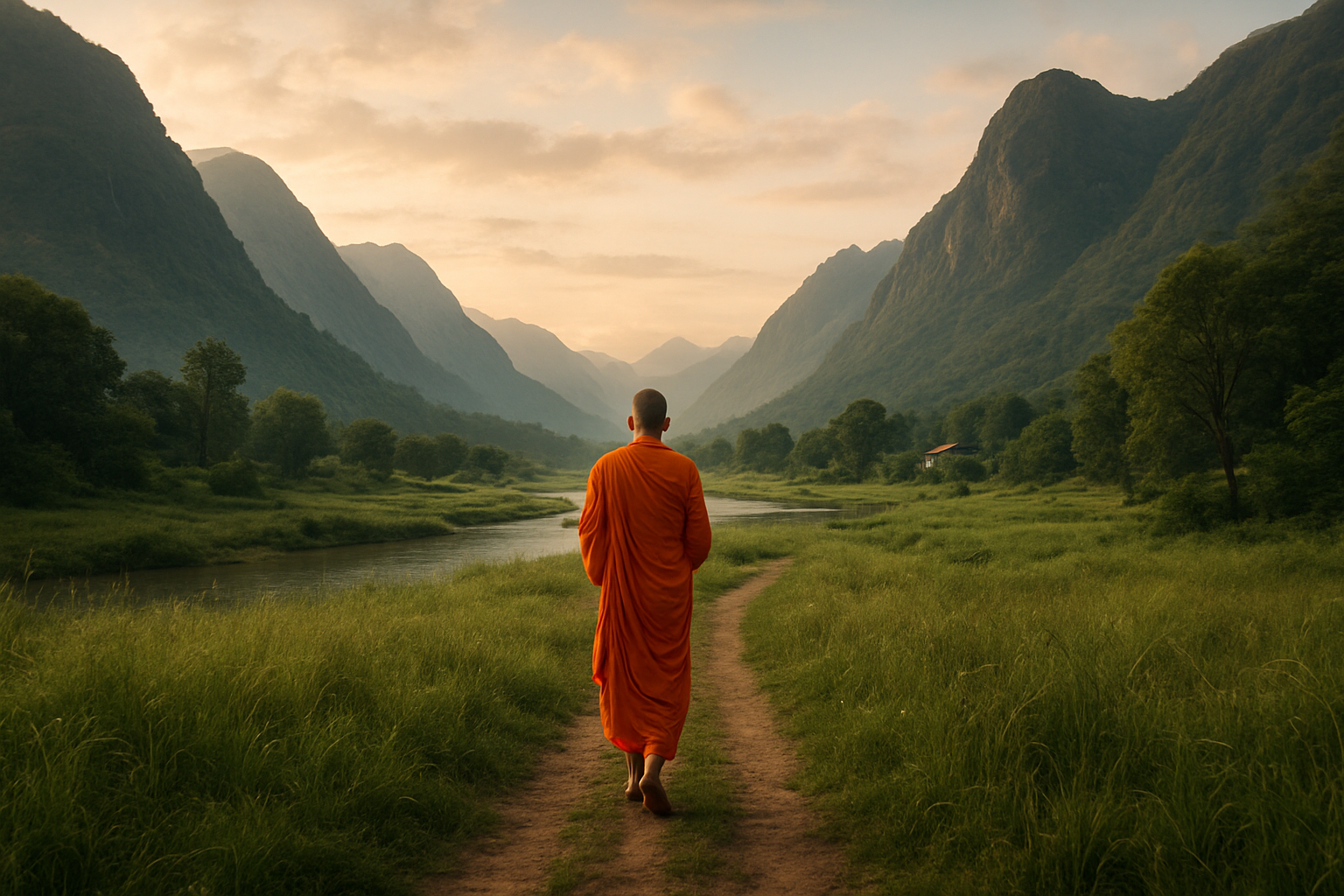
    In an increasingly chaotic world, the notion of the traveler as a conduit of Dao, or “The Way,” presents a timeless tranquility to those in search of spiritual balance. Embracing this concept can transform every journey into more than mere displacement, elevating travel to a practice of connectedness, harmony, and enlightenment.

    Understanding Dao

    Daoism, or Taoism, is an ancient Chinese philosophy that emphasizes living in harmony with the Dao. The Dao is an abstract concept, often translated as “The Way” or “The Path,” which represents the fundamental nature of the universe. As stated in The Tao Te Ching, attributed to Laozi, “The Dao that can be told is not the eternal Dao; the name that can be named is not the eternal name” (Project Gutenberg).

    This quintessential teaching captures the ineffable nature of Dao, inviting followers to experience rather than explain. Traveling, in its most profound form, can become an exercise in this experiential understanding.

    The Traveler as a Conduit

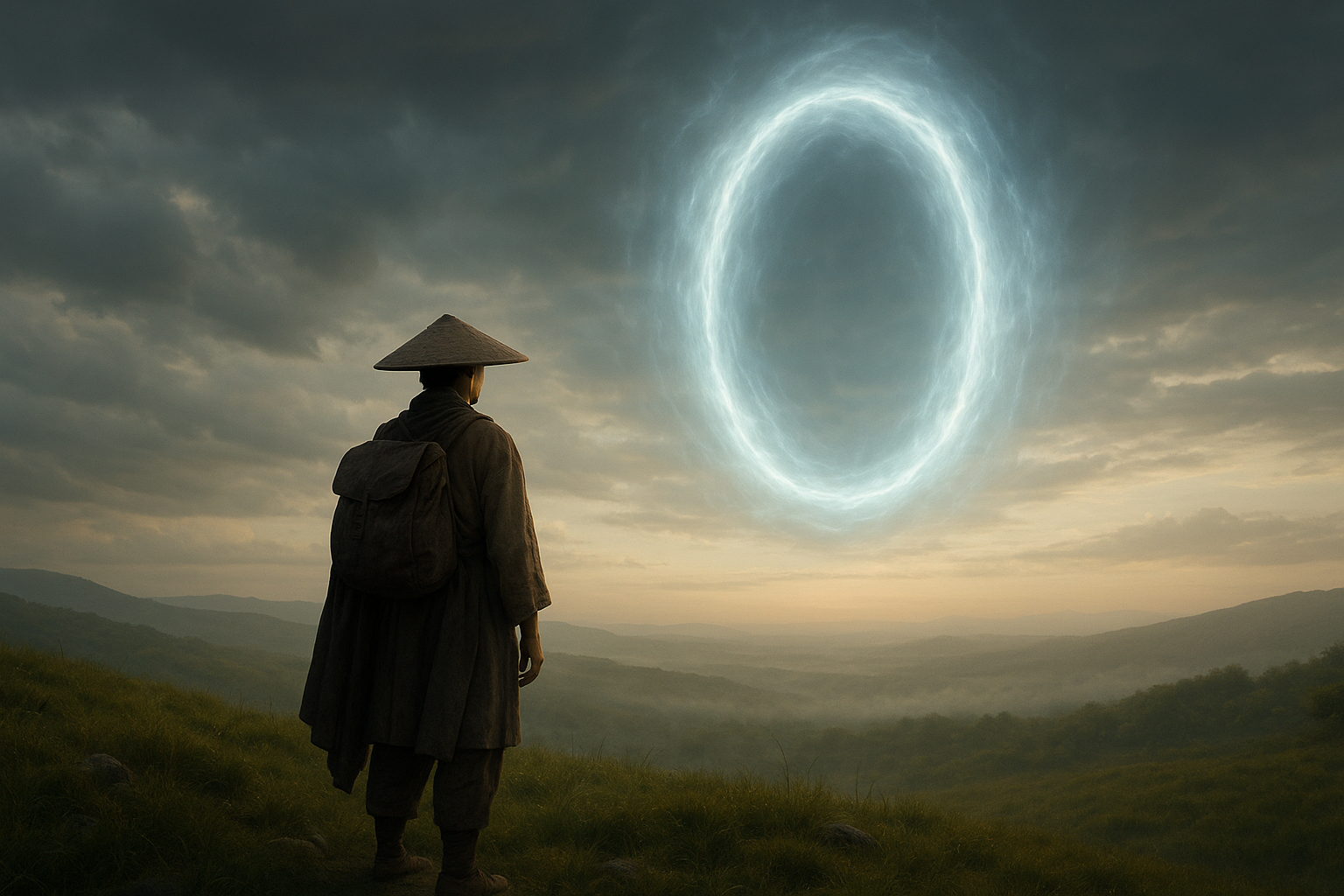
    In the context of Daoism, a traveler is more than a person on a journey from point A to point B. A true traveler embodies the principles of Dao—effortlessly wandering, observing, and absorbing the energy of both Earth and sky. This depiction is resonant with the classic image of the wandering sage, a seeker of wisdom and conductor of cosmic energies.

    The role of the traveler is one of intermediator between the tangible reality of the Earth and the ethereal expanse of the heavenly cosmos. By opening oneself to these dual realms, the traveler learns to flow with the natural rhythms, observing the world as a polyphony of existence rather than through the narrow lens of human ego and desire.

    The Physical and Spiritual Path

    Traditional travel often emphasizes the physical journey. However, for a traveler guided by Dao, the spiritual path is of greater significance. As Alan Watts, a prominent interpreter of Eastern philosophies, noted, “The only way to make sense out of change is to plunge into it, move with it, and join the dance.” (Goodreads).

    Herein lies the unique intersection between travel and spiritual practice: to plunge into the journey is akin to surrendering to the will of the universe, engaging with change and experiencing life in its raw, unfiltered form. The traveler thereby becomes a medium of Dao, moving fluidly and consciously through the world.

    Destinations as Reflections of Dao

    • Mountains: Symbolize strength and stillness. Visiting these majestic elevations, a traveler can meditate upon the immense age and wisdom that emanates from their peaks.
    • Rivers: Represent constant change and flow. Just as water navigates both gentle and treacherous terrains, the traveler learns adaptability and resilience.
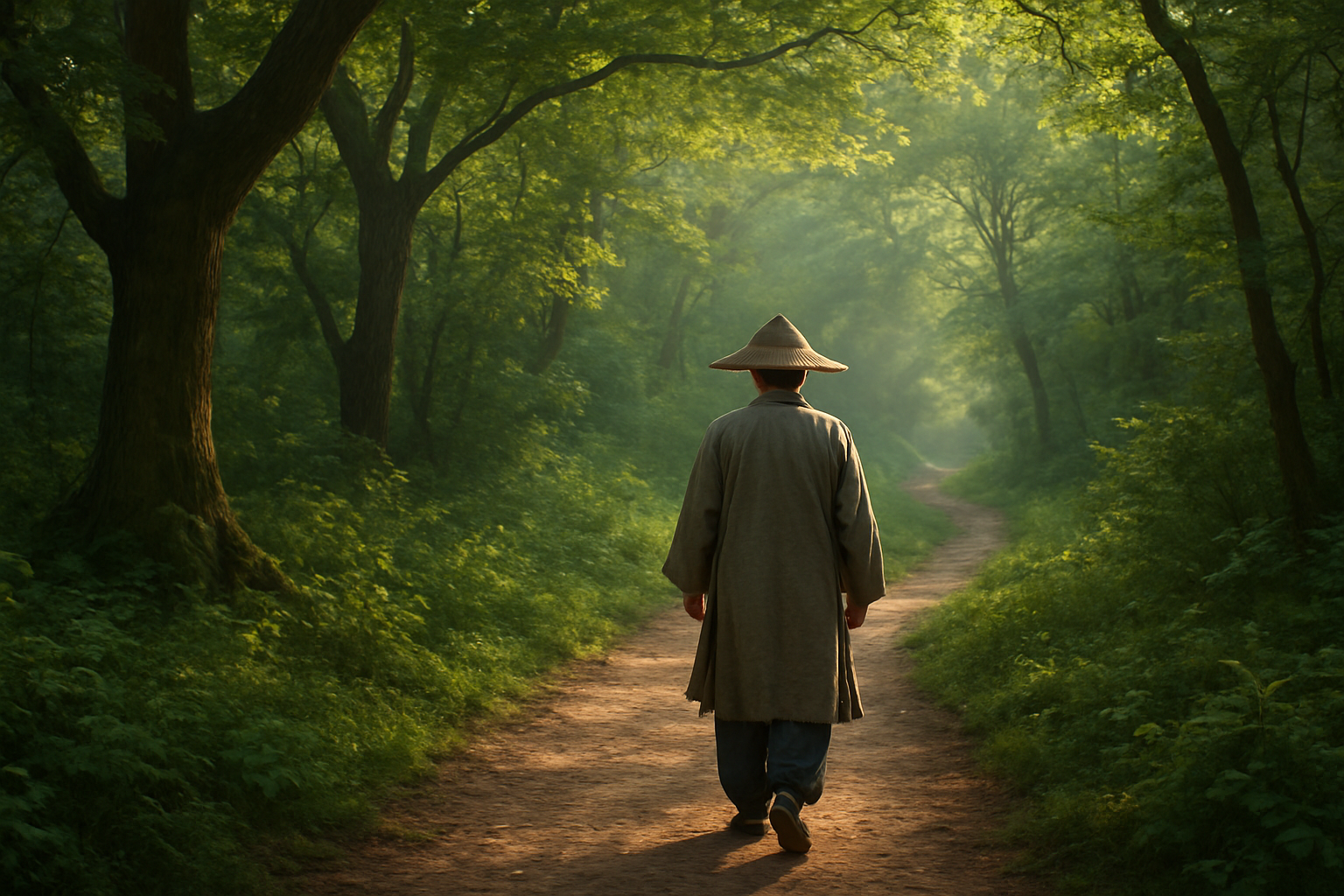
    • Forests: Embody life’s interconnectedness. Walking amidst trees allows one to contemplate the myriad forms of life that coexist harmoniously, reflecting the Daoist ideal of unity.

    Each of these natural elements serves not only as a destination but as a reflection of the Daoist teachings. Traveling through them calls for silent observation and an openness to the lessons they silently offer.

    Practical Advice for the Daoist Traveler

    “Travel and change of place impart new vigor to the mind.” — Seneca

    To channel the Dao effectively, consider the following during your travels:

    • Remain Mindful: Practice mindfulness by engaging fully in each moment. This could mean putting away technology to fully appreciate the landscape.
    • Observe Quietly: Be a silent witness to your surroundings. As nature unfolds its theater, let it whisper its wisdom to you without speaking over it.
    • Honor Impermanence: Recognize that each experience, like the traveler, is transient. Cherish its uniqueness without attachment.

    The Journey of Harmony

    Traveling as a channel of Dao is not confined to exotic destinations or planned itineraries. It is a state of mind—a continuous journey of learning, experiencing, and evolving. In connecting to both Earth and ether, the traveler embodies the essence of Dao, finding peace in motion and wisdom in silence.

    As we stand at the crossroads of worlds within and without, we might find, along the way, that the truth of our journey lies not in reaching a destination but in the journey itself. The lesson from Daoism remains timeless: to travel is not just to move through space, but to traverse the boundless landscapes of the heart and mind.

  • The Path Returns Itself – The Daoist Cycle of Journey and Home

    The Path Returns Itself – The Daoist Cycle of Journey and Home

    The Path Returns Itself: The Daoist Cycle of Journey and Home

    In the philosophies of Daoism, the journey and home are seen not as separate entities, but as parts of a continuous cycle. This cyclical understanding of life’s path offers a framework that is as ancient as it is relevant in today’s world. The essence of this philosophy can be encapsulated in the concept that the path inevitably leads back to the origin, a return that is both literal and metaphorical.

    The Daoist Philosophy of the Path

    Daoism, or Taoism, is one of the major schools of Chinese thought, the roots of which can be traced back more than two millennia. At the heart of Daoism is the concept of Dao (or Tao), often translated as “the Way.” As Lao Tzu famously wrote in the Tao Te Ching, “The Dao that can be told is not the eternal Dao; The name that can be named is not the eternal Name” (source).

    • Path as a Cycle: According to Daoist thought, life is an unending cycle of transformation. The journey itself is not linear but cyclical, and its end is a return to the beginning.
    • Returning to the Source: This notion is summarized in the Daoist adage, “Returning is the movement of the Dao” (source).
    • Interconnectedness: The realization of interconnectedness is vital. As all paths are cyclical, our encounters along the way contribute to our understanding of self and universe.

    The Journey and Its Symbolism

    The journey in Daoism represents not just physical movement but personal and spiritual growth. It’s about discovering the rhythm of life and aligning oneself with it.

    • Metaphorical Journey: While a physical journey can enlighten, Daoists believe that the inner journey is of equal, if not greater, importance.
    • Harmony with Nature: Following the path entails a harmonious relationship with nature. Zhuangzi, another prominent Daoist philosopher, observed, “He who follows the Dao is at peace” (source).
    • Understanding through Experience: Life’s challenges and experiences form the learning ground for Daoist wisdom.

    The Concept of Home

    In Daoism, “home” symbolizes more than a physical place; it is an internal state of balance and authenticity. The journey may cover great distances, but its ultimate purpose is to rediscover this inner home.

    • Inner Peace: The return home is synonymous with the attainment of inner tranquility and self-understanding.
    • Unity with the Universe: Homecoming reflects unity with the universe and an understanding of one’s place within it.
    • Contentment: It represents contentment, which the Dao De Jing emphasizes: “He who knows that enough is enough will always have enough” (source).

    The Interplay of Journey and Home

    The symbiotic relationship between the journey and home is central to Daoist tradition. It reflects the balance between external exploration and internal realization.

    “The wise man is one who knows what he does not know,” aligning with the cyclical notion where the journey of discovery leads to the realization of inner ignorance and a return to simplicity.

    • Dynamic Equilibrium: In Daoism, one cannot exist without the other. The journey craves completion through return, highlighting an everlasting dance between adventure and solace.
    • Parity and Balance: Just as yin and yang encapsulate duality in unity, the journey creates a necessary contrast to the peace found at home.

    Modern Reflections

    Today, amid the rapid pace of life, the Daoist cycle of journey and home offers a grounding perspective. It encourages mindfulness and suggests that the path to fulfillment is not through continuous seeking, but in finding contentment where we are.

    • Mindful Exploration: Embrace every new challenge as a necessary stop on the cyclical path rather than an endpoint.
    • Find Center in Chaos: Discovering balance and peace within oneself is the modern reflection of returning home.

    Understanding this dynamic enriches our lives—a reminder that no matter the paths we tread, they all bring us back home, in essence, fuller and more complete.

  • Zen of the Mountain Path – Awakening Step by Step

    Zen of the Mountain Path – Awakening Step by Step

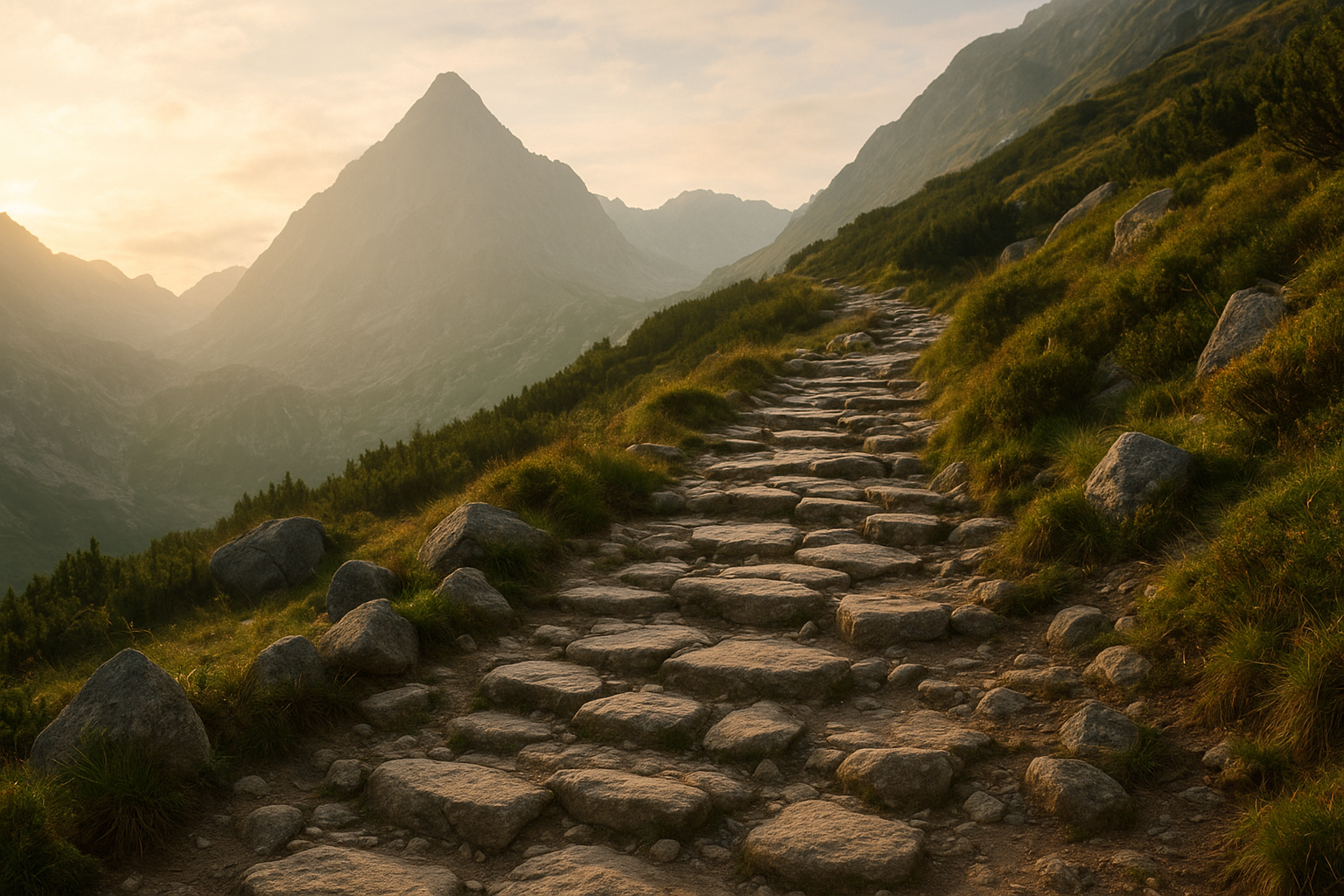
    In the heart of Japan, amidst the silent whisper of pine trees and the ruggedness of unyielding cliffs, lies the Zen path up the revered Mount Koya. This path, winding and steep, is more than just a trail to a picturesque summit. It is a metaphorical journey towards enlightenment, a step-by-step process of awakening that has captured the imagination of many spiritual seekers.

    The Journey Begins

    Every journey up the mountain begins with a single step, much like every journey towards enlightenment. The Zen philosophy teaches us that true enlightenment is not a sudden revelation but rather a gradual awakening, achieved through persistent practice and awareness. The act of climbing, one step at a time, encourages practitioners to focus on the ‘now’, to be present and mindful of each movement.

    “The only Zen you find on the tops of mountains is the Zen you bring up there.” – Robert M. Pirsig

    Meditation, an integral part of Zen practice, finds a perfect partner in the act of walking up a mountain. Many who embark on this pilgrimage engage in walking meditation, a practice that combines the physical act of walking with meditative awareness. This activity demands concentration on the rhythm of footsteps, the breath, and the sensations of the body.

    Lessons of the Path

    • Acceptance of the Present: The mountain path compels acceptance of the present. The challenges of the climb mirror the difficulties of life, teaching us to accept situations with grace and patience.
    • Perseverance: Like life, the mountain presents obstacles. Each step requires endurance and resilience—a lesson in perseverance.
    • Humility: The vastness of the mountain against our human scale induces a humility in the climber, fostering a greater sense of interconnectedness with the world.

    Nature’s Silence and the Inner Voice

    As one ascends further up the path, the noise of the world falls away. This departure from the mundane allows climbers to tune into their inner voice. In Zen, this is a crucial aspect of understanding one’s Buddha-nature. The silence of nature is profound, encouraging introspection and self-awareness.

    Zen monks have long used secluded environments, such as mountains, to cultivate a deeper understanding of their own minds. The great Zen master Dogen Zenji once said, “To study Buddhism is to study the self. To study the self is to forget the self.” The mountains become a student’s life-long mentor, revealing the secrets of the self to those who are willing to listen.

    Reaching the Summit

    Arriving at the summit of Mount Koya, climbers are rewarded not just with breathtaking views but with the profound satisfaction of having completed a spiritual journey. This summit is not the end but rather another beginning—a place to reflect on the journey and prepare for the descent.

    In Zen, the descent is as important as the climb. It symbolizes bringing the gained insights and wisdom back to the ordinary world. The essence of Zen practice lies in carrying the peace of the mountains into the bustle of everyday life.

    Conclusion

    The Zen of the mountain path is a potent reminder of life’s ephemeral nature. It teaches us the value of each step, the importance of the journey over the destination, and the endless process of awakening that life itself presents. As with any good Zen practice, it encourages one to be at peace with the path beneath their feet, no matter how rocky it may be. In the eloquent words of Jack Kerouac, from his writings in The Dharma Bums, “One day I will find the right words, and they will be simple.” The mountain path gives us a glimpse into that simplicity through each deliberate, mindful step.

  • The Wind Traveler – Moving Like Air Through the World

    The Wind Traveler – Moving Like Air Through the World

    The Wind Traveler: Moving Like Air Through the World

    In a world increasingly dominated by speed, technology, and connectivity, there exists a unique subset of adventurers known as “wind travelers.” Less concerned with fixed itineraries and more with the journey itself, these individuals seek to experience the world in a manner akin to the wind—free, unbound, and detached from the confines of modern travel dictates.

    The Essence of Wind Traveling

    Wind travelers embrace a philosophy of movement that mirrors the natural rhythm of the air currents, flowing from place to place with a sense of freedom and spontaneity. They often travel light, with minimal possessions, preferring to be unfettered by the weight of material goods. Their paths are not dictated by guidebooks or schedules but rather by the whimsical currents of chance encounters and unfolding stories.

    “To travel is to take a journey into yourself.” – Danny Kaye

    This quote by Danny Kaye encapsulates the wind traveler’s ethos perfectly. This mode of wandering is less about reaching a destination and more about the personal journey and transformation experienced along the way.

    The Journey of Discovery

    In their global peregrinations, wind travelers prioritize immersion over mere observation. Whether it’s exploring the intricate alleys of Marrakech, wandering across the transcontinental allure of the Silk Road, or simply shadowing the verdant rice terraces in Bali, the goal is to blend seamlessly into the environment, to live in harmony with the locale’s natural and cultural landscapes.

    • Flexibility: The lack of a rigid schedule allows wind travelers to stay longer in places that resonate deeply or to leave behind those that don’t.
    • Connection: By moving slowly and deliberately, they have the opportunity to forge genuine connections with locals, experiencing cultures and traditions first-hand.
    • Sustainability: This style of travel often has a lower environmental impact, as it tends to involve slower modes of transportation and less dependency on resource-intensive accommodations.

    Challenges and Rewards

    Being a wind traveler is not without its challenges. The unpredictability of this lifestyle can be daunting, and the lack of planning can lead to moments of discomfort and uncertainty. Yet, it is precisely in these moments that the rewards of the journey are unearthed—an unexpected friend made during a long bus ride, a hidden gem discovered in a remote village, or personal insights gained through solitude and reflection.

    Ultimately, wind travelers embody the spirit of the world’s ancient nomads and explorers, reminding us that the essence of travel is transformation and that sometimes to find ourselves, we must let go and allow the winds to guide us.

  • Walking the Eternal Circle – The Endless Pilgrimage of Dao

    Walking the Eternal Circle – The Endless Pilgrimage of Dao

    Walking the Eternal Circle: The Endless Pilgrimage of Dao

    In the vast expanse of spiritual practices, the path of Daoism offers a profound journey, one not toward a specific destination but toward the eternal present moment. This journey is often described as an “Endless Pilgrimage,” a cyclical exploration of the self and the universe intertwined.

    Understanding Dao

    The term “Dao” or “Tao” translates literally to “the Way.” It is the foundational concept of Daoism, a philosophy that emphasizes living in harmony with the Dao, the unchanging principle behind the universe. As Laozi, a central figure in Daoism, eloquently stated, “The Dao that can be told is not the eternal Dao; the name that can be named is not the eternal name.” (Tao Te Ching). This paradoxical statement encapsulates the idea that the true Dao transcends human language and conceptual thinking.

    The Cyclical Nature of Life

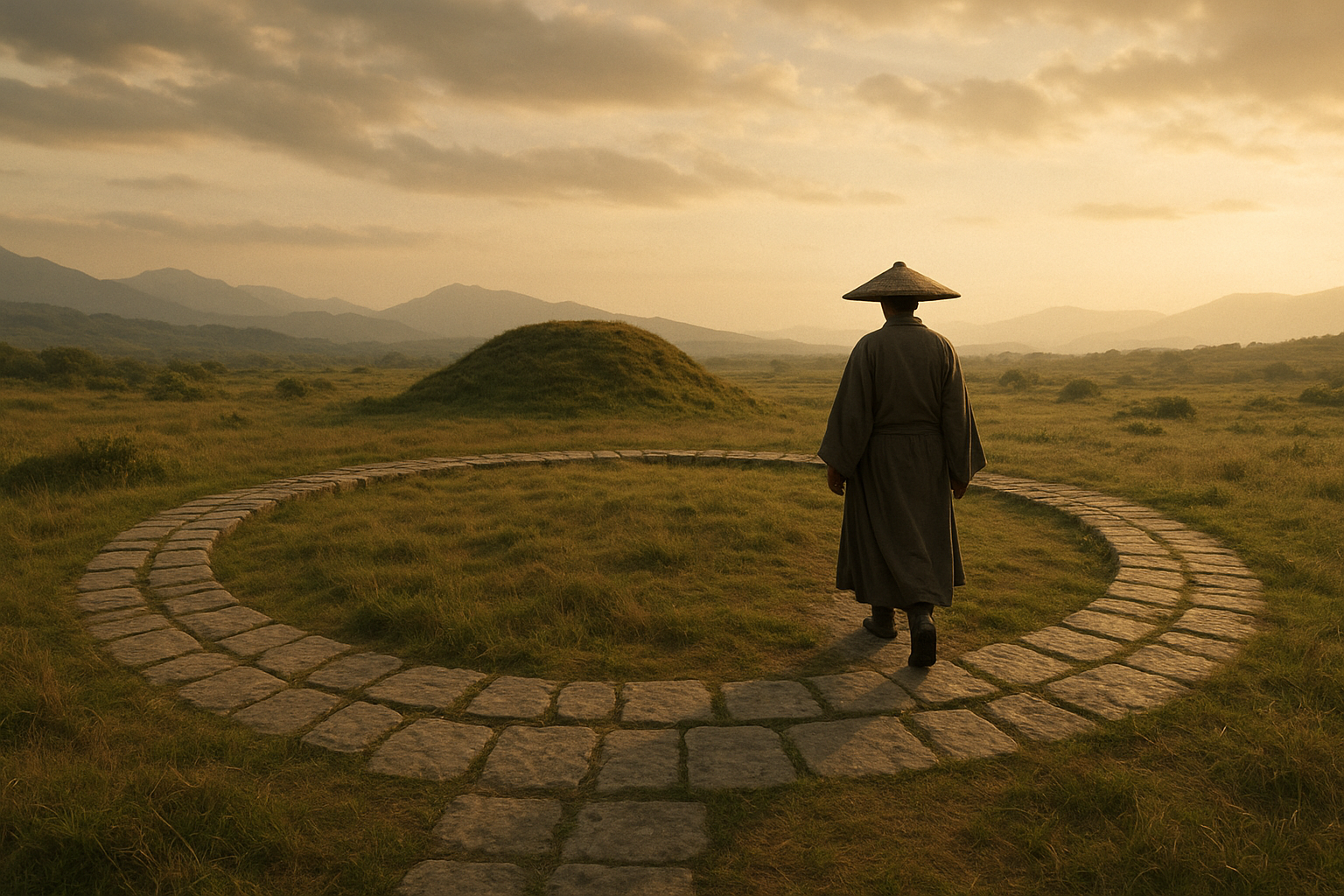
    Walking the eternal circle signifies embracing the cyclical nature of life. In Daoism, life is seen as a series of flowing cycles, much like the change of seasons or the ebb and flow of the tides. These cycles are not linear but circular, echoing the belief that each end signals a new beginning.

    The Practice of Wu Wei

    A key aspect of this pilgrimage is the practice of Wu Wei, or “non-action.” This does not imply inaction but rather an action that is in perfect harmony with the flow of the universe. As Zhuangzi, another celebrated Daoist sage, explains,

    “The Dao does nothing, and yet nothing is left undone.”

    This principle encourages adherents to align their actions with the natural order, cultivating a life of effortless grace.

    Embracing Simplicity and Contentment

    • Simplicity: Daoist teachings often emphasize the beauty of simplicity. By stripping away unnecessary desires, one can better align with the Dao.
    • Contentment: Achieving harmony requires a deep appreciation of what is. Contentment becomes a natural state, reducing the endless striving for more which characterizes much of modern life.

    The Journey Within

    Walking the eternal circle is as much an inner journey as it is an outer one. It requires mindfulness and meditation, practices that quiet the mind and open the heart to the Dao. This journey is both personal and universal, inviting practitioners to explore the interconnection of all things.

    Ultimately, the Endless Pilgrimage of Daoism offers a path of spiritual fulfillment through harmony, simplicity, and unity with the ever-present “Way.” As each step is taken, the circle closes, only to open again, revealing new layers of existence to be explored.

  • The Way of Forgetting – Losing the Self to Find the Source

    The Way of Forgetting – Losing the Self to Find the Source

    The Way of Forgetting: Losing the Self to Find the Source

    In an age where self-realization often takes center stage, the paradoxical journey of self-forgetting can appear both bewildering and counterintuitive. Yet, for those seeking a deeper connection with the universe, this path might hold the key to uncovering an inner source of wisdom and peace.

    The Paradox of Self-Forgetting

    Self-forgetting does not suggest amnesia or neglect of identity. Instead, it alludes to a transcendence over conventional self-boundaries. By losing oneself, one allows for an encounter with a broader, more profound reality. As the spiritual teacher Eckhart Tolle articulates, “To realize that you are not your thoughts is when you begin to awaken spiritually.” By stepping outside of the self, one opens to the richness of existence beyond personal consciousness.[Source]

    Mythological Narratives and Symbolic Loss

    Throughout human history, myths have encapsulated this journey toward the Source. In many traditions, the hero’s journey involves a symbolic death—a shedding of previous identities. Joseph Campbell’s concept of the monomyth highlights this transition as a critical stage in the hero’s adventure, where the protagonist must abandon prior identities to achieve spiritual enlightenment. As Campbell wrote in The Hero with a Thousand Faces, “The hero ventures forth from the world of common day into a region of supernatural wonder: fabulous forces are there encountered and a decisive victory is won: the hero comes back from this mysterious adventure with the power to bestow boons on his fellow man.”[Source]

    The Zen Approach to Forgetting the Self

    In Zen Buddhism, the practice of self-forgetting is not merely theoretical but an experiential pursuit engrained in zazen (sitting meditation). The Zen master Shunryu Suzuki emphasized this practice as a means of aligning with the rhythm of the universe. “When you forget all your dualistic ideas, everything becomes your teacher, Buddha, or God,” he stated. Through the discipline of forgetting the self, practitioners often report feeling a profound interconnectedness with all life.[Source]

    “To be awake is to be alive.” – Henry David Thoreau

    These words by Thoreau encourage us to awaken to a life lived beyond self-limiting narratives. It’s in the forgetting, not the clinging to identity, that one realizes their true place in the cosmos.

    The Neuroscience Perspective

    From a scientific standpoint, the brain’s default mode network is typically active during self-referential thought. However, meditation practices aimed at reducing this activity can lead to the dissolution of ego-centric thought patterns. A study published in the journal Social Cognitive and Affective Neuroscience indicated that experienced meditators showed substantial decreases in default mode activity, correlating with feelings of selflessness and contentment.[Source]

    Practical Steps to Embrace Forgetting

    • Meditation: Cultivate a daily practice focused on breath and presence. Allow thoughts to dissipate and ground yourself in the now.
    • Mindfull Walking: Engage in mindful walking to synchronize the body and mind with the rhythm of nature.
    • Letting Go of Labels: Notice the tendency to label experiences and people. Release these labels to see the world as it is, free from preconceptions.
    • Service to Others: Engage in selfless acts. By shifting focus from self to others, one can experience unity and compassion.

    Conclusion: Realizing the Source

    The journey of self-forgetting is not about losing oneself into oblivion but about finding a more significant, universal connection. Through the lens of spiritual traditions, personal practices, and scientific insights, we see a compelling case for this path. It is a journey inward, towards the Source—a journey that ultimately leads to the discovery of one’s authentic, boundless nature.

    In the end, by losing oneself, not only does one find a sense of peace and wholeness, but also the profound realization of interconnectedness—a reminder that in the grand tapestry of existence, no thread is ever truly lost.

  • The Ancient Traveler – Remembering the Journey Before Time

    The Ancient Traveler – Remembering the Journey Before Time

    The Ancient Traveler: Remembering the Journey Before Time

    In the silent echoes of Earth’s deep past, long before the first written word or recorded history, embarked a journey that would shape the very foundation of life. This is the tale of The Ancient Traveler—an odyssey traversing the annals of time, etched not on paper but on the tapestry of Earth’s geology and biology.

    “The clearest way into the Universe is through a forest wilderness.” — John Muir

    To understand the journey of The Ancient Traveler, one must look beyond the confines of human history and delve into a world shaped by primordial forces. Here, cosmos and time meld into a single, intricate waltz. This article invites you to travel back in time to explore the significant epochs that seeded life on our planet, each a testament to Earth’s resilience and creativity.

    The Precambrian Voyage

    The journey begins in the Precambrian—a vast expanse of time covering nearly 88% of Earth’s history. This era, stretching from the planet’s formation over 4.6 billion years ago to about 541 million years ago, is often shrouded in mystery. Lacking the abundant fossils and tectonic clarity of later periods, it is a canvas painted with scant clues. Yet, it’s during this time that life quietly began its saga.

    • Formation of Earth: About 4.5 billion years ago, the solar nebula—a swirling cloud of gas and dust—coalesced to form a blazing young Earth, its surface a molten inferno eventually cooling to allow the establishment of oceans and atmosphere.
    • The First Signs of Life: The Archean Eon (4 to 2.5 billion years ago) hosts the earliest indications of life—microbial mats known as stromatolites. These ancient bacteria engaged in photosynthesis, releasing oxygen and altering the Earth’s atmosphere in what scientists call the Great Oxygenation Event.
    • Multicellular Wonders: Fast forward to the Proterozoic Eon (2.5 billion to 541 million years ago), where life diversifies into multicellular forms, setting the stage for modern organisms.

    These early life forms are much like The Ancient Traveler themselves—simple yet profoundly resilient, adapting to a world in constant upheaval.

    The Cambrian Explosion

    The Cambrian Period, which follows the Precambrian, heralds a spectacular burst of life known as the Cambrian Explosion (approximately 541 to 485 million years ago). This era, rich in fossils, tells of a world teeming with diverse life forms. According to the Natural History Museum, this period saw the emergence of most major animal phyla.

    • The Richness of Early Life: Fossils such as trilobites and the enigmatic Hallucigenia capture the imagination, illustrating the biological innovation of this time.
    • Marine Dominance: Life’s diversity thrives in the oceans, where complex ecosystems begin to form, paving the way for more advanced life forms.

    “The fossil record is like a crumbling archive stacked with intriguing but incomplete volumes, filled with thousands of faint but tantalizing traces of ancient existences.” — Richard Fortey

    The Cambrian Explosion is a pivotal chapter in the history of The Ancient Traveler, as life adapts and evolves with unprecedented speed and creativity.

    The Conquest of Land

    As The Ancient Traveler strides through time, the Silurian (443 to 419 million years ago) and Devonian periods (419 to 359 million years ago) witness life’s grand migration from water to land. The first brave inhabitants—plants—prepare the terrestrial landscape for animal colonization.

    • Flora’s Footprint: Simple, non-vascular plants gradually give way to more complex vascular counterparts, leading to the first forests by the end of the Devonian.
    • The Age of Fish: Oceans swarm with a multitude of fish species, marking the Devonian as the “Age of Fishes.” Distinct types like the lobe-finned fish play a vital evolutionary role as they transition to tetrapods, the ancestors of terrestrial vertebrates.

    These transitions, each accompanied by novel adaptations, underscore the tenacity of The Ancient Traveler, continually seeking new worlds to explore.

    The Reign of Reptiles

    During the Mesozoic Era, spanning roughly 180 million years from 252 to 66 million years ago, reptiles dominated. Known as the “Age of Reptiles,” this time is marked by the rise and fall of the mighty dinosaurs. According to the University of California Museum of Paleontology, the Mesozoic is divided into three periods: Triassic, Jurassic, and Cretaceous.

    • Dinosaurs’ Ascendancy: Dinosaurs evolve to occupy niches across the globe, from the all-powerful Tyrannosaurus rex to the sky-soaring Pterosaurs.
    • Floral Diversification: The vegetal landscape also transitions with the advent of flowering plants (angiosperms), reshaping ecosystems and influencing evolutionary paths.

    The Great Extinction and the Rise of Mammals

    The Cretaceous-Paleogene extinction event 66 million years ago marks another pivotal moment for The Ancient Traveler—a transition that eliminates dinosaurs, paving the way for mammals. It is a testament to Earth’s unpredictable, ever-changing tapestry.

    • Surviving the Cataclysm: Small mammals, often overlooked during the reign of the dinosaurs, emerge as the unintended heirs of Earth’s thrones.
    • Proliferation and Evolution: With vast territories uninhabited, mammals swiftly diversify, filling ecological vacancies left by the resultant mass extinction.

    This era is marked by profound adaptability, with mammals charting a diverse range of evolutionary trajectories, much like The Ancient Traveler themselves, perpetually navigated by the forces of natural selection and environmental change.

    Reflections on the Journey Before Time

    The story of The Ancient Traveler is not merely a recount of Earth’s biological and geological history. It serves as a powerful reminder that the journey of life—an endless exploration imbued with both successes and cataclysms—continues beyond our lifetimes. Each epoch sheds light on the immense power of adaptation and transformation.

    “It’s not the strongest of the species that survive, nor the most intelligent, but the one most responsive to change.” — Charles Darwin

    In considering this journey before time, one is struck by the realization that we, too, are part of this ancient sojourn—bound to the past by our genetic makeup and to the future by our choices. As stewards of Earth, the story of The Ancient Traveler beckons us to cherish the planet’s diversity, learn from its history, and ensure a continuous journey for future travelers across the eons.

    Thus, as we reflect on the past, our challenge and responsibility lie in weaving a future where the footprint of humanity honors the ancient paths, preserving the delicate balance that ensures the continuity of The Ancient Traveler‘s endless journey.

  • Return to the Valley – The Humble Heart of the Way

    Return to the Valley – The Humble Heart of the Way

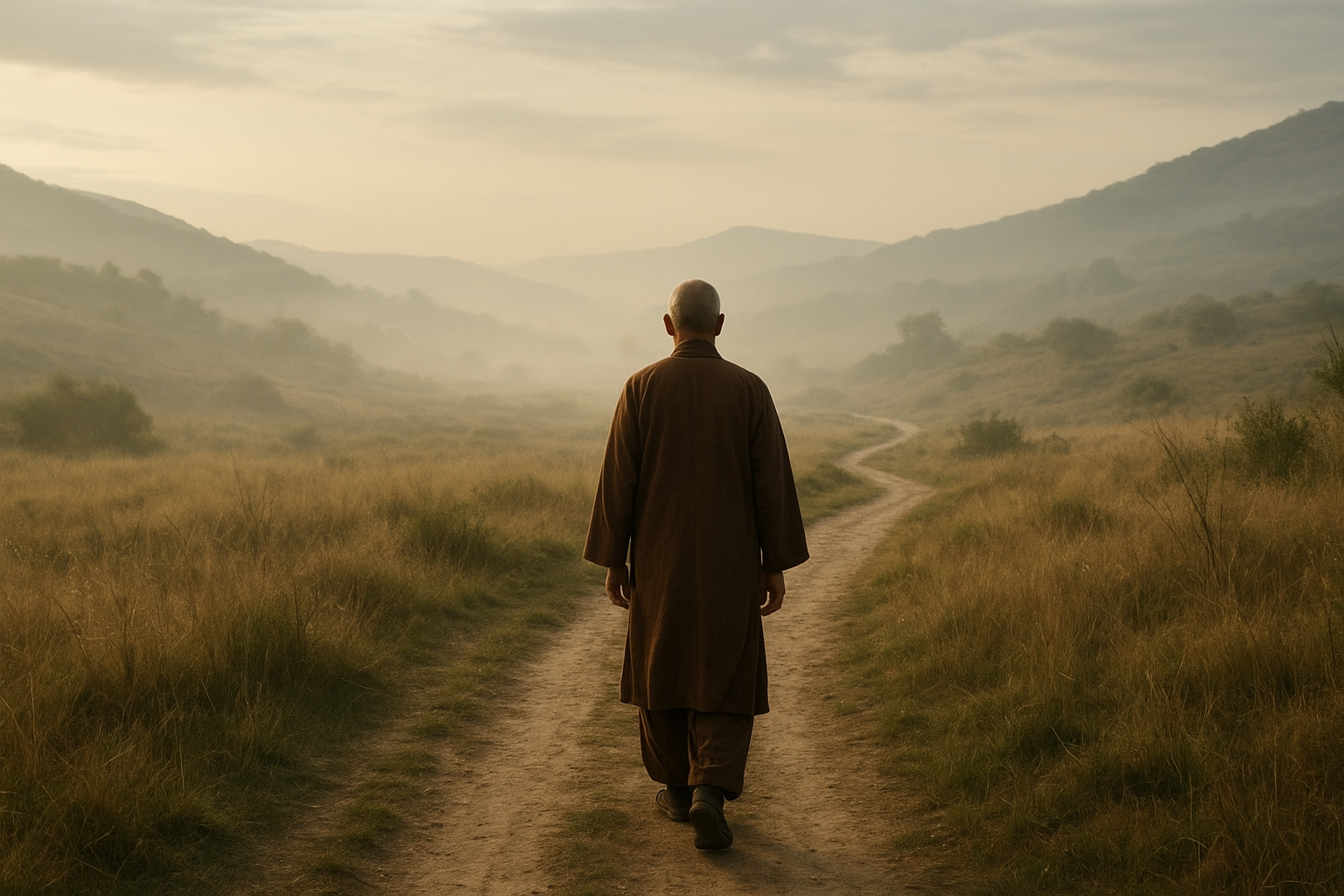
    In the realm of myth and magic, the concept of the valley has long been intertwined with notions of humility, introspection, and renewal. A journey back to the valley is often depicted as a return to an inner source of strength, a pilgrimage to the heart of wisdom where the noise of the world fades into the gentle whisper of the soul.

    The valley, in many traditions, is seen as a place of sanctuary and growth. It is the lowland where life flourishes, nestled between towering peaks. This symbolism is eloquently expressed in the ancient Taoist text, the Tao Te Ching. Lao Tzu writes, “The valley spirit never dies; It is the woman, primal mother. Her gateway is the root of heaven and earth. It is like a veil barely seen, use it; it will never fail.”

    • Rebirth through Humility: At its core, the valley is a metaphor for humility. By descending into the valley, one sheds the burdens of ego and ambition. It is here that individuals find the essence of their being, unburdened by the world’s heights.
    • The Heart of the Way: The Tao, often translated as “The Way,” embraces the valley as a path to tranquility and insight. The valley’s quietude offers a contrast to the striving and chaos of the external world. In returning to this humble state, practitioners of the Tao seek balance and peace.
    • A Place of Renewal: In the valley, springtime brings life back to the world, with rivers, plants, and creatures thriving. This cyclical renewal reminds us of life’s continuity and resilience. It is symbolic of the inner renewal one can experience through introspection.

    “It is good to have an end to journey toward; but it is the journey that matters, in the end.” —Ursula K. Le Guin

    In contemporary times, when the pressures of modern living can feel overwhelming, the metaphor of the valley is more relevant than ever. As people seek solace in mindfulness and retreat, the valley offers a reprieve from the relentless pursuit of success and status.

    Returning to the valley is not just a physical journey but a spiritual one, inviting us to embrace humility, foster renewal, and understand the heart of the way. It is a call to listen to one’s inner voice and remember that even amidst life’s climb, it is in the valley where the spirit finds its deepest peace.

  • The Pilgrim of Emptiness – A Journey Without Arrival

    The Pilgrim of Emptiness – A Journey Without Arrival

    The Pilgrim of Emptiness – A Journey Without Arrival

    The Pilgrim of Emptiness – A Journey Without Arrival

    In a world of constant movement and ambition, a peculiar traveler chooses a path less traversed, embracing the void and finding meaning in the absence of a destination.

    The Beginning of the Journey

    In the realm of Anderia, where horizons stretch endlessly beyond the eye’s grasp, a solitary figure walks a path defined by the sands left unstepped. Known only as the Pilgrim of Emptiness, this wanderer is a ghostly tapestry woven from the threads of silence and shadow. While most inhabitants of Anderia toil endlessly toward futures filled with golden promises, the Pilgrim is driven by an absence of objectives, a traveler who chases the intangible essence of nothingness.

    The Philosophy of Emptiness

    The Pilgrim’s journey is not one of destinations but of notions esoteric and profound. Embracing the philosophies of ancient sages, who once whispered of the void’s beauty, the Pilgrim explores realms where the absence of substance provides clarity. In the words of Lao Tzu, “

    To the mind that is still, the whole universe surrenders.

    ” It is this stillness that the Pilgrim seeks, a path where the whispers of empty wind carry the wisdom of eons.

    Encountering the Guardians of Purpose

    Throughout the journey, the Pilgrim encounters the Guardians of Purpose, beings fashioned from aspirations and intentions. These enigmatic entities are bound to their purpose with an intensity that burns like unquenchable fire. Many travelers aspire to harness the guidance of these guardians, for they grant clarity in pursuit. Yet, to the Pilgrim, their presence is a reminder of shackles unseen. “What is a path without a beginning or end?” the guardians ask, and the Pilgrim simply replies with a gentle smile, an acknowledgment of their differing existences.

    The Midnight Lake

    One of the Pilgrim’s notable sojourns leads to the shores of the Midnight Lake, a mirror-like expanse that reflects the galaxies above in crystal-clear detail. Here, in the depths of starry reflections, the Pilgrim finds solace and meditation. Legends tell that within its waters lies the essence of time itself, paradoxically still yet ever flowing. It is here that the Pilgrim contemplates the paradox of movement—that even in emptiness, one finds the ceaseless motion of the cosmos.

    Lessons From the Void

    • Embrace Nothingness: In embracing the void, the Pilgrim teaches us the importance of letting go. Where grasping leads to chains, releasing leads to freedom.
    • Find Stillness: To pause is to understand. Just as a pond only reflects perfectly when it is still, so too can the mind show truth when undisturbed.
    • Accept Impermanence: As the Pilgrim walks on, so does the landscape change with the passage of time, a reminder of the ever-evolving world.

    The Path Beyond

    Though the Pilgrim’s journey may appear to lack resolution, it is, in essence, an infinite journey, one without a guiding star nor a rearview mirror. The story of the Pilgrim of Emptiness invites us to ponder the significance of our own paths—whether it is the destination or the journey itself that defines our walk through life.

    As the Pilgrim fades into the endless horizon, we are left with the gentle words of the sage: “

    The journey of a thousand miles begins with one step.

    ” And so it does, in pursuit of the emptiness that is rich with its own treasures, the Pilgrim continues—with no destination but infinite discoveries along the way.

    To understand the duality of pathways both walked and untraveled is to embrace the emptiness of the world as part of a greater entirety. Indeed, the Pilgrim shows us that sometimes, arrival is an illusion, and it is in the deliberate act of wandering that we find our true selves.

  • Path of Clouds – Letting the Journey Be the Destination

    Path of Clouds – Letting the Journey Be the Destination

    Path of Clouds: Letting the Journey Be the Destination

    The environment we live in serves as more than just a backdrop to our lives; it is a continuous journey that invites us to explore and appreciate the world in motion. The path of clouds is a poetic reminder that sometimes the journey itself holds more significance than the destination.

    The Beauty in Transience

    Clouds are ever-changing and offer a unique perspective on transience and dynamism. As John Muir once said,

    “The clearest way into the Universe is through a forest wilderness.”

    Similarly, observing clouds can open our minds to the beauty of the ephemeral and the power of nature’s ongoing processes. Each formation and pattern tells a story of movement, transition, and transformation, urging us to find stillness within ourselves to appreciate this ever-evolving canvas.

    A Lesson on Presence

    Cloud-gazing offers a profound lesson in staying present. In today’s fast-paced world, it’s easy to get caught up in reaching our goals while missing out on the moments that make the journey worthwhile. By taking the time to observe the clouds, we learn to savor life’s moments, no matter how fleeting or subtle they might be.

    Inspiration and Imagination

    • Creativity: Clouds often inspire artists, writers, and dreamers. Their abstract shapes and ethereal movements spark creativity and fuel imagination.
    • Imagination: The human tendency to see shapes and figures in clouds, known as pareidolia, provides endless possibilities for stories and interpretations.
    • Peace of Mind: Watching the clouds drift can also offer peace of mind and a reminder that, like clouds, thoughts and situations in life are temporary.

    Embracing the Journey

    Letting the journey be the destination is about embracing the unpredictability of life and finding meaning in the experience of moving through it. It’s about focusing less on where we are going and more on exploring the scenic routes that lead us there. Consequently, it aligns with the deeper understanding that every occurrence, much like each cloud, has a purpose in shaping who we are and who we become.

    Next time you find yourself hurriedly moving through your day, take a moment to look up. Let the clouds remind you of the path you’re on and the journeys yet to come. Embrace the moment, for it is not the finish line that enriches us, but the steps we take along the way.