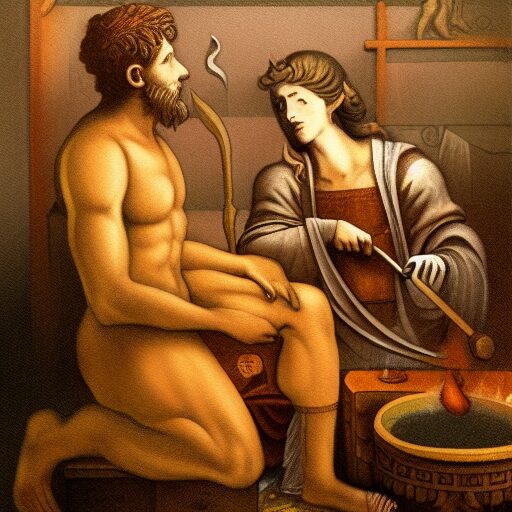
Tag: hephaestus

  • Prevent Burnout by Listening to Early Signals

    Prevent Burnout by Listening to Early Signals


    Prevent Burnout by Listening to Early Signals

    Prevent Burnout by Listening to Early Signals

    In the realm of mythology and human psychology, there are valuable lessons to be learned about self-care and avoiding burnout. One such lesson can be found in the story of Hephaestus, the Greek god of blacksmiths and craftsmen.

    “Even the gods need respite.”
    – Attributed to Hephaestus (Greek Mythology)

    Recognizing the Early Signals

    • Fatigue: Feeling constantly tired or drained, even after adequate rest, can be an early sign of burnout. This is often accompanied by physical symptoms such as headaches and muscle pain.
    • Detachment: A feeling of emotional numbness or detachment from activities that once brought joy can indicate burnout. It’s crucial to recognize this disconnect early on and take action to reconnect with hobbies and passions.
    • Decreased Performance: If productivity and quality of work start to decline, it may be a sign that you are on the brink of burnout. Recognizing this drop-off can help you take proactive steps towards self-care.

    Embracing the Power of Rest

    Just as Hephaestus forged his creations by alternating between intense work and rest, so too must humans approach their lives. By taking regular breaks, engaging in relaxation techniques, and seeking support from loved ones, we can prevent burnout and maintain a balanced, fulfilling life.

    “Rest when you’re weary, forge when you’re strong.”
    – Attributed to Hephaestus (Greek Mythology)


  • Hephaestus: The Wounded Creator and the Sacredness of Craft

    Hephaestus: The Wounded Creator and the Sacredness of Craft


    Hephaestus: The Wounded Creator and the Sacredness of Craft

    Hephaestus: The Wounded Creator and the Sacredness of Craft

    “Hephaestus, the Greek god of fire, metalworking, and craftsmen, is a fascinating figure in mythology. His tale is one of resilience, creativity, and the profound connection between injury and artistic endeavor.”

    Born from the union of Hera and Zeus, Hephaestus was initially rejected by his mother due to his physical deformity. This event not only marked him as an outcast but also set the stage for a unique perspective on creativity and craftsmanship.

    The Wounded God of Craft

    • Hephaestus’ physical deformity, often depicted as lame or having a limp, is a testament to the idea that even in pain and imperfection, one can create art.
    • As Hesiod writes in his “Theogony,” “Hephaestus was by nature the least strong among the gods who dwell on Olympus; but crafty beyond all the gods who were beneath the earth or who toiled upon the dark sea.”

    The Sacredness of Craft

    Despite his physical challenges, Hephaestus was revered for his unparalleled skills in craftsmanship. He was responsible for creating various iconic items in Greek mythology, such as the armor of Achilles and the marriage bed of Peleus and Thetis.

    “The art of Hephaestus is not just a skill, but a divine gift that brings beauty and utility into the world.” – Encyclopedia Britannica

    The story of Hephaestus serves as a reminder that creativity and craftsmanship are not exclusive to physical perfection but can thrive even in the face of adversity. His myth continues to inspire artists, craftsmen, and scholars alike, demonstrating the transcendent power of art.

  • The Smith at the Forge – How Hephaestus and Wayland craft the soul.

    The Smith at the Forge – How Hephaestus and Wayland craft the soul.

    The Smith at the Forge – How Hephaestus and Wayland craft the soul

    In various mythologies, there exist figures who embody the art of smithing, crafting not only metal but also the very essence of human beings. Two such examples are Hephaestus from Greek mythology and Wayland the Smith from Germanic mythology.

    • Hephaestus: The Titan God of Fire, as described by Homer in the Iliad, was the son of Zeus and the goddess Hera. His role went beyond crafting mere objects; he shaped the very fabric of reality. Hephaestus’s forge served as a metaphor for the creation of souls, imbuing them with purpose and identity.
    • “And thus did Hephaestus shape the hearts of men: he breathed into each one the spirit of life, and gave to every mortal his appointed lot.” – Iliad

    Similarly, in Germanic mythology, Wayland the Smith, a legendary figure, was said to possess divine powers. His hammering anvil echoed with the beat of the gods, as he crafted not only metal but also the souls of mortals.

    • “I hammered out the soul of every man who ever lived.” – Wayland’s Song

    As the mythologies reveal, these skilled smiths transcend their roles to become architects of human existence. Their craftsmanship is not limited to mere material, but encompasses the essence of being itself.

    “For in the fire, the soul is forged.” – Unknown

    References:

    This article is part of our ongoing series exploring mythological and symbolic connections between ancient cultures. For more insights, please visit our website.