Tag: gods

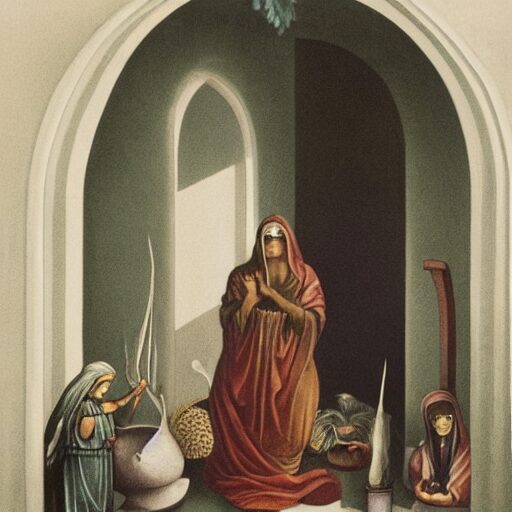
  • Kitchen Gods – Small deities and the sanctity of the domestic.

    Kitchen Gods – Small deities and the sanctity of the domestic.


    Kitchen Gods – Small deities and the sanctity of the domestic

    a whispered confession

    As I tend to the hearth, the whisper of olden days echoes through the kitchen – a symphony of sizzles and simmering. In this sacred space, where the mundane and the divine intertwine, small deities reign.

    the pantheon of the pantry

    • Hestia: She dwells in the heart of our homes, her eternal flame a beacon of warmth and unity. “I would rather have Hestia’s hearth than all the armies of the world,” said Homer.
    • Fortuna: The Roman goddess of fate and destiny, she oversees the fickle nature of cooking – one minute a triumph, the next a catastrophe.
    • Sobek: Ancient Egyptian deity associated with water, crocodiles, and fertility. In our kitchens, he is the embodiment of life-giving liquid, ensuring sustenance flows through our pipes and into our pots.

    sanctifying the domestic

    “There is no love sincerer than the love of food.” – George Bernard Shaw

    In this realm, these gods and goddesses find our devotion through daily acts of sustenance. We offer them our reverence in the form of the humblest ingredients, the simplest dishes, and the shared meal.

    the silence of the kitchen

    As I close the day with a last glance at the empty pots and pans, I feel a sense of completion, of purpose. The kitchen, once bustling with life, now sits in a quiet sanctity – a testament to the divine connection woven into the fabric of our homes.

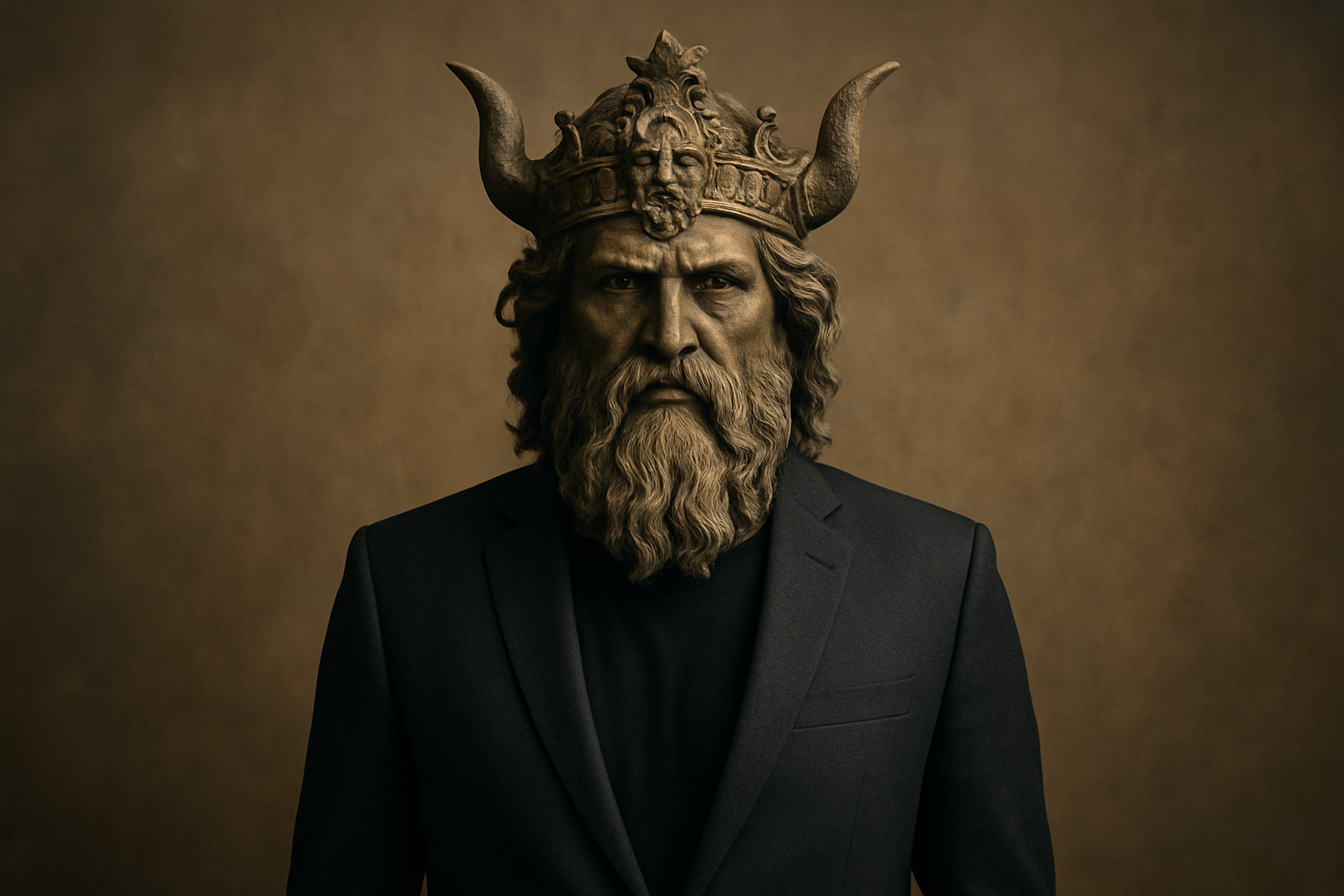
  • The Gods Are Not Dead – They migrated into systems and symbols

    In the realm of mythology and religion, gods have always played a pivotal role in shaping human culture and understanding. As time progresses, one might wonder: are the gods of old still relevant in our current age? According to many scholars and cultural theorists, the gods are far from extinct; they have simply evolved, keeping pace with modern society, manifesting themselves within our systems and symbols.

    While traditional worship of deities like Zeus or Osiris might have waned, the essence of these gods lives on in the symbolism deeply ingrained in our culture. Joseph Campbell, the esteemed mythologist, once said, “Myths are public dreams, dreams are private myths.” In a sense, our collective dreams continue to invoke gods, though the forms may have changed from individual deities to more abstract representations.

    From Olympus to Order

    The shift from myth to mechanism does not signify loss but transformation. Consider how the ideals embodied by ancient gods manifest in modern institutions. The god of commerce, Hermes, may not be receiving sacrifices at a temple, but his spirit thrives within our bustling markets and the virtual trades of Wall Street.

    • Justice: The scales of Themis, the Greek goddess of justice, are echoed in the courtrooms worldwide.
    • War and Strategy: Ares and Athena’s legacy can be found in military strategies and competitive enterprises.
    • Technology: Hephaestus, god of blacksmiths and invention, finds his likeness in the ceaseless innovation of the tech industry.

    The transmutation of gods into systems suggests that they represent not entities to be worshipped but ideals and forces to be engaged with. These forces shape societal structures, pushing humanity toward achievement and progress.

    Symbols as Modern Deities

    Beyond systems, symbols represent another way gods have adapted to modern life. Powerful symbols like brands and logos have taken on mythic proportions, becoming objects of reverence and identity in the digital age. In an article from HuffPost, it was noted that “Logos represent more than just brands; they signify lifestyles and societal statuses.”

    “The old gods never died; they just evolved into logos.” – Contemporary Cultural Analyst

    Indeed, the migration of gods into systems and symbols posits a compelling idea: human fascination with divine representation has not diminished but diversified. While the gods may no longer reside on Mount Olympus, their influence permeates through every institution, technological advancement, and influential idea. The symbolism of yesteryear has not perished but found new ground in the vast expanses of human progress.

    In our search for meaning and structure, the gods remain a powerful metaphor for the dynamics that govern human civilization, echoing the truth that while deities may change form, their impact on the world persists.

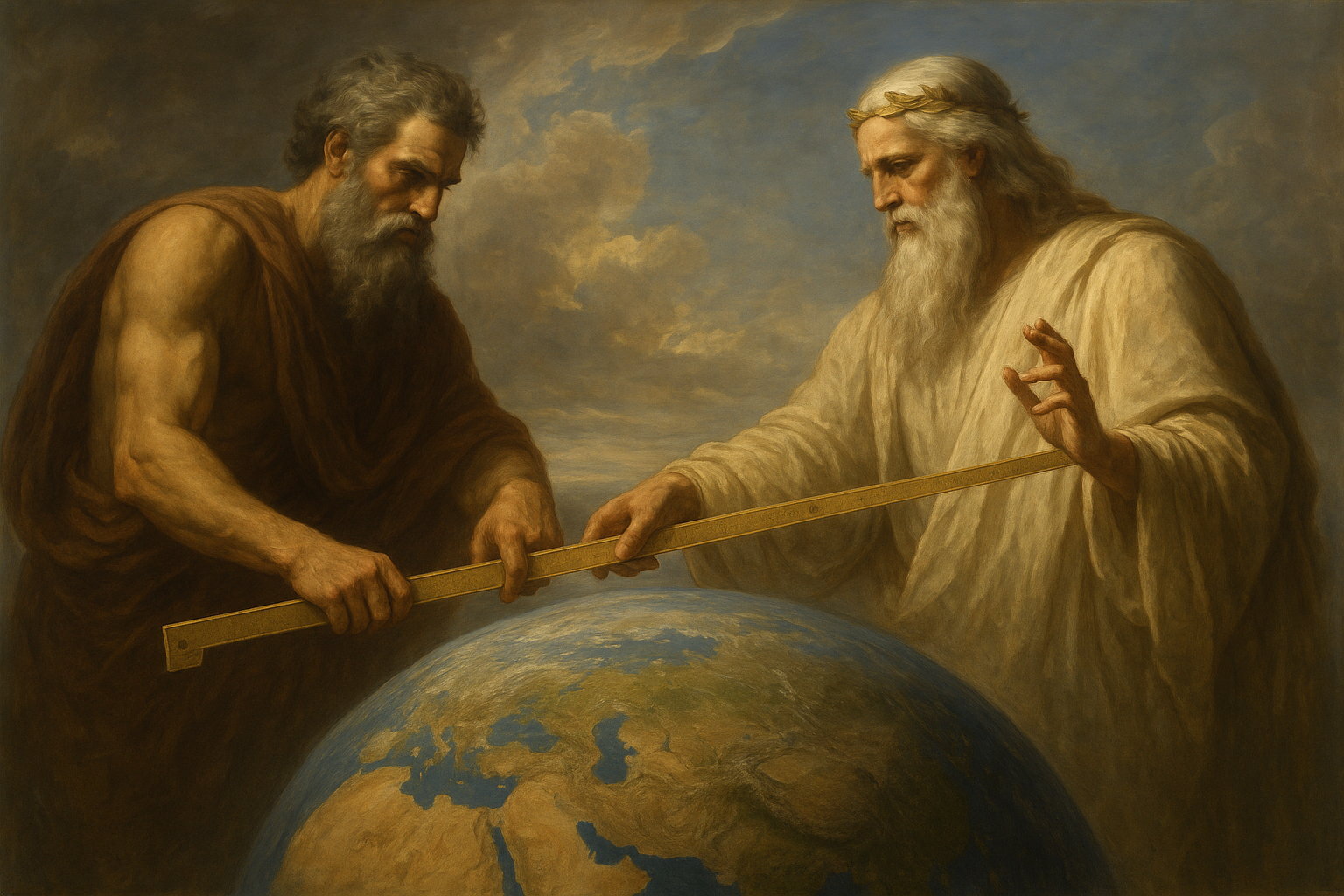
  • When Gods Measured the World – Myth as the first form of science

    When Gods Measured the World – Myth as the first form of science

    When Gods Measured the World: Myth as the First Form of Science

    Throughout history, myths have served as the cornerstone of human civilization, offering explanations for natural phenomena long before the advent of modern science. These stories not only provided comfort and understanding to ancient societies but also laid the groundwork for scientific inquiry as we know it today.

    The Role of Myth in Ancient Societies

    Myths were powerful tools used by ancient cultures to make sense of their environment, human behavior, and the cosmos. The ancient Greeks, for example, attributed natural occurrences to the whims of their pantheon of gods. Thunderstorms were seen as Zeus wielding his mighty thunderbolt, while the changing seasons were explained through the story of Demeter and her daughter Persephone.

    “The universe is full of magical things patiently waiting for our wits to grow sharper.” – Eden Phillpotts

    This quote encapsulates how myths were perceived: as magical narratives awaiting deeper understanding. These narratives laid the theoretical foundations for what would eventually evolve into scientific exploration.

    From Myths to Measurements

    The transition from myth to science was gradual and multifaceted. Many ancient myths contained observational truths that would later be validated by scientific discovery. For instance, the ancient Egyptians’ myth of the Sun God Ra traveling across the sky each day is an early recognition of solar patterns, which would later form the basis of astronomy and timekeeping.

    • Babylonian Astronomy: The Babylonians were amongst the first to record planetary movements, blending mythology with early scientific study. They believed their gods dwelt among the stars, prompting them to meticulously chart celestial bodies.
    • Native American Cosmology: Many Native American tribes used richly metaphorical stories to explain and predict natural events like eclipses and seasonal changes.

    Science as a Successor to Myth

    Some may wonder how myth compares to science in terms of validity and utility. It is crucial to understand that science is, in many respects, a natural successor to myth. While myths relied on narrative coherence and community acceptance, science insists on objective validation and universal applicability.

    According to historian of science, Richard Dawkins, “Science replaces private prejudice with publicly verifiable evidence.” What began as a means of storytelling and cultural transmission would eventually evolve into an empirical method of understanding the universe.

    Cross-cultural Connections and the Scientific Method

    Interestingly, several myths across different cultures suggest a universal quest for knowledge. The Sumerians told of Enki, god of wisdom, who guarded the divine tablet of the Me. Hindus have a similar concept in Saraswati, the goddess of wisdom who resides over knowledge and the arts. These analogous characters point to an intrinsic human desire to understand and measure the world.

    The scientific method, as it developed, was in many ways an organized, goal-oriented continuation of this mythical pursuit of knowledge. It provided a structured way to ask questions, collect data, and draw conclusions—the same processes that myths had informally undertaken centuries before.

    Myth: A Stepping Stone to Enlightenment

    While myths are often relegated to the realm of ancient history, they continue to influence modern culture and inspire contemporary science. Joseph Campbell, a notable scholar of mythology, once remarked, “Myths are public dreams, dreams are private myths.” This perfectly captures how myths and science are intertwined in our continuous effort to chart the unknown.

    Modern-day physicist and cosmologist, Neil deGrasse Tyson, articulates a similar sentiment: “The good thing about science is that it’s true whether or not you believe in it.” Yet, he also acknowledges that myths laid the ground upon which scientific inquiry was built.

    Conclusion

    In revisiting these ancient narratives, we not only gain insight into the development of human understanding but also appreciate the mythological roots of empirical science. Myths were the first form of science, guiding our ancestors’ understanding of the world and inspiring the methods through which we explore it today. In acknowledging this, we learn that the quest for knowledge is as timeless as the stars themselves, eternally linked through stories that measure, explain, and ultimately celebrate the mystery of existence.
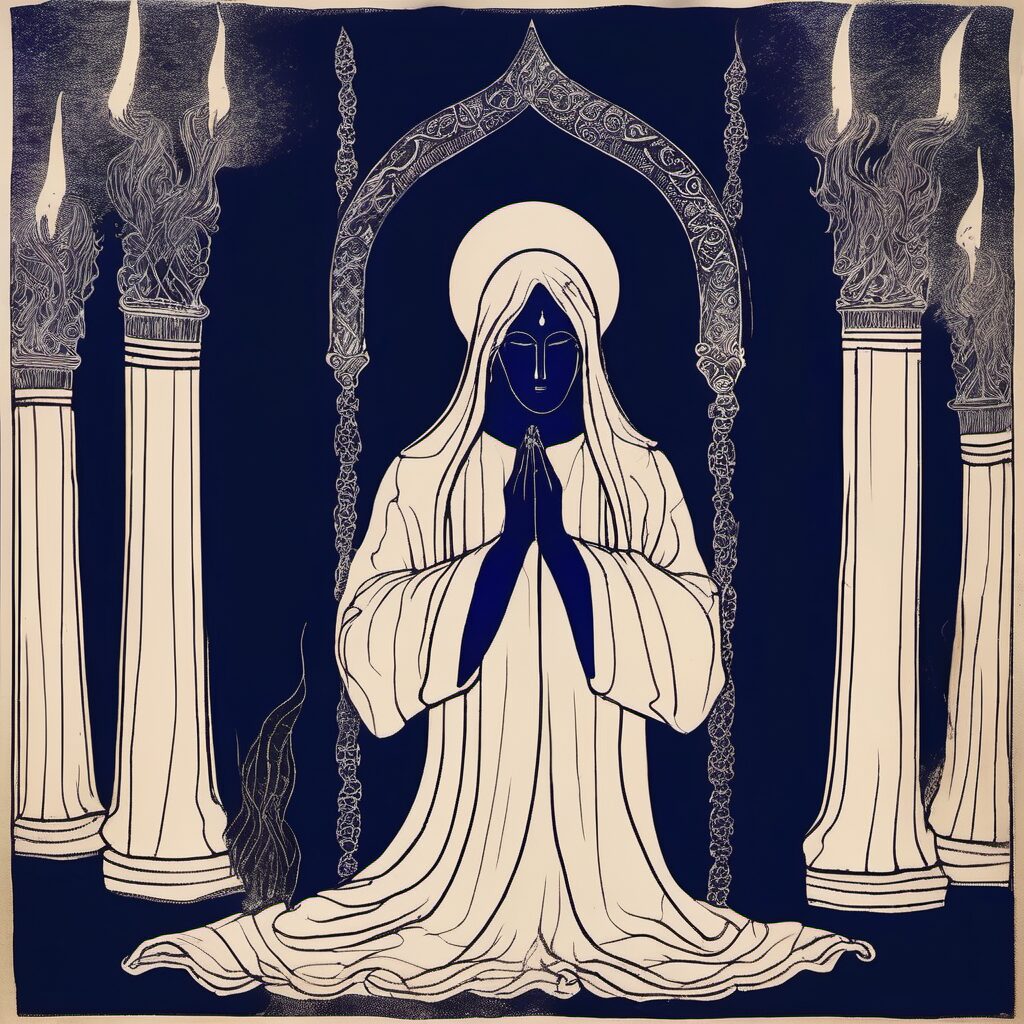

  • Old Gods, New Forms: Reimagining Tradition for the 21st Century

    Old Gods, New Forms: Reimagining Tradition for the 21st Century

    In a world shaped by technological innovation and shifting cultural paradigms, the ancient deities of myth and legend are finding new avenues into our consciousness. The 21st century offers fertile ground for the reimagining of old gods, allowing them to take on new forms and meanings that resonate with modern sensibilities.

    The Revival of Mythical Imagery

    Throughout history, humanity has turned to gods and myth to explain the unexplainable. In today’s hyper-connected global society, there is a resurgence of interest in these ancient tales, but with a twist that speaks to contemporary audiences. As Neil Gaiman notes in American Gods, “The old gods are immortal…as long as people believe in them.” (Source: Goodreads)

    Digital Age and the Mythical Consciousness

    The digital revolution has provided a platform for the repurposing of religious and mythological themes. Artistically, this takes shape in video games, films, and literature that reinterpret classical myths. Consider the global success of video games such as God of War, which reintroduces ancient gods in ways that invite players to interact with mythology directly.

    Similarly, social media platforms have become arenas where mythological discourse can flourish. Instagram and TikTok hosts countless accounts dedicated to the discussion and depiction of deities, creating a narrative network of belief and storytelling. This dissemination democratizes access to these age-old narratives.

    The Impact on Spiritual Practices

    The intersection of ancient deities and modern technology is not limited to art and literature but extends into personal belief systems and spiritual practice. Contemporary practitioners often blend traditional rituals with new-age elements. For instance, the growing popularity of neo-paganism illustrates a conscious adaptation of ancient religious practices that suit modern life’s pace and values.

    “The essence of these belief systems is fluid,” explains Carol Cusack, a religious studies professor at the University of Sydney. “The adaptability of old beliefs is vital for their survival.” (Source: University of Sydney)

    Conclusion: Continuity Through Change

    The old gods, once bound by geography, are now global citizens, revitalized and reshaped to meet the demands of the 21st century. As our world continues to transform, these mythical beings evolve alongside us, providing not only a connection to our ancestral past but also a mirror reflecting our ever-changing cultural identity. The enduring allure of these ancient figures lies in their ability to maintain relevance, continually reimagined to inspire and guide us through the challenges of modern life.