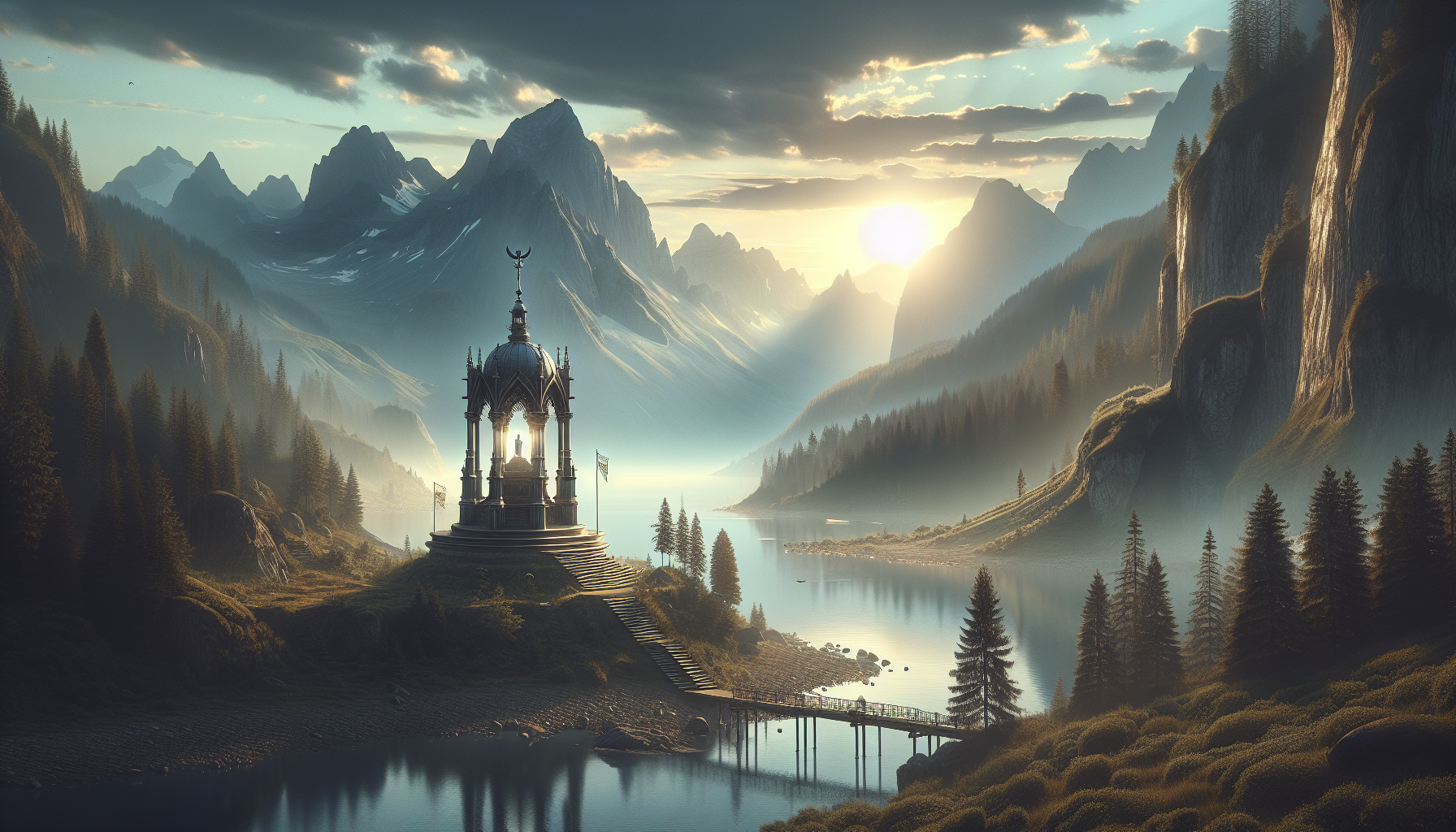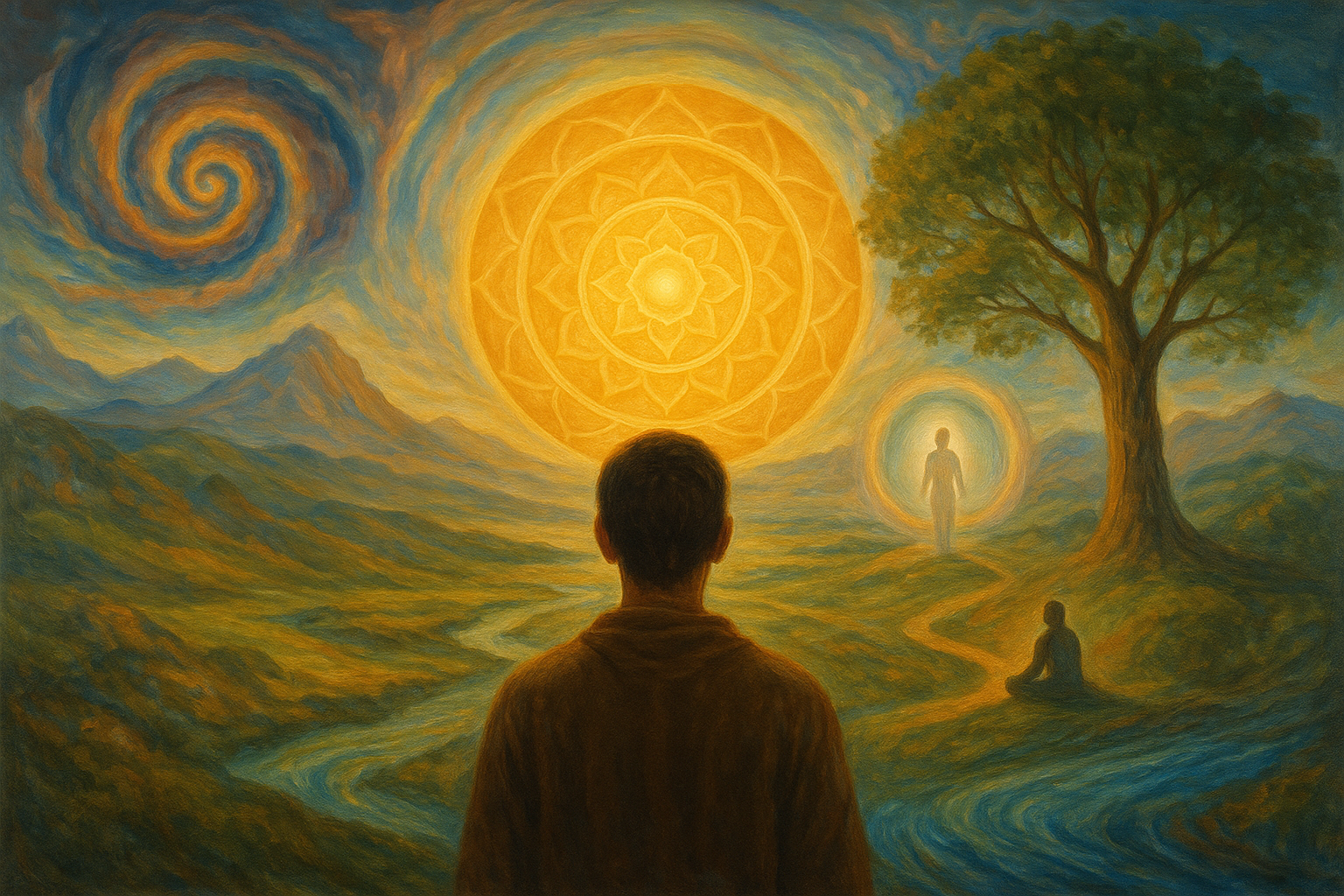
The human spirit has always sought connection to the vast unknown, exploring uncharted territories not just in the physical realm but within the boundless landscapes of the mind and soul. This journey towards self-discovery and understanding is often reflected in what can be termed “spiritual geographies.” Artists, in particular, have long been navigators of these inner worlds, mapping their explorations through various forms of art.
The Concept of Spiritual Geographies
Spiritual geographies pertain to the symbolic representations of the inner self depicted through art. These artistic endeavors serve as a bridge connecting the tangible world with the intangible dimensions of human experience. Art throughout history has not only mapped the physical world but also ventured into intricate and ephemeral landscapes of emotions, spirituality, and consciousness.
As philosopher Maurice Merleau-Ponty suggests, “Art provides a privileged access to the basic structures of lived experience.” This perspective highlights the role of artists as cartographers of the soul, delving into the depths of personal and collective consciousness.
Historical Perspectives
- Ancient and Indigenous Art: Many Indigenous cultures have utilized art as a tool for exploring spiritual geographies. The dreamtime paintings of Aboriginal Australians, for example, serve as a narrative map of existence, linking past, present, and future within a spiritual framework.
- Renaissance and Enlightenment: During the Renaissance, artists like Hieronymus Bosch illustrated the inner struggles between good and evil, heaven and hell, casting light on the spiritual landscapes of the time. Enlightenment artists, too, began exploring more secular spirituality, focusing on the individual’s inner world.
Modern and Contemporary Explorations
In the 20th and 21st centuries, the exploration of spiritual geographies has taken on new dimensions, as artists fuse traditional methods with modern technology to navigate deeper into uncharted territories of the self. From abstract expressionism to contemporary digital installations, artists continue to explore and depict spiritual geographies that resonate with our rapidly changing world.
Key Contemporary Voices
- Mark Rothko: Through his color field paintings, Rothko sought to evoke emotional responses and spiritual reflection, inviting the viewer to engage with his artwork on a deeply personal and interior level.
- James Turrell: With his exploration of light and space, Turrell creates experiences that immerse the observer in the spiritual and meditative facets of human perception.
- Yayoi Kusama: Known for her immersive infinity rooms, Kusama’s work reflects her own battles with mental illness, offering insights into her inner emotional and spiritual landscapes.
“There’s a mystery in life, and that mystery resides in the inevitable loss of all we hold close,” states Yayoi Kusama, whose art tries to confront and encapsulate the infinite within the finite.
The Role of Technology
With technological advancements, new tools and platforms have emerged, allowing artists to delve further into mapping spiritual geographies. Virtual reality, augmented reality, and digital installations offer new ways to visualize and interact with these abstract geographies. Artists like Marina Abramović have embraced these technologies to explore the limits of consciousness and existence through innovative and immersive experiences.
In the age of digital art, the blending of visual art, sound, and interactivity provides a multi-sensory experience that can promote a deeper understanding and connection with one’s spiritual self. These technological innovations open up new possibilities for depicting and engaging with the spiritual geographies that define our inner worlds.
The Significance of Spiritual Geographies in Art
The significance of spiritual geographies in art lies in their ability to transcend the barriers of language, culture, and time. By offering a means to explore and understand the intricacies of human experience, these artistic maps foster empathy, introspection, and a sense of shared humanity.
In a world that often emphasizes external achievement and material success, the introspection prompted by spiritual geographies offers a vital counterbalance. It encourages individuals to look inward, to reflect on their personal journeys, and to find meaning within themselves and the universe at large.
In conclusion, maps of the human spirit, as created by artists throughout history, are indispensable guides on the journey towards self-awareness and spiritual understanding. As we continue to evolve, so does our capacity to navigate and articulate these rich and diverse landscapes of the mind and soul.