Tag: form

  • Walking as a Form of Therapy

    Walking as a Form of Therapy


    Walking as a Form of Therapy: Ancient Wisdom and Modern Practice

    Walking as a Form of Therapy: Ancient Wisdom and Modern Practice

    “Walking is man’s best medicine.” – Hippocrates

    This ancient quote by the father of modern medicine, Hippocrates, still holds true today as walking has emerged as an effective form of therapy for both physical and mental well-being.

    The Ancient Connection

    • Greek Philosophers: Aristotle advocated physical exercise, including walking, as a means to promote health and clear the mind.
    • Romans: The Roman philosopher Seneca believed that walking was an excellent way to think and find solutions to problems.

    Modern Evidence

    Science has validated these ancient beliefs, demonstrating that walking can:

    • Improve Mental Health: Walking regularly can help reduce symptoms of anxiety and depression.
    • Boost Cognitive Function: Walking stimulates the brain, enhancing memory and problem-solving skills.
    • Promote Physical Fitness: Regular walking can contribute to weight loss and reduce the risk of chronic diseases like heart disease and diabetes.

    Walking as a Modern Therapy

    “Nature is a therapist.” – Frank Lloyd Wright

    Modern therapy practices often incorporate walking in nature, known as ecotherapy or green exercise. Studies have shown that this practice can significantly improve mood and reduce stress levels.

    So, lace up your shoes, step outside, and follow the footsteps of ancient philosophers for a therapeutic walk through nature.

  • Productivity Without Psychohygiene Is Violence

    Productivity Without Psychohygiene Is Violence

    Title:

    Productivity Without Psychohygiene: A Form of Violence

    In today’s fast-paced world, productivity is often equated with success. However, a growing body of thought suggests that overlooking psychohygiene in the pursuit of productivity can lead to detrimental effects, both personally and professionally.

    The Importance of Psychohygiene

    “Psychohygiene refers to those activities and behaviors which contribute to mental health and well-being.” – Dr. Hans Selye, Canadian stress researcher

    • Mental rest: Regular breaks from work can help prevent burnout and maintain productivity.
    • Emotional balance: Managing stress effectively is crucial for maintaining mental health and focus.
    • Physical well-being: Exercise, nutrition, and sleep are essential components of psychohygiene that impact productivity.

    The Link Between Psychohygiene and Productivity

    “An unhappy worker is an inefficient worker.” – Erich Fromm, German sociologist

    Neglecting psychohygiene can lead to decreased productivity due to stress, fatigue, and burnout. Conversely, prioritizing mental health can foster creativity, motivation, and resilience.

    The Ethical Implications

    “Overwork is a modern form of violence…” – Jacques Ellul, French sociologist

    By pushing employees to work excessively without considering their mental health, organizations may be engaging in a form of psychological violence. This not only negatively impacts the well-being of individuals but also undermines overall productivity and organizational success.

    As we strive for greater productivity, it is crucial to remember that psychohygiene is not a luxury but a necessity. By fostering a culture of mental health awareness and promoting work-life balance, we can create a more productive and ethical working environment for all.

    Sources: Psychohygiene, Erich Fromm

  • The Rejection of Rules: Freeing the Spirit in Modern Dance

    Modern dance, birthed in the late 19th and early 20th centuries, emerged as a rebellious departure from the highly structured and technical form of classical ballet. This new form of dance embraced freedom of expression and the fluidity of the human spirit, allowing performers to break free from the rigid constraints of traditional dance forms.

    “Modern dance emphasized creativity in choreography and performance. It was about the movement itself and the emotive potential it carried.”

    At its core, modern dance is characterized by its rejection of the conventional rules that govern ballet. Instead of focusing on preset movements and positions, modern dance invites performers to explore unpredictable and natural movements that are deeply connected to their emotions. This promotes a unique form of storytelling, where dancers wield their bodies as intricate instruments of expression.

    Key Figures in the Modern Dance Movement

    • Isadora Duncan: Often hailed as the “Mother of Modern Dance,” Isadora Duncan pioneered a dance style that emphasized natural movement and spoke to the soul. Her philosophy centered on an organic approach, believing in the “dance of the future” which would be free and natural.
    • Martha Graham: A vital force in modern dance, Martha Graham introduced a technique that involved the contraction and release of muscles. Her work delved deep into human emotions, challenging dancers to reflect profound psychological themes through movement.
    • Merce Cunningham: Known for adopting a more abstract approach to dance, Cunningham viewed dance and music as separate entities. His method often included chance procedures, allowing his dancers and choreographic ideas to evolve unpredictably, further rejecting the principles of traditional dance narratives.

    The modern dance movement encouraged a new wave of artistic expression, prompting dancers to explore a wider range of movements that were not confined to a stage. It incorporated elements from different dance styles, cultures, and every imaginable background. This eclectic mix only served to amplify the rejection of any single set of rules.

    Even today, the legacy of modern dance encourages dancers everywhere to eschew conventional norms and explore their unique movement languages. Through this liberation, dancers are given the freedom to convey stories, emotions, and thoughts in ways that are fresh and unencumbered by the limitations of codified dance forms.

    In summary, modern dance has continually pushed the boundaries of expression through movement, creating a dynamic and ever-evolving art form that thrives on the rejection of traditional constraints. This dance genre not only enables performers to experience freedom but also invites audiences into a world where creativity knows no bounds.

  • The Thread of Transcendence: Connecting Art, Dance, and Faith

    The Thread of Transcendence: Connecting Art, Dance, and Faith

    Art, dance, and faith—each a unique thread that, when woven together, creates a tapestry of human expression that transcends time and culture. These elements, though distinct, share an ability to reflect the ineffable, nurturing a connection between the earthly and the divine.

    The Interplay of Art and Faith

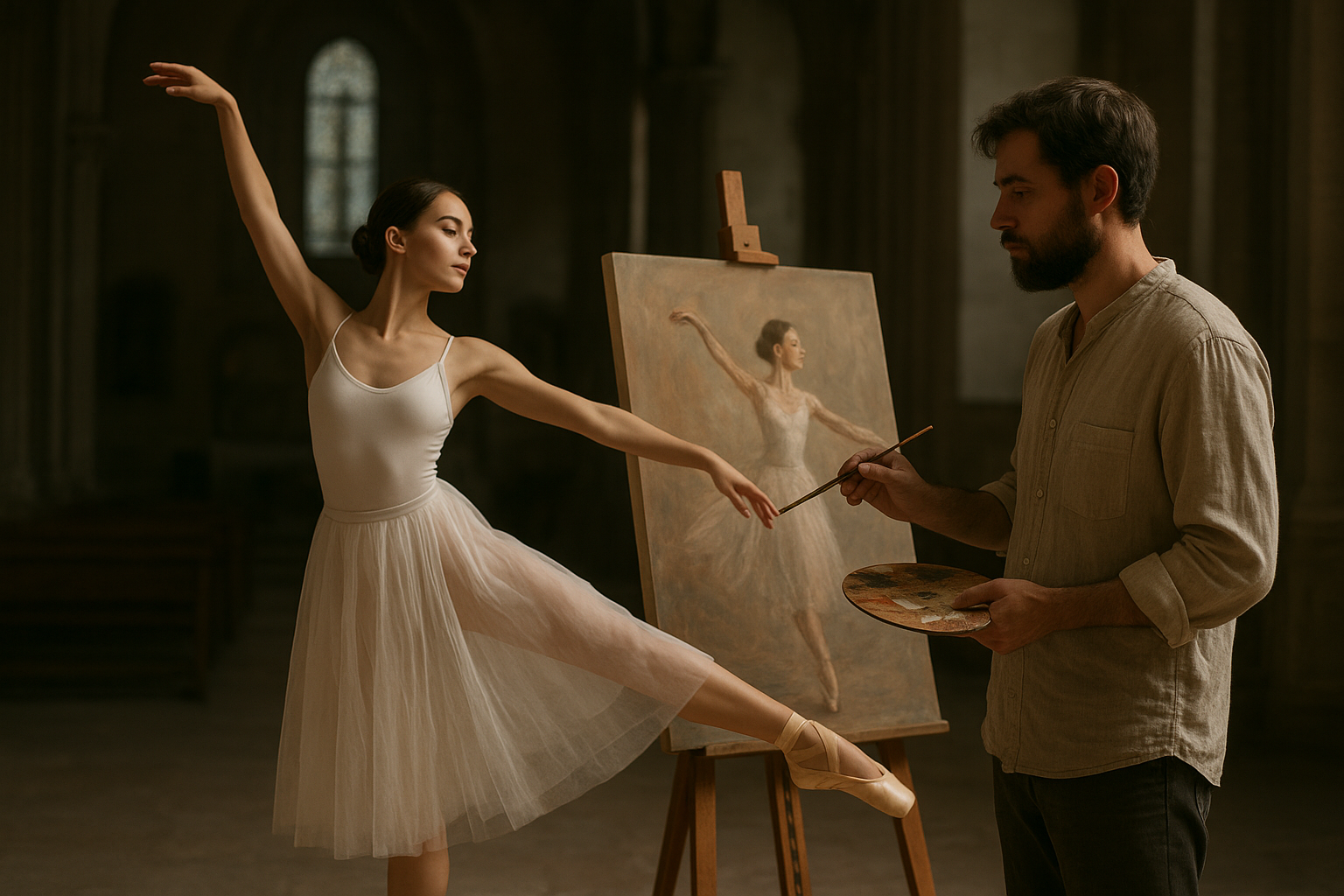
    Historically, art has been a conduit for expressing faith, offering a tangible form for the abstract. From the Byzantine mosaics, with their ethereal depictions of divine figures, to the intricate designs of Islamic calligraphy that meditate on the beauty of the Qur’anic text, art and faith have been enduring companions. As observed by Vincent Van Gogh, “Great things are done by a series of small things brought together.” Art, therefore, becomes a sacred testimony to faith, composed of small, deliberate choices filled with meaning.

    Dance: The Sacred Movement

    Dance, a language of movement, allows for an expression of faith through physicality and rhythm. Whether in the form of the Bharatanatyam—an Indian classical dance celebrating spiritual ideals—or through the whirling of the Sufi dervishes, dance transcends spoken word. Sufi poet Rumi eloquently encapsulated this notion, stating, “Dance, when you’re broken open. Dance, if you’ve torn the bandage off. Dance in the middle of the fighting. Dance in your blood. Dance when you’re perfectly free.” Here, dance becomes a liberation, an act of worship that unifies the dancer with the divine.

    The Symbiosis of the Three

    The synergistic relationship between art, dance, and faith creates a holistic experience that deepens spiritual understanding. For instance, in various cultures, religious ceremonies are often adorned with artistic symbols and communicated through dance performances. These elements enhance the ceremonial ambiance, inviting the community to partake in a collective contemplation of faith.

    In its highest form, art does not merely depict, it delves into the essence of belief systems, much like a dance that takes worship beyond words, into a realm of felt experience.

    The universality of this connection—across borders, languages, and epochs—suggests a fundamental human desire to seek out and manifest the divine truths in visible, tangible forms. Through the lens of art and the grace of dance, faith is not just seen or felt but truly experienced.

  • The Untamed Body: Breaking Down Gender and Form in Dance

    The Untamed Body: Breaking Down Gender and Form in Dance

    “To dance is to be out of yourself. Larger, more beautiful, more powerful.” – Agnes De Mille

    Throughout history, dance has served as a powerful medium of expression, pushing against the constraints of societal norms and embodying the fluidity of human identity. At the intersection of movement and identity, contemporary dance is increasingly challenging traditional notions of gender and form, transforming the stage into a canvas where bodies blur boundaries and redefine possibilities.

    The Historical Context of Dance and Gender

    Historically, dance roles were strictly divided along gender lines. Classical ballet, for instance, is rooted in distinct gender portrayals, with clear delineations of male and female roles. Men were traditionally assigned roles that emphasized strength and athletic prowess, while women embodied grace and ethereal beauty. This binary representation can be traced back to the early developments of ballet under the patronage of the aristocracy, where dance reflected the structured gender dynamics of the time.

    With the advent of modern dance in the late 19th and early 20th centuries, pioneers like Isadora Duncan and Martha Graham began to break away from these strictures. Their work introduced new forms and vocabularies that allowed for more personal expression, albeit within the confines of contemporary gender norms. As Martha Graham, often called the “Mother of Modern Dance,” famously stated, “Dance is the hidden language of the soul of the body.”

    Contemporary Shifts: Gender Fluidity in Dance

    In recent years, the conversation around non-binary and gender-fluid identities has gained momentum, fostering a new dialogue in the dance community. Choreographers and dancers are increasingly exploring gender as a spectrum, rather than a binary construct. This shift is reflected in both the thematic content of performances and the physical forms that dancers inhabit on stage.

    • Breaking Binary Boundaries: Contemporary choreographers like Akram Khan and Crystal Pite are known for their innovative approaches that challenge traditional gender roles. They often cast dancers irrespective of gender, focusing on the capability and emotion each artist brings to their work.
    • Embodied Identity: For many dancers, performing across traditional gender lines offers an avenue for authentic self-expression. This is particularly evident in the works of artists such as Trajal Harrell, who blends post-modern dance with elements of Harlem vogue, a dance style born from LGBTQ+ communities.

    The Body as a Site of Exploration

    When we talk about the untamed body in dance, we are referring to the body’s capacity to transcend imposed norms and explore the fluidity of human experience. This exploration is not merely performative but resonates deeply with personal journeys of identity.

    Dance companies like the Ballet Hispánico and the Bill T. Jones/Arnie Zane Company have long promoted inclusivity and diversity in their ranks and repertoire. Their works showcase an array of body types and backgrounds, which not only enhances the richness of the performance but also challenges the audience’s perceptions of dance and identity.

    Global Impact and Future Directions

    The movement towards gender inclusivity in dance is a global phenomenon, with companies and individual performers worldwide embracing the challenge of reimagining traditional forms. The Cloud Gate Dance Theatre of Taiwan is renowned for its fusion of Eastern and Western influences, which often include explorations of gender and identity. In Europe, the Sasha Waltz & Guests company is known for its multidisciplinary works that question normative assumptions about gender.

    The future of dance promises further innovation, with immersive technologies and virtual reality experiences offering new platforms for exploring identity and form. These advancements will likely continue to dissolve traditional boundaries, making dance an even more potent medium for dialogue and transformation.

    Conclusion: The Dance Continues

    “My body is my journal, and my dance is my legacy.” – Silas Riener

    As society continues its journey toward recognizing and embracing the complexities of gender identity, dance remains at the forefront of this revolution. Through the untamed bodies of dancers who defy categorization, the art form not only entertains but enlightens, offering audiences a glimpse into the myriad ways we can inhabit our own identities. Dance, in its continual evolution, stands as a testament to the limitless possibilities of the human form and spirit.

  • Shattering the Mirror: The Deconstruction of Dance Tradition

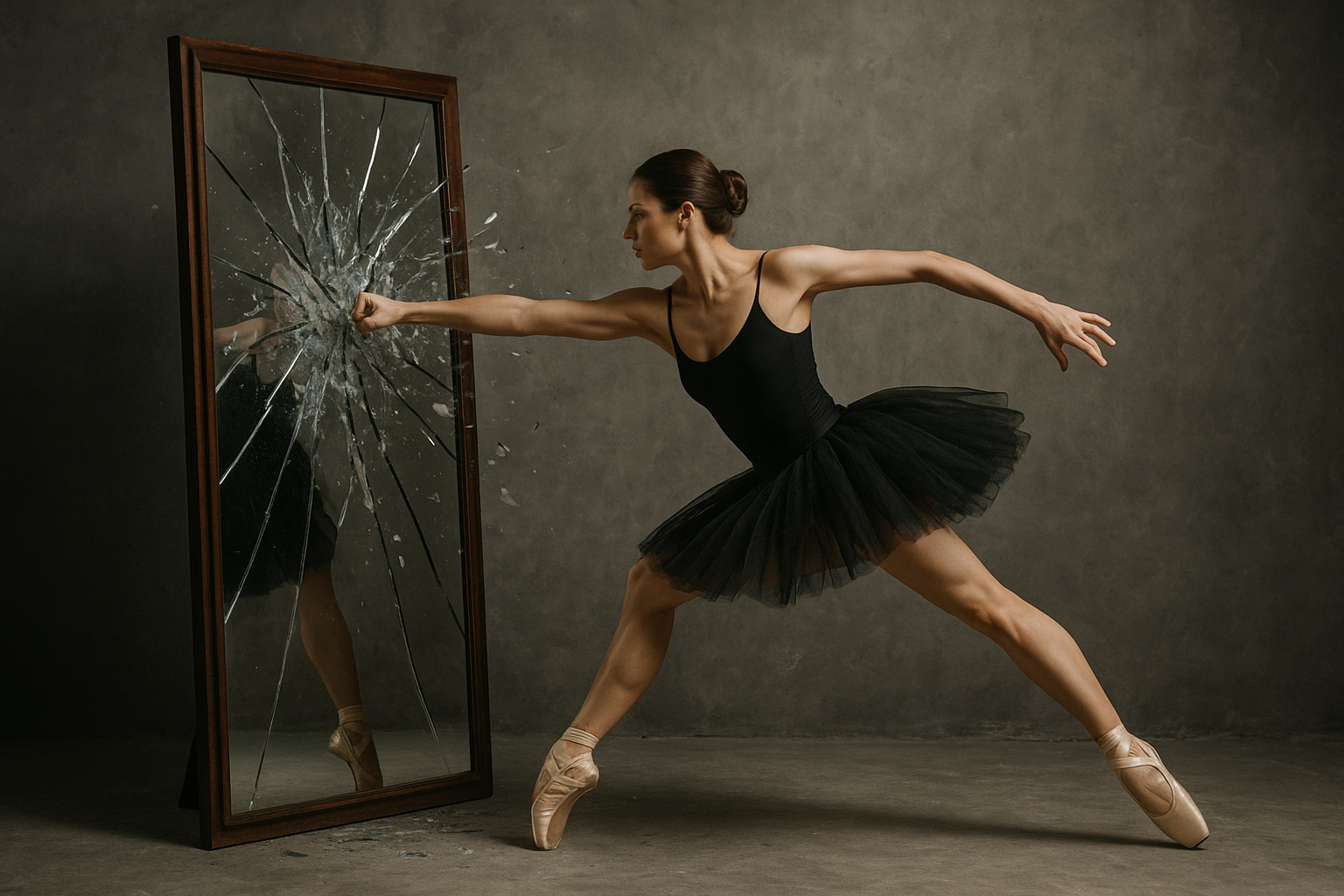
    Shattering the Mirror: The Deconstruction of Dance Tradition

    Dance, a universal language, has been a reflection of cultural identity, tradition, and evolution. It is both an art and a form of communication, able to convey deep emotions and stories without words. Yet, in recent years, the traditional mirror of dance reflects not an unyielding gaze into the past, but a kaleidoscope of deconstruction, innovation, and new narratives. This article delves into how dance traditions are being re-examined, deconstructed, and reimagined in contemporary contexts.

    The Historical Foundation of Dance

    Throughout history, dance has served as a vehicle for storytelling and cultural preservation. Consider classical ballet, which epitomizes the codification of movement and narrative. Originating in the courts of the Italian Renaissance before spreading to France and Russia, ballet became a highly structured art form, as referenced by Britannica, which states, “The dance form reached its peak as a complex danced drama during the 19th-century Romantic ballet.”

    Similarly, traditional dances such as India’s Bharatanatyam or Spain’s Flamenco are steeped in cultural rituals, often being passed down through generations. Each style not only embodies artistic expression but also serves as a living history of its people.

    Challenging the Status Quo

    While honoring tradition is vital, the modern era has ushered in waves of change that urge us to rethink established norms, including those in dance.

    The Influence of Postmodern Dance

    In the 1960s, the postmodern dance movement emerged, challenging existing perceptions by questioning the very essence of dance. Pioneering artists like Yvonne Rainer and Trisha Brown embraced the phrase ‘no to spectacle’ and questioned narrative and form. Their work eschewed the traditional elements of structured choreography, costumes, and mood-setting music.

    Rainer, in her “No Manifesto”, famously declared, “No to spectacle, no to virtuosity, no to transformations and magic and make-believe, no to the glamour and transcendency of the star image.”

    The Rise of Contemporary Dance

    Contemporary dance, distinct from its classical predecessors, merges elements from various styles, fostering an open-ended platform for expression. Its very nature is one of fusion and reinvention. As such, it serves as a powerful mechanism for deconstructing traditional dance and reconstructing it with new relevance.

    According to the Dance Consortium, a collective that aims to increase public interest in dance, contemporary dance is “characterized by its expressive nature, its use of unconventional techniques, and its acceptance of a wide array of influences.”

    Cultural Intersections

    Dance is increasingly seen as a reflection of globalization, where cross-cultural exchanges enrich traditional practices. This intersection has given rise to innovative collaborations and hybrid dance forms.

    • Interactive Fusion: Dancers frequently integrate elements from diverse traditions, creating unique expressions. For instance, the ‘Bollywest’ genre blends Bollywood and Western modern dance, appealing to broad audiences.
    • Cultural Dialogues: Modern-day choreographers often engage with issues of identity and belonging, expressing themes of diaspora, migration, and cultural hybridity. Choreographer Akram Khan, whose works intertwine Kathak and contemporary dance, exemplifies this blend.

    In an interview with The Guardian, Khan discusses how, “Dance has become a dialogue between cultures, an interaction where traditional boundaries dissolve into shared humanity.”

    Social and Political Narratives

    Dance is more than an art form; it’s a powerful tool for social commentaries and political movements.

    • Protest and Activism: Dance has been prominently featured in movements such as Black Lives Matter, where dancers use their bodies to protest against racial injustices.
    • Gender and Representation: Many choreographers focus on breaking gender stereotypes, questioning norms, and opening up spaces for underrepresented voices in the dance community.

    Dance in this century, thus, is not insular but deeply interconnected with societal currents, boldly addressing the issues of the day through innovative performance.

    The Digital Revolution

    The rise of digital platforms and technology has further expanded the canvas of dance. Virtual reality and digital mapping allow for unforeseen possibilities, as performances are released from traditional spaces and extended into digital realms.

    Live-streamed performances and online dance challenges on platforms like TikTok democratize and decentralize the art form, engaging global audiences and influencing new styles and trends.

    Conclusion: Realigning the Mirror

    As dance continues to evolve, breaking free from its own constraints, it calls into question what it means to preserve tradition while embracing change. The creative deconstruction of dance tradition is not the erasing of history but its reimagining, offering audiences new perspectives. As this dynamic art form continues to develop, it invites both artists and audiences alike to reflect on, challenge, and contribute to its bold narrative.

    Indeed, as choreographer Martha Graham aptly summarized, “Dance is the hidden language of the soul.” As we deconstruct its traditions, may we uncover even deeper meanings beneath its mesmerizing surface.

    This shattering of the mirror is not a critique but an evolution—an opportunity to see beyond reflections and discover the vast possibilities of human expression that lie beyond.

  • Rhythmic Revolutions: How Contemporary Dance Rejects Tradition

    Rhythmic Revolutions: How Contemporary Dance Rejects Tradition

    Dance, an art form as ancient as human civilization itself, has experienced an evolution that reflects the complexities and nuances of the societies that nurture it. Amongst the myriad of dance styles that have emerged over time, contemporary dance stands out for its revolutionary approach, breaking away from the constraints of traditional forms. It defies conventional boundaries and embraces innovation, making it a powerful vehicle for creative expression in today’s world.

    The Origins of Contemporary Dance

    The roots of contemporary dance can be traced back to the early 20th century. During this time, pioneers like Isadora Duncan and Ruth St. Denis began to challenge the rigidity and formality of classical ballet. They sought freedom in movement and sought to express a range of emotions and ideas that traditional techniques couldn’t encapsulate. This rebellion against the existing norms laid the foundation for what we now recognize as contemporary dance.

    Defining Characteristics

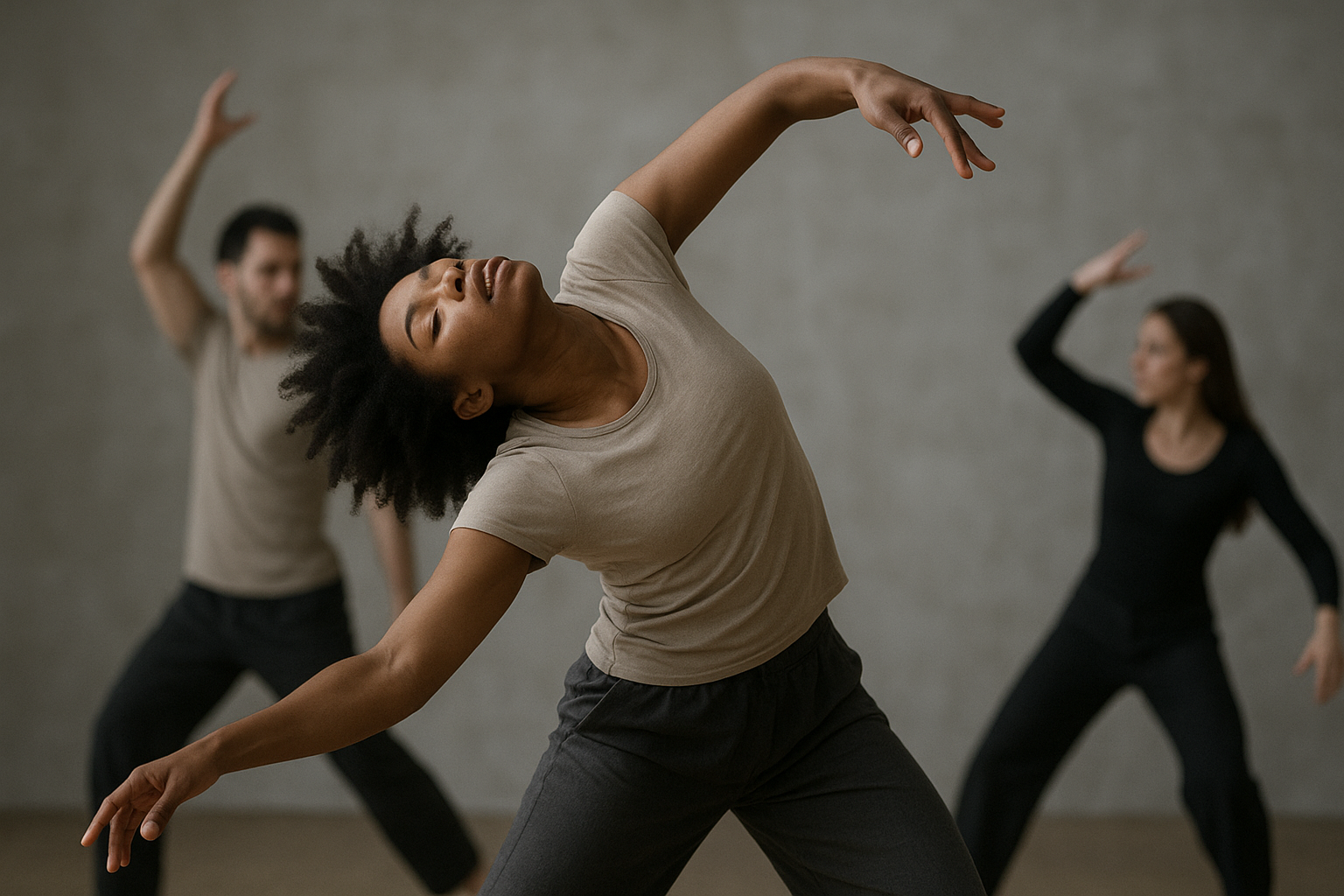
    • Fluidity and Freedom: Contemporary dance is characterized by its fluid movement, often allowing dancers to explore space in unconventional ways. There is an emphasis on organic movements and a connection with the floor.
    • Emotional Expression: Unlike ballet, which often prioritizes aesthetic form, contemporary dance places a significant focus on conveying emotion. Dancers are encouraged to express their personal stories and inner conflicts through movement.
    • Inclusivity and Diversity: Contemporary dance is often more inclusive than its predecessors. It blends elements from various dance forms across the world, such as modern, jazz, hip-hop, and even folk styles.
    • Innovation and Experimentation: There are no standard movements in contemporary dance. Choreographers are constantly inventing and experimenting with new ways to use the body and interact with the environment.

    Rejecting Convention: A Reflection of Society

    Contemporary dance’s inclination to reject traditional structures can be seen as a mirror of modern society’s continuous struggle against imposed norms and limitations. This dance form encourages breaking free from gender roles, cultural confines, and social expectations. As noted by artist and scholar Mary Wigman:

    “Dance should be a reflection of the spirit, the pulse of the times, and not just steps to be memorized.”

    A Global Phenomenon

    Contemporary dance is not limited to Western contexts; it is a global phenomenon. For instance, choreographers like Akram Khan infuse traditional Indian dance forms with contemporary dance, creating rich narratives that speak to global audiences. Similarly, Ohad Naharin, known for his development of the “Gaga” movement language, uses contemporary dance to celebrate the capabilities and imperfections of the human body.

    Controversies and Critiques

    While many celebrate contemporary dance for its boundless creativity, it is not without its critics. Some argue that the lack of structure and traditional technique can sometimes lead to performances that are incoherent or inaccessible to audiences not versed in the language of contemporary dance. Nonetheless, this very aspect makes contemporary dance an exciting and unpredictable art form.

    Embracing Technology

    The incorporation of technology in contemporary dance is yet another testament to its revolutionary spirit. From the use of digital media and projections to the integration of virtual reality, contemporary dance is at the forefront of merging technology with art. Choreographer Wayne McGregor, for example, often partners with scientists to explore how technology can extend the human body’s capabilities and explore new dimensions in dance.

    The Role of Education and Community

    Dance education and community engagement play vital roles in spreading contemporary dance’s revolutionary ethos. Dance institutions across the world offer programs that encourage students to explore and create, rather than replicate pre-existing works. This educational philosophy nurtures dancers who are innovators and thinkers, prepared to break norms and contribute to the ever-evolving dance landscape.

    Conclusion

    Contemporary dance, in its rejection of tradition, offers a platform for limitless expression and innovation. It captures the chaos and beauty of the contemporary world and allows both artists and audiences to engage with it in a deeply personal and profound way. As we continue to confront the challenges of the modern era, contemporary dance remains a powerful testament to human resilience and creativity.