Tag: flow

  • The Flowing Center – Finding Balance in the Stream of Life

    The Flowing Center – Finding Balance in the Stream of Life

    The Flowing Center: Finding Balance in the Stream of Life

    In the hustle and bustle of modern life, finding balance can seem as elusive as grasping water. The concept of “The Flowing Center” offers a way to embrace life’s constant changes while maintaining inner stability. This approach takes inspiration from the natural world’s seamless blend of movement and stillness.

    Understanding the Flow

    Life’s journey is much like a river, continuously moving and reshaping itself. According to Taoist philosophy, true balance lies not in resisting this flow but in harmonizing with it. As the Tao Te Ching by Lao Tzu suggests, “The wise man is one who knows what he does not know” and moves effortlessly within life’s currents.

    “Life is a balance of holding on and letting go.” – Rumi

    In our daily lives, achieving this balance involves understanding when to act and when to rest. The challenge lies in recognizing the moments that call for each. Here are some strategies to help you find your flowing center:

    Strategies for Embracing the Flowing Center

    • Practice Mindfulness: Incorporate mindful practices like meditation and yoga to ground yourself. These activities help you remain present and aware, enabling you to respond rather than react to life’s changes.
    • Embrace Impermanence: Recognize that everything is transient. This understanding allows you to let go of attachments to outcomes and accept the natural ebb and flow of experiences.
    • Find Your Rhythm: Each person has a unique rhythm, like the distinct flow of every river. Honor your natural pace and resist societal pressures to conform to a speed that doesn’t align with your well-being.
    • Create Space: Declutter both your physical environment and your mind. Simplifying your surroundings makes room for new opportunities and insights to flow in.
    • Connect with Nature: Spend time outdoors and observe the effortless flow of nature. Let the serenity of the natural world inspire your own sense of balance and peace.

    Ultimately, finding your flowing center is an ongoing journey. It’s about learning to dance gracefully with life’s unpredictable tides while maintaining a sense of calm and presence. As you embrace the stream of life, you may find that balance is not a destination but a dynamic, ever-changing process.

    For further reading on finding balance within life’s flow, explore mindfulness techniques and the timeless wisdom of ancient philosophies.

  • The Breath Path – Walking Meditation and the Natural Flow

    The Breath Path – Walking Meditation and the Natural Flow

    The Breath Path: Walking Meditation and the Natural Flow

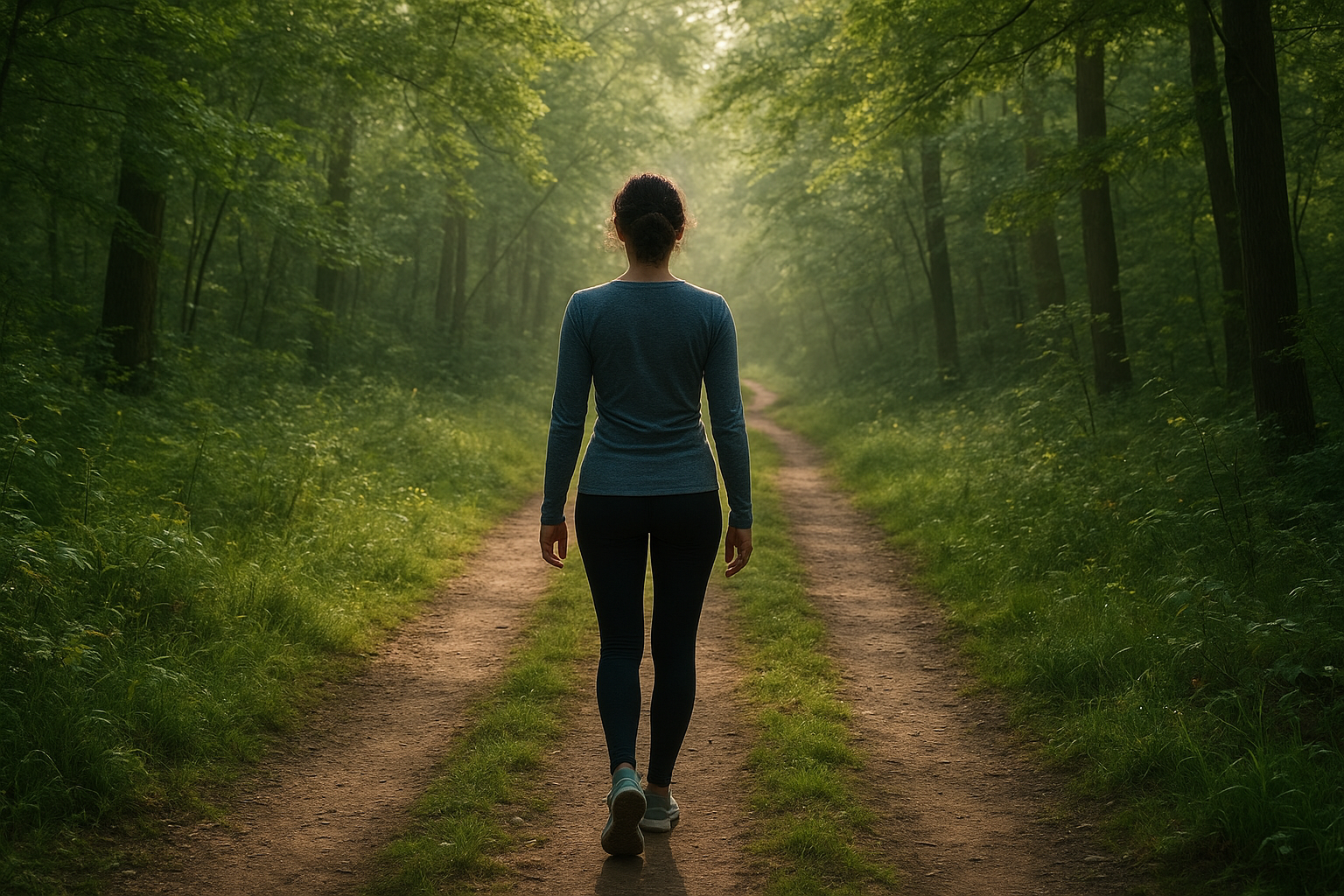
    In the fast-paced world we live in, many individuals are turning to meditation as a means to reconnect with themselves and find inner peace. A unique form of this ancient practice, known as walking meditation, invites practitioners to discover tranquility through movement. This meditative technique blends the awareness of walking with the natural flow of breath, offering a dynamic path to mindfulness.

    The Essence of Walking Meditation

    Walking meditation is not merely a stroll but a deliberate practice of mindfulness, where each step becomes an opportunity to attune with one’s body and surroundings. Thich Nhat Hanh, a renowned Zen Master, beautifully describes it:

    “Walk as if you are kissing the Earth with your feet.”

    Unlike seated meditation, where the practitioner stays still, walking meditation integrates physical movement, allowing individuals to channel their focus through both motion and breath. This harmonious blend creates a rhythmic flow that helps ground the practitioner in the present moment.

    Practicing the Breath Path

    • Begin with Intention: Start by setting a purpose for your walk, whether it’s to relieve stress, gain clarity, or simply to enjoy nature.
    • Focus on Breath: Align your breath with your steps, allowing each inhale and exhale to guide the movement. You might follow a pattern, such as taking three steps per inhalation, and two per exhalation.
    • Awareness and Sensation: Pay attention to subtle changes—how the ground feels underfoot, the sound of rustling leaves, or the warmth of sunlight on your skin.
    • Continue in Presence: Whenever your mind wanders, gently guide your attention back to your breath and steps, anchoring yourself in the now.

    Benefits of Walking Meditation

    Research has shown the numerous benefits of meditation, and walking meditation offers its unique advantages. It can improve balance, enhance focus, and elevate mood. Moreover, as Harvard Health Publishing points out, this practice may even aid in reducing anxiety and depression, making it an invaluable tool for mental wellness.

    The Breath Path is not simply about walking; it is a journey back to self-awareness and peace. By integrating the natural flow of breath with movement, one can discover a profound way to relax and revitalize the spirit.

    In the words of the great poet Rumi, “Let the beauty we love be what we do.” In walking meditation, we embody this beauty through every conscious step we take.

  • Water Mirror Mind – Seeing Yourself in the Flow

    Water Mirror Mind – Seeing Yourself in the Flow

    Water Mirror Mind: Seeing Yourself in the Flow

    The art of self-reflection often draws parallels to reflective surfaces—mirrors, still lakes, and sometimes the rippling water younger souls would skip stones across. Water embodies reflection both literally and metaphorically, revealing layers of truth that we may overlook in our fast-paced lives.

    “I will arise and go now, and go to Innisfree,
    And a small cabin build there, of clay and wattles made:
    Nine bean-rows will I have there, a hive for the honey-bee,
    And live alone in the bee-loud glade.”
    — William Butler Yeats

    Yeats’ vision of tranquility and reflection in “The Lake Isle of Innisfree” captures the essence of seeing oneself in a watery mirror. It invites a connection with nature and an introspective journey. Literarily and practically, the concept of the “Water Mirror Mind” suggests that by seeing the world in flux, as water is often in motion, we too can start to perceive our role and presence in the greater flow of life.

    The Fluid Nature of Identity

    Consider the idea that our identities are not static. Just as water flows, overcoming obstacles and changing form, so does our understanding of self. It is through life’s challenges—those unexpected hardships, joyful peaks, and quiet valleys—that we sculpt our cognition and self-awareness.

    • Dynamic and Ever-changing: Our personalities adjust to new circumstances.
    • Reflective and Deep: Like a still pond, our reflections can be clear or distorted depending on the ‘winds’ of our environment.
    • Transcendent: Water evokes a sense of spiritual flow, connecting and integrating diverse experiences and identities.

    Discovering Depth Through Meditation

    Meditation and mindfulness practices, akin to gazing into a calm water surface, enable the mind to settle and thoughts to clarify. These practices provide space for self-reflection and personal discovery.

    • Visualizing Flow: Imagining oneself as a part of the water cycle brings an understanding of larger systems and one’s transient role within them.
    • Inviting Stillness: Just as calm water reflects the sky, a quiet mind mirrors back its own depths.
    • Embracing Impermanence: Recognizing that both water and thought patterns transform and shift, this acceptance fosters peace and adaptability.

    As noted by Sharon Salzberg in her book “Real Happiness”, meditation can help individuals “develop a more spacious mind… allowing us to engage with the world from a place of greater inner flexibility and resilience” (Sharon Salzberg).

    Ecological Reflections and Personal Responsibility

    The metaphor of water not only serves as a tool for personal reflection but also brings forward the critical need for ecological awareness and responsibility. Water, vital to all life, is increasingly endangered. Our introspection can guide us to better stewardship and actions that honor both personal and environmental health.

    “Water is the driving force of all nature,” said Leonardo da Vinci.

    This timeless observation propels us to consider how we interact with our natural resources. Becoming environmentally conscious enhances our path of self-reflection—realizing the shared human responsibility for maintaining the flow of life.

    Conclusion: Embracing the Water Mirror Mind

    Adopting the “Water Mirror Mind” opens a pathway to greater self-awareness, understanding, and ecological mindfulness. It encourages recognizing the fluid aspects of identity while grounding them in the present flow.

    Whether through moments of meditative stillness or actively participating in safeguarding our ecosystems, the water mirror provides profound relational wisdom. After all, each ripple we create resonates far beyond our initial sight—a testament to the interconnectivity and delicate balance of all life.

    As we align our actions with the rhythmic cycles of nature, we foster a legacy of watershed moments, reflecting both inner truths and our shared stewardship of this blue planet.

  • Rivers Know the Way – Following Nature’s Flow as a Spiritual Practice

    Rivers Know the Way – Following Nature’s Flow as a Spiritual Practice

    Rivers Know the Way: Following Nature’s Flow as a Spiritual Practice

    A serene river winding through a forest

    There is something profoundly moving about the flow of a river. Throughout human history, rivers have been seen as sacred veins of our planet—symbols of both physical nourishment and spiritual guidance. Many cultures, both ancient and modern, revere these waters as places of self-reflection and spiritual practice. As Ralph Waldo Emerson insightfully noted, “The creation of a thousand forests is in one acorn.” In a similar vein, the lessons of many lifetimes can be found in the continuous flow of a single river.

    The Spiritual Significance of Rivers

    Rivers have been venerated in various religious and spiritual traditions across the globe. In Hinduism, rivers such as the Ganges hold immense spiritual significance. Bathing in these sacred waters is believed to purify the soul and wash away sins. Meanwhile, Indigenous cultures of the Americas, such as the Hopi, view rivers as living entities that embody a source of wisdom and life.

    These cultures remind us that engaging with rivers can be a profound spiritual practice, offering lessons in adaptability, patience, and resilience. As John Muir eloquently stated, “Rivers flow not past, but through us.” This suggests that just as rivers carve through land, they also have the power to influence our inner landscapes.

    Lessons from the Flow

    One of the key spiritual lessons that rivers teach is the importance of flowing with life’s circumstances. In a world where control and predictability are often prized, rivers remind us that life is inherently changeable. They demonstrate how to adapt with grace and confidence in the face of obstacles. A river does not resist the rocks or fallen branches in its path—instead, it finds a way around them, continually moving forward.

    “Life is like the river, sometimes it sweeps you gently along and sometimes the rapids come out of nowhere.” – Emma Thompson

    Through observing rivers, one learns the value of releasing resistance and embracing life’s uncertainties. This acceptance allows us to remain centered, much like a river that maintains its course through the landscape, adapting but never losing its direction.

    Another vital lesson provided by rivers is the importance of interconnectedness. Every river relies on countless tributaries, rainfalls, and underground springs to maintain its flow, symbolizing the myriad ways in which we are all supported and linked within the broader web of life. By relating deeply with this interconnectedness, we can cultivate a sense of belonging and compassion both for ourselves and for all living beings.

    Practicing River Spirituality

    Engaging with rivers as a spiritual practice does not require elaborate rituals. Instead, it is about mindfully interacting with the water, learning from its wisdom, and incorporating its lessons into your life. Here are some ways to deepen your spiritual connection with rivers:

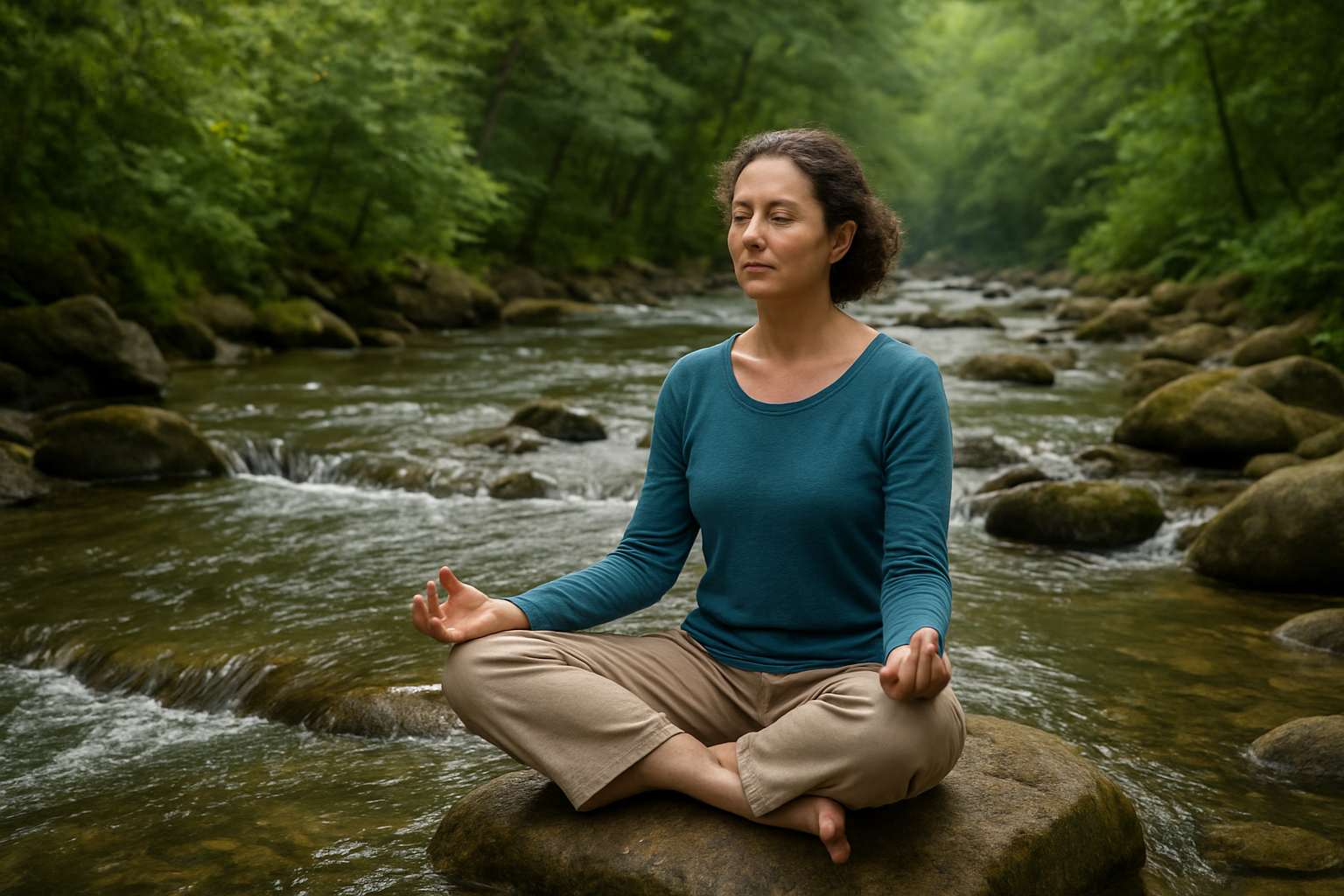
    • Meditate by the Water: Simply sitting by a river and listening to the water’s flow can be a powerful form of meditation. The consistent sound of the river can help quiet the mind and bring clarity to our thoughts.
    • Reflect on Symbolism: Consider the river as a metaphor for your life. What obstacles do you encounter, and how can you flow around them?
    • Physical Engagement: Engage in activities like kayaking or canoeing. Physically moving with the river can offer insights into surrendering control and enjoying the present moment.

    The River’s Call

    As we deepen our relationship with rivers, we become more attuned to the natural rhythms of life, reminding us of our origins and our place in the world. Rivers have long been symbols of life and renewal; they are guides showing us how to navigate the torrents and stillness on our life’s journey.

    It’s worth taking time out of the hustle and bustle of daily life to follow the river’s flow and let it teach us its timeless lessons. As Henry David Thoreau once wrote, “A river seems a magic thing. A magic, moving, living part of the very earth itself.” Indeed, rivers not only run through the earth but also weave through the depths of our spiritual consciousness, offering endless lessons if we are but willing to listen.

    The next time you find yourself by a river, pause to connect with its flow. Listen to its messages. In embracing the river’s path, you might just discover a deeper connection to both the world and yourself.

    For more information on how to spiritually engage with nature, visit Spirituality and Practice.

  • Chi and the River

    Chi and the River

    Chi and the River: Exploring Spirituality and Connection Through Water

    The concept of Chi, also known as Qi, has been a fundamental part of Eastern philosophy and traditional medicine for centuries. Often described as the life force or vital energy that flows through all living things, Chi is integral to practices such as Tai Chi, Feng Shui, and various forms of Chinese medicine. In recent years, Western audiences have become increasingly fascinated by this concept, exploring its implications in various aspects of life, including the natural world. One of the most captivating analogies is seeing Chi mirrored in the flowing dynamics of a river.

    “Chi is the circulating life energy that in Chinese philosophy is thought to be inherent in all things. In traditional Chinese culture, it’s believed that disruptions to your Chi can result in illness and imbalance.” – Encyclopedia Britannica

    The River as a Metaphor for Chi

    Rivers are often used symbolically in literature and art to represent the flow of time, life’s journey, and the constant change inherent in our existence. In the study of Chi, these flowing waters serve as a poignant metaphor for how energy courses through our bodies and the universe at large:

    • Flow and Movement: Just as a river flows continuously, unhindered, so should the Chi within us. Any blockage in this flow can lead to disruptions, much like a dam causing a buildup of pressure in a river.
    • Interconnectedness: All rivers eventually reach an ocean, highlighting the interconnectedness of different parts of a larger system. This is akin to Chi, which connects us to the environment, others, and the cosmos.
    • Adaptability: A river adapts to its path, curving around obstacles, which symbolizes resilience and flexibility – key aspects when cultivating a balanced Chi.
    • Purification: The flow of a river often symbolizes purification, as the moving water cleanses itself and its banks. Similarly, practices that enhance Chi often include elements of cleansing and detoxification.

    Practices to Synchronize with River Chi

    Incorporating the essence of river-inspired Chi into daily life can be both a spiritual and physical journey. Here are a few practices commonly recommended:

    • Meditation by Water: Sitting by a stream or river and meditating can help synchronize one’s own energy with the natural flow of the water, promoting peace and mental clarity.
    • Tai Chi and Qigong: These exercises are designed to enhance Chi flow through slow, deliberate movements, often performed in natural settings to harmonize with the environment.
    • Breathing Techniques: Focused breathing exercises draw inspiration from the rhythmic flow of water, facilitating a seamless flow of energy within.
    • Visualization: Envisioning oneself as a river can mentally unblock emotional or physical obstacles, allowing energy to move freely.

    The Cultural Significance of Rivers

    In addition to its spiritual parallels, rivers have played critical roles in the development of civilizations around the world. Many great ancient cultures, such as those along the Nile, Tigris-Euphrates, and the Yellow River, flourished because of the resources and transportation benefits provided by these waterways.

    Each river, with its unique characteristics, tells a story. The Yangtze River, for example, is often referred to as the cradle of Chinese civilization and has long been integral to trade, agriculture, and cultural development in the region. Its representation in local folklore and art further underscores its cultural and spiritual significance.

    “The Yangtze River is not only a major waterway, but it is also an important thread in the historical and cultural narrative of China, linking towns through its banks and connecting communities over millennia.” – National Geographic

    Reflections on Chi and Nature

    Understanding Chi through the lens of natural elements like rivers provides a holistic perspective on the connection between humans and the environment. It emphasizes the importance of maintaining balance and harmony, drawing parallels between natural processes and human life.

    Practitioners of various disciplines affirm that by appreciating and emulating the flow of a river, individuals can enhance their own vitality and connectivity with the world around them. As we continue to explore the concept of Chi, it becomes clear that rivers offer profound insight into how we can live in balance and harmony with ourselves and our environment.

    For more information about Chi and its applications in daily life, check out resources such as The Qigong Institute.

  • Falun Gong and the Flow of Nature

    Falun Gong and the Flow of Nature

    Falun Gong and the Flow of Nature

    Falun Gong and the Flow of Nature

    Falun Gong, also known as Falun Dafa, is a spiritual practice that emerged in China in the early 1990s. It intricately blends meditation, qigong exercises, and moral philosophy, with a profound emphasis on aligning with the natural universe. This article explores how Falun Gong adherents perceive and harmonize with the flow of nature.

    Understanding the Core Principles

    At the heart of Falun Gong are three primary principles: Truthfulness (Zhen), Compassion (Shan), and Forbearance (Ren). These tenets reflect the natural elements believed to govern the universe. Practitioners strive to embody these virtues in their daily lives, aiming to achieve a state of inner peace and enlightenment.

    “Falun Gong unites Buddhism, Taoism, and Qigong practices,” according to Encyclopaedia Britannica.

    The Philosophy of Harmony with Nature

    The concept of nature in Falun Gong encompasses not only the external physical environment but also the internal landscapes of the human mind and spirit. The practice encourages individuals to align their energies with the cosmic laws or “Dharma” to experience natural alignment with the world.

    Exercises and Meditation

    Central to the practice are the five sets of exercises, including meditation, which practitioners perform to purify the body and mind. These exercises are designed to open energy channels, enhance circulation, and increase a person’s life force or qi. According to Falun Dafa Information Center, this energy synchronization leads to unprecedented levels of mental clarity and physical health.

    • Buddha Showing a Thousand Hands: This exercise serves to reshape the energy field.
    • Falun Standing Stance: A series of gentle movements for energy absorption.
    • Penetrating the Cosmic Extremes: It involves bridging the energy from the cosmos into one’s body.
    • Falun Heavenly Circuit: Facilitates the movement of energy throughout meridians.
    • Way of Strengthening Divine Powers: Meditation to refine and strengthen one’s spiritual essence.

    How Falun Gong Views the Universe

    Falun Gong advocates for a holistic view of the cosmos, perceiving the universe as a sentient entity in which individuals must coexist symbiotically. Practitioners are encouraged to maintain ecological awareness, aligning their activities with environmental preservation to promote universal balance.

    This philosophical stance reflects traditional Chinese views of the world, modeling human life as a microcosm of the universe. Actions disturbing this balance are believed to lead to negative karma, while virtuous actions are thought to harmonize an individual’s energies with those of the cosmos.

    Social and Cultural Dimensions

    Since its inception, Falun Gong has experienced significant growth and spread beyond China. With millions of practitioners worldwide, the movement has fostered a unique subculture centered on health, tranquility, and ethical conduct. This expansion illustrates the resonance of Falun Gong’s teachings in contemporary global society.

    The practice has also faced adversity, notably from the Chinese government, which has imposed severe restrictions, citing political motives. Despite this, practitioners continue to emphasize peaceful resistance and the power of unity, epitomizing the natural flow of resilience and compassion in human interactions.

    “I think it is important to recognize the importance of belief. To me, Falun Gong changes people’s hearts,” said Mr. Li Hongzhi, the founder of Falun Gong, in a 1999 interview with the Los Angeles Times.

    Scientific Perspectives and Health Benefits

    Numerous studies have explored the health benefits associated with Falun Gong practice. Research indicates improvements in mental health, reduced stress levels, and increased physical wellness among practitioners. This suggests the practice’s ability to effectively contribute to harmonizing the body’s flow with nature by balancing physical and spiritual health.

    Moreover, scientific inquiries into the efficacy of qigong and other similar practices present a growing acknowledgment of traditional techniques in modern medicine, shedding light on potential complementary health practices that align with ancient wisdom.

    Conclusion: Falun Gong’s Contribution to Global Wellbeing

    As humanity faces unprecedented ecological and sociopolitical challenges, the philosophies inherent in Falun Gong offer profound insights. By emphasizing harmony between individuals and nature, this practice encourages actions contributing to personal and collective well-being.

    Ultimately, Falun Gong’s approach to spiritual purification through moral rectitude and energy cultivation represents a steadfast return to the core principles guiding centuries of human evolution. In doing so, it echoes a timeless message: when humans align with nature’s flow, the universe responds with abundant peace and prosperity.
  • Falun, Flow, and the Sacred Field

    Falun, Flow, and the Sacred Field

    The concepts of Falun, flow, and the sacred field are interconnected in ways that touch upon philosophy, spirituality, and cognitive science. These terms, although originating from distinct traditions, converge on the idea of harmony and alignment with the universe, whether it be through spiritual practice, psychological states, or metaphysical fields.

    Falun: The Wheel of Dharma

    Falun is a central concept in Falun Gong, a spiritual practice that combines meditation and exercises with a moral philosophy centered on the principles of truthfulness, compassion, and forbearance. Falun is often depicted as a spinning wheel, symbolizing the Dharma Wheel in Buddhist tradition.

    “The Falun spins constantly, drawing in energy from the universe and expelling negative energy from the body.” – Li Hongzhi, founder of Falun Gong.

    Practitioners believe that by cultivating Falun within oneself, they can achieve spiritual enlightenment and physical health. The practice emphasizes the transformation of mind and body, aligning oneself with universal principles.

    Flow: The Psychology of Optimal Experience

    The concept of flow was introduced by psychologist Mihaly Csikszentmihalyi. It describes a state of complete immersion and engagement in an activity where one loses self-consciousness and experiences intrinsic enjoyment.

    “Flow is a state in which people are so involved in an activity that nothing else seems to matter.” – Mihaly Csikszentmihalyi, Flow: The Psychology of Optimal Experience.

    This state of flow is characterized by a balance between challenge and skill, clear goals, and immediate feedback. It is often associated with peak performance in sports, arts, and work.

    The Sacred Field: Bridging Spirit and Science

    The sacred field refers to an invisible and intangible space that connects all living beings. It is a concept found in many spiritual traditions, often described as the energetic matrix of the universe.

    In recent times, the sacred field has been explored through the lens of quantum physics and consciousness studies. Researchers are investigating how this field might influence consciousness and how it could be measured scientifically.

    “The sacred field, or the quantum field, is the source of all creation, connecting mind and matter.” – Gregg Braden, The Divine Matrix.

    Interconnections and Implications

    • Spiritual Growth: Falun and the sacred field both emphasize spiritual growth and alignment with universal principles, suggesting a path toward enlightenment and self-realization.
    • Psychological Insight: Flow indicates the potential for human achievement when individuals are aligned with their intrinsic motivations and skills.
    • Scientific Exploration: The sacred field invites exploration into the nature of consciousness and the interconnectedness of life, bridging traditional spiritual wisdom with modern scientific inquiry.

    In conclusion, Falun, flow, and the sacred field offer unique perspectives on how humans can connect with the universe. By exploring these concepts, individuals may find pathways to greater understanding, fulfillment, and harmony in their lives.