Tag: every

  • One Step, Infinite Journey – The Zen of Every Movement

    One Step, Infinite Journey – The Zen of Every Movement

    One Step, Infinite Journey – The Zen of Every Movement

    One Step, Infinite Journey – The Zen of Every Movement

    The essence of Zen often defies logical reasoning and verbal explanation, yet it profoundly permeates every movement and breath. In the words of Zen master Thich Nhat Hanh, “Walk as if you are kissing the Earth with your feet.” This simple act of walking, seen through the Zen lens, transforms into a profound journey of enlightenment.

    The Philosophy of Zen in Everyday Life

    Zen Buddhism emphasizes mindfulness and experiencing the present moment without distraction. It invites us to engage fully with every task and step we take. In this practice, every movement becomes purposeful and sacred, encapsulating the infinite possibilities within the framework of the here and now.

    “Life is available only in the present moment. If you abandon the present moment, you cannot live the moments of your daily life deeply.” — Thich Nhat Hanh

    The Journey Begins with a Single Step

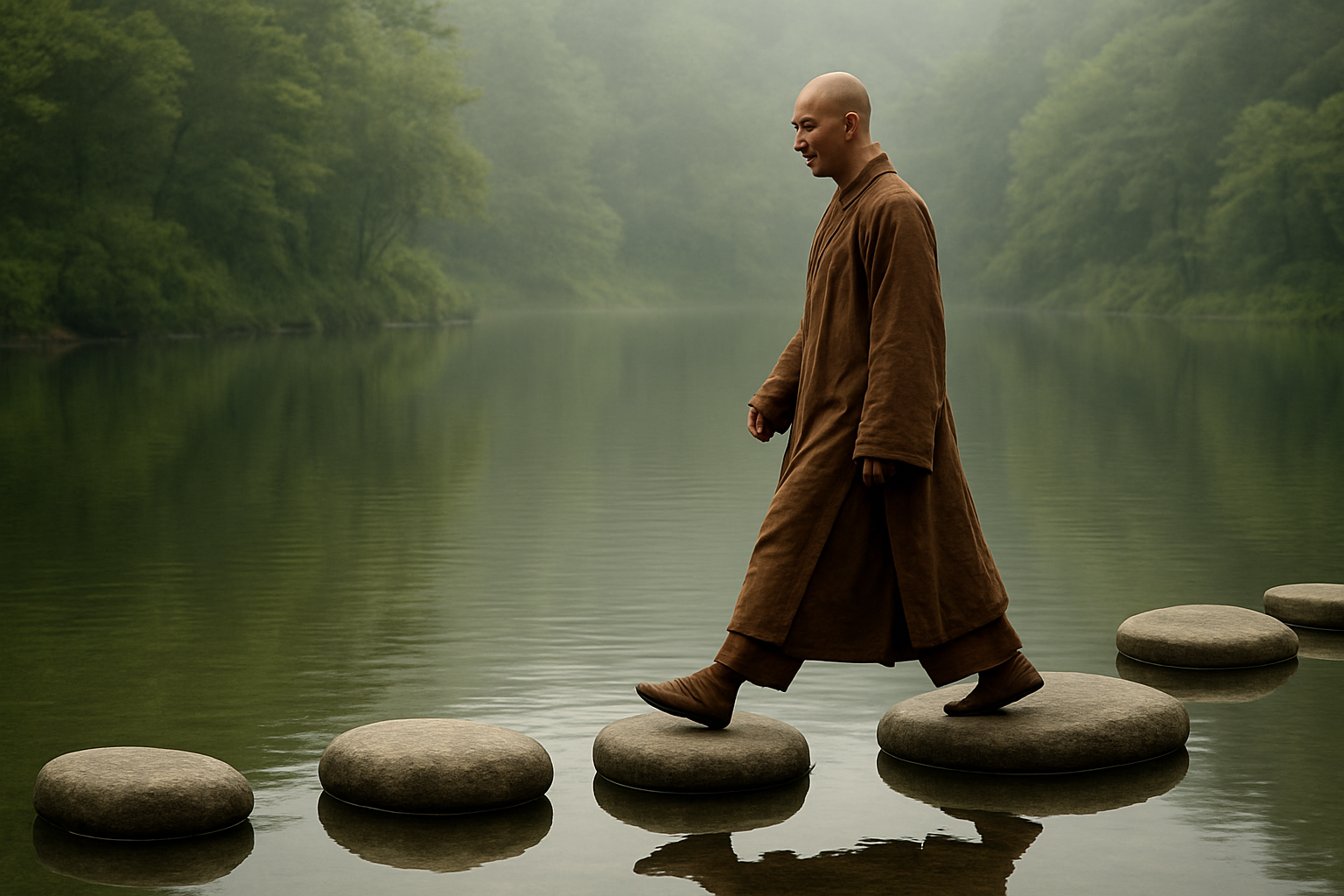
    In the Zen practice of walking meditation or kinhin, practitioners focus intensely on the act of walking. Each step becomes an expression of concentration and mindfulness. The rhythm of walking aligns with breathing, creating a state of unified awareness between body and mind. This practice illustrates the Zen teaching that the journey’s essence is to reside wholly in each action, however simple it may seem.

    The Infinite Potential of Every Step

    In his work The Way of Zen, Alan Watts elucidates, “The journey of a thousand miles begins with a single step.” This Zen-inspired wisdom highlights not just the beginning of any journey but emphasizes the value found in each individual step. Within that moment, the universe unfolds with endless potential, as each step is both complete in itself and a part of a broader continuum.

    Modern Applications of Zen Movement

    In today’s fast-paced world, mindfulness practices including Zen movements, offer an antidote to stress and distraction. Whether it’s through yoga, tai chi, or simple walking meditations, integrating mindful movement into daily routines can foster deeper awareness and relaxation.

    • Yoga: With its foundation in mindfulness and breath, yoga offers a path to integrate physical movement with Zen principles, enhancing physical and mental well-being.
    • Tai Chi: This gentle martial art, often described as “meditation in motion,” draws heavily on Zen concepts to cultivate balance, awareness, and inner peace.
    • Mindful Walking: Practiced anywhere, mindful walking allows individuals to harness the Zen power of each step, promoting clarity and groundedness.

    Embracing the Zen of Movement in Daily Life

    The teachings of Zen remind us that life’s most transformative experiences occur within the simplicity of everyday actions. It’s essential to cultivate an awareness that respects each moment as a contributing factor to the journey of life. As we embrace the Zen of every movement, each step—each breath—becomes more than mere actions; they are extensions of our inner essence reaching out to connect harmoniously with the world around us.

    In conclusion, the Zen of every movement teaches us to savor life’s journey, explore the infinite potential of each moment, and approach every step with mindfulness and intention. In doing so, both our bodies and spirits are nourished by the present, allowing us to walk our path with greater wisdom and peace.

  • Awakening Through the Landscape

    Awakening Through the Landscape

    Awakening Through the Landscape: Discovering New Sensations in Nature

    In an increasingly urbanized world, the call of the natural landscape offers a reprieve from the incessant pace of modern life. The desire to immerse oneself in nature speaks to an innate need to connect with environments older than human civilization. This awakening through the landscape is not just a physical journey but also a profoundly transformative experience.

    The Therapeutic Power of Nature

    Research has extensively documented how nature impacts our mental health. According to a study published by SAGE Journals, spending time in natural settings can significantly improve one’s mood and reduce symptoms of anxiety and depression. The variety of textures, colors, and scents found in natural landscapes stimulate a sensory awakening, profoundly affecting our well-being.

    “In every walk with nature, one receives far more than he seeks.” — John Muir

    Rediscovering the Simple Joys

    The landscape’s ability to awaken our senses can be boiled down to simplicity. This simplicity encourages us to engage in the moment, far removed from digital distractions. Through the landscape, people rediscover the joys of hearing birdsong, feeling the crunch of leaves beneath their feet, and watching the dance of light across a rippling stream.

    Engaging all senses, these experiences help foster a sense of peace and broaden our perspectives. Urban environments often confine our senses within narrow parameters, whereas the vast expanses of a natural landscape call out to every facet of our sensory palette.

    The Spiritual Connection

    For many, nature is a pathway to a deeper, spiritual connection. Native wisdom and ecospirituality commonly acknowledge the landscape as a sacred space. The Ecospirituality Foundation describes this connection as a deep respect for the Earth, a belief ingrained in countless indigenous cultures around the world.

    Experiencing the raw beauty of a landscape can feel akin to a spiritual revelation, serving as a reminder of one’s place within the larger tapestry of life. This awareness frequently leads to an internal journey, fostering a profound sense of humility and gratitude.

    Landscapes as Teachers

    The landscape not only provides a backdrop for reflection but also acts as a teacher. Figures like Henry David Thoreau in Walden emphasize the lessons nature has to teach us about self-sufficiency, patience, and harmony.

    “Look deep into nature, and then you will understand everything better.” — Albert Einstein

    • Observation: Tuning into the subtle changes in a landscape reveals nature’s rhythms and cycles, teaching valuable lessons about adaptability and resilience.
    • Patience: Watching an unfolding sunrise requires us to slow down and appreciate the present, reminding us that not all progress needs haste.
    • Interconnectedness: Witnessing the delicate balance of an ecosystem imparts an understanding of how every action ripples through the environment, emphasizing sustainability and responsibility.

    Practical Ways to Start Awakening Through the Landscape

    For those eager to embark on a journey through the landscape, several practical approaches can help deepen this connection:

    • Micro-Adventures: Even short ventures into local parks or green spaces can offer dramatic benefits.
    • Mindful Hiking: Treat each step as a meditation, focusing on the physical sensations and the beauty around you.
    • Nature Journals: Recording thoughts, sketches, or observations fosters deeper reflection and engagement with the landscape.

    Awakening through the landscape encourages a lifelong journey, beginning with tentative footsteps on a trail and culminating in a deeper understanding of ourselves and our world. The landscape beckons, ready to impart its ancient wisdom to those who seek it.

  • Footsteps Through Samsara

    Footsteps Through Samsara

    Samsara, in Sanskrit, refers to the cycle of death and rebirth to which life in the material world is bound. In many philosophical and religious traditions, it is the journey every being embarks on, accumulating karma and striving for liberation. The concept sheds light on our collective quest for meaning and purpose.

    The Path of Reincarnation

    In Hinduism, Buddhism, and Jainism, samsara operates as a fundamental principle of existence. The soul, or atman, embarks on numerous lifetimes, carrying forward the consequences of actions, or karma, from each previous existence. Liberation from this cycle, known as moksha in Hinduism, nirvana in Buddhism, or kaivalya in Jainism, is the ultimate goal—an end to suffering and the attainment of eternal bliss.

    As philosopher Alan Watts eloquently states, “The only way to make sense out of change is to plunge into it, move with it, and join the dance.” This captures the essence of samsara, where every moment and every life is a step in the cosmic dance of existence.

    The Journey Within

    Buddhist teachings emphasize mindfulness and compassion as essential elements in navigating samsara. By observing one’s thoughts and actions, individuals can transform their karma and inch closer to enlightenment. The Buddha himself stated, “Do not dwell in the past, do not dream of the future, concentrate the mind on the present moment.”

    Footsteps to Liberation

    Navigating samsara requires a commitment to personal growth and understanding. Here are key steps in this spiritual journey:

    • Self-inquiry: Dive deep into your intentions and actions. Reflection allows for the unveiling of truths behind desires and fears.
    • Compassion: Practice empathy towards all sentient beings. Compassion softens karma and nurtures positive energy.
    • Mindfulness: Maintain awareness of thoughts and emotions. This practice fosters clarity and reduces suffering.
    • Resilience: Embrace life’s challenges as opportunities for growth. In overcoming obstacles, the soul evolves.

    Conclusion

    Footsteps through samsara are inherently personal, yet they resonate with the universal human experience. By acknowledging our place within this cosmic cycle, we find solace and direction in our pursuit of truth. Embarking on this journey with awareness invites liberation from the confines of samsara and ushers in the dawn of spiritual freedom.